Tag: Emerging Technologies

  • ITU Kaleidoscope 2024 kicks off showcasing global tech innovations

    ITU Kaleidoscope 2024 kicks off showcasing global tech innovations

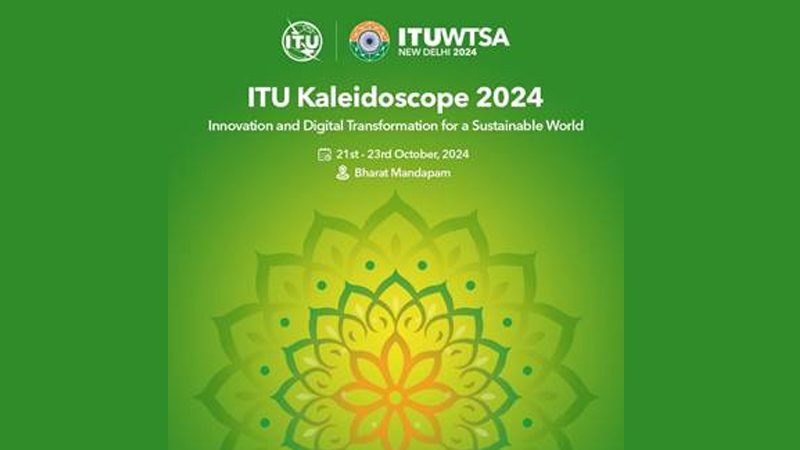
    Mumbai: The 15th ITU Kaleidoscope Academic Conference, themed ‘Innovation and Digital Transformation for a Sustainable World’, has commenced today at Bharat Mandapam, New Delhi, spotlighting India’s role in shaping the global digital landscape. Organised by the International Telecommunication Union (ITU), the event will run from 21-23 October 2024, featuring discussions on 5G, AI, IoT, quantum communications, and other groundbreaking technologies, with more than 140 record-breaking paper submissions highlighting the world’s growing interest in digital infrastructure and telecommunications standards.  

    The top three selected papers will each be awarded CHF 2000 in recognition of their contributions to advancing the field of telecommunications. These winning papers, chosen by an expert panel, cover pivotal topics including quantum communication, network security, and 5G applications.  

    In a move to foster the next generation of researchers, ITU will recognise young authors from the selected papers with certificates of excellence, reaffirming its commitment to encouraging fresh talent in the field of telecommunications research.  

    The conference will feature numerous technical sessions and panel discussions covering diverse topics such as 6G network architectures, AI in healthcare, IoT for smart cities, and quantum cryptography. Key stakeholders and industry leaders will tackle the challenges and opportunities presented by emerging technologies, providing thought leadership on the future of telecommunications.  

    As part of the World Telecommunication Standardisation Assembly (WTSA-24), the event will emphasise the need for international collaboration in setting global standards for next-generation technologies. Kaleidoscope 2024 aims to ensure these technologies are developed inclusively, securely, and sustainably.  

    On 23 October, two important panel discussions will take place. The first will address connecting the remaining 3 billion, while the second will explore the role of youth in global standards development, focusing on enhancing participation in telecommunications and technology standards.  

    By hosting Kaleidoscope 2024, India continues to assert its leadership in the global digital ecosystem. With initiatives like ‘Digital India’ and ‘Make in India’, the country positions itself as a hub for innovation in digital infrastructure, highlighting advancements in 5G deployment and the development of indigenous technologies for global markets.  

  • Global Standards Symposium 2024 concludes, paving way for digital progress

    Global Standards Symposium 2024 concludes, paving way for digital progress

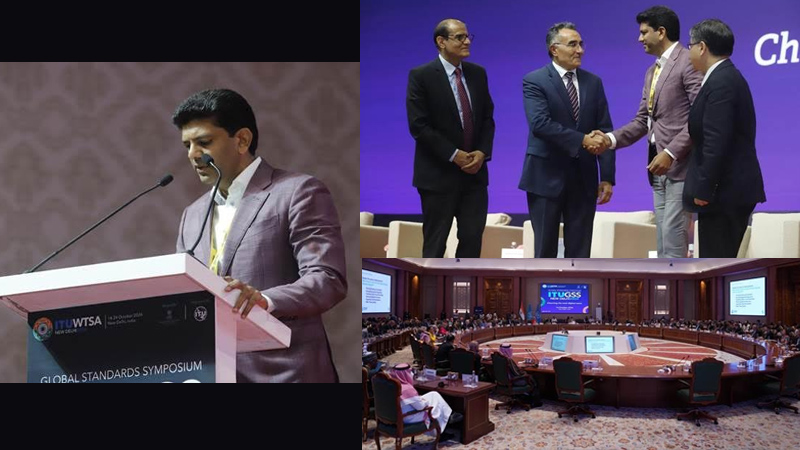
    Mumbai: The fifth Global Standards Symposium (GSS-24) wraps up in New Delhi, making history as the first time the event has been held in the Asia-Pacific region. Organised by the International Telecommunication Union (ITU) and hosted by the Department of Telecommunications, Government of India, GSS-24 gathers a record 1,500 policymakers, innovators, and experts to chart the future of digital transformation. The event emphasises the critical role of international standards in enabling emerging technologies to drive sustainable global development.  

    Minister of state for communications and rural development, Chandra Sekhar Pemmasani delivers a closing address lauding India’s transformation under prime minister Narendra Modi’s leadership. “The standards we establish are more than just technical standards, but they are moral compasses, guiding us towards a future of shared global progress. India is ready to take this journey not alone, but with all of you as partners,” Pemmasani states, advocating for an inclusive, democratic approach to international standards.  

    The symposium’s theme, “Charting the Next Digital Wave: Emerging Technologies, Innovation, and International Standards,” highlights the need for cohesive, forward-looking governance and standardisation in digital technologies. It serves as a platform for high-level dialogues on crucial issues like AI governance, open-source technologies, blockchain-based authentication, and the impact of AI and the Metaverse on public services.  

    Union minister Jyotiraditya M. Scindia underscores India’s role as a global telecommunications and digital innovation hub. He describes India as “a land of science, innovation, and rules aiding in the prosperity of the world.”  

    The key discussions focus on bridging the standards gap between developed and developing countries, emphasising equitable access to technology for all. The AI Standards Summit, held as part of GSS-24, illustrates how consensus-based standards can ignite innovation across multiple sectors, driving technological advancements.  

    Centre for Development of Telematics (C-DoT), CEO, Rajkumar Upadhyay chairs the symposium, marking India’s first time leading the event. The symposium’s outcome document lays the groundwork for discussions at the World Telecommunication Standardisation Assembly (WTSA-24), taking place from 15-24 October 2024, in New Delhi.  

  • Disney Star deploys new technologies to enhance IPL 2022 broadcast

    Disney Star deploys new technologies to enhance IPL 2022 broadcast

    Mumbai: Disney Star has announced a slew of technological innovations to enhance IPL 2022 broadcast on the network.

    These technologies, adopted across Star Sports network and streaming platform Disney+ Hotstar, have been spearheaded by Disney Star’s R&D arm – Star Lab which develops innovation in emerging technologies.

    The broadcaster has brought the immersive sound of Dolby Atmos to fans, unique online voting, and polling platform, enhanced analytics in the commentary box, mixed reality analysis, a behind-the-scenes (BTS) technology venture and the robot assistant ‘Cricko.’ However, only Star Sports1 HD and Star Sports1 Hindi HD will be integrated with the Dolby Atmos experience. “Viewers will experience multidimensional sound with incredible clarity that allows them to hear details never heard before during the live sporting action,” according to the statement.

    “Disney Star has been committed to elevating the experience of Tata IPL, bringing millions of viewers closer to the game, the heroes, and the action,” said Disney Star head – sports Sanjog Gupta. “With fans being allowed in the stadium, we wanted viewers to get as close to the real feel of the atmosphere at the venues and this is why we decided to produce the Tata IPL 2022 in Dolby Atmos for the first time. The Star Lab has also enhanced the presentation of the tournament by deploying AR and VR across match coverage and programming initiatives. We will also experiment with the world’s first interactive cricket show in the metaverse, in our ambition of making this the most interactive and immersive season of Tata IPL.”

    Online voting and polling platform through megaphone: 

    Star Sports is introducing a new online voting and polling platform. It will deliver a live and interactive experience that will allow viewers to shape the editorial discourse during shows and build a connection between the opinions of Star Sports’ experts and audiences.

    Mixed reality analysis

    Presenters will be able to visualise and interact with data-driven Hawkeye graphics using an MR headset, proprietary technology developed in-house by Star Lab.

    Enhanced analytics

    With enhanced analytics in the commentary box, commentators will be teleported from the ground to the studios.

    BTS tech venture

    A new BTS tech venture will be the implementation of cloud production. Cloud workflows and distributed production models have been accelerated by the global chip shortage. Eliminating hardware and geographical location dependencies means more resources can be deployed into creating quality content and storytelling and collaboration is accelerated which will result in benefits to the environment by reducing carbon emissions.

    Other enhancements include ball-by-ball fielding analysis linked to live on-ground player tracking, enabled within digital twins of stadiums as well as 3D player avatars, virtual multi-screen telestration, and a bespoke virtual studio environment that leverages a stereoscopic talent positional tracking system to create the magical illusion that the graphics are real, 3D physical objects.

    The robot assistant ‘Cricko’ is armed with a huge database of IPL facts and figures to ensure analysts are equipped with the most up-to-date and in-depth statistics to share with audiences.

    The media company will continue to leverage the power of the unreal gaming engine to create virtual studios and augmented reality graphics. AR graphics will be enabled on drone cameras flying high above the stadium, said the statement.

  • Green telecom: TRAI again extends time for ideas

    NEW DELHI: In addition to an extension earlier, stakeholders wanting to give suggestions to the Telecom Regulatory Authority’s efforts towards the effect of telecom on climate change and green house gas emissions have been asked to send in their views by 3 April 2017. Stressing that no further extension would be given, TRAI has said the counter-comments can be sent by 17 April 2017.

    The Consultation Paper on Approach towards Sustainable Telecommunications in mid-January this year with a date of responses set for 13 February 2017 which was extended to 14 March. The paper issued following a request from the Department of Telecom raised 14 questions.

    TRAI had issued a paper on similar issues in 2012 and the DoT had in fact given directions on that basis, but new issues have cropped up with emerging technologies.

    India has the second largest and fastest growing mobile telephone market in the world. Power and energy consumption for telecom network operations is by far the most important significant contributor of carbon emissions in the telecom industry.

    Hence, it is important for the telecom operators to shift to energy efficient technologies and alternate sources of energy. Moreover, Going Green has also become a business necessity for telecom operators with energy costs becoming as large as 25% of total network operations costs. A typical communications company spends nearly 1% of its revenues on energy which for large operators may amount to several million rupees.

    Also read:

    Shift to energy-efficient tech; TRAI seeks ideas by 27 Feb

  • Shifting to green tech: TRAI extends ideas date till 14 March

    NEW DELHI: Stakeholders wanting to give suggestions to the Telecom Regulatory Authority’s efforts towards the effect of telecom on climate change and green house gas emissions have been asked to send in their views by 14 March 2017.

    Stressing this is the last extension, TRAI said the counter-comments can be sent by 28 March 2017.

    Following a request received from the Department of Telecom, TRAI had issued the Consultation Paper on Approach towards Sustainable Telecommunications in mid-January this year. The paper has raised fourteen questions.

    TRAI had issued a paper on similar issues in 2012 and the DoT had in fact given directions on that basis, but new issues have cropped up with emerging technologies.

    India has the second largest and fastest growing mobile telephone market in the world. Power and energy consumption for telecom network operations is by far the most important significant contributor of carbon emissions in the telecom industry.

    Hence, it is important for the telecom operators to shift to energy efficient technologies and alternative sources of energy. Moreover, Going Green has also become a business necessity for telecom operators with energy costs becoming as large as 25 per cent of total network operations costs. A typical communications company spends nearly one per cent of its revenues on energy which for large operators may amount to several million rupees.

    Also read:

    Shift to energy-efficient tech; TRAI seeks ideas by 27 Feb

  • CII, Lawquest release White Paper on Copyright and Emerging Technologies

    CII, Lawquest release White Paper on Copyright and Emerging Technologies

    MUMBAI: The Confederation of Indian Industries (CII) and Lawquest have released a White Paper on Copyright and Emerging technologies. The paper discusses issues relating to copyright on content that may be used in mobile phones.

    LawQuest partner Poorvi Chothani who wrote the Paper notes that digital technology has made it easier to copy content. “People feel that once they buy digital content they can use it anywhere and anyhow. The customer’s attitude is “If I buy a downloadable movie I want to be able to play it in a number of places. My Mobile Phone. My Mac. My PC. My Video Pod 2 (for lack of a better term).” This is a flavour of what consumers are demanding and will demand in the future “I bought it so I own it, so I can use it how I like, when I like and where I like!””

    Moreover, the paper notes that technology is making it possible, whether use of content on these instruments or media is authorised or not. Rapidly changing technology enables the same content to be used in different ways on mobile phones, an iPod; in an online database retrieval systems in whole or in part on a CD Rom; on MP3 players; in whole or in part on a DVD on the Internet; on a website on the World Wide Web; for personal use and/or for podcasting or video casting; on an electronic bulletin board such as those included with Internet Service Providers; or on a blog initiated by an individual.

    Whatever be the medium, once a work that is entitled to copyright, is placed or used on any of the media, described above, there will be issues pertaining to copyright ownership, royalty, license, infringement and plagiarism, to name a few. This requires an examination of what can be copyrighted.

    The paper notes that copyright statutes were originally enacted for literary property, extended to other forms of creativity and as technologies change as an Intellectual Property Right (IPR) has been increasingly commodified, rendered easily transferable and in many cases susceptible to easy infringement. However, the speed with which technology evolves, a clear and timely definition of the ultimate bundle of rights, which is increasingly divisible into thinner and often ephemeral slivers, is almost imposgible.

    Since innovators cannot foresee all its future uses it is impossible to expect technology, judges and legislators to anticipate future protection and enforcement of copyrights. This is further complicated by the common perception that what is ‘freely’ available on the Internet is ‘free’ to use. This is based on the rationale that if it was not to be used free of cost it would not be ‘freely’ available or ‘free’ further exacerbates the problems. It is also worth noting that there is no copyright on an idea. There is however copyright on the expression of an idea.

    The paper looks at the different kinds of content available for mobile and internet and copyrights herein. A few of them are:

    WalIpapers: A wallpaper is an image used as a background on a computer screen. Wallpapers for the mobile phones are an extension of this term and could qualify as an artistic work for copyright protection notes the Paper. The right to a copyrighted pictorial, graphic, or sculptural work in copies includes the right to reproduce the work in or on any kind of article. Therefore, the right to create a “wallpaper” of a painting, for example, would lie with the artist that created the original painting or the subsequent owner of such a right.

    The Paper offers the case of the Daily Calendar Supplying Bureau vs. United Concern. The Court, when examining the copyright in a picture of a Hindu deity in a human form, found that ideas cannot be copyrighted but the skill and originality of thought and form of expression can be. Therefore, a “wallpaper,” where the artistic work shows “skill and originality of thought and form of expression” could qualify for copyright protection and can be exploited by the original author or the owner/licensee of the copyright. Further, under existing law a “wallpaper” may be protected as a derivative work if it consists of a contribution of original material to a pre existing work so as to recast, transform or adapt the preexisting work.

    It should be noted that in order to qualify for a separate copyright as a derivative work, the additional matter injected in a prior work or the manner of rearranging or otherwise transforming a prior work, must constitute more than a minimal contribution .

    Some websites that provide downloaclable wallpapers bring to the notice of customers that the sites contain wallpapers that are copyrighted, and cannot be distorted or distributed without prior permission. When sections of a film or other artistic work are used as wallpapers they would need to be authorised by the original copyrights owner. Any use in contravention of these provisions would amount to infringement.

    iTunes: As readers probably know downloads from Apples’ iTunes online music store is a popular source of purchasing legitimate content which will now be available on certain mobile phones. The problem is that control of copyright on content downloaded from this site or similar sites is difficult. Initial downloads are monitored by digital rights management systems.

    However, there is very little control on subsequent copies. iTunes does place contractual obligations on its users, and its terms of usage restriction on access and download from the site, which include that their “Products” may be used only “for personal, noncommercial use”, on “five Apple authorized devices at any time.” The user is further entitled to “export, burn (if applicable) or copy Products solely for personal, noncommercial use” and is explicitly “not entitled to burn Video Products.” In addition the user is “authorised to burn an audio playlist up to seven times” and can “store Products from up to five different Accounts on certain devices,

    Similar contractual restrictions are found on some other sites, but the challenge lies in the enforcement and monitoring of such restrictions. An Indian court might uphold such restrictions and grant relief provided the owner could prove infringement. Other service providers, including mobile operators could introduce such contractual obligations but are likely to find it difficult to enforce and monitor.

    Ring Tones : Many portals and cellular operators offer ring tones and caller tunes, but whether all of them offer licensed products is questionable. Since many of these ringtones are music notes of the original songs, the service provider needs to take the permission from the concerned company or the person under the Copyright Act. Anyone providing them without the consent of the “rights owner” does so illegally.

    Sound recordings of the original track to be used as ringtones would require licensing. The offer of “samples” of sound recordings by cellular operators to customers may require different treatment. Since this allows a customer to ‘sample’ or ‘try out’ the product before purchasing it. An analogy in the physical world would be that of a shop that offers several products and allows its customers to pick up, touch or feel objects before he/she makes a purchase. Whether such “samples” should be subject to licensing or not is the matter of great concern to mobile phone operators and other service providers.

    In addition, “samples” created so that they can be only heard on a computer with a sound card and the full version of the ring tone can be downloaded only after paying for it might be a viable solution. This would, of course, limit the market penetration due to the disproportion between the number of mobile users and the lack of access to computers for many of them.

    Mobile Phone Games: These are usually downloaded via the mobile operator’s network, but sometimes via other technology. Games are developed using various computer related technologies and software programming, in conjunction with different hardware and vivid graphics. The artistic graphics, which add to a Game’s appearance, is an important part of its success. Copyright does not protect the idea or concept behind a Game, nor does it protect the information as to how the Game is to be played (although it may protect a particular written expression of such rules). Ideas, information and styles are not protected by copyright. However, the underlying software and the graphics of the game would be entitled to copyright, as literary and artistic work respectively.

    Under the Copyright Act as amended in 1994, “Literary work” now includes computer programmes, table and compilations including computer data bases. According to section 14 of this Act, it is illegal to make or distribute copies of copyrighted software without proper or specific authorization. These rights are only available to the owner of the copyright. The only exceptions provided by section 52 of the Act, which allows a backup copy purely as a temporary protection against loss, distribution or damage to the original copy and certain “non commercial personal use.” In view of this any unauthorised uses or downloads of Games would amount to infringement of the owner’s copyrights as a literary and/or artistic work.

    Of course, there are several issues linked to the very ‘mobility’ and transferability’ of the medium mobile phones. When Games can be permanently saved on mobile phones, and the phone is sold to another individual the Game would also be transferred, thereby adding value to the mobile phone. Will this amount to ‘non commercial personal use’? Under US law this might be covered by the ‘first sale doctrine,’ which allows the purchaser to transfer (i.e. sell or give away) a particular, legally acquired copy of protected work without permission once it has been obtained.

    The first sale doctrine on whether this privilege should be extended from physical to digital goods has been actively debated in the US. This was further analyzed by the US Copyright Office, in a study required as part of the 1998 Digital Millennium Copyright Act (DMCA). The DMCA did not extend the first sale doctrine to digital content per se but even the US law regarding sale of devices with copyrighted content remain ambiguous.

    Fife Sharing: The Paper notes that file sharing on the Internet is rampant in India. With the enhanced availability of broadband this is likely to grow. The liability of Internet Service Providers (ISPs) for copyright infringement is not expressly covered by the Indian Copyright Act. The Indian Information Technology Act, 2000 exempts ISPs from liability if they can prove that they had no knowledge of the occurrence of the alleged act, and that they had taken sufficient steps to prevent a violation.

    However, if the ISP fails to take steps within a reasonable time to remove the infringing material from the network or fails to prevent infringement of copyright in the above circumstances he may not be entitled to the plea of ignorance of infringement.

    Last year while ruling in the famous Grokster Case, the US Supreme Court had exposed the file sharing companies to potential liability. It ruled that they were found to intentionally induce or encourage the theft of copyrighted works and could be held liable .24 Following this decision, the US entertainment industry sent notices last fall to seven file sharing software companies warning them to shut down or prepare to face lawsuits. Some services shut down while others settled with the entertainment industry with a view to launching similar licensed services.

    Ripping: Generally, an individual that makes a legal purchase of copyrighted material, like a CD can legitimately use the contents of that CD on any CD player. The very nature of the medium permits its use on devices like PCs that make many copies of the digital information carrying the material as an individual listens to music or uses other content.

    Is this automatic copying infringement? Whether any copies of the material on the CD made on a laptop, PC, or iPod for his/her personal rule is unlicensed use or not remains unchallenged at present. It seems that as long as the material is used for the individual’s benefit it would be licensed. However, when the same individual uses that material for commercial gain, to a larger audience, it would seem to be unlicensed use.

    The Paper adds that it is not correct for users to presume that, when one buys a CD, one has bought a license for the music on the CD. Instead, the buyer has only acquired the ownership of a tangible copy and everything else he/she does with that recording may fall under some form of fair dealing, if confined to the individual user.

    Then there is the question of reusing old recordings with technologies that were not contemplated at the time when the original was recorded on another medium like vinyl. One may wish to copy analogue content, already paid for, onto an iPod or to a mobile phone. Does one need to purchase it again from iTunes even though one might have paid for it several times on different media?

    Converting it from analogue to digital can be quite tedious and to have it done professionally may be expensive. The convenience of downloading digital content from iTunes, or similar portals, might encourage the purchase of the content once again even though one owns an analogue copy.

    Suggested Changes: The Paper states that copyright is a balancing act where public interest safeguards, the idea expression dichotomy and the fair use privilege need to be balanced with the right itself. In view of this certain changes to help protect these rights and to allow the public to have access to copyrighted work in an equitable manner are needed.

    To help protect rights, India could pass preemptive laws in keeping with the European Union Copyright Directive (The EU Directive) which provides for the protection of “rights management information”, which is metadata such as identifying “watermarks” which is combined with a work whereby the EU Directive prohibits the removal or modification of rights management information.

    However the controversial fallout of this is that as the tracking information monitors illegal users there are issues of infringing user privacy, as it would be illegal to write or use software to strip out the information in an attempt to preserve the user’s privacy rights. India will have to balance these issues when considering similar legislation.

    In addition, India could emulate the Technical Protective Measures under the EU Directive, which requires member states to provide adequate legal protection against the circumvention of any effective technological measures that are introduced with the objective of protecting copyrights.30 A measure is deemed to be “effective” if the use of a protected work or other subject matter is controlled by the rightholders through application of an access control or protection process, such as encryption, scrambling or other transformation of the work or other subject matter or a copy control mechanism, which achieves the protection objective.

    Another recommednation is to increase the penalty levied in the case of copyright infringement. In the US penalties levied are far higher. Along with a notice of copyright ownership, required by the Copyright Act ’32 it might be a deterrent to include information about penalties and criminal punishments applicable to copyright infringement, similar to those that are required by federal law in the US. On US DVDs for instance there is an FBI warning at the beginning.

    To protect public interest, Indian law could introduce flexible provisions to govern fair use. The US courts have used principles of ‘fair use’ in the interest of promoting copyright’s overall policy goals and is not rigidly applied; instead the four factors are applied in a balanced fashion on a case by case basis to arrive at an equitable result. A flexible application of ‘fair use’ instead of the present list of rigid provisions pertaining to ‘fair dealing’ under the Indian Copyright Act, 1957, might lead to a more equitable balance of copyrights, their use and ownership. For example a ‘fair use’ of “samples” of sound recordings could be exempted from licensing requirements to enable the public to check whether they really want access to the product.

    Free “samples” may be subject to size restrictions; for example a free “sample” of a sound recording could be restricted to 30 seconds of play time (as is the case with amazon.com and some other sites), and mobile operators or other content providers could be precluded from charging their customers for “samples” because they would not have to pay royalties for use of such “samples.”