Tag: Emerging Media

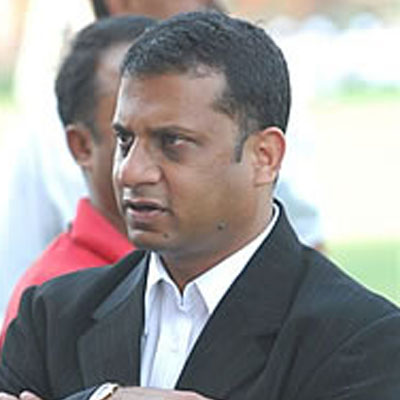
  • Biraja Swain appointed Chief Growth and Innovation Officer of Neo@Ogilvy India

    Biraja Swain appointed Chief Growth and Innovation Officer of Neo@Ogilvy India

    MUMBAI:Neo@Ogilvy India  has  appointed Biraja Swain as chief growth and innovation officer. Other than leading the Neo Center of Excellence, Biraja will also drive growth and build capability in the mobile space and lead innovation for Ogilvy’s current businesses.

    Prior to this role, Biraja was the Digital and Emerging Media lead for OMD’s operations across India & South Asia with over fifteen years of digital media expertise.

    Neo@Ogilvy, India president and country head Rajesh Bhatia welcomed Swain with, “I am thrilled to have him as part of our network and I am certain that he will play a leading role in driving business, innovation and growth, not just for Neo, but Ogilvy India as a whole.”

    Biraja is well known for his penchant for innovation especially in the field of mobile and among the accolades that he has received include acclaimed awards like Cannes and FOMA. As a founding member of OMG and PhD, he created one of South Asia’s largest digital agency networks from scratch scaling to a team strength of over 250 people with the largest digital advertiser in India (Unilever) on board during his tenure. Under Biraja’s leadership Unilever was awarded “Digital Marketer of the year” and “Mobile Marketer of the Year”, for 3 years running across India and APAC respectively.

    In his previous role, Biraja was National Director at MEC Interaction (Mediaedge: CIA) where he led the “Digital Strategy” for clients such as Citi, Beiersdorf, Singapore Airlines & Sony Ericsson. His experience includes work at some of the best technology and media setups in India, including Baazee/Ebay India and Smile Technologies/Quasar. He also has extensive experience of working in international markets of Middle East and Africa during his previous stints based out of Dubai.


  • Biraja Swain appointed Chief Growth and Innovation Officer of Neo@Ogilvy India

    Biraja Swain appointed Chief Growth and Innovation Officer of Neo@Ogilvy India

    MUMBAI:Neo@Ogilvy India  has  appointed Biraja Swain as chief growth and innovation officer. Other than leading the Neo Center of Excellence, Biraja will also drive growth and build capability in the mobile space and lead innovation for Ogilvy’s current businesses.

    Prior to this role, Biraja was the Digital and Emerging Media lead for OMD’s operations across India & South Asia with over fifteen years of digital media expertise.

    Neo@Ogilvy, India president and country head Rajesh Bhatia welcomed Swain with, “I am thrilled to have him as part of our network and I am certain that he will play a leading role in driving business, innovation and growth, not just for Neo, but Ogilvy India as a whole.”

    Biraja is well known for his penchant for innovation especially in the field of mobile and among the accolades that he has received include acclaimed awards like Cannes and FOMA. As a founding member of OMG and PhD, he created one of South Asia’s largest digital agency networks from scratch scaling to a team strength of over 250 people with the largest digital advertiser in India (Unilever) on board during his tenure. Under Biraja’s leadership Unilever was awarded “Digital Marketer of the year” and “Mobile Marketer of the Year”, for 3 years running across India and APAC respectively.

    In his previous role, Biraja was National Director at MEC Interaction (Mediaedge: CIA) where he led the “Digital Strategy” for clients such as Citi, Beiersdorf, Singapore Airlines & Sony Ericsson. His experience includes work at some of the best technology and media setups in India, including Baazee/Ebay India and Smile Technologies/Quasar. He also has extensive experience of working in international markets of Middle East and Africa during his previous stints based out of Dubai.


  • ‘With the launch of the kids channel, we are ready to scale up the verticals’ : Rajiv Sangari- Spacetoon India MD & CEO

    ‘With the launch of the kids channel, we are ready to scale up the verticals’ : Rajiv Sangari- Spacetoon India MD & CEO

    It has been a long wait outside the ring. After building up verticals in the licensing, publishing and merchandising space, Spacetoon has launched its kids channel to combat against multinationals like Turner, Walt Disney and Viacom in the tough Indian market.


    A licensing and merchandising deal with Emerging Media, owner of the IPL winning team Rajasthan Royals, has put the company on a totally different pedestal. Talks are also on with a few other sporting goliaths to expand the L&M portfolio.


    Spacetoon Kids TV, however, will evolve as the prime property and will guzzle over 50 per cent of the company’s Rs 1 billion investment plan.


    In India, the group has floated Kids Media India (KMI), a company that will take care of the TV and licensing business. Kids Animation India is the other arm that will look after the publishing activities.


    The shareholding has also been restructured with Japanese firm Animation International holding 51 per cent stake in KMI. Dubai-based Spacetoon Media Group holds the remaining with a small stake as sweat equity resting with Spacetoon India managing director and CEO Rajiv Sangari.


    In an interview with Indiantelevision.com’s Anindita Sarkar, Sangari talks about the company’s growth plans across the verticals.


    Excerpts:

    What took you so long to launch in India?
    Since the germination of the idea way back in 2004-end, we have spent a long time testing the market. As the Indian economy and the TV industry went on a zoom and prices skyrocketed, we had to rethink our strategies as we were going to occupy a niche space. With distribution, marketing and all kinds of operational spends going beserk as Hindi general entertainment channels got launched, it would have made no business sense to launch a kids channel. Frankly, it would have been a business hara-kiri. Now the prices have corrected and things are much more in control. Despite an overall bleak scenario and a tough advertising market, launching at this moment definitely makes more business sense.

    The shareholding for the Indian venture has changed with Japanese firm Animation International (AI) holding 51% stake in Kids Media India. Was the delay partly caused by this?
    Both Spacetoon and AI have relations since the last 25 years and they have been partnering and co-operating with each other on many businesses together. Hence, changing of the hands in shareholding doesn’t have much to do with any kind of interest level subsiding or increasing. It is a strategic move by both partners of re-strategising and restructuring their operations amongst themselves. Most of the East and South East Asian operations, for example, will be monitored by AI, while most of the Western Asian, European and Eastern European operations will come directly under Spacetoon. I would term this as strategic restructuring.

    Spacetoon was in talks with investors to raise money. Is that plan still on?
    Spacetoon was in talks with a few players and we had already determined 3-4 of them at various stages of our discussions. But most of them wanted to basically take advantage of the position of our fund raising, rather than sharing our passion. Either they wanted majority stake or at some point they wanted us to exit. This did not go with our strategy for India.


    Though we realise that for taking our verticals to the next level we require some support, we are equipped as of now to handle it on our own. But if we get an extra push in terms of a partner who can value our strength, experience and hard work which has gone behind making the company and the brand what it is today, we will definitely look at the possibility. India’s economy and retail can only grow and we have 360 million kids. We require a partner who thinks and aligns with us for long term.

    Did you first focus on developing the licensing, publishing and merchandising platform before stepping into the kids broadcasting space?
    That is the business model Spacetoon has followed in other markets. We are doing the same thing here. For over a period of 3 years now, other than TV launch, we have successfully launched our licensing, publishing and merchandising divisions and are very soon launching our own IP programmes.


    We are glad that we did not divest then. We have done the tough job of laying out a platform for licensing and merchandising. After the launch of the kids channel, the time has come for us to scale up the verticals.

    How much is Spacetoon investing in India?
    We plan to invest Rs 1 billion over three years. Out of this, about 50 per cent upwards will be consumed by the TV operations.

    Why did KMI decide to launch a kids channel when the genre has actually shrunk a bit last year and the revenue size at Rs 150 crore is still too small to take in so many players?
    We need to realise that kids business is not driven completely by TV broadcasting. Unlike general entertainment channels, ad revenue is important but not the only source of income in the kids genre. It’s always the ancillary units like merchandising, publishing, etc. which will help it take to the next level. And TV business is a long term game.

    Kids business is not driven completely by TV broadcasting. Ad revenue is important but not the only source of income in the kids genre. It’s always the ancillary units like merchandising and publishing which will help it take to the next level

    Earlier, Spacetoon Kids TV was looking at investing Rs 250 million for carriage in delivery platforms such as cable TV networks and DTH. However, that number has been scaled down. Why?
    Haven’t others too? It’s simple, the market today doesn’t allow us or anyone to do so. I hear from some sources that most of the top to small TV channels have slashed down their distribution disbursements. And, especially in kids genre, you just can’t support such a large distribution budget.

    The channel is still not well distributed. How are you planning to tackle this and by when do we see it more visible?
    Our focus is not only to tap the Tam cities but also other markets. As of today, our estimates are that we have penetrated over 10 million homes and we expect to do over 15 million by the middle of this year. By year-end, we should be touching 25 million homes. And, don’t forget, it’s only four weeks since we launched. We realise it will take minumum 3-4 months before we start getting visible across all markets.

    What are the distribution deals you with stitched with the MSOs and the DTH operators?
    We are in talks with the direct-to-home operators. As far as cable goes, we are available in some Hathway Cable & Datacom networks. We have also signed up other cable operators, particularly for their digital viewers. Distribution is a gradual build-up.

    Spacetoon Kids TV will have to jostle with seven existing channels to tap into 360 million kids in India. How do you find space in this tough market?
    Each one of us has a different style, programming methodologies, and formats. Our channel will be focusing a lot on moral and social values, packaged with lots of entertainment content.

    What is the different positioning you are taking?
    Spacetoon will divide the day into 10 planets. Unlike running half-hour episodes back to back, we will be giving the kids a mix of several things. There will be fillers which are moral based, messages, ads, packaging, promos, etc. This will ensure a different look during the whole day.

    Do we also get to see localised content as part of the programming mix?
    We definitely are looking towards creating localised programming very soon. This will be mostly live action-based programming. There are discussions going on with various producers to this effect.

    What are your other marketing plans and spends for the channel?
    We will be creating a touch base by tapping thousands of schools in India. We realise that if we have to tap the minds of the kids, there is no better place than their learning ground – school. We are creating a very good value-based school-contact programme, a key area where most of our energy is going to be focused in the first year.


    We will also be having events from April onwards in high public areas like malls.

    What is the revenue Spacetoon is projecting and how does it break up in terms of the channel and other verticals?
    I would not want to put across numbers now. Nobody can predict the forthcoming financials in today’s market. But our major revenue driver will be merchandising, which is in full throttle. Following that are our publishing and licensing activities. As for TV revenue, we are expecting it to start from the later part of the year. It will take us some time to penetrate the market and grab space in the minds of the kids.

    What are your expansion plans in terms of licensing and merchandising?
    We have tapped over 69 licensees in the last 14 months. These are translating into products that will get into the market during the course of this year. We already represent some top companies in the world for licensing and there are few more coming our way in the next few months to make our portfolio more robust and meaningful.


    We observed that our portfolio was tilted more towards the boy category. But now with Hello Kitty and Garfield coming our way, I think we have one of the best characters in the girls genre.

    What are your plans with Rajasthan Royals?
    We are in hot pursuit to come out with products before the first week of April when the IPL kicks off. We have already worked out our strategies to tap the right licensees who will be able to add value to this fantastic brand on the ground level through merchandising.


    We have a three-year deal with Emerging Media and are targeting Rs 200 million of retail business in the first year. Since the time is very short, we are channelising all our resources towards this.


    We are also in discussions with few more goliaths from other sports, especially big international clubs. We hope to stitch deals with some of them soon.

  • ‘We will breakeven after the third year’ : Fraser Castellino- Emerging Media CEO

    ‘We will breakeven after the third year’ : Fraser Castellino- Emerging Media CEO

     The Indian Premier League (IPL), which kicks off next month, has brought in $2 billion into the Twenty20 format over a 10-year period, involving big corporates like Reliance Industries and Bollywood Badshah Shah Rukh Khan.


    Emerging Media, which has two other shareholders in Sporting Investment Group and Lachlan Murdoch, has bought the Jaipur team franchise for $67 million and is hoping to rake in profits after the third year.


    Indiantelevision.com’s Ashwin Pinto caught up with Emerging Media CEO Fraser Castellino to find out about his plans for the team and the impact IPL will have on the game.


    Excerpts:

    What prompted Emerging Media to be involved with the IPL?
    We have been in the sports business since 2005. Our first venture into cricket was when we bought the management rights for the Leicestershire County Cricket Club. Then we did an international T20 tournament that people today call the Champions Tournament.


    We came into India in 2006 and launched the reality show Cricket Star based on the T20 format. We are looking for the next Indian superstar. We saw IPL as a big opportunity as we also have experience in running clubs.

    What is the IPL trying to achieve?
    The IPL is BCCI’s attempt to bring in funds and get corporates involved with the development of cricket. The Board is trying to improve the infrastructure and facilities available to players who participate at a domestic level.


    By whipping up support for city-based league teams, the BCCI is also trying to bring new fans into the stadiums.

    The tradition of supporting a regional team is not present in India. Do you feel that this will be a hindrance in terms of the IPL taking off?
    I don’t think that there is a hindrance. Everything about the IPL represents an opportunity to grow the game. The challenge particularly for us is to create a fan base that supports the Rajasthan Royals.

    Another issue is that the BCCI wants the IPL to be for India what EPL is for English soccer. At the same time, the players are with EPL for several months each year and there is no conflict with an international schedule. How will IPL manage to do this?
    One of the challenges franchisees face is taking the IPL team that participates in the tournament for 45 days and stretching it across the year. The international calendar is packed. We are working with the IPL Governing Council to see how the tenure can be extended. We have a squad of 22 players. While all may not always be available, we need 11 players at any given point in time. We are looking to take the Rajasthan Royals to play in other countries including Australia and England.

    Having bought the Jaipur franchise for $67 million, what breakeven period is Emerging Media looking at from IPL?
    We will be investing $12 million in the first year which includes the payout for the team franchise, player costs, marketing, etc. Our assumption is that the business will breakeven after the third year. If IPL picks up, the breakeven can happen before that.

    How much will Emerging Media spend towards marketing?
    We will spend close to $2-3 million on this. A 360-degree campaign will break shortly. O&M has put this together. There will be a TVC, radio spots and outdoor activities. There will also be a school, college and mall activation campaign. This will happen in Jaipur, Delhi NCR, and in Gujarat.

    What brief was given to the agency?
    The brief is that the campaign must appeal to people at a local level. It must make people want to be supporters of Rajasthan Royals. It must inspire people to either switch on the television or come to the stadium.

    Have you tied up revenue deals?
    We are in advanced talks with companies for sponsorship deals. We also have merchandising and licensing activities. Besides, there are central revenue streams including ad and broadcast rights.

    Is there any chance that Emerging Media might sell a stake in the IPL team?
    Not in the first year. We might sell a stake later if we want to inject fresh capital into the company.

    ‘One of the challenges franchisees face is taking the IPL team that participates in the tournament for 45 days and stretching it across the year

    What is the strategy you followed in selecting your team?
    Our strategy was clear. We knew that there would be at least two auctions. The first auction had the stars. We knew that there was also a lot of talent that was not a part of that auction.


    During the first auction, we picked players and also set price points at which we felt that they had good value for us. If they exceeded these price points, we let them pass.


    We did our research, and went after certain players. Now when you look at my team, they are at least as good as the others if not better. And we have spent $3.5 million while the others have burnt $5 million.

    Are performance and marketability of players of equal importance?
    Performance is more important. You can have glamour and entertainment, but at the end of the day we are here to win matches. Marketability has its place but it is not the primary determining factor for us.

    Could you talk about the branding of the team and how your star player Shane Warne will be used?
    When we selected Jaipur, we were clear that we wanted to be in the state of kings. The name “Rajasthan Royals” reflects the characteristics of that state.


    Shane Warne was a strategic choice that many people do not understand. He has an incredible record in county cricket. When we signed him as both captain and coach, other teams who have specialist coaches were surprised. Specialist coaches are fine but Warne transformed the fortunes of Hampshire in county cricket. He took them from being a non-performer to a team to be reckoned with.


    The IPL is about youth and developing domestic cricket. Now that he has retired, Warne is keen to come in and give back to the game by helping youngsters. The IPL is the perfect platform for him to do just that.

    Has Emerging Media also appointed a consultant to help its IPL team form a cohesive unit?
    We have a support team in place that includes physiotherapist John Glocter and assistant coaches. We believe that our team will be inspired by our captain and the support structure, and become a cohesive unit.

    Has T20 brought sports and entertainment closer?
    The emergence of T20 has been interesting because as working life has become more hectic, people are increasingly looking for instant gratification.


    In India, while it has not been played often, we feel that this format will be well accepted. Since the IPL games will be played in floodlit stadiums in the evening, it will attract more women and families to enjoy an evening out.

    How will IPL broaden the corporate involvement with cricket overall?
    One of the things that will happen is that IPL will support academies, coaching centres, etc. These are feeder systems into T20 cricket.
    How did the idea of doing Cricket Star come about?
    We wanted to be a body that works with the BCCI but at the same time goes off into areas where it has not managed to find talent. We believe that there are people who, while possessing talent, do not have the money to turn up at the BCCI’s coaching camps. We give them the chance to spend just two days with our experts and decide if they are good enough or not. If they are good enough, the sky is the limit.

    How have you grown the event over the years and how successful has it been in uncovering hidden talent?
    I think what Cricket Star lacked in the first season was the gratification platform. It wasn’t clear what would happen with the chosen talent. Today anybody who is selected gets a contract with the Rajasthan Royals. The format has not changed much in terms of the testing process.


    We are clear in terms of what we look for in a T20 cricketer. Last year, we found two boys who were very good. But we had restricted entries to those who were absolutely fresh and had not played first-class cricket. They had never been part of an under 15 or under 17 squad. This year, we have opened it up for everybody.

    Finally, are you looking at other sports?
    Yes! We are interested in soccer, tennis and golf. There is potential for these three sports to grow in the country. We are looking at different options in terms of how to go about it. In terms of whether we do a reality show around these sports, it depends on the level of interest. There are many things that can work in sport provided you are willing to invest and watch it grow gradually.