Tag: Elon Musk

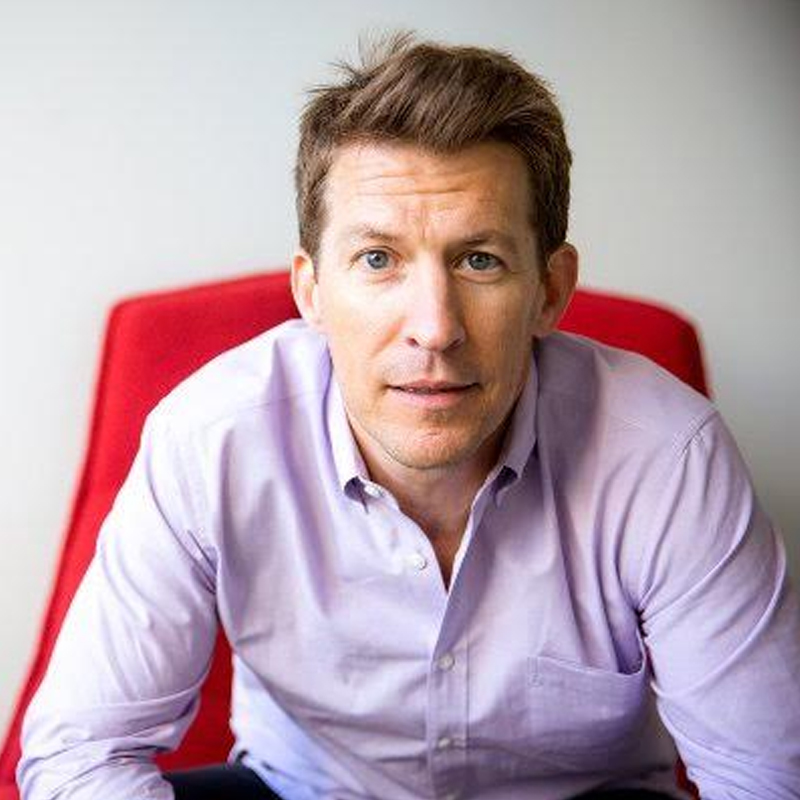
  • Chris Riedy is now head of advertising sales at Twitter

    Chris Riedy is now head of advertising sales at Twitter

    Mumbai: Chris Riedy, who previously held the designation of vice president – EMEA at Twitter, has now been made incharge as head of advertising sales at the company. He takes on the reins from Robin Wheeler who was sacked by Elon Musk for declining to lay off more members of his team.

    As per his LinkedIn profile, Reidy has been with the social media giant for about a decade, and has about 25 years of experience across sales, marketing and business development. He has a Bachelor’s degree in Arts (History) from Denison University in Granville, Ohio and is an MBA from Santa Clara University, California.

    Riedy is currently based in Dublin.

  • Mass layoffs undoubtedly tarnish a brand’s image

    Mass layoffs undoubtedly tarnish a brand’s image

    Mumbai: Seems like Elon Musk’s takeover of Twitter has proved to be ominous! Ever since the business tycoon took the reins of the social media company in his hands and sacked a hefty number of employees, the news hasn’t been too favourable for the workforce of most digital and information technology (IT) companies. Not that it was any better before that. The last three months have been exceptionally bleak for IT personnel in India and across the globe. In a conversation with Indiantelevision.com, industry experts gauge factors concerning brand image and brand trust in such a situation.

    To put things in perspective, as per Layoffs.fyi Tracker, around 787 companies across the world have let go of a total of 1,20,699 employees this year. Majority of them owe this to the global recession that the world is undergoing.

    Meta, which had employed 87,000 people across the globe as of September, has fired the most number of employees ever done by any organisation—it sacked more than 11,000 employees, which is about 13 per cent of the social media firm’s global task force. Its Indian counterpart was affected too. The company has also decided to freeze hiring until Q1’24. The company’s feeble Q3 performance and a rise in the overall costs of the firm by a fifth in the previous quarter made Meta CEO Mark Zuckerberg take such a step.

    After Musk stepped in at the helm of Twitter, he dismissed about 3,700 employees (including the top-level management of the firm), which amounts to about 50 per cent of the company’s overall working strength. The marketing and communications team of the social media company’s India bureau was shown the exit door; a total of 180 people were fired from the Indian office. Musk reasoned that he couldn’t let the firm lose four million dollars a day.

    Very recently, media and entertainment conglomerate Walt Disney announced a layoff as well as a freeze in its hiring process. The firm’s chief executive, Bob Chapek, made this decision as part of a cost-cutting measure as the firm’s streaming business goes through losses.

    Computer software major, Microsoft, fired around 1,000 employees across multiple divisions last month, owing to setting business priorities and making structural adjustments. According to some media reports, chip maker Intel, was also considering job cuts by 20 per cent in the previous month. The organisation went through a dip in sales and profits in its second quarter performance this year.

    Salesforce, an enterprise software company that had previously thought of sacking about 2,500 people, has let go of about 1,000 personnel. In what could be termed as a hypocritical scheme of events, edtech company Byju’s has fired about 2,500 employees in the name of cost-cutting and in turn hired one of the most expensive brand endorsers in the world, celebrity footballer Lionel Messi, for its social initiative.

    Unacademy, the SoftBank-backed edtech giant, laid off about 10 per cent of its workforce, or about 350 employees, in accordance with the current funding crisis that is being faced by start-ups.

    Udaan, a B2B e-commerce platform that raised $120 million last month, decided to forego hiring about 350 employees.

    Also, media reports suggest that Snap, the company that runs Snapchat, was considering downsizing its staff by 20 per cent, in August. This was due to the 80 per cent drop in its stock price this year.

    Affecting brand image

    Considering that these are not just sizeable firms but also successful brands in their respective domains, how does this chain of mass layoffs affect the brand image of these companies?

    Brand guru and Samsika Marketing Consultants founder, chairman & managing director Jagdeep Kapoor explains that every company represented by a brand has two types of customers. External customers who are consumers. Internal customers who are employees.

    “The brand’s image gets affected by both external customers (consumers) and internal customers (employees). Brands are built in the minds and hearts of customers. Any such large layoffs affect and shake hearts and minds, and hence the brand image does get affected,” he cites.

    He adds, “Ultimately, companies are showcased through brands, which are served by employees and consumed by consumers. This kind of ‘earthquake’ leads to a ‘shake’ of internal and external confidence and faith. Instead of the brand being in the ‘make’ mode, it goes into the ‘shake’ mode.”

    Sideways Consulting co-founder Abhijit Avasthi agrees that for certain brands, the image gets dented. “For the established tech companies, the consumer brand might not be affected that much, but the employer brand will take a beating for sure. For the newer ones, like the edtech ones, the consumer brand will suffer big time as well because it will raise questions about their ability to deliver the service well,” he points out.

    Communications consultancy, Treize Communications founder & CEO Sonam Shah believes that while this does affect the brand’s image to a certain extent, employees today are more accepting of the fact that they can lose their jobs at any time.

    She believes that if this is handled sensitively, the brand will not have a difficult time managing its public image. She goes on, “Public memory is short, and there is enough and more for the audience to read and talk about. Once people get new jobs and the situation gets better, the brand can work on reviving its brand image easily.”

    Advocacy platform, Socxo chief marketing officer Ajit Narayan, feels that the layoffs all around will have a negative buzz, as is natural. And these are not one or two but in thousands. “People will talk about it. For a while. But then, as with everything else, people’s memories are short. And life goes on as usual. Depending on the company and how they manage the situation. And if they do turn around. Then all will be forgotten,” he emphasises.

    He spells out, “The ‘be negative’ impact will be temporary. More like a setback. The ones that ease out of it better will be the ones that show empathy for those being told to go. And then there will be those who will be ego-driven. And if the turnaround does not bring results, they will carry the negative image with them.”

    Building trust

    By taking such harsh steps in terms of downsizing, how easy or difficult will it be for these firms to revive their brand name and build trust after being splashed about so negatively in the media and undoubtedly through word-of-mouth too?

    Avasthi is of the opinion that it will take a fair bit of time. “Companies very often confuse increasing awareness with trust. Big budget splashes can help you build awareness, but earning trust takes time and patience and consistently delivering the goods with integrity,” he reiterates.

    “Trust is another word for a brand. It takes decades to build brands and trust. It just takes a moment to let it slide. Building a brand or an organisation is difficult. Re-building it is even tougher because a lot of intangibles like feelings, emotions, and sentiments also need to be rebuilt, not only of internal and external customers but also of their families,” Kapoor highlights.

    On the contrary, Shah thinks, “It will not be a very difficult road, but a lot of this depends on the business model of the company and if the company needs to restructure its core offerings or work on escalating the current ones.”

    Narayan, too, thinks that this is a temporary phase, and most of the brands will come out of it over the next few quarters. “Also the market reality and future plans will have a major impact. There is a recession looming large, and this and other stories now will be washed away if that becomes a reality,” he specifies.

    Layoffs particularly in the digital and IT industry

    There is an economic recession across the globe, which has affected and continues to affect a lot of industries. Surprisingly, most of these layoffs seem to be happening in the digital and IT industries. What could be the reason behind this?

    Avasthi mentions that the reasons for the layoffs vary from company to company, so one can’t attribute them to any generic reason. However, he brings out, “Broadly speaking, for some of the newer venture capital (VC) funded startups, it’s simply because they were badly run businesses that were trying to move ahead of themselves—trying to do too much in too little time—chasing unrealistic, unsustainable growth. There is a sense of misplaced arrogance that some of the founders had; it’s catching up with them.”

    “For the big, established tech giants, I feel it’s another manifestation of insatiable capitalist greed. I can understand layoffs to save a sinking ship, but if you are sitting on billions of dollars, I can’t comprehend why it’s not okay to make a little less money for a few years and let people keep their livelihoods till optimal solutions are found. But then that’s a larger philosophical debate,” he expresses.

    According to Narayan, tech is the industry which has given large scale employment and also the large paychecks. “The industry has been driven by the scale and adoption idea and not profitability. To achieve scale and the speed at which it is being envisaged, it needs people. So they hired for scaling plans,” he brings out.

    Further, he points out, “The ‘what if’ of growth not leading to profitability had been discounted. And that is what is playing up as access to capital dries up. And demand for profitability goes up. Business is driven by profits. And the leaders of the business will have to keep that in focus as they run their businesses. Not just fancy talk of scale, growth, and adoption. This is the hard truth.”

    Shah sheds light on some facts – the layoff spree has been frequently happening within the start-up and tech space. There was a phase for a few years, pre-pandemic, where IT companies and even start-ups had a series of layoffs. Pink slips were shown to employees.

    She says, “The market and economic conditions are too dynamic for job stability, especially in the IT and tech sector. People who join here are aware of this. So what’s important here is how the process is executed and if all the HR policies and compensations are in place or not.”

    “These things have happened in many industries. But the service sector, which is dependent on people, gets affected and highlighted more. But these companies and brands will rebound back after a time lag. One will have to watch to see whether these companies and brands have a permanent layoff or just a time lag off,” Kapoor signs off.
  • Twitter needs to be more user friendly, improve its ad targeting, boost content curation efforts

    Twitter needs to be more user friendly, improve its ad targeting, boost content curation efforts

    Mumbai: On 27 October, Elon Musk agreed to buy micro-blogging platform Twitter. In a message to advertisers he wrote, “Twitter aspires to be the most respected advertising platform in the world that strengthens your brand and grows your enterprise.” For advertisers and agencies it is a wait and watch mode. Some feel that things should improve given that Musk is a businessperson. At the same time, who owns it is not as important as making the right moves like ensuring a brand safe environment. It also needs to be more user friendly, improve its ad targeting. There is also room for improvement in the content curation area.

    Talking to Indiantelevision.com RD&X Network co-founder & chairman Ashish Bhasin said that who owns the majority stake in Twitter does not matter. “What matters is the policies and principles that Twitter is going to follow. Who owns it does not mean much to advertisers. What they will watch to see is the policy decisions being taken, the ROI, is the editorial environment conducive to them? Are their ads appearing in the right context? That is going to be far more important than ownership.”

    He goes on to tell that there are some changes proposed and some of them look positive as well. “The proof of the pudding will rest in what happens on the ground and not in statements that are made. Hopefully the changes will keep in mind the interests of brands and advertisers.” He noted that Twitter, if used properly, can lead to superb ROI. He, however, added that the lion’s share of digital advertising goes to Google and Facebook. Twitter is not in that league. “But it is an important medium for certain types of brands or certain objectives that brands may have. It can be a very powerful tool if used properly.

    “But from an advertisers point of view once the noise dies down one has to see the long run ROI as well as brand safety issues around editorial and freedom of speech. This is what brands are waiting to see before taking further long term decisions. But it can be pretty effective if used properly. With a relatively small sum of money you can get very powerful returns. You can reach a certain consumer base very quickly by using top of the mind issues,” Bhasin added.

    He points out that brand safety issues affect other digital platforms also, besides Twitter. Tech, in his opinion, can solve issues like fake news, inappropriate content, trumped up figures pertaining to viewership visibility. “This is an industry wide issue that needs to be tackled. Tech giants have the best of brains, sufficient resources and are cash rich to figure out a way to tackle this in the long run. Only the use of technology will be the solution. It cannot be done manually. The problem is too big and widespread.”

    Bhasin explains that the area of balancing free speech with content moderation has to be navigated very carefully. “You do not want to go too much to one side. Content that is obviously inflammatory or is promoting something illegal is about misuse of media, not about free speech.” He added that recognising diversity of India will be important for platforms like Twitter. It is a matter of how much a priority regional languages will be for Twitter. Mediums that want to exploit the full potential of India cannot restrict themselves to only English. “If they do then they will play only in a niche. Some platforms have adapted better than others to regionalisation,” he notes.

    Since Twitter is instantaneous it will have to be careful to follow all the rules, regulations and laws of the land. “It can go viral in a very short period of time. Therefore it is the responsibility of the platform to make sure that it is not being unfairly exploited by certain people. The government is coming out with more laws for social media platforms and following them will be key,” he brings out.

    Kurate Digital Consulting senior partner Uday Sodhi said that Twitter needs to scale and get in young audiences. It also needs to work on reducing fake profiles. “I’m sure it works as a good platform for brands but in India it is small compared to other social media platforms/ Facebook and Google.” He also noted that with all the politics and hatred in the country, brand safety could be an issue. “Also consumer information is very limited to run anything targeted at a group of consumers.” On whether Elon Musk can bring in Gen Z audiences he said that it is a wait and watch situation.

    Musk had also tweeted, “Twitter obviously cannot become a free-for-all hell-scape, where anything can be said with no consequences!” NOFILTR.Group partner chief marketing officer Hitarth Dadia meanwhile said that he is very excited about Musk owning it. “There are not a lot of billionaires who are relatable. Musk is extremely relatable. Platforms need a good shakeup every now and then for people to care about them. More people will take Twitter seriously.”

    Meanwhile dentsuMB India managing partner Indrajeet Mookerjee said that with the transition of Twitter moving to its new owner, it is certain for the platform to evolve in terms of technology and functionality. “Apart from dismissing key executives, a couple of changes we can expect from this transition are – monetisation, gaming, and a window to innovative advertising avenues. It would be interesting to see how brands leverage these changes innovatively to play it to their advantage.”

    In terms of Twitter’s goal to be the most respected ad platform, he noted that it surely isn’t easy to be so overnight and it would be a long journey for the platform to achieve it. “It is apparent that the platform is currently focusing on preventing the outflow of power users.”

    Shedding light on the role it plays in a digital marketing mix Mookerjee said that an effective way to incorporate this medium into the brand’s marketing plan is by using it as a top of funnel approach.” As a social platform, Twitter lends itself excellently to achieving the first two phases of the funnel that is awareness and consideration for B2B and B2C campaigns.

    “With a whopping 450 million monthly active Twitter users, the platform gives large and small businesses direct reach and avenues to engage with their target audience at their fingertips. Today, brands have capitalized on this by using Twitter as a tool to create interesting content that not only captures the audience’s attention but also draws them into having a conversation,” he states.

    He added that with over 500 million tweets daily, the platform is cluttered with micro-content that’s shared every minute. “However, it is this real-time engagement that continues to keep brands relevant and interact with their online community.”

    Social network for Web 3.0 influencers, educators, and artists Soclly co-founder Prayag Singh noted that some changes in Twitter are already being seen. The first is the cutting down on the workforce. “Sometimes you do not want to do it but it is mandatory for a long term goal. A lot of tech companies are cutting back.” Secondly is the platform’s move to diversify revenue streams beyond advertising. Hence the subscription fee of eight dollars a month for the blue tick verification. Thus there will also be more web 3 adoption. Musk supports Dogecoin.”

    So in the future there could be integration of this cryptocurrency into Twitter. Another move he feels will happen will be a more thorough investigation before an account is suspended. “You will see a more in-depth analysis of things.” He also expects Gen Z and millenials to have a more active presence on Twitter and share their thoughts. He expects challenges and changes to happen in terms of how brands showcase their presence on Twitter moving forward. He also thinks that Twitter Vines may return. This is short form video like Instagram Reels.

    Meanwhile Wing Communications CEO & founder Shiva Bhavani is very clear on what Twitter needs to do to be the most respected digital ad platform. “Twitter needs to provide more value to advertisers than any other platform. This means offering the best targeting options, the most effective ad formats, and the most insightful data. Twitter also needs to continue to invest in its ad product so that it remains at the cutting edge of digital advertising.”

    According to him, Twitter needs to be more user-friendly. “Twitter is notoriously difficult to use for beginners, and even experienced users can find the interface confusing and overwhelming. The platform needs to streamline its design and make it more intuitive to use.”

    Bhavani also feels that the social media company needs to improve its ad targeting: “Twitter’s ad targeting options are currently very basic, which makes it difficult for advertisers to reach their target audience. The platform needs to offer more detailed targeting options so that advertisers can better target their ads.”

    He is of the view that Twitter needs to do a better job of curating content. “Twitter is full of spammy and low-quality content, which can make it hard for users to find the good stuff. The platform needs to do a better job of curating its content so that users can easily find the best tweets.”

    When asked about the impact of a new owner Bhavani noted that one could see a lot of changes happening on Twitter under Musk. “For one, he could bring some much-needed innovation to the platform. He might also make some major changes to the way the content and things are displayed, or even get rid of them altogether”. 

    “And, of course, he could also add some new features that we can’t even imagine right now. Whatever happens, it’s sure to be interesting – and we can’t wait to see what Twitter looks like under Musk’s ownership,” he says further.

    At the same time, though, Bhavani noted that Twitter is a challenging platform for brands due to the amount of noise. The average person is exposed to over 34 GB of data per day, and that number is only increasing. In order to stand out, brands need to be strategic about their content and how they engage with their audience. 

    He suggests a few ways to cut through the noise on Twitter:

    1.      Use hashtags strategically: Hashtags are a great way to help your tweets get seen by more people. But don’t just use any old hashtag – make sure it’s relevant to your brand and your message.

    2.      Engage with influencers: Twitter is all about relationships. If you can build relationships with influencers in your industry, they can help amplify your message and reach a larger audience.

    3.      Be timely: Timing is everything on Twitter. Make sure you’re tweeting when your audience is most active, and you’re more likely to get seen.

    Bhavani pointed out that as more and more brands join Twitter, the question of how effective the platform is for them becomes increasingly relevant. “While there are many potential benefits to using Twitter as a marketing tool, including increased visibility and reach, it’s important to consider how well the platform aligns with your goals and objectives.”

    “For example, if you’re looking to use Twitter to drive website traffic or generate leads, you’ll need to make sure your content is optimised for these goals. The same goes for if you’re hoping to build brand awareness or create a strong connection with your audience – your tweets should be tailored accordingly,” he reveals.

    “Of course, no matter what your goal is, it’s essential to tweet regularly and interact with other users on the platform. The more active you are, the more likely you are to achieve success with Twitter,” he says.

    So, how effective is Twitter as a tool for brands? Bhavani elucidates, “It depends on what your goals are and how well you utilize the platform. With that said, there’s no doubt that Twitter can be a powerful marketing tool – it just takes some strategic planning and execution.”

    He goes on to add that Twitter has become an increasingly popular platform for businesses and individuals alike. As a result, many companies are now using Twitter as part of their digital marketing mix.

    So what role does Twitter play in the digital marketing mix? Bhavani mentions a few key ways that Twitter can be used to help achieve marketing objectives:

    1. Increasing brand awareness and reach: With over 500 million active users, Twitter provides businesses with a massive potential audience. By regularly tweeting interesting and relevant content, businesses can quickly grow their follower base and increase their brand visibility, he explains.

    2  Generating leads and sales: Twitter can also be used as a powerful lead generation tool. By sharing offers, coupons, or other incentives, businesses can encourage users to click through to their website or make a purchase, he noted.

    3. Building relationships and engaging with customers: In today’s digital world, customers expect brands to be responsive and engaged on social media. By actively listening to and responding to customers on Twitter, businesses can build strong relationships with their target audience.

    4. Providing customer service: Customers also increasingly expect brands to provide customer service via social media platforms such as Twitter. “By monitoring mentions of your business, you can quickly respond to any customer queries or concerns, helping in better customer satisfaction and engagement,” he says.

  • Twitter sacks slew of people across teams in India

    Twitter sacks slew of people across teams in India

    Mumbai: In another series of ‘Twitter’ events, billionaire Elon Musk has sacked a hefty number of people across the marketing and communications team of the social media group’s India office.

    Considering the slew of proceedings, Musk has been on a sacking spree with a firm intention to cut costs.

    Indiantelevision.com tried contacting a senior executive from the Twitter India team, but there was no response.

    In this chain, Twitter US senior director – global head of consumer product marketing Justin Taylor also revealed in a Tweet that today was his last day at the social media platform.  His tweet reads, “Today was my last day at Twitter. Proud of the work I did, and the people I worked with, especially my team. My DM’s are open for any new opportunities, but for now will take the weekend to appreciate what matters most, my family.”

    Musk, who took over Twitter last week, hasn’t spoken publicly about layoffs. As soon as he stepped foot in and purchased the social media firm for $44 billion, Musk has fired the people at the helm of the firm – CEO Parag Agrawal, CFO Ned Segal and head of legal affairs and policy Vijaya Gadde. Ever since, rumours have been rife that employees would be laid off from the company, and approximately 25 per cent to 75 per cent employees would lose their job, as per reports.

  • A human appeal + a priced blue tick verification: Elon Musk’s evolving Twitter strategy

    A human appeal + a priced blue tick verification: Elon Musk’s evolving Twitter strategy

    Mumbai: Business baron Elon Musk has caught the world in a frenzy with the daily evolution of his Twitter strategy.

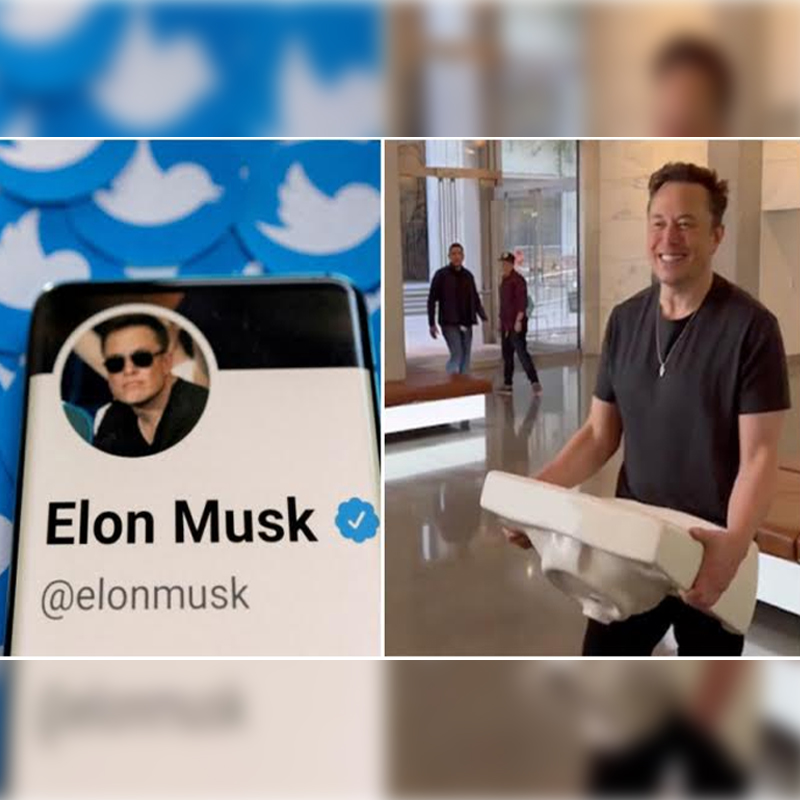
    From entering the social media company’s headquarters with a sink in his hand, his human appeal to advertisers on Twitter, him firing senior executives from the company since day one of his takeover, forming a content moderation council for Twitter, suggesting to charge a $20 fee for verification to becoming the sole director at Twitter after firing the board of directors and finally proposing a price tag of $8 for a blue tick verification on the social media portal – Musk has changed the face of Twitter drastically within the last week.

    One could only wonder what else the social media company has to go through under Musk’s reign. In a confab with industry veterans, I set out to explore the nitty gritty of Musk’s appeal to advertisers, wherein he claims that he wants to use the social media platform for the betterment of humanity, and also the blue-tick verification priced at eight dollars, which has led to a storm of reviews across the advertising fraternity.

    Discussing the human plea that Musk has made to advertisers, it’s an obvious point to ponder what could be going on in the minds of the several advertisers/brands that take to Twitter for their publicity purposes. Madison World vice president Kosal Malladi understands that Musk is a businessman at the end of the day. “He has said all the right things, but the intention is clear. How will he show better ads unless he collects more data? And collecting more data will mean more control over what people say. And this will mean having the power to veer conversations either towards the right or left basis of your agenda,” he brings out.

    Tonic Worldwide CEO Chetan Asher emphasises, “Advertisers are watching the developments at Twitter with keen interest. But it is too early for them to react to his appeal. His actions in the next few days in making Twitter advertiser-friendly will matter more than any appeal.”

    Thought Blurb Communications founder and chief creative officer Vinod Kunj seconds Asher’s opinion, he thinks that the overall sentiment among advertisers is “wait and watch.” He points out, “Musk’s public statements of purpose and actual actions seem to be surprisingly at odds with each other. The troubles of social media have always been about self-editing or the lack of it, quite unlike professional media. Freedom of speech is all very well as long as it is regulated by a mature journalistic authority. That is flagrantly absent in social media, hence the series of crises attributed to these platforms over the years.”

    Restricted brand opinion/advertising or not?

    Needless to say, the natural question pops up in the mind: Would this human appeal restrict a brand’s opinion or a brand’s advertising in any way?

    Malladi refutes that this could impact a brand’s advertising in any way. “In today’s world, a brand is always very careful about the opinion it puts out. At this stage, human appeal will in no way change the way we advertise. A brand will continue to be careful until such a time where opinions do not have a direct and immediate negative repercussion on its sales,” he clarifies.

    Asher feels otherwise. “While he assured the advertisers in his note that Twitter cannot become a “free-for-all hellscape,” brands will take a cautious approach as it’s not clear what his plans for moderation are. The fact that he has hinted at tweaking the advertising model on the platform also adds to the confusion,” he points out.

    Kunj feels that it puts the onus of caution on the brand. He says, “With one sweeping stroke, advertisers will have lost the ability to control the quality of discourse in the conversation. On one hand, brands actively seek out reviews, opinions, and experiences from customers. Twitter allows us to respond to issues in real-time.”

    “But there have always been issues that Twitter has been able to clamp down on. Fashion brands can face the brunt of sexist comments, and lifestyle brands have come under heated fire from conservative thinking. And then there is always the incipient fear that customers will turn on each other with opinion clashes leading to personal attacks,” he adds.

    Sensible step or not?

    Also, as part of this discussion, is this human appeal a sensible step taken by Musk with the thought of helping advertisers not get off the platform and to avoid any kind of extremist views on it?

    Malladi thinks that the problem Twitter has been facing due to its “lack of control” is that advertisers have started seeing it as a negative platform. Two factors will play an important role in attracting advertisers. One, is the overall “negativity” going down on Twitter? And second, is there enough of your audience on Twitter?

    “Point number one is under Musk’s control. But in the process, he needs to ensure that people do not leave the platform. In fact, he needs to figure out a way to grow the base. If that happens, brands will advertise. Sensible step or not, only time will tell,” he specifies.

    Kunj chooses to give in to cautious optimism. He elucidates, “I don’t imagine this allows advertisers to be more or less free. Advertising communication will always cater to the centre of the mean. It doesn’t help to cater to the fringe. If and when the fringe becomes the norm, things might change.”

    The human appeal – good or not?

    Speaking about whether he is in favour of human appeal or not, Malladi is of the opinion that, as a business, Musk needs to change the narrative of Twitter. So he has taken the logical step. Further, he says, “We can find loopholes in his appeal, see through his appeal, but the intention is clear. And he will need to make a few more such statements and eventually show some real change for brands to start getting really comfortable.”

    Giving a thumbs up to the human plea, Asher is of the view that Musk recognises that advertising is the fuel that is vital for Twitter, and hence the outreach to allay the fears, and was a move in the right direction.

    Kunj explains, “Advertising has always tried to push boundaries. Sometimes we get it right, but not always. The further we stretch the band, the greater the chance for it to snap. It’s like advertising underwear. There is a thin line between flirty-sexy and downright obscene. It’s that notional thin line that we never cross. Musk’s appeal may be to persuade advertisers to go ahead and cross it anyway.”

    Blue tick verification at $8

    The blue tick verification has been priced at eight dollars, and this fee applies only to USA-based Twitter users. Musk stated that the membership fee would vary in different countries according to the respective nations’ purchasing power parity. What does this entail for advertisers/brands, content providers, and obviously the users of Twitter? Malladi fathoms that it makes it much easier for anyone to get a blue-tick verification now. “These users/brands get additional benefits. In a way, blue tick seems to be a subscription model, hence an additional revenue stream for Twitter. Brands will also get even more audience understanding, and hence the ability to target better,” he describes.

    On the contrary, Kunj of Thought Blurb Communications feels that this makes absolutely no sense. This is like a bank charging you for KYC every month. Or the government charging you a monthly fee on your passport to accept that you are a citizen. There is no call for it. “Either I am who I claim to be, or I am not. This doesn’t change by the month. Unless Musk intends to make Twitter subscription a tradeable commodity, which might be a whole different bag of beans,” he suggests.

    Blue tick verification at $8 – yay or nay?

    In the whole scheme of things that is taking place, what could be the advantages and repercussions of pricing the blue-tick verification at eight dollars? Malladi senses that people will get an opportunity to easily flaunt the tick, until the point it no longer has a flaunt value. “Musk said that he wants to break the loads and peasants system where only lords get the blue tick. I am not so sure if that is his real motivation. Audience segmentation will be a real benefit for Twitter,” he cites.

    Asher elaborates, “Blue tick will obviously help in reducing spam on the platform and will also allow advertisers to do qualitative advertising to users who are invested in the platform. Musk has also talked about reducing the number of ads for users and this ties in with advertisers getting the opportunity to target small but qualitative users.”

    Kunj feels the opposite and imagines that a lot of celebrities and personalities will walk off immediately. That makes Twitter a platform for commercial and showbiz personalities only. “I don’t imagine a brilliant thinker, serious journalist, or upcoming artist using this platform as it was originally meant to be. There is no reason for anybody to pay every month for the pleasure of being authenticated,” he says, making his point.

  • Twitter ad sales chief Sarah Personette quits

    Twitter ad sales chief Sarah Personette quits

    Mumbai: Twitter ad sales chief and chief customer officer Sarah Personette has resigned.  She tweeted about it on Tuesday mentioning that her last day in the company was last week.

    In her tweet she mentions, “Hi folks, I wanted to share that I resigned on Friday from Twitter and my work access was officially cut off last night.”

    This move of hers is followed by the firing of CEO Parag Agrawal, chief financial officer Ned Segal and head of legal & policy Vijaya Gadde, when Elon Musk came on board.

    After showing Agrawal out of the door, Musk has roped in Sriram Krishnan – another Indian-origin man, who is assisting him with the refurbishment of Twitter. Krishnan’s tech career started in Microsoft in 2005.

    With the kind of senior executive churn that the social media company is undergoing, one tends to wonder what could actually be on Musk’s mind and how matters will take shape for it.

  • Elon Musk takes control of Twitter, fires CEO Parag Agrawal

    Elon Musk takes control of Twitter, fires CEO Parag Agrawal

    Mumbai: Elon Musk started his ownership of Twitter by dismissing the company’s CEO Parag Agrawal, CFO Ned Segal, and head of legal affairs and policy, Vijaya Gadde.

    Tesla’s CEO has stated that, while limiting censorship, he also wants to fight spam bots on Twitter, make the algorithms that decide how information is exposed to users public, and stop the social media site from turning into an echo chamber for hate and division.

    The influential social media platform’s new owner, Musk, fired top executives he had accused of deceiving him and offered no details on how he would carry out the ambitious goals he has set for it.

    He has stated that he intends to make employment cuts, which has caused the 7,500 or so employees of Twitter to worry about their future.

    Also Read: Elon Musk makes a human appeal to advertisers few hours before Twitter deal

    Musk fired Twitter’s chief executive officer Parag Agrawal, chief financial officer Ned Segal, and head of legal & policy Vijaya Gadde. Apparently, they had misled him and Twitter’s investors over the prevalence of phoney accounts on the social media site.

    The sources stated that Agrawal and Segal were escorted out of Twitter’s San Francisco offices after the deal was finalised.

    The $44 billion deal is the culmination of a remarkable saga full of twists and turns that cast doubt on Musk’s ability to complete the deal. On 4 April, Musk disclosed a 9.2 per cent stake in the San Francisco company, making him the company’s largest shareholder.

  • Elon Musk makes a human appeal to advertisers few hours before Twitter deal

    Elon Musk makes a human appeal to advertisers few hours before Twitter deal

    Mumbai: Elon Musk, the billionaire businessman, donned a serious hat with his human appeal on Twitter, just hours after his amusing entry at the company’s headquarters in San Francisco, California, with a toilet sink in his hand on Thursday. He also posted a video on the social media platform with the caption, ‘Entering Twitter HQ-Let that sink in.’ And this time around, the Tesla chief is determined to seal the $44 billion deal on 28 October, which is reflected in his Twitter bio as it now reads “Chief Twit.”

    In his most recent post, Musk expresses his concern, has requested advertisers to work together, and says that he is buying Twitter to help humanity. The post reads, “I wanted to reach out personally to share my motivation for acquiring Twitter. There has been much speculation about why I bought Twitter and what I think about advertising. Most of it has been wrong.”

    He goes on, “The reason I acquired Twitter is because it is important for the future of civilization to have a common digital town square, where a wide range of beliefs can be debated in a healthy manner without resorting to violence. There is currently a great danger that social media will splinter into far right-wing and far left-wing echo chambers that generate more hate and divide our society.”

    As Musk points out in his post, “In the relentless pursuit of clicks, much of traditional media has fueled and catered to those polarised extremes, as they believe that is what brings in the money, but, in doing so, the opportunity for dialogue is lost.”

    Citing his reasons for buying out the social media platform, he explains, “That is why I bought Twitter. I didn’t do it because it would be easy. I didn’t do it to make more money. I did it to try to help humanity, whom I love. And I do so with humility, recognising that failure in pursuing this goal, despite our best efforts, is a very real possibility.”

    He adds, “That said, Twitter obviously cannot become a free-for-all hellscape, where anything can be said with no consequences! In addition to adhering to the laws of the land, our platform must be warm and welcoming to all, where you can choose your desired experience according to your preferences, just as you can choose, for example, to see movies or play video games ranging from all ages to mature.”

    “I also very much believe that advertising, when done right, can delight, entertain, and inform you; it can show you a service or product or medical treatment that you never knew existed but is right for you. For this to be true, it is essential to show Twitter users advertising that is as relevant as possible to their needs. Low relevancy ads are spam, but highly relevant ads are actually content,” brings out Musk.

    He wraps up his post with, “Fundamentally, Twitter aspires to be the most respected advertising platform in the world that strengthens your brand and grows your enterprise. To everyone who has partnered with us, I thank you. Let us build something extraordinary together.”

    Musk originally offered to buy the social media company earlier in April. But later backed out of the deal in July. After Twitter sued the 51-year-old billionaire, he offered to complete the deal. The court ordered Musk to do so by 28 October 2022.

  • ‘Twitter has spoken’, says Musk as 65% back his claims on fake users in poll

    ‘Twitter has spoken’, says Musk as 65% back his claims on fake users in poll

    Mumbai: The Twitter-Elon Musk wrangle does not seem to be resolving itself any time soon, with both sides trading charges and counter charges. A Twitter poll by the Tesla CEO has revealed that nearly 65 per cent of his followers do not believe Twitter’s claims on the percentage of fake/spam accounts on the platform.

    The Tesla CEO conducted the poll on Saturday on whether “less than five per cent of Twitter daily users are fake/spam?” to be answered with a Yes/No. The billionaire triumphantly declared the results of the online poll on Monday: “Twitter has spoken …”, disclosing that 64.9 per cent of over eight lakh users who participated in the poll believe that Twitter’s claims that less than five per cent of its active users are bots is not true.

    Some of the Twitterati went so far as to accuse the networking giant of trying to hide its actual bot count, with Musk emphatically agreeing to the accusation.

    The Tesla CEO is engaged in a fierce legal battle with Twitter after he backed out of his $44 billion acquisition deal, claiming the social media giant did not keep up its part of the deal by disclosing the correct data on spam and bot accounts on the platform. Twitter claims that spam profiles account for only five per cent of its daily active users.

    Earlier, Musk challenged Twitter CEO Parag Agrawal to a “public debate” over the issue of fake accounts on the platform. In multiple tweets, while replying to a follower’s tweet summarising the highlights of the $44 billion acquisition offer to buy Twitter, Musk asserted that the social media company’s method of estimating spam bots and accounts is flawed and “materially false.”

    The billionaire currently faces a lawsuit after breaching the $44 billion acquisition agreement of the social media company.

    ALSO READ  Twitter sues Elon Musk for breaching $44 bn deal, he reacts with a meme

    ALSO READ | The Twitter-Elon Musk tussle: To be ‘bot’ or not to be

  • Twitter sues Elon Musk for breaching $44 bn deal, he reacts with a meme

    Twitter sues Elon Musk for breaching $44 bn deal, he reacts with a meme

    Mumbai: Tesla CEO Elon Musk was quick to react to a lawsuit filed against him by Twitter for breaching the $44 billion contract in his trademark maverick style – with a meme.

    Twitter recently sued the billionaire for violating the deal to buy the micro blogging platform, accusing him of hypocrisy and asked a Delaware court to order Musk to complete the merger at the agreed $54.20 per Twitter share, according to a court filing.  

    “Musk apparently believes that he – unlike every other party subject to Delaware contract law – is free to change his mind, trash the company, disrupt its operations, destroy stockholder value, and walk away,” stated the lawsuit.

    “Twitter brings this action to enjoin Musk from further breaches, to compel Musk to fulfil his legal obligations, and to compel consummation of the merger upon satisfaction of the few outstanding conditions,” Twitter asserted in the lawsuit.

    In response to the news of the lawsuit, Musk took to the microblogging site and simply tweeted, “Oh the irony lol.” Earlier, he had responded to reports of Twitter taking him to court with a hilarious meme which seemed to take potshots at the social media giant’s decision.”

    The meme, accompanied by images of a laughing Musk, read: They said I cannot buy Twitter. Then they wouldn’t disclose bot info. Now they want to force me to buy Twitter in court. Now they have to disclose both info in court.

    The lawsuit could be the beginning of a long-drawn-out legal battle with both parties unwilling to climb down from their stances, as Twitter seeks to hold Musk to his deal to pay $44 billion for the company. The litigation accused Musk of “a long list” of violations of the merger agreement that “have cast a pall over Twitter and its business.”

    Last week, the Tesla CEO said he was terminating the merger because Twitter violated the agreement by failing to respond to requests for information regarding fake or spam accounts on the platforms. Musk said the lack of information about spam accounts and inaccurate representations amounted to a “material adverse event.”

    The standoff between the two parties has been ongoing for a while now, specifically since April this year when Musk reached an acquisition agreement with Twitter at $54.20 per share in a transaction valued at approximately $44 billion. Since then, however, Musk has been challenging Twitter’s claim that less than five per cent of accounts on the platform are bots or spam, even putting the deal on hold in May to allow his team to review the veracity of Twitter’s claim.

    ALSO READ | The Twitter-Elon Musk tussle: To be ‘bot’ or not to be

    In June, Musk had openly accused the social media company of breaching the merger agreement and threatened to walk away and call off the acquisition of the micro blogging site for not providing the data he has requested on spam and fake accounts.