Tag: Elizabeth

  • AI, aye Captain, Shekhar Kapur to steer Studio Blo’s ethical vision

    AI, aye Captain, Shekhar Kapur to steer Studio Blo’s ethical vision

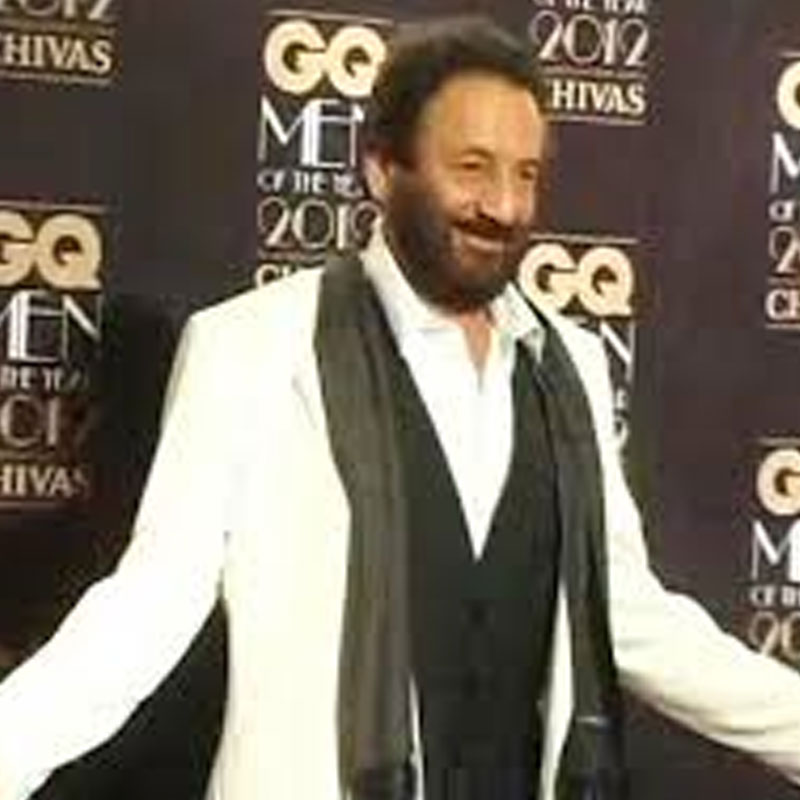
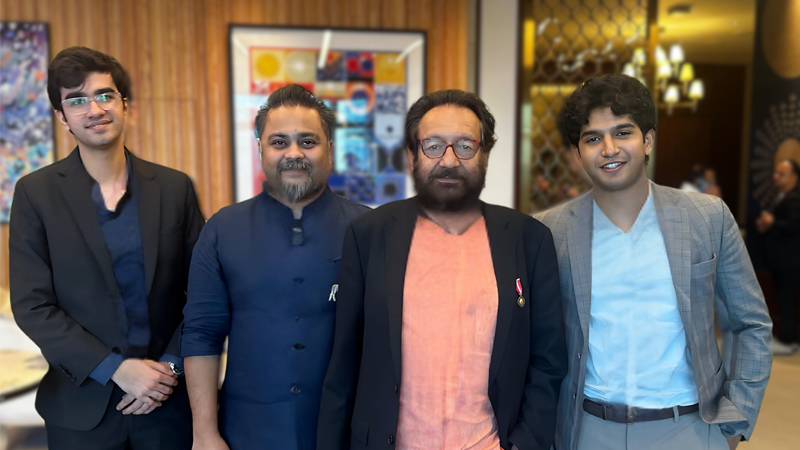
    MUMBAI: In a plot twist worthy of his own films, Shekhar Kapur has boarded the AI express, this time not behind the camera, but at the helm of innovation. The celebrated director has been named chairperson of the Board of AI Ethics & Creative Stewardship at Studio Blo, a move that fuses reel-life mastery with real-time tech.

    Studio Blo, the next-gen content studio making waves with AI-powered filmmaking, is counting on Kapur to lead the charge as it navigates the tricky intersection of creativity, culture, ethics, and artificial intelligence.

    Commenting on his appointment, Shekhar Kapur said, “AI is not here to replicate the past it’s here to create entirely new forms of cinematic expression. I believe AI films will soon stand as a genre of their own, unbound by traditional definitions of cinema. Studio Blo is doing some of the most cutting-edge work I’ve seen globally, and I’m excited to shape a future where imagination is limitless, and technology is the brush.”

    And if anyone can lend gravitas to that future, it’s the man behind Elizabeth, Bandit Queen, and Mr. India. With a Padma Bhushan, a BAFTA, and a shelf full of national and international accolades, Kapur brings not just credibility but a cinematic sensibility that’s both visionary and deeply human.

    Studio Blo, meanwhile, isn’t just dabbling in AI, it’s diving in head-first. With collaborators ranging from Warner Music and YRF Films to Dentsu and Nykaa, the studio is rewriting the rules of filmmaking, blending old-school craft with cutting-edge AI workflows.

    Studio Blo co-founder and CEO Dipankar Mukherjee said, “Shekhar Kapur’s association with Studio Blo is both an honour and a powerful validation of our vision to disrupt content production and filmmaking through AI. His mentorship will not only guide our global expansion but will also help us invent a bold new grammar of storytelling, one where AI becomes a co-creator of cinematic experiences rather than just a tool.”

    With Kapur now in the director’s chair of ethics and imagination, Studio Blo’s script just got a lot more exciting and perhaps even Oscar-worthy.

  • No such thing as historical accuracy: ‘Vikings’ creator Michael Hirst

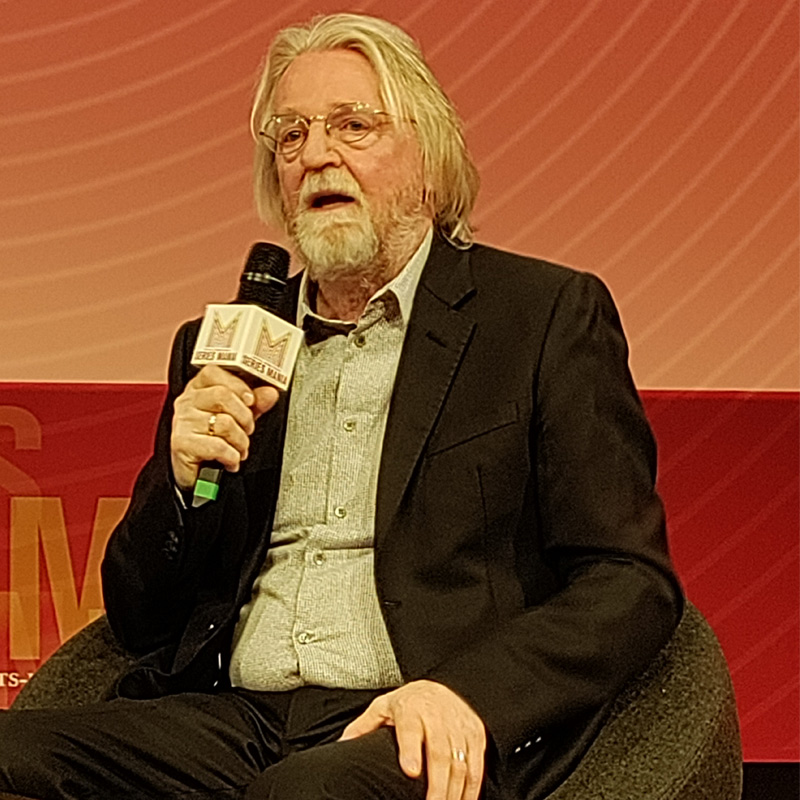
    No such thing as historical accuracy: ‘Vikings’ creator Michael Hirst

    With international successes and critically acclaimed hits such as “The Tudors,” “Vikings” and the hotly anticipated forthcoming series “Billy the Kid,” English screenwriter and producer Michael Hirst’s talent for capturing an era, a specific atmosphere, and singular characters are well established. Hirst is also the owner of Green Pavilion Entertainment, a production company he launched in 2017.

    At the Series Mania Forum 2022, Hirst revealed his writing secret, his beliefs as well as the method and madness to recreating the historical universe on-screen through serialised dramas. In a session moderated by journalist Perrine Quennesson, he talked about the joy of writing for TV, owning his characters, and his next – the Epix/MGM project “Billy the Kid” which he described as a ‘new kind of western.’ The show had its world premiere in the Series Mania International Competition.

    Is authenticity your golden rule when scripting a show?

    It is, pretty much, but also emotional truth… If someone would come up to me and say, ‘I have been reading a book (“Vikings”) and they did or said this; why are you not showing it’? I would say I am not making a documentary; it’s a drama.

    It all begins for me with the thought and the research. Then I would start to write and shape the material. Creating drama is about shaping material. Life has no shape, but drama has to have a shape. There are always gaps in the narrative. I always say to myself and my advisor, because we both know there is no such thing as historical accuracy… ‘Is it plausible,’ ‘is it authentic,’ and ‘in your opinion is it true,’ or ‘does it feel true.’ If he assures me, then I can go ahead and tell my stories.

    One of the characters I am most proud of in “Vikings” is Lagertha. The History Channel, who commissioned the show is a male-skewed studio, so it obviously felt that it would appeal to their male viewers. But I wanted a female lead as well, and I wanted someone who is persuasive in that role. Katheryn Winnick, who I finally chose is a black belt, so I had all reason to believe she could carry it off, which she did incredibly well. Last we were making “Vikings” there was a new discovery. There’s a skeleton, I believe, in a museum in Sweden of an iconic warrior Viking. It was buried with all these weapons. They had brought a new curator, who looked at it and said ‘that’s not a man, it’s a woman skeleton’. So the iconic warrior figure of the Swedish Vikings was a woman. I felt totally vindicated (laughs).

    I am happy to say that by the end of the series, the audience was 50:50 male and female. That, for a show called “Vikings” which everyone thought will just be about male violence.

    Looking at those scenes in “Vikings” and “Tudors,” I was just wondering about your relationship with budgets…

    The accountant would often ask me if I had any relationship with reality. I do believe that if you start dreaming with economics in mind, then you are repressing a part of your imagination. You shouldn’t do that. What you should do, is leave it to others to figure out how they work around it. The very first show I did “The Tudors”… literally the beginning of “Tudors” was one exterior of the palace, two studio-built rooms, and a boat disappearing into the distance with the help of some special effects.

    Similarly, for “Vikings,” I was doing some more research. I came upon this fact that when the Vikings were prevented from sailing by the enemy by putting some obstacle in the river, they would dismantle the boats and hold them physically over the mountains, and put them down on the other side of the obstruction. I got very excited about it and told the production design team. They said, ‘it’s wonderful, but we can’t do it.’ I asked if we could do something like it. Though I didn’t know then what ‘like it’ would look like.

    But in actual fact, two months later when we were shooting in Wicklow mountains, we got the cast to hold a Viking ship up a huge cliff, and then hold it back down the other side. We had permission from the landowner to cut some trees down by the side. So they just found a way of doing it. That’s what I mean about giving people the opportunity to figure it out.

    Why do you prefer being the only writer on every series that you are working on?

    I was a film writer. When I started nobody wanted to work in TV. It was cheap. It was about soap operas. Everyone wanted to do movies. I too wanted to do movies. But after “Elizabeth,” a young American executive came to me in London and said, ‘do you think you can turn this into an American soap opera’. I said show me some shows for me to see the sort of standard. He sent me lot’s of them and they were all…The point was ‘you got to be entertaining, but you can also talk, write about serious things.’

    So I began to write, and I just didn’t stop. It was good. The joy was that in movies you reveal characters. You don’t have the time to develop them, which is something that long-form TV dramas give. In TV, you can have characters with contradictions; you can dive a little deeper. I was having a good time. You have to work very hard in TV. Do four scenes a day. But I enjoyed the pressure. It was magical to see how it all worked. So, I really didn’t want to stop.

    When I started doing “Vikings,” if anyone had told me that this is going to be 89 hours of TV…I mean, who knew. They often cancel the show after the first season if it’s not working, if it doesn’t have enough audience. So with every season we did, we didn’t know it’s going to be picked up again. By that stage the characters were friends. And I didn’t want anyone else to take my friends and characters away.  

    How do you know when it’s time to end a show? If “Vikings” ended at season 5 would it be the same end?

    No No, I knew how I wanted it to end, but I had to get there.

    How do you pick your cast? What was it like for “Billy the Kid”?

    It’s very rare to find a resemblance to the real person or character. In this case, Tom Blyth (“The Gilded Age”) seemed to have strong empathy for Billy. We had to go through the process. We were looking in many countries including America, but he kept coming back into our consciousness. I kept throwing stones in his path and he kept responding. I told him that Billy sang and played musical instruments. The next thing I get from Tom is a tape of him singing and playing guitar.  He is perfect for the role.

    Billy is a very special drama for me, much more intimate than the other dramas we have been working on for the last 15 years. It’s lean, lyrical, and character-driven. It’s about big issues as well – immigration, corruption, formation of the west, Dutch Americans kicking out the Mexicans. It’s a real and edgy human story and Billy is at the core of it. It’s a new kind of western; pre-western that starts just before the west as we have seen in movies was actually created.

    People think they know Billy, just like they thought they knew about Vikings, but they actually don’t. They don’t know him as an immigrant, as a very sensitive guy, as someone who got his moral compass from his mother…she taught him to read, and more. I have loved Billy since I was seven, so I have redeemed my childhood with this show.

  • Endemol Shine Group appoints top screenwriter for ‘The Ibis Trilogy’

    Endemol Shine Group appoints top screenwriter for ‘The Ibis Trilogy’

    MUMBAI: Global content creator, producer, and distributor Endemol Shine Group today announces the latest high- profile talent to join forces in the development of The Ibis Trilogy, a major high-end production for the global market.

    Internationally acclaimed screenwriter Michael Hirst, who is behind the Oscar-winning historical film ‘Elizabeth’and TV series such as ‘Vikings’ and ‘The Tudors’ has signed to bring Amitav Ghosh’s blockbuster novels The Ibis Trilogy to life.

    Shekhar Kapur, the award-winning film director behind ‘Elizabeth’ and ‘Elizabeth: The Golden Age’ as well as Bollywood smash hit ‘Bandit Queen’ will direct the series. 

    Amitav Ghosh’s masterpiece The Ibis Trilogybegins with ‘Sea of Poppies’, continues with ‘River of Smoke’ and concludes with ‘Flood of Fire’, is seen as a landmark of twenty-first century literature. Set in mid-nineteenth century Asia, the exotic series begins in India and will interweave the lives of vividly drawn characters against the backdrop of the opium wars between Britain and China.

    The Ibis Trilogycombines a huge narrative sweep to explore the iniquities of colonialism and the seeds of modern capitalism fuelled by the trade in opium with finely drawn, psychologically rich characterisation of people from multiple different nationalities and walks of life who are swept into the vortex of history.

    Tiger Aspect will lead production with newly appointed Head of Drama, Lucy Bedford joining executive producers Gub Neal, Justin Thomson and Jeremy Gawade (DoveTale Media). Story Editor Justin Pollard will serve as Co-Executive Producer. Headed up by Abhishek Rege, Endemol Shine India is also on board in the development of the project.

    Endemol Shine Group head of scripted for EMEA Lars Blomgren says, “Since Abhishek brought The Ibis Trilogy to our attention over a year ago, it’s been a joy to bring together a talented and passionate team – to supercharge this high-end, multi-layered journey. Michael Hirst has a distinctive writing style which appeals to a contemporary audience – and this paired with Shekhar’s vision – puts us in an excellent position to take a fully developed package to the global market in the new year.” 

    Michael Hirst says; “It’s absolutely magic to be working with Shekhar Kapur once again to create a historic world of characters that the audience can universally connect with. The Ibis Trilogy is an extraordinary series of novels, which delivers the material to create an impressive, exciting and unique television series with the both commercial and critical appeal. I’m thrilled to be working on this project which will take television drama into new worlds and new opportunities and will tell the story of the Opium Wars from an Indian and Chinese perspective.”

    Endemol Shine India CEO Abhishek Rege, says, “It is amazing to see such a talented team come together to visualize Amitav Gosh’s outstanding novel series. This was exactly what we had in mind when we first pursued the project, bringing the best talent from across the globe together to create a drama showing the intricacies of the characters and the era.”

  • Indian director Ramana’s short film ‘Living Idle’ wins international acclaim

    MUMBAI: Prolific filmmaker Ramana’s short film ‘Living Idle’ has received accolades by winning 26 international awards at various Film Festivals across the globe. Five Continents International Film Festival (FICOCC) is the latest win, in May 2017.

    The film revolves around the basic idea of unconditional love and how a woman loves her husband and family and goes to any extent to fulfilher duty of love without any expectations or biases towards her oppressors. It runs for duration of seven minutes.

    Ramana is, at present, the Art Director at Assemblage – a leading feature film focused CGI production animation studio based out of Mumbai. At Assemblage, Ramana closely works with its Hollywood clients in areas related to visual development, visual scripting and design.

    Throughout his career, he has worked on many great films like Puss in Boots, Madagascar, Elizabeth 2 & 3, and Prince of Persia, etc. Ramana has been working in the movie business for over 20 years and has been a part of renowned studios including the likes of DreamWorks and mentored by great film-makers such as Shekhar Kapur. He has always been an inspiration the artists in the Indian animation and creative industry.

    Ramana is the latest addition to the award-winning team at Assemblage Entertainment, that consists of technocrats, artists and production managers with several years of experience in creating world-class animation productions in collaboration with major Hollywood studios and independent production companies globally.

    On his film receivingworldwide appreciation, Ramana said, “The most important thing for a creative person to excel at his work is when he is allowed the freedom of expression. This automatically translated into one’s body of work. Working here at Assemblage, I have been given the kind of freedom that a film maker can only dream of!”

    Congratulating Ramana on his recent success, ArjunMadhavan, Head of Strategy and New Business at Assemblage adds, “Ramana’s ability to translate his creative visualisation into celluloid, over a weekend’s worth of a shoot has been very impressive. Kudos to him, the brilliant actors and execution team for pulling this off!”

    Living Idle is a symbolic short film that reflects actions have consequences. This is the story of an artist, a creative sculptor of idols,that puts life and colour into clusters of mud and clay. Ironically, he fails to add colour to his own creation- his world, his family, his child. The narrative revolves around how a creation of the sculptor- an idol of Ma Durga punishes him (by rendering him indisposed and idle), when he crosses all limits of abuse and shows him a life of yearning. The film concludes with a deep dawn of realisation – of how a single action- takes away from him his ability to be a prolific sculptor- that of clay and stone and that of his child’s future. The film is embedded with contrasting symbolism, as aptly reflected in its title, most strongly that of the strength of a woman, of a mother, which is – representative in Ma Durga’s rendition of ‘Good over Evil’.

    The hunger for food, the hunger for physical fulfilment and the hunger for creativity are natural, necessary, and common human instincts. However, an unbalanced, excessive, and uncontrolled desire to fulfil one’s hunger leads to dire consequences, which is the story of ‘Living Idle’.

  • Indian filmfest in Melbourne to become competitive from this year

    Indian filmfest in Melbourne to become competitive from this year

    NEW DELHI: The Indian Film Festival of Melbourne (IFFM) is becoming a competitive festival with international competition in 2014.

    The festival, for which actor Vidya Balan is the brand ambassador, will take place from 1 to 11 May.

    The inaugural Indian Film Festival Awards (IFFM Awards) will honour films in five categories: Best Film, Best Performance, Best Director, Best Independent Film and the People’s Choice Award.


    A select number of narrative feature films will be invited into competition. The films will be judged by an International Jury of prominent Indian and Australian film industry figures from a wide range of backgrounds. The stellar list includes award-winning Australian director Phillip Noyce (Rabbit Proof Fence, Dead Calm, The Quiet American); world renowned Australian film editor Jill Bilcock (Strictly Ballroom, Elizabeth, Moulin Rouge, Red Dog and Shekhar Kapur’s upcoming Paani) and 2013 Gold Jury member for the Mumbai Film Festival and celebrated filmmaker Raju Hirani (Munnabhai MBBS , Lage rahoo Munna Bhai and 3 Idiots ) Indian actress, producer and television presenter Simi Garewal; film critic Rajeev Masand and Indian actress, director, writer and producer Suhasini Maniratnam. Winners of the Indian Film Festival of Melbourne Awards announced at the Festival.

    Festival Director Mitu Bhowmick-Lange said in a release from Melbourne, “We are thrilled to announce the inaugural Indian Film Festival of Melbourne Awards. The Awards will build the festival’s reputation as an important international showcase for contemporary Indian cinema.”

    Balan was a 2013 Cannes Jury Member and in January was awarded the Padma Shri, the fourth-highest civilian award given by the Indian government. Balan will be in Melbourne to launch the festival programme on March 28.

    IFFM continues to offer a window into the future of filmmaking. The Western Union Short Film Competition is now open to filmmakers from India and Australia.

    The Indian Film Festival of Melbourne was established in 2012 as an initiative of the Victorian Coalition Government and presents a broad, curated program of more than thirty films, ranging from Bollywood to art house and the sub continent, as well as master classes. In 2014, the festival presents a world-class program of films across three Melbourne cinemas.
     

  • India and Asia should create their own Oscar-level awards, says Shekhar Kapur

    India and Asia should create their own Oscar-level awards, says Shekhar Kapur

    New Delhi: Veteran filmmaker Shekhar Kapur said today that Indians should not be so crazy about the Oscars when Asia was vibrant enough to have its own Oscar-like awards.

    The ace filmmaker had the media and others present for the 12th Osian‘s Cinefan Festival for Asian and Arab Cinema glued to every word he said during an interaction with Osian‘s Chairman Neville Tuli on “Indian Cinema, World Cinema film festivals and cinematic heritage”.

    Shekhar, whose ‘Elizabeth‘ had won Oscars, said few knew that the Oscars were launched because March is a lean month in the United States and so it was thought that there should be some activity relating to films which will keep people enthused.

    He also said it was not correct to say that filmmakers in India did not plan for marketing when they plan their films, but said the budgets were far lower than those for Hollywood.

    He said it was wrong to claim India has the largest film industry in the world. China is ahead of India because it is creating new infrastructures for cinema. It had a very strong domestic market for cinema, worth almost $ 100,000.

    Therefore, the only way to improve the Indian market is to improve the local market for cinema by building greater infrastructure such as financial institutions to help the film industry.

    He also felt that Indians should look more towards Asia than towards the west in terms of developing its cinema.

    He said that Indians would any day prefer to see an Indian film rather than a Hollywood film, and this potential should be recognized by the film industry.

    He said the west had picked up many things from India and films there had more emotions now because they had also realized what people wanted to see.

    Shekhar also had his complaints against the Central Board for Film Certification and said many countries did not have any censorship and those that did had better and more rational regulations in place.

    Mr Tuli said that the OCFF this year was stressing on freedom of thought and expression and showing films that proved to be milestones in their fight for their right of freedom of expression.

    He also said Osian‘s was helping to build the proper infrastructure for creative freedom and also bring about a vibrant film culture that could co-exist with other forms of art.

    Shekhar was at the Festival to participate in the panel on ‘The Water Landscape‘ held yesterday as part of the section on environmental films.

  • Actor Ben Gazzara passes away at 81

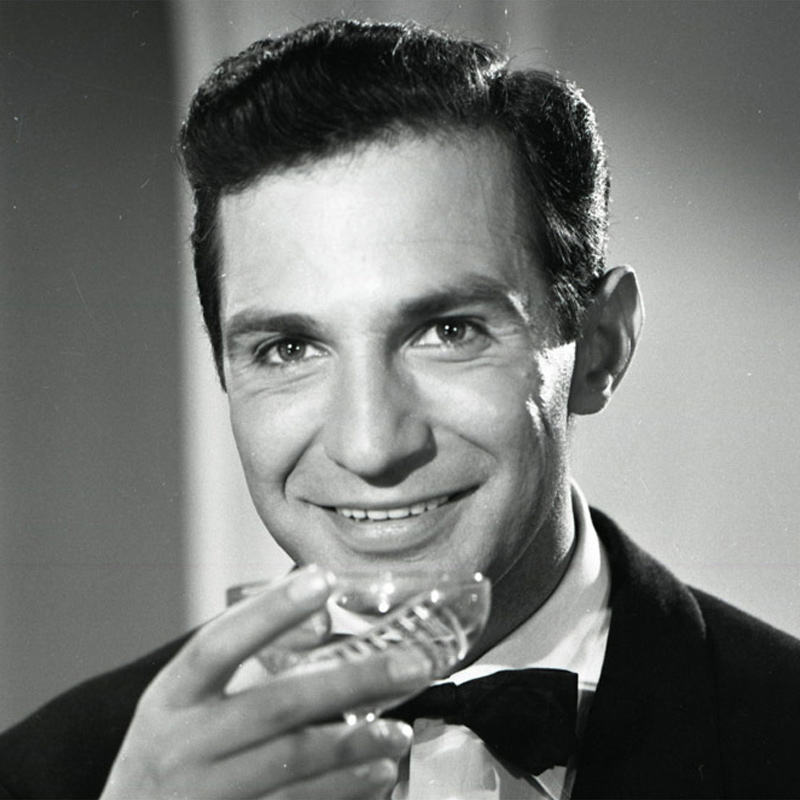
    Actor Ben Gazzara passes away at 81

    MUMBAI: New York born on-screen and stage performer Ben Gazzara passed away on 3 February at Bellevue Hospital Centre, New York. He was 81 years old.

    Gazzara was suffering from pancreatic cancer.

    Starting his career in 1950s as a stage actor, Gazzara has worked in movies and television for over five decades.

    His credits include NBC‘s Run for Your Life (1965-1968), which earned him two Emmy nominations and TV movie An Early Frost (1985).

    During his career, Gazzara appeared in more than 100 feature films and TV movies, including the indie films he made with writer-director John Cassavetes. Husbands, The Killing of a Chinese Bookie and Opening Night which are his notable works. He also directed two mid-1970s episodes of Peter Falk‘s drama Columbo.

    He won an Emmy for 2002 HBO production Hysterical Blindness.

    Married thrice, Gazzara is survived by his third wife Elke, daughters Elizabeth and Danja, and brother Anthony.

  • Rupert Murdoch plans to divide wealth equally between children

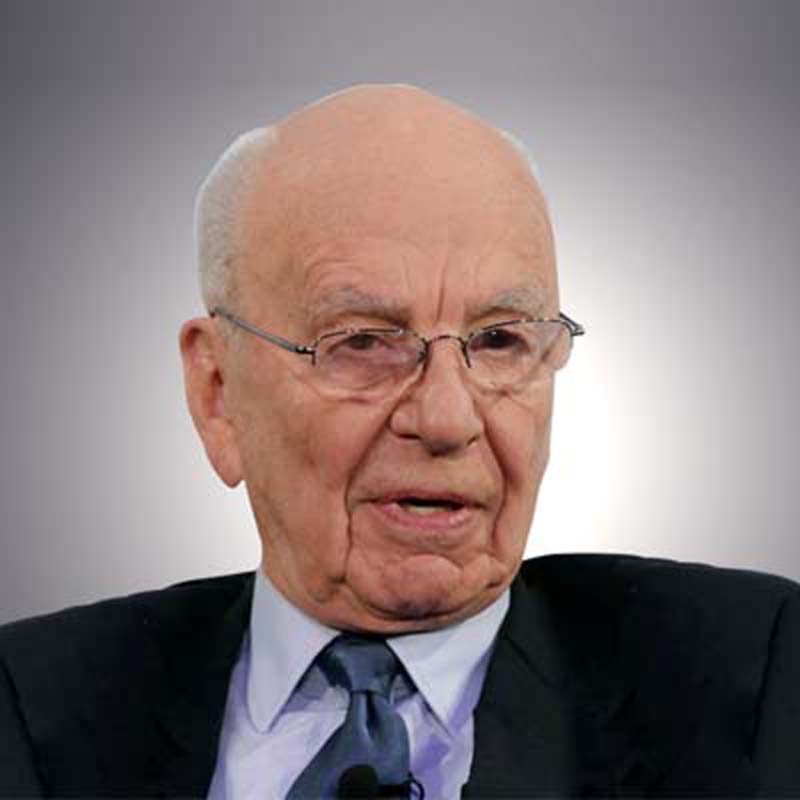
    Rupert Murdoch plans to divide wealth equally between children

    MUMBAI: Media tycoon Rupert Murdoch has said that he plans to divide his wealth equally among his six children. In an interviw on US broadcaster CBS’ Charlie Rose Show he added that if he died tomorrow, his four elder children would decide who among them would control the family trust’s 30% control of the media conglomerate. Murdoch has also said that his two younger children through his third marriage to Wendi Deng will not have a role in the future of News Corp.

    This reports indicate settles confusion over who will take over the reins once Murdoch steps down. It was this confusion that led to a fight that saw Lachlan Murdoch quitting the company last year. The four children from Murdoch’s first two marriages Prudence, Lachlan, Elizabeth and James will control the family’s controlling stake in News Corp once he dies.

    “If I go under a bus tomorrow, it will be the four of them will have to decide which of the ones should lead them,” he said.

  • Queen to visit BBC on 80th anniversary of Royal Charter

    Queen to visit BBC on 80th anniversary of Royal Charter

    MUMBAI: Britain’s Queen Elizabeth II will visit BBC Broadcasting House on 20 April to mark the 80th anniversary of the granting of the Corporation’s Royal Charter.

    The Queen will officially re-open the original Broadcasting House in Portland Place, London, which has recently been refurbished as a part of the redevelopment of the site.

    The Queen will be shown a model outlining building project plans for Broadcasting House by Sir Richard MacCormac, architect, and the BBC’s chief operating officer, John Smith, and will view a display of digital radio technology and Broadcasting House artefacts.

    The digital radio technology consists of :-

    >A DAB digital radio featuring an electronic programme guide (EPG)

    >A wi-fi radio, which can pick up, via wireless broadband, internet radio stations around the world including all the BBC’s national stations

    >A plasma TV screen with a Freeview box, displaying the BBC’s 24/7 radio service via digital TV

    >A laptop computer demonstrating listening to radio via the internet on the BBC Radio Player

    >Mobile devices capable of receiving radio services -i.e.- The iPod featuring a selection of the BBC’s podcasts and a new mobile telephone with DAB radio access

    The Broadcasting House artefacts consist of: a ‘royal’ microphone used by King George V for Christmas broadcasts in the 1930s. The ‘King’s Radio’, a specially created version of a high quality radio set made by Murphy, the electronics manufacturer, and presented to King George V. The model was subsequently known to the public as the ‘King’s Radio.’ Also, a cigar box in the form of Broadcasting House presented to Lord Reith on his 10th anniversary as manager/director-general of the British Broadcasting Company/Corporation.

    The Queen will then watch a production for BBC 7’s The Big Toe Radio Show and will meet presenters Kirsten O’Brien and Kevin Duala and young competition winners in the Drama studio.

    The Queen will also view a recording for Radio 4’s Woman’s Hour and meet presenter Jenni Murray, programme engineers and interviewees Dr Sarah Childs from Bristol University and Dr Rosie Campbell from Birkbeck College, London.