Tag: electric vehicles

  • Eicher Motors’ electric vehicle chief heads for the exit

    Eicher Motors’ electric vehicle chief heads for the exit

    NEW DELHI: Mario Alvisi is revving off into the sunset. The chief growth officer for electric vehicles at Eicher Motors has tendered his resignation, effective from the close of business on 31 December 2025. His departure marks the end of a standalone EV push at the Indian automotive firm.

    The company, better known for its Royal Enfield motorcycles, says it is strategically integrating its electric vehicle brand and commercial teams with its core operations. Translation: the EV experiment is being absorbed into the main business. Eicher reckons this will harness the company’s “full strength, scale and expertise” to execute its electrification strategy with speed and precision.

    The regulatory filing to India’s stock exchanges was notably thin on gratitude or future plans for Alvisi and was dated 13 October.  It focused squarely on the reorganisation—a signal that Eicher is betting its EV future on integration rather than isolation.

    Whether folding the cards or going all in remains to be seen. But for Alvisi, the road ahead lies elsewhere.

  • Blue Energy Motors to invest Rs 3,500 crore in Maharashtra EV truck plant

    Blue Energy Motors to invest Rs 3,500 crore in Maharashtra EV truck plant

    MUMBAI: What’s better than a zero-emission truck? How about 30,000 of them.

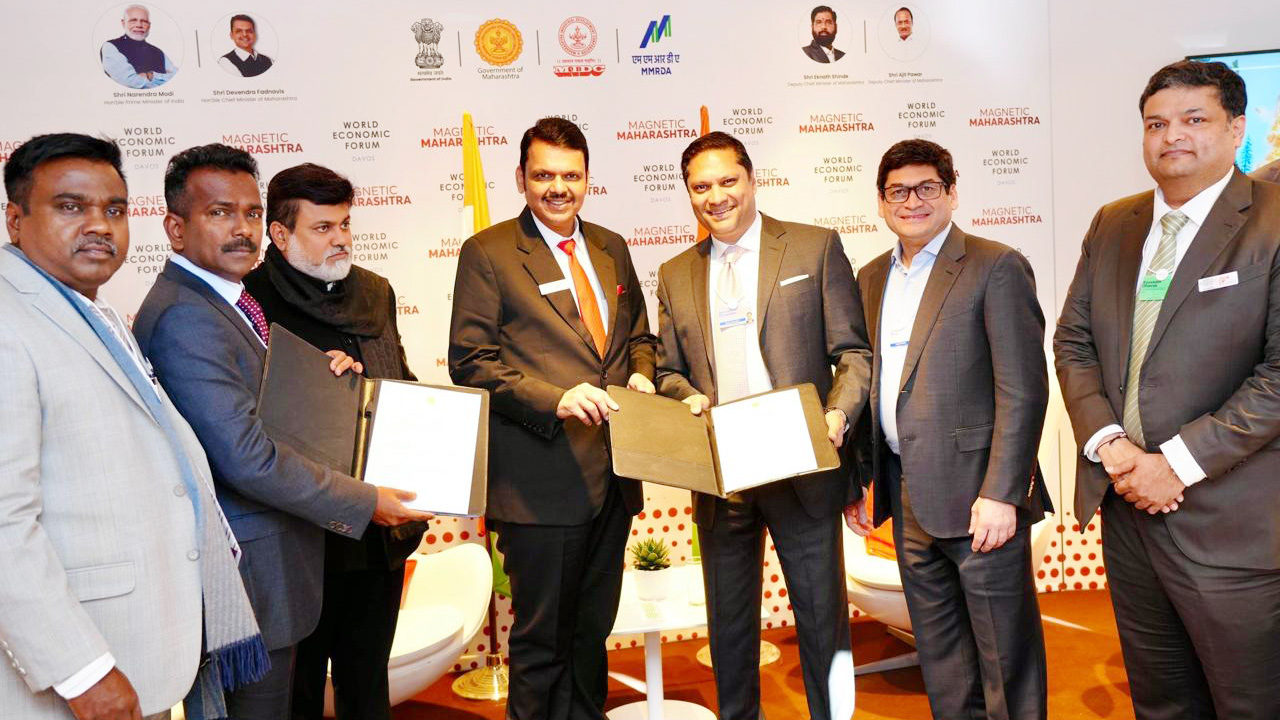
    Blue Energy Motors Ltd., a key partner in Essar’s green mobility initiative, has inked a landmark Memorandum of Understanding (MoU) with the Government of Maharashtra. Signed at the prestigious World Economic Forum in Davos, this ambitious partnership paves the way for a Rs 3,500 crore investment to transform the state into a powerhouse for electric vehicle (EV) truck manufacturing.

    Set to kick off in the 2025-26 fiscal year, this state-of-the-art facility will churn out 30,000 advanced EV trucks annually. But that’s not all. The plant will feature cutting-edge research and development capabilities, a battery-pack line, a motor manufacturing unit, and its own charging infrastructure.

    The investment doesn’t just promise innovation—it’s a win for the economy too. With 4,000 direct jobs in the pipeline, this initiative is set to energise Maharashtra’s green energy transition while cementing its status as a global hub for clean mobility solutions.

    Why make this move now? Blue Energy Motors CEO Anirudh Bhuwalka explained, “We are excited to announce this landmark partnership with the Government of Maharashtra. This collaboration represents a crucial milestone in our ambitions of pioneering green trucking in partnership with Essar’s green mobility initiative. It reflects our shared vision for a cleaner, greener and a more sustainable future. Our investment will not only reaffirm Maharashtra’s position as a global hub for advanced clean mobility solutions but also will contribute to job creation and economic growth.”

    Blue Energy Motors’ AI and ML-enabled EV commercial vehicles are more than just trucks; they’re game-changers. Designed for unmatched efficiency and reliability, these zero-emission giants promise to revolutionise heavy-duty trucking while significantly slashing carbon footprints.

    The new facility will employ industry-leading manufacturing practices, ensuring that the trucks deliver on both performance and sustainability.

    The transition to green energy isn’t just about saving the planet—it’s about smart economics too. This investment by Blue Energy Motors aligns with global goals to combat climate change and champion sustainable development.

    Is this the spark India needs to electrify its mobility future? With Maharashtra leading the charge, the answer might just be a resounding yes.

    As industries worldwide embrace sustainability, this initiative marks a significant step forward for India’s EV ambitions. Will this partnership set the benchmark for green mobility solutions across the globe? Blue Energy Motors is betting Rs 3,500 crore that it will.


  • Hyundai powers ‘Atmanirbhar Bharat’ with localisation and EV breakthrough

    Hyundai powers ‘Atmanirbhar Bharat’ with localisation and EV breakthrough

    MUMBAI: Hyundai Motor India Limited (HMIL) isn’t just making cars; it’s making waves. With a roaring 92 per cent localisation in manufacturing and a game-changing battery-pack assembly plant in Chennai, Hyundai is taking its ‘Make-in-India’ commitment to full throttle. If this isn’t a rev-up moment for India’s automotive landscape, we don’t know what is.

    Let’s talk numbers—1,238 indigenised parts, 194 vendors, and a whopping $672 million in forex savings (over Rs 5,678 crore) since 2019. Hyundai’s localisation journey is no leisurely Sunday drive; it’s a turbocharged race to leverage India’s resources and engineering talent.

    Hyundai’s whole-time director & chief manufacturing officer, Gopalakrishnan Chathapuram Sivaramakrishnan, put it perfectly, “Our indigenisation aligns seamlessly with India’s ‘Atmanirbhar Bharat’ vision. The launch of the battery-pack assembly plant is not just a milestone; it’s a testament to our commitment to delivering world-class technology made in India.”

    Oh, and did we mention that Hyundai’s Creta Electric now boasts locally assembled battery packs? Talk about an electrifying debut!

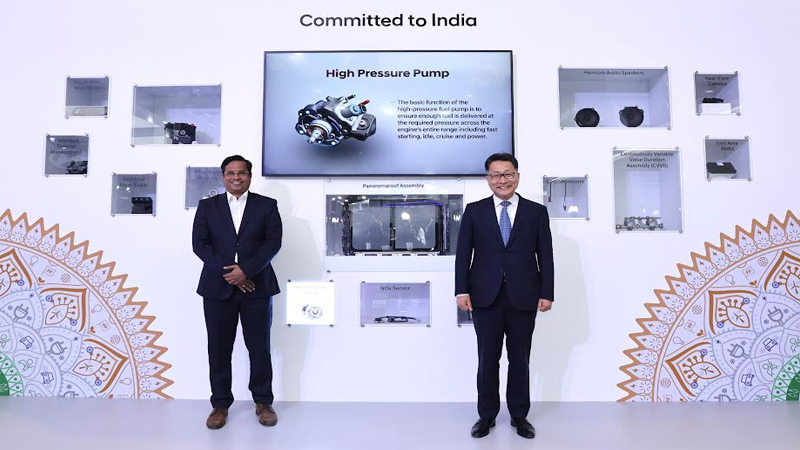
    Why is everyone talking about Chennai? Because Hyundai and Mobis India have launched a state-of-the-art battery-pack assembly plant, complete with an annual capacity of 75,000 packs in phase one. Whether it’s NMC (Nickel-Manganese-Cobalt Oxide) or LFP (Lithium-Iron-Phosphate) batteries, this facility has it all.

    Hyundai isn’t just building cars; it’s building them with 100 per cent locally sourced components like alternators, alloy wheels, catalytic converters, and shark fin antennas. Fancy tech like tyre pressure monitoring systems and panoramic sunroofs? Yep, localised too.

    The company is also looking ahead with plans to replicate this success at its Talegaon manufacturing plant in Maharashtra. Can we hear a round of applause for the future?

    In its localisation journey, Hyundai isn’t just saving forex; it’s creating jobs—1,400 direct employment opportunities, to be exact. The company’s engineering prowess and strategic partnerships are redefining what it means to be ‘Atmanirbhar’.

    In a world racing toward electric and sustainable solutions, Hyundai’s efforts are more than just industry milestones—they’re a blueprint for automotive evolution. The localisation strategy isn’t just a business move; it’s a bold statement. And with the Creta Electric leading the charge, Hyundai is proving that Indian manufacturing isn’t just capable; it’s competitive.

  • TCS releases global e-mobility  2025 study;  preference shifting toward electric vehicles

    TCS releases global e-mobility 2025 study; preference shifting toward electric vehicles

    MUMBAI:  It’s an electrifying report which tells us so much about consumer  attitudes towards electric vehicles (EVs).  Tata Consultancy Services (TCS) Future-Ready eMobility Study 2025 is filled with info nuggets to help those in the EV ecosystem to take some tips from it. 

    The study, conducted across 18 countries and 1,300 respondents, explores consumer preferences, industry challenges, and the roadmap to sustainable mobility.

    Key Findings:
    * Consumer adoption: 64 per cent of global respondents are likely or very likely to choose an EV for their next vehicle. Younger demographics (18–35 years) show the strongest interest.
    * Barriers to rowth: Charging infrastructure, cost, and range anxiety remain significant hurdles, with 74 per cent of manufacturers citing infrastructure as the biggest obstacle.
    * Budget constraints: Most consumers are willing to spend up to $40,000 on an EV, reflecting concerns about affordability. Only five per cent are open to paying a premium compared to internal combustion engine (ICE) vehicles.
    * Sustainability and costs: 63 per cent of EV influencers cite environmental sustainability as the primary motivation for adoption, while fleet adopters prioritise operational cost reductions.
    * Technological advances: Battery technology improvements are identified by 90 per cent of manufacturers as critical for enhancing range and charging speed. However, 70 per cent anticipate breakthroughs to take two to three  years or more.

    Regional Insights:
    * U.S. consumers lead in EV interest, with 72 per cent likely to consider an EV, compared to 31 per cent in Japan.
    * Hybrid EVs (HEVs) are emerging as a transitional preference, especially among older demographics.
    Industry 

    Challenges and Strategies:
    * Collaboration needs: Significant consolidation is expected among EV charging infrastructure companies, driven by scaling challenges. Partnerships with retail, government, and energy sectors are critical.
    * Environmental concerns: While EVs are seen as pivotal for sustainability, nearly 48 per cent of influencers believe their environmental impact is neutral, citing concerns over battery production and disposal.
    * R&D investments: Manufacturers are heavily investing in affordability and battery technology, with a focus on reducing costs and enhancing vehicle performance.

    TCS  president of manufacturing Anupam Singh said:“The EV industry is at a crossroads, navigating complexities while maintaining momentum. TCS is committed to leveraging AI and generative AI to drive smarter decision-making and sustainable transportation.”

    The report underscores that while EV adoption is accelerating, overcoming infrastructure and technological barriers will require collaborative innovation and systemic changes.

    (Picture courtesy: TCS Future-Ready eMobility Study 2025 )

  • Network18’s Green Bharat conclave to chart India’s road to green

    Network18’s Green Bharat conclave to chart India’s road to green

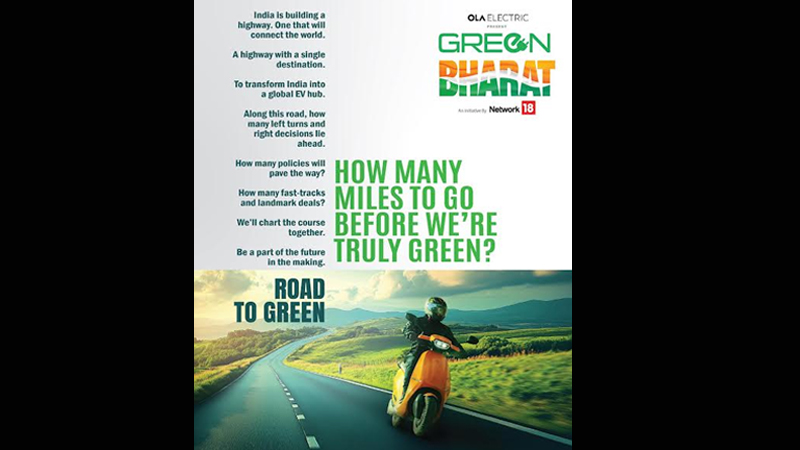
    MUMBAI: As the world races toward a greener future, electric vehicles (EVs) are taking centre stage in the quest for sustainable mobility. In this spirit of innovation and commitment to environmental responsibility, Network18 is set to launch Green Bharat, an annual conclave scheduled for 13 December 2024 in New Delhi. This initiative in collaboration with Ola Electric, aims to ignite a nationwide conversation about the transformative power of EVs, spotlighting their economic, environmental, and social benefits while addressing the challenges that stand in the way of widespread adoption.

    Green Bharat has been launched in collaboration with Ola Electric, a leading pure-play electric vehicle (EV) company to chart the Road to Green. This is designed to be an ongoing, multi-platform conversation spanning television, digital platforms, print, and on-ground activation. This integrated approach ensures a holistic coverage of India’s vast EV landscape, fostering collaboration and innovation at every level of the ecosystem.

    The maiden edition of Green Bharat will bring together influential policymakers, industry pioneers, and sustainability advocates to discuss the future of electric mobility in India. The event will feature distinguished guests, including Nitin Gadkari, union minister of road transport and highways, and Piyush Goyal, minister of commerce and industry, who will attend as guests of honour. Their participation will underscore the growing importance of EV adoption in the context of India’s broader sustainability goals and the pivotal role of government policies in driving this transition.

    The prime minister, Narendra Modi, has emphasised the pivotal role of the EV revolution, stating that the silent revolution of electric vehicles is reshaping India’s mobility landscape, marking a significant step towards sustainability and innovation. This transition reflects India’s commitment to addressing climate change and promoting green growth. With sustained investments in EV infrastructure, local manufacturing incentives, and technological innovation, India is all set to become a global hub for electric mobility.

    AETN18 chief executive officer Network18 (broadcast) & managing director Avinash Kaul stated, “The global automotive industry is undergoing a transformative shift towards electrification, reshaping economies worldwide. India’s transition to electric vehicles is not only an environmental milestone but also a significant driver of economic growth. Green Bharat is bringing the EV community together and highlighting the dynamic potential of this emerging sector. We are thrilled to partner with Ola Electric, a brand that has been a leader in driving EV adoption in India, and we share their passion for a sustainable, electrified future.”

    Green Bharat aims to be a transformative platform for driving meaningful discussions and fostering collaborative efforts to address the challenges within India’s electric vehicle ecosystem. By focusing on innovation, policy advocacy, and actionable solutions, the initiative will play a pivotal role in accelerating the adoption of EVs across the country. The conclave will facilitate an in-depth analysis of India’s current EV landscape, identifying key challenges and opportunities, while setting a clear roadmap for positioning India as a global EV hub. Through these efforts, Green Bharat aims to pave the way for a greener, more sustainable future for the nation, embarking on the Road to Green and inspiring collective action towards environmental responsibility.

  • Quantum Energy surpasses 10,000 EV rolled out threshold

    Quantum Energy surpasses 10,000 EV rolled out threshold

    Mumbai: Quantum Energy, an electric vehicle (EV) startup specialising in electric scooters, surpasses 10,000 vehicle sold within two years of its market debut. Since launching in October 2022, Quantum Energy has rapidly grown, moving from the 57th position to become one of the top 10 EV two-wheeler brands in India. This achievement reflects the company’s commitment to innovation and customer satisfaction. Quantum Energy operates in 11 states and two union territories, with a network of 108 touchpoints across the country.

    Quantum Energy’s range of electric two-wheelers has quickly gained popularity. The Plasma, with a 2000W peak motor, reaches a top speed of 65 km/h and offers a range of up to 120 km on a single charge. The Plasma XR, also with a 2000W peak motor, has a top speed of 60 km/h and a range of up to 100 km per charge, balancing performance and affordability. The Milan, powered by a 1000W motor, delivers a top speed of 60 km/h and a range of up to 100 km per charge, combining style and functionality. The Bziness, designed for commercial use, is equipped with a 1200W motor, achieving a top speed of 60 km/h and a range of up to 110 km per charge. Each model caters to different consumer needs, from high performance and extended range to stylish urban commuting and commercial reliability.

    Quantum Energy Ltd’s managing director Chakravarthi C commented, “Surpassing 10,000 vehicle rolled out is a major milestone for us and reflects our dedication to excellence and innovation. At Quantum Energy, we are committed to delivering exceptional products, supported by comprehensive warranties and exceptional after-rolled-out service. This success is also a testament to the hard work and passion of our entire team, whose efforts drive our continuous innovation in electric mobility. We strive to advance our offerings with cutting-edge solutions for cargo and fleet mobility, tailored to meet the diverse needs of Indian consumers. Our goal is to enhance transportation efficiency and provide our customers unparalleled reliability and satisfaction.”

    Quantum Energy’s growth accelerates through strategic partnerships with leading battery technology companies, including Log9, Sun Mobility, and Battery Smart. These collaborations enable the company to offer advanced solutions for last-mile connectivity and ride-hailing services. Quantum Energy’s achievements have been recognised by the industry, with the company being named one of the top 10 EV startups of 2023 by Outlook India Magazine.

    As a subsidiary of Kusalava International, Quantum Energy Ltd benefits from decades of expertise in manufacturing critical engine components for major OEMs. This foundation allows Quantum Energy to lead the electric vehicle revolution in India, building on its parent company’s legacy. The EV two-wheeler brand operates a production facility in Patancheru, near Hyderabad, with an annual capacity of 50,000 vehicles. To meet growing demand and enhance production capabilities, Quantum Energy is developing a new greenfield facility in Maheshwaram, expanding its production capacity to 250,000 vehicles per annum.

  • “We aim to sell close to one lac EVs, this financial year”: TPEML’s Vivek Srivatsa

    “We aim to sell close to one lac EVs, this financial year”: TPEML’s Vivek Srivatsa

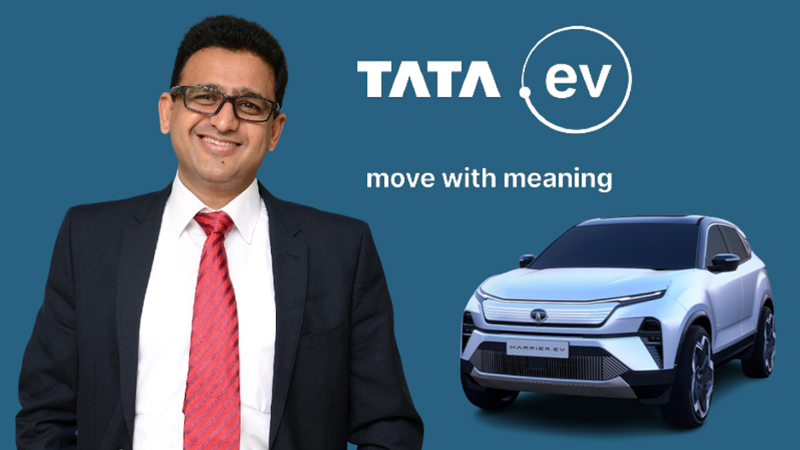
    Mumbai: Incorporated on 21 December 2021, Tata Passenger Electric Mobility, a subsidiary of Tata Motors, has unveiled its new brand identity, TATA.ev, marking a pivotal step in India’s EV revolution. Aligned with sustainability and innovation, the identity embodies “Move with Meaning,” uniting values of sustainability, community, and technology. The Orbit logo and Evo Teal color symbolise a circular ecosystem and tech-forward commitment. This evolution reflects Tata’s drive toward a greener future while emphasising customer experiences. With a 70 per cent market share in four-wheeler EVs, Tata’s pioneering journey includes selling over one lakh EVs, showcasing a commitment to sustainable mobility.

    Indiantelevision.com on the sidelines of the press conference, caught up with Tata Passenger Electric Mobility Ltd (TPEML) head, marketing, sales and service strategy Vivek Srivatsa to talk about the idea behind the EV business, their TG, market share, etc.

    Edited Excerpts:

    On Tata Motors being the first auto manufacturer to launch an EV in India

    Yes, the first mainstream EV cars with the Nexon EV in 2020. When I say mainstream, it means you can use it like any normal car, i.e., it comes with the right warranty, safety, and all that. We launched the Nexon, the Tigor and the Tiago which was showcased last year in the IPL.

    On TPEML’s market share and the idea behind getting into the EV business when India had not yet opened up to the business

    We saw the signs early. A large part of Western Europe was adopting to EVs and India’s government was strongly pushing EVs and on the kind of subsidies being offered for both manufacturing as well as for customers in terms of GST reduction, made it a very compelling business case, as well as a use case for customers. Of course, it involves some capital investment and some R&D, but we thought we should do it for the betterment of the country in terms of moving towards more sustainable mobility sources.

    But also, when we saw internally in Tata Group, we had all the ingredients ready to move into this, which probably other companies did not have. We had Tata Power, we had Top Auto Components who make the batteries for us. We have obviously Tata Motors expertise in making cars. We have TCS who make software. So, we have all the basic requirements already in place, we just have to create the ecosystem together and take advantage of the government’s subsidies and incentives to give a viable product.

    On the buying trends of Indians today and are you urban-centric or reaching out to your TG’s in the tier-2 and tier-3 market

    Electric vehicle (EV) adoption is surging robustly. The initial 10,000 sales spanned 44 months, while the subsequent 40,000 were achieved in just 15 months. The next 50,000 sales took only nine months. This strong acceleration indicates that achieving the next milestone of 100,000 sales might take 12 months.

    When we launched Tiago, more than 25 per cent of our sales came from the smaller towns. Smaller towns have an inherent advantage in that there is no restriction on parking space. Requiring parking space for charger installation poses a challenge in urban areas, while smaller towns face no such issue. Two-wheeler EVs are already hugely used in smaller towns. So as a concept, it’s not alien to them. They are very focused on the cost of operation. EV is one-eighth or one-tenth the cost of operation of traditional cars and the distances they travel also is not too high. So, EV use case for smaller towns is actually perfect and we are seeing very fast adoption there.

    On Tata Motors building up sustainability, educating your consumers and carrying it forward in various activities in CSR and other things

    Firstly, at the Tata Group level, there is a group-level commitment under something called ‘Project Aalingan’ towards sustainability. Tata Motors is the same, we have committed to be carbon neutral by 2040 which is the most ambitious target for an Indian automotive company. We have committed to be water neutral by 2030. So, firm commitments have been made and that is internal. Through EV adoption and the work with our customers, we are pushing sustainability into the lifestyle of our consumers as well.

    First is obviously, by using EV itself, we’re saving carbon emissions, but we’re taking it beyond with the new brand design and the practices to follow for our community will teach them other elements of the community in terms of long use items, i.e., the longer you use anything, the better it is for the environment, whether it is clothes, gadget or anything. Safe disposal is very important. CSR activities, like educating the underprivileged, and clothes donation for the underprivileged, among others are the ones we are going to formally pursue. These are anyway strong active pillars of what Tata Group does. So, it is actually an extension in a modern way. Not only are we focused on sustainability at a Tata Motors level, but we are also focused on the CSR activity, which actually is a parallel line to sustainability.

    On conceiving the campaign film and its conceptualisation

    The new brand design has been conceived by our partners, Landor & Fitch. They helped us lay this out. There were a few challenges because there are so many aspects. On the business side, it’s a growing business is a very demanding consumer. On the sustainability side, we have made firm commitments and we needed to showcase that also. Also, it has to be a brand design, which is able to be present across all our touchpoints, i.e., digital, retail, communicating offline, online, and digital. So, it took about a year for us to put this together. I think it will help us give a firm direction to, whatever we do in the future.

    On the significance of the bridge

    So, the bridge brings humanity to whatever we do. It allows us to express ourselves better. You can treat it like a floating underline. It allows us to express things better. It’ll also be immediately recognisable as a TATA.ev communication. It does bring in a certain level of expressiveness without

    costing too much and not being on your face.

    On their future plans and the EV’s price range

    We aim to sell close to one lac EVs, this financial year. What we have committed is, we want to look at about 50 per cent of our portfolio or sales being on the electric side by 2030.

    Our EV’s range starts from just below 10 lakhs and goes up to 22 lakhs right now.

  • IPL 2022: One Moto India becomes associate sponsor of Rajasthan Royals

    IPL 2022: One Moto India becomes associate sponsor of Rajasthan Royals

    Mumbai: One Moto India – a British brand of premium EVs in India has announced that it will be the associate sponsor of the Rajasthan Royals franchise.The brand has come on board as official EV partner in the two-wheeler segment for the upcoming Season 15 of IPL, starting 26 March.

    As part of the association, One Moto India’s official logo will feature on the back of the Royals’ playing helmets and caps. The mobility company will also unveil the special range of limited edition One Moto two-wheelers – RR X One Moto. The association with the Royals will also see the Rajasthan-based franchise’s players encouraging their fan community to shift to Electric Vehicles and become a part of India’s EV revolution.

    Furthermore, the brand will also give away custom design One Moto Rajasthan Royals limited edition scooter range across the Rajasthan Royals academies in Nagpur, Mumbai, Dubai, and the ones that open during the upcoming season.

    One Moto has chosen to associate with the Royals for Season 15 as the team’s ethos are in sync with the brand’s ambition to promote sustainable solutions and create awareness. The brand has been on an aggressive spree on all the facets including associations with players like Global Assure, and back-to-back product launches including the EV two-wheelers – Byka, Commuta, Electa.

    “Rajasthan Royals has always promoted an eco-friendly approach as a team.  The Royals have also always adopted a sustainable approach with steps like opting for jerseys made of sustainable material. It has synergies with the brand One Moto, and the league could be an opportunity to educate masses about making an informed choice of switching to EVs,” said One Moto India partner and promoter Mohammed Muzammil Riyaz.

    Rajasthan Royals CEO Jake Lush McCrum added, “We are delighted to welcome a globally recognised brand like One Moto on board. Their vision of providing sustainable yet stylish EV vehicles to consumers has a strong synergy with our central purpose of transforming society through the significant platform we have as an IPL franchise. Through this partnership, we are excited to help them further expand across India and around the world while creating a positive societal impact.”

    “We are the first generation to be affected by climate change, therefore it is also our responsibility to do something about it. Switching to EVs is being driven in the form of a mission in India. If we can share the approach with people and motivate them towards making this lifestyle change, it will be a contribution to be remembered. With this thought in mind we have partnered with Rajasthan Royals,” stated One Moto India co-founder and partner Sameer Moidin.

  • LML partners with former Harley Davidson manufacturing facility in India

    LML partners with former Harley Davidson manufacturing facility in India

    MUMBAI : Laying the groundwork for a long-term future in the EV business in India, LML Electric on Thursday announced a strategic partnership with Saera Electric Auto, which formerly handled manufacturing for global major – Harley Davidson.

    The company will use Saera’s facility located in the auto hub of Bawal in Haryana to produce its disruptive range of upcoming electric vehicles. “The highly advanced and innovative infrastructure of Saera, backed by its historical competence in manufacturing will now be leveraged to develop the much talked about and anticipated EV range of products from the LML electric stable,” the company said in a statement.

    LML highlighted that it intends to build a future-ready manufacturing facility using Saera’s technology and processes. It termed the partnership as one of the first of many steps for LML to transition into a 100 per cent ‘Make in India’ company by end of 2025.

    “The manufacturing plant, which spans 2,17,800 square feet and has a capacity of 18,000 units per month, is equipped with state-of-the-art infrastructure. It’s prior excellence in manufacturing for global behemoths would offer a distinct edge in streamlining, scaling up, and providing world-class quality assurance to LML, making this a very promising collaboration,” it said in the statement

    LML CEO Yogesh Bhatia said Saera was the company’s first choice because it holds unparalleled expertise and reputation with some of the world’s premier auto brands. “With this alliance as we aspire to create a brand that is 100 per cent localised and has an impeccable quality assurance that is world-class. We foresee an immediate need for automakers to reduce their dependence on imports and build an infrastructure that is designed and capable to address the rapidly growing demand in India and the world over. We are confident that this partnership will be a stepping stone in our vision to redefine and reimagine the future of EV manufacturing in India to bring the country at par with global manufacturing standards.”

  • Ather Energy rejoins Kerala Blasters FC as official partner for ISL

    Ather Energy rejoins Kerala Blasters FC as official partner for ISL

    Mumbai: As the country gears up for the seventh season of the Indian Super League (ISL), homegrown electric scooter manufacturer Ather Energy has joined Kerala Blaster Football Club (KBFC) as the official partner of the team. This is the second consecutive year for the brand to be a part of the football team as its sponsor.

    “The ISL is one of India’s largest sporting leagues and football is deeply ingrained in Keralites’ hearts. Kerala has shown tremendous consumer demand and is an important market for us,” said Ather Energy VP – charging infrastructure and marketing Nilay Chandra. “The new-age consumer is beginning to encourage domestic football matches and we are pleased to be a part of the growth of a sport in the country. Ather 450X has seen a resounding response across the country and will continue to drive the transition to electric with associations like this.“

    KBFC is gunning for victory in this season of the Indian Super League, which will kick off in November 2021, while Ather Energy is set to make a pan-India presence.

    “We are delighted to step into the second year of partnership with a dynamic brand like Ather,” said KBFC director Nikhil Bhardwaj. “They have been at the forefront of India’s EV transformation and we look forward to further contributing to this transformation and driving awareness about sustainable consumption. Together, I am sure we will continue to build an association that helps us both set a benchmark in our respective fields.”

    Ather Energy began operations in Kerala earlier this year and now has two experience centres in the state. The company has also installed 16 fast-charging points – Ather Grid – across Kochi and Kozhikode, speeding up the EV infrastructure. By the end of the year, Ather Energy plans to expand its presence in Kerala to more cities.This association will increase brand awareness in Kerala as well as among football followers across the country, said the company in a statement.