Tag: elections

  • How Hindi news channels perform on counting day

    How Hindi news channels perform on counting day

    MUMBAI: News viewership is event-driven – either scheduled or unscheduled. Elections are certainly the most important of all special or scheduled events. Being scheduled additionally helps news channels plan better. Discussions, flashes, events – before, during, and after the polls and election results day – drive the news genre’s viewership through the roof. Some of the channels even have a countdown clock to the D-Day to heighten the anxiety and interest among viewer about who will come to occupy 7, Lok Kalyan Marg.

    According to BARC, it is the Elections Results day which draws the largest spike in ratings, followed by Election Day, followed by pre-election days.

    As per BARC, on an election result day, the break duration on the channels goes down, with programming increasing. This is due to channels covering the results from multiple perspectives and angles to keep the viewers hooked, and taking lesser breaks.

    Election programming plays a key role in helping channels garner big viewership numbers and attracting advertisers. The race for reporting numbers as they trickle in is fierce as viewers switch channels in their hunger for the fastest updates.

    Some of the biggest brands in the country also get into the heightened frenzy and spend top dollars on leading Hindi news channels during election season. That’s because sponsorship and native advertising rates are jacked up, keeping in mind the hordes of viewers who will lead to the spurt in ratings.

    Across years and markets, we can see a visible drop in some ad insertions on Hindi news on Election Day, as channels take lesser breaks and focus more on the live coverage to increase viewership. Hence, the brands that chose to put their money during this busy time end up paying a premium for the ad inventory. 

    Election coverage leadership

    Nothing gets the Indian public going like the rough and tumble of Indian politics. More so when election season well and truly kicks off with high-voltage campaigns and rallies by political stalwarts in the run up to polling and eventually counting of votes. The political drama that plays out in all the news studios makes for engagement almost equal to what can be seen on TV soaps and dramas on general entertainment channels.

    Hindi news channels put their best foot forward to capture the public mood to not just drive up ratings but also their revenues. In a bid to do so, most channels spruce up their programming with leading experts and political watchers.

    Below are the reach numbers achieved by the Hindi News genre leader AajTak in the recent elections.

    Below is the stack-up of weekly impressions of the recent elections. The genre leader AajTak emerges as the clear leader here as well. It leads second placed India TV by a goodly measure of about 24 per cent. The second, third and fourth slots are hotly contested with the second, third and fourth placed news channels is around five per cent. 

    Below is the stack-up of Election Day impressions of the recent elections.  

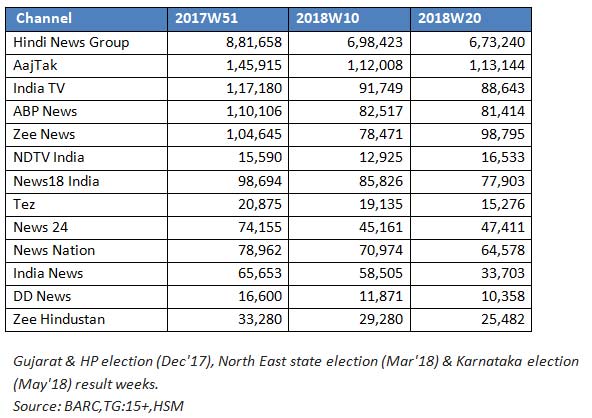
    The below table shows Hindi News Group and leader AajTak have clocked increased impressions on election result days.

  • Impact of assembly elections on TV ad spends

    Impact of assembly elections on TV ad spends

    MUMBAI: “Bad officials are appointed by good citizens who do not vote.”  We’ve all heard that every citizen must cast their vote because it’s the very essence of a country’s democracy and also their right. However, a lot of people choose to turn a blind’s eye. This could either be due to lack of awareness about getting voter ID cards ahead of time or just sheer boredom to go out, stand in a queue and getting inked. 

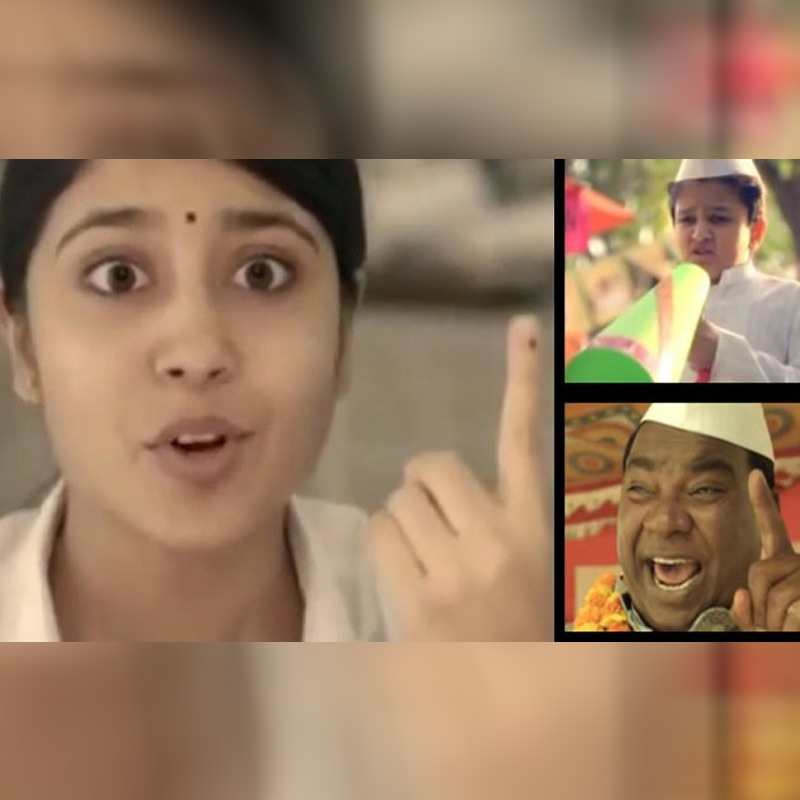
    Election time is fairly interesting because we get to see so many different and new ads during this time. The ruling party is gushing about its achievements whereas the opposition party criticises the existing regime and the changes they intend to bring if elected. Brands on the other hand, often come up with some tongue-in-cheek advertisements that talk about the importance of voting and so on. Today, with digitisation, availability of low cost smartphones and low data costs, digital and social media has become the front leader of all marketing mix. Bands and political parties are sure to leverage the medium to reach a large set of audiences where traditional media kind of seems to fail. 

    India’s 2014 election was the world’s biggest exercise in democracy, with a price tag to match. Indian politicians spent around $12 billion on their campaigns, which, in terms of expense, makes these polls the most expensive since the US presidential elections hit the $7 billion mark.

    The next General Elections will take place in 2019 which is promised to be a game changer in the way political parties spend during elections. If we’ve learnt anything from the 2014 elections where BJP spent Rs 714 crore and Congress spent Rs 516 crore, 2019 election is set to break all major records. However, before we enter 2019, The Indian Assembly Elections are scheduled between November-December in the states of Madhya Pradesh, Rajasthan, Chattisgarh, Telangana and Mizoram.

    In order to understand what will be the impact of Assembly elections on ad spends this year and which brands or categories will advertise the most, we bring to you industry expects’ views: 

    MediaCom national director for buying K Srinivas Rao thinks that advertising on elections, especially state elections is majorly driven by local retail advertisers or semi-corporate advertisers with a B2B advertising objective.

    Local/retail advertisers majorly depend on news channels for their advertising and hence are most likely to go big during elections. Retail players do long term deals keeping in mind the election time which gives them a leverage to get the best value from the channels. Election time is generally seen as the time when news channels expect an upside in revenues on the back of specific programming and its sponsorships. We have typically seen around 10-15 per cent upside in revenues for the national channels during elections. However, this number grows many times on the respective local news channels in which the elections are being conducted.


    Dentsu Aegis Network chairman & CEO South Asia Ashish Bhasin thinks that election ad spends are not that significant because the total size of the market is Rs 65000 crore whereas election ad spends contribute to only Rs 2000 crore. 

    The government/political ad spend goes up during elections, especially before election silence starts. Digital and mobile play a vital role during this time as all of them want to reach the younger user/generation. The 2014 general election was the first one where digital was used in a big way and it will be pertinent in the next elections as well. News channels become more active and advertise the most during this time because advertising follows eyeballs and people who follow elections, tend to switch on those news channels for election coverage. Other than the government and political parties, there is no significant change in the advertising spends because brands advertise according to their consumer cycle and the need of their category.


    Havas Media Group CEO – India and South East Asia Anita Nayyar is of the opinion that automobile, FMCG, e-commerce brands and e-wallet sectors are expected to advertise the most during elections along with digital and mobile which will play a major role in political advertising.

    According to the PTI report, the government spent nearly Rs 1,286 crore in 2016-2017 on ads about government policies, schemes, projects and events, through various media. The amount spent by the advertising agency for 2016-17 was 8.15 per cent higher than Rs 1,188.85 crore spent in 2015-16. The decibel level of marketing by government and brands will only go up in the coming months. While political advertising is an important arm of the Indian adex, it is very sentiment-driven and dynamic. If the government is stable, there is positive sentiment leading to brands spending more on advertising.
  • Bihar Elections: AIR & DD fix time schedules for poll broadcast

    Bihar Elections: AIR & DD fix time schedules for poll broadcast

    NEW DELHI: All India Radio (AIR) and Doordarshan (DD), which provide a platform for political parties to make poll broadcasts before every election, will also organise a maximum of two panel discussions and/or debates on the Kendras/Stations for the forthcoming elections to the state assembly of Bihar.


    The polling begins in five phases on 12 October with the last day of polling being 5 November.


    Each eligible party can nominate one representative to such a programme, but the Election Commission of India will approve the names of coordinators for such panel discussions and debates in consultation with the Prasar Bharati Corporation.


    The Commission has, as in previous years, worked out a schedule for the time to be given for poll broadcasts to different parties.


    The facilities of use of broadcast time and telecast time will be available only to ‘National Parties’ and ‘Recognised State Parties’ in Bihar.


    A base time of 45 minutes will be given to each National Party and recognised State Party (recognised in Bihar) uniformly on the regional Kendras of DD and AIR network in the State. The additional time to be allotted to the parties has been decided on the basis of the poll performance of the parties in the last assembly election.


    The facilities will be available from the Regional Kendra of AIR and DD in the states and then relayed by other stations within the state.


    In a single session of broadcast, no party will be allocated more than 15 minutes.


    The period of broadcast and telecast will be between the last date of filing the nominations and will end two days before the date of poll. However, there will be no telecast or broadcast during the 48 hours preceding the close of polls as per specific provisions of the Representation of People Act, 1951.


    Prasar Bharati, in consultation with the Commission, will decide the actual date and time for broadcast and telecast. This will be subject to the broad technical constraints governing the actual time of transmission available with the DD and AIR.


    The guidelines prescribed by the Commission for telecast and broadcast will be strictly followed. The parties will be required to submit transcripts and recording in advance. The parties can get this recorded at their own cost in studios, which meet the technical standards prescribed by Prasar Bharati or at the Doordarshan/All India Radio Kendras.


    They can, in the alternative, have these recorded in the studios of DD and AIR by advance requests. In such cases, the recordings may be done at the State Capital and at timings indicated by DD/AIR in advance.


    The broadcasts cannot have criticism of other countries; attack on religions or communities; anything obscene or defamatory; incitement of violence; anything amounting to contempt of court; aspersion against the integrity of the President and Judiciary; anything affecting the unity, sovereignty and integrity of the Nation and any criticism by name of any person.


    Time Vouchers will be available in the denomination of five minutes with one voucher having time allotment from one to four minutes and the parties will be free to combine them suitably.


    Introduced for the first time for the Lok Sabha elections in 1998, the scheme of free broadcasts was extended by the Commission to the State Assemblies held after 1998 and General Elections to the Lok Sabha from 1999 onwards.


    With the amendments to the Representation of People Act 1951 through “Election and Other Related Laws (Amendment) Act, 2003” and the rules notified thereunder, equitable time sharing for campaigning by recognized political parties on electronic media now has statutory basis.


    In exercise of the powers conferred by clause (a) of the Explanation below section 39A of the Representation of People Act, 1951, the Central Government has notified all such broadcasting media which are owned or controlled or financed wholly or substantially by funds provided to them by the Central Government as the electronic media for the purposes of that section. Therefore, the Commission has decided to extend the said scheme of equitable time sharing on electronic media through Prasar Bharati Corporation to the ensuing General Elections in Bihar.

  • EC issues detailed guidelines for forthcoming state assembly polls

    EC issues detailed guidelines for forthcoming state assembly polls

    NEW DELHI: Even as the Model Code has come into effect for the elections to the Jharkhand and Jammu and Kashmir assemblies, the Election Commission today prohibited conduct of Exit poll and dissemination of their results during the period mentioned therein, that is, from the hour fixed for commencement of polls in the first phase and half hour after the time fixed for close of poll for the last phase in all the States.

     
    The directive was issued under Section 126A of the Representation of Peoples Act 1951 and Section 133 A of the J&K R.P. Act, 1957.

     
    The Commission reiterated that the TV/Radio channels and cable networks should ensure that the contents of the programme telecast/broadcast/displayed by them during the period of 48 hours referred to in Section 126 of R.P. Act 1951 and Section 133 of J&K R.P. Act, 1957 do not contain any material, including views/appeals by panelists/participants that may be construed as promoting/prejudicing the prospect of any particular party or candidate(s) or influencing/affecting the result of the election. This among other things includes display of results of any opinion poll and of standard debates, analysis, visuals and sound-bytes.
     

    At the outset, the Commission said there are sometimes allegations of violation of the provisions of Section 126 of the RP Act 1951 by TV channels in the telecast of their panel discussions/debates and other news and current affairs programmes. The Commission said it has clarified in the past that Section 126 prohibits displaying any election matter by means of television or similar apparatus during the period of 48 hours ending with the hour fixed for conclusion of poll in a constituency.

     
    “Election matter” has been defined in that Section as any matter intended or calculated to influence or affect the result of an election. Violation of the aforesaid provisions of Section 126 is punishable with imprisonment upto a period of two years, or with fine or both.

     
    During the period not covered by Section 126 or Section 126A, of R.P. Act, 1951 and Section 133 and 133 A of J&K R.P. Act 1957 concerned TV/Radio/Cable/FM channels are free to approach the state/district/local authorities for necessary permission for conducting any broadcast related events which must also conform to the provisions of the model code of conduct and the programme code laid down by the Information and Broadcasting Ministry under the Cable TV Networks (Regulation) Act 1995 with regard to decency, maintenance of communal harmony, etc. They are also required to stay within the provisions of Commission’s guidelines dated 27 August 2012 regarding paid news and related matters. Concerned Chief Electoral Officer/District Election Officer will take into account all relevant aspects including the law and order situation while extending such permission.

     
    The Commission also drew attention of the media to the guidelines issued by the Press Council of India and the News Broadcasting Standards Authority with regard to elections.


  • It was Modi vs. the rest in Maharashtra: Nikhil Wagle

    It was Modi vs. the rest in Maharashtra: Nikhil Wagle

    My 10 takeaways from Maharashta Assembly election:


    1) The just concluded 2014 Assembly Elections in Maharashtra will go down as a historic development in the state’s politics, which has the potential to transform the face of Maharashtra. For the first time, a non-Congress party has reached a near majority. Since the inception of Maharashtra, BJP had never managed to reach the three-digit figure. Their highest number was 65 in 1995 when they formed the government with the help of their elder brother, Shiv Sena. But this time around, with 123 seats, BJP has inspired a tectonic change.


    2) The anger against the 15 years regime of Congress and NCP was palpable among the electorate. Serious corruption charges were labeled against the government, which they were unable to refute. Voters desperately wanted a change. The alternative was offered not by BJP, but by Prime Minister Narendra Modi whose impact was experienced during the Lok Sabha elections. Modi filled the credibility vacuum created by local leaders like Sharad Pawar, Prithviraj Chavan, Ajit Pawar and so on. Voters believed in Modi and decided to give him a chance. This is not a verdict for BJP, but Modi. It was Modi verses the rest.


    3) In spite of Modi’s popularity, BJP could not reach the magic figure of 144 in the assembly of 288 members. BJP’s national president Amit Shah tried his best with his electoral arithmetic. But Shiv Sena was able to stop them in regions like Kokan. In Vidarbha, BJP won 44 out of 62 seats. It is a big achievement, but the expectations were higher. The last minute decision of dropping the demand of separate Vidarbha from their manifesto could have damaged BJP here. In north Maharashta too, BJP could not live up to the expectations due to their weak party machinery. The lack of credible indigenous leaders and fragile cadres at remote places are the reasons behind BJP not crossing the halfway mark.


    4) Political pundits are blaming Uddhav Thackeray for Shiv Sena’s debacle. But I don’t agree with them. In fact, this is the best performance of Shivsena after 1995 when they got 70 seats. This time around, they were able to win 63 in spite of Modi onslaught. Many thought that Shivsena would be swallowed by the Modi-juggernaut but it did not only survive the storm but came out with their self respect intact. Credit goes to aggressive campaigning by Uddhav and grassroot machinery of party.


    5) Was it development verses Marathi pride, where the emotional issue took a back seat? I again disagree. Development was never ever a focus in this campaign. It was about clean and trustworthy leadership, where Modi won the battle. But along with this, the issue of Marathi pride helped Shivsena to protect their strongholds in Mumbai, Thane and Kokan. In fact, they totally snatched this plank from Raj Thackeray’s MNS.


    6) As far as MNS is concerned, this election has been a big blow to them. Raj is more charismatic than Uddhav. His oratory skills are as good as his uncle. But elections are never conquered on charisma. Due to wrong policies and frivolous politics, Raj has reached this stage. He started well in 2006, but was not able to build the party. In 2009 assembly elections, he had 13 MLAs, now he is decimated to just one. It is time for him to introspect.


    7) Raj should introspect but if there is anyone who needs utmost introspection, it is Congress and NCP. They have reached their lowest ever number in assembly elections. Congress is a house divided and NCP is totally engrossed in their politics of money and muscle power.


    By declaring unconditional support to BJP, Sharad Pawar once again proved his ‘Pawar Power’, which a common voter will only perceive as shameless opportunistic politics.


    8) This election could possibly write another chapter in the history of criminalisation of politics in Maharashtra. 165 of 288 newly elected MLAs have serious criminal charges against them and most of them are crorepatis.


     9) The participation of women candidates has been disappointing. Only 20 women candidates will be seen in the assembly, which is 7 per cent of the total assembly strength of 288. One wonders if it is still appropriate to call Maharashtra a progressive state.


    10) This election will also mark a black chapter for media, which witnessed unprecedented ‘Paid News’. In spite of the monitoring by the Election Commission, nobody could nail this cancer. Political parties sniffed the opportunity and took maximum advantage of the situation. It has set a dangerous precedent and the credibility of the media suffered like never before.


    (These are purely personal views of Mi Marathi consultant and veteran journalist, Nikhil Wagle and indiantelevision.com does not subscribe to these views.)

  • CNN-IBN & IBN7 to cover Maharashtra & Haryana Assembly Elections’ Counting Day

    CNN-IBN & IBN7 to cover Maharashtra & Haryana Assembly Elections’ Counting Day

    MUMBAI: As the states of Maharashtra and Haryana along with the nation, awaits the verdict of the Assembly Elections on 19th October, CNN-IBN & IBN7 line up the most exhaustive programming for the Counting Day. After showcasing the Network’s prowess and brilliance during the coverage of General Elections 2014, the channels are now set to recreate the magic by bringing together the best team of journalists, finest panel of experts and unmatched television graphics.

    Commencing at 7am in the morning, this special coverage will include latest trends and developments, vote sharing percentage, seat tally and fastest updates from Ground Zero. The viewers will get the complete picture along with the minutest of details as there will be reporters on-ground covering each of the 378 seats of Maharashtra and Haryana. IBN Network will bring together the most formidable team of political analysts and experts including Ashok Malik, Pradeep Singh, Tavleen Singh, Nilanjan Mukhopadhyay, Ramesh Vinayak, Dhiraj Nayyar and Girish Kuber to share their expertise and opinion on the mandate and simplify the voting maths for the viewers.

    This special day long programming will decode the election outcome that will decide the fate of both these states, in the most extensive way. Along with keeping a close track on the results, the channels will ensure that the viewers get every bit of information and details in the neatest and cleanest format.

    Do not miss this special Counting Day programming on CNN-IBN & IBN7 on 19th October 2014, 7 AM onwards, all through the day.


  • Advertisements on state-owned buses banned during Elections

    Advertisements on state-owned buses banned during Elections

    NEW DELHI: The Election Commission (EC) has banned the display of political advertisements on State Road Transport Corporation buses and vehicles owned by Municipal Corporations etc, and other government owned vehicles when the Model Code of Conduct is in force for State Assembly or Legislative Council elections.


    The Commission, which has already banned such advertisements through hoardings and posters, said “it wanted a level-playing field for all parties since state-owned buses or the corporations were necessarily run by the ruling parties.”


    It also added that the action was taken after having duly considered all aspects of the matter in exercise of its powers under Article 324 (1) of the Constitution, and in the interest of conduct of free and fair elections.


    The Commission’s circular letter of 7 October 2008 contains the instructions and guidelines to be followed in the matter of display of election related advertisements through hoardings, banners, posters etc. It mainly deala with advertisements on static property and regarding display of flags and stickers on private vehicles.


    It can also be noted that there may be cases where advertisement-panels on buses are let out to advertising agencies for allocation to various clients during certain periods as per the contract entered into by them.


    EC also stressed that a level playing field envisaged under the Model Code of Conduct is a very vital aspect for ensuring free and fair elections. “A party should not be in a position to take undue advantage on account of it being in power in the government. This will put the other parties and contestants at a disadvantageous position and will disturb the level playing field, adversely affecting the fairness of election.”


    “There is reasonable likelihood that the allotment of advertisement spaces on such vehicles is likely to be manipulated more so in politically important constituencies and as such it will not be easy to ensure equitable distribution of advertisement space on the buses,” the Commission concluded.

  • Media comes under attack from CEC and Law Minister on regulation and paid news

    Media comes under attack from CEC and Law Minister on regulation and paid news

    NEW DELHI: The media came under attack on issues of paid news and regulation at different forums in the capital over the weekend.


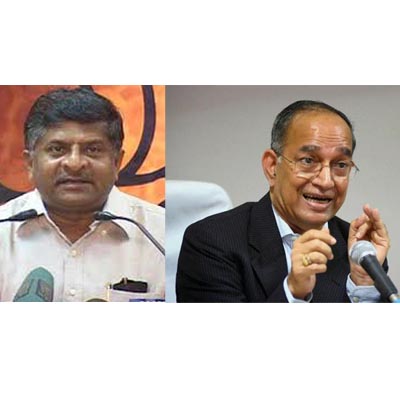
    Chief election commissioner (CEC) VS Sampath suggested that paid news should be made an electoral offence that attracts disqualification so that it acts as a deterrent, regretting that inadequacies in legal framework were not allowing the poll panel to effectively check this and other malpractices.


    He also said that there is a ‘crying need’ for a ‘well defined legislation’ governing expenditure of political parties during elections as its absence was allowing them and their candidates to circumvent the rules.


    Speaking at a session organised by the Law Commission, Sampath reckoned, “When the Election Commission looked into whether it had the powers to deal with paid news it found the answer was negative.”


    He also added that paid news in whatever form is presently not even an electoral offence. “If it is an electoral offence, it can eventually lead to the disqualification of the candidate. Whatever the difficulties of implementation, the very fact that if it is listed as electoral offence, it would act as a deterrent against people using it in the elections,” he further explained.


    The CEC revealed that a recommendation in this regard has been made to the Law Ministry.


    He also asked why government advertisements during elections should not be considered as paid news. “Since paid news is not an electoral offence, the Commission now tries to check this menace by invoking its powers related to candidates’ spending,” he added.


    “When they (candidates) file their expenditure returns, they always build a cushion for this. If Rs 40 lakh those days was the limit, invariably no candidate would file a return for more than Rs 25 lakh. That Rs 15 lakh will be the cushion for this,” Sampath stated.


    Sampath also revealed that while the Commission’s control over a candidate’s spending is only after he files his nomination, people make substantial election related expenses before that.


    He added that people start spending but the Election Commission is constrained ‘because of the law and the interpretation of the law.’


    The law states that EC can hold an election within the period of six months before the due date.  “We have been making proposals on so many occasions. Why should not the Commission have powers to ensure the purity of the election during this six-month period?” the CEC questioned.


    He noted that all limits for poll expenditure is for candidates and none for political parties.


    “We have seen political parties handling huge amounts of cash. We have seen political parties giving to the candidates’ huge amounts of cash. When it is caught they will say no, no it is not meant for him, it is meant for him to distribute to others in his district or in his state.


    “There is no regulatory framework governing these things.  There is a crying need for a well defined legislation governing political parties particularly political parties’ finance,” Sampath reckoned.


    The Commission had recently tried to come out with some transparency guidelines. He said in countries like the US, expenditure commissions only take care of the expenditure and how political parties raise finance.  He also called for a ‘well defined law’ relating to opinion polls conducted by TV channels.


    “There should be a well defined law regulating opinion polls also,” Sampath said, adding that there is a view that voters will not be swayed by opinion polls but added that that there were instances where candidates won by wafer thin margins. Later, he was asked why during elections when polling was on in one area, poll related news from other areas continued to be shown on electronic media or internet.


    Sampath also explained that there is a mismatch between law and electronic revolution. “On every poll day during this Lok Sabha election, this violation has taken place. It is because of mismatch between law and electronic revolution in the country. All our laws did not take in to account electronic revolution,” he said, adding that EC has to abide by the law as it exists.


    At another session, Law Minister Ravi Shankar Prasad said those in politics and government should recognise the right of the Press to ‘criticise, lampoon us.’


    Delivering the inaugural address at the National Consultation in Media Law organised by the Law Commission of India with the National Law University, Delhi, Prasad said the leaders in his government, including Prime Minister Narendra Modi, were those who fought for press freedom during the Emergency.


    Noting that the Indian media has matured during the comparatively short span of its existence, he spoke of his early years as a panellist on TV. “Earlier we used to outshout each other. Anchors spoke more, some still do it. But the process of maturing has started,” he said.


    “But if media freedom is necessary and important for the media, self-regulation must be the mode,” he added.


    “Paid news is sickening. Politicians have to realise that Indian voters are mature and cannot be swayed by aggressive promises alone,” Prasad stated.


    He said press freedom should be equally balanced with right to privacy, so also the right of the media should not hinder the freedom to conduct a fair trial.


    “My government recognises the importance of social media. We have no intention to curb this flowering of creativity. But there are reasonable restrictions prescribed under the Constitution, which will be used only in extreme, rare circumstances and with the complete approval of the higher authorities, that too only in serious issues threatening our national or communal framework,” the Minister explained.


    Speaking at a panel discussion on the topic media regulations, Kasturi and Sons Ltd Chairman (publishers of The Hindu) N Ram opined, “There was hardly any self-regulation for the Press today. He claimed that his newspaper had introduced the idea of a full-time news ombudsman independent of the editor. He said this practice however had not spread to other newspapers, and TV certainly did not have it.”


    He also added how even the Press Council of India was dominated by people from the newspaper industry and that an independent mechanism, which was also transparent, was crucial for self-regulation.
  • Election Campaigns: How they boosted OOH sector

    Election Campaigns: How they boosted OOH sector

    Since the 2014 elections is being touted to be one of the toughest elections of all time, parties are more than willing to dig deep into their pockets and spend on advertising…especially outdoor since their vote bank lies within the masses on the street of not just the metros but also the tier II, III, IV markets. Therefore, outdoor has become massively important for them. It’s much more rigorous this time.


    Election season has given a boost to outdoor advertising industry by more than 30 per cent. Understand, unlike television and print which also exude national presence, the power of outdoor lies in its local behaviour. It helps put up a larger than life picture wherein literacy is not a heavy requirement. You can easily look at the picture and understand the message. As a result outdoor has become a very significant medium for the parties to reach out to the masses who stay in the hinterlands of this country. They are their vote banks, most of whom who may not even have a television at home to watch an ad or are not literate enough to read the paper. It’s outdoor that helps the candidates and parties to reach out to such regions. Now talk of metros like Mumbai, where time is limited and people do not have the leisure to watch TV and read papers, since people are constantly on the run and outdoor helps capture their attention in a very big way. Outdoor inventories  such as hoardings, transit medium, street furniture, mobile vans, railway media all can be placed at strategic locations and just cannot go unnoticed by the target viewer. In a city like Mumbai where consumers are constantly travelling, hoardings play an exponential role in capturing their attention.


    The government has estimated a 4.9 per cent rise in economic growth this financial year, against a decade-low of 4.5 per cent last year. Parties have majorly used larger than life hoardings without much innovation in a bid to keep their campaign language simple and direct. National political parties such as Congress, BJP, NCP and the latest entrant in the political game Aam Admai Party (AAP) have also rolled out an outdoor campaign to woo voters pan India. Outdoor has come up as an effective mass communication tool for targeting people on the go as soon as they step out from their home.  This has given rise to the demand of outdoor inventories on big scale especially large size hoardings. Taking the professional approach, these parties have engaged highly lit, strategically located, clutter free hoardings along with bus media.


    Interestingly, political parties have also raised ad spend on OOH medium to cater to large number of diverse voters. Focused on innovation, diverse range of outdoor inventory and tactical media planning have brought national political parties closer to outdoor medium.


    Digital Marketing and OOH: Combination used?


    These political campaigns came up with single objective to influence the decision of voters. Therefore, the demand of quality outdoor products coupled with highest reach gained popularity amongst parties.


    Parties used combination of digital and outdoor campaigns for various political promotional events such as rallies, public appearance of prime ministerial and Lok Sabha seat candidate in every constituency, awareness campaign of party’s agenda and promises to the voters and many more.


     This year we have noticed many new trends such as advertising via mobile vans, LED, huge display screen at traffic junctions, public announcements, heavy advertising on railway and bus stations etc. A lot of BTL activities are also planned around the city like Narendra Modi T-shirts, Arvind Kejriwal’s Cap and Rahul Gandhi’s Mask to list a few.


     What after election?


    The elections this year is expected to boost the ad revenues across sectors in double digits. And this boost will help sustain even the OOH industry for the rest of the year. It is only an addition to the already existing and growing business of OOH as a whole. So, we do not think that there should be any coping issues. There will be business as usual. Elections are a once in a five year phenomenon. We do not depend on elections alone, therefore…right?! The elections will get over in a few days. And April-May are the best advertising months. Its summers…and holiday season for schools too. So, a lot of advertising happens across the summer FMCG brands, tourism and education too.


    (These are purely personal views of Global Advertisers MD Sanjeev Gupta and indiantelevision.com does not subscribe to these views)