Tag: elections

  • Why AAP Lost Delhi & Why BJP gained it: A Marketing Analysis

    Why AAP Lost Delhi & Why BJP gained it: A Marketing Analysis

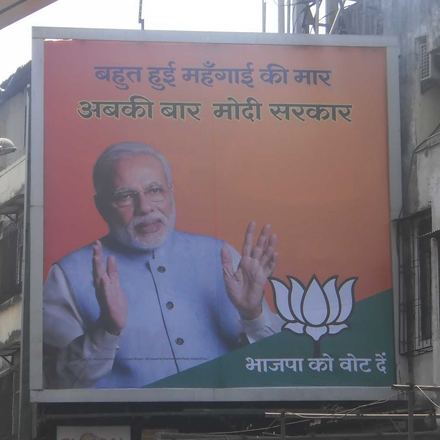
    MUMBAI: The BJP’s victory over AAP in Delhi can be examined through key marketing principles – product lifecycle, distribution strategy, and competitive positioning.

    Product Failure:
    * AAP as a ‘product’ failed to deliver on its core promises
    * The brand reached the end of its lifecycle without significant evolution
    * Core issues like pollution, garbage management and infrastructure remained unresolved
    * The product (AAP leadership) faced credibility issues with leaders facing legal challenges

    Distribution Strategy:
    * BJP outperformed in distribution through: 
    o RSS volunteers conducting extensive door-to-door campaigns
    o Thousands of drawing-room meetings across demographics
    o Strong presence in traditional AAP strongholds including slums and unauthorised colonies
    o Superior ground-level connect with voters

    Competitive Positioning:
    * BJP successfully countered AAP’s ‘freebie’ positioning by: 
    o Offering higher monetary benefits (Rs 2,500 vs AAP’s Rs 2,100 for women)
    o Matching and exceeding welfare schemes
    o Promising continuation of existing benefits while adding new ones
    o Building a stronger narrative around development and governance

    Brand Messaging:
    * BJP controlled the narrative effectively through: 
    o Consistent messaging on AAP’s unfulfilled promises
    o Focus on corruption allegations
    o Strong leadership projection
    o Clear communication of enhanced welfare measures

    Marketing Lessons for AAP:
    * Need for product reinvention and clear deliverable promises
    * Importance of maintaining brand credibility
    * Necessity of strong distribution network
    * Requirement for effective counter-narrative
    * Focus on tangible achievements rather than just promises

    The defeat highlights that tactical promotional offers (freebies) work only until a competitor provides better alternatives, emphasising the need for sustainable competitive advantages in political marketing.

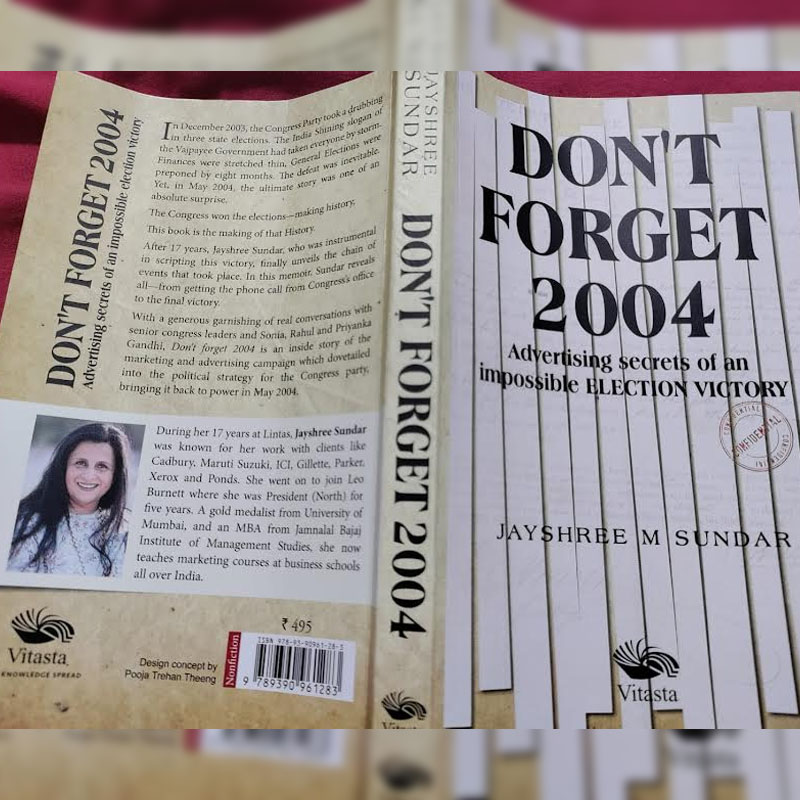
    [Based on insights from Jayshree Sundar, author of “Don’t Forget 2004” and Meenakshi Menon, advertising veteran]
     

  • A must-read ad & marketing book

    A must-read ad & marketing book

    Mumbai: Political advertising and marketing case studies might be a bit of a bore for many. But once you pick up ‘Don’t Forget 2004 – Advertising secrets of an impossible ELECTION VICTORY’ by Jayshree M Sundar and start flipping through its pages, you can’t put it down. Written in the manner of a fast-paced diary and personal narrative, it keeps you thirsting for more, and it hardly feels like you are reading. The pages flip by so fast, and before you know it, you are at the end of the book, a lot richer in your understanding of what politicians think like,  how ad agency executives can interact with them, and what it takes to draw up a winning election strategy and brand campaign.

    Jayshree should know. The senior advertising executive was heading the Delhi office of Leo Burnett India (once Chaitra Advertising founded by Walter Saldanha) when she got a call from Congress (I)’s senior leader Salman Khurshid’s office. The voice at the other end informed her that her agency was in the running to help the Congress (I) as it sought to make a comeback in the 2004 hustings at the Centre. The party had been out of power for more than a decade and a fierce opposition BJP was riding high with top media expecting it to win again by a thumping margin.

    Some of us may have a recollection of the savage campaign by Saatchi & Saatchi titled “Labour is not working” which swept Margaret Thatcher’s conservatives to power in 1979. Jayshree, along with her team, took a similar tack, working against impossible deadlines for a client which had no idea about the political marketing direction it should take. What made it even more challenging was that the BJP was looking smug as hell, splurging top dollar on ads all over the nation talking about how India was shining.  

    The Congress (I) mandarins provided no brief and they had limited budgets. Jayshree and her team had to come up with the communication that would position the Congress (I) right and yet show up the failures of the outgoing BJP government. Agency executives had to work and communicate with political heavyweights like Sonia Gandhi, Salman Khurshid, Ambika Soni, Jairam Ramesh, Ahmed Patel, Rahul, and Priyanka Gandhi, Motilal Vora – folks who commandeered a lot of respect, and whom they had only seen on TV.

    Through the book, you find out how she and the agency’s creatives pivoted to get quick answers through cheap and cheerful primary and secondary research. That and the fact that it approached the assignment as a regular brand campaign helped it come up with a pitch presentation that was bought by the steeped-in-the-old-ways-of-working Congress (I) senior leaders. The riposte to BJP’s India Shining slogan was “Aam aadmi ko kya mila?” “Congress Ka Haath aam aadmi ke Saath” and addressed the heartlands of India, against the former which was more focused on the urban Indian. The B&W visuals featured farmers, unemployed youth, the middle class and children, women as against the BJP’s well-dressed urban Indians.

    The book details how the agency came up with the four phases of the campaign, the steps it took to maintain utmost secrecy while creating the campaign, and later when ads and TVCs were released to publications and TV channels in various languages all over the country.

    Jayshree’s effort is not just all about words; she has peppered the book with advertising artwork which made it to the newspapers over the various phases of the campaign.

    The Leo Burnett team’s communication and marketing strategy did work well if you recollect. Despite the BJP’s bigger advertising war chest, it and its allies managed to retain only 185 seats (1999 count 298). The Congress (I) however celebrated as it individually captured 145 seats (against 112 seats in 1999) and 220 seats (as against 135 in 1999) with its allies. It of course came to power, and the rest they say is history.

    ‘Don’t Forget 2004’ is a must-read for students and practitioners of marketing and advertising as well as those in the political ranks, given that there is very limited literature available on political advertising. It is rich in detailing the learnings the agency had while working on the Congress (I) campaign. Be sure to pick up a copy.

    (Don’t Forget 2004- Advertising secrets of an impossible ELECTION VICTORY – Jayshree M Sundar, pp284, publisher Vitasta Publishing, Rs 495)

    You can buy it on Amazon too by clicking on this link: https://www.amazon.in/-/hi/Jayshree-M-Sundar/dp/9390961289

  • India fastest-growing market globally at 14.6%: dentsu Global Ad Spend Forecast report

    India fastest-growing market globally at 14.6%: dentsu Global Ad Spend Forecast report

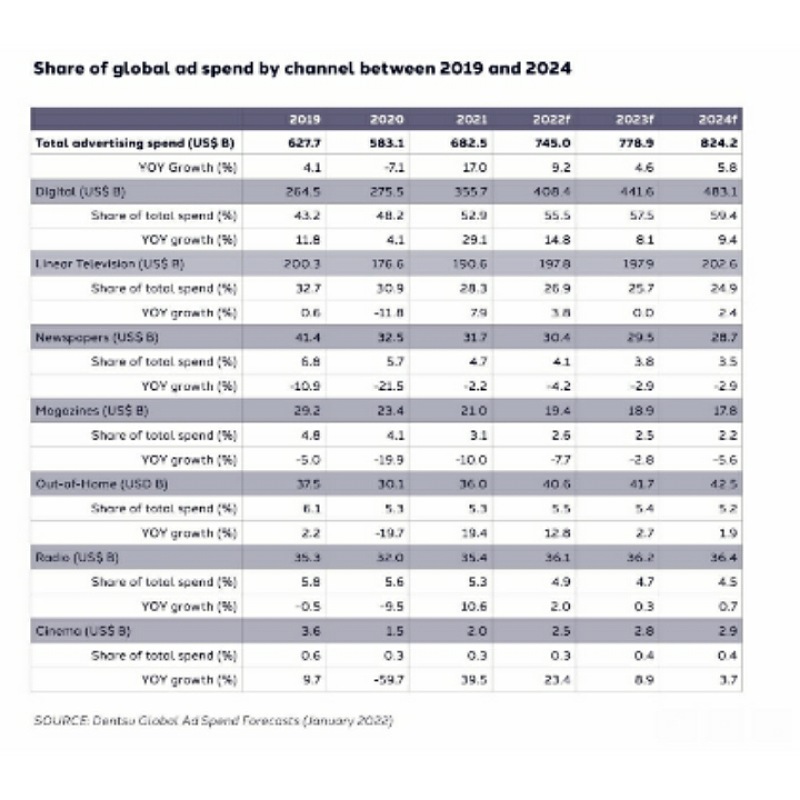
    Mumbai: Advertising expenditure in the Asia Pacific is expected to grow by 5.9 per cent, with India being the fastest-growing market globally at 14.6 per cent, followed by the US, Russia and Canada, according to dentsu’s Global Ad Spend Forecast report. Digital forecast is expected to increase 9.6 per cent to a share of 61.1 per cent of total APAC advertising spend, even as advertising investment overall is forecast to grow by 9.2 per cent globally in 2022, as per the report.

    In APAC, overall ad spend growth is boosted by key sporting events such as the Indian Premier League, FIFA World Cup, Winter Olympics, and country elections in Australia and India.

    Moving towards a second consecutive year of growth following the five per cent market dip in 2020, 2022 is projected to build on a stronger than expected recovery in 2021 which itself saw a record-high 14.4 per cent growth in APAC, totalling $241 billion. The twice-yearly report which combines data from over 50 markets globally, anticipates $745 billion will be spent globally. 

    Digital and television continue to be the two powerhouses driving global and APAC ad spend, yet with opposite dynamics. Following a 24.8 per cent increase in 2021 (vs 29.1 per cent globally), dentsu forecast digital investment to grow by 9.6 per cent (vs 14.8 per cent globally) in 2022, fuelled by Social and Programmatic in APAC. This will result in the digital share of spend increasing to 61.1 per cent ($150 billion) of the total ad spend in APAC, over twice as big as the television share of spend (24.5 per cent) in 2022.

    Linear TV ad spend increased by 5.1 per cent in 2021, the highest rate since 2013. In 2022, dentsu forecast linear TV ad spend to grow by 1.4 per cent to reach $60 billion in APAC. Unlike digital and despite staying in high demand, dentsu is seeing linear TV share of spend on the decline – both globally and in the region – as connected TV and video on demand (VOD) grow.

    Out-of-home (OOH) and cinema will both see encouraging growth in 2022, respectively 12.8 per cent and 23.4 per cent globally (vs 2.8 per cent and 30.0 per cent in APAC). Radio too is forecast to grow, yet at a slower pace of 1.5 per cent in APAC (vs 2.0 per cent globally). As with previous predictions, ad spend in newspapers and magazines will continue to decline globally and in APAC. 

    Globally, the industries that will see growth in ad spend this year will include the beleaguered travel industry which is forecast to see a 10.3 per cent rise. There is also confidence the automotive advertising spend will grow by 7.6 per cent in 2022. Growth follows an 11.5 per cent increase in 2021 and steep declines in 2020 of -15.9 per cent. With pent-up demand and a trend towards personal vehicles in how people want to travel post-pandemic, there is confidence in the recovery of the automotive industry.

    Looking further ahead, APAC ad spend is predicted to grow by 5.6 per cent (vs 4.6 per cent globally) in 2023 and 4.9 per cent (vs 5.8 per cent globally) in 2024 – exceeding growth before the pandemic (4.1 per cent in 2019). Digital is forecast to increase its share of spend domination to 64.6 per cent in APAC (vs 59.4 per cent globally) in 2024. Of course, many factors contributing to the uncertain economic outlook could influence the predictions, from the evolution of the pandemic to supply chain issues, and dentsu recommends the industry keep a close eye on key economic indicators.

    “APAC region is expected to post robust growth in ad spend in 2022. India, Hong Kong and Vietnam will drive double-digit growth with the rest of the region showing strong growth,” said dentsu International CEO Media APAC Prerna Mehrotra. ” The share of digital spends in APAC is set to increase to 61.1 per cent up from 50.1 per cent in 2019 (pre-covid), driven by Greater China and ANZ. TV as a platform will continue to play a key role especially in Southeast Asia and South Asia.”

    “Marketers will need to be nimble, leaning on technology and maximizing opportunities in video, social, connected TV and e-commerce. The use of data to drive business outcomes without compromising privacy or security will continue and we expect data collaboration to be a big focus for 2022. In light of the ongoing global turbulence and recovery, we will continue to work with brands to accelerate efforts to engage consumers and drive attentive reach,” she further added.

    When compared to previous global financial and advertising crises, notably the financial crash of 2008, this rebound is almost three times greater, said the report. In 2022 the growth forecast at 9.2 per cent is nearly three times the 3.4 per cent growth in 2011 – the second-year post-global financial crisis. In 2022 the global ad market exceeded the 2019 pre-pandemic level of spend by 18.7 per cent, whereas in 2011 the global ad market continued to be one per cent lower than in 2008.

    “The bounce back from the early pandemic impact continues to be strong, especially in digital,” remarked dentsu International Global CEO media and global clients Peter Huijboom. “As we spend more time consuming digital media, brands have the opportunity to tap into the increased flexibility in which consumers engage through multiple touchpoints. Businesses who truly understand these developed human behaviours have the best opportunity to build lasting relationships with them.”

    “It also comes as no surprise of the increased popularity in gaming. Dentsu launched its global gaming proposition in 2021. Along with the burgeoning Metaverse, there has never been a more exciting time for brands to experiment, innovate and engage with their customers – as all forms of media are increasingly more central to daily life and routine,” he further said. 

  • TIMES NOW suspends its election results coverage on 2 May

    TIMES NOW suspends its election results coverage on 2 May

    MUMBAI: In an unprecedented move, English news channel Times Now on Saturday announced that it will suspend its coverage of Assembly elections results for four States and one union territory on 2 May, citing “the biggest health emergency” that the country is facing.

    The Times Group-owned channel said that it will track the “biggest national story”- keep COVID news as its main priority and suspend its usual special election coverage ‘on 2 May and beyond.’ 

    “As part of the coverage, viewers can expect COVID-related news reports, the latest on the status of the vaccination drive, information on helplines, and can interact with healthcare and mental wellness experts on the channel,” it stated in a social media post. However, it will still carry flash news updates on the counting and results, but refrain from covering poll-related celebrations.


    “The second wave would have been better controlled had we avoided two of the mega risk events – Kumbh Mela and elections in five states in normal campaigning mode. But, as the wave keeps climbing, with it claiming more innocent lives, it is clear that there has been a serious lapse in leadership at all levels- across the political spectrum,” the channel averred expressing concerns over the deteriorating situation and said that it has been vocal against these lapses.


    After the final phase of polling for West Bengal, Tamil Nadu, Kerala, Assam, and Puducherry assembly elections got over, all eyes are now set on 2 May when the counting of votes will take place for the four states and one UT. As many as 822 seats out of 824 scheduled for election went to poll between March 27 and April 29.

    However, the results have been overshadowed by the massive surge in Covid2019 cases and the resultant oxygen shortage at hospitals which has put the lives of millions of Indians at risk. The country is facing one of the biggest health crises, as daily cases crossed an unprecedented 4 lakh on Saturday. As many as 3,523 more people succumbed to the infections during the last 24 hours, taking the total death toll to 2.11 lakh.

    A staggering 69 lakh new infections were detected in the country during April when campaigning for the Assembly elections was on in several states. This was the highest tally for any month in any country so far- another dismal global record, raising a question mark on conducting regular elections during the crisis.

  • BJP leads political ad spends on Facebook

    BJP leads political ad spends on Facebook

    NEW DELHI: Social media has emerged as one of the most powerful tools in elections. All the political parties are making the utmost use of social media platforms during the elections to tilt the opinion in their favour.

    From February 2019 till August 24 this year, BJP spent Rs 4.61 crore on Facebook advertisements and Congress Rs 1.84 crore, according to the data available on the social media giant’s spending tracker. Keeping an eye on Maharashtra elections, the ruling Bhartiya Janata Party spent most on this money tp push social issues, elections, and politics. 

    Four other advertisers, linked to the BJP, also made it to the top 10 list including three that share the same address in Delhi as the ruling party’s national headquarters, according to the tracker.

    These four include two community pages, ‘My First Vote for Modi’ (Rs 1.39 crore) and ‘Bharat Ke Mann Ki Baat’ (Rs 2.24 crore); Nation With Namo, which is categorised as a news and media website (Rs 1.28 crore); and, a page (Rs 0.65 crore) affiliated to BJP leader and former MP R K Sinha, who owns Security and Intelligence Services (SIS).

    According to Facebook, an ad is categorised under “social issues, elections, and politics” if it is made by or on behalf of a candidate, political party, or advocates an outcome; is about a particular election or referendum; is regulated by political advertising, or is about a local social issue.

    In total, these accounts and BJP spent Rs 10.17 crore on advertising, which accounts for 64 per cent of the total amount spent by the top ten rank holders, that is Rs 15.81 crore. The period covered includes the general elections in April-May 2019, which saw the BJP return to power with an overwhelming majority.

    Earlier, a report by the Association for Democratic Reforms (ADR), claimed that BJP is by far the richest political party in India. The ADR analysed the audited accounts of the BJP, and six other national parties, including the Congress, for 2016-17. In 2019, BJP earned Rs 2,410 crore.

  • English news records highest ratings in 2020 during Delhi elections, results week

    English news records highest ratings in 2020 during Delhi elections, results week

    BENGALURU/MUMBAI: Runup to elections and election results announcements are big viewership drivers for news channels in India. Assembly elections on 8 February 2020 and announcement of the election results of the New Delhi legislative assembly in week 6 of 2020 (Saturday, 8 February 2020 to Friday, 14 February 2020, week or period under review) boosted the combined viewership of the Top 5 English News channels by 49.5 percent as compared to the previous week. Broadcast Audience Research Council of India (BARC) reported a total of 2.741 million impressions for the top 5 English News channels in the week under review. The combined total of the top 5 channels during the previous week (week 5 of 2020) was 1.835 million weekly impressions.

    Combined impressions of the top 5 English News channels in week 6 of 2020 was the highest ratings to date in 2020. The previous highest combined total of the top 5 English News channels in 2020 was in week 4 at 2.582 million weekly impressions. Further, the average combined weekly impressions of the top 5 English News channels during 41 weeks of the previous calendar year was 2.271 million weekly impressions. It must be remembered that BARC had stopped publication of ratings in the public domain to allow viewership to stablise after the implementation of Telecom Regulatory Authority of India (TRAI) New Tariff Order (NTO) for the weeks 6 to 12 of 2019. Hence, average of the remaining 41 weeks of 2019 (weeks 13 to 53 of 2019) or post week 12 of 2019 average has been considered.

    Top 5 English News Channels in week 6 of 2020

    Four of the channels in BARC’s weekly list of Top 5 English News channels for week 6 of 2020 were the same as in the previous week. Pub-caster Doordarshan’s English News channel DD India exited the list during the period under review, while the Radhika and Pronnoy Roy headed NDTV 24×7 made a rare appearance into BARC’s weekly list of Top 5 English News channels in week 06 of 2019.

    At its normal numero uno position was the Arnab Goswami headed Republic TV with a phenomenal 74.5 percent lead in ratings in week 6 of 2020 of 1.141 million weekly impressions as compared to the 0.654 million weekly impressions in week 5. Also at its normal second rank was Times Now with 0.664 million weekly impressions in week 6 of 2020 which was 24.3 percent more than the 0.534 million weekly impressions in week 5. Continuing on at its previous week’s third rank was the India Today group’s India Today Television with 0.415 million weekly impressions in week 6 of 2020, a jump of 40 percent from the 0.303 million weekly impressions in the previous week.

    Climbing up to fourth rank in week 6 of 2020 from the previous week’s fifth rank was Network18’s CNN News18 with 0.263 million weekly impressions, which was 61.3 percent more than the 0.163 million weekly impressions in week 5. Entering BARC’s weekly lists of Top 5 English News channels for was NDTV 24×7 with 0.258 million weekly impressions. This was NDTV 24×7 second appearance in BARC’s top 5 English News channels list in 2020. The channel had appeared in the lists earlier in calendar year 2020 in week 1.

  • News18 India announces special programming for Maharashtra and Haryana assembly elections

    News18 India announces special programming for Maharashtra and Haryana assembly elections

    MUMBAI: After BJP’s historic win in the recently held General Elections, states of Maharashtra and Haryana will witness the battle for political supremacy. As the political parties gear-up once again for a fierce contest, News18 India has lined-up extensive programming to bring to its viewers unparalleled access and insights into these assembly elections.

    Continuing the commitment of bringing compelling yet incisive reportage through a wide array of diverse formats, News18 India will present the election programming under the umbrella branding ‘Sabse Bada Dangal’. Comprising of comprehensive election special bulletins, audience based debate shows, poll of polls and interviews of the biggest newsmakers along with special editions of popular shows such as Bhaiyaji Kahin and Lapete Mein Netaji, the channel will showcase not only a detailed analysis but also an overall view of the political scenario in these states.

    Through Bhaiyaji Kahin, renowned journalist Prateek Trivedi, will travel to key constituencies in the election-bound states providing a unique platform to connect voters and local leaders, while Lapete Mein Netaji will go outside the studio to bring politicians, poets and voters together on one platform to add a sharp sense of satire and humor to the political discourse. The exhaustive programming will also cover polling and counting days extensively bringing the latest trends and fastest & most accurate updates to the viewers.

    Supported by a team of experienced anchors, on-ground reporters and eminent experts, News18 India will offer viewers unmatched coverage of the assembly elections. The channel will follow and present key developments, campaigns of major parties and politicians, trends, results and government formation to keep viewers abreast of minute-to-minute developments.

  • Dailyhunt Launches #KhudKiSochBanao Campaign as Nation gets ready for Elections

    Dailyhunt Launches #KhudKiSochBanao Campaign as Nation gets ready for Elections

    MUMBAI: Dailyhunt, India’s #1 news and local language content application, today announced the launch of its new election campaign, Dailyhunt Chalao, #KhudKiSochBanao.

    India, the world’s largest democracy with 1.35 billion population, is preparing itself for upcoming general elections in India. The campaign aims at highlighting how it is imperative for us Indians to have a ‘Trusted’, ‘Unbiased’, ‘Credible’ source of information online to make an informed choice. 

    This groundbreaking campaign comes with a powerful message, “Iss election, kisi ka tota mat bano!” It attempts to reiterate on the significance of forming one’s own opinion at a time when the presence of multiple channels of information often leads to the misrepresentation of facts, biased coverage and impacts neutrality.

    The multi-media campaign across TV, Digital, Radio targets all individuals who are eligible to vote and are residing not only in the metros but also in tier 2, 3 Indian cities, towns and rural villages and will be aired in all major languages and continue till the end of elections.

    The campaign TVC interestingly shows various ‘totas’ among us –someone accused of mindless repetition of opinions from different walks of life, living in different parts of the country, speaking diverse regional languages, accessing latest news updates via different media channels. The ‘tota’ is seen blindly repeating other people’s opinions on important election issues, such as the hike in petrol-CNG prices, reservation, LPG subsidy, black money and implications of GST.

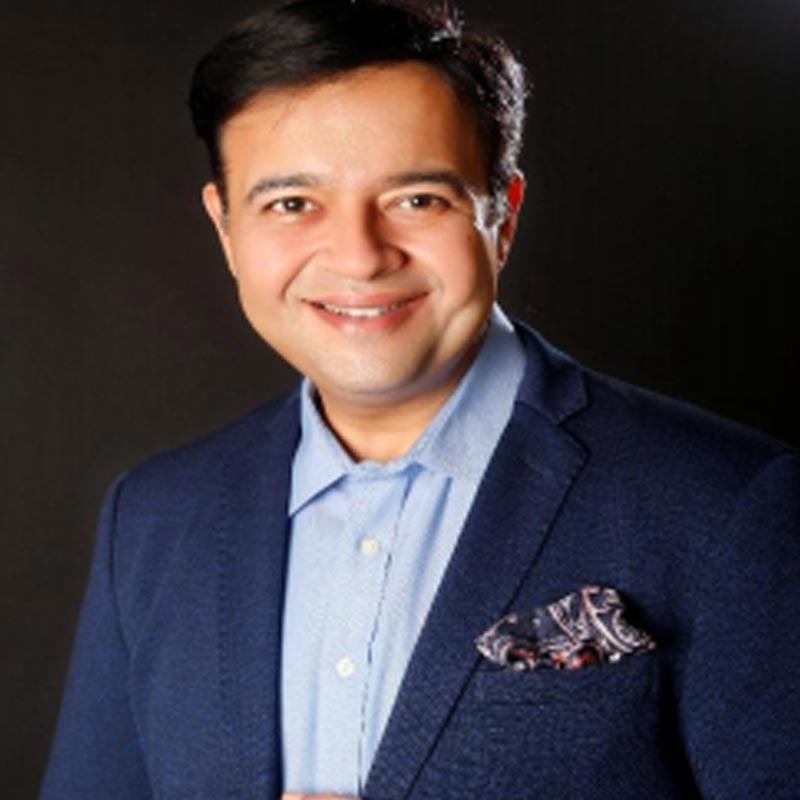
    Umang Bedi, President, Dailyhunt, said, “The “Khud Ki Soch Banao” Campaign resonates with the philosophy of the brand. With the increase in the use of smartphones, expansion of 4G to rural villages, the growth of social media and media outlets, Indians are bombarded with multiple avenues offering news, varied opinions and biased narratives, thereby affecting election outcomes. The consumer feels the absence of a credible and trustworthy news brand that can provide unbiased coverage and multiple perspectives on every topic…. The Dailyhunt brand fills that void for the voting public.”

    The #KhudKiSochBanao campaign is conceptualized and executed by Mumbai-based, full-service digital agency, What’s Your Problem Brand Solutions.

    Amit Akali, Founder and Creative Head, What’s Your Problem, said, “We are excited to partner with Dailyhunt for this insightful campaign – a captivating way to bring forth the issue of biased, polarized opinions being formed against the backdrop of elections. We feel ‘tota’, as a metaphor, works beautifully and starts the debate on how important it is to have a platform that can give multiple perspectives allowing you to form your own opinions.”  

    National Award-winning Director, E Suresh (from Eeksaurus Studios), has directed the candidly shot film, and Firefly films, of Bahubali fame, has created the parrot-head CGI.

  • GEC, regional channels’ viewership to dip further this year due to IPL, Elections

    GEC, regional channels’ viewership to dip further this year due to IPL, Elections

    MUMBAI: This summer, India is set to witness two major events, the Indian Premier League (IPL) and the much awaited General Elections, clash for votes and viewership. For the broadcast industry, those with general entertainment channels (GECs) are likely to see even further dip in eyeballs because of this.

    With Star India introducing several regional feeds for its first edition of IPL last year, the regional channels also saw a slight change. As per reports, viewership share of regional language telecast was reported to be 23 per cent followed by English with 22 per cent and Hindi dominating with 55 per cent.

    IPL telecast has also shown significant impact on viewing habits for other genres. While mapping viewership of various genres during IPL and non-IPL weeks, it was found that the share of the GEC genre declined marginally in all 3 years under review (2016-18), as viewers tuned in to IPL matches during primetime.

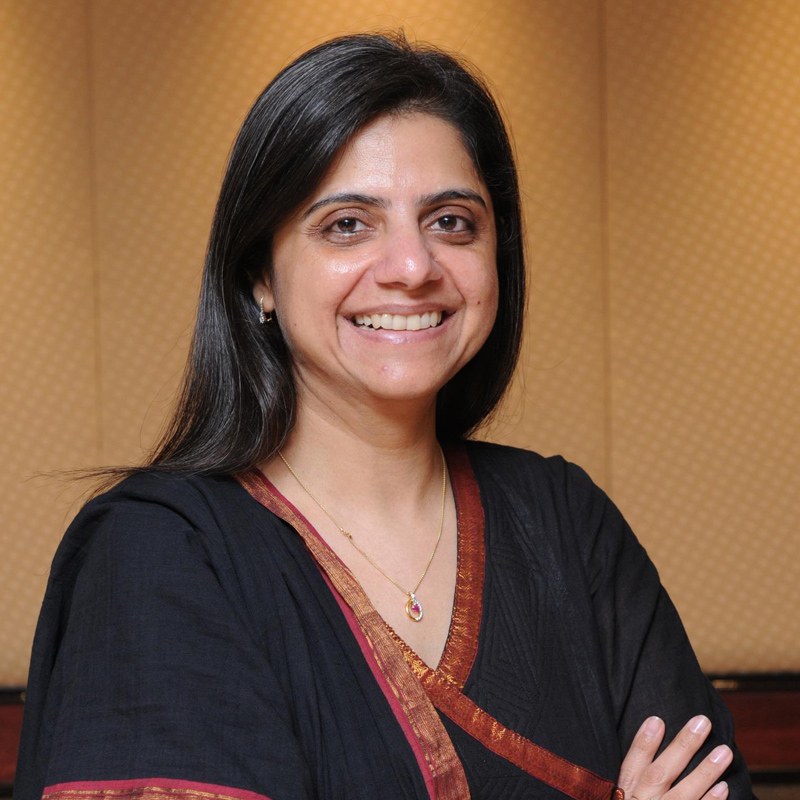
    According to Viacom18 Hindi mass entertainment and kids TV network head Nina Elavia Jaipuria, these events, no doubt, work well with audiences but that doesn’t mean that people stop watching GECs. She said, “What happens in any country when there is large mass viewership, there is one television, and the viewership time gets divided. But like I told you that the power of content is so much that there is no viewer who is going to stay without television for two months and without their characters. It’s the eleventh IPL and Hindi GECs have always done well. It is not that people stop watching GECs. So to my mind, there will be some division of time and little more time given to different genres of channels. But people will not stop watching their favourite shows and characters.” She is confident that Viacom18 has a very strong line up and there’s no reason that it will be losing viewership on the channels.

    Zee TV business head Aparna Bhosle claimed that Zee saw growth during IPL last year. She added that when the content offering is strong, viewership invariably grows. Media planners spoke to Indiantelevision.com and said that the loss of viewership will be little more than the previous year. On the contrary, while reports suggested that regional channels are expected to grow double digits, this year regional broadcasters felt that there could be a decrease.

    Fakt Marathi Enterr10 MD Shirish Pattanshetty said that it wouldn’t be the case with Hindi GECs as against regional channels. “Trend shows that regional could see 8 to 12 per cent decline,” he said.

    According to Dishum Broadcasting COO Partha Dey, the viewership on news and sports genre will definitely be high but rooted entertainment and spike programming on regional channels will cushion much of the impact.

    Talking about the growth of viewership on television, the impressions for IPL 2018 witnessed a growth of 41 per cent over the 2016 season and 16 per cent over the 2017 season. Even the average time spent went from 28 minutes in 2016 to 34 minutes in 2018. 

    Stratagem Media founder-director Sundeep Nagpal said that the loss of viewership can be expected to be a little more pronounced this year. Moreover, Carat Media SVP Mayank Bhatnagar explained that IPL viewership has been growing year-on-year. He added, “In 2018, GEC and movies genres’ viewership drop was 3-5 per cent. This year, there are back-to-back cricket events with IPL first and then the World Cup. So it’s imperative to have counter strategies to mitigate the risk.”

    As far as ad rates are concerned Pattanshetty said that overall it is likely to increase due to the mega events and regional especially may see double-digit growth.

    With the new TRAI tariff regime also set, there is likely to be fluctuations in the viewership pattern as well. The industry is giving time for viewership patterns to stabilise and is likely to see it happen before these events take place. 

  • Viacom18 continues period drama experimentation with ‘Jhansi ki Rani’

    Viacom18 continues period drama experimentation with ‘Jhansi ki Rani’

    MUMBAI: Viacom18 is not one to stay down after one fall. Recently, the network released a periodical historical drama Dastaan-E-Mohobbat on Colors but when it failed to grab eyeballs, it has swiftly decided to replace it with another in the same genre – Jhansi Ki Rani produced by Contiloe Pictures.

    Viacom18 Hindi mass entertainment and kids TV network head Nina Elavia Jaipuria said, “The show Dastaan-E-Mohobbat didn’t click very well. Since we are in the business of entertainment, there comes a time when viewers embrace us and sometimes they don’t. Therefore, we learnt from our past and moved on to new things because entertainment is all about finding the right viewers and finding the right content for them. So, unfortunately, it didn’t do really well for us and it’s off-air right now.”

    The new tariff regime was also likely to impact broadcasters. Jaipuria said that it puts the control of choice squarely in the hands of the viewer. She added that the second benefit of this regime is that it brings in the much-needed transparency into the system, with under-reporting promising to become a thing of the past. “As business becomes more streamlined and transparent, I feel the process of content creation, curation and distribution will significantly improve. Interestingly, the future for the broadcasters will now undergo a subtle yet tectonic shift – from networks bundling and pushing channels to consumers, it will become consumers pulling in channels that they want to watch. This, I believe, in the mid-long term will lead to content quality dialling up even further,” she added.

    Most broadcasters bundled their long-tail channels with their best ones to increase uptake. While it is likely that these channels will suffer, Jaipuria doesn’t think so. According to her, niche channels will not be affected. “While Nick is number one and Sonic is not, that doesn’t mean Sonic can’t make it. Sonic has Shiva. Kids who love Shiva will anyway watch it. I think it is not about the platform but it is about the loyalty and the shows you have today.”

    Meanwhile, two big national events are coming up – IPL and Elections, which may hamper viewership of Hindi GECs. Jaipuria said, “What happens in any country when there is large mass viewership, there is one television household and the viewership time gets divided. But like I told you that the power of content is so much that there is no viewer who is going to stay without television for 2 months and without their characters. It’s the eleventh IPL and Hindi GECs have always done well. It is not that people stop watching GECs. So to my mind, there will be a little division of time and little more time given to different genres of channels. But people will not stop watching their favourite shows and characters.” She is confident that Viacom18 has a very strong line up and there’s no reason that it will be losing viewership on the channels.