Tag: Election Commission

  • Election Commission issues strict guidelines to media for poll coverage

    Election Commission issues strict guidelines to media for poll coverage

    NEW DELHI: The Election Commission, which recently announced polls for the Maharashtra and Haryana assemblies, said today that news broadcasters must not air any final, formal and definite results until such results are formally announced by the returning officer. The results must have been carried with a clear disclaimer that they are unofficial or incomplete or partial results or projections which should not be taken as final results.


    The Commission, which issued detailed guidelines relating to the polls said these should be duly observed by all the concerned media.


    It reiterated that the TV/radio channels and cable networks should ensure that the contents of the programme telecast/broadcast/displayed by them during the period of 48 hours referred to in Section 126 of the Representative of People’s Act 1951 do not contain any material, including views/appeals by panelists/participants that may be construed as promoting/prejudicing the prospect of any particular party or candidate(s) or influencing/affecting the result of the election. This shall, among other things include display of results of any opinion poll and of standard debates, analysis, visuals and sound-bytes


    It said: “During the period not covered by Section 126 or Section 126A, concerned TV/Radio/Cable/FM channels are free to approach the state/district/local authorities for necessary permission for conducting any broadcast related events which must also conform to the provisions of the model code of conduct and the programme code laid down by the Ministry of Information and Broadcasting under the Cable Network (Regulation) Act with regard to decency, maintenance of communal harmony, etc. They are also required to stay within the provisions of Commission’s guidelines dated 27 August 2012 regarding paid news and related matters. Concerned Chief Electoral Officer/District Election Officer will take into account all relevant aspects including the law and order situation while extending such permission.”


    During the elections, there are sometimes allegations of violation of the provisions of Section 126 of the Representation of the People Act 1951 by TV channels in the telecast of their panel discussions/debates and other news and current affairs programmes.


    The Commission has clarified in the past that the Section 126 prohibits displaying any election matter by means, inter alia, of television or similar apparatus, during the period of 48 hours ending with the hour fixed for conclusion of poll in a constituency. ‘Election matter’ has been defined in that Section as any matter intended or calculated to influence or affect the result of

    an election. Violation of the aforesaid provisions of Section 126 is punishable with imprisonment up to a period of two years, or with fine or both.


    Attention is also invited to Section 126A of the Act, which prohibits conduct of exit poll and dissemination of their results during the period mentioned therein, that is, from the hour fixed for commencement of polls and half hour after the time fixed for close of poll.


    The Commission has drawn attention to the guidelines relating to coverage of elections issued separately for the print media by the Press Council of India and by the News Broadcasters Standards Authority.


    Among others, attention has been drawn to the Guideline that the Press should refrain from publishing false or critical statements in regard to the personal character and conduct of any candidate or in relation to the candidature or withdrawal of any candidate or his candidature, to prejudice the prospects of that candidate in the elections. The Press shall not publish unverified allegations against any candidate/party.


    News broadcasters must endeavour to avoid all forms of rumour, baseless speculation and disinformation, particularly when these concern specific political parties or candidates. Any candidate/political party, which has been defamed or is a victim of misrepresentation, misinformation or other similar injury by broadcast of information should be afforded prompt correction, and where appropriate granted an opportunity of reply.


    News broadcasters are required to scrupulously maintain a distinction between news and paid content. All paid content should be clearly marked as ‘Paid Advertisement’ or ‘Paid Content’ and paid content must be carried in compliance with the ‘norms and guidelines on paid news’ dated 24 November 2011.


    The Election Commission will monitor the broadcasts made by news broadcasters from the time elections are announced until the conclusion and announcement of election results. Any violation by member broadcasters reported to the News Broadcasting Standards Authority (NBSA) by the Election Commission will be dealt with by the NBSA under its regulations.
  • Delhi High Court stays EC’s paid news notice to Ashok Chavan

    Delhi High Court stays EC’s paid news notice to Ashok Chavan

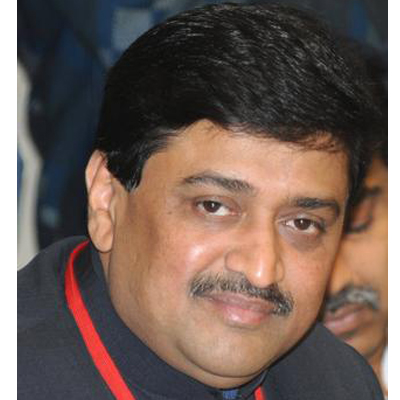
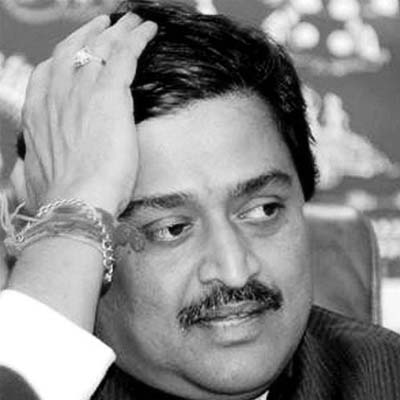
    NEW DELHI: Former Maharashtra chief minister Ashok Chavan has received an interim relief with Delhi High Court putting a stay on the show cause notice issued by the Election Commission to the Congress politician.


    The Court also issued notice to BJP leaders Mukhtar Abbas Naqvi, Kirit Somaiya and one independent candidate who had filed complaint against Chavan to the EC.


    The poll panel in the notice on 13 July had asked Chavan who had stood from Nanded in Maharashtra as to why he should not be disqualified for not giving correct details of his 2009 poll expenses.


    A fortnight ago, the Commission had set a 20-day deadline for Chavan to respond to the notice, saying he had “failed to lodge his account of election expenses in the manner required by the (Representation of the People) Act and rules.”


    Chavan had moved the court against the EC’s order, saying the panel had not followed the procedure laid out in the Representation of People Act prior to giving its findings.


    He had also said that the expenses that he had allegedly not declared pertained to some advertisements that were released in October 2009 regarding a meeting that was to be held between the members of United Progressive Alliance (UPA).


    Senior advocate Kapil Sibal appeared for Chavan and argued that the ex-CM did not know who had issued the advertisements.


    Chavan had won the 2009 assembly election from Bhokar in Maharashtra’s Nanded Lok Sabha constituency. He won the recent Lok Sabha polls from Nanded.


    It was contended that Chavan had incurred an expense of over Rs 16,000 for attending the UPA meeting that was advertised and that he had cited the same while filing his poll spends.

  • Chavan unfazed by EC Notice, says it vindicates his stand

    Chavan unfazed by EC Notice, says it vindicates his stand

    NEW DELHI: Former Maharashtra Chief Minister Ashok Chavan remains unfazed by the show cause notice issued to him by the Election Commission.


    In fact, Chavan said this only vindicated his and the Congress’ stand that “there is no question of paid news.”


    “Our stand on the paid news issue has been confirmed by the Election Commission. Even the High Court and Supreme Court had taken a similar stand when our opponents had filed a petition. The courts had rejected their petition. Now this (EC) order is also very clear. There is no question of paid news,” Chavan told Press Trust of India over phone.

    Chavan claimed that he had himself pleaded with the Commission to give him an opportunity to file electoral expenses as required by law and he will now do this as notice has been issued to him.


    “There is a provision under which a notice can be served to us. We will reply to that. I have not seen the order in detail yet. But the issue of paid news is ruled out totally,” Chavan said.

    The notice relates to the election to the Maharashtra Legislative Assembly held in September-October 2009 wherein Chavan was the candidate from the Bhokar seat.

    The complainants who include rival contestant Madhavrao Kinhalkar, Bharatiya Janata Party vice president Kirit Somaiya, BJP MP Mukhtar Abbas Naqvi and five others had alleged in their submission made before the Election Commission that Chavan got several advertisements published in various regional newspapers during the poll campaign.

    The complainants had alleged that the advertisements which appeared in newspapers in the garb of news eulogising Chavan and his achievements as Chief Minister, were “paid news”.


    It was alleged by them that a huge expenditure was incurred or authorised by Chavan for getting those advertisements and the articles published as news, and that the expenditure incurred or authorised on the publication of those paid news was not included by Chavan in his account of election expenses maintained under section 77 of the Representation of the People Act, 1951. 

  • Code of Conduct bars clearance of any new TV channels in May 2014

    Code of Conduct bars clearance of any new TV channels in May 2014

    NEW DELHI: Even though it is said that the government is run by bureaucrats and not by politicians, the change in government in the month of May brought stagnancy to the process of clearances of television licences.


    In fact, the month saw the first half being ruled by the United Progressive Alliance (UPA) and the second half by the National Democratic Alliance (NDA).


    A large number of new applications including Media Content and Communications Services (MCCS) that runs the ABP group of channels, Star India, Epic TV among others have been waiting in queue for a new licence.


    Information and Broadcasting Ministry secretary Bimal Julka says that the delay was primarily because of the Code of Conduct that had come into force. He adds, “There was clear mandate from the Election Commission that no action like clearances for new channels should be given without its permission.”


    The list of permitted private satellite TV channels in India remains constant at 795. Out of these 393 are news and current affairs channels while the remaining 402 are non-news and current affairs channels.


    The first four months of 2014 saw licences being given to nine channels including AXN HD and SET HD.


    The Ministry also placed on its website the names of the companies which own these channels, the language, and the date when permission was granted. 

  • Red FM’s ‘Dabaa Ke Bajaa’ campaign urges to press the button

    Red FM’s ‘Dabaa Ke Bajaa’ campaign urges to press the button

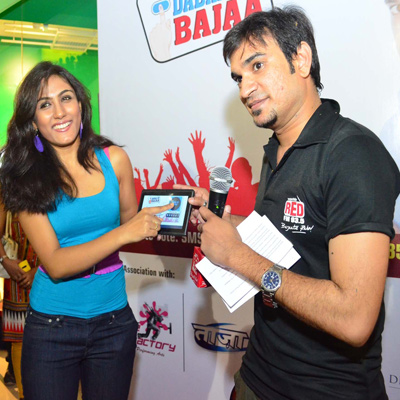
    KOLKATA: Be it television or radio, everyone is playing their part in urging people to go out and vote. Similarly, with an aim to advise people to press for vote, the radio network, 93.5 Red FM has launched the campaign ‘Dabaa ke Bajaa’ across the country.


    “Dabaa Ke Bajaa’ is our attempt at channelising the energy of the people in all parts of India into one simple, and yet difficult act- pressing the button on the voting machine,” says 93.5 Red FM COO Nisha Narayanan.


    The radio channel’s RJ Praveen has been announced as Kolkata’s official youth ambassador by Election Commission for this year’s campaign – ‘Dabaa ke Bajaa’ – targeting at increasing voter participation.


    RJ Praveen along with other RJs also did a flashmob on the channel’s anthem for the campaign.


    Red FM, being the ‘Station for Expression’ has always encouraged people to come out and talk. “We are proud to have been associated with the Election Commission of India on this. The insights and associations that they bring to the campaign are invaluable,” adds Narayanan.


    Talking about the initiative in details, the COO further says, “Red FM RJs will continue to pledge to vote by using the ‘Dabaa ke Bajaa’ app and flashmobs in malls across the city like Avani Mall, Quest Mall and colleges along with RJ Praveen. The idea is to support the Election Commission of India in urging people, especially the first time voters, to come out on the polling day, and press the button of the voting machines.”


    “The initiative is likely to receive a sprawling response especially among the first time voters. It is the best marketing strategy of connecting with citizens with a motto in mind and reminding them of ‘Bajaate Raho!” concludes a city-based analyst.

  • Election commission launches media channel for voter awareness

    Election commission launches media channel for voter awareness

    MUMBAI:  In its bid to reach out to a large number of voters to exercise their valuable franchise, a ‘Voter Education Channel’ was launched by the election commission of India (ECI). The channel which can be viewed on YouTube, has video clips of many Indian icons urging citizens to cast their important vote.


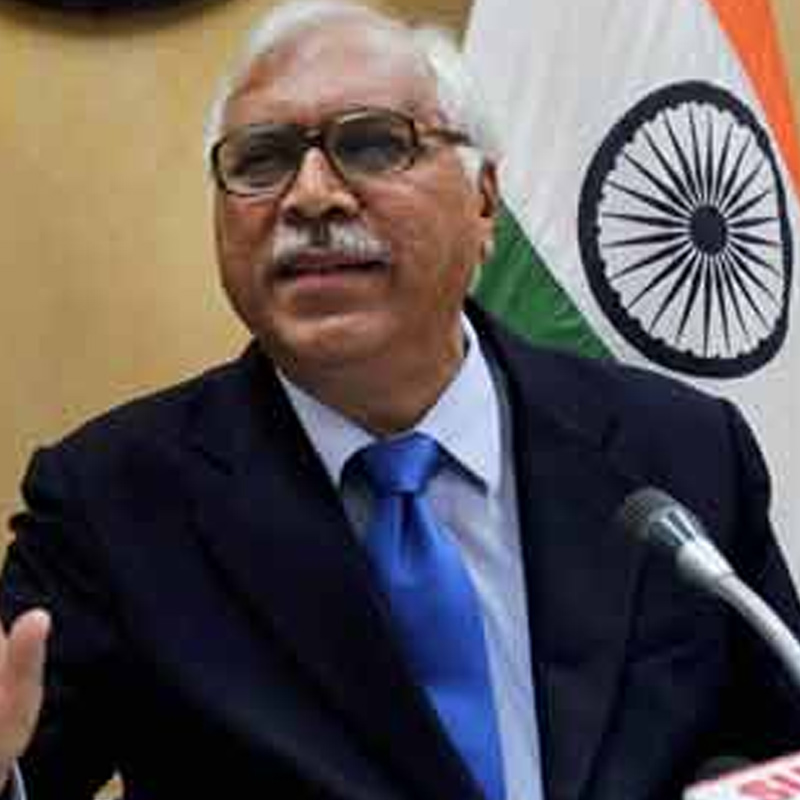
    The first clip features a recorded speech by the chief election commissioner VS Sampath asking voters to ‘turn up at polling stations and exercise their right to vote in an informed and ethical manner’. This speech, uploaded yesterday has so far recorded 2028 hits. The other video links have sportspersons like boxer MC Mary Kom, cricketer MS Dhoni and badminton sensation Saina Nehwal, who are seen urging voters to exercise their vote. Channel viewers can also watch videos of ECI brand ambassadors like Aaamir Khan and former president of India Mr. A.P.J Abdul Kalam asking voters to do the same.


    The newly launched YouTube link also has a number of other messages recorded by various state election offices asking and motivating voters to cast their vote during this elections. The channel also provides details about the procedures deployed to use the electronic voting machines (EVMs) and their functioning while others mention about the none of the above (NOTA) option procedure. The link to this YouTube channel can also be found on the official website, www.eci.nic.in- under the section ‘Voter Education Channel’. A senior official from the ECI has said that many such video links will be posted soon on the YouTube channel.

  • Election Commission to allot time to five state assemblies for poll broadcast on DD, AIR

    Election Commission to allot time to five state assemblies for poll broadcast on DD, AIR

    NEW DELHI: All India Radio and Doordarshan, which provides a platform to political parties for their poll broadcasts before election, will also organise panel discussions or debates at the Kendras/Stations for the forthcoming elections, for the state assemblies of Rajasthan, Madhya Pradesh, Chhattisgarh, Mizoram and the National Capital Territory of Delhi.


    The eligible party can nominate one representative for this programme, but only the Election Commission of India will approve the names of coordinators for the panel discussion and debates in consultation with the Prasar Bharati Corporation.


    The Commission, in the previous years, has worked out a schedule to provide different time slots for poll broadcasts to different parties.


    Only the ‘national parties’ and ‘recognised state parties’ will be eligible to avail the facility of the broadcast and telecast time.


    A base time of 45 minutes will be given to each party uniformly on the Regional Kendras  of  Doordarshan network and All India Radio network in the States/UT of Rajasthan, Madhya Pradesh, Chhattisgarh, Mizoram and NCT of Delhi. The additional time to be allotted to the parties has been decided on the basis of the poll performance of the parties in the last assembly election. The facilities will be available at the Regional Kendra of the All India Radio and Doordarshan in the states and then will be relayed by other stations within the states.


    In a single session of broadcast, no party will be allotted more than 15 minutes.


    The period of broadcast and telecast will be between the last days of filing the nominations and will end two days prior to the date of the poll. However, there will be no telecast or broadcast during the 48 hours before the polls close, as per specific provisions of the Representation of People Act, 1951.


    Prasar Bharati, in consultation with the Commission, will decide the actual date and time for broadcast and telecast. This will be subject to the broad technical constraints governing the actual time of transmission available with the Doordarshan and All India Radio.


    The guidelines prescribed by the Commission for telecast and broadcast will be strictly followed. The parties will be required to submit transcripts and recording in advance. The parties can get this recorded at their own cost in studios that meets the technical standards prescribed by Prasar Bharati, or at the Doordarshan/All India Radio Kendras.


    Alternatively, they can have these recorded in the studios of Doordarshan and All India Radio by advance requests. In such cases, the recordings may be done at the State Capital and at timings indicated by Doordarshan/All India Radio.


    Time Vouchers will be available in the denomination of five minutes with one voucher having time allotment from one to four minutes. The parties will be free to combine them suitably.


    Introduced for the first time for the Lok Sabha elections in 1998, the scheme of free broadcasts was extended by the Commission to the State Assemblies held after 1998 and General Elections to the Lok Sabha in 1999, 2004 and 2009.


    With the amendments in the Representation of People Act 1951, “Election and Other Related Laws (Amendment) Act, 2003”, and the rules notified in that, equitable time sharing for campaigning by recognised political parties on electronic media now has statutory basis.


    In exercise of the powers conferred by clause (a) of the Explanation below section 39A of the Representation of People Act, 1951, the Central Government has notified all such broadcasting media that are owned or controlled or financed wholly or substantially by funds provided to them by the Central Government, as the electronic media for the purposes of that section. Therefore, the Commission has decided to extend the said scheme of equitable time sharing on electronic media through Prasar Bharati Corporation to the ensuing General Elections to the State Legislative Assemblies.

  • Election Commission mandates poll-related behaviour of media before state polls

    Election Commission mandates poll-related behaviour of media before state polls

    NEW DELHI: With elections to five states on the anvil, the Election Commission has prohibited conduct of Exit polls and dissemination of their results in the hour fixed for commencement of polls in the first phase and half hour after the time fixed for close of poll for the last phase in all the States, as also stated in Section 126A of the Representation of Peoples Act 1951.


    The Commission has clarified that there have been violations in the past of Section 126 of the Act which prohibits displaying any election matter by means of television or similar apparatus, during the period of 48 hours ending with the hour fixed for conclusion of poll in a constituency. There are allegations sometimes during elections of violation of the provisions of the above Section 126 by TV channels in the telecast of their panel discussions/debates and other news and current affairs programmes.


    “Election matter” has been defined in that Section as any matter intended or calculated to influence or affect the result of an election. Violation of the aforesaid provisions of Section 126 is punishable with imprisonment upto a period of two years, or with fine or both.


    Elections in November and December are being held for Chhattisgarh, Madhya Pradesh, Mizoram, Rajasthan, and Delhi.


    A mechanism has been laid out with three-tier Media certification and Monitoring Committees (MCMC) at District, State and Election Commission level to deal with the menace of paid news, it said. Revised comprehensive instruction on ‘Paid News’ has been issued on 27 August 2012 and is available on the Commission’s Website. Necessary instructions have been issued to the CEOs of the poll going states to ensure briefing of political parties and Media in the districts about ‘Paid News’ and the mechanism to check ‘Paid News’. Representatives of Political Parties and Media Organizations of poll going states have also been briefed at Election Commission. The MCMCs of all states have been trained to do their job.


    The Commission has reiterated that the TV/Radio channels and cable networks should ensure that the contents of the programme telecast/broadcast/displayed by them during the period of 48 hours referred to in Section 126 do not contain any material, including views/appeals by panelists/participants that may be construed as promoting/prejudicing the prospect of any particular party or candidate(s) or influencing/affecting the result of the election.


    During the period not covered by Section 126 or Section 126A, concerned TV/Radio/Cable/FM channels are free to approach the state/district/local authorities for necessary permission for conducting any broadcast related events which must also conform to the provisions of the model code of conduct and the programme code laid down by the Information and Broadcasting Ministry under the Cable TV Networks (Regulation) Act 1995 with regard to decency, maintenance of communal harmony, etc.


    The Commission said they are also required to stay within the provisions of Commission’s guidelines dated 27th August, 2012 regarding paid news and related matters. Concerned Chief Electoral Officer/District Election Officer will take into account all relevant aspects including the law and order situation while extending such permission.


    It drew attention of the media to guidelines issued by Press Council of India to follow for observance during the election:


    (i) It will be the duty of the Press to give objective reports about elections and the candidates. The newspapers are not expected to indulge in unhealthy election campaigns, exaggerated reports about any candidate/party or incident during the elections. In practice, two or three closely contesting candidates attract all the media attention. While reporting on the actual campaign, a newspaper may not leave out any important point raised by a candidate and make an attack on his or her opponent.


    (ii) Election campaign along communal or caste lines is banned under the election rules. Hence, the Press should eschew reports, which tend to promote feelings of enmity or hatred between people on the ground of religion, race, caste, community or language.


    (iii) The Press should refrain from publishing false or critical statements in regard to the personal character and conduct of any candidate or in relation to the candidature or withdrawal of any candidate or his candidature, to prejudice the prospects of that candidate in the elections. The Press shall not publish unverified allegations against any candidate/party.


    (iv) The Press shall not accept any kind of inducement, financial or otherwise, to project a candidate/party. It shall not accept hospitality or other facilities offered to them by or on behalf of any candidate/party.


    (v) The Press is not expected to indulge in canvassing of a particular candidate/party. If it does, it shall allow the right of reply to the other candidate/party.


    (vi) The Press shall not accept/publish any advertisement at the cost of public exchequer regarding achievements of a party/government in power.
    (vii) The Press shall observe all the directions/orders/instructions of the Election Commission/Returning Officers or Chief Electoral Officer issued from time to time.

  • Election Commission wants ban on opinion polls: Quraishi

    Election Commission wants ban on opinion polls: Quraishi

    NEW DELHI: The Election Commission is in favour of banning opinion polls in media.

    Chief Election Commissioner S Y Quraishi said that the Election Commission would like to press for the ban as the Exit Polls could be as misleading.

    He refuted charges that a ban on opinion polls amounted to an attack on the freedom of expression. It was equally erroneous to say that Article 19 (1) (a) did not apply to social media.

    Releasing the book ‘Media Ethics: Truth, Fairness and Objectivity – Making and Breaking News’ by noted media commentator Paranjoy Guha Thakurta, he said the recent elections threw up 112 cases of paid news in Uttar Pradesh.

    Speaking on the occasion, ‘Outlook’ Editor Vinod Mehta said it was natural for mediapersons and editors to be opinionated or have prejudices and biases. However, these should not reflect in news and should be voiced only in editorial comment.

    He said media in India was facing its most major credibility crisis since 1975 when the National Emergency had been imposed.

    But media should realise that it is not a player on the national scene: it merely has the best ringside seats to watch, report and comment.

    He felt that demands for self-regulation were a hoax since experience had shown that even editors seldom wanted to come forward to make clean confessions of mistakes made. The editor being the custodian of a publication has to be above board. There was imperative need for a Code of Conduct.

    Rajdeep Sardesai of CNN-IBN said it was interesting that the media was facing a vigorous credibility crisis at a time when it was the most powerful but commanded the least respect – unlike the early years of Independent India when the media was not so powerful but commanded respect.

    Agreeing that television news channels had become entertainment, he said that the primary external threat to the media was the business model where the editor had to bow to the proprietor or the marketing people. He also said the carriage fee demanded from TV channels – which he claimed was like underhand payment – was also a major problem.

    The primary revenue of TV was from advertisements and not subscriptions since the people were unwilling to pay. He said it was natural, therefore, that channels resorted to telecasting programming like that of Nirmal Baba, who paid for his time. He hoped the situation would change after digitisation.

    The internal threats were sensationalism instead of sense and jingoism instead of journalism, since competition had taken away the ‘moral compass’.

    He was happy that the self-regulatory bodies of the news and general entertainment channels were ‘naming and shaming’ the culprits in the eyes of their peers, since that would bring a semblance of sanity.

    Thakurta regretted that the Press Council of India was toothless and the scant respect given by the Government to the recent report on Paid News was an example of this. He also wondered why private radio was not being permitted to telecast news.

    Mazhar Khan of the Oxford University Press which has published the revised and enlarged edition of the book noted that OUP had completed one hundred years in India.

  • Several cases of paid news during assembly polls: Soni

    Several cases of paid news during assembly polls: Soni

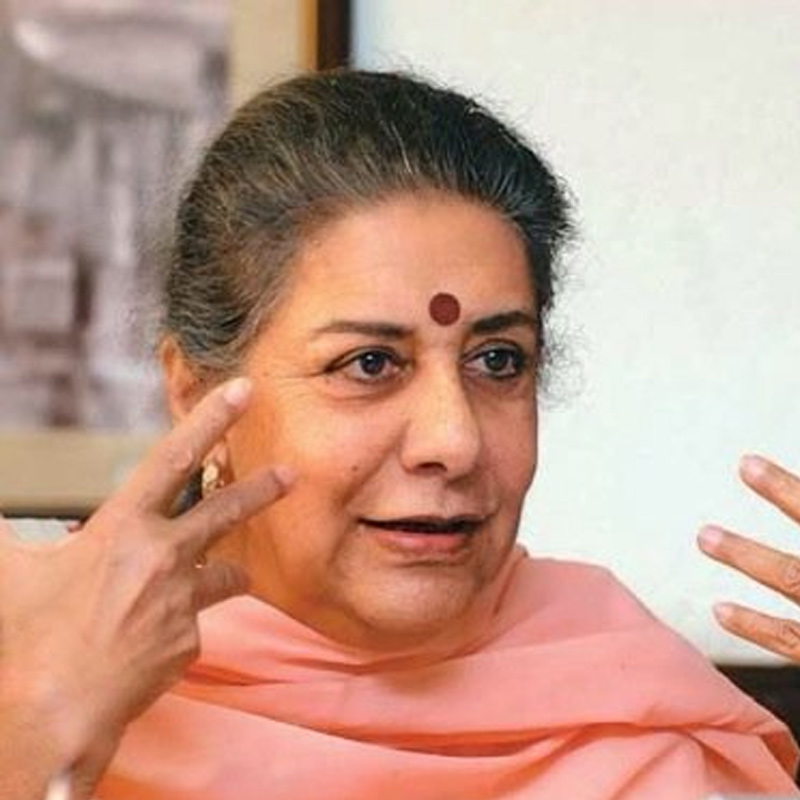
    NEW DELHI: Information and Broadcasting Minister Ambika Soni has said that the recent Assembly elections in five states had thrown up several cases of paid news.

    She said: “Special observers were appointed (by the Election Commission) to check the menace of paid news in the recent Assembly elections as well as in the elections in Tamil Nadu earlier. Some pink papers (business newspapers) have also been reported to have indulged in paid news.”

    Speaking on the sidelines of an event here, she drew attention to the large number of players in the electronic and print media, and its impact on news coverage.

    She regretted that the malaise of paid news which has grown especially since 2009, was not limited just to election time.

    “(Paid news) is something which weakens the freedom of the media, and all who argue for it,” Soni added.