Tag: Election Commission

  • HISTORY TV18 unveils documentary on the Lok Sabha Election in association with the Election Commission

    HISTORY TV18 unveils documentary on the Lok Sabha Election in association with the Election Commission

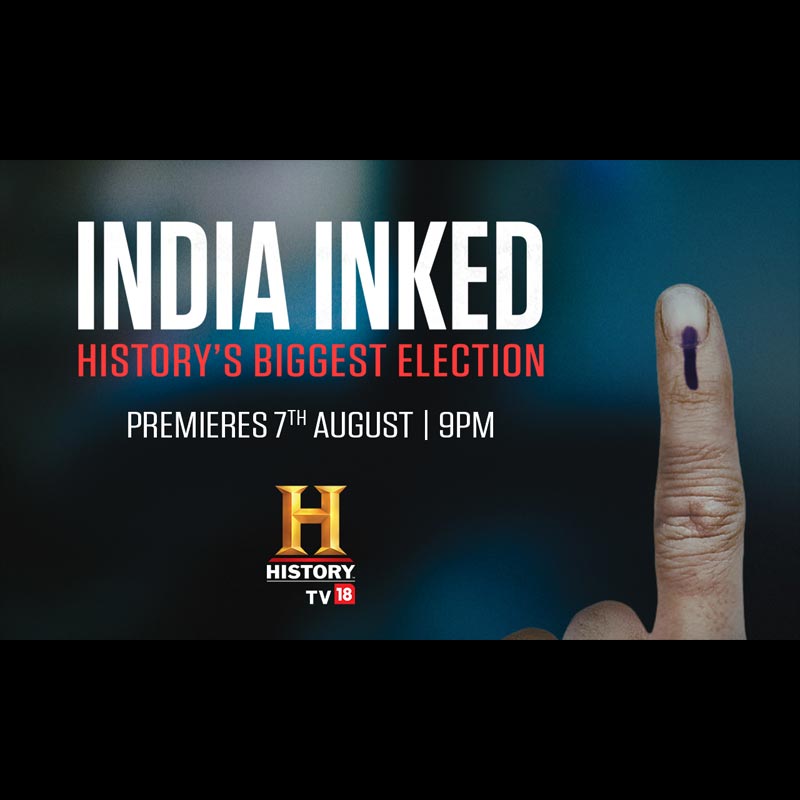
    MUMBAI: HISTORY TV18 today announced the release of its original production,“India Inked:History’s Biggest Election”whichbrings to life,‘the making of’the world’slargest ever, democratic exercise.The documentaryshowcases incredible facts, facets and stories of the colossal event, as never-seen-before. The show premieres exclusively on HISTORY TV18 on 7th August 2019, at 9 PM.

    India Inked:History’s Biggest Electiongoes beyond politics, age, gender, religion and geography to bring forth diverse narratives of voters, as well as of the unsung heroes ofthe record-setting endeavour. The one-hour special takes viewers on a mission across the length and breadth of the country and reveals the efforts of the Election Commission,various institutions and individuals,who overcome seemingly insurmountable odds, to conduct a free and fair election.

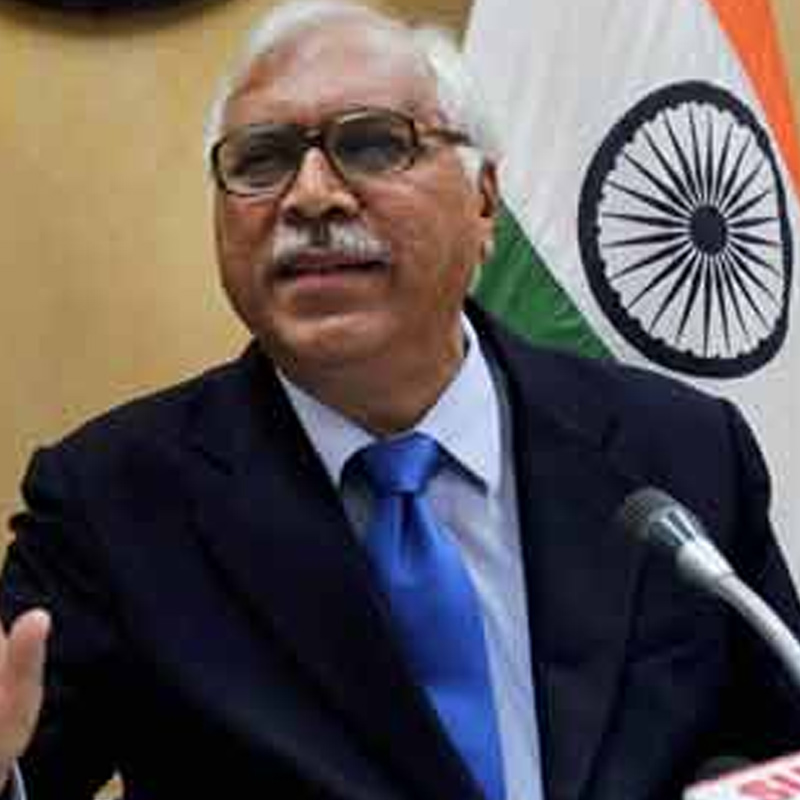
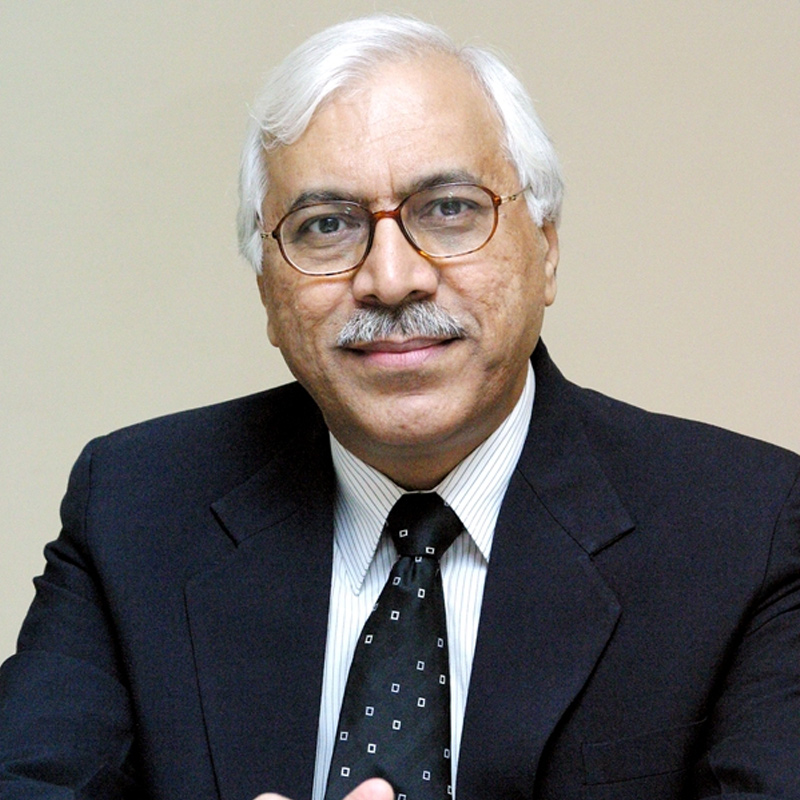
    Sunil Arora, Chief Election Commissioner of India said, “India’s General Election 2019, was the largest democratic exercise in history, with staggering statistics and daunting logistic needs. It is an example for the rest of the world in how to conduct free and fair polls. The EC’s teams, both permanent and those requisitioned for the specific purpose of conducting and overseeing the elections, have been exemplary in their service to the nation and to the fundamentals of democracy, as enshrined in India’s constitution.

    The Election Commission is happy to be associated with HISTORY TV18 in the creation of the documentary ‘INDIA INKED: HISTORY’S BIGGEST ELECTION’ that showcases what it takes to make it possible for the people of India to elect their parliamentary representatives. It is equally a testament to Indian voters, who turned out in the largest numbers ever, to cast their vote.”

    Avinash Kaul, Managing Director A+E Networks | TV18 and CEO- Network18 added "With ‘India Inked: History’s Biggest Election’, HISTORY TV18 reaffirms its promiseof offering content that is contemporary, compellingand informative. We sincerely thank the Election Commission for providing special access to our teams in the creation of the show. The documentary also reasserts our core philosophy thathistory is made every day, by ordinary people doing extraordinary things.”

  • Media houses warned against publicising exit polls

    MUMBAI: The Election Commission, noting violation by media houses of its fiat, has recommended them to keep away from publicising exit polls till a particular period during assembly elections in five states. EC asked the media not to air or publish such programmes in future so as to ensure fair polls.

    The strongly-worded advisory stated that “such attempts merely to score brownie points against the competitors for merely commercial reasons do not behove well.”

    In a letter to the News Broadcasters Association secretary-general and the Press Council of India secretary, the EC asked the print and electronic media to keep away from publicising exit polls or predictions about future poll triumphs.

    In the crucial advisory, the Commission has stated that use of astrology to bypass the ban on exit polls is not permitted. The advisory states that forecasts by political analysts or astrologers or tarot card readers is banned during the poll process. The media cannot publish or telecast any programme that predicts the poll outcome, the EC advisory read.

    The poll watchdog pointed to Section 126 A of the Representation of the People Act which states that “no person shall conduct any exit poll and publish or publicise by means of the print and electronic media or disseminate in any other manner, whatsoever, the result of any exit poll during such period as may be notified by the Election Commission…”

    It pointed out that in one of the channels, the panellists on the show, who were persons from different fields, had put forward the projected number of seats likely to be won by different parties in Uttar Pradesh.

  • EC rejects cancellation demand of PM’s ‘Mann Ki Baat’ on AIR, puts conditions

    EC rejects cancellation demand of PM’s ‘Mann Ki Baat’ on AIR, puts conditions

    NEW DELHI: The Election Commission (EC) has rejected demands for putting off the national broadcast of Prime Minister Narendra Modi’s Mann Ki Baat until the Bihar elections are over, but said nothing should be said that will have a bearing on the state polls.


    The demand had been made by the Grand Alliance formed in Bihar for the polls of various parties.


    Meanwhile, Modi has once again offered to share recordings of the messages he receives from people on different issues for the next edition of Mann Ki Baat, which will be broadcast on All India Radio and linked channels on 25 October.


    The Prime Minister has urged people to share their ideas for the programme on the MyGov Open Forum. 

    In a tweet he said: “Have an idea for #MannKiBaat programme this Sunday? Share it on the MyGov Open Forum. https://mygov.in/group-issue/give-your-inputs-prime-ministers-mann-ki-baat-25th-october-2015/”.  

    The Prime Minister has also invited people to share their voice messages for the programme on the toll-free number 1800-3000-7800. Selected voice messages may be included as part of the broadcast. 

    “Your voice on #MannKiBaat…dial 1800-3000-7800 and share your message. Some of them will be a part of the programmethis Sunday,” he tweeted. 

    The Mann Ki Baat broadcast this Sunday will the 13th edition of the programme and is scheduled for broadcast at 11 am.  

    The programme is broadcast live on the entire All India Radio network and Doordarshan channels. The programme would also be live-streamed on the YouTube channels of Prime Minister’s Office, Information & Broadcasting Ministry, and DD News. Regional language versions of this broadcast will be aired by AIR stations in respective regions at 8 pm the same day.

  • Election Commission bans exit polls by print & TV media for Bihar elections

    Election Commission bans exit polls by print & TV media for Bihar elections

    NEW DELHI: The Election Commission of India has banned all electronic and print media including television channels from carrying out any exit polls between 7 am on 12 October and 5.30 pm on 7 November in view of the Assembly elections inBihar.


    The directive was issued by the Election Commission through a notification issued under Section 126A of the Representation of the People Act 1951.


    This includes a ban on publicising or publishing through any media the results of any exit poll in connection with the Assembly Elections.


    The notification further prohibited under Section 126(1)(b) any opinion poll in any electronic media during the period of 48 hours ending with the hours fixed for conclusion of the polls.

  • Election Commission issues detailed media guidelines for Bihar assembly polls

    Election Commission issues detailed media guidelines for Bihar assembly polls

    NEW DELHI: Even as the Model Code has come into effect for the elections to the Bihar assembly, the Election Commission today prohibited conduct of Exit poll and dissemination of their results during the period mentioned therein, that is, from the hour fixed for commencement of polls in the first phase and half hour after the time fixed for close of poll for the last phase in all the States.


    The directive was issued under Section 126A of the Representation of Peoples Act 1951. The polls commence from 12 October and will continue till 8 November, in five phases.


    The Commission reiterated that the TV, radio channels and cable networks should ensure that the contents of the programme telecast by them during the period of 48 hours referred to in Section 126 of the Act do not contain any material, including views/appeals by panelists/participants that may be construed as promoting/prejudicing the prospect of any particular party or candidate(s) or influencing/affecting the result of the election. This among other things includes display of results of any opinion poll and of standard debates, analysis, visuals and sound-bytes.


    At the outset, the Commission said there are sometimes allegations of violation of the provisions of Section 126 by TV channels in the telecast of their panel discussions/debates and other news and current affairs programmes. The Commission said it has clarified in the past that Section 126 prohibits displaying any election matter by means of television or similar apparatus during the period of 48 hours ending with the hour fixed for conclusion of poll in a constituency.


    “Election matter” has been defined in that Section as any matter intended or calculated to influence or affect the result of an election. Violation of the aforesaid provisions of Section 126 is punishable with imprisonment up to a period of two years, or with fine or both.


    During the period not covered by Section 126 or Section 126A, concerned TV, radio, cable and FM channels are free to approach the state, district or local authorities for necessary permission for conducting any broadcast related events, which must also conform to the provisions of the model code of conduct and the programme code laid down by the Information and Broadcasting Ministry under the Cable TV Networks (Regulation) Act 1995 with regard to decency, maintenance of communal harmony, etc.


    They are also required to stay within the provisions of Commission’s guidelines dated 27 August 2012 regarding paid news and related matters. Concerned chief electoral officer or district election officer will take into account all relevant aspects including the law and order situation while extending such permission.


    Apart from issuing separate guidelines for the print media, the Commission also drew attention of the media to the guidelines issued by the Press Council of India and the News Broadcasting Standards Authority with regard to elections.

  • Election broadcast must be seen in context of electoral constituencies: NBSA

    Election broadcast must be seen in context of electoral constituencies: NBSA

    MUMBAI: A case had been filed against English news channels CNN-IBN, NDTV, Times Now and Headlines Today regarding a piece of news that was broadcast on 7 April 2014.

    The complaint filed by Vishal  Kudchadkar and  Syed Ali Hussaini claimed that on the particular day, some constituencies in Assam and Tripura went to polls but the above mentioned channels chose to broadcast the BJP manifesto release on the same day. According to the complainants, they have violated the Section 126 (1) of the Representation of People Act, 1951, which prohibits any public display of  election  matter  by means  of cinematography,  television and other  similar apparatus  during  the  period  of 48 hours  prior  to  the end  of  polling.  

    This apart they allege that it also violates the direction of the Election Commission of India and Guideline 12 of the NBA guidelines for election broadcasts.

    The NBSA sought a reply from the ECI in this regard to which it said, “The legal opinion (obtained by EC) on the issue relating to Section 126 of  RP Act was that the said section,  being a penal provision,   had  to be strictly construed; and that the telecasting of an election related event such as release of election manifesto or an election address or a press conference outside the limits of a constituency  going  to   the  poll  would  not  attract  the  penal  provisions  of Section 126; and that the prohibition  regarding the release of  a manifesto or election address or press conference will have to be restricted  to any election matters relating to that constituency and the candidates in that constituency.”

    Guideline 12 of the NBA says, ‘The  broadcasters shall not broadcast any ‘election matter’ that is, any matter intended  or calculated to influence or affect  the result of  an election during the 48 hours ending with the hours fixed for the conclusion of  poll, in violation of  Section 126 (1) (b) of  the Representation of People Act. 1951.’ The EC was proposing to consider the broadcast of the BJP manifesto as a violation of section 126 of RP Act.


    Therefore, the NBSA feels that this falls in the jurisdiction of the criminal courts. It says that it could have considered that the broadcasters had violated the provision of section 126 (1)(b) of the RP Act, had the words ‘in violation of section 126(1)(b) of the Representation of People Act, 1951’.


    The election matter also involves the fact that whether anything was done to disturb or tilt the voting scenario in the area where it is being held rather than throughout the country. Therefore, the NBSA says that the complaints have no merit and can be closed.


  • Akshay Rout takes over as ADG in DD News

    Akshay Rout takes over as ADG in DD News

    NEW DELHI: Doordarshan has got a new ADG for its news side in Akshay Rout. He will take over as the former ADG Mayank K Agrawal has been shifted to the Press Information Bureau as ADG for media and communications.

     
    An Indian Information Service officer, Rout was director general in the Election Commission of India and has been transferred following completion of his term there. Earlier, he had also served as chief electoral officer in Madhya Pradesh.

     
    Agrawal who has experience of around 25 years has earlier served in PIB and in the NACO wing of the Health Ministry.

     
    Prasar Bharati has seen several changes this year, particularly since the Bharatiya Janata Party government took over.

     
    While Vijaylakshmi Chhabra took over as DG of Doordarshan in July, Archana Datta took over as DG News in Doordarshan.

     
    The Prasar Bharati Board, most of whose members resigned when the new government took over, has a new chairman in A Surya Prakash.

     
    An advertisement has also been placed for filling the post of member (finance) in the board.

  • EC issues detailed guidelines for forthcoming state assembly polls

    EC issues detailed guidelines for forthcoming state assembly polls

    NEW DELHI: Even as the Model Code has come into effect for the elections to the Jharkhand and Jammu and Kashmir assemblies, the Election Commission today prohibited conduct of Exit poll and dissemination of their results during the period mentioned therein, that is, from the hour fixed for commencement of polls in the first phase and half hour after the time fixed for close of poll for the last phase in all the States.

     
    The directive was issued under Section 126A of the Representation of Peoples Act 1951 and Section 133 A of the J&K R.P. Act, 1957.

     
    The Commission reiterated that the TV/Radio channels and cable networks should ensure that the contents of the programme telecast/broadcast/displayed by them during the period of 48 hours referred to in Section 126 of R.P. Act 1951 and Section 133 of J&K R.P. Act, 1957 do not contain any material, including views/appeals by panelists/participants that may be construed as promoting/prejudicing the prospect of any particular party or candidate(s) or influencing/affecting the result of the election. This among other things includes display of results of any opinion poll and of standard debates, analysis, visuals and sound-bytes.
     

    At the outset, the Commission said there are sometimes allegations of violation of the provisions of Section 126 of the RP Act 1951 by TV channels in the telecast of their panel discussions/debates and other news and current affairs programmes. The Commission said it has clarified in the past that Section 126 prohibits displaying any election matter by means of television or similar apparatus during the period of 48 hours ending with the hour fixed for conclusion of poll in a constituency.

     
    “Election matter” has been defined in that Section as any matter intended or calculated to influence or affect the result of an election. Violation of the aforesaid provisions of Section 126 is punishable with imprisonment upto a period of two years, or with fine or both.

     
    During the period not covered by Section 126 or Section 126A, of R.P. Act, 1951 and Section 133 and 133 A of J&K R.P. Act 1957 concerned TV/Radio/Cable/FM channels are free to approach the state/district/local authorities for necessary permission for conducting any broadcast related events which must also conform to the provisions of the model code of conduct and the programme code laid down by the Information and Broadcasting Ministry under the Cable TV Networks (Regulation) Act 1995 with regard to decency, maintenance of communal harmony, etc. They are also required to stay within the provisions of Commission’s guidelines dated 27 August 2012 regarding paid news and related matters. Concerned Chief Electoral Officer/District Election Officer will take into account all relevant aspects including the law and order situation while extending such permission.

     
    The Commission also drew attention of the media to the guidelines issued by the Press Council of India and the News Broadcasting Standards Authority with regard to elections.


  • Unique video game developed to encourage voters to cast their ballot

    Unique video game developed to encourage voters to cast their ballot

    NEW DELHI: In a unique venture, the Election Commission of India has developed a video game titled “Get! Set! Vote!” amongst a series of edutainment materials on voter awareness and education.


    The game has been created to broadly engage citizens of all age groups to learn on democracy and electoral process. 

    In a fun-filled and interactive manner, the video game gives out pieces of information and interesting details in10 levels of mazes. With every successive level, the information becomes more specific to subjects such as Indian democracy, registering to vote, ethical voting, help from ECI and so on. The mazes also get more challenging with the player clearing each level. 

    Under the Commission’s SVEEP (Systematic Voter Education and Electoral Participation) programme, the video game has been developed in collaboration with the United Nations Development Programme India.


    It is available for playing on the ECI website (www.eci.gov.in) and can also be downloaded from the link- www.eci.nic.in/eci_main1/sveep.aspxfor playing on computers and kiosks. 


    A series of edutainment materials including picture book “Proud to be a Voter” and “Garv se bane Matdata”; Cartoon Strips “Wah Election Wah”; board game “Ready! Steady! Vote!” and “Vote kiBaazi”; and radio programme “Loktantra Express” has been developed for imparting voter education through entertainment. All materials can be accessed at the aforesaid link. Such materials will be disseminated through the election machinery, educational institutions and related agencies for addressing targeted population.  

  • Advertisements on state-owned buses banned during Elections

    Advertisements on state-owned buses banned during Elections

    NEW DELHI: The Election Commission (EC) has banned the display of political advertisements on State Road Transport Corporation buses and vehicles owned by Municipal Corporations etc, and other government owned vehicles when the Model Code of Conduct is in force for State Assembly or Legislative Council elections.


    The Commission, which has already banned such advertisements through hoardings and posters, said “it wanted a level-playing field for all parties since state-owned buses or the corporations were necessarily run by the ruling parties.”


    It also added that the action was taken after having duly considered all aspects of the matter in exercise of its powers under Article 324 (1) of the Constitution, and in the interest of conduct of free and fair elections.


    The Commission’s circular letter of 7 October 2008 contains the instructions and guidelines to be followed in the matter of display of election related advertisements through hoardings, banners, posters etc. It mainly deala with advertisements on static property and regarding display of flags and stickers on private vehicles.


    It can also be noted that there may be cases where advertisement-panels on buses are let out to advertising agencies for allocation to various clients during certain periods as per the contract entered into by them.


    EC also stressed that a level playing field envisaged under the Model Code of Conduct is a very vital aspect for ensuring free and fair elections. “A party should not be in a position to take undue advantage on account of it being in power in the government. This will put the other parties and contestants at a disadvantageous position and will disturb the level playing field, adversely affecting the fairness of election.”


    “There is reasonable likelihood that the allotment of advertisement spaces on such vehicles is likely to be manipulated more so in politically important constituencies and as such it will not be easy to ensure equitable distribution of advertisement space on the buses,” the Commission concluded.