Tag: Elara Capital

  • SAT allowing Punit as CEO of Zee/Sony merged co. – a potential overhang if Sony does not agree on the same

    SAT allowing Punit as CEO of Zee/Sony merged co. – a potential overhang if Sony does not agree on the same

    Mumbai: As per media reports (link – https://tinyurl.com/4sfbhbn4

    ), Sony does not want Punit Goenka to head Zee/Sony merged co, amidst the ongoing SEBI investigation which will continue despite interim relief from SAT. We believe this is as per our two scenarios pointed out earlier (scenario 1 – merger process expedited with clarity over Punit and scenario 2 – Sony not in favour of appointing Punit as CEO amidst the ongoing investigation), which clearly mentioned that Sony may not be in favour of having a CEO who is undergoing an investigation.

    Legally, we don’t foresee any challenge in appointing Punit as CEO, post the relief by SAT- as indicated by primary checks with legal experts too. However, as Sony is the majority in this merger – they may decide to appoint someone else due to this investigation; there is a high likelihood of Sony appointing someone internally to head the merged co.

    There is minimal impact of the above move (change in CEO) eventually, as the appointment of a new CEO will require a mere shareholder and Board approval; as mentioned earlier, we don’t foresee big delays beyond a point for the merger and the process could end over next 8-12 weeks, as Sony may not wait longer than that. Hence, we don’t even expect a big delay as such on the merger due to this move. Expect a larger transition time in business synergies case of Sony acquiring Zee without Punit, due to a potential new management for Zee

    Albeit above, 1) the business synergies, 2) superior CG (corporate governance) practice, 3) scale in OTT remain to be the drivers for the merged co and this could drive superior valuation multiples.

    Various scenarios that could emerge basis above – if Punit Geonka changes his stance and wants to remain CEO of the merged co, post SAT approval or keeps his stance (not wanting to become CEO)

    1) Scenario one – Sony may back out – merged called off  (Probability -20 per cent)

    In case of Punit Goenka wanting to be the CEO of the merged co. and Sony not agreeing upon the same,  it may lead to Sony backing out of the merger. We believe the probability of this event seems to very low, as the merger is very important for Z shareholders and the Goenka family; also, Sony may struggle to scale up in a market like India in case Disney is acquired by Reliance. We believe Sony too is equally eager for the merger as Z is, as the linear TV and OTT market has turned disruptive.

    2) Scenario two – Punit remains CEO of the merged co (Probability -10 per cent)

    In this scenario, Sony may allow Punit Goenka to remain as CEO and have their own finance, operations team for day to day affairs, with a majority on Board by Sony. However, given Sony’s MNC culture, this may seem to be a low likelihood event, unless they legally need to do it (As per term sheet of the merger) and cannot back out of the merger; Sony may not want to have a CEO on Board, who is under a SEBI investigation

    3) Scenario three – Punit may be offered a board seat, but not a CEO role (Probability -30 per cent)

    In this scenario, Punit may be offered a Board seat in the merged co, but not a CEO designation, until the outcome of investigation is known. This in turn may lead to superior CG practices in Z, with change in finance and operations team post the merger by Sony. This could potentially be a win-win for both parties, if mutually agreed upon. Further, Punit may also ask Sony for a higher non-compete fee in case he plans to step aside of Zee and not become CEO. We believe the probability of this event is on the higher side, as Punit may eventually agree to be on Board in the interim, until the outcome of investigation is known with a higher non compete fee

    4) Scenario four – Merger goes ahead without Punit (Probability – 40 per cent)

    In this scenario, Punit Goenka agrees to step aside as CEO if Sony decides to call off the merger; Sony may continue to run its India operations in India if the merger is called off, but Zee may struggle as valuations may come off atleast 50 per cent if the merger does not go through, which in turn could hamper shareholder and promoter stake valuation in Z today. We thus believe that at the end of the day, bargaining power is limited from Z promoter side, and they may have to agree upon the same. Sony can also seek shareholder approval (consortium) and go ahead with the merger without Punit Goenka. We believe probability of this event is the highest as shareholders own the company, with promoters having a mere 4 per cent stake.

    In terms of merger process, Z has already filed with ROC (Registrar of Companies); the merger process has reached advance stages and hence it may be tough for Sony too to back out of this merger. We thus believe that the likelihood of this merger going through remains high (80 per cent probability) with or without Punit Geonka; however, the recent approval by SAT allowing Punit as CEO and Sony not agreeing upon the same is a potential risk for the merger, as probability of the merger not going through moves up to 20 per cent now. As per our checks with legal experts, SEBI will file a stay in Supreme Court against the SAT order by end of this month. We await updates from Sony and Zee management, which will provide us more colour on where this merger could be headed.

    The credit for this article goes to Elara Capital Sr VP – research analyst (media, consumer discretionary & internet) Karan Taurani.
  • Post SAT order impact  – Media & entertainment – Win-win for Z-Sony

    Post SAT order impact – Media & entertainment – Win-win for Z-Sony

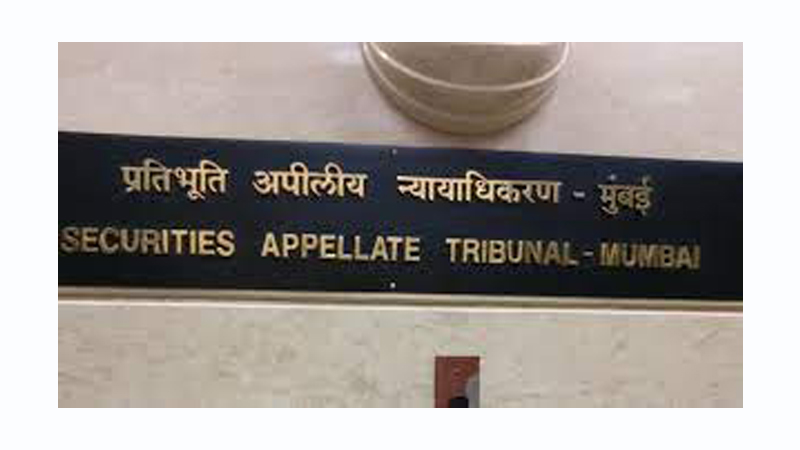
    Mumbai: The Securities Appellate Tribunal (SAT) passed an order on 30 October 2023 allowing Mr. Punit Goenka to become CEO and MD of the merged company, Zee Entertainment-Sony (Z-Sony). Based on our assessment of the detailed order (Zee SAT order) and channel checks with legal experts, we believe the SAT order is a positive for Goenka, as it states he can continue as MD and CEO, as there no strong evidence yet to support the allegations of money siphoning against him; further, his counsel has provided adequate evidence and documents to substantiate it.

    Post this order, there is a high likelihood the Securities and Exchange Board of India (SEBI) will appeal against the order in the Supreme Court to get a stay; however, Z-Sony merged co. can be formed with Goenka as its head in the interim. The SAT order also states the investigation in this case will continue; as per our assessment, the outcome could take 12-18 months; Goenka could obtain necessary legal recourse in case the outcome is against him in the medium term; if it is favourable, he will continue as usual.

    This underscores our view that there is no likelihood of Sony backing out from the merger, and Goenka getting relief could lead to expedited timelines for the merged entity to be formed with him at the helm, as it may not require changes in the term sheet or any shareholder and Board approval. Further, appeals made by Axis Finance and IDBI Bank will have no impact on the merger, and the NCLT approval is without any conditions. We believe the merged entity record date could be announced in the last week of November or in the first week of December, which means the merged firm could be listed in January 2024 (post six weeks of delisting). We maintain BUY with a Sep’24 TP of Rs 340.

    SAT order removes overhang on merger: Goenka to be reinstated as CEO of merged entity

    The SAT order is a significant victory for Goenka. Nevertheless, it is expected that SEBI will persist with its investigation, as the allegations against Zee Entertainment appear to hold merit. However, Sony will have to appoint Goenka as CEO of the merged company; further, this will not lead to change in the merged entity board and merger timelines. It is highly likely that SEBI will file a statutory appeal against the SAT order in the Supreme Court in the next 60 days. If this were to take place, the earliest date for a hearing would be scheduled for the first week of January 2024. Therefore, we believe there is no likelihood of Sony backing out of the merger as there are no legal constraints preventing it from proceeding. Further, the cases before the National Company Law Appellate Tribunal (NCLAT) against Zee will continue and will have no impact on the merger.

    SEBI to continue with the investigation without a timeframe

    As per the order, SAT has acknowledged the allegations of fund diversion have yet to be proven, and both Zee Entertainment (Z IN) and Goenka have presented satisfactory explanations supported by documentation, effectively fulfilling the burden of proof. Additionally, SAT also says it has noted factual inaccuracies in the order issued by whole-time members regarding specific companies that were classified as Essel Group companies when in fact they were not, but at this moment it is not fair to punish Goenka because the merger of Zee-Sony has been allowed. Nevertheless, SAT has granted SEBI the authority to proceed with its inquiry into the alleged fund diversion of Rs 42.1bn by Subhash Chandra and Goenka, without establishing a specific timeframe for the investigation. Z and Goenka have been instructed to cooperate with the investigation.

    Merged entity likely to be listed between December 2023 and March 2024

    We expect the merged entity to get listed anytime between December 2023 and March 2024.  This will depend on how Sony wants to take it forward. The RoC (Registrar of Companies) filing has been done and processes required for the merger could end in the next four weeks. The investigation timeline could vary between 12 and 18 months post the merged entity is formed. In case allegations are not proven, things will continue as usual. However, in case allegations are proven, Goenka may have to step down or find legal recourse. Post the merged entity is formed with Goenka as CEO, our checks with legal experts indicate that Sony may also support Goenka in legal proceedings against SEBI, which also provides comfort.

    We retain our positive stance on Z-Sony merged company

    In the newly configured merged entity Board, five out of nine directors would represent Sony, with the Chairman also hailing from Sony. This shift in Board composition is anticipated to lead to an enhancement in corporate governance at Z along with a change in management dynamic favouring Sony. We retain our positive stance, led by:

    1) synergistic benefits

    2) MNC control (superior corporate governance practices)

    3) positive impact of consolidation in the TV industry

    4) Scaling up of the OTT business.

    The credit of this article goes to Elara Capital SVP Karan Taurani

  • SAT sets aside SEBI order against ZEE promoters

    SAT sets aside SEBI order against ZEE promoters

    Mumbai: SAT has quashed SEBI’s order of barring Punit Goenka from holding key directorship in listed entities over the alleged fund-diversion case.

    Our view

    Implications of the event

    Scenario 1- This may expedite the Zee/Sony merger process; if SEBI gives a go ahead in favour of Punit Goenka, without going to the Supreme Court, post the detailed order that is to be released tonight. In this case, we expect the record date to be announced around last week of November 23. This in turn means that the listing of the merged co. will happen towards the first week of Jan ’24. Further, with Goenka coming on Board, there will be no need for any changes in the term sheet, or any Board/shareholder approval required for change in CEO; this also means that business will be as usual for ZEE and lesser transition time with little change in senior management.

    Scenario 2- SEBI can also move to the Supreme Court to appeal for a stay against SAT’s order. Further, the SAT order may only mention that Goenka can continue as CEO of Zee or the merged co; however, SEBI’s investigation on grounds of fraud may continue after this relief by SAT. This in turn means that there is still a high likelihood of the merger going through without Goenka. We believe there is a low likelihood of Sony allowing Goenka to continue as CEO of the merged Co, unless the issue with SAT is resolved (in case of SEBI going to Supreme Court). In this case, there may be a delay in the merger too, if Goenka changes his stance  and waits for the outcome of investigation; if Sony does not wait, then merger will go through as usual and the merged co will get listed by Jan’24

    Change in media landscape – a big benefit for Zee/Sony

    With Reliance wanting to acquire Disney, the media landscape on TV/OTT side will see a big consolidation as two large players – 1) TV18/Disney and 2) Zee/Sony could potentially command a market share of 67%/53% (TV18/Disney and Zee/Sony together) on TV/OTT in India; which could shift bargaining power in their favour and help them grow ahead of industry averages, as other players may scale down in the ecosystem

    No overhang of CG issues

    With Sony coming as a parent company, we expect no CG (corporate governance) issues in the future, which in turn will drive re-rating of valuation multiples for Zee.

    The stock has corrected more than 10 per cent from its peak over the last three months post the NCLT approval in Aug’23, citing delay on the merger. We await 1) the detailed order and 2) SEBI’s response on the above judgement order passed by SAT to allow Goenka to be a part of Z to assess the actual impact of the above decision for the merger and Goenka; we have a BUY recommendation on Zee with a Sept 24 TP of Rs 340 – we will await more developments over the near term on above.

    Background of the event

    • On 12 June 2023, SEBI banned ZEE promoters Chandra & Goenka from holding directorial, key managerial roles over allegations of fund siphoning. On 13 June 2023, ZEE promoters approached SAT against the order following which SAT provided SEBI 48 hrs. to file a reply against ZEE’s plea.

    • On 10 July 2023, two weeks of time were provided by SAT to ZEE promoters to file a response against the interim order. Meanwhile ZEE formed an interim committee of senior executives to run operations at the company.

    • On 14 August 2023, SEBI asked for 8 months of time to complete investigation of alleged fund diversion by Zee promoters (due to significant red flags in the transactions between Zee and Essel entities) which was again challenged by ZEE on 26 August 2023.

    • On 27 September 2023, SAT reserved order on the case after hearing from both the parties.

    • On 30 October 2023, SAT quashed SEBI’s order barring Goenka from holding key directorship in listed entities over the alleged fund-diversion case.

    The credit of this article goes to Elara Capital SVP Karan Taurani

  • MNC media juggernaut arrives

    MNC media juggernaut arrives

    Mumbai: The National Company Law Tribunal’s (NCLT) approval for the Zee Entertainment -Sony merger without conditions offers further respite for Z valuation, which has been muted for the past two years (the stock has not given any absolute returns). The company will now move to Registrar of Companies to file for the merged entity once the final NCLT order is released; in the interim, we await the outcome of the SEBI and SAT cases against the Goenka family, the promoter, which may not have any adverse impact on the merger, as Punit Goenka has already stepped down from the Board; in a worst case scenario, the Board and shareholders will appoint a new CEO in case SAT order is against Punit Goenka. Post the regulatory approvals, Z will be delisted, and the merged company will be relisted as Sony-Zee wherein 100 shares of Z will enable shareholders to get 85 shares of the merged entity (~2-3 months process). We do not expect any change in the deal contours despite the long delay, as NCLT has approved the scheme. Further, Sony will get a majority shareholding of 50.8 per cent in the merged entity whereas the Goenka family’s stake will move up to 3.99 per cent, which includes the non-compete fee. We do not expect any impact from creditors filing a case against the NCLAT order.

    Moat remains for the merged company

    Z-Sony commands an ad market share of 24 per cent as on CY22, below the other large peer, Star-Disney, which is at 33 per cent; formation of a large entity on the broadcasting side would lead to cost and revenue synergy, which would offset the negative impact of lower growth rates (India TV ad revenue CAGR has been flat over FY20-23).

    Valuation: reiterate Buy with a higher TP of Rs 340

    We expect better execution in terms of strategic initiatives, due to global expertise and better CG (corporate governance) initiatives , which should propel higher cashflow. We do not expect Z-Sony valuation moving to 32- 33x fwd. P/E (peak valuation multiple in FY18). This is because India’s media landscape has changed with 1) TV broadcasting growth rates converging, and 2) digital business offering limited opportunity for monetization & scale due to disruption; however, we expect the negative impact to be offset by: 1) the merged company, and 2) an MNC-backed firm, which would lead to P/E at a 40 per cent discount vs peak (32x one-year forward). We introduce FY26E for the merged entity and value the core broadcasting business at 20x (from 17x) one-year forward P/E (potential exit of Disney from linear TV may enable Z-Sony to gain market share). We rollover to 24 Sept (since synergies will take some time to kick in) SOTPbased TP of Rs 340 from Rs 300 (after factoring in higher sports losses), with a cash infusion from Sony, synergy and valuing the OTT business 4x one yr. fwd. EV/Sales; our PAT estimate incorporates potential OTT losses.

    The credit of this article goes to Elara Capital SVP Karan Taurani.

  • Disney India to scale down it’s linear TV business

    Disney India to scale down it’s linear TV business

    Mumbai: Reportedly, Disney India may scale down its linear TV business or seek strategic options. It reported an EBITDA margin (with OTT losses) of four per cent (average of FY19-22), due to hefty investments/losses in high-cost cricket content. Zee’s (Z IN) average EBITDA margin (with OTT) was 24 per cent in FY19-22. As per our assessment, unit economics of the TV business is strong, led by healthy profitability margin (~30-32 per cent EBITDA for larger broadcasters core Tv business, ex OTT losses).

    Digital has gained sharp traction since the launch of affordable 4G data, as the India OTT market has posted a CAGR of 19 per cent in FY19-23 to USD 2.1bn. Also, TV industry CAGR declined one per cent in FY19-23, on: 1) regulatory concerns on ARPU, 2) tepid ad environment in linear TV and 3) consistent drop in viewership and consumption patterns. Despite this, TV is still the largest medium after digital, with an ad market share of 34 per cent in FY23 (dip of 330bp from FY20).

    We continue to believe that despite converging growth rate, linear TV medium is a key mode of mass campaigning for larger advertisers (FMCG contributes 45 per cent to TV ad revenue), given the reach/scale it has. Digital has the potential to grow, but unit economics are not yet proven. No larger OTT platforms in India have turned profitable despite: 1) launch

    since 2017 (post 4G data becoming cheaper), and 2) strong adoption/during Covid, which increased time spent/consumption. Also, India OTT has many concerns such as: 1) price sensitive market (lower APRUs), 2) higher distribution costs (heavy dependence on telcos/OEM, 3) higher content costs, 4) lower wired broadband penetration and 5) fragmented nature of the OTT market (multiple languages). This further makes break-even or profitability is difficult for any OTT platform, in the near- or medium-term. We, thus, prefer the linear TV business from a profitability standpoint and believe it will be a win-win for India despite tepid growth rates, as digital is an expensive medium. This may be a challenge to scale at mass – Digital ARPU for a consumer with major OTT platforms subscriptions and data costs is Rs 1,500, 4x higher than that of TV ARPU (Rs 350).

    We believe an exit or a strategic change by Disney in India may augur well for peers such as Zee, Sony, Viacom18, SUNTV, enabling a strategic shift in the ‘go to market’ strategy, in turn benefitting other players to gain market share. Subject to regulatory approvals (NCLT), Zee-Sony merger may be the biggest beneficiary of any changes in Disney management or market strategy, as Zee-Sony commanded an ad market share of 25 per centin FY22, slightly below Disney’s 32 per cent. The merged entity (subject to approval) may thus see a big valuation re-rating , on likelihood of market share loss by market leader, Disney India. Disney India enjoys strong recall across genres such as urban GEC, Tamil, Telugu, Marathi, and sports, which together contribute 65 per cent to India’s TV revenues. TV may become further consolidated post Z-Sony merger with top two players (Z-Sony and Disney India) commanding ~60 per cent ad market share, leaving little or no potential for peers to gain (or spike) market share. We believe there is also a likelihood of Viacom 18 (73 per cent owned by RIL/TV18, 11 per cent TV ad market share)- the third largest broadcaster after Zee/Sony and Disney, becoming a strategic partner with Disney India as the former is aggressively seeking to make inroads in the media segment (TV via TV18/NW18; digital via Jio Cinema).

    This scenario too may not be very disruptive for the Z-Sony merged entity as it leaves with two players having an even larger share in the TV ad market. India OTT market is a long haul – Expect early signs of consolidation in the medium term, but broadcaster-based OTTs (Zee, Sony, Disney), Jio Cinema (largest telecom player) and global giants such as

    Amazon and Netflix may eventually command a lion’s share in this market. We expect smaller OTT platforms to tie up with these larger platforms for distribution/scale. Consolidation is the only way OTT platforms in India may move closer to break-even or profitability helped by 1) lower content cost 2) tech cost efficiency and 3) bargaining power with distributors. OTT is a business of scale/depth as platforms with a large customer base and strong content library may be the first ones to attain profitability due to efficiency on technology and distribution costs.

    The credit of this article goes to Elara Capital SVP Karan Taurani. 

  • Axis Finance moves to NCLAT – more noise, no impact

    Axis Finance moves to NCLAT – more noise, no impact

    Mumbai: Axis Finance has approached the National Company Law Appellate Tribunal (NCLAT), Delhi against the National Company Law Tribunal (NCLT) order approving the merger of Zee and Sony. The NCLAT has served notice to Zee in response to Axis Finance’s plea.

    We believe the above issue of Axis Finance approaching the National Company Law Appellate Tribunal (NCLAT) will not have any impact on the merger between Zee and Sony because the claims being pursued by Axis Finance, which amount to Rs 1,000 mn, are not directed at Zee but rather at its parent company, Essel Group. As mentioned in the NCLT merger order (Zee/Sony), Axis Finance has previously approached various legal bodies, including the Debt Recovery Tribunal (DRT) and high courts, for above claims; however, judgements on the same have not been in their favour (Axis Finance). Therefore, we believe these claims lack merit and will not impact the merger. Also, appeals with NCLAT may continue for months even after the merged company is formed, just like in the case of PVR-Inox merger (Consumer Unity & Trust Society appealed in NCLAT against the merger and the case got dismissed in August 2023 – six months after the merged company of PVRINOX was formed).

    As for the current status of the merger, the merged company is progressing with the Registrar of Companies (ROC) filing process, post receipt of the NCLT merger order. They are also engaged in discussions regarding Closing Precedents (CP) (the merged company may want to include July/August financials as well), which may result in a delay of two to three weeks in the merger timeline. We believe the record date is usually given one week prior to delisting. Considering the marginal delay in CP, the record date for the merger could be towards the last week of October 2023. Subsequently, relisting is expected to take place in the first or second week of December 2023 vs our earlier expectation of the second week of November 2023. Additionally, the company will need to submit details of the merged co. Board of Directors to the Ministry of Information & Broadcasting (MIB), before the record date is finalised.

    Further, the SEBI/SAT issue (with promoters) too may not impact the merger timelines as the NCLT merger approval is without any condition.

    We have a BUY recommendation on Zee with a 24 Sept TP of Rs 340 – we maintain our positive stance on the company; PFA our latest company update post the NCLT merger approval.

    The credit of this article goes to Elara Capital SVP Karan Taurani.


  • BCCI bilateral rights – Hefty premium on a low base; marginally below our estimates

    BCCI bilateral rights – Hefty premium on a low base; marginally below our estimates

    Mumbai: BCCI bilateral rights for 88 matches have been sold of INR 59.6 bn (8 per cent below our estimated range of INR 65bn-INR 75bn, link – https://tinyurl.com/2u8v8xrm) which is 13 per cent higher on a per match basis vs the earlier cycle (43 per cent lower vs IPL on a per match basis).

    * Whilst comparing this with IPL, premiums vs base price for TV/digital in IPL per match were at 17 per cent /72 per cent on an already high base price, whereas in the case of these bilateral matches, premiums vs base price for TV/digital per match basis is 63 per cent /41 per cent vs base price (base price was set much lower than earlier cycle’s final price per match). In our view, TV premium compared to base price could been higher than digital, due to Viacom 18 bidding aggressively for her same as one platform having both (TV and digital rights) lead to better advantage on bundling and higher negotiating leverage with advertisers  

    * Overall premiums (vs earlier cycle) for these rights been much lower vs IPL due to 1) lower number of T20 matches, 2) less interest in bilateral matches with a large tournament like IPL garnering interest on home grounds already, 3) lesser number of platforms bidding for the same and 4) a poor ad environment over the last one year; IPL had attracted a premium of 117 per cent on a per match basis vs it’s last cycle price, whereas these rights have come at a premium of mere 13 per cent on a per match basis  vs it’s last cycle’s price.

    Further, in this case, the cost of per match on digital has surpassed cost of per match on TV , as digital is 8% higher on a per match basis; in the case of IPL – TV and digital were largely on par on a per match basis

    Earlier cycle of the bilateral rights was not unbundled hence there isn’t a comparison on TV/digital rights basis per match  

    We believe that a single entity securing both TV and digital rights is mutually advantageous, as it enhances the negotiating leverage of the platform. This allows them to offer bundled options to advertisers. In contrast, when two separate players acquire TV and digital rights, it fuels competitive rivalry between platforms, resulting in a dampening effect on overall revenues (IPL revenues were down YoY in CY23); we believe bundling prevents advertisers holding a stronger bargaining position as compared to the platforms.

    Acquisition of BCCI bilateral rights will also enable Jio cinema to become even bigger in the Indian OTT ecosystem; the platform has an AVOD market share of ~22-24% already in CY23, after factoring IPL revenue and other content; revenues can scale up further due to these bilateral rights; this in turn will intensify competition in the OTT segment and work negatively for other broadcast-based OTT players like Sony, Zee, Disney+Hotstar. It will also continue to negatively impact SVOD revenue growth for Indian OTT, as Jio Cinema may continue to offer content free  

    On the TV side, this is Viacom’s first large scale cricket acquisition, as IPL and WC rights on cricket for TV are with Star/Zee respectively.

    The credit of this article goes to Elara Capital SVP Karan Taurani 

  • India’s DPDP Bill – a win-win for consumer tech platforms

    India’s DPDP Bill – a win-win for consumer tech platforms

    Mumbai: India’s Digital Personal Data Protection (DPDP) Bill, is expected to be implemented over the next six to eight months in a phased manner; hefty penalties have been imposed for breach of data. This Bill will have a positive impact on companies/platforms that use first party data, whereas players using or sharing third party data (Google cookies, publisher platforms) could see a negative impact; this could potentially mean that sourcing data may become an expensive proposition for programmatic companies like Affle, as they may need to invest in enhancing their own database (first party). This Bill mirrors UK’s GDPR (General Data Protection Regulation) in terms of the major norms mentioned therein. Internet platforms like Zomato, Nykaa, Paytm etc may have relatively lesser monthly active users (MAU’s) as compared to social/search giants like YouTube, Meta, however the former has a detailed understanding of their limited customer base, with more intelligence around their purchasing/consumption patterns; e-commerce giants like Amazon, Flipkart too will have a big edge due to data protection, as they can earn ad. revenue with the help of their first party data, which will help provide better monetisation and profitability over the medium term.

    Long haul for implementation of the DPDP Bill (six to eight months)

    The DPDP (Digital Personal Data Protection) act, which has been highly anticipated, has been in the works for the past four to five years. Numerous drafts have been exchanged and extensive input has been gathered from the industry stakeholders. Although the Bill is set to take effect on 11 August 2023, its actual implementation has not yet occurred. Currently, the sections have not been enforced, but there are plans to assign specific dates for the phased implementation of these sections.

    The scope of its applicability extends to all forms of digitised or digital personal data. Notably, the act also holds extraterritorial jurisdiction. This means that all entities, including those located outside of India, that process data to offer data services within the country, will be obligated to adhere to the provisions of the act. The Bill is anticipated to bring about a positive impact. India is undergoing rapid digital transformation, and with such swift digitization, there’s a substantial amount at risk. Considering the challenges posed by data leaks, the implementation of this law is crucial. It will establish a regulatory framework that offers a cleaner environment for the transmission and processing of personal data.

    Substantial penalties for non compliance/data privacy breach

    The entirety of the act’s liability is placed upon the data fiduciary. The responsibility for implementing safeguards to ensure data protection also falls solely on the data fiduciary. Implementing the requirements should not pose a significant challenge for data fiduciaries, provided they approach it with seriousness and a willingness to comply. The Bill makes it obligatory to report breaches of the principles, regardless of whether the breach is categorized as a high-security breach or not. Entities will undoubtedly feel apprehensive about the substantial penalties, given their magnitude. Data fiduciaries have a responsibility to uphold reasonable security measures for personal data when processing such information. Failure to inform both the board and the principle in case of a data breach can lead to significant fines being imposed. Rather than waiting for the possibility of never being reported and taking on the associated risks, companies could proactively reach out to a wider customer base about the data leak. This approach would involve enhancing compliance efforts and demonstrating a commitment to addressing the issue.

    Contents of the DPDP Act have been drawn heavily from EU’s GDPR

    The Indian legislation has drawn significant inspiration from the EU’s General Data Protection Regulation (GDPR) and is built upon its framework. The authorities have analysed the real-world challenges that arose with GDPR and incorporated those insights into the crafting of this Bill. The primary objective is to ensure the responsible processing of personal data and establish robust data privacy rights for individuals. Both regulations emphasize the handling of personal data through consent, although there are specific scenarios where consent might not be obligatory. The Government has skilfully navigated the task by avoiding excessive amendments and appropriately identifying areas of overlap with other laws.

    Ad-tech players could face challenges in accessing third-party data

    It is believed that targeted advertising technology companies operating in this domain and relying on third-party data for tailored advertisements will encounter additional challenges. Since they don’t directly gather the data, using third-party data will demand heightened attention. Employing third-party data should make you more cautious, vigilant, and well-informed about the methods of data collection. Ensuring the integrity of the data used for crafting targeted advertisements becomes imperative to prevent any form of contamination. Well-established players involved in collecting, distributing, or selling data would undoubtedly need to swiftly adapt to the provisions of this new act. These programmatic ads. tech players could resort to either 1) Investing into their own database or 2) Recover the higher the costs from clients via higher pricing.

    Broad based implementation – across small and large enterprises

    Small businesses, lacking substantial resources to engage established players, are focusing on diligently ensuring proper compliance. They recognize that firsthand data collection is significantly preferable to relying on third-party data access. Bigger technology companies might be required to establish compliance requirements slightly ahead of smaller players and startups. The law takes a somewhat more lenient stance toward startups. It’s anticipated that there will be a window of around six to ten months before full implementation is expected.

    Safety of consumers/children an added benefit apart from privacy

    Companies operating multiple businesses might find common ground internally, where data exchange occurs among their various segments or units by following proper compliance. This aspect should be regarded as a protective measure for sharing information securely. In the case of large tech giants, they will have to adhere to the supplementary data requirements. These companies heavily rely on technology, so many of the obligations are likely already integrated into their operations. The introduction of this regulation could bring about a positive impact, leading to an enhanced safety net. Regarding children’s data, obtaining verifiable parental consent is a requisite. The act has established a mechanism for addressing grievances within its provisions. The composition of the board is explicitly outlined in the act.

    The credit of this article goes to Elara Capital senior vice president- research analyst Karan Taurani.

  • IPL media rights likely to touch Rs 50, 000-60,000 crore: Elara Capital

    IPL media rights likely to touch Rs 50, 000-60,000 crore: Elara Capital

    Mumbai: The next cycle of the cash-rich T20 League Indian Premier League (IPL) media rights is expected to touch Rs 50,000-60,000 crore during the period 2023-2028, said Elara Capital in a note on June 7.

    In a statement, Elara Capital said, “Cricket may continue to enjoy such sheer dominance in India, medium-term, propped by large-lucrative properties such as the Indian Premier League (IPL). Thus, expect IPL renewal to underpin media rights growth in India, medium-term.”

    The value of digital rights is expected to double. The BCCI (Board of Control for Cricket in India) has kept the base price for digital rights at Rs 33 crore a game. The TV rights value is expected to rise by 40-50 per cent. The base price for television is Rs 49 crore a match.

    “Expect digital to see premiums of 100 per cent over the current base, while TV premiums of 40 per cent. Based on these premiums, the share of digital might rise to 50 per cent in IPL media rights. We anticipate 6 per cent and 35 per cent revenue CAGR in FY23E-28E for TV and digital, respectively,” noted the brokerage business.

    According to Elara, one-third of Star’s revenue is IPL-led (TV + digital). “If Star wins IPL rights, this revenue contribution will augment to 40 per cent as digital growth will accelerate. As per our estimates, 70 per cent of Star India’s advertising-based video on demand revenue is IPL-led, with subscription video on demand revenue largely following suit,” the brokerage firm added.

    The report also noted that TV viewership growth will be a challenge and growth will be in the single digits of 3-4 per cent. However, digital will fare much better.

  • Will non-fiction shows witness growth post IPL?

    Will non-fiction shows witness growth post IPL?

    MUMBAI: IPL 2020 was the first major live sporting event since the lockdown began. Despite a delayed start owing to the pandemic, it proved to be a respite for Indian audiences who were wilting on a diet of TV news and reruns. Not to mention that it gave a new lease on life to advertisers to once again build a connect with consumers and attain the pre-Covid reach levels. BARC reported that the 13th edition of the league, which has an estimated brand value of $6.8 billion drew record television and digital viewership. The IPL opener was viewed by 200 million plus audiences and a staggering 31.57 million watched the tournament, clocking a 23 per cent rise in eyeballs.

    This year, marquee non-fiction properties Kaun Banega Crorepati (KBC) season 12, Bigg Boss season 14, Fear Factor-Khatron Ke Khiladi, India’s Best Dancer, The Kapil Sharma Sharma, Super Dancer were launched while the IPL was underway. Indian Idol season 12 started after IPL ended. The upcoming non-fiction shows are Taare Zameen Par and Dance Deewane 3. While the league may have gone relatively unscathed in terms of sponsors and revenue (BCCI being cagey about financials notwithstanding), several media experts had pointed out that the overlap of the tournament with the festive season and audience shift to OTT platforms would impact the revenues of television networks.

    By the by, both shows managed to rope in a sizeable number of sponsors and partners (KBC – 10, Bigg Boss – 15). But they failed to make a splash in their opening week – BARC data reflects that none of them broke into the top five shows in the Hindi GEC category. However, the report also stated that Bigg Boss clocked 3.9 billion minutes in the same period, the highest in the last three seasons.

    BARC is yet to release data on how these shows have performed since they premiered this season.

    But the question remains that with IPL over, viewers of the non-fiction genre need the next big thing for their daily dose of entertainment. Will this quest for serotonin give a boost to the genre and viewership? 

    The industry is divided, where some believe that now the IPL is over, things will get better for non-fiction shows in terms of ratings and revenue. Others think that overall market sentiment is low with the festive season behind us. Revival will come, but not before January 2021.

    The Media Ant CEO and founder Samir Chaudhary said, “Both KBC and Bigg Boss have not performed as compared to last year. IPL definitely has a role to play, given that both shows launched during the tournament, which is an unusual scenario. Diwali was the peak season for all advertisers, but now overall ad volumes have gone down. The volume was driven a lot by automobile and e-commerce companies, and both have now come out of their peaks. We are expecting the volumes to come back by mid-December when the second round of sale comes up."

    He further qualified this by saying that since the IPL is over, the shows may see traction and gain a new set of advertisers by mid-December, but that remains to be seen.

    Wavemaker India managing partner Mansi Datta echoed the sentiment and added, “Post IPL (data for four days post IPL), these programs have seen an increase in viewership across different cohorts by 5-15 per cent. This indicates that the audience viewership movement is to be further expected across both genders/age groups. This would also hold the case as momentum for these episodes gain, the viewership will climb.”

    Traditionally, Dussehra-Diwali is the reaping period for TV networks as they launch big-ticket fiction and non-fiction properties, helping them attract advertisers. Estimates are that marketers signed checks to the tune of Rs 24,000 crore during the festival period last year. The pandemic and the lockdowns over the past six months have resulted in Indian advertising expenditure shrinking by as much as 39 per cent since. Soothsayers predict that 2019’s festive season ad-ex will not be breached this year.

    Elara Capital vice president Karan Taurani observed that both ratings and ad volumes of non-fiction shows have gone up but the issue is pricing. Viewership ratings have increased by 10 to 15 per cent but compared to last year the rates are still low. “From October to November, the TV advertising segment grew by 10 to 12 per cent. But post festivities, the entire media plan was put on hold based on how the market functions in terms of consumption pattern. The growth was not sustainable.”

    Taurani projects December to be slightly down in terms of advertising. “But hopefully, January and February will see some relief and the market will bounce back,” he added.

    In terms of ad volumes, both properties have brought in a lot of advertisers, in fact the difference in the total number of advertisers onboard with the IPL and Bigg Boss was just 10 per cent. Others emphasise that these programmes got new sponsors, even those that stayed away from IPL, and the inventory level is almost full.

    Havas Media buying national head R Venkatasubramanian pointed out that now advertisers have the option to choose between HD and SD platforms separately. Hence, the number of advertisers are more in both properties, a win-win for brands and channels.

    During the pandemic, the lines have blurred between primetime and non-primetime. Content consumption patterns have also changed. In an average household, while women and family audiences have been glued to fiction serials, young viewers have taken either to the IPL or to online content that is slowly attracting Hindi-speaking viewers.

    Omnicom Media Group chief investment officer Mamatha Morvankar shared that initial trends post the closure of IPL 2020 are certainly encouraging. Both KBC and Bigg Boss, Sa Re Ga Ma Pa, have shown an uptick in TVRs. In the case of Bigg Boss, the increase was largely attributed to time spent by viewers, whereas for KBC the surge was both with regards to reach and time spent. KBC had its one crore winners in the weeks following IPL and that aspect would have had a positive impact on ratings.

    A media professional, on the condition of anonymity, mentioned that Bigg Boss – which is already on the verge of completing two months – is introducing new formats and twists to lure viewers. And while advertisers are coming on board, they’re doing so on discounted rates.

    But despite challenges, reality shows are slowly but steadily gaining the power to create an impact in the wake of IPL. Morvankar explained, “This is also showing in terms of the ad volumes. Both these reality programs are signing on new sponsors post the IPL 2020 season and going full-on their inventory. KBC has even gotten an extension of four weeks, now stretching to end in January, which should also extend the ratings momentum. These early signs are promising enough for us to anticipate that impact reality shows such as these are set to take the coming quarter by storm.”

    If reports are to be believed, the IPL has already eaten up a Rs 2,500-crore slice of the ad-ex pie. But some experts still hold that non-fiction shows are on a growth trajectory. It will be interesting to see if the genre will hit it out of the park in the coming months or if it’s samay samaapt for it.