Tag: Ekta Kapoor

  • ALTBalaji is essentially everything that Balaji on TV is not: Sameer Nair

    MUMBAI: It was in the year 1994 that Sameer Nair was hired as a director-producer in the television industry. Shortly later, he became Star Movies’ executive producer.

    In the following years, he controlled acquisitions of movies for Star in India, and subsequently became its programming head. He eventually became the CEO of Star TV-India, a position he enjoyed till 2007. In 2008, Nair became the CEO of NDTV Imagine, a Hindi general entertainment channel from the NDTV stable, which went off air in 2011. In 2012, after quitting NDTV Imagine, Nair partnered with a few ex-colleagues and founded few startups in the media sector. In 2014, Nair became part of Ekta Kapoor’s Balaji Telefilms, a company that he had given break while in Star TV. He joined as group CEO and expanded Balaji’s digital business. In a recent development, just before Balaji and Reliance Industries announced that the latter has taken an equity stake in BLT a shade less than 25 per cent, Nair announced his departure from BLT end July.

    Nair was one of the speakers at indiantelevision.com’s second edition of Vidnet2017, held mid-July. He had a one-on-one conversation with Indiantelevision.com consulting editor Anjan Mitra.  Edited excerpts from the conversation:

    Has being in Balaji different from what you’ve been doing at Star and Imagine TV or even at a startup company?

    First of all, I have been associated with Balaji for many years because we used to work with them in Star. Balaji is primarily a television production house and is one of the most successful television production houses in India. And, the plan with Balaji was that how do you take a business like this and scale it up. How do you grow 10x? For example, for a company that is already having eight to nine shows on air, we have 20 per cent market share in general entertainment Hindi fiction. We make some movies too. So how do you grow 10x? We can’t go from 8 shows to 80 shows. So the sense was we have to go from being a B2B business to being a B2C business, which is where this plan of creating a (digital) platform came up. Now, if you could take all the Balaji shows today and put it on one channel, then that one channel would become the #1 channel. But obviously that ship has sailed and we couldn’t have started one more GEC channel. So it became clear that we should go B2C and should go digital (OTT). We should create content for it and act on our key strength, which is content creation.

    Which segment of the Balaji media business drives the revenues?

    Currently, television, obviously. TV is our base business where all the money comes from. But the future will be the digital business, which is Alt Balaji that we launched on April 16, 2017. That’s where the future is.

    How is Alt Balaji different?

    Balaji is known for its daily soaps on TV…shows that have been extremely popular and also have been criticized (for regressive themes, at times). Alt Balaji is essentially everything that Balaji on TV is not! The kind of content that we get to create (for Alt) is stuff that’s not available on TV; that you don’t see on TV and is exclusive to a platform. And, it’s in the fiction space because that’s what we specialize in. This is a big market. We have chosen to be in the OTT SVOD space.

    But critics say that the Indian digital realm is still more of traditional broadcasters, TV companies putting content available on linear or traditional television onto a digital platform. Do you agree with this line of thinking?

    It’s true. It’s common sense. Whenever a new medium starts and it grows, it lives off content from an old medium. That’s the way it goes. When satellite TV started in India, it was living off the English language programming from the West. Then English language programming was dubbed into Hindi and finally original Hindi and regional language programming came. It’s a process of evolution. Logically, if you got to put the content out there into a new medium, by default, Star’s Hotstar would put its own TV shows. In fact, that drove a lot of the viewership (to the digital platform) to start with. But as it goes forward, if you can get content everywhere, then why would you pay for it? If you actually want people to pay for anything, then it (content) has to be good and exclusive and people must see value in it.

    You mean content that you once famously described “between Narcos and Naagin”. Has that median changed or are you still grappling to traverse that terrain?

    In India in the 2000 (decade), we did the ‘K’ soaps — `Kyunki’, `Kahaani Ghar…’, etc. In 2017, that is pretty much the staple on Indian television, almost after a generation has gone. So, what we have missed as an evolutionary step is premium subscription television — the likes of HBO and Showtime. The closest India came to premium subscription television was, may be, Star One. So that’s where the opportunity is. The need (today) is the world between `Narcos’ and `Naagin’. It’s a world between a Colors Infinity and Colors — in all languages, not just in Hindi. And, that’s what we (at Balaji) are going after.

    I was reading an interview of Reed Hastings where he said that new shows, especially when they are released, do affect the seasonality of the business and the bottomlines. Do you feel in India it is still the same story or India is still an evolving drama?

    Even if you look at the TV business, the content business tends to work like that. So, in the Diwali quarter, your spends are up and your revenues too go up. However, I think, the big difference between Netflix and traditional content houses is if you have a subscriber model, then you have a basket of programming for a basket of revenue.

    Would you like to share some of the numbers?

    I am not going to share the numbers, but I can tell you what we are doing and why we think what we are doing makes sense.

    Why are you shying away from numbers?

    I am going to come to that. I got to build up to it. What we are doing is we are creating fiction shows— 10 to 12 or 15 episodes in a series and with multiple seasons going forward. We will give five episodes free. So we don’t have a one-month free scheme. What we have is every series of ours is free for the first five episodes — three episodes you can see on YouTube, two you can see on the app and then it means you have liked it; which means you are hooked on to it. We are going to ask you for some (subscription) money then. That’s the play we are aiming at. There are some things you want to pay money for and some you would not. For a movie like `Dangal’, a big section of the audience in India gave Aamir Khan Rs 300-400 crore (Rs. 3-4 billion in ticket sales) despite being aware that the film would come on TV for free technically, in a few months (of its theatrical release). But they still thronged the theatres and bought tickets. There is a draw that (good) content has…where people want to pay and see it. Our sense is to create content that people would want to watch and pay for.

    Coming back to numbers, we have got a great start. We have got about four-five million downloads. We have got subscriptions from day one, primarily because we are in five-episode free model. I can’t give you subscription numbers, but we are doing well compared to the market now. We have got subscriptions from about 70 countries. Most people have taken the quarterly pack and not the annual pack, which is fair I guess. They may first want to sample the content and see how the service is. We have got good reaction to our content.

    People who have downloaded your app are mostly of the Indian diaspora?

    Indians mostly. It’s an Indian and Indian diaspora game. It’s all in Hindi for now. We have done one Tamil show and are going to do one Bengali show. But it’s targeted towards Indians primarily. So we are not yet in the foreign (audience and non-Hindi speaking) space.

    What are the expansion plans for Alt Balaji?

    For first couple of years, we are going to focus on content, build up customer base and do content in multiple languages. We are doing content in Hindi, Tamil and Bengali. We want to add Gujarati, Punjabi and Telugu too, which we are planning to launch within 18 months time.

    The sense that I get from feedback that even the big OTT players don’t know where the revenue is going to come from in India. What is Alt Balaji’s point of view on revenues and business model, considering you are quite a late entrant?

    We are looking at the revenue from a subscription point of view and we are not in the AVOD space. We are not looking for advertising support. Within the SVOD space, our business plan is to spend some amount of money on content and getting to a certain number of paying subscribers by the end of two to three years, which takes us to break-even. That’s the plan. And, for that, the kind of content we are creating is premium subscription television content — the kind India has not seen so far. We are putting it out there (and) giving consumers the opportunity to sample it. We think the market is pretty large. There are two million homes that are watching Star World or Colors Infinity and there are 165 million (TV) homes that actually a Colors or a Star Plus reaches. The in-between audience, say about 25-30 million homes, today are already spending Rs.1000 to Rs. 2000 on a combination of Internet, entertainment and telecom (per month). They have two-three smartphones, have a DTH connection and watch one or two movies in a month. These guys will potentially spend $10 more per month in the next five years. That figure when you take to 25 million homes becomes a $3 million market. Now, what will they spend it on? They will spend it on OTT services, watching new movies. So, we are focusing on those 25 million homes, which will, in the next five years, probably become 25-40 million homes. Out of that, we want a fair share.

    By 2019-2020 you will reach the breakeven point. So, where are the stumbling blocks? Which are the three biggest stumbling blocks for digital platforms in India?   

    One of the big stumbling blocks used to be the connectivity issue. We used to wonder how this is going to work and how would we reach the consumers. Call-drops and bad connectivity is a problem. But in the last year or so, with the kind of push Jio is doing, the (digital) highways are being built. Second big stumbling block would be, would people pay? We keep saying that Indians get everything for free and that’s like a constant refrain. But ideally you pay for everything. You get nothing for free. If you go to a temple, you got to put money in the pooja thaali for blessings. So, I think people will pay. They are paying for movies, IPL matches…In fact, people have always paid for TV. For all this drama around ‘Indians like to get everything for free’, ever tried to not pay for your cable connection? They’ll (LCOs) just cut it (connection) off. Right? And, from 1992 this is going on. The third stumbling block would be if consumers are willing to pay, what are they going to pay for? That’s where the content comes in. Already, almost all of us have become Netflix subscribers. It may be expensive, but for a certain set of audience it is good to go. Amazon has come along too. So, these are the three key things and they are being addressed.

    In all this, do you feel somewhere the government can be helpful in removing the stumbling blocks?

    I don’t know actually. But government should stay far away from it. This is going reasonably well. Private players are helping in building infrastructure and are building businesses. Let market forces decide.

    At the moment, it is almost like ‘free for all’ without any regulations for the digital players; something like what cable and satellite TV was once upon a time before MIB and TRAI waded into it in 2003-04 onwards. How do you view the growth of the digital world vis-a-vis regulations or its absence?

    This is a tough one because the Internet is open; so technically at this point of time you can go out on the net and find porn too. Now going forward, more and more people will create (digital) content and somebody will push the boundaries and maybe or maybe not the government decides to regulate it. Ideally, if the players together are not creating obscene content just for the sake of creating obscene content, that would be the best self-regulated environment. But it is a big a market; too many content creators are out there and it’s hard to assume things. But I feel there are already some rules and regulations in place.

    And where do the OTT platforms fit into the Indian debate of net neutrality?

    Obviously, there should be net neutrality. I think all the OTT platforms are now pushing for net neutrality. If we don’t have net neutrality, then it would be like the TV business’ carriage phase, which still persists, though it has gone down because of the digitization.

    Is the digital world at the moment a content driven business or a technology driven business?

    Well, it’s a combination of both. Tech is equally important.


  • Colors’ version of Chandrakanta coming on 24 June, new weekend shows in pipeline, says Raj Nayak

    MUMBAI: As viewers prepare to bid adieu to the unprecedented leader on Indian television, Naagin 2, Colors is all set to launch a 52-episodic fantasy tale of love and revenge portrayed against the backdrop of magic and mysticism, Chandrakanta, which is already selling at around Rs two lakh per 10-second slot. Addiitonally, new shows are in the Colors pipeline during the weekends.

    Promising to be a visual treat and every fantasy lover’s delight, Chandrakanta will showcase an epic power struggle between two rival Aiyaar kingdoms, Vijaygarh and Suryagarh. Putting the spotlight on the conflicting yet fervid relationship between princess Chandrakanta (Madhurima Tuli) and prince Veer (Vishal Aditya Singh), the show is laden with myths, legends and magic.Along with Madhurima Tuli, Vishal Aditya Singh, Urvashi Dholakia and Shaad Randhawa, Chandrakanta will feature an ensemble cast including actors Shilpa Sakhlani as Queen Ratnaprabha (Chandrakanta’s birth mother), Sandeep Ranjora as King Jai Singh (Chandrakanta’s birth father), Prerna Wanvari as Vishaka (Chandrakanta’s aunt), Nirmal Soni as Djinn (Chandrakanta’s best friend), Shruti Golap as Ruchi (Chandrakanta’s adoptive aiyaar mother), Sayyad Mohammad Iqbal as Bheema (Chandrakanta’s adoptive aiyaar father), Purvi Mundada as Champa (Veerendra’s best friend), Amit Sinha as Kroor Singh (Shivdutt’s confidante) and many more.

    Spread across a sprawling 32,000 square feet, Chandrakanta’s sets, designed by National Award winning Art Director Chandravadan More, highlight regality and opulence of the magical realms. Three distinct zones, Queen Iravati’s darbar in Vijaygarh, Prince Shivdutt’s darbar in Suryagarh, and Chandrakanta’s foster parents’ fisherman’s shack, have been authentically created to form the perfect setting for Chandrakanta and Veerendra’s love saga. Intricately designed costumes, by Sameera Ahmad, offer a kaleidoscope of vibrant colours which add a dimension to the complexity of the monolithic and prodigious backdrop.

    Chandrakanta, produced by Balaji Telefilms, will mystify audiences starting 24 June 2017, every Saturday and Sunday at 8:00 PM on Colors. A brief talk with Viacom18 COO Raj Nayak (RN), programming head Manisha Sharma (MS) and Ekta Kapoor (EK):  


    How different will Colors’ Chandrakanta be?rate
    RN: Irrespective of others, we do it as per own plan and ideas. Ekta (Kapoor) has a certain way of narrating a story. In the new telecast, this story has been ‘sectionalised’ differently. It is our version of Chandrakanta.  We are thrilled to collaborate with Ekta Kapoor’s creative intellect yet again to showcase a unique rendition of a story which, though has been narrated before, leaves a lot of scope for creating a cohesive viewing experience.  Chandrakanta narrates the tale of Vijaygarh’s lost princess who lost her family and kingdom to a power war waged by Naugarh’s evil Queen Iravati (Urvashi Dholakia). While many believed the family to be wiped out, an infant Chandrakanta was found in a river by a simple and loving aiyaar fishing couple in Suryagarh. Her true identity lost in the war, Chandrakanta grows up to be a strong warrior-like woman, whose focus and strong determination are unparalleled. But, her real journey starts when she crosses paths with Queen Iravati’s son, Prince Veerendra Singh, who finds himself enamored by Chandrakanta’s entrancing beauty and falls hopelessly in love with her when he comes to battle Suryagarh’s Prince Shivdutt (Shaad Randhawa).

    MS: As a channel, we are committed to bringing viewers a variety of entertainment – be it Naagin, now Chandrakanta or the upcoming Mahakaali that makes for edgy yet pacier story telling as compared to the daily fiction dramas. The success of Naagin tells us that viewers still have a huge appetite for this genre and with Chandrakanta, we are scaling up every aspect of the show and making it as spectacular and thrilling as ever. True to the ethos of the channel that offers differentiated content, be it weekdays or on the weekend – we hope that this enchanting story will be enjoyed by the audience as much as Naagin was.

    EK: Chandrakanta is a very special show for us and it has very big shoes to fill. That said, we were filled with excitement over the prospect of creating this show. The plot is gritty, complex, passionate and is laced with top class VFX which will transport the viewers into alternate reality. We hope that Naagin’s ardent viewers and voracious fantasy-fiction aficionados enjoy watching Chandrakanta and support this mammoth venture.”


    Isn’t it a risk to replace Naagin 2?
    RN: It’s obviously a risk to replace a highly-rated show with another, it is a scary thought. But, we believe in the new plot, ….but you know entertainment, creative, shows and their the nature: the ultimate decision-maker is going to be the viewer. So, we did to the best of our ability — the story telling, the casting, the sets, but, we believe Chandrakanta would be engaging, interesting and the element of suspense that is there, like you have seen in Naagin, and so somewhere it is straddling the same genre of content.


    Tell us about bringing back ‘Kavach’
    RN: Colors had made Kavach a successful show. Kavach could become equally successful as Naagin. Even, we didn’t think Naagin would become  a superhit. W had expected a rating of 2.5 to 3, but when it went to a rating of 5.5 and 6, we were surprised.

    Whether or not fantasy in shows works?
    RN: From Doordarshan around 25 years ago, like Ramayana, some things work. Love stories, historical and mythological ones will always work. But, it doesn’t mean success comes with the the genre — it needs to be well-scripted, well-cast and well-written. One doesn’t know whether or not stories will work, but the concept of the story will always work, such as the love stories of Heer Ranja, Laila Majnoo. For two back-to-back seasons Naagin has enjoyed the status of being a favorite of the viewers. It’s their confidence in our content that has allowed us to explore this genre further. The recent success of costume dramas and fantasy offerings not only on television but also in films is a testimony that our viewers have evolved, and are willing to explore different narratives.

    Tell us about your marketing plans.
    RN: Our main focus is on television because obviously our audience is there — its easy to connect with them. The show will be aired on Colors and Voot and not AltBalaji. To promote Chandrakanta and bring this fantastical folklore directly to audiences, Colors has devised an integrated marketing campaign encapsulating different mediums including print, television, radio, OOH, and ATL and BTL activations. The channel has also designed an extensive digital campaign including #ChandrakantaKiDuniya – a 360-degree video of Chandrakanta’s magical world, #MyMagicalLoveStory – a viewer engagement initiative asking viewers to share their respective love stories in micro-fiction format, a fan e-book and Facebook canvas, and a mix of 3D GIF images, video bytes and behind-the-scenes sneak peek posts

    Enlighten us about the choice of star cast.
    RN: I’m happy with the star cast. Ekta always gets the casting right. Most of the delays are always because of Ekta as she feels: ‘No no, this cast isn’t good, we need to change it.’

    What will be the rate for a 10 second spot?
    RN: Right now, the team is selling at rupees lakh and a half to one lakh eighty, but let’s see, it all depends on the ratings of the show.


  • Two most watched prime time Hindi GEC soaps in 2017

    BENGALURU: Two of the Ekta Kapoor headed BalajiTelefims Limited soaps on competing networks and channels were the most watched primetime programmes during the first 22 weeks of calendar year 2017. One is a supernatural drama series and the other a family soap. This paper is based on the analysis of Broadcast Audience Research Council of India (BARC) ratings data from the weekly list of top five programmes in the Hindi GEC (HSM (U+R) : NCCS All : Prime Time (1800 – 2330 hrs) : 2+ Individuals); Hindi GEC – Rural (HSM (Rural) : NCCS All : Prime Time (1800 – 2330 hrs) : 2+ Individuals); and the Hindi GEC – Urban (HSM (Urban) : NCCS All : Prime Time (1800 – 2330 hrs) : 2+ Individuals) spaces.

    Naagin 2, on Network 18’s flagship Hindi GEC Colors, has been present in BARC’s weekly list of top 5 five Hindi GEC programmes during all the first 22 weeks of 2017, as was KumkumBhagya on Zee Entertainment Enterprises Limited (Zeel) flagship Hindi GEC Zee TV.  Both the programmes were continuations from 2016.

    Naagin 2 started off at the top of the charts right from the first week of 2017 as far as the Hindi GEC (Urban+Rural) genre is concerned.Naagin 2 was ranked first for 13 of the first 22 weeks of 2017, second for 8 of the first 22 weeks of 2017 and third for one week of 2017. However, with the onset of the tenth edition of the Indian Premier League (IPL 10 or IPL 2017), the programme seems to have lost some of its sheen on the viewership numbers front. The programme has garnered combined weekly impressions (CWI) of 252.084 million impressions (sums) during the first 22 weeks of 2017 in the Hindi GEC (Urban+Rural) genre.

    Naagin 2 is also aired on Network 18’s second Hindi GEC Rishtey. On Rishtey, Naagin 2 was present for 8 of the first 22 weeks of 2017 in the weekly list of top five Hindi GEC (Urban+Rural) programmes at ranks 3, 4 and 5 on different weeks. On Rishtey, Naagin 2 had CWI of 75.340 million impressions while it was present in the top 5 Hindi GEC (Urban+Rural) genre. It must be noted that the actual sum of all the weekly impressions garnered by Naagin 2 were much higher if the weekly impressions of all the weeks during which it was aired on Rishtey are taken into accont.

    KumkumBhagya started sedately in week 1 of 2017, and it has generally shown slowly increasing viewership growth, during the first 22 weeks of 2017, even during the weeks that IPL 10 was aired. The programme garnered CWI of 242.145 million during the first of 2017 in the Hindi GEC(Urban+Rural) market. KumkumBhagya was ranked 1 for seven of the first 22 weeks of 2017, second for 11 of the first 22 weeks of 2017, third and fifth once each and fourth twice during the first 22 weeks of 2017.

    Please refer to the figure below:

    public://F1_9.jpg

    Naagin 2 was also the most watched programme in the weekly lists of the Top 5 Hindi GEC – Rural and Hindi GEC – Urban programmes during the first 22 weeks of 2017. It was present in the top five  programmes for the Hindi GEC Rural market for 16 of the first 22 weeks of 2017, with a total presence of 20 ranks across both of Network 18’s Hindi GEC channels – Colors as well as Rishtey.

    Naagin 2 was present in all the weekly list of the top 5 Hindi GEC – Urban programmes during all the first 22 weeks of 2017. It was ranked one for 18 of first 22 weeks, second and fourth for one week each and third for two weeks during the first 22 weeks of 2017.

    KumkumBhagya was present in the weekly lists of the Top 5 Hindi GEC – Rural programmes during 13 of first 22 weeks of 2017. It was ranked first and third for one week each, fourth for four weeks and fifth for seven weeks during the first 22 weeks of 2017. The programme was the third most watched Hindi GEC programme in the Hindi GEC – Rural space, after Naagin 2 and Balaveer on Sony Pictures Network India (SPN) channel Sony Pal

    KumkumBhagya was lapped up by Hindi GEC – Urban market- it was present in the weekly list of top 5 Hindi GEC Urban during all the first 22 weeks of 2017. It was ranked first for 4 weeks, second for five weeks, third for six weeks and fourth for seven weeks during the first 22 weeks of 2017.


  • ALT Balaji & the Balaji Telefilms story, courtesy Sameer Nair

    MUMBAI: The ALT key on computer keyboards is quite a crucial one. As is recently launched OTT/SVOD service ALT Balaji for content producer Balaji Telefilms Ltd (BTL). CEO and broadcast veteran Sameer Nair is quite sanguine that the app is well on course to hit breakeven point as planned, but admits that  its TV content business will continue to be the “cash cow.”

    “Alt (Balaji) started with a plan of breaking even with a target of about four million subscribers who pay us between Rs 60-Rs90 per month by 2020,” Nair told CNBC TV18 yesterday after the company announced its financials for the period ending 31 March, 2017.

    Nair pointed out that card or rack rate for Alt Balaji OTT service is Rs 90 per month, but it was launched in April 2017 with an introductory first quarter offer of Rs 25.  However, the pricing for users internationally is at Rs 399.

    Mumbai-headquartered and Bombay Stock Exchange-listed BTL  is arguably Asia’s largest TV and film content production houses delivering Hindi and Indian language content across a variety of platforms. It is promoted by Hindi film actor Jeetendra Kapoor and his family comprising his wife Shobha Kapoor, daughter Ekta Kapoor and son Tusshar Kapoor.

    Nair is quite happy with the traction that ALT Balaji had got in the first five weeks since launch with downloads going past the three million mark from over 75 countries.

    “The reason we got subscribers so early in the game is because our strategy is different from the rest of the players where they (subscribers) have one month free (service), but we give five episodes free,” the seasoned media executive explained on the business news channel.

    Nair pointed out that that the company aimed at having two million paid ALT Balaji subscribers by end March 2018, with revenues  at Rs 700 million (Rs 70 crore).

    “Alt is investing Rs. Rs100-Rs125 crore (Rs.1,000 million-Rs. 1,250 million) a year and we have also got a lot of interest from strategic investors to come and partner with us,” he added.

    The company in its investor presentation said that the net realization per hour for its TV programmes increased 17 percent to Rs 2.89 million in FY-17 as compared to Rs 2.47 million in the previous fiscal.

    Nair is  confident about the the group’s television content business and expected it to remain a robust revenue stream. He pointed out that the business would grow in the range of 20-30 percent year-on-year helping the company to better its margins and added, “ARPUs are growing, which is a good thing for us. The TV business is going to remain a cash cow in the Balaji stable.”

    Nair disclosed that BTL had gone easy on film releases in FY 2017, but has begun pretty well in Q1FY18 with its offering `Half Girlfriend’, based on banker-turned-author Chetan Bhagat’s book of the same name, attracting viewers to the box office. “We had originally planned the film in a manner where we did a lot of re-sales on satellite, digital and theatrical rights. The film will make good money for distribution (people) and as well as for the company,” he explained.

    However, BTL is reviewing its exposure to movie production business, at the same time, as resources allocated to the business vertical may not be yielding the desired results.

    “We are taking a long hard look at it (the movie business) and, at the board meeting we decided …capital allocation will be towards television and Alt Balaji. The only reason why on a consolidated basis for a full year we are negative is because of the movie leak.”

    ALSO READ:

    Balaji Telefilms net realization for programs improves

  • Balaji Telefilms net realization for programs improves

    BENGALURU: The Ekta Kapoor led Balaji Telefilms Limited (Balaji Telefilms) had 8 shows on air at the end of the financial year 2017 (FY-17, current year, year ended 31 March 2017) on various channels in the country. The company in its investor presentation says that the net realization per hour for its programmes increased 17 percent to Rs 2.89 million in FY-17 as compared to Rs 2.47 million in the previous fiscal. In the fourth quarter of 2016, the company had had 11 shows on air, 3 of which went off air before the end of FY-16.

    The company created 960 hours of television programming in the current year, 4.2 percent lower than the 1,002 hours it had created in the previous year. Revenue from Balaji Telefilms from commissioned programmes segment increased 11.4 percent to Rs 2,899.11 million in FY-17 from Rs 2,602.18 million in the previous year. The segment reported 11.2 percent lower operating profit of Rs 395.92 million in FY-17 as compared to the Rs 445.81 million in FY-16.

    The segment’s soaps such like Kumkum Bhagya on various channels of the Zee Entertainment Enterprises Network Limited (Zeel) and Naagin 2 (The Network 18/Viacom 18 Network) have consistently been in Broadcast Audience Research Council of India (BARC) weekly top five programmes lists across the Hindi GEC urban and rural markets in India.

    Balaji Telefilms other major segment – Films revenue more than quadrupled (went up 4.62 times) in FY-17 to Rs 1,263.30 million in the current year as compared to Rs 224.90 million in the previous year. The segment reported a higher operating loss at Rs 249.01 million in FY-17 as compared to an operating loss of Rs 134.35 million in fiscal 2016. The company says that piracy of its movies released in FY17 led to loss of revenues against marketing and productions costs already incurred which has severely affected its profitability in this period. It estimates loss of revenue on account of piracy at approximately Rs 360 million.

    The company’s consolidated Total Income from Operations (TIO) increased 43.4 percent to Rs 4,389.44 million in the current year as compared to Rs 3,060.18 million in FY-16. The company reported to a higher net loss of Rs 297.35 million in fiscal 2017 as compared to a net loss of Rs 35.80 million in the previous year. Balaji Telefilms reported an Operating loss (EBIDTA) of Rs 181 million for FY-17 as compared to an operating profit of Rs 53 million in FY-17.

    Balaji Telefilms consolidated total expenses for FY-17 increased 54.3 percent to Rs 4,581.23 million from Rs 2,969.65 million in the previous year. Cost of production/acquisition and telecast fees increased 2.7 percent to Rs 3,147.26 million from Rs 3,064.98 million in the previous year. Employee Benefits Expense in FY-17 increased 40.8 percent to Rs 283.43 million from Rs 201.36 million in FY-16. The company’s finance costs in FY-17 was Rs 0.36 million as compared to Rs 0.09 million in the previous year. Other expenses in FY-17 increased 2.3 percent to Rs 413.44 million from Rs 404.01 million in FY-16.

    Balaji Telefilms says that it will transition from a B2B business to a Digital B2C business. It plans to build a digital B2C business through own and curated content. The company has launched its OTT platform ALT Balaji in April 2017. Balaji Telefilms says that ALT Balaji will soon have 32 new shows and 250 hours of original exclusive content in Hindi, Telugu, Tamil, Gujarati and Punjabi.

  • ALTBalaji launched, to create 250+ hrs of original content this year

    MUMBAI: Undisputed leaders in the world of television and cinema Balaji Telefilms announced their arrival in the digital world through the launch of mobile platform ALTBalaji today. ALTBalaji has been launched with the vision to create original shows for India & Indians abroad, for consumption on their personal devices at location/time/show of their choice! 

    The platform will offer 250+ hours of original, exclusive content to its subscribers. This ad free, subscription-based platform will be commercially available with few of these original shows from 16 April. 

    After conquering the world of television, Balaji Telefilms and Ekta Kapoor are all set to claim her throne on digital entertainment space with the OTT platform ALTBalaji.

    The shows on video on demand platform are created by the best talent of Indian entertainment industry including critically acclaimed directors and actors. The long illustrious list of artists comprises of Nagesh Kukunoor, Juhi Chawla, Nimrat Kaur, Rajkumar Rao, Hansal Mehta, Sakshi Tanwar, Ram Kapoor, Atul Kulkarni, Sameer Soni, Yudhishtar Urs, Dipannita Sharma Atwal, and many more. 

    Commenting on the launch, Balaji Telefilms joint managing director Ekta Kapoor said, “Indian entertainment audience is evolving and so are we at Balaji, with ALTBalaji we are officially identifying our audience as individuals and not groups/family. We are entering into their most personal space- mobile phones and this empowers them to really watch what they want, at the time & location of their choice and not what single TV family is habituated to. ALTBalaji’s shows will open new world of home grown differentiated entertainment to the viewers with the best stories and artists.”

    Balaji Telefilms group CEO Sameer Nair said, “We are proud to bring ALTBalaji to the Indian viewers, this is an alternate to their regular entertainment options- TV, Bollywood Films and foreign English content. We fit right between these options and with the plummeting digital divide across Indian cities we found a perfect space to showcase our content, digital platform. We tied up with multiple partners to ensure smooth navigation and subscription payment option, creating an unparalleled user experience on the app.”

    ALTBalaji CEO Nachiket Pantvaidya said, “The most endearing feature of ALTBalaji is its content, we are launching with the promise to bring fresh and never heard of stories to our viewers. While we are starting with 5 shows, it will be followed by a new show every 15 days for the binge watch lovers. On one hand we offer story of India’s first female in combative role- THE TEST CASE on the other we have most loved TV stars in KARRLE TU BHI MOHABBAT. It is intriguing and fresh story-telling.”

    Features of ALTBalaji app
    ALTBalaji is fully cloud based, to deliver incomparable performance and durability, ensuring high performance video delivery to all subscribers. ALTBalaji’s highlights include:
    ● A subscription based Video-on-Demand service with original and exclusive premium content at competitive prices to customers
    ● 5 episodes of every show free for viewing & less than Rs.1/day thereon
    ● Service across multiple connected devices with seamless cross device user experience
    ● Parental control allowing kids to watch kids content and giving them no access to other content

    Details of shows 

    · The Test Case- directed by national award winning director Nagesh Kukunoor, the show stars Nimrat Kaur as THE TEST CASE prepping to be the Indian Army’s first woman test case in a combat role. It is an inspirational story about her passion and struggle to prove her worth as a combative soldier. The impressive cast includes Juhi Chawla, Atul Kulkarni and Rahul Dev.

    · Boygiri- it is fun, pure, unadulterated, slaphappy comic story of boys next door. Boygiri is an authentic take on “men will be boys” and the overarching awkwardness of being boys.

    · Romil and Jugal- this is ALTBalaji’s fresh take on Shakespeare’s famous tale of Romeo and Juliet but with a twist. An emotional love story of two boys- Romil and Jugal who hails from different family and cultural backgrounds. 

    · Karrle Tu Bhi Mohabbat- Starring the famous duo Sakshi Tanwar and Ram Kapoor, this is a story of two opposite people who cross each other’s paths suddenly and how it has an everlasting impact on their lives.

    · Bewaffa Sii Wafaa- a matured, complicated love story of two married people, married to other people. This emotionally charged story opens multiple layers off a relations between married couples and explores what happens when one of them finds loves outside marriage. 

    · Dev DD- Imagine Devdas with a bottle of vodka, now replace Devdas with Devika Dharmendra Dwivedi! This is a twisted tale of Devika (Dev DD) who is not a ‘so called good girl’ and loves everything that is complicated in life.

    ALTBalaji’s 250+ hours of original and exclusive content offers a wide range of genres, the package has something for every viewer. Shows in regional language are also in pipeline for the platform, Maya Thirrai- a Tamil thriller drama will soon be available to viewers. ALTBalaji will offer extensive range of shows in various languages and genres to all age group and regions, both in India and abroad.

  • FICCI Frames 2017: Birth of other mediums cannot kill traditional TV

    MUMBAI: The fast changing scenario and the content ecosystem have gone through a significant change over the years and are keeping all the production houses and the broadcasters on their toes.

    The ‘Grammar of the new TV content’ on the second day of FICCI FRAMES 2017 was discussed as experts from the industry sharing vital pointers in regards to the future of the television content and how this is expected to evolve with many changes coming its way, on a regular basis.

    Moderated by Star India president and content studio head Gaurav Banerjee, the session saw Balaji Telefilms creative director and joint managing director Ekta Kapoor, Keshet International Asia head Gary Pundey, Trailer Park senior producer Robin Humbert, BBC Worldwide Asia Content VP Ryan Shiotani, Discovery Networks International South Asia head and GM Karan Bajaj, and GoNews founder and editor-in-chief Pankaj Pachauri expressing their views..

    Answering a question on TV content, Shiotani said: “As a business we focus on high quality content across the genres. We focus primarily on three areas, one is the distribution of the content around the world, running of branded BBC channels and the third thing is the production around the world. For us, it is very clear to focus on high quality storytelling and production value. The emotional connection with the audiences is something we will continue to do in India and other markets around the world.”

    Sharing her experience, the czarina of the Indian TV ecosystem Ekta Kapoor said: “Television is India’s biggest, most prominent and aggressive medium of entertainment. Women’s Day was celebrated by television. But technology cannot marginalize such a large medium and such a large voice. It challenges, actually give birth to fresher and more interesting content.”

    Bajaj added: “In countries like the US, the UK and all developed broadcast markets, the smart TV penetration has shot through the roof. From 10 to 12 per cent smart TV penetration has reached 50 to 60 per cent in the last six months.”

    Voicing a different viewpoint, Pachauri said: “We are talking about essentially television and digital. We have not touched yet how to change the grammar of the content. India and Bharat are going to come together because of digitization. As far as digital content and its grammar is concerned, we have to change are attitude towards television and no one is trying to change that. We started India’s first digital news television on phone because there are more phones in India then television. Within five years, TV as as we know it would just die. We need new grammar for this new television.”

    Taking the cue, Banerjee claimed that radio was supposed to die in the 1950s, the film industry was over in the 70s, and Doordarshan was expected to be over in the 80s. “We keep foretelling these deaths but the reality is, it is not going to happen. Even in America where a lot of these changes have happened, TV is still incredibly big. The big advantage television has is its reach. Even people watching on digital will watch on television as well.”

    But Pachauri said in India, from 2011 to 2016, the total reach of news television has gone down by 15 per cent according to Nielsen data. “I am not saying that the news will die, or serials or TV will die. There is a new player in the market and we have all to align with that,” he added.

    Talking about the content Balaji produced, Kapoor said: “A lot of questions are raised by India and answered by Bharat. Unfortunately we have to be aware of the problems. If there wouldn’t be any identification to these stories, they won’t be told.”

    She said, “There are three mediums which actually cater to the same people in three different ways. We all have the family phase, the outside world phase, and the individual phase (‘us’ phase). TV is the family phase where the whole family watches the same content. Film is the communal viewing, a screen with 300 people viewing, and digital is content that you want to consume alone. Clearly, for me it is the stories that matter and I cannot say this through other two mediums.”

    Bajaj added: “Discovery is going through intense localization drive, and in the last ten years we have produced 5 to 10 hours of local content, and this year in September we will be moving to 300 hours local content. The learning for us is also this- that it is not the numbers of local hours but that the storytelling in India is different. We are used to very larger than life and entertaining stories so for 200 to 300 hours of local content, we have to shift from the documentary maker to the storytellers and its an interesting journey for us.”

  • ALT Balaji to go live on 21 Feb, commercial launch on 15 April

    MUMBAI: For Ekta Kapoor, Sameer Nair, and the entire team at Balaji Telefilms D-Day has finally dawned. 21 Februrary 2017 is the day when its latest diversification ALT Balaji which has been talked about for so long will finally launch.

    Speaking to ET Now, CEO Sameer Nair said that the video on demand (VOD) platform will be rolled out to consumers as a free service to sample and snack in the first phase.

    “It’s going  tech live on 21 February,” he said. “We are testing the technology for the first month. Everything that can go wrong will go wrong. We will be testing whether it plays out well. You put it off, you put it on. Does it work well? Are all the features performing as well as expected?”

    He added that post this testing phase, the commercial launch has currently been slated for 15 April .

    Pricing he revealed has been kept super disruptive. “Netflix has a tag of Rs 600 a month, ours will be at Rs 60,” he explained.

    Nair pointed out that ALT Balaji is aiming for the 25 million cable and satellite audiences (of the total of 165 million Indian C&S homes) which are lapsing from Naagin kind of content.

    “There is this giant world which between Narcos (on Netflix) and Naagin which is what we are going after,” he said. “The premium subscription homes. These 25 million folks are spending between Rs 1,000 to Rs 2,000 a month for telephony, television and entertainment. They will be spending Rs 600 more a month more in the next five years. That’s a $3 billion market. “

    According to Nair, Bollywood has been pushing the envelope with its eye on this audience. “It produces a Sultan and a Dangal and it also makes  a Pink, Kapoor & Sons and also makes Neerja. Television has not done that, and  it remains currently in the giant mass base. And therein lies the opportunity.”

    At commercial launch, ALT will showcase about 60-80 hours of content; the target is to finally have 300 hours for users to binge on.  He revealed that Balaji Telefims  will be making 30 per cent of those shows for ALT Balaji  while the remainder have been farmed out to outside producers. Each series will be between 12-15 episodes, with each episode being between 12-15 -18 to 22 minutes long.

    “Users will get to watch the first two to five episodes free,” he highlighted. “And if you like what you have seen, you will have to pay us a little bit of money. That is Rs 60 a month.”

    Nair also revealed that the ALT  business model has three years of losses written in to build its audience base and turn in profits.

    “Our focus is on the digital platform because it is going to build a genuine B2C business for us. It will be a consistent business.  Our costs are consistent for content whether we have a million subscribers or 10 million on ALT. So it can be from Rs 400 crore to RS 4,000 crore depending on how we scale up.  Films show  a wobble. TV is our core business and it continues. However, it is getting commoditised and we will continue to produce TV shows whether for DD or private satellite channels. But digital has the potential to be a game changer. It is our big play.”

    Nair also took an indirect dig at the oodles of money that is being used to create content by those rushing into the video on demand segment. “There’s a lot of noise about the big players, the broadcasters. And all the money that is going to be spent,” he explained. “ But we all know that the amount of money spent is not equal to how good a story is. You can spend a billion dollars to make something; you can spend a billion dollars to make a turkey.  We at Balaji are really focused on the story telling.  And that’s where our advantage lies.”

    Also Read :

    Alt Balaji ropes in Manav Sethi as CMO

    Ekta ties up with Lemon Advisors for Alt Balaji global launch

    Balaji to invest Rs 200 cr in ALT, launch in Jan ’17


  • Balaji Telefilms reports operating profit for third quarter

    BENBALURU: After a few consecutive quarters during which the Ekta Kapoor run Balaji Telefilms Limited (Balaji Telefilms) reported consolidated operating losses, the company is showing signs of return to profitability. Balaji Telefilms reported operating profit of Rs 2.8 crore for the quarter ended 31 December 2016 (Q3-17, current quarter). In the current fiscal, the company had reported consolidated operating losses of Rs 26.2 crore and Rs 3 crore for the Q2-17 and Q1-17 respectively. In Q3-16, the company had reported an operating profit of Rs 18.05 crore (as per its older accounting practise – since 1 April 2016, the company has adopted IND-AS).

    The company reported increase in programming hours for the current quarter due to higher number of serials – 10 in the current quarter as against 9 in the immediate trailing quarter Q2-17. In Q3-17, Balaji Telefilms reported 262 hours of programming as against 231 hours in Q2-17. Though the company reported 294 hours of programming in Q3-16, its net realisation per hour for the current quarter is much higher at Rs 31.9 lakh as compared to Rs 24.2 lakh in the corresponding year ago quarter and Rs 26.3 lakh in the immediate trailing quarter. Revenue from Balaji Telefilm’s Commissioned Programs segment in Q3-17 was Rs 83.74 crore, while for Q2-16 it was Rs 72.01 crore.

    Further, though year-over-year (y-o-y) gross margin per hour has declined in the current quarter to Rs 7.10 lakh from Rs 8.7 lakh in Q3-16, it is higher than the Rs 6.8 lakh in Q4-16; Rs 5.2 lakh in Q1-17 and Rs 6.4 lakh in the immediate trailing quarter.

    The company had no film releases in the current quarter as compared to four in the immediate trailing quarter during which the company says that it incurred significant losses due to piracy.

    Balaji Telefilms reported a consolidated loss of Rs 1.78 crore in Q3-17, as compared to Profit after tax (PAT) of Rs 6.63 crore for the corresponding year ago quarter. Loss in the immediate trailing quarter was higher at Rs 28 crore.

    The company reported 40.7 percent higher revenue (TIO) in the current quarter at Rs 102.96 crore as compared to Rs 73.15 crore in Q3-16, but 2.5 percent lower than the Rs 105.91 crore in the immediate trailing quarter Q2-17.

    On a standalone basis, Balaji Telefilms Limited (BTL) – the television arm reported higher a net profit of Rs 8 crores in the current quarter versus Rs 4.4 crore in the immediate trailing quarter. Standalone revenues for Q3-17 and Q2-17 were Rs 83.9 crore and Rs 61.2 crore respectively.

    ALT Digital

    Revenue from Balaji Telefilms digital business – ALT- was Nil as the company is getting ready to launch commercial services in early Q4-17. Other Income from ALT was Rs 1.6 crore in Q3-17 versus Rs 3.3 crore in Q2-17.

    Balaji Telefilms says that it will continue to add original, exclusive and disruptive content in preparation for launch. It reveals that its content library at launch will have 6 original shows and some curated content totalling over 200 hours of content
    It says further that it has entered into marketing and distribution tie ups with leading smartphone OEMs / telco / ISP / eCommerce and payment partners.

    Let us look at the other numbers reported by Balaji Telefilms

    Revenue from Balaj Telefilms movie business for Q3-17 was Rs 19.2 crore against Rs 43.2 crore in Q2-17. The movie business had an operating loss of Rs 1.7 crore in the current quarter. Operating loss in the immediate trailing quarter was Rs 28 crore. Total amount invested as of 31 September 2016 in movies that are under production was Rs 50.2 crore says the company.

    Total Expenditure in the current quarter increased 51.4 percent y-o-y to Rs 103.98 crore (100.3 percent of TIO) as compared to Rs 68.69 crore (87.3 percent of TIO) in Q3-16. Cost of Production/Acquisition and Telecast Fees in Q3-17 was Rs 77.37 crore (74.6 percent of TIO), 13.7 percent more than Rs 68.04 crore (86.5 percent of TIO) in the corresponding year ago quarter.

    Employee Benefit Expense in the current quarter increased 35 percent y-o-y to Rs 6.63 crore (6.4 percent of TIO) as compared to Rs 4.92 crore (6.2 percent of TIO).

    Note: The unit of currency in this report is the Indian rupee – Rs (also conventionally represented by INR). The Indian numbering system or the Vedic numbering system has been used to denote money values. The basic conversion to the international norm would be:
    (a) 100,00,000 = 100 lakh = 10,000,000 = 10 million = 1 crore.
    (b) 10,000 lakh = 100 crore = 1 arab = 1 billion…

  • Hindi GECs to be bigger and better in 2017

    Hindi GECs to be bigger and better in 2017

    MUMBAI: As the new year 2017 begins, broadcasters across Hindi general entertainment channels, are all set to come up with their big bang shows. Be it Star Plus, Colors, Sony Entertainment Television, Zee TV, Life OK, &TV or Sab TV. Each channel has pulled up its sleeves to offer a wide range of entertainment. On the one hand where Star Plus is launching its grand singing reality show ‘Dil Hai Hindustani’ from 7 January, Colors is bringing up an international format to India Rising Star.

    After strengthening the weekend time slot and rising higher and higher in the GEC space, courtesy its  reality show Super Dancer, Sony is betting big on its weekday programming with some big budget shows. Zee TV too is not leaving any stone unturned when it comes to content experimentation. Life OK changed its programming strategy altogether. Focusing more on the male audience, the channel is now experimenting with content to attract male TG for Life OK.

    &TV and Sab TV too have geared up for the race.

    With DD’s third auction bidding in December  for the prime time slot, Doordarshan too girded up its loins to launch television shows. Gajendra Singh’s Saaibaba Telefilms and Ekta Kapoor-promoted Balaji Telefilms are putting together programming ranging from family dramas to youth-oriented shows to music reality shows which may lead to the revival of viewership of the network. Indiantelevision had reported that Balaji bid successfully for four slots, and Saaibaba bagged two slots on Doordarshan’s prime time slot auctions. 

    Lets see what the Hindi GECs have for their viewers in 2017:

    Colors

    Rising Star: Originally created and produced by Tedy Productions and Keshet Broadcasting, it has since inception in 2013, enthralled  global audiences with the most vivid talent. With more than 250 episodes globally to its credit, the format has been aired across more than 16 countries including Israel, the U, Brazil, Portugal, Argentina, China, Cambodia and Indonesia.

    The show is slated to launch in January-end. It will be a weekend programme which will replace Bigg Boss 10. Rising Star’s Indian adaptation will be produced by Optimystix Entertainment.

    Another offering from Colors is ‘Dil Se Dil Tak’, produced by Shashi Sumeet Mittal Production which will probably replace Bigg Boss 10 on weekdays at 9pm.

    ‘Chhote Miyan’ featuring the most talented kids from India is back with Season 4. After a gap of four years, the show is bringing a new format and much more laughter and entertainment.

    Star Plus

    Starting 7 January, Star Plus will launch its first show of 2017. Produced by Frame Production, ‘Dil Hai Hindustani’ will celebrate the popularity of Bollywood music through talent from across the globe, from different cultures and nationalities, bound by their love for Bollywood. The talent will be judged by an expert panel who put India on the world map of music. The panel would consist of director Karan Johar who travelled the globe to handpick singers while Bollywood’s favourite rapper Badshah will be seen making a debut as a judge on television. Music sensation – Shekhar Ravjiani and Shalmali Kholgade will be seen monitoring the contestants and judging the show.

    Another show, ‘Meri Durga’ directed by Ravindra Gautam and produced by Paperback Films is slated to launch by January-end. Set in the backdrop of Haryana, this show is a drama serial which will dramatise the relationship of a man and his daughter. Star Plus will also be offering ‘Nastik’ slated to launch by February.

    Zee TV

    Produced by Sidharth Malhotra’s Alchemy Films, ‘Wo Apna Sa’ is slated to launch on 23 January in the 10pm time-band from Monday to Friday. The show will have Disha Parmar. And it will be  Ridhi Dogra Vashisth is come back to television after a long hiatus. Zee TV is back with one of its most popular shows ‘Saregamapa Little Champs’..  

    Sony Entertainment Television

    Sony will soon launch one of its most-awaited shows ‘Peshwa Bajirao.’ Produced by Sphere Origins and creatively produced by Nilanjana Purkayasstha’s company Invictus T Mediaworks, the show is based on Bajirao Mastani. It is  slated to launch in January and will replace ‘Ek Rishta Sanjhedari ka’.

    Written by Saba Mumtaz and produced by Rahul Tewary, ‘Yeh Moh Moh ke Dhaage’ is a series about a family which is set in Gujarat. The story of the new show revolves around three lovers.

    Life OK

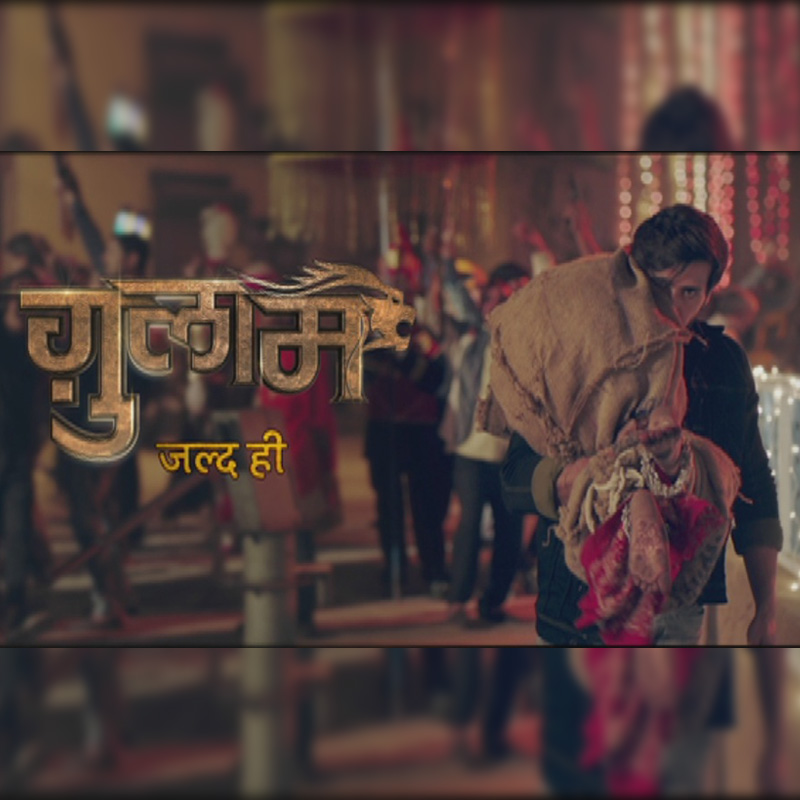
    Produced by Saurabh Tewari in association with Life OK, Ghulaam promises to focus on life in Berahampur, especially the atrocities meted out against women and focus on the men who rule the land. The men here will go to any length to terrify all to rule this town where  the law of the land has no jurisdiction. The show will be aired from 16 January from Monday to Friday at 9pm.  Another show, ‘Har Dard Ka Mard,’ is the new offering from Life OK this month. It has been produced by DJ’s  Creative and is directed by Parmeet Sethi.