Tag: EGoM

  • M&A Guidelines to be finalised by EGoM later this month

    M&A Guidelines to be finalised by EGoM later this month

    NEW DELHI: The much-awaited Merger and Acquisition (M&A) Guidelines has got further delayed and now the Empowered Group of Ministers (EGoM) on Telecom is expected to discuss it on 22 November.


    The GoM will also study the roadmap for the third round of spectrum auction. “Besides auction related matters, the department of telecom will place before them the M&A guidelines as recommended by the Telecom Commission,” a Telecom Ministry official said.


    Inter-ministerial panel Telecom Commission has suggested about 25 per cent higher base price compared to the amount recommended by sectoral regulator Telecom Regulatory Authority of India (TRAI) for radio waves used for mobile phone services for the proposed auction.


    The Telecom Commission had only forwarded its view on two sets of airwaves used by GSM players like Airtel, Vodafone and Idea Cellular.


    The official said DoT has written today to TRAI to suggest a base price for CDMA spectrum used by players like Sistema Shyam Teleservices, Tata Teleservices and Reliance Communications in 15 days.

    TRAI had recommended against auction of CDMA spectrum at present and suggested studying whether a part of these airwaves can be used for extended GSM services.


    The official said DoT is working on other details for auction of all three sets of spectrum in third round which is expected to start in January.


    Telecom Commission has recommended to allow companies to acquire another operator in a manner that market share of the resultant entity does not exceed 50 per cent.


    EGoM will have to decide on spectrum related issues that entity formed as result of consolidation of companies should be allowed to keep.


  • Govt initiates steps to help Hindustan Photo Films

    Govt initiates steps to help Hindustan Photo Films

    NEW DELHI: Hindustan Photo Films Manufacturing which has for long suffered as being on the list of sick industries is one of the six companies to be given the minimum public shareholding of 10 per cent requirement under a proposal accepted by the Union Cabinet.


    The Cabinet Committee on Economic Affairs has approved creation of the Special National Investment Fund for the specific objective of meeting the minimum public shareholding of 10 per cent requirement in six Central Public Sector Enterprises (CPSEs).


    Hindustan Photo Films has for years been responsible for supplying raw stock to filmmakers.


    Since these Companies were not financially sound, it was found difficult to meet the minimum public shareholding by following SEBI approved methods. However, government was keen to comply with the requirement in all government companies. The Department of Disinvestment discussed the matter with SEBI and has proposed to meet the minimum public shareholding in the above six Companies.


    The salient features of the fund are:


    (i) The number of shares that is required to make the six companies compliant with the minimum public shareholding will be transferred to the Special National Investment Fund out of government of India shareholding on irrevocable basis without any consideration.


    (ii) The Fund will be managed by independent professional fund managers.


    (iii) The Fund will sell the shares within a period of five years.


    (iv) The funds realised from the sale of shares would be used for social sector schemes of the government.


    (v) The modalities of the sale of shares in the fund would be decided by the existing EGoM.


    Under the Securities Contracts (Regulations) (Second Amendment) Rules 2010 of 9 August 2010, all government companies are required to have at least 10 per cent public shareholding and where public shareholding is less than 10 per cent, the companies were required to comply with this condition within a period of three years by following methods permitted by SEBI for this purpose.

  • Revised reserve price for spectrum auction cut to half

    Revised reserve price for spectrum auction cut to half

    NEW DELHI: Following the failure of the November 2012 auction for 2G spectrum, the government has decided that the reserve price for 800 MHz band in all service areas will be reduced by 50 per cent from the previous reserve price.

    The previous reserve price was approved by the Cabinet in its meeting held on 3 August 2012, following directions of the Supreme Court for fresh auction.

    The revision had to be done as no bids were received during auctions held for 800 MHz band (CDMA) for all service areas in November 2012.

    The cabinet decided that pricing of spectrum for current spectrum holding in the 800 MHz band (CDMA) by existing operators in the 800 MHz band at the reserve price will hold till auction discovered price is available.

    This follows the recommendations of the Empowered Group of Ministers (EGoM).

    The above decisions are expected to result in further efficient utilisation of the scarce natural resource of spectrum facilitating proliferation of telecom services in the country.

  • I&B Ministry presses for convergence regulation

    I&B Ministry presses for convergence regulation

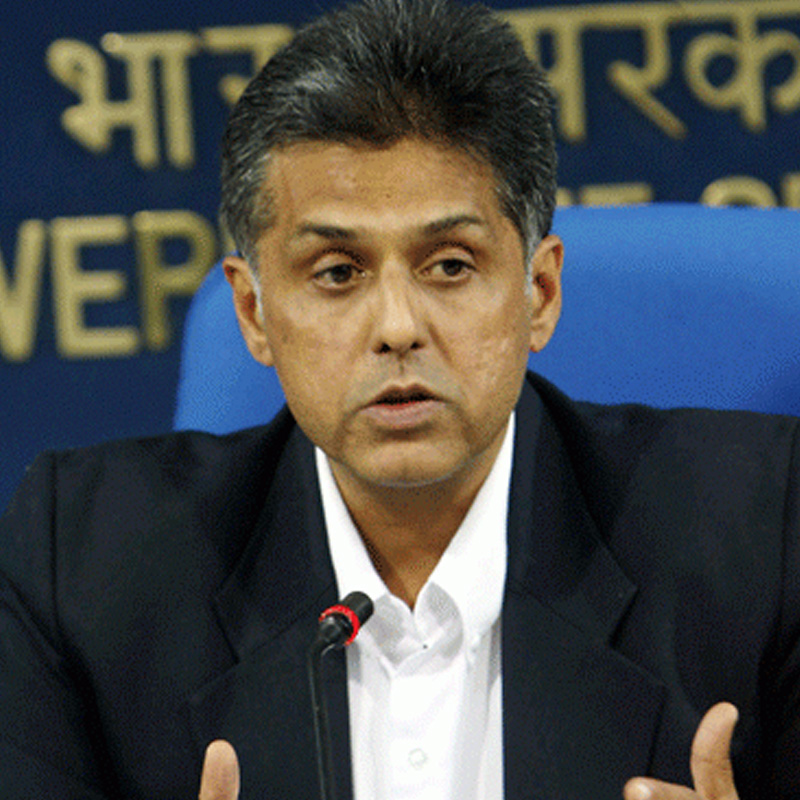
    NEW DELHI: Information & Broadcasting Minister Manish Tewari on Wednesday said he would talk to Telecom Minister Kapil Sibal to impress upon him the need to create a statutory mechanism to address issues related to convergence across media, entertainment and telecom.

    "Convergence across media, entertainment and telecom space specially with digitisation kicking in, is inevitable. Therefore, at some point in time there will have to be an overarching (legal) architecture which looks at it holistically," Tewari told reporters on the sidelines of Convergence India 2013.

    Admitting that convergence is a reality which cannot be ignored, he said: "I will talk to my senior colleague, the minster of telecom (Kapil Sibal) and see if we can work out a modus operandi whereby we can put a statutory architecture on the convergence format."

    Efforts have earlier been made to have a legal framework for convergence of the three sectors. A Convergence Bill was tabled in Parliament more than a decade ago. The bill has sought to create an autonomous commission to regulate carriage of all forms of communications, and for establishment of an appellate tribunal and to provide for matters connected therewith or incidental thereto.

    The bill aimed at promoting, facilitating and developing in an orderly manner the carriage and content of communications (including broadcasting, telecommunications and multimedia). The Convergence Bill had sought amalgamation of Information Technology (IT), Telecommunications and entertainment industry by replacing the Telegraph Act of 1985 and the Indian Wireless Act of 1933.

    Tewari admitted that the convergence bill tabled earlier could not be worked on. "The EGoM (empowered group of ministers) will work on the prevalent conditions," he said.

    Need to encourage production of indigenous STBs

    Tewari said one of the government‘s primary concerns now is to ensure that digital set top box (STB) manufacturing happens in India as the whole process is going to lead to revenue expansion of about $4 to $5 billion, according to a Trai estimate.

    "As we speak today, most of that business is not coming to India. So, that is an overriding priority for us as to how we are able to build an indigenous STB manufacturing model on to it," he said.

    Tewari also said STBs should be inter-operable and wanted enough operators for the consumers to switch to.