Tag: EDUSAT

  • Major events of ISRO during 2005

    December 30, 2005 The year 2005 ended for ISRO with the successful launch of INSAT-4A, the most advanced satellite intended for Direct-to-Home television broadcasting services. The launch of the most sophisticated remote sensing satellite, CARTOSAT-1, along with a micro-satellite, HAMSAT, by PSLV and commissioning of the state-of-art Second Launch Pad at Satish Dhawan Space Centre SHAR, Sriharikota were other major events during the year. The space application programme continued to make forays with the initiation of several programmes using EDUSAT and further expansion in Telemedicine network and establishment of Village Resource Centres. Design completion and initiation of the construction of Deep Space Tracking Network Station near Bangalore and finalisation of three instruments from European Space Agency, one instrument from Bulgaria and another two instruments from the US were important milestones during the year towards moon mission Chandrayaan-1.

    Some of the important events of ISRO during 2005 are as follows:

    December 22, 2005: INSAT-4A Launched
    ISRO’s latest satellite, INSAT-4A, carrying 12 high power Ku-band transponders and 12 C-band transponders for providing Direct-To-Home television services was launched by European Ariane-5 launch vehicle from Kourou, French Guyana on December 22, 2005. The orbit raising operations to take the satellite from 620 km X 36,000 km geosynchronous transfer orbit to 36,000 km circular geosynchronous orbit and deployment of the solar panels and antennas were completed by December 26, 2005. The satellite is slated for commissioning in January 2006.

    June 27, 2005: ISRO and European Space Agency, ESA, Sign Agreement on Chandrayaan-1
    ISRO signed an agreement with European Space Agency, ESA, according to which ISRO will include three instruments of ESA on board India’s first scientific mission to Moon, Chandrayaan-1. The instruments are: a low energy X-ray spectrometer, Near Infra-Red Spectrometer and Sub keV Atom Reflecting Analyser.

    June 20, 2005: Antrix-EADS Astrium, Sign Cooperation Agreement
    Antrix Corporation of the Department of Space and EADS Astrium, France, signed a Memorandum of Agreement to jointly address the commercial market for communication satellites in the mass range of 2 to 3 tons. The agreement envisages optimising ISRO’s INSAT platform along with EADS Astrium communication payloads.

    May 5, 2005: PSLV Successfully Launches CARTOSAT-1 and HAMSAT
    In its ninth flight conducted from Satish Dhawan Space Centre (SDSC) SHAR, Sriharikota, ISRO’s Polar Satellite Launch Vehicle, PSLV-C6, successfully launched on May 5, 2005 the 1560 kg Indian Remote Sensing Satellite, CARTOSAT-1, and a micro-satellite of ISRO, HAMSAT. CARTOSAT-1 is intended for cartographic applications while HAMSAT is India’s contribution to Amateur Radio Services.

    May 4, 2005: Second Launch Pad Dedicated to the Nation
    President of India Dr A P J Abdul Kalam dedicated to the nation the state-of-the-art Second Launch Pad at SDSC-SHAR, Sriharikota and maiden launch of PSLV took place from the new pad on May 5, 2005.

    March 18, 2005: ISRO Signs Agreement for the production of Automatic Weather Station
    ISRO has designed, developed and productionised an Automatic Weather Station (AWS) along with a private company (M/s Astra Microwave Products Limited). The low cost and compact AWS records weather data and transmits the same through the data relay transponder on board INSATs in real time.

    March 17-19, 2005: International Telemedicine Conference
    ISRO, along with Astronautical Society of India and other agencies organised an International Telemedicine Conference that brought out several recommendations for implementing telemedicine, particularly in developing countries.

  • Edusat starts live class transmission – VTU

    BANGALORE: Starting 21 March 2005, Karnataka’s Visvesvaraya Technological University (VTU) began transmitting live sessions through ISRO’s satellite Edusat across its 100 affiliated colleges in Karnataka.

    Earlier the transmissions, which commenced in September 2004, were being routed through INSAT-3B.
     

    The Edusat or the Gsat-3 is the first satellite of the Education Satellite System and has a special configuration for multiple beams covering different regions of the country. Edusat was launched by the GSLV and has a powerful Ku band frequency to facilitate the use of easy to handle ground terminal. The INSAT 3B made possible only audio sessions, one way generally, while two video and two way audio sessions through Edusat.

    The potential for such live teaching sessions is tremendous. In a country that faces a paucity of qualified teachers, a single teacher could reach out to 10000 students in the state at the same time. The lecture could be stored as a computer file or copied on a compact disc that can be accessed by the students. Services of a good teacher could be availed of by a large number of students.


    Professor G L Shekar, special officer in the VTU learning center at Mysore, while speaking to indiantelevision.com from Belgaum said, “One of the main issues that we are discussing now is two way video and two way audio. 50 colleges have been provided with interactive terminals for two way audio and two way video. ISRO has provided some specifications for the web camera and colleges have been asked to buy these cameras and install them at their end, we’ll be providing them with the software support. In another 8-10 days they should be in a position to have two way video and two way audio. VTU is the first university in the country, which is using Edusat officially from today. No other University has come any way close to us in the use of satellite technology for teaching,” he added.

    The program schedule in the VTU website shows 360 live class telecasts have been lined up between 21 March, 2005 and June 18, 2005. The subjects covered include Structural Analysis, Power System Analysis and Stability, Control Systems, Finite Automata and Formal languages, Digital System Design using VHDL, Power Electronics, Mechanical Vibrations and Mathematics for different semesters and branches of engineering. Teachers and experts drawn from industry will handle the courses. Each session will be of about one hour, out of which 45 minutes will be spent on the lecture followed by a 15-minute interactive session between students across the state and the resource persons in the studio.

  • Economic Survey terms broadband as ‘next frontier’

    Economic Survey terms broadband as ‘next frontier’

    NEW DELHI: Those technologies like broadband and DTH are important for India can be gauged from the fact they find references in the Economic Survey and the presidents address to a join session of Parliament today.

    Along with liberal doses of mention of the telecom sector, countrys annual performance report card Economic Survey termed the emerging service of broadband as the “next frontier.”

    “India lags behind the world to a considerable extent in the field of broadband telecom. The new policy encourages creation of growth of infrastructure through various technologies. This may have a bigger impact on the economy as compared to the growth in ordinary voice telephony,” the Survey, tabled today in Parliament, stated.

    “The services have been launched recently and with the increase in volume and competition, the cost of these services are likely to decrease. Bandwidth will become cheaper to the extent the domestic traffic is switched within the country and servers accessed by Indian users are located within the country”, the survey said.

    The policy aims at three million broadband subscribers
    and six million Internet subscribers by 2005-end.

    The Survey also called for a fresh policy on spectrum with a limited role of the government on the utilisation.

    “An important area requiring a fresh policy impetus is that of reducing the extent to which a state-led planning approach is used in the utilisation of the spectrum,” it said.

    The Survey, which was optimistic on the telecom sector exhorted the government to maintain pro-competitive policy, while making the environment conducive for new players to make forays.It also pushes for lower tariffs to increase tele-density.

    Heaping praise on the development made in the infrastructure sector, especially telecom, the Survey said, “The most striking success is visible in telecom.

    However, the Survey was critical of the expansion of the tele-density despite the fact that it has grown. Pointing out that India continues to lag behind countries like brazil and china where the tele-density is more than 40 per cent, the Survey suggested that in order to catch up there was a need to maintain vigorous pro-competitive efforts in terms of public policy.”

    The broadcast and telecom regulator, Telecom Regulatory Authority of India also came in for some support from the Survey that wanted a bigger and stronger regulator to facilitate pro-competitive policies. The Survey said, The policy initiatives taken in the telecom sector recently address some of these issues and looking forward, the sector would feature lively competition among private firms.”

    The Survey also took note of the fact that foreign direct investment (FDI) the telecom sector is the second largest after power and oil refineries —But the survey was critical of the falling market share of he public sector undertaking like Bharat Sanchar Nigam Ltd and Mahanagar Telecom Nigam Ltd,their growth in rapidly rising mobile telephony segment, notwithstanding.

    “Over the recent period, PSU operators BSNL and MTNL have lost market share in fixed telephony from 98.65 per cent to 91.39 per cent. In the past two years, PSUs have actually seen a decline in the number of fixed lines, while such lines have grown in the private sector”, the Survey said.

    PRESIDENT ON DTH AND EDUCATION
    Addressing the Parliament , heralding the convening of the Budget session of Parliament, president APJ Kalam said that India has been a knowledge-based civilization for millennia and yet remains a country with an unacceptably high rate of illiteracy.

    Pointing out that modern technologies would help in this aspect, the president said, The launch of EDUSAT, an educational satellite, and of Doordarshans Direct-To-Home (DTH) television facility will enable us to use modern technology in spreading literacy.

    “Today our best and brightest are at the forefront of the global knowledge economy and yet many of our schools and colleges are unable to meet the aspirations of all those who seek the light of knowledge.This must change. India needs a new knowledge revolution, a new wave of investment in education at all levels of the knowledge pyramid, from elementary schools in villages to world-class research institutions. My Government will give priority to issues of both access and excellence in education,” he said.

    Kalam also dwelt on he telecom sector by stating the government plans to increase Indias tele-density from a lowly 8.4 per cent today to more than 20 per cent by 2008.

    The priority will be to provide both voice and data transmission connectivity in rural areas. The broadband policy announced recently would enhance Internet connectivity with increased speed. This, in turn, would help our rural areas to take advantage of the benefits of e-governance, e-education and e-health. The digital divide between rural and urban areas must be bridged expeditiously, since it is possible for us to leapfrog into next generation information technology,Kalam said.
     

  • GSLV-F-01 carrying Edusat launched

    GSLV-F-01 carrying Edusat launched

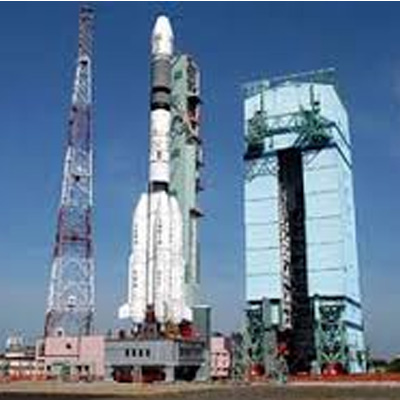
    NEW DELHI: The geosynchronous satellite launch vehicle (GSLV-F-01), carrying Edusat, India’s exclusive satellite for educational services, was launched from the space centre at Srharikota here today at 4.01 pm.

    The GSLV-F-01, carrying the 1950-kg satellite, soared majestically into the sky, from the Satish Dhawan Space Centre here, Press Trust of India reported today.

    As the 49-metre-tall three-stage GSLV, weighing 414 tonnes, rose into the sky from this spindle-shaped island, off Bay of Bengal, there was jubilation all round with many scientists of the Indian Space Research Organisation, hugging each other and clapping their hands.

    The GSLV will place the satellite into a Geosynchronous Transfer Orbit (GTO) within a few minutes after the lift-off, and from GTO, the satellite would reach the 36,000 km high Geostationary Orbit (GSO), by firing, in stages, its on-board Liquid Apogee Motor (LAM).

    In GSO, the satellite will be co-located with Kalpana-1 and INSAT-3C satellites.

    Built for a mission life of seven years, the Edusat is mainly intended to meet the demand for an interactive satellite-based distance education system for the country.

    The exclusive satellite project will be utilised to demonstrate the concept of “multicasting” interactive multimedia for the educational sector. It will have multiple beams, with one Ku-band transponder covering the entire footprint of the country, while five Ku-band transponders will provide spot beams directed in four different regions (north, south, west and east, including north-east).

    In addition, Edusat will carry six C-band transponders for other communication and broadcasting services covering the entire country.

    The dedicated satellite will become operational in three months after it is deployed in the geo-orbit and we hope the first phase of the programme will be implemented before the end of the current fiscal (2004-05).