Tag: education

  • Best Jobs For Indians In the USA

    Best Jobs For Indians In the USA

    Everyone, no matter where he is, wishes to live a better life. The United States is a popular destination for international students, particularly Indians pursuing higher education since it offers a diverse range of work prospects in addition to a world-class education.

    Among the highest-paying careers in the United States include those in the trucking sector, medical, computer technology, marketing, economics, construction, and law.

    However, if you only want to work there, all you have to do is get a USDOT registration and start trucking. It is one of the highest-paying jobs in the US.

    Aside from transportation, jobs in marketing, sales, and business managers are predicted to expand at a quick pace of 15% from 2022 to 2030, nearly matching the average wage for all professions.

    Here are some of the highest-paying jobs in the US.

    Trucking

    Truck drivers in the United States have the finest pay. It is among the most lucrative jobs. It’s also difficult because it entails a lot of driving and long-range travels, as well as lengthy overnights and other things. However, if you are prepared to take on this task, you may make a significant amount of money.

    With a trucking career, you can expect not just a decent compensation, but also a variety of bonuses and incentives that will keep you motivated. Other advantages of working as a truck driver include flexibility. Many well-known transportation and logistics firms in the United States are now offering flexible work hours in exchange for a high income.

    Psychiatrists

    Psychiatrists help those who are suffering from mental diseases. They frequently encounter people who are depressed or anxious, or who are abusing drugs. A degree is required in pre-medical studies and four years of clinical school are required to get to be a psychiatrist. After that, he’ll have to go through a three- to five-year residency program before being allowed to work independently.

    For a variety of reasons, it is one of the greatest employment opportunities for Indians in the United States. Private practice psychiatrists supplied their perks. Psychiatrists who were paid a salary enjoyed paid vacations and travels, as well as health retirement savings schemes.

    There has been a significant focus on psychological health in society as a whole. Given the current state of the globe, this could not be more true. This emphasizes the importance of psychiatry and the necessity for psychiatrists.

    Marketing

    The Indian market is huge with millions of brands to conquer. This interests the US-based companies that tend to open their offshore companies in India. But before that, they need to understand what drives the customers in such countries and how to advertise in them. This is why companies in the US are now hiring Indian marketing managers.

    People in advertising professions work on all aspects of a company’s marketing operations, including research, development, and coordination. More specialized fields, such as consumer research, innovative branding, public affairs, and event organizing.

    It is one of the highest paying jobs and depending on their performance and the venture in which they operate, these individuals may be eligible for rewards, bonuses, incentives, and even revenue sharing. As a result, even for a newcomer to this profession, the pay scale will be competitive, which is one of the primary advantages that has made this one of the most popular career alternatives in recent years.

    Final Thoughts

    The above-mentioned jobs are among the highest-paying jobs for Indians in the US, however, one can also go for a little investment and open his or her grocery store or drive a taxi. It is important to know the market before you decide what to do with your career.

  • Unacademy launches its first on-ground store in Delhi

    Unacademy launches its first on-ground store in Delhi

    Mumbai: Online learning platform Unacademy has announced the launch of the Unacademy Store – its first experience store in New Delhi. The on-ground store aims to extend the awareness of the platform’s offerings to learners, it said.

    Unacademy has designed the store to serve as an offline touchpoint for learners who want to experience and browse through the various platform offerings. The store is conceptualised to help learners stay updated about their chosen career pathways and connect with like-minded people, according to the brand statement. 

    “On-ground counseling with experts and frequent meetings with top educators and several other elements will provide a holistic experience at the stores to expand their knowledge about their chosen goals. Students can purchase subscriptions at the store for any chosen goals after counseling and browsing through the content offering,” it added.

    In the next phase of the initiative, the company has plans to establish similar touchpoints across the country starting with Kota, Jaipur, and Lucknow.

    “The journey which started with a Youtube channel to democratise high-quality knowledge for everyone is taking a new shape with our Unacademy Stores today. With these stores, we are taking a step forward towards creating a community of like-minded learners,” commented Unacademy Group co-founder and CEO Gaurav Munjal. “We hope these experiential stores with expert and educator connects, libraries, classrooms, and much more will help Learners gain significant insights into their chosen career paths.”

  • realme India’s #HopeForGood campaign brings joy of education for 100 children

    realme India’s #HopeForGood campaign brings joy of education for 100 children

    Mumbai: Smartphone maker realme India has joined hands with SOS Children’s Villages India for its 2021 Christmas campaign called #HopeForGood. The consumer technology brand along with the independent non-governmental social development organisation spread a little Yuletide cheer among the kids adopted by the latter,  bringing hundred young minds the ‘gift of education’ for a year to help secure their future.


    A team from realme India visited the kids earlier at an SOS Children’s Village. In the released video, the team showcased the dreams and aspirations of these kids and made an appeal to twitteratis to come forward and leave messages that show support for these kids. realme India also appealed to netizens to help them contribute towards fulfilling the aspirations of the children by sponsoring their education.

    Realme India released another video on Thursday, delivering on the promise they made earlier. The latest video compiles the success story of how Twitter and the realme community came through with their support to help sponsor the education of the young minds for all of 2022.


    realme India digital director Bhawana Sharma expressed gratitude at the support the initiative received and said, “It is heart-warming to see how many people came through to support the children. This is the first step marking the beginning of our Hope for Good initiative and we hope to take many such steps in the future to drive more positive change. We are ready to start the new year with more hope and compassion.”

  • Recovery on track: Print ad volumes surges by 93% in Q3 shows TAM AdEx

    Recovery on track: Print ad volumes surges by 93% in Q3 shows TAM AdEx

    Mumbai: Continuing the path to recovery, print media has witnessed a 93 per cent increase in ad volume in the July-September period, over its previous quarter. The surge in ad volume was led by the services and education sector, according to AdEx India, a division of TAM Media Research, a TV audience measurement agency.

    Print media was hit hardest during the pandemic, with ad volumes dropping 47 per cent during the second Covid wave. The overall advertising spends had dropped 43 per cent to Rs 10,350 crore last year from Rs 18,164 crore in 2019. The recent growth in ad volume has come as good news for the newspapers and magazines after a tumultuous period, which had to face shut downs, and mass lay-offs last year.

    The analysis also showed that the print ad volume recorded a 37 per cent growth over the same period last year. At least 20 out of the 27 sectors in print media saw positive growth during the three months, compared to the same period a year back.

    [[{“fid”:”1050439″,”view_mode”:”default”,”fields”:{“format”:”default”,”alignment”:””,”field_file_image_alt_text[und][0][value]”:false,”field_file_image_title_text[und][0][value]”:false},”link_text”:null,”type”:”media”,”field_deltas”:{“1”:{“format”:”default”,”alignment”:””,”field_file_image_alt_text[und][0][value]”:false,”field_file_image_title_text[und][0][value]”:false}},”attributes”:{“height”:409,”width”:700,”class”:”media-element file-default”,”data-delta”:”1″}}]]

    Among the top growing categories, ‘Ecom –Food/Grocery’ showed the maximum rise in Ad Volumes with twelve times the growth in Jul-Sep’21 over Jul-Sep’20. From the retail sector, clothing/fashion and consumer durables/home appliances entered the top-ten list with a positive shift in their ranks. Four out of the top-10 growing categories were from the retail sector which saw 4.6-fold growth in the one year under review.

    The research firm monitors over 700 newspapers and more than 180 magazines, and found that LIC emerged as the top brand in Jul-Sep’21 followed by Maruti Car Range. Aakash Byjus and Winzo Games were the new entrants in the Top 10 list of Advertisers. Two among the Top 10 brands were from ‘Auto’, ‘Education’ and ‘Personal Healthcare’ sector. The Top 100 brands accounted for nearly 29 per cent share of Print Ad Volumes.

    ‘Jacket-Full Page’ ads had 31 per cent share in the total ad Volumes followed by ‘Full Page’ ads with 24 per cent share during Jul-Sep’2, according to the report.

    Sales Promotions covered 29 per cent of Print Ad Volumes during Jul-Sep’21. Among the various sales promotions used in Print, ‘Multiple Promotion’ grabbed 47 per cent share followed by ‘Discount Promotion’ with 34 per cent share, said the report.

  • Teachmint teams up with Anil Kapoor for #NayeZamaaneKiNayiSchooling campaign

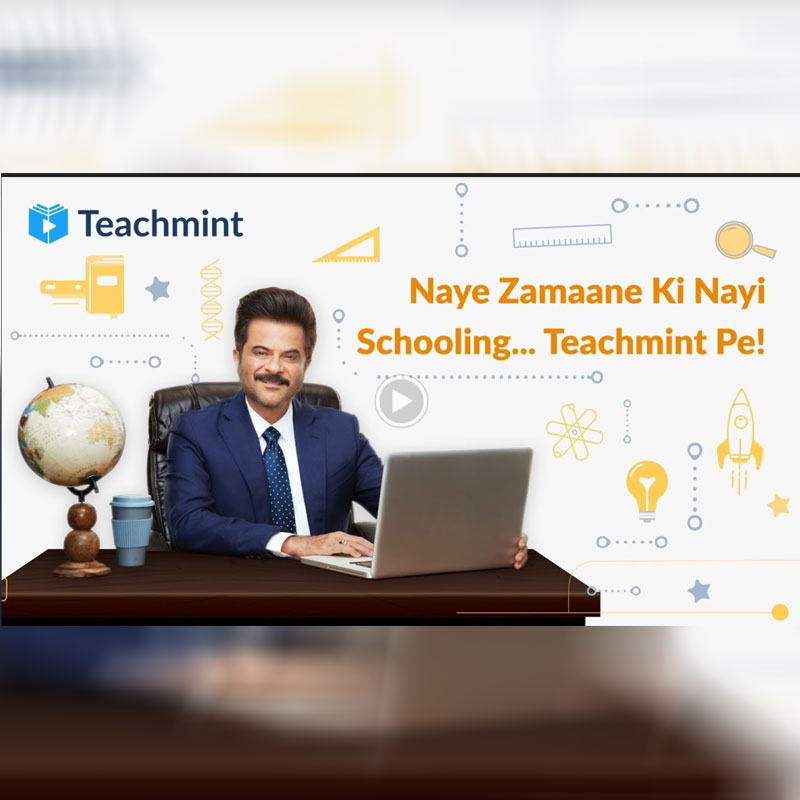
    Teachmint teams up with Anil Kapoor for #NayeZamaaneKiNayiSchooling campaign

    Mumbai: Teachmint, an education infrastructure startup and teaching platform has launched its brand new campaign featuring Bollywood veteran Anil Kapoor. Centered around the idea of ‘Naye Zamane ki Nayi Schooling,’ the all-new ad campaign decodes what makes a school truly digital in today’s world and how digitisation can empower schools and teachers, thereby benefiting the learning opportunities and experiences of students.

    The digital ad film sees Kapoor play the role of a school principal who is experiencing the benefits of having digitised his entire school. The film begins with him establishing the fact that true digitisation goes beyond just conducting “live classes,” it takes place when you automate your operations and allow your teachers to focus on what they love doing – teaching. 

    The film also highlights the brand’s features like automated test generation & correction, classroom recordings as well as end-to-end institute management which enables principals and admins to significantly boost efficiency by automating several mundane, manual processes.

    “I am delighted to be associated with Teachmint, not just as an actor but also as a strong advocate of the power of education,” said Anil Kapoor. “Tech-enablement in education will play an integral role in building the future of our nation and it’s heartening to see a young company like Teachmint revolutionize this experience for educators, schools and institutes.”

    This is Teachmint’s second significant celebrity collaboration in 2021. The company had launched its first large marketing campaign with Rajkummar Rao in April to drive awareness and adoption of its mobile-first teaching platform. 

    “We have witnessed unprecedented growth in just 17 months since launching Teachmint and this campaign marks a new milestone in our journey of building a state-of-the-art infrastructure for education,”  said Teachmint COO & co-founder Divyansh Bordia. “With this new campaign, we take this up a notch by introducing an offering to help an entire institute digitise within minutes – Teachmint for Institute. We are extremely excited to collaborate with Anil Kapoor and are confident that this partnership will help us reach out to a larger audience, connect with educational institutes and help them become more aware of the benefits of end-to-end digitisation.”

  • GUEST COLUMN: The future of ed-tech in India

    GUEST COLUMN: The future of ed-tech in India

    Mumbai: Ed-tech is a trending buzzword today. It is simply a combination of education and technology, implying the augmenting of education using technology and digital tools. The canvas of Ed-tech is extremely vast and transcends learning across ages, grades, vocations, and skill enhancement.

    I would like to specifically focus on the impetus Ed-tech is bringing into India for children in their formative, school-going years.

    India has over 264 million school-going children, more than any other country in the world. We also have ~15.5 lakh schools in India. While digitisation was slowly seeping into our lives and how we do things, be it online vocation or coding classes; education delivery was largely traditional through the brick and mortar classroom format. However, the pandemic has led to sudden acceleration and even disruption in the way technology is integrated into education and leveraged to bring best-in-class learning direct to home!

    The ecosystem is well poised to accept ed-tech. Today, 80 per cent of the school-going children are aware of ed-tech and there are over 500 million active internet users expected by 2022 (up from 350m in 2019) (Source: BLinC Insights 2021). The National Education Policy announced in 2020 acknowledges the importance of online interventions and outcome-based learning. By 2022, online education offerings across grades 1 to 12 are projected to increase 6.4 times. (Source: Omidyar Reedseer Report, 2019-20)

    The benefits are multi-fold with students getting access to best-in-class academia, supplementary support, skill-building, application-based learning, and more sans boundaries. Educators will get their due with an opportunity to transcend geographical horizons, surpass barriers of formal structures and impart learning for the outcome. A few exciting things we can look forward to in the future are:

    More Application, Less Instruction

    While LIVE, online classes are a fantastic platform and will continue to unite educators and students alike, we will also see the application and outcome-based learning gaining traction. We are seeing a lot of game technology used for better engagement. These will be further used for core learning and even supplementing academics. For example, at BrainGymJr, we provide puzzles and challenges based on Math, English, and real-world skills in fun formats such as crosswords, digit cards, etc. Children can solve and learn the real application of what is being taught in school.

    One Size will not fit All

    We already know that every student in a given class has a varying level of proficiency. While we reward better performance and celebrate achievers, we have limited capacity to tailor learning based on proficiency and aptitude. However, technology can enable extremely detailed insight into the core proficiency of every child. Application of analytics and enabling machine learning will further help customise to the strength of every child and nudge them from there. AI and big data will help empower students to develop their competencies, critical thinking, and creative abilities.

    Learning on the Go!

    We will see more self-initiated and self-learning formats gaining precedence. These formats will provide flexibility of space and time while giving clear results on learning. This could be in the form of activities, puzzles, short courses, daily quizzes, video-based learning, and more. Over time, these will be acceptable outcome-based learning modules with due credit and consideration breaking away from scheduled or structured learning courses.

    In summary, information will not be king, the intent to learn will rule. A couple of decades ago, Google brought about a huge change in how we perceive information and knowledge, with everything available at a click of a button. We now see this permeating education and learning. We already have and will continue to have an abundance of learning courses, material, and information. Peer-to-peer exchange of information will be encouraged and even facilitated. Educators and students will be seamlessly connected.

    Ed-tech will evolve further wherein the value addition brought about by customised learning, analytics-based insights, deep engagement, and outcome-based programs will be what differentiates the learning experience for every student.

    “Tell me and I forget, teach me and I may remember, involve me and I learn” – Benjamin Franklin.

    (Vidur Garg is the founder at BraingymJr. The views expressed in the column are personal and Indiantelevision.com may not subscribe to them.)

  • This decade belongs to the ed-tech industry: Practically’s Mahadev Srivatsa

    This decade belongs to the ed-tech industry: Practically’s Mahadev Srivatsa

    The ed-tech sector in India is witnessing unprecedented growth owing to the accelerated adoption of technology. The pandemic further strengthened the trend, with schools, colleges, and educational institutes shifting online, paving the way for the rise of several ed-tech start-ups. Claiming to be India’s first experiential learning app that brings learning alive through immersive videos, interactive augmented reality, and 3D simulations for 6th to 12th graders Practically is one such startup that also scripted its success story during the time.

    Mahadev Srivatsa, who spearheads the brand team as the ed-tech’s VP – marketing & brand strategy, is on a mission to make Practically a household name in India. An evangelist marketer and brand strategist with a keen eye for consumer insight, and over 13 years of cross-industry experience in brand launch & integrated marketing campaigns, Srivatsa has worked across telecom, consumer electronics, auto, and FMCG to name a few. He was recently adjudged Winner in the Thought Leaders category at Voot.

    Srivatsa, who has been previously associated with organisations such as Vodafone-Idea, ASUS India, H&R Johnson India among others, brought in a unique acumen on how traditional and new-age digital mediums can be leveraged to build a brand. He is credited with launching the brand’s first integrated marketing campaign, including crafting the brand proposition, the campaign strategy, and successful rollout that resulted in a 3X growth in both business and brand objectives. The brand’s first national campaign launched earlier last month, ‘Scan Anything’- a disruptive feature that enables students to learn from their everyday observations – also saw a 2X growth in terms of search volumes.

    IndianTelevision’s Anupama Sajeet caught up with the marketer and branding professional for a freewheeling conversation on an overview of the ed-tech marketing space and digitisation in education. Srivatsa also shared insights on the start-up’s roadmap ahead and the role of online education platforms in lieu of the scheduled reopening of schools and institutes for offline teaching in the coming days…

    Edited excerpts…

    On what differentiates Practically from other online learning platforms

    As India’s first experiential learning app designed for students in classes of 6th-12th with a focus on STEM learning, our content is 3D, immersive, and experiential which makes learning fun and engaging for kids. We have a very comprehensive content of 3000+ world-class 3D videos, 1000+ Simulations / AR experiences and are constantly working to make our library amongst the largest. We are also the world’s first ed-tech company to launch the #ScanAnything feature which transforms the mobile camera into an educational tool allowing learners to interact with surrounding elements freely. It can recognise pictures, questions, exercises, proofs, etc., from textbooks, magazines, newspapers including capturing images of any surrounding objects and presenting linked curriculum learning information on the app for the learners to pick their learning journey and resolve doubts instantly. 

    On the challenges faced by the brand to penetrate this increasingly crowded sector

    In ed-tech, the consumer and the customer are different, so the marketing challenge is always to create a campaign that appeals to both sets of audiences. The TG for the campaign was parents of kids of 6-12 grades and kids themselves. The other challenge was communication in a cluttered market, given the amount of SOV (share of voice) by competition in this space of late. Hence the challenge was also to develop communication that breaks the clutter and gets noticed. And finally, we had to do justice to the ScanAnything feature not just in terms of creating awareness about the feature but also the claim that it’s the first by an ed-tech company.

    So, the entire campaign communication was developed to get the perfect balance of keeping the campaign look & feel to reflect the world-class tech and product offering as the hero and at the same time appeal to our younger TG which likes to see communication that is light, snackable and fun. To make the feature believable and showcase its robustness, we designed the print ad in a manner that users could try out this innovative feature straight out of the ad.

    On Practically’s first national campaign

    Given the need to promote this innovative ed-tech feature, the campaign is digital-first with a robust focus on print. The entire campaign was meticulously planned in four phases starting from teasers on social media to launch, post-launch and sustenance. The digital campaign kick-started with the launch of two films on YouTube and a national press release around the campaign proposition of #StopSearchingStartScanning. The films centered around the feature and the tech as the hero.

    A print ad every week for three weeks on leading national and regional dailies was planned to drive awareness and credibility and was uniquely designed to make people engage with the feature. A robust influencer plan with a mix of celebs, micro and macro influencers at a Pan-India level was also executed to create buzz. We will continue to deploy influencers in the future as well. As a medium this is something no marketer can afford to ignore given the digital age, we are in.

    On the key take-aways post the brand’s campaign launch

    The campaign has been well received with over seven million views for our films so far across all social media platforms. We were at four lakh installs before the campaign and in just over a month have grown at a record speed of almost three times to cross one million installs which was our key campaign KPI. All our in-app metrics (MAU, DAU) have witnessed exponential growth and we recently hit more than 1 lakh MAU (Monthly Active Users). More importantly, we are able to sustain the growth as the campaign reaches its final leg. With respect to the feature, on average so far, we are getting 10,000-15,000 scans a day with the highest being 33,000 on the day of our first print ad.  We have had six lakh scans since the launch of the campaign indicating the likeability of the feature and the marketing impact. We have also seen a 2X growth in terms of search volumes.

    On the media mix, the brand looks to target

    The choice of medium for marketing is always dependent on the product and TG. As a marketer, one always selects the optimum media mix desired for a launch or communication. Being an app, our communication will always be digital-first. Going forward, digital and TV alongside print will be the preferred choice for us. With pandemic almost looking like an endemic now, OOH also can be a good bet as a support medium.

    While Andhra Pradesh, Telangana, Karnataka, Tamil Nadu, and Maharashtra are our key markets, we have already gone national with this campaign and will continue to make strides deeper into these markets. As we enter new geographies, our focus will be primarily metro & tier 1one towns for now. We are also present in the Middle East and are expanding rapidly.

    On plans to scale up the brand marketing in 2021

    Getting a million downloads is a dream for any app and is usually the first key milestone and we are delighted at the pace with which we have achieved it, especially the last mile. All our future marketing campaigns will only be bigger in scale than the previous, given our objective is to make Practically the most loved and trusted e-learning brand. The next goal is three million and then eventually 5ive million installs by this financial year for which we have already started planning the next marketing campaign.

    On the role of online education platforms going forward, with schools reopening

    We believe that technology adoption in the education sector is yet to see its peak and the growth trajectory is likely to continue beyond the pandemic years. The lockdown induced by the pandemic has produced a paradigm shift in learners’ behaviour leading to an exponential increase in the demand for ed-tech products in India. As consumers are more aware of the offerings and accessibility, the urge to learn beyond the syllabus will help in bringing in innovations in learning. With steep competition, players need to modify their offerings to engage consumers constantly. With the implementation of the New Education Policy, online learning in higher education will further experience accelerated adoption as people focus more on upskilling and reskilling.

    Also, in what has probably been the biggest change in ed-tech marketing, today every player wants to be a ‘Brand’ and more importantly behave like one!  With the pandemic firmly establishing the trend of blended learning, this decade is looking like the decade of ed-tech in India.


  • Eupheus Learning appoints Kapil Chanana as Chief Growth Officer

    New Delhi: Eupheus Learning on Monday appointed Kapil Chanana as the chief growth officer for the company.

    Chanana previously served as director marketing activations, Coca-Cola India and South-West Asia from 2011 to 2021. He has more than 25 years of experience in the FMCG, Education, and Advertising sectors.

    Eupheus Learning co-founder and managing director Sarvesh Shrivastava said, “We are thrilled to have Kapil lead our growth mandate. He is a unique blend of marketing and operational excellence with an exceptional record of innovation and growth. Kapil’s extensive experience in consumer marketing, education marketing, and advertising in the past and his impressive track record and passion for customers make him the ideal choice to lead the explosive growth mandate.”

    On his new role, Chanana said, “I’m excited to be a part of Team Eupheus at a time when the fundamentals of marketing are experiencing a great transformation – from interruption to engagement model. And while every brand narrative is unique, the consumers or customers need to be engaged well for the narrative to be well received. Which leads to sustainable and profitable business growth.”

    Weighing in on the effects of the ongoing pandemic on children’s learning, he further said, “The pandemic induced tussle between on-line and off-line learning is an incomplete story. What is important is a bridge between at-school and at-home learning. A child needs to be engaged differently to imbibe holistic education, skills, and values which we hope for our future generations. And I look forward to leveraging this moment to deliver even more value to our stakeholders.”

    Set in 2017, Eupheus Learning is an education technology firm in the K-12 space, intending to bring 21st-century learning solutions from all across the globe.

  • Edtech newbie Practically sets 1 million users as next milestone

    Edtech newbie Practically sets 1 million users as next milestone

    KOLKATA: 2020 has broken all the barriers for edtech players in India, especially the start-ups. With educational institutes being shut for most of the year, a number of new players have gained momentum in their growth journey. Investment by venture capital (VC) in e-learning firms has quadrupled between January and November reaching $1.8 billion.

    Practically is one such edtech platform that has come up by leaps and bounds in the last one year to tap into the growing segment. The learning app, which has crossed 330,000 users, raised $4 million in a pre-Series B round this January. With a pan India expansion plan in the works, it aims to surpass one million users within the next year, revealed Practically marketing & brand strategy vice president Mahadev Srivatsa. After reaching this goal, it might take a shot at five million users in the next financial year.

    The platform started operations during the pandemic with its b2b solution in the Andhra Pradesh and Telangana market. Under this initial line of business, the product was sampled to schools and institutions across the two southern states. However, the brand later realised the need for a b2c model given the geographical limitations of b2b expansion.

    “We are a unique solution. We are working under the b2b2c model,” quipped Srivatsa.

    Both the formats are important from a business point of view, added he, but the b2c push will drive Practically going forward. Under the blended model, b2b solution can be accessed by students without any cost as it will be directly provided by their schools. If users want to access content beyond what has been offered by schools, then they will have to pay, he detailed.

    For the direct-to-consumer segment, the app works under a subscription model. The app consists of a universal curriculum targeting grades six through 12. Users also get access to free 30 minutes of content every month – a freebie that helps drive engagement, said Srivatsa, terming the app as a one-stop shop as it has live classes, doubt resolution and even assigns mentors to students.

    One of the growth accelerators for the brand has been the marketing campaign it did in December last year. It had a two-pronged strategy: ATL was focused on the home market while the digital campaign drove pan-India expansion. The former was targeted to generate more awareness and more conversion. Through the digital campaign, it wanted to test responses from 40 cities identified as potential regions for the future.

    ATL activations included a two-week associate sponsorship on Big Boss Telugu alongside a couple of rounds of print ads. Social media messaging had company, features and campaign-led communication amplified throughout the campaign period of December 2020 to February 2021.

    The campaign has set a lot of milestones for the app like sparking 3X growth, and improvement in social media metrics. As Practically plans to make inroads into more markets, Srivatsa added that they want to make the platform a household name; the latest advertising blitz gave confidence in that direction.

    “At this juncture, considering the learning from the digital campaign and looking at the way business is expanding, the south and western region of India would be our initial foray. You will find us immediately entering this market. We have an eventual entire year plan for further expansion,” he commented. The app may even get into vernacular content and K-5 curriculum in the future.

    With so many players eyeing the booming market, experts have already predicted a spurt in mergers and acquisitions, and consolidation in the sector in the next three to four years. Srivatsa said the similarities between telecom at its early growth phase and ed-tech is significant. It is evident that 3,000-4,000 players will not be able to survive, with media spend being the biggest differentiator. There are certain players who are dominating media spend, brands that have been here for close to a decade and aggressively expanded in the last few years. In this space of cut-throat competition, investment in branding is critical for ed-tech players. It's necessary to communicate the USP of the platform and what it is as a brand, he explained.

  • ASCI cracks down on false claims in education ads

    ASCI cracks down on false claims in education ads

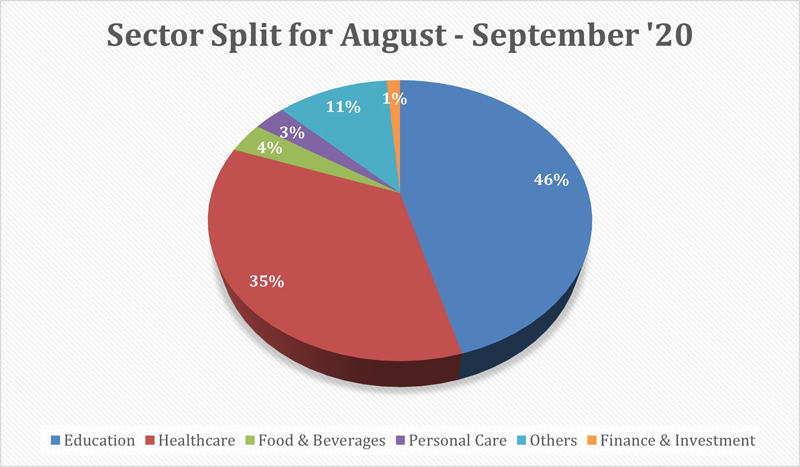
    MUMBAI: The Advertising Standards Council of India (ASCI) has cracked down on advertisements from the education sector which made misleading and false claims. During August and September, the regulatory body noticed a sharp rise in advertisements fielded by educational institutes which tried to pass off fake claims and upheld complaints against 101 such ads.   

    Claims such as top of their field, ranking no.1, 100 per cent job placements, best institute, 100 per cent passing rate, were the most used red flag terms that violated ASCI’s code. One online learning app claimed to be the best and pioneer of live online classes. Many educational institutions didn’t have substantial data and surveys to support the claims they were making and the Consumer Complaints Council (CCC) of ASCI recommended that these advertisements be declared misleading.

    In the health sector, with advertisers are trying to leverage consumers’ fears and insecurities amid the Covid2019 pandemic, ASCI cracked the whip on 59 ads which falsely claimed to cure or prevent the infection. Working together and synergizing efforts with the ministry of AYUSH, ASCI has constantly been working towards eliminating such false claims for consumer protection.

    The self-regulatory body also looked into non-healthcare advertisements, wherein a company contended that their paint protected home owners from germs, a clothing company claimed to kill 99 per cent germs, while another professed their fabric was anti-Corona. There was even an instance of a sweet confectioner claiming their sweets could combat COVID 19 and improve the immune system. There was a grocery chain that said they would refund their full grocery bill if their customer tested positive for Covid2019 within 24 hours of shopping at their store. These advertisers were told to modify such claims or withdraw their advertisements.

    There were some interesting cases flagged in the finance and investment sector too. ASCI received a unique direct complaint from a consumer regarding a campaign TVC run by a leading loan company. The TVC had people covering their mouth only till their nose with the mask. The CCC concluded that such advertisements misuse the Covid2019 situation and upheld the complaint.

    ASCI also upheld misleading ad claims made on various digital platforms like Instagram, Twitter and Facebook. Many such claims were taken up by ASCI suo motu.

    Overall, ASCI looked into complaints against 317 advertisements during August-September period, of these 64 were promptly withdrawn by advertisers on the council’s intervention. Of the remaining 253, complaints against 221 advertisements were upheld.

    ASCI secretary general  Manisha Kapoor said: “ASCI, is now in its 35th year since inception. COVID-19 related claims as well as misleading education claims continued to dominate the kind of complaints we received at ASCI during this period. The independent consumer complaints council (CCC), which comprises members of civil society as well as industry, jointly view such advertisements and adjudicate. The CCC goes deep into understanding the underlying complaint and the advertiser response and justification before an opinion is given. ASCI’s only goal is to promote responsible advertising which safeguards consumers.”