Tag: Editors Guild

  • After Odisha, UP and Tamil Nadu declare journalists as frontline workers

    After Odisha, UP and Tamil Nadu declare journalists as frontline workers

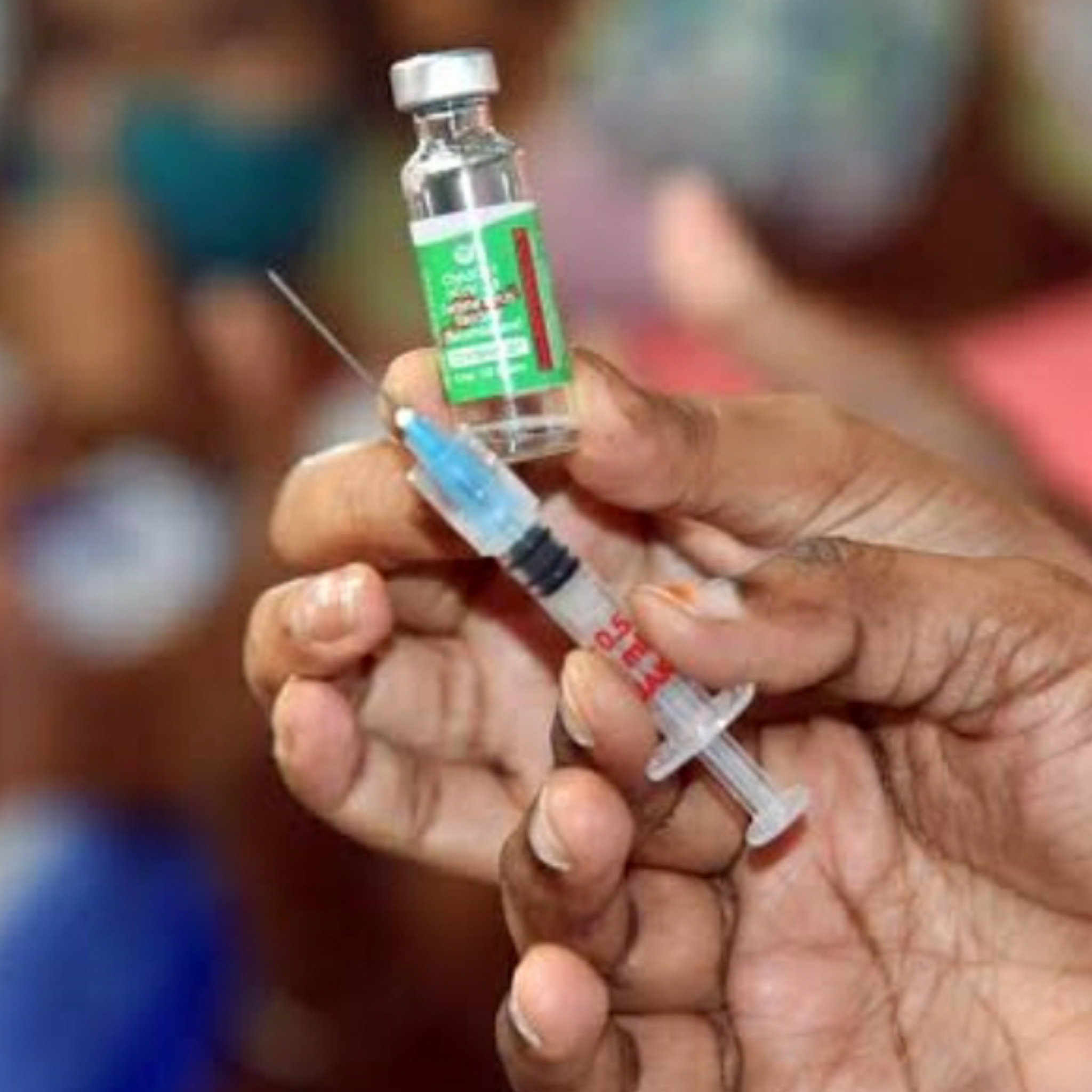
    New Delhi: After Odisha, now Uttar Pradesh has declared journalists as frontline workers to be given priority in the ongoing vaccination drive and also directed authorities to allot separate centres for them where they can be inoculated.

    The new government formed in Tamil Nadu and West Bengal has also classified journalists as frontline workers, a day after emerging victorious in the Assembly elections. 

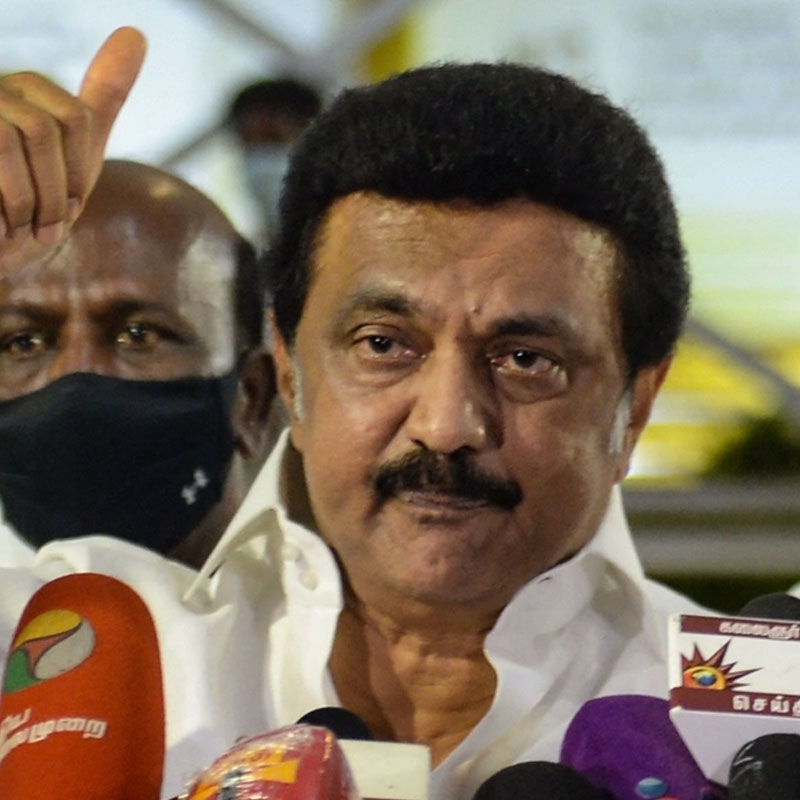
    “All journalists working in newspapers and the visual media risk their lives and their work will be considered as frontline workers in Tamil Nadu,” said Tamil Nadu CM MK Stalin on Tuesday.

    The devastating second wave of Covid2019 has taken a severe toll on news mediapersons, many of whom have been reporting from the ground. According to the Delhi-based Institute of Perception Studies, more than 100 journalists have died since 1 April 2020. Over 52 scribes from various parts of the country lost their lives in April alone.

    The decision comes amid several appeals by the Editors Guild of India (EGI) to the central government to give journalists priority in vaccination along with frontline workers. While several states, including Uttrakhand, Odisha, Bihar, Madhya Pradesh, Punjab have already declared journalists as frontline workers, the Centre has not yet made any provision in this regard.

    “Despite the support from various state governments and media organisations, the central government has not responded to this request. Now, even though vaccination has been technically opened for all above 18 years of age, there is an acute shortage of vaccines. Therefore, the Guild’s urgent demand that journalists be given priority along with other frontline workers,” said the Guild in a recent statement, while condoling the death of mediapersons.

    Welcoming the UP government’s decision on Tuesday, News Broadcasters Association president Rajat Sharma said UP chief minister Yogi Adityanath has directed his officials to open special vaccination centres exclusively for media personnel.

    Sharma had earlier written a letter to the UP CM to make the vaccines available to all media personnel and their family members on priority. “Noida has emerged as a big centre for national electronic media, and most of the TV journalists and camerapersons work and live here. In most of the cases, TV reporters and camera persons have to work in the midst of crowds, and meet Covid2019 patients, doctors and health care workers in hospitals. Hence, the need for vaccinating them and their family members on priority,” wrote the senior journalist.
  • Vaccinate journalists on priority, Editors Guild urges government as Covid death toll rises

    Vaccinate journalists on priority, Editors Guild urges government as Covid death toll rises

    New Delhi:  As the country battles the deadliest wave of Covid2019, with a record four lakh positive cases recorded in the last 24 hours, the challenges faced by journalists and media organizations continue to intensify. Over 52 journalists from various parts of the country lost their lives due to Covid2019 in April alone.

    As India opened the vaccination drive for all adults (18-45 years), here on Saturday, the Editors Guild of India (ECI) urged the government yet again to consider journalists as frontline workers and ensure they are vaccinated on priority.

    “The Guild is extremely distressed that the central government has not yet taken any steps to hasten the vaccination of journalists over the last few months. Many of them (who succumbed to Covid2019) were freelancers and hence, were not insured. Others who worked for media organizations did not enjoy the assurance and comfort of being insured by their companies,” it stated.

    The Guild condoled the death of journalists due to Covid2019 in the past year. According to the Delhi-based Institute of Perception Studies, more than 100 journalists have died since 1 April 2020. “Many of them were reporting on the worsening pandemic and bringing to fore stories of the great human tragedy that has been unfolding before us,” said ECI. “The Guild pays homage to the fortitude and commitment to work that these journalists have displayed over the past year.”


    ECI had earlier demanded that journalists be considered as frontline workers and vaccinated on priority.  “Despite the support of various state governments and media organizations, the central government has not responded to this request,” it asserted while highlighting that that issue of shortage of vaccines has now hit Phase-3 of vaccination drive. It also urged the media organizations to ensure the safety of their journalists.


    On Saturday, two more journalists, Assam Tribune’s Delhi correspondent, Kalyan Barooah and his wife and senior journalist Nilakshi Bhattacharyya succumbed to Covid19.

    Meanwhile, Mumbai Press Club also urged the government to consider journalists as frontline workers. “It’s urgent, all lives matter,” it appealed to the government on Saturday

  • Editors Guild appeals to PM to revoke new digital media rules

    Editors Guild appeals to PM to revoke new digital media rules

    NEW DELHI: The Editors Guild of India has sought Prime Minister Narendra Modi’s urgent intervention in revoking the new rules for digital media, saying that the guidelines would be "adverse to the freedom of press" in the country.

    In a letter dated 6 March addressed to the PM and union ministers Prakash Javadekar and Ravi Shankar Prasad, the association has urged the government to hold off on the implementation of the new rules till the Centre “consults all stakeholders” in the matter.

    "We are conscious of the challenges posed by the digital age, and as such, we recognise the need for self-regulation of digital news media. However, we have grave concerns regarding the rules, which can fundamentally alter how news publishers operate over the Internet and undermine the freedom of the press in the country," the EGI wrote in the letter.

    On 25 February, the Centre introduced the Information Technology (Intermediary Guidelines and Digital Media Ethics Code) Rules, 2021 that seek to regulate social media, OTT platforms, and digital news content for the first time. According to the new rules, digital news media and online video streaming services must adhere to the code of ethics under the rules which will be enforced by a three-tier regulatory mechanism.

    However, the EGI has taken exception to the three-tier structure, stating that it allots "excessive powers" to government officials to block, modify and delete content.

    “Various other provisions in these rules can place unreasonable restrictions on digital news media, and consequently media at large. These rules have been brought in without due consultation with the stakeholders and deepen the worry that freedom of press in India is being seriously compromised,” it added.

    The guild also raised concerns that the absolute decision-making power conferred upon the executive through these new rules will inhibit digital news media and thereby press at large from fulfilling its obligations as the fourth estate.

    Moreover, it cited the clause that anyone can file a grievance and the publisher will have to respond within 15 days of receiving it; compelling publishers to respond to each and every complainant within a period as short as 15 days is "onerous".

    "This again will be adverse to press freedom. The rules should have been accompanied by a form containing the details which the complainant should be obligated to furnish, to lodge a complaint. As of now, the publishers may have to spend resources to respond to incomplete, ill-intentioned and even anonymous complaints," it said.

    The association went on to claim that the new guidelines were announced and notified on the same day and the Union government did not consult any stakeholders, including EGI, in the drafting of the rules.

    "The Guild urges the ministry to withdraw such an onerous and regressive regulatory mechanism, and to initiate consultations for putting in place a more equitable self-regulatory system," the letter read.

  • Editors Guild constitutes legal advisory panel on media freedom

    Editors Guild constitutes legal advisory panel on media freedom

    NEW DELHI: The Editors Guild of India has constituted a legal advisory panel that will advise and work with it on important issues pertaining to press freedom. It shared in a statement that the panel will help the Guild craft responses to the complex web of civil and criminal laws that are used by authorities to suppress media freedom. 

    The members of the panel include former union minister, Rajya Sabha MP and senior Congress leader Kapil Sibal, senior Supreme Court advocates Shyam Diwan, Sanjay Hegde, and Menaka Guruswamy, senior Delhi high court advocate Rajiv Nayar, advocate Prashant Kumar, and advocate Shahrukh Alam. 

    The Guild also stated, “The panel will be expanded in the coming days to include more members of the legal fraternity from across different states, who have worked in the realm of freedom of expression and media related issues.”

    The move comes in the wake of concerns raised over freedom of the press following several high-profile arrests of journalists across the country. While the case of Republic TV editor-in-chief Arnab Goswami being taken into police custody and his subsequent release on bail was highly publicised, some other instances of arrest may have slipped under the average person's radar. Kerala-based reporter Siddique Kappan was arrested by Uttar Pradesh police and charged under the Unlawful Activities (Prevention) Act, while on his way to cover the Hathras incident. Manipuri journalist Kishorechandra Wangkhem was arrested in October on charges of sedition for responding to a viral social media post made by the wife of a BJP politician. Ahan Penkar, a journalist with The Caravan magazine faced the brunt of police highhandedness when he was detained for several hours, his phone was taken away from him and its contents deleted by Delhi police officials.

  • NDTV India ban; revocation sought by media groups

    NDTV India ban; revocation sought by media groups

    NEW DELHI: Various media organizations joined forces at a meeting here to protest against the decision to take NDTV India off-air for a day, terming it “arbitrary and violates the fundamental principles of freedom of expression as enshrined in our Constitution.”

    The meeting urged the government to immediately quash the order as the decision amounted to uncalled-for censorship and was in utter disregard of already established redress mechanisms – Press Council of India and National Broadcasting Standards Authority (NBSA), which have been specifically constituted to look into such issues.

    “It is unfortunate and condemnable that the Central Government has resorted to extreme measures when press freedom is already under increasing threat in the country. This sends a dangerous signal to the entire media and undermines the safeguards under the democratic right of free of expression enshrined in the Indian Constitution,” the resolution at the meeting organized at the Press Club of India here said.

    “We demand that the government immediately withdraw (revoke) the order in the interests of Indian democracy,” it added.

    Organizations represented included the Press Club of India, Editors’ Guild, Indian Women’s Press Corps, Federation of Press Clubs, Delhi Union of Journalists, News Broadcasters Standards Authority, Indian Journalists Union and Press Association.

  • NDTV India ban; revocation sought by media groups

    NDTV India ban; revocation sought by media groups

    NEW DELHI: Various media organizations joined forces at a meeting here to protest against the decision to take NDTV India off-air for a day, terming it “arbitrary and violates the fundamental principles of freedom of expression as enshrined in our Constitution.”

    The meeting urged the government to immediately quash the order as the decision amounted to uncalled-for censorship and was in utter disregard of already established redress mechanisms – Press Council of India and National Broadcasting Standards Authority (NBSA), which have been specifically constituted to look into such issues.

    “It is unfortunate and condemnable that the Central Government has resorted to extreme measures when press freedom is already under increasing threat in the country. This sends a dangerous signal to the entire media and undermines the safeguards under the democratic right of free of expression enshrined in the Indian Constitution,” the resolution at the meeting organized at the Press Club of India here said.

    “We demand that the government immediately withdraw (revoke) the order in the interests of Indian democracy,” it added.

    Organizations represented included the Press Club of India, Editors’ Guild, Indian Women’s Press Corps, Federation of Press Clubs, Delhi Union of Journalists, News Broadcasters Standards Authority, Indian Journalists Union and Press Association.

  • Editors Guild steps up tirade against paid news, urges EC to act

    Editors Guild steps up tirade against paid news, urges EC to act

    NEW DELHI: The Editors Guild has urged the Election Commission to take strong action against candidates and mediapersons who violate the disclosure norms of election expenditure to gain media publicity.

    A delegation from the Guild, led by president Rajdeep Sardesai, submitted a memorandum to the Commission, deploring the ‘paid news’ phenomenon. The memorandum cited several recent investigative reports which highlighted the prevalence of this dangerous practice, which threatened the foundations of journalism by eroding public faith in the credibility and impartiality of news reporting. It also vitiated the poll process and prevented a fair election, since richer candidates who could pay for their publicity had a clear advantage, the Guild pointed out.

    Chief Election Commissioner Navin Chawla admitted that the EC did not have the mechanism to monitor the candidates in all 543 constituencies, but some random samples could be examined closely.

    Election Commissioner SY Qureshi said Maharashtra Chief Minister Ashok Chavan had been issued notice to reply by 1 February for allegedly paying publications for favourable publicity in the recent assembly election.

    The Guild was represented by senior journalists Coomi Kapoor, Mannini Chatterjee and Seema Chisti.