Tag: EDF

  • Rs 12 billion budgeted for ‘Digital India’ ’17-18

    Rs 12 billion budgeted for ‘Digital India’ ’17-18

    NEW DELHI: With the Government’s emphasis on cashless and paper-less working, electronic governance gets the highest chunk of Rs 4.0055 billion out of the overall budget of Rs 12.1642 billion set aside for Digital India for 2017-18.

    Of the total allocation for electronics governance, Rs 3.8555 billion has been set aside as programme component.

    According to the budget for the electronics and information technology ministry, the objective of e-governance is to deliver all government services electronically to the citizens in his/her locality through integrated and inter-operable systems via multiple modes, while ensuring efficiency, transparency and reliability of such services at affordable costs. 

    The World Bank supported India: e-Delivery of Public Services project is an externally aided project under Electronic Governance Scheme under which financial support is extended for various e-governance initiatives of the Centre and States/UTs in the broad areas of policies, human resources, technology, project development, etc.

    Manpower development gets Rs 3.0676 billion while the National Knowledge Network has been allocated of Rs 1.5 billion.

    The objective of manpower development is to ensure availability of trained human resources for the manufacturing and service sectors of electronics and IT industry. Initiatives include identifying gaps emerging from the formal sector and planning programmes in non-formal and formal sectors for meeting these gaps.

    The National Knowledge Network has been initiated with multiple gigabit bandwidth to connect Knowledge Institutions across the country

    Promotion of electronics and IT HW Manufacturing (MSIPS, EDF and Manufacturing Clusters) will get Rs 7.45 billion. The ministry says electronics manufacturing is one of the important pillars of Digital India Programme and target to achieve net zero imports is a striking demonstration of intent. 

    Ministry sources said the demand for electronics hardware is expected to rise rapidly and India has the potential to become an electronics hardware manufacturing hub and contribute significantly to the GDP, employment opportunities and exports.

    For Promotion of IT/ITeS Industries, the total allocation is Rs 60 million while Cyber Security Projects (NCCC & Others) get Rs 210.8 million.

    Two schemes (NEBPS and IBPS) under IT for Jobs pillar have been launched under Digital India Programme to incentivise BPO/ITES operations across the country, particularly digitally deficit areas for creation of employment opportunities for the youths and the balanced regional growth of IT/ITES Industry.

    The objective of the Cyber Security scheme is to adopt a holistic approach towards securing the cyber space of the country by pursuing multiple initiatives like Security Policy, Compliance and Assurance, Security, Incident-Early warning & Response, Security Training, Security specific R&D, Enabling Legal Framework and 
    Collaboration.

    A sum of Rs 1.01 billion has been set aside for research and development in IT/Electronics/CCBT. Proliferation and absorption of emerging technology by supporting R&D is one of the important objectives, apart from creating essential R&D infrastructure and scientific & technical human capital. 

    The allocation for Foreign Trade and Export Promotion is a mere Rs 30 million to reimburse Central Sales Tax (CST) to Electronics Hardware Technology Parks (EHTP) and Software Technology Park (STP) units according to the Foreign Trade Policy.

    Also Read:

    Budget ’17: Encourage digital economy to make tax system globally competitive

    Dist. National Informatics Centres to be of international standards

    How Digital India will foster VoD growth: Spuul Global CEO

  • Ravi Shankar too hopes DTH will support Swayam

    Ravi Shankar too hopes DTH will support Swayam

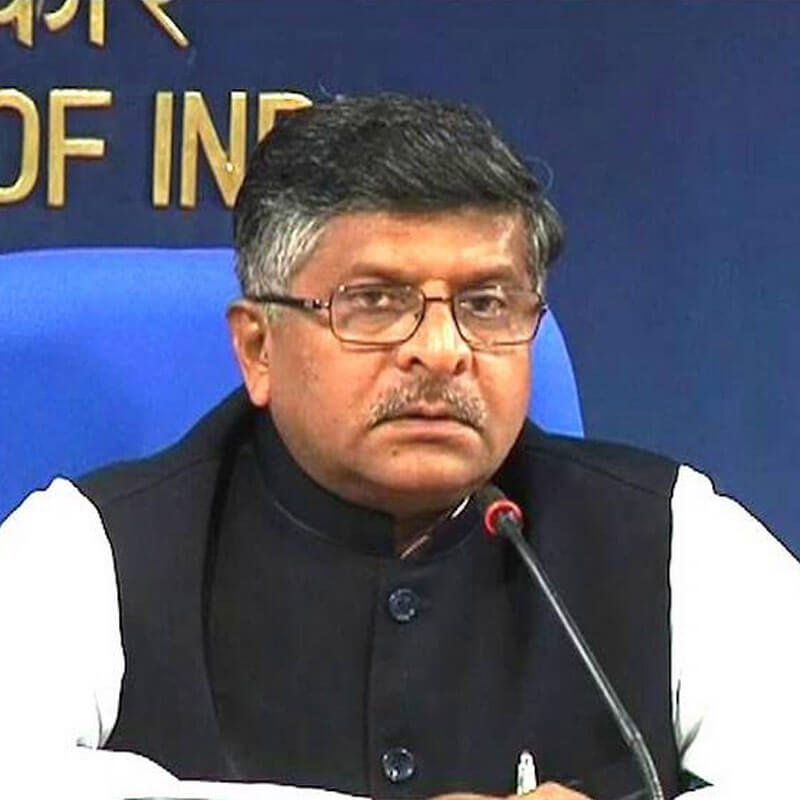
    NEW DELHI: Communications and Information Technology Minister Ravi Shankar Prasad has expressed the hope that said linkage with direct-to-home platforms will help the ready-to-be-launched Swayam platform with at least 350 online courses.

    This will leverage information technology and enable students to virtually attend the courses taught by the best of the faculties present in the country, access high quality reading resources, participate in discussion forums, take tests and earn academic grades.

    Prasad in a statement described the budget as “A Digital Friendly Budget aimed at accelerating India’s Transformation into a Digitally Empowered Society”.  

    He said the Digital India initiative of the government had transformed the digital profile of India significantly. Investments in electronic manufacturing which was just Rs 110 billion in June 2014 has increased to Rs 1278.8 billion.

    The production of indigenous LCD/LED TVs went up by 38 per cent to 12 million units in 2015-16 as compared to 8.7 million units in 2014-15.

    LED products made in the country earned Rs 35.9 billion in 2015-16, showing a growth of 65 per cent over 2014-15 when the earning was Rs 21.72 billion.

    Similarly, 110 milion Indian mobile handsets were produced in 2015-16, showing a rise of 83 per cent over the previos year 2014-15 when the production was 60 million units. With 72 new mobile handset and component manufacturing units set up in last two years, India has emerged as a mobile manufacturing hub. The growth in mobile handsets in value terms means a growth of 185 per cent, having risen to Rs 540 billion in 2015-16 as against Rs 189 billion in 2014-15.

    The number of telephone users in the country had grown from 950 million in June 2014 to 1080 million mobile phone users. He listed some of the other achievements of the Digital India programme:

    ·   Bharat Net: Optical Fibre Network to connect villages of India has seen rapid growth. In June, 2014 only 358 kms of optical fibre was laid. In January, 2017 1.72 lakh kms of optical fiber has been laid across more than 76, 000 Gram Panchayats.

    ·   MyGov: A new platform created for participative governance now has over 40 lakh registered users.

    ·   Aadhaar Holders: From 63 Crore Aadhaar holders in 2014, India today has 111 Crore Aadhaar holders.
    ·   Common Service Centers: To provide digital services to common people in villages the Common Services Centers were created. In June 2014, only 83,000 such centers were active across the country, which has now increased to 2.05 lakh centers.

    ·    Jeevan Pramaan Portal: A new initiative to provide convenience to pension holders was created which now has 56 lakh registered pensioners.

    ·    Digi Locker:  A new initiative to provide safe online document storage to citizen now has more 42 lakh users. More than 165 Crore digital documents have been issued by the Government in these lockers.
    ·   Scholarship Portal: Online scholarship was easily made available to the students. 1.4 Crore students have registered under this.

    ·   Online Hospital Appointment: Online appointment services in 60 major hospitals have been started. Total 47 lakh appointments have been taken online.

    ·   eNAM: Online National Agriculture Market was created so that farmers can get the best price for their produce. Today more than 8.5 lakh farmers have registered on this portal.

    ·   Growth in Digital Transactions: eTaal portal which measures the digital transactions of various eGovernance services has seen a rapid growth:
    ·   In 2013- 66.25 lakh transactions per day
    ·   In 2014- 96.9 lakh transactions per day
    ·   In 2015- 1.85 crore transactions per day
    ·   In 2016- 3 crore transactions per day

    ·  Computerization of Land Records: Land records have been computerized in 31 states and Union Territories. Record of Rights (RORs) made online for 22 States/UTs. Bhu-Naksha/ Map digitization done for 15 States/UTs.

    · Digi Dhan Abhiyaan: To promote digital payments across the country, Digi Dhan Abhiyaan was launched in December, 2016. Under this effort of the Ministry, more than 2 Crore people and 7.18 lakh shopkeepers were trained in digital payments across 5636 blocks of 640 districts.

    Speaking on the relevance of the Union Budget 2017-18 to Electronics and IT sector, Prasad said, “As India is now on the cusp of a massive digital revolution, promotion of a digital economy is an integral part of Government’s strategy to clean the system and weed out corruption and black money. It has a transformative impact in terms of greater formalisation of the economy and mainstreaming of financial savings into the banking system. This, in turn, is expected to energise private investment in the country through lower cost of credit.”

    “Digital Economy aims for speed, accountability and transparency. We are also creating an eco-system to make India a global hub for electronics manufacturing. Over 250 investment proposals for electronics manufacturing have been received in the last 2 years, totalling an investment of Rs 1260 billion. A number of global leaders and mobile manufacturers have set up production facilities in India. A shift to digital payments has huge benefits for the common man. The earlier initiative of our Government to promote financial inclusion and the JAM trinity were important precursors to our current push for digital transactions”, he added.

    Digital Inclusion remains of central concern to this Government. In order that people in rural areas are able to access quality services, the Government has announced that a DigiGaon initiative will be launched in order to provide tele-medicine, education and skills through use of digital technologies. For senior citizens an Aadhar based Smart Card containing health details will be introduced initially on a pilot basis in 15 districts in 2017-18. This week the Cabinet has approved a scheme for digital literacy for 6 crore rural households– Prime Minister Gram Digital Saksharta Abhiyaan PMGDISHA which will be strengthened through the network of the Common Service Centre. We expect that this will further open up opportunities for livelihood in digital arena in rural areas. It is to be noted that CSCs have generated employment opportunities for over five lakh youth in rural areas.

    He said the recently launched BHIM App by the Government will unleash the power of mobile phones for digital payments and financial inclusion. So far, over 140 lakh people have adopted the BHIM app. The Government will launch two new schemes to promote the usage of BHIM; viz., Referral Bonus Scheme for individuals and a Cashback Scheme for merchants

    Aadhar Pay, a merchant version of Aadhaar Enabled Payment System, will also be launched shortly.  This will be specifically beneficial for those who do not have debit cards, mobile wallets and mobile phones. A Mission will be set up with a target of 2,500 crore digital transactions for 2017-18 through UPI, USSD, Aadhaar Pay, IMPS and debit cards. Banks have targeted to introduce additional 10 lakh new PoS terminals by March 2017.  They will be encouraged to introduce 20 lakh Aadhaar based PoS by September 2017.  

    Keeping in view the need to promote cashless transactions, exemptionfrom BCD, Excise/CV duty and SAD on miniaturized POS card reader for m-POS, micro ATM standards version 1.5.1, Finger Print Readers/Scanners and Iris Scanners been brought down to nil. Simultaneously, exemption is also extended to parts and components for manufacture of such devices, so as to encourage domestic manufacturing of these devices. I am sure you will notice that there are a number of other measures that are aimed at improving the ease of doing business and also for encouraging start ups.

    The focus would be on rural and semi urban areas through Post Offices, Fair Price Shops and Banking Correspondents and cooperative sector. Support has been provided for NABARD for computerisation and integration of all 63,000 functional PACS with the Core Banking System of District Central Cooperative Banks. This will be done in 3 years at an estimated cost of Rs 1,900 crores, with financial participation from State Governments. This will ensure seamless flow of credit to small and marginal farmers. The coverage of National Agricultural Market (e-NAM) will be expanded from the current 250 markets to 585 APMCs. Steps would be taken to promote digital payments in petrol pumps, fertilizer depots, municipalities, Block offices, road transport offices, universities, colleges, hospitals and other institutions, such as using the recently launched BHIM App.  A proposal to mandate all Government receipts through digital means, beyond a prescribed limit, is under consideration.  Further, steps will be taken for linking of individual demat accounts with Aadhaar.

    The Government is planning to introduce a new and restructured Central scheme – Trade Infrastructure for Export Scheme (TIES) in 2017-18. The allocation for incentive schemes like M-SIPS and EDF exponentially increased to an all time high of Rs 7450 million in 2017-18. Duties have been rationalized which will provide boost to manufacturing of LED lights and solar cells and modules.

    Cyber Security being very critical for safeguarding the integrity and stability of the financial sector and one of the major factors behind the Digital drive, the government is setting up a Computer Emergency Response Team for the Financial Sector (CERT-Fin).  This entity will work in close coordination with all financial sector regulators and other stakeholders.

    Also Read:

    FM wants DTH to help Swayam, industry skeptical

    DTH channels being launched by September to impart education: Javadekar

    Only Dish TV carrying HRD ministry’s educational TV channels