Tag: Ed-Tech

  • Intercell-Virtual Mentor Network names Abhishek Verma as CMO

    Intercell-Virtual Mentor Network names Abhishek Verma as CMO

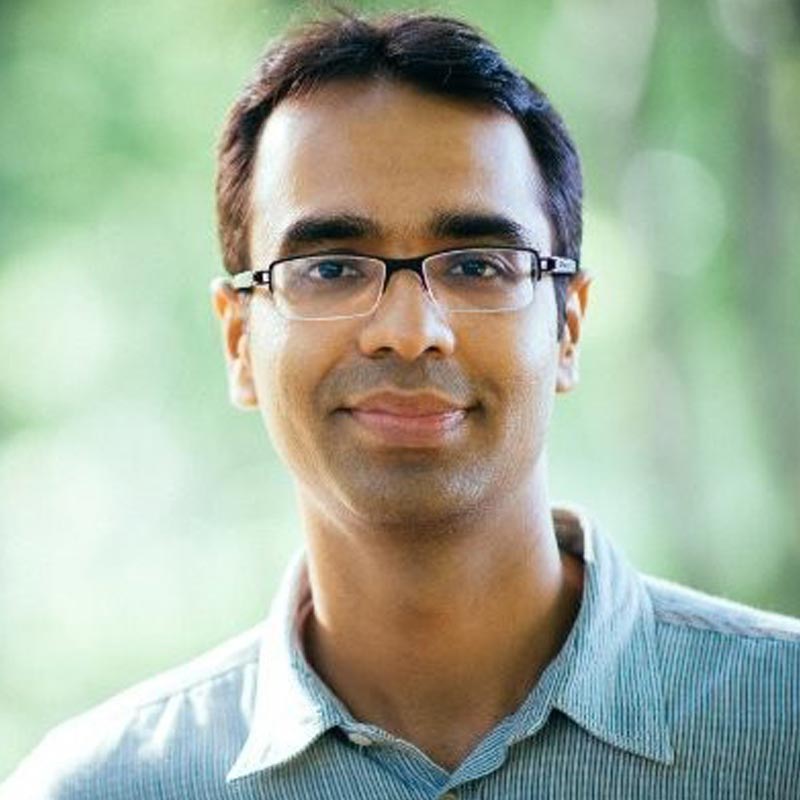
    Mumbai: Ed-tech start-up and online mentoring service Intercell – Virtual Mentor Network announced on Wednesday that it has onboarded Abhishek Verma to its leadership team as chief marketing officer. Verma will lead all marketing and PR initiatives and will help build a compelling brand story and drive user growth.

    Intercell is backed by marquee HNI investors, including actor Sonu Sood, who has recently invested in the business.

    “I am very excited to be joining the Intercell team,” said Abhishek Verma. “I believe Intercell has a great business model and talented management team that uniquely positions it to capitalize on the changing industry. Mentoring services are the need of the hour and I look forward to working with the leadership to craft a narrative for the brand and drive the next phase of growth.”

    Verma comes with 21 years of industry experience, has led marketing teams at Star TV, Sony Entertainment Television and Discovery Channel. More recently, he led the P&L of Freemont Digital, a digital agency with luxury hospitality clients like the Taj Group of Hotels. Verma has graduated from New Jersey Institute of Technology, USA and has an MBA from SP Jain School of Global Management.  

    “We are delighted to have Abhishek join our leadership team and direct the marketing function towards our next phase of growth,” said CEO Arunabh Varma. “His diverse expertise in building brands will be pivotal to our plans.”

  • Simplilearn assures job guarantee in its latest brand campaign

    Simplilearn assures job guarantee in its latest brand campaign

    Mumbai: Simplilearn, the digital-skills bootcamp has announced the launch of its latest brand campaign #JobGuaranteed focussing on Simplilearn’s ‘Job Guarantee’ programs that assure a job upon course completion.

    Culturally, Indians look for reasons, big or small, to celebrate or ask for a treat. The campaign is based on this very concept of friends and family members asking for a treat when one bags a new job. As part of the ad film, the protagonist is asked for a treat by his peers, right after he enrolls in a Simplilearn program, indicating that he is guaranteed to land a new job after he completes the program.   

    “The two programs launched thus far in Data Science and Full Stack Development include a 100 per cent job guarantee (conditions apply) within 180 days of completing them,” said the brand in a statement. “This, along with the money-back (*conditions apply) provision, make the Simplilearn Job Guarantee Programs ideal for anyone looking for an assured start to their career in these high-growth professional domains.”

    Simplilearn chief marketing officer Mark Moran said, “As a leading online Bootcamp, we are excited to launch this campaign bringing job guarantee as a core offering to aspirants, coupled with the relatable storyline of asking for a treat when one succeeds in their profession. We hope viewers will relate to the characters and find the motivation to learn new skills and share their “sweet success” with their family and friends.”

    The ad films focus on two primary sets of target audiences, those employed and exploring better opportunities; and aspiring candidates who are currently looking to join the workforce and build a career for themselves. Both films showcase the protagonist being asked for a treat after enrolling in the Simplilearn program, as it means they are on track to secure a job, guaranteed.  

    Bluebot Digital CEO and CCO Carl Savio said, “The campaign is built around a tangible product benefit – guaranteed jobs. While conceptualising the campaign we stumbled on a cultural insight – In our country, it’s customary to ask for a treat when a friend or family member acquires an asset or moves up in stature. And from there we built a campaign that we know will relate to all demographics.”

    The integrated campaign will be launched across multiple digital platforms, and print media.

  • #Retrace2021: Associating with marquee properties on TV helped us take a quantum leap on digital: Arjun Mohan

    #Retrace2021: Associating with marquee properties on TV helped us take a quantum leap on digital: Arjun Mohan

    The only ed-tech “to have a ‘donkey’ as its brand ambassador”, upGrad has been hitting all the right notes, starting from its eye-grabbing ‘Don’t lick ass, instead kick ass’ 2020 ad to its fortune-teller donkey ad in early 2021 to drive across its “Sirf Naam Ki Nahi, Kaam Ki Degree” messaging. Having achieved the desired impact with its former campaign, the edtech consciously shifted its brand positioning to ‘Fast Forwarding’ one’s career with upGrad’s online courses, ending the year with a striking print campaign that took on CAT, while also tackling with humor the perception of ‘online’ MBAs not being effective.

    The seven-year-old start-up, known to make full use of its marketing channels to amp up the reach has crossed a subscriber base of two million learners at last count, and the jump from one million to two million came about in approx. eight months.

    As the person at the helm of upGrad’s India operations, Arjun Mohan has steered the edtech unicorn and helped put it on an upward trajectory. An experienced industry professional, Mohan has worked across domains spanning sales, marketing, and product development for over 15 years.  Before upGrad, Mohan worked with edtech major Byju’s as marketing vice-president and later as the chief business officer (CBO). A gold medallist from IIM Kozhikode, Mohan has worked with brands like Titan and Tata services.

    In a free-wheeling conversation with IndianTelevision’s Anupama Sajeet, the upGrad India CEO Arjun Mohan talks about steering the edtech brand through a post-pandemic world and on the key marketing innovations adopted by the brand in the past year. He also shares his thoughts on being a ‘hardcore optimist’ and the trends that might dominate the edtech industry in 2022.

    Edited excerpts:

    On looking back at how the year 2021 fared for upGrad

    In a growing industry, every year is a good year. So, from a business perspective, 2021 was a good year as overall business metrics have been quite good. But it was pretty challenging considering the multiple waves of Covid which struck us – the lockdowns, the inconsistencies of when to come to the office, and the problems that our consumers were facing. As a result, decisions were getting delayed. But then it was these challenges that pushed us and I believe as a result of that we were able to carve out several good ideas on all three aspects of business i.e. products, sales, and marketing. Hence we were able to create an impact in the market.

    On key innovations adopted by the brand in 2021

    Yes, between 2020 and 2021, there have been a lot of changes in the way upGrad communicated. That change is a testimony to consumer behaviour, where the association between education being something ‘serious’ is a thing of the past. And that is why we positioned the brand differently.  We realised that learning, upskilling, lifelong learning- all these aspects are no longer constrained to a few. There are guys who want to learn, upskill, and constantly improve themselves but at the same time, they want to enjoy life. We started talking to our consumers in a lighter vein, started communicating with working professionals in a language they connected to.

    One of the initial communications we did was on office politics- on how one should stop bothering about office politics and focus on specialisations and upskilling that will take your career ahead. The second campaign we built upon was ‘Sirf naam ki nahi, kaam ki degree’. We continuously heard from customers that “we would definitely think of doing this course, par ye degree koi kaam ki honi chahiye.” In India, a degree is associated with – a better job, a promotion, a better salary, a future, and so on. So, we worked on those insights and repositioned the entire company into offering courses that will actually be life-changing. That’s where we moved to our positioning of ‘kaam ki degree’.

    In 2022, we moved into phase two of it. Rather than just talking about online learning, we started focusing more on the value proposition part of it- On how the upGrad course/ degree is better than whatever options you have in the market. Thus, if you see our communication, it has also been based on the life-changing impact that upGrad courses have, followed by two or three shorties or 15-second films where we talk about the USPs. This format has been really helping us with the consideration part and we have been seeing that the conversion on the lead has been on the uptick. So, if last year the donkey was the high point from an ‘awareness’ perspective, then this year the MBA campaigns we did focusing on the ‘value proposition’ – that would be the highlight which saw a lot of impact for us. That’s been a big change in 2021. 

    On launching campaigns sans any celebrity endorsements

    While we do joke about it that every edtech out there has a celebrity brand ambassador- Byju’s has a SRK, Great learning has Virat Kohli, now Vedaantu has got Aamir Khan- and we have a donkey (!), it’s not been a conscious decision. If at a point in time we feel we need a celebrity vehicle we would do that. Currently, we are at an early stage of our brand building and the aspect we have been focusing on, as well as the TG we are talking about, is very different. This is not for mass India; this is for a smart audience. We didn’t see working professionals as the right vehicle for getting a brand ambassador. Even if you look at who or what they follow on OTTs or YouTube platforms – the kind of influencers these people follow are not celebrities. They are very individualistic and iconoclastic in that they follow what they think is right- they don’t believe they need to follow the crowd. And that’s why we stuck to the basics and the donkey!

    On exploring influencer marketing and subsequent ad-spends

    The way we look at brand marketing is that there are three pillars- The first pillar for us is ‘Content’ which includes social etc. Then comes the ‘Mass media’ which is where the TV and Print comes in and finally the ‘PR’ and all other aspects.

    For Content- we focus a lot on the content creators: influencers on YouTube, Instagram, OTT platforms, etc because our TG, especially the knowledge worker who is in IT/ ITES follows this segment a lot. We have started by working with multiple content creators like BeYouNick, Dhruv Rathee, who are very popular with this TG. We work with them on bringing Upgrad into their content very organically.

    Apart from relying on other content creators, we have also started creating our own original content called ‘the office canteen’. This again revolves around the theme of office politics, along with BeYouNick and YouTube, Google and has been a big success for us (trending with ten mn views).

    On the brand’s ad spend across TV, digital and print

    When it comes to mass media like TV and Print, rather than a ‘spray and pray’ our strategy has been focused on large properties.  When we do it, we do it big because we want to work on those properties which have a huge reach. So, we worked on IPL, the Test championship, UEFA, Wimbledon, and such. You can also see the sports association- as sport is connected with winners and ambitions so that works for us. Even in newspapers, our ad was an impact ad. It was more like moment marketing in that we took a dig at CAT, saying ‘CAT is so yesterday’. So that’s the kind of ‘big bang’ approach we are taking with mass media.

    We do digital marketing all the time and we’ve our leaps coming at particular CPL (Cost per lead) and traffic coming with a particular threshold. I want these brand properties on mass media to be at a point where I’ll get a quantum leap on the digital side of it. We plan it in such a way that our traffic moves a threshold and comes to a new benchmark. That’s been our larger strategy.

    Digital is where we get to do direct marketing. And we keep using large-scale marketing properties to get quantum jumps. Because, the kind of scale these properties give, digital will take years to reach there. We are also seriously looking at OOH. We shall do a clinical campaign, once our TG is back in the office, by trying to focus on places where we know our TG is- for instance, an IT park- and then do BTL inside such premises along with hoardings etc.

    So, all of this mass marketing is important to us, and we have a way to measure their impact. For that matter, even ‘Shark Tank’, where we are the title sponsors, we are quite sure that is the direction large-scale mass media is moving into. Rather than doing a couple of ads in between programs, writing your brand into the story is what really works. So that’s something we have really worked on and we have big plans for the show.

    On rising competition in ed-tech space and strengthening their USP

    We have complete confidence in our product. This product took almost five years to develop after multiple iterations. We were always clear that if we are able to get our customer to at least try our product then we can change his/ her perspective and even convince them that online is better than offline. There has been a lot of influx but if you see what’s happening today is that the players with a strong product, and sales & marketing capability are finally emerging out of this. So, I feel the solution for us is just to have our ears to the ground and keep on listening to the customer and then be ready with a solution that they will love. And that’s what we have been doing with our products, sales and marketing.

    On upcoming plans for 2022

    I am a hardcore optimist so I am sure 2022 will be superb for the brand. We are very clear we want to be the largest integrated edtech in the higher education space (post K-12) across the globe. Our international operations, which we started in 2021, is panning out well. We have our offices in the US, APAC and India where we have set up our subsidiaries. Post-India, our focus market will be the US- we really want to crack that market. So really looking forward to 2022 when we can take this to the next level.

    On key trends that might dominate the industry this year

    I think most of the ed-tech players in the K-12 segment will ultimately stabilise with the hybrid model, wherein there’s an offline component to it and an online component. But in higher edtech I don’t see that happening. Higher online learning has gotten established as a clear option or a side-by-side alternative to what used to exist earlier offline. There’s a very clear value proposition that you can continue upskilling even when you are working: ‘Learn while you Earn’.

    Hence, I believe, online education will be the preferred mechanism, at least from a Masters-degree perspective in India. The majority of Indians do not do a Master’s today because they are not sure whether thereafter, they will be able to get a job with that kind of a package. Even from a NNation-building perspective it is important for a country like India, with such a young population that we have highly skilled people. That’s when the country’s economy will move to the next level.

    Also, as we keep getting feedback from our learners, there has to be some social component to even online learning. So we are working to build a social module where learners can share their ideas, meet their lecturers, and have a session offline also. So that’s the way we see it and we will keep improving on it in 2022.

  • #Retrace2021: The emergence of new advertiser categories in sports genre

    #Retrace2021: The emergence of new advertiser categories in sports genre

    Mumbai: As LIVE sports returned to Television in full swing in 2021, several new categories of advertisers also dived in to make the most of the opportunity to establish a connect with consumers. From e-pharma, gaming, cryptocurrency to several new-age brands flocked the TV space with a marketing blitz.

    “There is a deep connection between sports and youth, and the latter is undoubtedly among the first adopters of technology. So, no wonder why a plethora of consumer tech brands are dominating the mass sports broadcasting airspace,” says Wunderman Thompson Delhi senior VP and managing partner Joy Chauhan. “For them, the biggest metric of success is how fast they can scale up their brand and operations. Big sporting brands and Bollywood celebrities are just what the media planning doctor ordered for them.”

    Sample this: According to the latest Barc India report, out of the total 4,624 brands that advertised on TV in October, as many as 1,065 were new ones. While legacy brands such as the durables and automobile brands stayed strong, several new ones made splashes with significant increases in investment in the sports sponsorship space.

    According to Pitch Madison Advertising report published in February early this year, ed-tech firm Byju’s spent Rs 400-500 crore in advertising in 2020 while gaming firm Dream11 spent Rs 350-400 crore and My11Circle spent Rs 150-250 crore. The trend continued this year as millions of people tuned into cricket, football, and other sports events throughout the year.

    Despite the pandemic-led disruptions, the sports scene in 2021 saw some big impact properties reigniting the LIVE sports action on Television. From the 14th season of the Indian Premier League (IPL) to ICC T20 World Cup, India-New Zealand series, Indian Super League (ISL), and the Pro Kabaddi League (PKL) – all boosted the presence of new advertisers powering the revenue growth.

    Online gaming, ed-tech, and crypto brands drive Ad-ex

    The contribution of these companies to the overall adex has also been steadily growing each year with new categories such as online gaming and ed-tech driving the adex in 2021.

    According to DDB Mudra Group country head and managing partner – Integrated Media Rammohan Sundaram, new-age consumer tech companies contribute nearly 50-55 per cent of the adex on sports. “Look at the number of brands and their frequency on TV – PayTM, Cred, Upstox, CoinDCX, Byjus, Unacademy, Upgrad, MPL and others have ensured the growth of TV advertising, sponsorship in sports and celebrity endorsements,” he explains. “This is visible not just on TV but also on digital due to the nature of the business of streaming sporting events on devices. My guess is that around Rs 4500-5000 crore come from new-age companies into sports marketing alone.”

    Industry experts also highlight the advantages that an Indian consumer offers especially in terms of consumer loyalty and long-term affinity. With the youngest population in the world, where 65 per cent of the total 1.3 billion are below the age of 35, India is considered the largest market economy in the world.

    Building Mass Reach

    When such a denominator is at play, how does a consumer-tech company build its momentum? It does that by being omnipresent through reach and high frequency, through a medium that still continues to build new audiences outside of the urban population- and that medium is TV. Experts cite this as one of the prime reasons why big brands in e-commerce and other new categories continue to plough millions of dollars on television.

    Going by the consumption patterns of this young audience, and a definite outcome that makes for a wholesome experience, the Sports genre delivers the highest GRPs (gross rating point measuring impact). Thus, making it worthwhile for these new-age companies to bet on so that the required adoption of their products happens in their desired target sets.

    “At least 60 per cent of Unacademy’s advertising spends is allocated to TV to capture the growing internet populace and make them adopt their offerings early so that they can stay locked in for a longer period of time. Most of the loan-to-value (LTV) for such (EdTech) brands is strong because of the number of years these platforms can lock their consumers with high-quality educational content and experience through their product offerings,” says Sundaram. “So even if they have a very high customer acquisition cost, it really doesn’t matter much because eventually they not only recover but make a lot of profit from one customer, leading to an eventually profitable business simply because of the duration a customer stays attached with the brand.”

    That may not hold true for eCommerce, or Crypto, however, which is a different ball game altogether. So, while there may be different consumer behaviours associated with these new-age brand categories, all of it makes media investments in Sports advertising, parking a sizable chunk of their annual ad budget, worthwhile given the sheer size of the addressable audience that is available for these new-age brands in such a large market economy.

    According to dentsu India chief client officer Narayan Devanathan, brands in these categories are the ones which are flush with funds, and they are looking to generate awareness very quickly, backed by a lot of ad spends—and the properties with the most impact for this task are the sports-related ones. “The emergence of these advertisers is so visible is primarily because they have received a disproportionate share of attention and capital from VC firms in this time period. And they are now spending that capital to garner a disproportionate share of attention from their potential customers,” he opines.

    Turning to Social Media for the boost

    Even as Sports continues to attract eyeballs, the ‘new normal’ and digital advancements coupled with the social media expansion have brought new possibilities for brands to increase their visibility and improve their sponsorship message. And this time, with back-to-back IPL and T20 World Cup leagues aligned with the festive season, the brands went all out investing in the sport on TV and OTT platforms to be where their audiences are.

    E-commerce brands were the biggest spenders during the first leg of IPL 2021 in April-May and an increase in the number of fantasy gaming apps were observed during the league, as per HI-CRICKET, a proprietary IP report by Havas Media Group India.

    Digital stock brokerage Upstox recently beat online investment platform Groww to become the official partner of the Indian Premier League (IPL), joining startups such as fantasy sports platform Dream11, e-payments firm Cred and ed-tech startup Unacademy. The latter is also sponsoring the T20 tournament, apart from IPL, and currently working on Olympics and other branded content-led partnerships across different forms of sports, the company disclosed earlier.

    Pro Kabbadi League, which returned after two years on 22 December has online pharmacy platform Netmeds.com and Dream11 as sponsors. Recently e-gaming platform WinZO which aims to build a community of gamers and gaming influencers in Tier 2 to tier 4 cities in India, also secured the principal sponsorships for two major Vivo Pro Kabaddi League (PKL) teams, Bengal Warriors and Gujarat Giants, as well as associate sponsorship for Patna Pirates. Meanwhile, the Indian Super League (ISL) has sponsors including Dream11 and Policybazaar.

    With the year drawing to a close, let’s see how these new-age brands up their game in 2022!

  • Tata Studi shows the correct way to study in latest film

    Tata Studi shows the correct way to study in latest film

    Mumbai: Parents undergo immense stress while preparing their kids for school and often end up putting their children under undue pressure. It is this thought, that drives Tata Studi’s new campaign, which conveys the message, that true success depends on effective planning and not undue pressure.

    The campaign ‘Padhne Ka Sahi Tareeka’ conceptualised and executed by Mullen India, focuses on the correct way to learn by planning one’s studies efficiently. It is based on insights drawn from how invested parents are in the studies of their children. Through a series of films, the campaign conveys the point that planning their studies will help students to be better prepared, avoid anxiety and perform well in their exams.

    “The category is flooded with multiple brands, so the idea was to create clutter-breaking work that’s also insightful and relevant to parents and students. The insight into how parents put pressure on children unknowingly, especially during exams gave us an opportunity to tell stories that parents can connect to. The idea – ‘Pressure Nahi, Plan’ – also puts the key differentiator benefit of Tata Studi, which is to plan one’s studies to reduce last-minute exam stress, right at the centre of the campaign,” said Mullen Lintas chief creative officers Azazul Haque & Garima Khandelwal.

    First introduced in early 2021, Tata Studi is an after-school learning app designed around the principles of Science of Learning – a multidisciplinary approach that combines research from neuroscience, psychology, and cognitive science.

    Tata ClassEdge chief B2C Sachin Torne said, “We want children to plan their studies and learn for understanding so that they can use their learning in real life. Planning for any activity helps reduce pressure and it is true even for studying. Through Tata Studi, we want to inculcate good learning habits in students. Once the child learns how to learn, it’s a skill that will stay with them for life.”

  • GUEST COLUMN: The future of ed-tech in India

    GUEST COLUMN: The future of ed-tech in India

    Mumbai: Ed-tech is a trending buzzword today. It is simply a combination of education and technology, implying the augmenting of education using technology and digital tools. The canvas of Ed-tech is extremely vast and transcends learning across ages, grades, vocations, and skill enhancement.

    I would like to specifically focus on the impetus Ed-tech is bringing into India for children in their formative, school-going years.

    India has over 264 million school-going children, more than any other country in the world. We also have ~15.5 lakh schools in India. While digitisation was slowly seeping into our lives and how we do things, be it online vocation or coding classes; education delivery was largely traditional through the brick and mortar classroom format. However, the pandemic has led to sudden acceleration and even disruption in the way technology is integrated into education and leveraged to bring best-in-class learning direct to home!

    The ecosystem is well poised to accept ed-tech. Today, 80 per cent of the school-going children are aware of ed-tech and there are over 500 million active internet users expected by 2022 (up from 350m in 2019) (Source: BLinC Insights 2021). The National Education Policy announced in 2020 acknowledges the importance of online interventions and outcome-based learning. By 2022, online education offerings across grades 1 to 12 are projected to increase 6.4 times. (Source: Omidyar Reedseer Report, 2019-20)

    The benefits are multi-fold with students getting access to best-in-class academia, supplementary support, skill-building, application-based learning, and more sans boundaries. Educators will get their due with an opportunity to transcend geographical horizons, surpass barriers of formal structures and impart learning for the outcome. A few exciting things we can look forward to in the future are:

    More Application, Less Instruction

    While LIVE, online classes are a fantastic platform and will continue to unite educators and students alike, we will also see the application and outcome-based learning gaining traction. We are seeing a lot of game technology used for better engagement. These will be further used for core learning and even supplementing academics. For example, at BrainGymJr, we provide puzzles and challenges based on Math, English, and real-world skills in fun formats such as crosswords, digit cards, etc. Children can solve and learn the real application of what is being taught in school.

    One Size will not fit All

    We already know that every student in a given class has a varying level of proficiency. While we reward better performance and celebrate achievers, we have limited capacity to tailor learning based on proficiency and aptitude. However, technology can enable extremely detailed insight into the core proficiency of every child. Application of analytics and enabling machine learning will further help customise to the strength of every child and nudge them from there. AI and big data will help empower students to develop their competencies, critical thinking, and creative abilities.

    Learning on the Go!

    We will see more self-initiated and self-learning formats gaining precedence. These formats will provide flexibility of space and time while giving clear results on learning. This could be in the form of activities, puzzles, short courses, daily quizzes, video-based learning, and more. Over time, these will be acceptable outcome-based learning modules with due credit and consideration breaking away from scheduled or structured learning courses.

    In summary, information will not be king, the intent to learn will rule. A couple of decades ago, Google brought about a huge change in how we perceive information and knowledge, with everything available at a click of a button. We now see this permeating education and learning. We already have and will continue to have an abundance of learning courses, material, and information. Peer-to-peer exchange of information will be encouraged and even facilitated. Educators and students will be seamlessly connected.

    Ed-tech will evolve further wherein the value addition brought about by customised learning, analytics-based insights, deep engagement, and outcome-based programs will be what differentiates the learning experience for every student.

    “Tell me and I forget, teach me and I may remember, involve me and I learn” – Benjamin Franklin.

    (Vidur Garg is the founder at BraingymJr. The views expressed in the column are personal and Indiantelevision.com may not subscribe to them.)

  • This decade belongs to the ed-tech industry: Practically’s Mahadev Srivatsa

    This decade belongs to the ed-tech industry: Practically’s Mahadev Srivatsa

    The ed-tech sector in India is witnessing unprecedented growth owing to the accelerated adoption of technology. The pandemic further strengthened the trend, with schools, colleges, and educational institutes shifting online, paving the way for the rise of several ed-tech start-ups. Claiming to be India’s first experiential learning app that brings learning alive through immersive videos, interactive augmented reality, and 3D simulations for 6th to 12th graders Practically is one such startup that also scripted its success story during the time.

    Mahadev Srivatsa, who spearheads the brand team as the ed-tech’s VP – marketing & brand strategy, is on a mission to make Practically a household name in India. An evangelist marketer and brand strategist with a keen eye for consumer insight, and over 13 years of cross-industry experience in brand launch & integrated marketing campaigns, Srivatsa has worked across telecom, consumer electronics, auto, and FMCG to name a few. He was recently adjudged Winner in the Thought Leaders category at Voot.

    Srivatsa, who has been previously associated with organisations such as Vodafone-Idea, ASUS India, H&R Johnson India among others, brought in a unique acumen on how traditional and new-age digital mediums can be leveraged to build a brand. He is credited with launching the brand’s first integrated marketing campaign, including crafting the brand proposition, the campaign strategy, and successful rollout that resulted in a 3X growth in both business and brand objectives. The brand’s first national campaign launched earlier last month, ‘Scan Anything’- a disruptive feature that enables students to learn from their everyday observations – also saw a 2X growth in terms of search volumes.

    IndianTelevision’s Anupama Sajeet caught up with the marketer and branding professional for a freewheeling conversation on an overview of the ed-tech marketing space and digitisation in education. Srivatsa also shared insights on the start-up’s roadmap ahead and the role of online education platforms in lieu of the scheduled reopening of schools and institutes for offline teaching in the coming days…

    Edited excerpts…

    On what differentiates Practically from other online learning platforms

    As India’s first experiential learning app designed for students in classes of 6th-12th with a focus on STEM learning, our content is 3D, immersive, and experiential which makes learning fun and engaging for kids. We have a very comprehensive content of 3000+ world-class 3D videos, 1000+ Simulations / AR experiences and are constantly working to make our library amongst the largest. We are also the world’s first ed-tech company to launch the #ScanAnything feature which transforms the mobile camera into an educational tool allowing learners to interact with surrounding elements freely. It can recognise pictures, questions, exercises, proofs, etc., from textbooks, magazines, newspapers including capturing images of any surrounding objects and presenting linked curriculum learning information on the app for the learners to pick their learning journey and resolve doubts instantly. 

    On the challenges faced by the brand to penetrate this increasingly crowded sector

    In ed-tech, the consumer and the customer are different, so the marketing challenge is always to create a campaign that appeals to both sets of audiences. The TG for the campaign was parents of kids of 6-12 grades and kids themselves. The other challenge was communication in a cluttered market, given the amount of SOV (share of voice) by competition in this space of late. Hence the challenge was also to develop communication that breaks the clutter and gets noticed. And finally, we had to do justice to the ScanAnything feature not just in terms of creating awareness about the feature but also the claim that it’s the first by an ed-tech company.

    So, the entire campaign communication was developed to get the perfect balance of keeping the campaign look & feel to reflect the world-class tech and product offering as the hero and at the same time appeal to our younger TG which likes to see communication that is light, snackable and fun. To make the feature believable and showcase its robustness, we designed the print ad in a manner that users could try out this innovative feature straight out of the ad.

    On Practically’s first national campaign

    Given the need to promote this innovative ed-tech feature, the campaign is digital-first with a robust focus on print. The entire campaign was meticulously planned in four phases starting from teasers on social media to launch, post-launch and sustenance. The digital campaign kick-started with the launch of two films on YouTube and a national press release around the campaign proposition of #StopSearchingStartScanning. The films centered around the feature and the tech as the hero.

    A print ad every week for three weeks on leading national and regional dailies was planned to drive awareness and credibility and was uniquely designed to make people engage with the feature. A robust influencer plan with a mix of celebs, micro and macro influencers at a Pan-India level was also executed to create buzz. We will continue to deploy influencers in the future as well. As a medium this is something no marketer can afford to ignore given the digital age, we are in.

    On the key take-aways post the brand’s campaign launch

    The campaign has been well received with over seven million views for our films so far across all social media platforms. We were at four lakh installs before the campaign and in just over a month have grown at a record speed of almost three times to cross one million installs which was our key campaign KPI. All our in-app metrics (MAU, DAU) have witnessed exponential growth and we recently hit more than 1 lakh MAU (Monthly Active Users). More importantly, we are able to sustain the growth as the campaign reaches its final leg. With respect to the feature, on average so far, we are getting 10,000-15,000 scans a day with the highest being 33,000 on the day of our first print ad.  We have had six lakh scans since the launch of the campaign indicating the likeability of the feature and the marketing impact. We have also seen a 2X growth in terms of search volumes.

    On the media mix, the brand looks to target

    The choice of medium for marketing is always dependent on the product and TG. As a marketer, one always selects the optimum media mix desired for a launch or communication. Being an app, our communication will always be digital-first. Going forward, digital and TV alongside print will be the preferred choice for us. With pandemic almost looking like an endemic now, OOH also can be a good bet as a support medium.

    While Andhra Pradesh, Telangana, Karnataka, Tamil Nadu, and Maharashtra are our key markets, we have already gone national with this campaign and will continue to make strides deeper into these markets. As we enter new geographies, our focus will be primarily metro & tier 1one towns for now. We are also present in the Middle East and are expanding rapidly.

    On plans to scale up the brand marketing in 2021

    Getting a million downloads is a dream for any app and is usually the first key milestone and we are delighted at the pace with which we have achieved it, especially the last mile. All our future marketing campaigns will only be bigger in scale than the previous, given our objective is to make Practically the most loved and trusted e-learning brand. The next goal is three million and then eventually 5ive million installs by this financial year for which we have already started planning the next marketing campaign.

    On the role of online education platforms going forward, with schools reopening

    We believe that technology adoption in the education sector is yet to see its peak and the growth trajectory is likely to continue beyond the pandemic years. The lockdown induced by the pandemic has produced a paradigm shift in learners’ behaviour leading to an exponential increase in the demand for ed-tech products in India. As consumers are more aware of the offerings and accessibility, the urge to learn beyond the syllabus will help in bringing in innovations in learning. With steep competition, players need to modify their offerings to engage consumers constantly. With the implementation of the New Education Policy, online learning in higher education will further experience accelerated adoption as people focus more on upskilling and reskilling.

    Also, in what has probably been the biggest change in ed-tech marketing, today every player wants to be a ‘Brand’ and more importantly behave like one!  With the pandemic firmly establishing the trend of blended learning, this decade is looking like the decade of ed-tech in India.

  • BYJU’S announces Rs 2 crore for Olympic Gold winner Neeraj Chopra

    BYJU’S announces Rs 2 crore for Olympic Gold winner Neeraj Chopra

    New Delhi : The ed-tech brand BYJU’S on Sunday announced Rs 2 crore for the Olympic Gold winner Neeraj Chopra.

    Chopra achieved a historic feat on the penultimate day of the Tokyo Olympics 2020, after he won the first athletics Gold medal for India. He came out victorious in the Javelin throw competition.

    With a total of seven medals, Team India gave it’s best ever Olympics performance at the Tokyo 2020 event.

    Highlighting that BYJU’S is an ardent supporter of sports in the country, the brand said its making further strides into encouraging players across sports disciplines. It has also announced Rs 1 crore each for individual Olympic winners including Mirabai Chanu, Ravi Kumar Dahiya, Lovlina Borgohain, PV Sindhu and Bajrang Punia. 

    The accomplishments and the stellar achievement of India’s sports heroes at the Tokyo 2020 Olympics have been nothing but inspirational, despite the challenges posed by COVID-19 lockdown in 2020-2021. Not only has each one of them made the country proud but has also ignited hope and aspiration that our country can create many more Olympic champions in the future. 

    BYJU’S founder and CEO Byju Raveendran said- “Sports has a critical role to play in nation building and it’s time that we celebrate our olympic heroes, not just once in four years, but every single day.  They deserve all the adoration they get, and after this historic achievement at Tokyo 2020 we are rewarding the players for their efforts, sacrifices and achievements.”

    He added, “We hope that this small gesture will help them in their journey going forward to win more laurels for the country and also encourage many more youngsters to dream big. India has a huge potential to produce many more sporting champions and it is important to celebrate successes like this and make them heroes so that we transform ourselves from a Sport loving nation to a sport playing nation.”

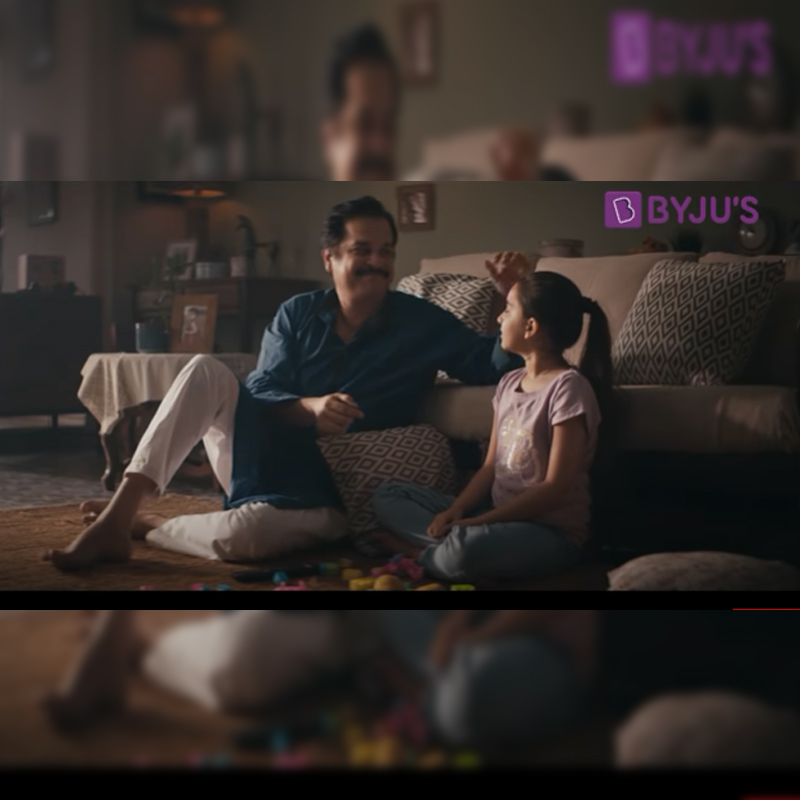
  • BYJU’S latest ad is a tribute to all parents

    BYJU’S latest ad is a tribute to all parents

    Mumbai: Ed-tech start-up BYJU’S has rolled out a new digital campaign honouring the sacrifices made by parents to build a successful professional career for their children.

    The new campaign – #HonorTheSacrifices went live on the brand’s social media handles on the occasion of Parents’ Day on 25 July.

    Conceptualised by the in-house team and created in partnership with Mumbai-based Dora Digs, the film includes four beautiful stories showing how our parents have always had their children’s backs and never shied away from providing them with any necessary support to achieve our goals.

    The first ad shows how a mother prioritises her child’s needs over hers, even for smaller things, like purchasing a better uniform, over a new saree. And, how a father keeps postponing his plan to buy a new scooter to save money for his son’s dream of becoming a cricketer.

    The campaign attempts to bind the audience with the love and warmth of a beautiful parent-child relationship, while invoking the brand’s philosophy- ‘Proud partner to parents’. It aims to celebrate parents for the selfless commitment and lifelong sacrifice towards nurturing the relationship with their children and always encouraging them to follow their passion.

  • Byju’s acquires US start-up Epic for $500 mn

    Byju’s acquires US start-up Epic for $500 mn

    New Delhi: Signalling its bid to expand its global footprint, edtech major Byju’s has announced that it has acquired Epic, US based digital reading platform for kids for $500 million.

    The company said it will invest an additional $1 billion in the US to strengthen its vision of “helping students fall in love with learning”.

    The acquisition will enable the ed-tech major to bolster its presence in the US market by providing access to the more than two million teachers and 50 million kids in Epic’s existing global user-base, which has more than doubled over the last year, Byju’s said in a statement. It will also enable it to create engaging and interactive reading and learning experiences for children globally.

    “Our mission is to fuel curiosity and make students fall in love with learning. Knowing that Epic and its products are rooted in the same mission, it was a natural fit. Together, we have the opportunity to create impactful experiences for children to become lifelong learners,” said Byju’s founder and CEO, Byju Raveendran.

    Epic CEO Suren Markosian and co-founder Kevin Donahue will continue in their current roles.

    “The alignment of missions and shared passion makes Byju’s the perfect partner, as Epic is confident that this acquisition will ignite excitement for learning around the world,” said Epic co-founder, Markosian. “Together, we can help empower future generations of kids by fostering a lifetime love for reading and learning.”

    Byju’s has aggressive plans for international and US market expansion, and the acquisition with Epic will not only lead to significant investments in technology that will help to further personalised learning for students but also enable Byju’s to become a natural part of America”s learning culture, the statement said