Tag: economy

  •  Zee Business launches Budget Get Set Grow special series for Union Budget 2025

     Zee Business launches Budget Get Set Grow special series for Union Budget 2025

    MUMBAI: It’s getting down to business about the budget. Zee Business is set to air its special programming series Budget Get Set Grow on 1 February 2025, starting at 7 AM. The series aims to decode the Union Budget 2025, offering in-depth analysis of its impact on the economy, businesses, and citizens.

    The programme will feature expert panels comprising economists, policymakers, and industry leaders who will break down key budget proposals and their implications. Sector-specific insights will cover infrastructure, manufacturing, green energy, and technology, providing a comprehensive understanding of the budget’s potential to drive growth and foster innovation.

    In addition to expert-driven discussions, the series will provide real-time perspectives to help viewers understand how fiscal policies affect everyday lives. The coverage aims to empower businesses and investors with actionable insights to navigate the evolving economic landscape.

    Zee Business managing editor  Anil Singhvi said: “The budget is a crucial step in shaping India’s economic journey. Budget Get Set Grow is designed to simplify and analyse the budget’s potential, enabling viewers to plan for a brighter future with confidence.”

    Zee Media CEO  Karan Abhishek Singh added: “The Union Budget represents a vision for India’s future. With Budget Get Set Grow, we are dedicated to delivering credible and insightful coverage that breaks down the budget’s impact across key sectors and industries.”

    Viewers can catch the live broadcast on Zee Business and stay informed about the government’s vision for sustainable development, innovation, and inclusive growth.

  • Cordelia Cruises to Lakshadweep – India’s most searched yet fairly unexplored island

    Cordelia Cruises to Lakshadweep – India’s most searched yet fairly unexplored island

    Mumbai: Cordelia Cruises has emerged as the unparalleled leader in introducing Indian travellers to the splendours of Lakshadweep. Since 2021, they have been the only cruise line consistently facilitating remarkable journeys to this unexplored paradise, making them the definitive choice for anyone aspiring to visit Lakshadweep. Following PM Modi’s recent visit, interest in this pristine archipelago has skyrocketed, with Cordelia Cruises experiencing a 2500 per cent surge in booking queries.

    More than 200,000 Indians introduced to Lakshadweep since 2021: Cordelia Cruises has been the only cruise line to facilitate over 200,000 Indians’ discovery of Lakshadweep since 2021.

    80,000 passengers annually explore Lakshadweep through Cordelia Cruises.

    Regular sailings from Mumbai, Goa, and Kochi: Offering unparalleled access to Lakshadweep.

    Significant economic contribution through shore excursions: Boosting local economies and creating symbiotic relationships with the island communities.

    Cordelia Cruises stands out with its unique itineraries from Mumbai, Goa, and Kochi, offering more than just a journey – it’s an immersive cultural and environmental experience. Over 80,000 guests cruise every year to explore Lakshadweep’s rich tapestry, vibrant marine life, and stunning landscapes through our cruises, significantly boosting the local economy.

    In line with its commitment to sustainability and community support, Cordelia Cruises is planning extensive CSR initiatives. These include local community hospitality training programs and environmental sustainability activities like beach clean-ups, ensuring a positive impact both ecologically and socially.

    Waterways Leisure Tourism Pvt Ltd, Cordelia Cruises president and CEO Jurgen Bailom said, “We are thrilled about the growing interest in Lakshadweep; we are committed to being an integral part of its growth story. Cordelia Cruises is proud to have introduced over 200,000 Indians to the mesmerising islands of Lakshadweep since 2021, significantly contributing to the region’s tourism and local economies. We’ve witnessed a remarkable interest for Lakshadweep cruises, particularly the 4-night and 5-night itineraries from Mumbai, which echoes the public’s enthusiasm for exploring this idyllic destination.

    India’s cruising landscape has been witnessing a remarkable transformation, and Cordelia Cruises is at the forefront of this monumental shift. With a commitment to delivering world-class cruising experiences, Cordelia Cruises has played a significant role in making the dream of cruising accessible to countless Indian travellers.

  • GUEST ARTICLE: The role of crypto in facilitating the content creator economy

    GUEST ARTICLE: The role of crypto in facilitating the content creator economy

    Mumbai: With technology opening myriad opportunities across sectors, it has ushered in an era of growth for the creator economy. Content creators today have a new means of monetising content, which is empowering them to become the sole owners of what they produce and engage directly with the audiences. Blockchain is revolutionising how content creators can make money from their creativity and hard work online. In the past, they relied on brands by engaging, promoting or representing them. Despite having millions of followers or influence on social media, they have to depend on brands to make money from their content. 

    With the growth in digital spheres such as streaming platforms and even the metaverse, for instance, they are now able to explore new avenues to showcase their work, establishing a link with audiences and earning directly. At present, the total creator economy market size is over $100 billion, and it also states that 46 per cent of creators generating content for over four years are earning more than $20,000 annually.

    Undoubtedly, the creator economy empowers content creators by giving them ownership. They now do not have to think much about the ever-changing online algorithms, worry about how much brands will value them, and can depend on their actual supporters, fans, or audiences for income. They can decide where and when to work and how to engage with audiences directly to make money. Thus, cryptos are democratising the ecosystem by unlocking many options to make, share, and sell content across platforms.

    How is blockchain boosting the creator economy?

    The rise of creators, consumers, and engagement on social media have made these online platforms leverage emerging and new-age technologies to offer realistic, advanced, and real experiences to their users. It is vital to make sure that creators get paid for their hard work without relying on anyone else as the ecosystem grows. With the advent of technology like blockchain, decentralisation is happening, and as users are gaining ownership of what they create online, it is making the ecosystem more equitable for them by linking consumers and producers through a direct exchange.

    Blockchain, which is the basis of non-fungible tokens (NFTs) and cryptocurrencies, has made it possible to track or record transactions or exchanges in real-time. Content creators today are using NFTs to digitally trade their assets and collect royalties. Once issued, the NFTs assign a monetary value to these digital assets. Also, a token is tied to the content that makes it the original piece. The owners then sell or auction off these NFTs with cryptocurrencies, which can be later converted into real money.

    How does it bring additional benefits for creators?

    The most significant advantage of blockchain technology for content creators is that it empowers them by allowing them to earn directly from their audiences without the use of intermediaries. They get full control, complete rights, and visibility of their earnings. The content creators, thus, by engaging, are able to earn, which greatly boosts the creator economy. Moreover, the benefit of crypto is that it stores the value of financial incentives with the distributed ledger to decentralise each financial transaction with the help of blockchain. The networks don’t hold or store a centralised source of original information, which makes it safe from hacking or exploitation.

    Taking a step ahead, the creators can use creator tokens to create and offer unique resources and provide unique experiences to their followers for community building. For example, they can offer member passes to grant greater access to fans and create new income pathways. Also, such tokens let fans get closer to creators by paying extra. The creators will subsequently be able to expand their income source by possibly investing their earnings in crypto assets. Today, there are leading platforms such as Taki, Chingari Clubhouse, and others that are providing opportunities for content creators to earn money. This sector is gaining huge traction, and as technology, demand, and awareness develop further, it can definitely provide an alternative source of income and possibly higher returns to content creators.

    The way forward

    It is indeed welcoming to see that the Indian government hasn’t banned but regulated the crypto ecosystem, leaving scope for learning and understanding to bridge the trust deficit and address the hesitations. As per reports, the creator economy in India has grown to Rs 1,300 crore in the last couple of years as many small, medium, and even global brands are actively opting for social media creators and influencers to promote their products, which shows that the future is bright. The country, which is on its way to emerging as a resilient digital economy, has to formulate its policies to adopt the innovations and trends to not miss this bus at this juncture. India is witnessing a rise in its internet and social media population, and a conducive ecosystem for the development of blockchain, NFTs, cryptos, and web 3.0 can empower the content creators by making them sole owners of their content and selling it directly to their loyal fan base. 

    The author of this article is Taki co-founder Sakina Arsiwala.

  • Budget 2022: A clear push towards a digital economy, start-ups

    Budget 2022: A clear push towards a digital economy, start-ups

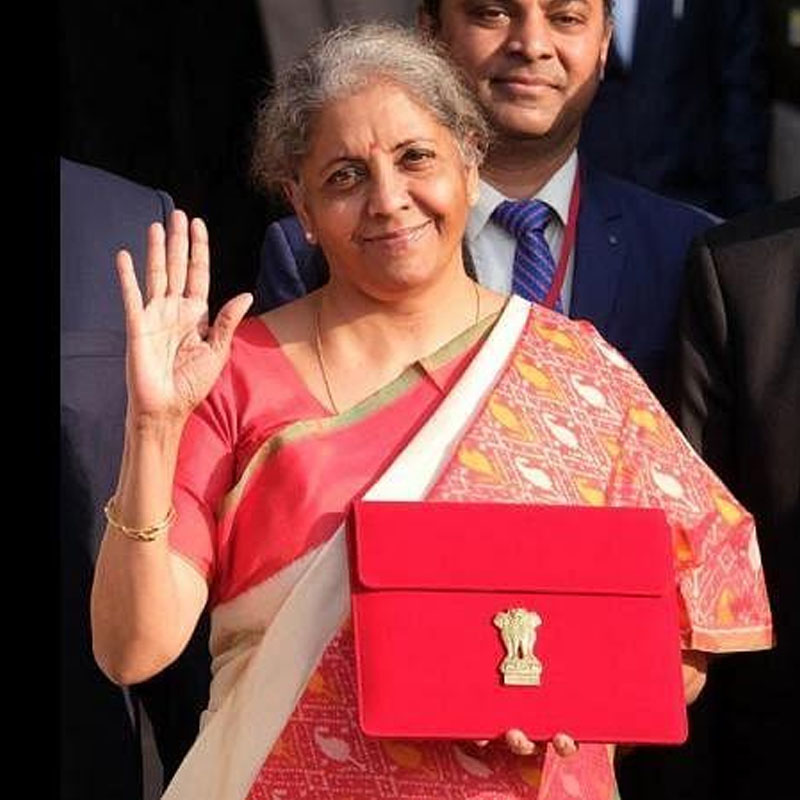
    Mumbai: Finance minister Nirmala Sitharaman on Tuesday presented the Union Budget 2022 in Parliament. The minister said that the country is set to clock an economic growth rate of 9.2 per cent in the current financial year, in what was her shortest Budget speech yet. While the budget made no tax concessions for the salaried class, some of the key areas it focussed on was a push towards a digital economy, and start-up ecosystem.

    The FM proposed a 30 per cent tax on income from transactions of cryptocurrencies and other virtual assets. Also, to bring such assets under the tax net, Sitharaman proposed a one per cent TDS (tax deducted at source) on transactions in such asset classes above a certain threshold, while also including gifts in crypto and digital assets in the to-be taxed list.

    Sitharam also said that the Reserve Bank of India (RBI) will launch a ‘Digital Rupee’ based on blockchain technology in 2022-23. The Central Bank Digital Currency (CBDC), according to the finance minister, will provide a significant boost to the digital economy and lead to a more efficient and cost-effective currency management system.

    The FM also announced the extension of the Emergency Credit Line Guarantee Scheme (ECLGS) that provided additional credit to over 1.3 crore MSMEs till March 2023. Additionally, its guarantee cover has been expanded by Rs 50,000 crore to Rs 5 lakh crore. Apart from this, in a year riddled with mental health well-being concerns amid the pandemic, FM Sitharaman announced the launch of a ‘National Tele Mental Health Programme’ for better access to quality mental health counselling and care services, in a move that signifies the normalising of mental health as a legitimate area of focus for us as a nation.

    Industry reactions on the Union Budget have been pouring in, and most of the industry stakeholders saw the twin announcements of the digital rupee and the taxation on “virtual digital assets” as a focused drive from the government to regulate the crypto space. Some felt that regulating a decentralised space is a paradox in itself, and took the cautious approach by saying how this plays out needs to be seen.

    Here is what the industry experts had to say:

    CoinSwitch founder and CEO Ashish Singhal who is also the co-chair of Blockchain and Crypto Assets Council (BACC) welcomed the government’s decision to introduce central bank digital currency (CBDC) to accelerate digitisation. Calling it the ‘the gateway to the future decentralised world, aka Web3.0’, he said, “The budget provides clarity on taxation and shows the government’s intent to take a business-friendly approach while protecting the interest of consumers and the exchequer. The regulatory guidance on tax from the government furthers the mainstreaming excitement of this emerging asset class with over $6bn worth of investments in India. Hopefully, this will induct more digital-savvy Indians into the financial ecosystem willing to explore newer forms of investing and wealth creation.”

    OKX.com CEO Jay Hao believes that India is slightly lagging in the digital currency race mainly due to the regulatory hurdles and reluctance in accepting the growing popularity of digital assets/digital currency around the world. “If we look at the global scenario, central banks around the globe have already launched or are about to launch their digital currency,” said Hao, adding that he hoped the announcement made regarding CBDC is implemented without any further delay as it will give a much-needed push to the blockchain industry in India. He also asserted that higher taxes may discourage investors from choosing crypto as an investment avenue and delay the mass adoption of crypto assets in India.

    CoinDCX co-founder and CEO Sumit Gupta hailed taxation of Virtual Digital Assets or Crypto as a step in the right direction. According to him, this will give a much-needed clarity and confidence to the industry. The introduction of CBDC sends a clear signal of India being a digital-first, efficiency-driven, and transparency-led system, he added.

    Mudrex CEO and co-founder Edul Patel also termed it as a progressive step towards boosting crypto adoption in the coming years. The sentiment was shared by other industry executives who felt the government legitimatised crypto assets in India in an indirect way by coming out to tax the same.

    Dentsu India chief client officer Narayan Devanathan said the budget is “future-focused, aiming at the distant vision of India@100”, instead of being focussed on the present. Expressing dismay over the omission of much-needed concessions in critical sectors like health, Devanathan said, “A punishing 2021 for the aam aadmi with more-than-usual expenditure on health and sustenance meant the general populace was looking for immediate relief that would place more cash in their household budgets. That did not happen. Nor was there any extraordinary investment in relieving the healthcare expenditure burden. Even the MSME sectors were only handed a slightly longer lease of life with the extension of the ECLGS, but there was no real move to stimulate consumption by placing more cash at consumers’ disposal, for example, extending LTA claims to restaurants (and not just accommodation).”

    According to Blink Digital co-founder and COO Rikki Agarwal the government sent mixed signals with its proposed announcement of a new digital rupee powered by blockchain technology and taxing digital assets. While the move has cleared the impending ambiguity around the cryptocurrencies in India, signifying its acceptance as an asset and legalising it to boost the economy, imposing heavy taxes on digital assets is an indication that the government intends to discourage the same, he says, adding, “We will wait for more clarity on the regulations.”

    Wunderman Thompson South Asia CEO Shams Jasani said the budget highlighted that government is finally recognising that digital is getting to be bigger and bigger. “With so much talk on digitisation I think the digital revolution has already come in India. And the sheer push on digital infrastructure in the country will help a lot more content consumption and a lot more content creation as well. Also, the reach of the medium is going to grow into the rural areas and smaller towns & cities,” he said, adding that, “Governments across the world are going to ultimately get into the digitalisation of currencies, backed by Crypto technology or blockchain technology, and that is the future of currencies. So that is going to take off and that will also legitimise the whole idea of cryptocurrencies in India.”

    DDB Mudra Group chief operating officer and chief financial officer Anurag Bansal opined that the Union Budget looks neutral, with no major changes in taxation, adding that the launch of digital Rupee based on blockchain technology is a big move to bring in official cryptocurrency in India. Managing the Fiscal deficit while pushing for growth and investments is a great balancing act taken on by the government, he feels; one that will give a boost to capital investments and infrastructure development.

    White Rivers Media CEO and co-founder Shrenik Gandhi termed the budget as ‘fairly balanced’ in that there is sufficient emphasis being laid on up-skilling, and making right investments in tech which is the need of the hour. Speaking of the expected benefits, he added, “Let’s not forget that this is India’s #Budget and not a Big Bazaar scheme announcement. So, the immediate benefit may not be seen right now but considering the long-term narrative, it is a fairly established budget.”

    According to Publicic Groupe South Asia CEO Anupriya Acharaya, the Budget was positive, growth-oriented and with reforms in the right direction. “The advent of 5G is sure to transform communications – for our industry it will help the creation of better AV, voice and AR/VR experiences. It will also fuel digital payments, streaming entertainment, gaming, e-commerce, tele-medicine etc which in turn will aid more Unicorns! From e-passports, to battery swapping for electric vehicles, setting up of optic fiber in villages, setting up of a digital university and skilling through an e-portal, the big push is for technology, digital infrastructure and empowerment,” she added.

    Parle Products senior category head Mayank Shah said putting money in the hands of consumers really helps, so they go out and buy products. “So that was more on the front of ensuring that the demand remained robust given that we have gone through two years of pandemic. That was something that industry expected, either by tax cut, or by increasing the slabs tax brackets or by probably increasing the standard deduction limit. Those were the things that we expected but not much has been done there.”

    Thomas Cook (India) MD Madhavan Menon said the budget was disappointing from a Travel & Tourism perspective. “The Budget made no reference to the industry’s recommendations to aid revival, including rationalisation of taxes (a complete GST holiday, exemption of TCS on outbound tours, reduction in indirect taxes), removal of SIES benefit capping of Rs 5 cr,” he said.

    Mad Over Donuts ED Tarak Bhattacharya also rued that the budget gave no attention to the hospitality industry in particular. “Our industry continues to bear the brunt of the pandemic, probably more than a lot of other sectors. We were hoping for some relief or some measures that would help the industry in the months and years to come,” he said.

    Food and Beverage startup Wat-a-Burger co-founder & CEO Farman Beig said the government has been supportive towards the F & B sector and did announce some steps to help the sector bounce back by shifting the GST compliance onto online food delivery partners on behalf of the restaurants. “However, some relief in terms of ITC (Input tax credit) would have further catalysed the recovery of the sector which otherwise is on the bleeding end. Currently, when the industry is struggling to manage the fixed cost with GST, it requires immediate boost, and cutting down ITC would have worked wonders,” he added.

    TCL India head of marketing Vijay Kumar Mikkilineni welcomed the FM’s increased focus on the consumer electronics industry and formation technology. “The 2022 Union Budget allocated 1.97 lakh crore ($26 billion) for PLI projects, notably electronic components, which are among the 13 vital sectors that would undoubtedly help our economy expand. Furthermore, reduced customs taxes will encourage electronics manufacture, which will benefit the electronics industry,” he said.

    CEO of SPPL – exclusive licensee of Thomson in India Avneet Singh Marwah said, “This budget has been more like announcements and slogans. I’m surprised how FM missed on health and education, which are two main pillars of the economy, despite the pandemic. On one hand the government talks about how electronics will contribute one trillion to the economy and on the other for consumer electronics no major announcements, no roadmaps have been given to the industry.”

  • Resilient rural market drives HUL’s growth in Q1, net profit rises to Rs 2,100 cr

    Resilient rural market drives HUL’s growth in Q1, net profit rises to Rs 2,100 cr

    New Delhi: A resilient rural market, coupled with subsequent decline in Covid cases has infused growth in theFMCG major Hindustan Unilever Ltd (HUL) this quarter. The company reported a 10.7 per cent increase in its consolidated net profit for Q1 ended June, 2021.

    The FMCG major posted a net profit of Rs 2,100 crore in Q1 2021, compared to Rs 1,897 crore recorded in the April-June quarter of the previous fiscal. Net sales during the quarter under review stood at Rs 11,996 crore, up 13.49 per cent, as against Rs 10,570 crore in the corresponding period a year ago.

    HUL’s total expenses were at Rs 9,546 crore in the quarter under review, up 14.68 per cent from Rs 8,324 crore a year ago. The FMCG major delivered a strong performance with domestic consumer growth of 12 per cent, underlying volume growth of 9 per cent and profit after tax growth of 10 per cent, said the company in a statement.

    “In a challenging environment, we have delivered a strong performance across topline and bottomline. Our performance in the quarter has been resilient and is reflective of our capabilities, the agility in our operations and the intrinsic strength of our portfolio, “said HUL CMD Sanjiv Mehta.

    The number of Covid cases have come down June onwards, paving the way for FMCG industry’s growth and market levels to reach close to March 2021 levels. “The rebound that we have seen in the month of June and early July is led by rural. So, the good news is that rural is resilient, and it has started to come back, strongly ahead of urban,” HUL CFO Ritesh Tiwari while talking to the media virtually post Q1 results. “Rural has been a good engine for FMCG for the last few quarters, and it continues to be resilient. Hopefully, we see a good monsoon and this will augur well for the rural economy.”

    The company witnessed double-digit growth across all three divisions — Home Care, Beauty & Personal Care and Foods & Refreshment.

    Household care continued to perform well growing in high double-digits on a strong base. Liquids and Fabric Sensations also benefited from robust market development initiatives. HUL’s revenue from the home-care segment was up 11.94 per cent this quarter to Rs 3,797 crore, as against Rs 3,392 crore in the corresponding quarter in 2020.

    The company’s revenue from Beauty & Personal Care was up 13.41 per cent to Rs 4,585 crore, as against Rs 4,043 crore of the corresponding quarter. This was led by Hair Care and Skin Care, both growing in high double-digits, said HUL. “Contextual communications in Hair Care continue to yield good results. Skin Cleansing continued its strong momentum, soaps grew on a high base and the premium segment performed well. Hand Hygiene portfolio declined against an exceptionally high base,” it said in a statement.

    The Food & Refreshment segment was up 12.2 per cent to Rs 3,319 crore, as against Rs 2,958 crore in the corresponding period, helped by double-digit growth in segments as tea, ketchups, soups and nutrition business. According to HUL, all Tea brands also continued to grow in high double-digits despite a very strong base in the prior year.

    HUL said it is cautiously optimistic about future demand recovery.

  • CNN International boosts its business coverage with new programming

    CNN International boosts its business coverage with new programming

    New Delhi: As the world looks to the future and new ways of doing business, new channel CNN is launching cross-platform programming to cover the macro trends impacting Asia, Europe, and the Middle East and profile the regions’ key industries and corporations.

    Starting this coming weekend, CNN Marketplace Asia and CNN Marketplace Europe will begin airing on CNN International. These monthly shows, and dedicated new sections on CNN Business will focus on the recovery following the pandemic, analysing the new economy and ways of working driven by innovation. It will include in-depth interviews, reporting, and analysis about the very latest sector and regional trends in technology, sustainability, automotive and mobility, health and medicine, energy, and e-commerce.

    The first show will look at some of the biggest e-commerce players in the region as they discuss the possibilities of digital transformations and the acceleration of e-commerce adoption globally.

    “The pandemic has changed the business world’s long-held rules and accepted norms beyond all recognition,” said CNN International, senior vice president and managing editor for the Asia Pacific & Global head of features content, Ellana Lee. “By expanding our Marketplace franchise across multiple regions and platforms, we are responding to our audiences’ desire to know more about both the disruptors and the disrupted as the world of global business enters a new era. With our global reach, unique access, and business expertise – no one is better placed to tell this story than CNN.”

    ‘Marketplace Asia’ will air on 22nd May at 4:00 pm IST on CNN International.

  • Column-Policy Cross-Connections

    Column-Policy Cross-Connections

    Point 1: With over 1.2 billion population, India is a dream market for any product or service. In short, a land of opportunities.

    Point 2: Despite economic liberalisation started in early 1990s and followed through by successive governments, including the present one in New Delhi, India is still termed a challenging market.

    Just like any other sector, India’s INR 1,157 billion media and entertainment (M&E) industry too gets affected by the two aforementioned points.

    That the M&E industry holds immense potential can be easily seen in various crystal-ball gazing done.

    Indian Government Economic Survey 2016, an annual report card for Indian economy released every February, states the M&E recorded “unprecedented growth” over the last two decades making it one of the fastest growing industries in India. It is projected to grow at a CAGR of 13.9 percent to reach INR 1964 billion by 2019, the Survey states, adding digital advertising and gaming are projected to drive the growth of this sector in the coming years.

    The FICCI-KPMG annual report on Indian M&E sector, released in March, also reiterates the optimism. According to the report, the sector is expected to be worth INR 2,260 billion by 2020 and the advertising sector grew by 14.7 percent from INR 414 billion in 2014 to INR 475 billion in 2015.

    But then what’s holding back big bang investments not only from Indian investors but also foreign ones? Especially when China, the only other market in Asia that outstrips India in terms of size and opportunities, is mostly closed for foreign investors with stringent rules relating to M&E sectors.

    My theory is that despite successive governments from 1990 (it was in 1991 that economic liberalisation was set in motion in India and Indians also got exposed to satellite TV in few years from then) following up on that, full benefits have failed to accrue to the country. Reason? Various liberalisation processes and easing norms of doing business get enmeshed with other policy decisions— some taken in isolation — thereby continuing to make India a challenging market.

    Take, for example, the much talked about government step in June in liberalising FDI investment norms for various sectors, including media, defence, pharmaceuticals and retail.

    FDI policy on broadcasting carriage services as of June 2016


    Sector/Activity

    New Cap and Route

    5.2.7.1.1

    (1)Teleports(setting up of up-linking Hubs/Teleports);

    (2)Direct to Home (DTH);

    (3)Cable Networks (Multi System operators (MSOs) operating at National or State or District level and undertaking upgradation of networks towards digitalization and addressability);

    (4)Mobile TV;

    (5)Headend-in-the Sky Broadcasting Service(HITS)

    100%


    Automatic

    5.2.7.1.2 Cable Networks (Other MSOs not undertaking upgradation of networks towards digitalization and addressability and Local Cable Operators (LCOs))

    Infusion of fresh foreign investment, beyond 49% in a company not seeking license/permission from sectoral Ministry, resulting in change in the ownership pattern or transfer of stake by existing investor to new foreign investor, will require FIPB approval

    (Source: Commerce Ministry)


    The government in June said that FDI in all broadcast carriage services like cable, MSO, DTH, mobile TV, HITS have been upped to 100 percent and brought under automatic route, which means bureaucratic and lengthy permission processes have been lessened.

    Small caveat in automatic route investment norms notwithstanding, Indian companies and foreign investors should have been popping the champagne bottles. But industry reactions were sober to the extent of being subdued.

    General analysis of the aforementioned decision, in short, was: the government took a big step, but not a giant one. Why?

    According to government data, total FDI flow into India since April 2000 to December 2015 stood at US$ 408.68 billion. But the media sector’s share of FDI inflows from 2000-2015 was pegged at $4.48 billion.

    Considering the burgeoning media industry and newer technologies coming in, this sector’s share of FDI during this 15-year period should have been higher.

    So, why are foreign investors hesitant in investing in India, especially when PM Modi’s dream of Digital India can dovetail into building digital infrastructure capable of delivering many media services?

    The federal government may be trying its best to ease norms of doing business in India and live up to its claim of ‘India being a fav destination for foreign investors’, other proposed and existing policy decisions not only send out confused signals, but, actually, create more impediments.

    Take, for example, broadcast carriage regulator TRAI’s two discussion papers on infrastructure sharing in TV broadcasting distribution and  set-top-box interoperability .
    TRAI’s contentions for floating these discussion subjects are to explore avenues to reduce expenditure of companies providing these services by doing away with duplication (in the first case) and examine whether interoperable STBs can largely benefit the consumers.

    Critics of both these TRAI discussion subjects opine that if followed through and converted into regulations, both measures could add another layer of restrictions on the industry.

    Hong Kong-based Asian media industry organisation CASBAA, which also has Indian members, doesn’t mince words when it said in its submission on STB interoperability that the TRAI paper was based on a “number of untested, unproven presuppositions concerning the practice of technical interoperability”.

    Countering TRAI assertions, CASBAA said, “Regulator-imposed technical interoperability requirements will impose very large burdens on Indian consumers and industry players and risk stifling innovation in development of new features of interest to consumers.”

    If a holistic view is taken of both the TRAI consultations, surprisingly aimed at bringing down media services to a common denominator having little USPs, it’s no wonder the likes of Comcast and Liberty Media or closer home the Hong Kong-headquartered PCCW, for instance, have not been enthused much to invest in Indian broadcast carriage segment despite FDI norms liberalisation and a whopping over 100 million TV homes still on the plate.

    It’s not only TRAI, but also the general layout of the taxation and financial environment, apart from other cross-media restrictions, which would deter foreign investors.

    A DTH service provider in India, for example, on an average pays 40 percent tax, including an annual 10 percent licence fee, while ARPUs range between INR 175-220 for most of the six DTH companies. Why would AT&T, parent company of American DirecTV, invest in a DTH operation in India?

    Or, for that matter, why would Comcast or PCCW invest in Indian cable TV distribution when a large number of LCO operations are still far from transparent?

    Add to that a slowing down of the digital rollout — the earlier two phases of the proposed four-phased digitisation of TV services did manage to bring about increased transparency resulting in higher tax revenues for the government — and you have a pitch that’s not conducive for fair foreign investment game.

    Singapore-based market media market research company Media Partners Asia estimates approximately $2 billion has been invested by strategic and foreign institutional investors in Indian pay-TV distribution platforms, which certainly is peanuts considering  over 250 million TV homes are target consumers.

    If confusing policy signals were not enough, stellar performer ISRO’s new-found love for Make In India and resultant insistence on weaning away all Indian users of satellite-based services from foreign satellites to INSAT — informal as of now but gaining currency — is also fodder to scare a foreign investor as such moves smack of throwback to pre-90s when India was dubbed a closed market and not an open economy.

    That’s why, I would insist, till systematic changes are brought about in the country and various government organisations and regulators also see the big picture on regulations instead of functioning within their own small islands, attempts by any Indian government to make India the most favoured destination for foreign investments will not bear ripened fruit. And, in the process, full benefits won’t accrue to the consumers.

    (1 USD= INR 67)

    (Anjan Mitra is Consulting Editor of Indiantelevision.com and will write a fortnightly column on media matters.)


  • Column-Policy Cross-Connections

    Column-Policy Cross-Connections

    Point 1: With over 1.2 billion population, India is a dream market for any product or service. In short, a land of opportunities.

    Point 2: Despite economic liberalisation started in early 1990s and followed through by successive governments, including the present one in New Delhi, India is still termed a challenging market.

    Just like any other sector, India’s INR 1,157 billion media and entertainment (M&E) industry too gets affected by the two aforementioned points.

    That the M&E industry holds immense potential can be easily seen in various crystal-ball gazing done.

    Indian Government Economic Survey 2016, an annual report card for Indian economy released every February, states the M&E recorded “unprecedented growth” over the last two decades making it one of the fastest growing industries in India. It is projected to grow at a CAGR of 13.9 percent to reach INR 1964 billion by 2019, the Survey states, adding digital advertising and gaming are projected to drive the growth of this sector in the coming years.

    The FICCI-KPMG annual report on Indian M&E sector, released in March, also reiterates the optimism. According to the report, the sector is expected to be worth INR 2,260 billion by 2020 and the advertising sector grew by 14.7 percent from INR 414 billion in 2014 to INR 475 billion in 2015.

    But then what’s holding back big bang investments not only from Indian investors but also foreign ones? Especially when China, the only other market in Asia that outstrips India in terms of size and opportunities, is mostly closed for foreign investors with stringent rules relating to M&E sectors.

    My theory is that despite successive governments from 1990 (it was in 1991 that economic liberalisation was set in motion in India and Indians also got exposed to satellite TV in few years from then) following up on that, full benefits have failed to accrue to the country. Reason? Various liberalisation processes and easing norms of doing business get enmeshed with other policy decisions— some taken in isolation — thereby continuing to make India a challenging market.

    Take, for example, the much talked about government step in June in liberalising FDI investment norms for various sectors, including media, defence, pharmaceuticals and retail.

    FDI policy on broadcasting carriage services as of June 2016


    Sector/Activity

    New Cap and Route

    5.2.7.1.1

    (1)Teleports(setting up of up-linking Hubs/Teleports);

    (2)Direct to Home (DTH);

    (3)Cable Networks (Multi System operators (MSOs) operating at National or State or District level and undertaking upgradation of networks towards digitalization and addressability);

    (4)Mobile TV;

    (5)Headend-in-the Sky Broadcasting Service(HITS)

    100%


    Automatic

    5.2.7.1.2 Cable Networks (Other MSOs not undertaking upgradation of networks towards digitalization and addressability and Local Cable Operators (LCOs))

    Infusion of fresh foreign investment, beyond 49% in a company not seeking license/permission from sectoral Ministry, resulting in change in the ownership pattern or transfer of stake by existing investor to new foreign investor, will require FIPB approval

    (Source: Commerce Ministry)


    The government in June said that FDI in all broadcast carriage services like cable, MSO, DTH, mobile TV, HITS have been upped to 100 percent and brought under automatic route, which means bureaucratic and lengthy permission processes have been lessened.

    Small caveat in automatic route investment norms notwithstanding, Indian companies and foreign investors should have been popping the champagne bottles. But industry reactions were sober to the extent of being subdued.

    General analysis of the aforementioned decision, in short, was: the government took a big step, but not a giant one. Why?

    According to government data, total FDI flow into India since April 2000 to December 2015 stood at US$ 408.68 billion. But the media sector’s share of FDI inflows from 2000-2015 was pegged at $4.48 billion.

    Considering the burgeoning media industry and newer technologies coming in, this sector’s share of FDI during this 15-year period should have been higher.

    So, why are foreign investors hesitant in investing in India, especially when PM Modi’s dream of Digital India can dovetail into building digital infrastructure capable of delivering many media services?

    The federal government may be trying its best to ease norms of doing business in India and live up to its claim of ‘India being a fav destination for foreign investors’, other proposed and existing policy decisions not only send out confused signals, but, actually, create more impediments.

    Take, for example, broadcast carriage regulator TRAI’s two discussion papers on infrastructure sharing in TV broadcasting distribution and  set-top-box interoperability .
    TRAI’s contentions for floating these discussion subjects are to explore avenues to reduce expenditure of companies providing these services by doing away with duplication (in the first case) and examine whether interoperable STBs can largely benefit the consumers.

    Critics of both these TRAI discussion subjects opine that if followed through and converted into regulations, both measures could add another layer of restrictions on the industry.

    Hong Kong-based Asian media industry organisation CASBAA, which also has Indian members, doesn’t mince words when it said in its submission on STB interoperability that the TRAI paper was based on a “number of untested, unproven presuppositions concerning the practice of technical interoperability”.

    Countering TRAI assertions, CASBAA said, “Regulator-imposed technical interoperability requirements will impose very large burdens on Indian consumers and industry players and risk stifling innovation in development of new features of interest to consumers.”

    If a holistic view is taken of both the TRAI consultations, surprisingly aimed at bringing down media services to a common denominator having little USPs, it’s no wonder the likes of Comcast and Liberty Media or closer home the Hong Kong-headquartered PCCW, for instance, have not been enthused much to invest in Indian broadcast carriage segment despite FDI norms liberalisation and a whopping over 100 million TV homes still on the plate.

    It’s not only TRAI, but also the general layout of the taxation and financial environment, apart from other cross-media restrictions, which would deter foreign investors.

    A DTH service provider in India, for example, on an average pays 40 percent tax, including an annual 10 percent licence fee, while ARPUs range between INR 175-220 for most of the six DTH companies. Why would AT&T, parent company of American DirecTV, invest in a DTH operation in India?

    Or, for that matter, why would Comcast or PCCW invest in Indian cable TV distribution when a large number of LCO operations are still far from transparent?

    Add to that a slowing down of the digital rollout — the earlier two phases of the proposed four-phased digitisation of TV services did manage to bring about increased transparency resulting in higher tax revenues for the government — and you have a pitch that’s not conducive for fair foreign investment game.

    Singapore-based market media market research company Media Partners Asia estimates approximately $2 billion has been invested by strategic and foreign institutional investors in Indian pay-TV distribution platforms, which certainly is peanuts considering  over 250 million TV homes are target consumers.

    If confusing policy signals were not enough, stellar performer ISRO’s new-found love for Make In India and resultant insistence on weaning away all Indian users of satellite-based services from foreign satellites to INSAT — informal as of now but gaining currency — is also fodder to scare a foreign investor as such moves smack of throwback to pre-90s when India was dubbed a closed market and not an open economy.

    That’s why, I would insist, till systematic changes are brought about in the country and various government organisations and regulators also see the big picture on regulations instead of functioning within their own small islands, attempts by any Indian government to make India the most favoured destination for foreign investments will not bear ripened fruit. And, in the process, full benefits won’t accrue to the consumers.

    (1 USD= INR 67)

    (Anjan Mitra is Consulting Editor of Indiantelevision.com and will write a fortnightly column on media matters.)


  • Q3: Christmas, New Year delays invoicing at DQ Entertainment

    Q3: Christmas, New Year delays invoicing at DQ Entertainment

    BENGALURU: Christmas and New Year holidays resulted in invoicing delays and hence lower revenue for the Tapas Chakravarti-led DQ Entertainment (International) Ltd, (DQE). The company says that though deliveries for some products had been completed before December 31, 2013, approvals from its customers were delayed on account of the holidays, hence invoices have been raised in the fourth quarter. 


    The company reported consolidated revenue of Rs 50.85 crore for Q3-2014, 11.5 per cent more than the Rs 45.59 crore in Q3-2013 and 10.1 per cent lower than Rs 56.58 crore in Q2-2014.YTD, revenue in 9M-2014 was down 2.1 per cent to Rs 137.85 crore in Q3-2014 from Rs 140.86 crore in 9M-2013. For FY 2013, DQE reported revenue of Rs 229.05 crore. 


    DQE reported loss of Rs 1.24 crore in Q3-2014, against a profit of Rs 8.92 crore in Q3-2013 and a profit of Rs 22.72 crore in Q2-2014. YTD, for the nine month period ended December 31, 2013, DQE reported PAT of Rs 28.11 crore which was a little more than the double the Rs 14.01 crore in 9M-2013. For FY 2013, DQE’s PAT was Rs 37.31 crore. 


    Let us look at the other Q3-2014 numbers reported for Q3-2014


    Total expense (excluding finance cost) at Rs 38.59 crore in Q3-2014 was 27.7 per cent more than the Rs 27.39 crore in Q3-2013 and 40.9 per cent more than the Rs 26.04 crore in Q2-2014. YTD, Total expense fell 22.5 per cent to Rs 84.89 crore from Rs 109.57 crore in 9M-2013. For FY 2013 Total expense was Rs 168.83 crore.


    The company’s finance cost in Q3-2014 went up by 36.3 per cent to Rs 7.18 crore from Rs 5.27 crore in Q3-2013 and went up by 13.9 per cent from Rs 6.30 crore in Q2-2014. Finance Cost on a YTD basis was up 24.4 per cent to Rs 18.5 crore in Q3-2014 from Rs 14.87 crore in 9M-2013. For FY 2013, DQE paid Rs 20.94 crore towards Finance Cost. 


    The company’s Employee expense in Q3-2014 at Rs 18.64 crore was (12.9) per cent lower than the Rs 21.41 crore in Q3-2013 and 14.0 per cent lower than the Rs 19.74 crore in Q2-2014. In 9M-2014, Employee expense was 12.8 per cent down to Rs 58.61 crore from Rs 67.21 crore in 9M-2013. For FY 2013, Employee expense was Rs 87.58 crore. 


    Its other expense was up 26.9 per cent in Q3-2014 to Rs 8.26 crore from Rs 6.51 crore in Q3-2013 and was lower by 30.2 per cent from the Rs 11.83 crore in Q2-2014. Other expense was up 50.5 per cent to Rs 26.43 crore in 9M-2014 from Rs 17.57 crore in 9M-2013. For FY 2013, other expense was Rs 25.02 crore. 


    The company’s animation segment reported a 11.5 per cent drop in operating revenue in Q3-2014 to Rs 30.11 crore from Rs 34.03 crore in Q3-2013 and was 27.9 per cent lower than the Rs 41.77 crore in Q-2014. YTD, the company’s Animation segment reported operating revenue of Rs 98.18 crore which was 5.8 per cent more than the Rs 92.84 crore in 9M-2013. For FY 2013, this segment reported revenue of Rs 170.09 crore.


    Animation segment reported an operating profit of Rs 13.79 crore in Q3-2014, 17.6 per cent lower than the Rs 16.72 crore in Q3-2013 and 46.1 per cent lower than the Rs 25.59 cores in Q2-2014. In 9M-2014, the segment reported operating profit of Rs 50.84 crore which was 31.5 per cent more than the Rs 38.67 crore in 9M-2013. For FY 2013, this segment reported operating profit of Rs 97.52 crore. 


    DQE’s other segment – distribution reported revenue of just Rs 0.69 crore in Q3-2014 as compared to the Rs 10.92 crore in Q3-2013 and the Rs 13.62 crore in Q2-2014. YTD, the segment’s operating revenue fell 14.3 per cent to Rs 15.3 crore from Rs 17.84 crore in 9M-2013. For FY 2013, this segment reported revenue of Rs 28.72 crore.  


    The segment reported a loss of Rs 3.99 crore for the current quarter as compared to a profit of Rs 7.51 crore in Q3-2013 and Rs 7.6 crore in Q2-2014. Over the nine month period ended December 31, 2013, the segment reported a 63.6 per cent drop in operating profit to Rs 1.75 crore from Rs 4.8 crore in 9M-2013. For FY 2013, Distribution segment reported operating loss of Rs 2.64 crore.


    DQE’s reported an unallocated expense of Rs 11.54 crore in Q3-2014, which was 58.3 per cent more than the Rs 7.29 crore in Q3-2013 and almost four times the Rs 2.8 crore in Q2-2014. 


    The company states that its current order book stands at Rs 410 crore.


    Says Chakravarti, “There is a clear upsurge in the economy of North America, however the economic slowdown in Europe still continues. DQE is making all efforts in North America to take benefit of increased demand for TV and movie content in animation, hybrid presentations as well as pure live action. This is evident from our advanced negotiations with production houses in the USA.”


    “DQE with its track record of international high quality productions such as ‘Little Prince’, Iron Man, Fantastic Four, Jungle Book, Peter Pa, The Penguins of Madagascar, etc., should benefit from this renewed demand. The industry is also witnessing an increase for Visual Effects (VFX) content for animated feature films, live action thrillers & action films and Sci-Fi films from Hollywood, Europe and Japan. This will help DQE take advantage of its capabilities and trusted name for CGI/VFX production in USA and Europe. Our intellectual properties are also gathering momentum worldwide,” added Chakravarti.


    Click here for full financial

  • Entertainment &Media sectors to grow steadily: CII-PwC

    Entertainment &Media sectors to grow steadily: CII-PwC

    MUMBAI:  India’s Entertainment & Media sector is expected to grow steadily over the next five years as per Confederation of Indian Industry-Price Waterhouse Cooper (CII-PwC) latest report titled ‘India Entertainment & Media Outlook 2013’.

    The industry is expected to exceed Rs 224,500 crore growing at a CAGR of 18 per cent from 2012 to 2017. The CII-PwC report was released today at the second edition of the CII Big Picture Summit held in New Delhi.

    The Summit which brought together the finest business and creative minds of the E&M industry with `Embracing Innovation in Media’ was themed towards achieving $100 billion by the end of this decade.  Over 70 M&E leaders spoke at the two-day summit organised by the CII.

    Today, the size of the Indian M&E sector has increased from about Rs 805 billion in 2011 to almost Rs 965 billion in 2012 representing a year-on-year growth of 20 per cent. This growth was achieved in spite of a relative slowdown in the broader economy, underlining the resilience of the E&M sector. It is expected to grow at about 18 per cent CAGR over 2012-2017 and reach revenues of about Rs 2,245 billion in 2017.

     “This growth is driven by the introduction of cable TV digitisation, continued growth of regional media, continued strength of the filmed entertainment sector, fast increasing new media businesses and transparency,’’ said CII director general Chandrajit Banerjee. “We believe that innovation – faster, better, more efficient, thinking out of the box (and within the box) – would be one of the game changers in this space,’’ he added.

    An entire chapter on “The Innovation Imperative in the rapidly evolving E&M sector’’ has documented strategies for E&M companies in the CII-PwC report.  Indian E&M businesses, like its peers abroad, needs to raise its game in operational agility and customer insight.

     “To achieve this successfully, every industry participant will need to invest in constant innovation that encompasses products and services, business and operating models and most importantly, customer experience and engagement. Innovation should be seen as an important enabler to get closer to consumers and profitably deliver relevant content and services,” said the report.

     India’s television market grew at 13 per cent with revenues increasing from Rs 340 billion in 2011 to Rs 383 billion in 2012. Filmed entertainment also demonstrated stellar growth in 2012 with sector revenues increasing by about 17 per cent from Rs 96 billion in 2011 to Rs 112 billion in 2012. The print sector revenues are expected to increase at over nine per cent CAGR to reach Rs 331 billion in 2017 from Rs 212 billion in 2012.

    Year-on-year sectors such as internet access (30 per cent), internet advertising (29 per cent), gaming (19 per cent), and music (15 per cent) are expected to continue on their high growth trajectory. The radio sector is also expected to receive a fillip with the successful conclusion of Phase III license auctions and it is expected to grow at a robust CAGR of about 16 per cent.

     The rapid rise of Internet usage, high penetration of smart phones, digital advertising, wireless broadband, digital content consumption, regulatory interventions have had a significant impact on the E&M sector.

    The television and print sectors dominate the industry with about 40 per cent and 22 per cent contribution to industry revenues respectively in 2012. Internet access now commands about 18 per cent share and films 12 per cent of industry revenues.

     Nonetheless, in 2017, television will continue to lead the industry in terms of revenue contribution with 39 per cent share, followed by internet access with 28% share. The share of print and films are likely to decrease 15 per cent and nine per cent in 2017.

    If we take the E&M growth without taking internet access and internet advertising into account the size of the Indian M&E sector increased from about Rs 690 billion in 2011 to almost Rs 795 billion in 2012. It is expected to grow at about 15 per cent CAGR over 2012-2017 and reach revenues of about Rs 1,615 billion in 2017.

     Overall, the Indian E&M industry is on the cusp of a strong phase of growth, backed by rising consumer payments and advertising revenues across all sectors.