Tag: Economic Survey

  • Centre and states have gained from TV digitization, viewers to get better viewing experience: Economic Survey

    Centre and states have gained from TV digitization, viewers to get better viewing experience: Economic Survey

    New Delhi: The Government has claimed that preliminary data shows that central and state governments have gained significantly because of digitization of cable television, as transparency in the subscriber base through digitization has led to increase in tax collections.

    While stating this, the Economic Survey for 2015-16 did not give any figures specifically relating to increase in revenues because of digitization. But it said digitization achieved by December-end 2016 would usher a new era in broadcasting, as it would enhance the viewing experience of the users and upgrade the service, the survey said.

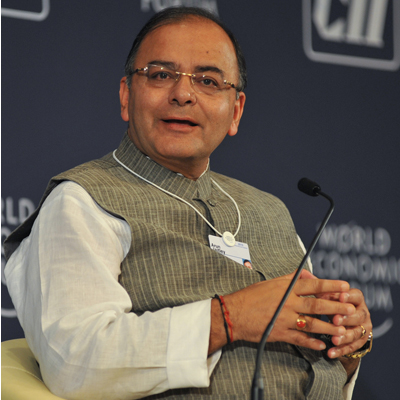
    The survey tabled by Finance Minister Arun Jaitley who also holds the Information and Broadcasting Ministry portfolio, said in order to achieve universal digitalization by 2017, the government is implementing the Broadcasting Infrastructure Network Development Scheme for modernization and upgradation of Prasar Bharati.

    He said India has been experiencing higher volume of content consumption due to increasing per capita consumption, media penetration and use of 3G devices.

    It was noted that India is the world’s second largest TV market after China with 168 million (16.8 crore) TV households, implying a TV penetration of 61 per cent.

    There are about 847 satellite television channels, 243 FM radio channels and 190 community radio stations operating in India.

    India’s broadcasting distribution network comprises 6,000 multi system operators (MSO) and seven direct to home (DTH) operators.

    At the outset, the survey said the Indian media and entertainment industry has recorded unprecedented growth over the last two decades, making it one of the fastest growing industries in India.

    According to a report by FICCI-KPMG, the Indian media and entertainment industry grew by 11.7 per cent to Rs 1026 billion(Rs 1,02,600 crore) in 2014 from Rs 918 billion  (Rs 91,800 crore) in 2013 and it is projected to grow at a CAGR of 13.9 per cent to reach Rs 1964 billion (1,96,400 crore) by 2019.

    DTH in India is also growing at a rate of about one million (10 lakh) subscribers per year. HITS (headend in the sky) technology will play a key role in achieving the goal of 100 per cent digital distribution in India. At present two HITS operators have been permitted by the Government to operate their set up.

  • Centre and states have gained from TV digitization, viewers to get better viewing experience: Economic Survey

    Centre and states have gained from TV digitization, viewers to get better viewing experience: Economic Survey

    New Delhi: The Government has claimed that preliminary data shows that central and state governments have gained significantly because of digitization of cable television, as transparency in the subscriber base through digitization has led to increase in tax collections.

    While stating this, the Economic Survey for 2015-16 did not give any figures specifically relating to increase in revenues because of digitization. But it said digitization achieved by December-end 2016 would usher a new era in broadcasting, as it would enhance the viewing experience of the users and upgrade the service, the survey said.

    The survey tabled by Finance Minister Arun Jaitley who also holds the Information and Broadcasting Ministry portfolio, said in order to achieve universal digitalization by 2017, the government is implementing the Broadcasting Infrastructure Network Development Scheme for modernization and upgradation of Prasar Bharati.

    He said India has been experiencing higher volume of content consumption due to increasing per capita consumption, media penetration and use of 3G devices.

    It was noted that India is the world’s second largest TV market after China with 168 million (16.8 crore) TV households, implying a TV penetration of 61 per cent.

    There are about 847 satellite television channels, 243 FM radio channels and 190 community radio stations operating in India.

    India’s broadcasting distribution network comprises 6,000 multi system operators (MSO) and seven direct to home (DTH) operators.

    At the outset, the survey said the Indian media and entertainment industry has recorded unprecedented growth over the last two decades, making it one of the fastest growing industries in India.

    According to a report by FICCI-KPMG, the Indian media and entertainment industry grew by 11.7 per cent to Rs 1026 billion(Rs 1,02,600 crore) in 2014 from Rs 918 billion  (Rs 91,800 crore) in 2013 and it is projected to grow at a CAGR of 13.9 per cent to reach Rs 1964 billion (1,96,400 crore) by 2019.

    DTH in India is also growing at a rate of about one million (10 lakh) subscribers per year. HITS (headend in the sky) technology will play a key role in achieving the goal of 100 per cent digital distribution in India. At present two HITS operators have been permitted by the Government to operate their set up.

  • Services sector in I&B shows significant growth in FDI inflows: Economic Survey

    Services sector in I&B shows significant growth in FDI inflows: Economic Survey

    NEW DELHI: The services sector in the field of Information and Broadcasting earned $515.1 million as inflow of foreign direct investment between April and October of 2015-16.
     
    According to the Economic Survey for 2015-16 presented to Parliament, this was in comparison to $255 million in 2014-15.
     
    The figures also showed that the total FDI inflow between April 2000 and October 2015 was $4484.5 million in this sector. 
     
    The largest growth was in computer software and hardware, going up from $2296 million in 2014-15 to $4122.5 in 2015-16 up to October 2015. Thus the total growth from April 2000 to October 2015 was $19139.8 million. 
     
    The Survey said the government had made significant changes in the FDI policy regime in recent times to ensure that India remains an increasingly attractive investment destination.
     
    In order to provide simplicity to the FDI policy and bring clarity on application of conditionalities and approval requirements across various sectors, different kinds of foreign investments have been made fungible under one composite cap. 
     
    Significant FDI-related liberalisation has taken place in a number of sectors/areas of the economy including some services and service-related sectors like construction development, broadcasting, civil aviation, cash and carry wholesale trading, wholesale trading (including sourcing from micro and small enterprises [MSE]), single brand retail trading and duty free shops, private sector banking, and credit information companies.
  • Services sector in I&B shows significant growth in FDI inflows: Economic Survey

    Services sector in I&B shows significant growth in FDI inflows: Economic Survey

    NEW DELHI: The services sector in the field of Information and Broadcasting earned $515.1 million as inflow of foreign direct investment between April and October of 2015-16.
     
    According to the Economic Survey for 2015-16 presented to Parliament, this was in comparison to $255 million in 2014-15.
     
    The figures also showed that the total FDI inflow between April 2000 and October 2015 was $4484.5 million in this sector. 
     
    The largest growth was in computer software and hardware, going up from $2296 million in 2014-15 to $4122.5 in 2015-16 up to October 2015. Thus the total growth from April 2000 to October 2015 was $19139.8 million. 
     
    The Survey said the government had made significant changes in the FDI policy regime in recent times to ensure that India remains an increasingly attractive investment destination.
     
    In order to provide simplicity to the FDI policy and bring clarity on application of conditionalities and approval requirements across various sectors, different kinds of foreign investments have been made fungible under one composite cap. 
     
    Significant FDI-related liberalisation has taken place in a number of sectors/areas of the economy including some services and service-related sectors like construction development, broadcasting, civil aviation, cash and carry wholesale trading, wholesale trading (including sourcing from micro and small enterprises [MSE]), single brand retail trading and duty free shops, private sector banking, and credit information companies.
  • Cable digitisation to increase tax collection: Economic Survey

    Cable digitisation to increase tax collection: Economic Survey

    MUMBAI: The Economic Survey for 2013-14 that was tabled by the Finance Minister Arun Jaitley shows that both the centre and the state governments will benefit from the digitisation of the cable TV industry in India because of the increase in tax collection from it.


    Jaitley in Parliament said, “Preliminary data from the state governments show that there is already two to three fold increase in entertainment tax collections.” The transparency in the subscriber base is set to add to the manifold increase in tax collection.


    Due to digitisation, opportunities are being created for the domestic manufacturers to delve into more set top box (STB) production. It stated that over three crore STBs have already been installed in the eight metros and 36 cities of the phase I and II of digitisation. The deadline for complete digitisation (phase III and IV) has been set to 31 December 2014.


    India has nearly 16 crore TV households with nearly 800 channels. Also there are 88 teleports. However, the benefits of digitisation are yet to kick in even in the phase I and phase II markets with only a few cities being billed as per the rules. Uneven and high entertainment tax is an issue that all the stakeholders including DTH, MSOs and broadcasters are standing up to and urging the government to look into and provide them relief. DTH operators are double taxed as they also have to pay a service tax apart from the entertainment tax.


    While DTH operators are adding 10 lakh customers each year, the government has also allowed two more operators to provide services through headend-in-the-sky (HITS) system. Effects of digitisation are already visible on film exhibition where 95 of the big screens are now digitised and the sector is ‘poised for buoyant growth in the long run.’


    The survey also stated that the media and entertainment industry has had tremendous growth and according to a FICCI-KPMG report, it is expected to touch Rs 1,78,600 crore by 2018. However, piracy remains a big challenge for the film industry and the government has approved an anti-piracy plan to combat it through legal methods.