Tag: Ecommerce

  • Throwback2020: The great show that Indian e-commerce industry put up

    Throwback2020: The great show that Indian e-commerce industry put up

    NEW DELHI: It was more than a decade-and-half long journey for the e-commerce industry in India to grow from a ticket booking platform to an  offeror of everything – from a needle to a car – online. The initial hurdles of  low internet accessibility, pricey data charges, and lack of trust were vaporised  by Reliance Jio in 2014, giving a major boost to the industry. And then came 2020 and  the much spoken about coronavirus, that made e-shopping more of a necessity than an option for almost all on planet earth. It has been said by many and trusted by all that what 2020 did for the digital and e-commerce industry, wouldn’t have been possible to happen in the next five years or so. Here’s an overview of what all went down in 2020 that made e-commerce a stronger and stiffer chap, giving a tough competition to the offline retail stores that remained the predominant choice of buying and selling for most, up until 10 months ago.

    2020 growth story

    The Indian e-commerce industry was  struggling, climbing a steep incline for the past many years, given the strong intent of policymakers to support a digitally-enabled India. From increasing FDI in e-commerce ventures to signing MoUs with banks to rolling out 5G fibre networks, the past few years have seen great strides being made in that direction. However, the 2020 growth story was more the gift of an unexpected catastrophe than organised attempts in the direction. Yes, the sector faced some hiccups in the beginning, because of the uncertain situations and market slowdown, It, however set a new peak in terms of growth this year.

    Starcom CCO Rajiv Gopinath notes, “The e-commerce industry has seen a massive boost in 2020 all over the world due to the pandemic. Global retail e-commerce will hit a staggering 3.9 trillion dollars in 2020– the equivalent of 17 per cent of all retail sales. Meanwhile in India, the industry saw a momentary fall in March and April due to the pandemic and the resultant logistics constraints and curbs on sales of non-essentials. However, after April, there has been a steady rise in the number of orders placed.”

    Overall, it grew about 35-40 per cent and achieved a GMV of around 38 billion dollars, as per IBEF and Redseer Consulting estimates. A report by Kantar and Amazon Advertising indicates that 42 per cent of Indian urban active internet users were shopping online during COVID times.

    Hustlers of the e-comm town

    The e-commerce industry hogged most of the spotlight this year, given the situation the consumers found themselves in with the Covid-2019 imposed lockdown. However, according to data from Venture Intelligence — a firm that tracks private companies’ investments, financials and valuations, private equity and venture capital (PE-VC) investments in e-commerce companies in India from  January to September dropped by 55 per cent as compared to the same period last year. It stood at $1223.12 million in 2020. Additionally, only 66 firms raised funding in 2020 against 107 in 2019. The reasons behind this could possibly be attributed to anti-China sentiments and consolidations within the industry.

    Yet, majors like Amazon, Flipkart, and the biggest star Reliance managed to keep the mills running with a great infusion of dollars.

    Amazon invested $95.51 million in its Indian payments unit AmazonPay, in October. It was the second round of investment into the platform after the company pumped in Rs 1,355 crore in January. Additionally, as the e-grocery industry heated up, Amazon announced the expansion of its ‘Amazon Pantry’ to over 300 new cities in India, delivering to 10,000 pin codes across the country.

    Amazon also forayed in the food-delivery business, an alcohol-delivery service, and an online prescription medicine delivery service, making the most of the year.

    Its closest competitor, the Walmart-backed Flipkart found its base strengthening further as Tencent, the second-biggest shareholder in the e-commerce marketplace, put in $62.8 million in it.

    Additionally, Flipkart tied up with e-pharma company 1MG, foraying into the e-med space. It rolled out ‘dark stores’ to service customers in nearby localities, and unveiled its plans in the wholesale market with the unveiling of its exclusive B2B marketplace – Flipkart Wholesale. Flipkart also acquired the wholesale business of its parent company Walmart in India.

    And of course, most of the headlines space was reserved for Reliance this year as well. Its stock values went through a crushing journey early in the year, dropping to Rs 880 by the end of March from the peak of Rs 1,610 in December 2019, due to the pandemic. However, it was quick to get back on its feet as RIL sold about 10 per cent of Jio Platforms to Facebook in April. A series of marquee investors followed the suite, including Google, and Jio Platforms secured investments of $20.6 billion.

    Reliance Retail Ventures also secured investments worth over $5.1 billion through various investments from leading global investors including two tranches from Silver Lake (1 and 2), KKR, General Atlantic, Mubadala, GIC, TPG, ADIA and PIF.

    The launch of Jio Mart was one of the biggest events in the Indian e-commerce space this year. The megacorp also announced important acquisitions including digital pharma marketplace Netmeds, a chunk of the Future Group’s businesses, and Urban Ladder.

    It created an omni-channel retail strategy which smartly included its brick and mortar presence with its ecommerce wings also spurred the next phase of its growth, which we will see giving fruit in the future as well. Some of the smartest moves in this direction were partnering  with SBI in Jio Payments Bank and collaborating with Facebook-controlled WhatsApp that has launched its UPI-based payment platform.

    Enough space for everyone

    What essentially started as a space for fashion hauls and ticket bookings, the  e-commerce industry really got its due in 2020 with purchases, across all the categories being driven online. According to Google Trends, the interest in the category went up by around 50 per cent since this time last year.

    Logicserve Digital founder & CEO Prasad Shejale shares: “The number of e-commerce shoppers has at least doubled during Covid. Talking about the wide reach of the online shopping phenomena, a recent report by Bain & Co. suggests that 97 per cent postal codes in India ordered at least 1 item online in the last year, which is great. The report also mentions that for many businesses, including the small sellers, 60-70 per cent of the sales happen through e-retail.”

    Gopinath notes:  “Online marketplaces have witnessed a total growth of 30-40 per cent of new users. E-commerce leader in India, Flipkart recorded a new user growth of close to 50 per cent right after the lockdown, with tier 3+ regions registering the highest growth of 65 per cent during the "unlock" July – September phase. Consumers from tier 2 and tier 3+ regions also spent the most time on the platform, signalling a continuing rise in user engagement and a shift in shopping preferences. From the supply side, it saw close to a 35 per cent increase in sellers on board in 2020, in comparison to the same period last year.”

    22Feet Tribal Worldwide Preetham Venkky adds, “Brands have significantly upped their investment on both owned channels as well as a marketplace (Flipkart, Amazon, Nykaa etc.). While investments in the marketplace have borne fruit immediately, in mid and high involvement categories, brands have shown interest in growing their branded e-commerce platforms. For instance, we’ve seen a growth of over 40 per cent on e-commerce in the home appliances space.”

    Gopinath elaborates: “The top-selling category in e-commerce has long been electronics, especially mobile phones, followed by apparel. Rather, in January-March, the most searched categories included personal care, men's clothing, footwear and women's clothing. Though these still remain the dominant categories, a “work from home” category is emerging primarily due to Covid-2019, consisting of products related to office activity like laptops, chargers, small furniture, etc.

    “However, during the lockdown, food and nutrition, household, toys and audio products witnessed the highest demand among consumers. Grocery and FMCG goods were one of the biggest beneficiaries during the pandemic even though fulfilled orders were only a fraction of the total in-demand orders (due to a steep hike in demand). However, even after the lockdown ended, e-grocery orders have been seeing an upward trend.”

    According to a study by RazorPay, categories like beauty and personal care and home furnishings also witnessed massive growth, especially after May. While the former saw an increase of almost 295 per cent in the number of transactions, the latter saw a spike in orders in May and June given lifestyle changes and the need to work from home.

    dentsu Asia Pacific (APAC) Chief Data & Product Officer and dentsu Programmatic – South Asia CEO Gautam Mehra adds, “Sectors that benefitted the most were electronics, pharma and education. Even fintech to a large extent benefitted, with more and more demat accounts, digital-only savings accounts being opened and UPI usage increasing.”

    The Indian retail market also saw a new wave of direct-to-consumer brands such as Lenskart, Licious, Zivame, Epigamia, BoAt, Wow Skin Science, Healthkart, Mamaearth, MyGlamm, SUGAR Cosmetics, IncNut, Country Delight, among others, establishing a strong market  presence. Relying on technology and smart interactive solutions, these brands have made big within the industry.

    Growing in potential

    The industry not just grew in numbers but also made great investments in improving the overall customer experience. They relied heavily on smart-tech interventions and UI/UX development to make the consumer journey more smooth sailing.

    More and more brands were forced to step into the online world and create their own shopping platforms. According to the report titled ‘E-commerce Trends Report 2020’ by Unicommerce, there has been a 65 per cent increase in brands developing their own website in India. Bisleri, Cornitos, Nivea, Kiehl’s and Amaris Jewels were some of the brands that launched their own shopping platforms in India this year. Apple, which used to get 30 per cent  of its annual sales in India from e-commerce sites here, also launched its own online store for India.

    At the same time, brand websites have witnessed 88 per cent order volume growth compared to 32 per cent for ecommerce marketplaces.

    Carwale SVP (used cars) Abhishek Patodia mentioned in an Indiantelevision.com virtual roundtable that the platform included video upload option for car-sellers, which eventually driven up the number of consumers on their platform.

    Baggit head of marketing Atul Rohan Garg added that they are working on incorporating options like video-calling and on-call assistance for its shoppers to make the experience more transparent and wholesome. The same plans are in place for a number of lifestyle, fashion, and jewellery brands.

    Many restaurants, QSRs, and salons adopted options like e-menus, pre-bookings, on-app valet services to fit into the new normal and make physical stores more comfortable and safe.

    Venkky quips: “The growth of e-commerce will be on the back of four services: technology, user experience design, dynamic creative optimisation and performance marketing. This creates the need and demand for fully integrated digital agencies, which will benefit the maximum.

    Driven by Technology

    Mehra notes: “Digital commerce is almost entirely tech-driven. From better warehousing to better personalisation to customers, every part of the commerce journey has an opportunity to be disrupted or innovated on. Ad-tech / mar-tech will play an important role in the acquisition and driving lifetime value, whereas traditional operations where SAP/ERP used to be deployed are now being disrupted by startups like Khatabook and several others.”

    According to Shejale, personalised SaaS-based platforms that are powered by AI also gained great preference from the e-commerce players as they work on systems that ensure that a seamless omnichannel approach is followed.

    The year, therefore saw, ecommerce software platforms making a big mark in India Brands and e-commerce platforms partnered with payment gateways, cloud computing and analytic service providers. Ready-to-use ecommerce software from Shopify, Magento, Ecwid, BigCommerce, Volusion, Wix and others eased out the pain of setting up online stores, making D2C bigger than ever in the country. Use of inbuilt RFID, GPS, and IoT, and telematics played a crucial role in evolving the ecomm world.

    Additionally, brands are also experimenting a lot in closing the gap between the online look and  feel of the product and how it physically is. This has attracted great strides in involving technologies that can create realistic 3D imageries, refine digital texture and colour palette and at the same time keep the site design simple and light. Jewellery brands invested in technologies that can help the retailers and e-platforms to customise designs, do online virtual trials  on a real-time basis.

    Another simple platform that greatly assisted e-commerce players this year was Whatsapp. Reliance Industries started limited use of WhatsApp to connect customers to grocery stores. JioMart successfully interacted with its customers on orders using WhatsApp, simplifying the whole process. Jewellery brands like Mellora are also relying on the Facebook-owned platform to reach consumers.

    In the papers and on the screens

    Keeping up with the buoyancy in online shopping, e-commerce and digital-first players greatly supported the Indian advertising industry too. Online gaming platforms like Dream 11, also the sponsor of IPL, MPL, Poker Stars, e-learning platforms like Vedantu, WhiteHat Jr, and BYJUS, and e-shopping platforms like Flipkart, Myntra, and Amazon were some of the top advertisers this year, keeping the industry afloat.

    Not just that, the marquee sales events like Myntra End of Reason Sale, Amazon Great Indian Sale, Pepperfry Shubh Aarambh Sale, Paytm Maha Cashback Sale, etc. got the bucks moving in the brand’s direction as the sales and supply chains remained largely impacted through the year.

    Has the inflection point been reached. Observers are betting their hats that there’s no going back from here; only forward. 
  • TV ad revenues recover by 86% in Q2 : ICRA

    TV ad revenues recover by 86% in Q2 : ICRA

    KOLKATA: After bearing the brunt of the initial shock of the pandemic, TV broadcasters saw a strong sequential recovery of 86 per cent in advertising revenue in Q2. Although it was lower by 20 per cent year-on-year basis, the growth was aided by the lifting of the lockdown, easing of restrictions and resumption of fresh content on general entertainment channels (GECs) with effect from June 2020, according to credit rating agency ICRA Ltd.

    As per the report, GECs regained their popularity and market share that they had lost to news and movies during the quarantine phase. FMCG, ecommerce and consumer durables remained the top contributors in terms of advertisement spends in Q2 FY2021.

    Overall, TV broadcasters in ICRA’s sample set reported a 21 per cent  year-on-year decline in revenues in H1 FY2021. Advertisement revenues witnessed a sharp 40 per cent year-on-year decline in H1 FY2021, though the same was partly offset by the nine per cent year-on-year growth in subscription revenues as subscribers increased their TV viewing during the pandemic.

    In Q1, ICRA’s sample set of TV broadcasters witnessed a 59 per cent year-on-year decline in advertisement revenues, as corporates pulled back their advertisement spends, amid the uncertainty during the then imposed lockdown and the pandemic. Depending on genres, advertisement revenues were impacted by 25-60 per cent (vis-a-vis pre-Covid average monthly revenues) in Q1 FY2021.

    While news and movies genres were on the lower end of the spectrum, with an average decline of 25-30 per cent in advertisement revenues, GECs and sports channels witnessed a sharp 50-60 per cent reduction in advertisement revenues in Q1 FY2021, given the absence of fresh content and deferment of high viewership driving sports events – including the IPL, UEFA 2020, Olympics 2020, among others.

    TV viewing remained high during the first half of the year, which resulted in increase in subscription revenues, up by 12 per cent on a year-on-year basis in Q1 and seven per cent in Q2. Since advertisement revenues account for more than 55 per cent of the total revenues of TV broadcasters, this decline adversely impacted the operating profit margin (OPM) of TV broadcasters, which contracted to 26.6 per cent in H1 (for ICRA’s sample set).

    However, ICRA expects the TV broadcasting industry to witness year-on-year contraction of 15-20 per cent in revenues in FY21. Subscription revenues for TV broadcasters are expected to hold steady in H2 FY21 as consumers are likely to continue their TV viewing amid limited outdoor avenues of entertainment. Overall, subscription revenues are expected to witness mid-single digit revenue growth in FY2021.

    Advertisement revenues witnessed good traction during the festive season and most of the TV broadcasters have witnessed an uptick in ad rates in Q3 FY2021. Industry players expect to reach pre-Covid advertisement revenues in Q3 FY2021. Advertisement revenues will thus witness a strong recovery in H2 FY21, as economic activity and growth improves, though it will be lower by five per cent on a year-on-year basis.

    The OPM in the period was supported by the savings on fresh content creation costs. Given the anticipated year-on-year revenue decline for H2 FY21, ICRA expects the OPM to remain under pressure and overall contract by 400-500 bps in FY21. Profitability pressures have also risen due to the increasing investments in content necessitated by increased competition from digital platforms, ICRA states.

  • How virtual sales across categories improved during Covid-2019

    How virtual sales across categories improved during Covid-2019

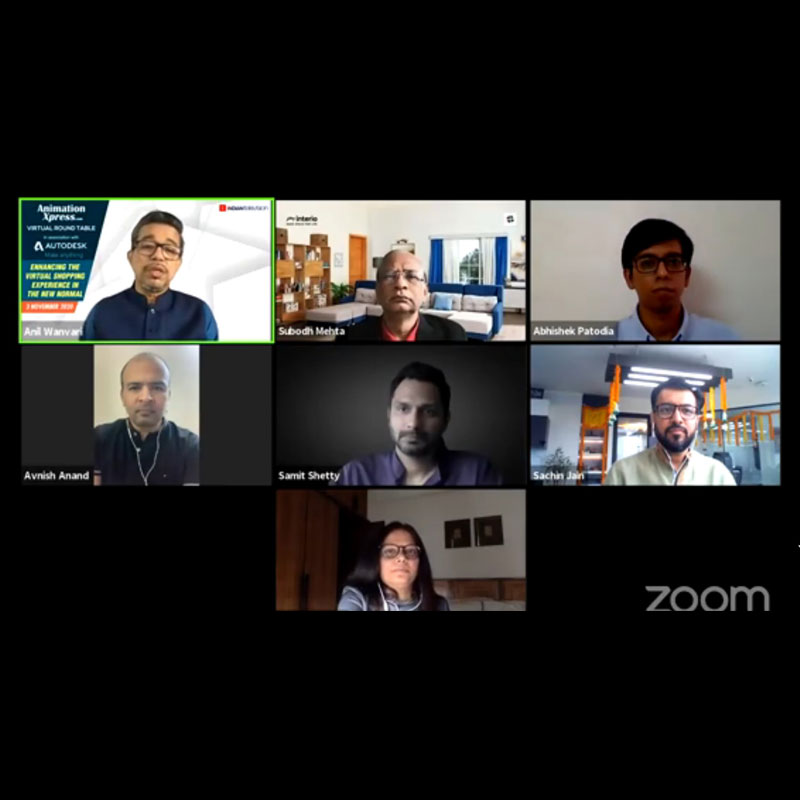
    NEW DELHI: The online sales of jewellery, used cars, and furniture segment witnessed a huge spike in terms of traffic and sales during the lockdown period, representatives from some of the most popular brands claimed in a recent panel discussion on enhancing the virtual shopping experience in the new normal, organised by AnimationXpress.com. They are also hyped about the festive season improving their sales further. 

    Godrej Interio SVP (B2C) Subodh Mehta said that after a slow first quarter, the brand observed an unexpected surge in virtual footfall. “In earlier days, we saw five times the demand for work-from-home furniture. People have started visiting the online stores much more and I am expecting it will only grow in the festive season. There already has been a 20 per cent uptick in sales and I am hoping November will be even better.”

    He added that all retailers are now trying to improve the experience on their online platforms and promotions for Godrej Interio have mostly moved to digital. “We relied on a lot of local-digital content. We have generated a tremendous amount of leads from local geo-targeting.”

    Hometown CMO Medha Tawde also agreed with Mehta and claimed that integrating their shopping channels has helped the company improve its sales. “Categories like work-from-home and storage did pretty well during the lockdown period. We grew 2-3 times in the former category. Additionally, our online ticket size has increased, clocking a 5x increase in online sales.”

    De Beers India MD Sachin Jain, however, noted while there was a “dramatic dip” in diamond sales in the tier-1 markets, they saw a jump in the tier-2 and tier-3 sectors. 

    The speakers attributed this growth to the merging of their virtual and physical shopping experiences. Tools like video calling, virtual store walk-ins, etc have made customer conversions easier. 

    Carwale SVP (used cars) Abhishek Patodia highlighted that most consumers today do their research online, and when they walk into the store, they know exactly what they want. 

    He said, “People want to know everything about a car before they buy it and therefore the video option on our platforms is a big hit. We have witnessed a 50-70 per cent growth in our traffic in the past three months, as compared to the same period last year. Also, as the category requires a lot of involved purchases with several people having a say in the decision, the digital presence augments the shopping experience.”

    Caratlane co-founder and online head Avnish Anand shared a similar view, noting that 90 per cent of the purchases in the jewellery segment still remain assisted and that’s why providing experience through technology helps the sector grow. 

  • Festival season will be the golden quarter for ecommerce players: Criteo Report

    Festival season will be the golden quarter for ecommerce players: Criteo Report

    New Delhi: Criteo has released its Holiday Report 2020 highlighting key trends in the online e-commerce industry in the much-awaited festive season including Rakshabandhan, Big Billion days and Diwali. The report highlights the top trends observed for the highly thriving e-commerce market in India. Criteo regards this as the ‘Golden Quarter’ of 2020 as e-commerce clocks significantly high growth. 

    Overcoming such unprecedented times, online retail is back to pre-Covid2019 numbers, and steadily growing upwards since then. As 2020 sales are increasing progressively; 2019 data provides relevant  context and describes the strong seasonality expected in the coming weeks. According to the report, there has been a 28 per cent year-on-year increase in the overall online retail sales.

    Criteo MD southeast Asia and India Taranjeet Singh said, “During these trying times, the Indian e-commerce industry has been on a steady upward growth trajectory showcasing a gradual shift of consumers towards e-commerce websites for purchases. Consumers have moved onto a stage where purchasing online has become their daily routine in order to fulfil all their demands for food, beverages and festive gifting. Expanding businesses on e-commerce platforms is the need of the hour. This golden quarter signals a revival in demand and consumer sentiment at large on ecommerce platforms.”

    Read more news on ecommerce industry

    With the festive season around the corner, the daily sales of flowers, gifts, food and beverages increase manifold. Individually flowers and gifting categories witness a boost in their numbers by more than 343 per cent in August 2019, compared to its average in July.

    Additionally, statistics according to Criteo Holiday report reveal 70 per cent increase in sales in the food & beverage category observed during the festival of Raksha Bandhan.

    During the time of Big Billion Days on Flipkart, overall, retail sales were up 39 per cent showcasing an average of 27 per cent for the entire week compared to average in August 2019. As traffic generates more sales the conversion rates remain above usual as sales increase more than traffic during the four weeks leading to Big Billion Days. The report quotes that for every 1,000 visitors to Indian retailers, there are significantly more transactions than usual. The week of Big Billion Days represents e-commerce traffic increased by 19 per cent, followed by a sharp rise in sales (+27 per cent).

    As people spend most of their time at home, especially during the most anticipated festival like Diwali; the share of transactions completed on app increased consistently before and following the festival in  2019, with an acceleration of In-App sales just before the event.

    Read more news on Criteo

    For all retail combined, during the weeks following Diwali, sales remain 6-8 per cent above average in August with a 32 per cent increase in sales in the food & beverage category. This festival of Diwali also marks the onset of the travel season with an uplift of bookings to 16 per cent in the week following Diwali.

  • Amazon set to acquire 9.5% stake in Future Retail

    Amazon set to acquire 9.5% stake in Future Retail

    MUMBAI: Ecommerce giant Amazon is all set to acquire a minority stake in Future Retail next week according to an Economic Times report. This deal will allow Amazon to reach the country’s food and grocery market through supermarket chains like Big Bazaar and Nilgiris. Future Retail has more than 1,100 physical stores across India.

    The deal is said to be around Rs 2,500 crore. Speaking to Economic Times, sources said, “Amazon, through the foreign portfolio investor (FPI) route, will buy about 9.5 per cent stake in Future Retail and has already signed a term sheet. The deal will be announced after board approval on 14 November.”

    Wazir Advisors founder Harminder Sahni said, “It essentially means Amazon is taking a position in offline retail. But it can’t just be a financial investment and they will surely leverage Future Group's network and backend facilities for supply chain and other operations."

  • NDTV’s TV segment reports lower operating loss

    NDTV’s TV segment reports lower operating loss

    BENGALURU: New Delhi Television Limited (NDTV) Television segment reported lower loss at Rs 3.94 crore for the quarter ended 30 September 2016 (Q2-17, current quarter) as compared to the operating loss of Rs 8.41 crore during the corresponding quarter of the previous year (y-o-y). The segment’s consolidated operating loss in the current quarter was just a fraction of the operating loss of Rs 22.83 crore in the immediate trailing quarter (q-o-q).

    Overall, the company reported almost flat y-o-y net loss after taxes of Rs 17.22 crore as compared to a loss of Rs 17.19 crore. Loss in the immediate trailing quarter was more than double at Rs 38.36 crore. NDTV attributes the improved performance to improved advertising revenues alongside lower costs in Convergence, NDTV’s digital content subsidiary and E-Commerce segment.

    NDTV’s consolidated Total Income from Operations (TIO, revenue) in the current quarter declined 4.9 per cent y-o-y to Rs 123.31 crore from Rs 127.60 crore, but increased 9.3 per cent q-o-q from Rs 112.81 crore.

    NDTV had negative EBIDTA (operating loss) of Rs 3.64 crore in Q2-17; negative EBIDTA of Rs 10.91 crore in Q2-16; and negative EBIDTA of Rs 26.78 crore in Q1-17.

    Segment numbers

    NDTV’s Television Media and related operations (Television) segment reported 3.4 per cent y-o-y decline in revenue in Q2-17 at 121.03 crore as compared to Rs 125.25 crore, but an 8.3 per cent q-o-q increase from Rs Rs 111.78 crore. The segment’s operating loss has been mentioned above.

    NDTV’s Retail/eCommerce (eCommerce) segment reported 19 per cent y-o-y decline in revenue at Rs 3.20 crore as compared to Rs 3.95 crore, but a 60 per cent q-o-q increase from Rs 2 crore in Q1-17.

    Let us look at the other numbers reported by NDTV

    Total Expenditure (TE) in the current quarter declined 9.4 per cent y-o-y to Rs 134.84 crore (109.4 per cent of TIO) from Rs 148.77 crore (116.6 per cent of TIO) and declined 8.3 per cent q-o-q from Rs 147.11 crore (130.4 per cent of TIO) in Q1-17.

    NDTV’s consolidated Production Expense (PE) increased 4.4 per cent y-o-y in Q2-17 to Rs 28.62 crore (23.2 per cent of TIO) from Rs 27.41 crore (21.5 per cent of TIO) and increased 1.9 per cent q-o-q from Rs 28.09 crore (24.9 per cent of TIO).

    The company’s Marketing, distribution and promotional expense (Marketing expense) in the current quarter reduced 35 per cent y-o-y to Rs 19.67 crore (16 per cent of TIO) from Rs 30.28 crore (23.7 per cent of TIO) and declined 13.3 per cent from 22.69 crore (20.1 per cent of TIO) in Q1-17.

    NDTV’s Employee Benefit Expense (EBE) in Q2-17 declined 5.1 per cent y-o-y in Q2-17 to Rs 45.19 crore (36.6 per cent of TIO) from Rs 47.63 crore and declined 21.9 per cent from Rs 57.86 crore (51.3 per cent of TIO).

    Operating and administration expenses (Admin expenses) in Q2-17 increased 10.5 per cent y-o-y to Rs 34.71 crore (28.1 per cent of TIO) from Rs 31.42 crore (24.6 per cent of TIO) and increased 4.7 per cent q-o-q from Rs 33.14 crore (29.4 per cent of TIO).

    Finance Costs in the current year increased 26.8 per cent y-o-y to Rs 6.63 crore (5.4 per cent of TIO) from Rs 5.23 crore (4.1 per cent of TIO) and increasd 56 per cent q-o-q from Rs 4.25 crore (3.8 per cent of TIO).

    Note: The unit of currency in this report is the Indian rupee – Rs (also conventionally represented by INR). The Indian numbering system or the Vedic numbering system has been used to denote money values. The basic conversion to the international norm would be:

    (a) 100,00,000 = 100 lakh = 10,000,000 = 10 million = 1 crore.

    (b) 10,000 lakh = 100 crore = 1 arab = 1 billion.

  • NDTV’s TV segment reports lower operating loss

    NDTV’s TV segment reports lower operating loss

    BENGALURU: New Delhi Television Limited (NDTV) Television segment reported lower loss at Rs 3.94 crore for the quarter ended 30 September 2016 (Q2-17, current quarter) as compared to the operating loss of Rs 8.41 crore during the corresponding quarter of the previous year (y-o-y). The segment’s consolidated operating loss in the current quarter was just a fraction of the operating loss of Rs 22.83 crore in the immediate trailing quarter (q-o-q).

    Overall, the company reported almost flat y-o-y net loss after taxes of Rs 17.22 crore as compared to a loss of Rs 17.19 crore. Loss in the immediate trailing quarter was more than double at Rs 38.36 crore. NDTV attributes the improved performance to improved advertising revenues alongside lower costs in Convergence, NDTV’s digital content subsidiary and E-Commerce segment.

    NDTV’s consolidated Total Income from Operations (TIO, revenue) in the current quarter declined 4.9 per cent y-o-y to Rs 123.31 crore from Rs 127.60 crore, but increased 9.3 per cent q-o-q from Rs 112.81 crore.

    NDTV had negative EBIDTA (operating loss) of Rs 3.64 crore in Q2-17; negative EBIDTA of Rs 10.91 crore in Q2-16; and negative EBIDTA of Rs 26.78 crore in Q1-17.

    Segment numbers

    NDTV’s Television Media and related operations (Television) segment reported 3.4 per cent y-o-y decline in revenue in Q2-17 at 121.03 crore as compared to Rs 125.25 crore, but an 8.3 per cent q-o-q increase from Rs Rs 111.78 crore. The segment’s operating loss has been mentioned above.

    NDTV’s Retail/eCommerce (eCommerce) segment reported 19 per cent y-o-y decline in revenue at Rs 3.20 crore as compared to Rs 3.95 crore, but a 60 per cent q-o-q increase from Rs 2 crore in Q1-17.

    Let us look at the other numbers reported by NDTV

    Total Expenditure (TE) in the current quarter declined 9.4 per cent y-o-y to Rs 134.84 crore (109.4 per cent of TIO) from Rs 148.77 crore (116.6 per cent of TIO) and declined 8.3 per cent q-o-q from Rs 147.11 crore (130.4 per cent of TIO) in Q1-17.

    NDTV’s consolidated Production Expense (PE) increased 4.4 per cent y-o-y in Q2-17 to Rs 28.62 crore (23.2 per cent of TIO) from Rs 27.41 crore (21.5 per cent of TIO) and increased 1.9 per cent q-o-q from Rs 28.09 crore (24.9 per cent of TIO).

    The company’s Marketing, distribution and promotional expense (Marketing expense) in the current quarter reduced 35 per cent y-o-y to Rs 19.67 crore (16 per cent of TIO) from Rs 30.28 crore (23.7 per cent of TIO) and declined 13.3 per cent from 22.69 crore (20.1 per cent of TIO) in Q1-17.

    NDTV’s Employee Benefit Expense (EBE) in Q2-17 declined 5.1 per cent y-o-y in Q2-17 to Rs 45.19 crore (36.6 per cent of TIO) from Rs 47.63 crore and declined 21.9 per cent from Rs 57.86 crore (51.3 per cent of TIO).

    Operating and administration expenses (Admin expenses) in Q2-17 increased 10.5 per cent y-o-y to Rs 34.71 crore (28.1 per cent of TIO) from Rs 31.42 crore (24.6 per cent of TIO) and increased 4.7 per cent q-o-q from Rs 33.14 crore (29.4 per cent of TIO).

    Finance Costs in the current year increased 26.8 per cent y-o-y to Rs 6.63 crore (5.4 per cent of TIO) from Rs 5.23 crore (4.1 per cent of TIO) and increasd 56 per cent q-o-q from Rs 4.25 crore (3.8 per cent of TIO).

    Note: The unit of currency in this report is the Indian rupee – Rs (also conventionally represented by INR). The Indian numbering system or the Vedic numbering system has been used to denote money values. The basic conversion to the international norm would be:

    (a) 100,00,000 = 100 lakh = 10,000,000 = 10 million = 1 crore.

    (b) 10,000 lakh = 100 crore = 1 arab = 1 billion.

  • eComm players among top 10 television advertisers in BARC week 40

    eComm players among top 10 television advertisers in BARC week 40

    BENGALURU: Quite like their brick and mortar counterparts, eCommerce players in India offer discounts galore during the run-up to  Navratra-Duhserra. This year also, the three big payers – Flipkart, Amazon India and Snapdeal ran television campaigns to grab as much of the online rupees as they could during the five or six special days.   Flipkart’s sale’s moniker  was ‘Big Billion Day 2016, Amazon called it ‘The Great Indian Sale’, while Snapdeal called its offering  ‘Unbox Sale’

    Note: This paper is on the changes in the pecking order in terms of television ad spots among the top 10 brands, and does not reflect the performance of a particular industry or genre per se.

    As per Broadcast Audience Research Council of India (BARC) data top 10 brands *Across Genre : All India (U+R) : 4+ Individuals,for week 39 (24 to 30 September 2016), of the total 164,881 television ad spots shared by the top ten brands, as many as 119,314 (72.4 percent) spots were by the seven FMCG brands that included beauty,oral care and healthcare, food beverages and confectionary;27,390 (16.6 percent) ad spots were booked by two automobile players – Honda and TVS; and 18,177 spots (11 percent) by one eComm player – Snapdeal.

    Comparatively, in week 40 (1 October to 7 October 2016), the number of television ad spots by the top 10 brands increased 12.6 percent to 185,593. The break up in week 40 was:  108,088 (58.2 percent) spots by six FMCG brands (down 9.4 percent in terms of absolute numbers);   23,554 ad spots or 12,7 percent were by the sole representative from the auto mobile industry – TVS; and 53,951 (29.1) spots by the three eComm players mentioned above.

    In week 39, Patanjali was numero uno with a massive28,949 in terms of spots, which fell 24.7 percent to 21,785 spots in week 40 and brought the brand down to fifth position in the pecking order of ad spots. In week 40, it was healthcare brand Dettol that moved to pole position with 25574 spots. Please refer to Fig A for ad spots for week 39 and 40. Please refer to Fig A below for the top 10 ranks in terms of TV ad spots.

    public://10-brands.jpg

    Snapdeal has another mini festival sale in the period between 12 and 14 October, while Amazon has announced 17 to 20 October as the Great IndianFestival days. Ad blitzkrieg’s by these two eComm players are on and data for next few weeks could yet see some interesting movements among the top ten brands in terms of ad spots on television.


  • eComm players among top 10 television advertisers in BARC week 40

    eComm players among top 10 television advertisers in BARC week 40

    BENGALURU: Quite like their brick and mortar counterparts, eCommerce players in India offer discounts galore during the run-up to  Navratra-Duhserra. This year also, the three big payers – Flipkart, Amazon India and Snapdeal ran television campaigns to grab as much of the online rupees as they could during the five or six special days.   Flipkart’s sale’s moniker  was ‘Big Billion Day 2016, Amazon called it ‘The Great Indian Sale’, while Snapdeal called its offering  ‘Unbox Sale’

    Note: This paper is on the changes in the pecking order in terms of television ad spots among the top 10 brands, and does not reflect the performance of a particular industry or genre per se.

    As per Broadcast Audience Research Council of India (BARC) data top 10 brands *Across Genre : All India (U+R) : 4+ Individuals,for week 39 (24 to 30 September 2016), of the total 164,881 television ad spots shared by the top ten brands, as many as 119,314 (72.4 percent) spots were by the seven FMCG brands that included beauty,oral care and healthcare, food beverages and confectionary;27,390 (16.6 percent) ad spots were booked by two automobile players – Honda and TVS; and 18,177 spots (11 percent) by one eComm player – Snapdeal.

    Comparatively, in week 40 (1 October to 7 October 2016), the number of television ad spots by the top 10 brands increased 12.6 percent to 185,593. The break up in week 40 was:  108,088 (58.2 percent) spots by six FMCG brands (down 9.4 percent in terms of absolute numbers);   23,554 ad spots or 12,7 percent were by the sole representative from the auto mobile industry – TVS; and 53,951 (29.1) spots by the three eComm players mentioned above.

    In week 39, Patanjali was numero uno with a massive28,949 in terms of spots, which fell 24.7 percent to 21,785 spots in week 40 and brought the brand down to fifth position in the pecking order of ad spots. In week 40, it was healthcare brand Dettol that moved to pole position with 25574 spots. Please refer to Fig A for ad spots for week 39 and 40. Please refer to Fig A below for the top 10 ranks in terms of TV ad spots.

    public://10-brands.jpg

    Snapdeal has another mini festival sale in the period between 12 and 14 October, while Amazon has announced 17 to 20 October as the Great IndianFestival days. Ad blitzkrieg’s by these two eComm players are on and data for next few weeks could yet see some interesting movements among the top ten brands in terms of ad spots on television.


  • Flipkart spends 80 percent of its digital marketing budget on mobile: Flipkart Ads business head Prakash Sikaria

    Flipkart spends 80 percent of its digital marketing budget on mobile: Flipkart Ads business head Prakash Sikaria

    MUMBAI: While addressing a session at a marketing conclave in Mumbai, that debated the relevance of mobile marketing and the need to go app first for brands, Flipkart Ads business head Prakash Sikaria shared that the  eCommerce giant spends almost 80 percent of its digital marketing budget on mobile.

    Sikaria’s confidence in the medium stems from the data the eCommerce site has gathered as an advertising and eCommerce platform that tracks its consumers’ usage behaviour on multiple screens.

    When posed with the question ‘is mobile a minor or a major screen’ Sikaria simply asked, ‘Is that even a  debate’. To back his astonishment at the topic of debate, Sikaria shared that for a eCommerce company such as Flipkart going mobile first was only natural, given that more and more of the site’s consumers are switching to spending more time on their smartphones.

    “Just to put things in perspective, 3 hrs of mobile in India is equatable to 92 mins of television, which is in turn equatable to 31 minutes of  desktop usage by viewers. What we see as a consumption pattern for several businesses mobile is the only screen in India, and going forward a large proportion of the time spent on any medium by consumers would be on mobile,” Sikaria shared, highlighting how India is unique in its mobile friendliness.

    Sharing some data the eCommerce platform has gathered from its own consumer research and data and analysis of consumer behaviour on the platform, around 50 per cent of the time spent on mobile is used for communication.  According to the consumer pattern gathered from traffic on Flipkart’s mobile app and its  web usage analysis, Sikaria inferred that usually customers try the mobile app first, and once they are convinced with the services and have grown loyalty towards the brand, they move to web. This places mobile marketing as the supreme most important requirement for a brand that functions mostly digitally, as it introduces the service to new consumers.

    “We have also noticed that across metrics there is better customer engagement and better customer experience on mobile from how much time consumers spend on the site per visit, to how many successful transactions they complete per visit,” Sikaria shared.

    As per Sikaria, once the user has jumped the hurdle of downloading the app the engagement is far higher on mobile than on other medium like desktop, provided the app is designed conveniently for them. That is the reason every ecommerce site, every travel startup or web based business wants their app to by in everyone’s phones.

    It is to be noted that between the four to five major eCommerce players in the country, television media raised about Rs 1,200 crores in advertising revenue in a single quarter, albeit it was before Diwali last year.

    Now with a key player such as Flipkart thinking mobile first, should television advertisement slot seller be worried about the smaller screen stealing away the advertisers which are native to the medium?