Tag: EC Studios

  • EC Studios is now CYLNDR: A global creative powerhouse

    EC Studios is now CYLNDR: A global creative powerhouse

    Mumbai: Experience Commerce, the digital agency under Cheil Worldwide Network, is pleased to announce the rebranding of its content production arm, EC Studios, as CYLNDR India. This strategic transformation marks a pivotal move towards global expansion, positioning CYLNDR India as a dedicated production studio catering to clients worldwide. The rebrand aligns with CYLNDR’s broader presence across seven countries, consolidating its position as a fast-growing content production powerhouse.

    CYLNDR is an established content production brand of BMB, which is an overseas subsidiary of Cheil Worldwide with its head office in London, UK. CYLNDR operates cutting-edge studios in London, North America, Eastern Europe, and Seoul and stands out as a tech-enabled, end-to-end production company renowned for delivering exceptional work in a cost-effective and agile manner.

    As a collective of directors, content creators, producers, editors, and audio experts, CYLNDR has access to the best talent in the industry. The state-of-the-art studio facilities allow CYLNDR to create diverse content, including film, mobile-first content, 360 videos, AR, AI, VR, and more.

    CYLNDR has successfully executed global campaigns for renowned brands such as Nivea, LinkedIn, Samsung, and more. This rebranding not only enhances EC Studios’ global expertise but positions it as a powerhouse, offering production services to brands and advertisers worldwide. CYLNDR India will deliver high-performing content solutions globally.

    BMB CEO Jason Cobbold applauds this move and says, “We are delighted to see the rapid evolution of CYLNDR, now establishing its presence in India. EC Studios has consistently demonstrated exceptional proficiency since its inception, delivering projects of impressive scale. We look forward to collaborating with them on our upcoming projects in London, North America, and other international markets. We are confident this move will not only contribute significantly to our revenue growth, but also elevate our business operations to the next level. The prospect of working with CYLNDR India is in line with our commitment to excellence and innovation.”

    “We are thrilled to share this exciting update as EC Studios transforms into CYLNDR India, marking a significant stride towards a broader global presence,” stated CYLNDR India and Experience Commerce CEO Umesh Bopche. “This rebrand opens up exciting new opportunities for all involved, promising a journey defined by innovation, creativity, and collaborative success. As we embark on a creative journey transcending borders, CYLNDR stands as the epitome of artistic excellence, where every frame is a masterpiece. United not just by locations but by passion, innovation, and a profound love for extraordinary storytelling, we invite our clients and peers to be part of the global revolution of Connected Production. At CYLNDR, we define it as Connected Production, where we are linked through data and technology, united by dynamic working, and now also connected through a global network.”

    In the wake of this transition, CYLNDR India plans comprehensive rebranding initiatives across various touchpoints and is in the process of migrating its website and email domains to cylndr.in.

  • Effective Production: The Art of Bringing Agency Scripts and Brand’s Vision to Life

    Effective Production: The Art of Bringing Agency Scripts and Brand’s Vision to Life

    Mumbai: Behind every successful advertising campaign/visual masterpiece lies an effective production process that weaves together the creative vision of the agency’s scripts and the brand’s identity.  In the dynamic world of marketing and advertising, a compelling script is the backbone of any successful campaign. It captures the essence of a brand’s vision and messaging, shaping the narrative that resonates with the target audience. However, turning these scripts into captivating visuals that align with the brand’s vision requires a well-planned and executed production process.

    It is the process where the creative ideas, concepts, and messages outlined in the agency scripts are transformed into tangible visual and auditory elements. The role of a production house goes beyond merely executing ideas; it is a strategic partner in the process of delivering impactful and memorable content to the target audience. The indispensable role of production houses in making a campaign successful requires meticulous planning, skilled execution, and seamless collaboration.

    The key elements of an effective production that breathe life into agency scripts and bring the brand’s vision to life are as follows:

    Collaboration and Communication: The Foundation of Success

    Effective production begins with strong collaboration and open communication between the agency, brand representatives, and the production team. All stakeholders must be aligned on the creative vision, messaging, and brand identity. A shared understanding ensures that the production process flows smoothly and that the final content resonates with the brand’s core values.

    Pre-Production Planning: The Blueprint for Success

    A well-planned pre-production phase sets the stage for a successful shoot. Develop a clear production plan that outlines the shooting schedule, required resources, and the overall vision. Thorough casting and auditions help find the perfect talent to breathe life into the characters, ensuring they align seamlessly with the brand’s image.

    Storyboarding and Visualization: Translating Ideas to Visuals

    Storyboarding is a critical step in visualizing the script’s narrative. It outlines each scene, shot composition, and camera movements, ensuring a cohesive flow of storytelling. A carefully crafted storyboard helps the production team understand the creative vision, creating a roadmap for translating ideas into powerful visuals.

    Location Scouting and Art Direction: Creating a Visually Engaging Atmosphere

    Finding suitable shooting locations that align with the brand’s identity is essential for creating an authentic visual atmosphere. Art direction plays a vital role in set design, props, costumes, and makeup, ensuring that every element enhances the brand’s vision and narrative. Attention to detail in art direction enhances the overall visual appeal and strengthens the connection between the audience and the brand.

    Quality Equipment and Crew: Elevating Production Standards

    Investing in high-quality cameras, lighting, sound equipment, and a skilled crew ensures that the production maintains a professional standard. A skilled crew, including directors, cinematographers, sound technicians, and production assistants, ensures that the vision is brought to life with finesse.

    Direction and Performance: The Heart of Authentic Storytelling

    The director’s guidance and collaboration with actors are crucial in evoking emotions and authentic performances. Bringing out the desired expressions and emotions aligns with the script and helps the audience connect with the brand’s message on a deeper level & evoking authentic reactions from the audience.

    Post-Production Magic: Elevating the Narrative

    The post-production stage adds the finishing touches to the content, where the raw footage is transformed into a cohesive and compelling narrative. Skilled editing, sound design, and visual effects breathe life into the visuals, creating a seamless and immersive storytelling experience.

    Music and Sound Design: Stirring Emotions

    Original music composition or sound design complements the brand’s image and enhances the emotional impact of the content. Engaging soundscapes create a memorable experience that resonates with the audience long after the content is viewed.

    Adherence to Brand Guidelines: The Hygiene Factor

    Throughout the production process, it is essential to adhere to the brand’s guidelines. Consistency in color palettes, typography, and overall brand identity ensures that the final product reinforces the brand’s image and messaging.

    Feedback and Revisions: Check masters & Brand Custodians

    Seeking feedback from the agency and brand representatives during post-production is essential. Incorporating revisions that align with their vision ensures that the final product meets the brand’s objectives.

    The role of a production house is an indispensable one in the success of an advertising campaign. By seamlessly executing ideas, embracing innovative storytelling, and optimizing resources, production houses elevate the impact of a campaign and leave a lasting impression on the audience. It ensures that the brand’s message is conveyed authentically, emotionally, and professionally, ultimately influencing how the audience perceives and connects with the brand. Working hand in hand with the agency and brand representatives, production houses play a crucial role in creating content that connects, engages, and drives the campaign’s success.

    The author of this article is Experience Commerce and EC Studios CEO Umesh Bopche.

  • IDBF 2023: From Script to Screen: EC Studios Crafting compelling narratives for brands

    IDBF 2023: From Script to Screen: EC Studios Crafting compelling narratives for brands

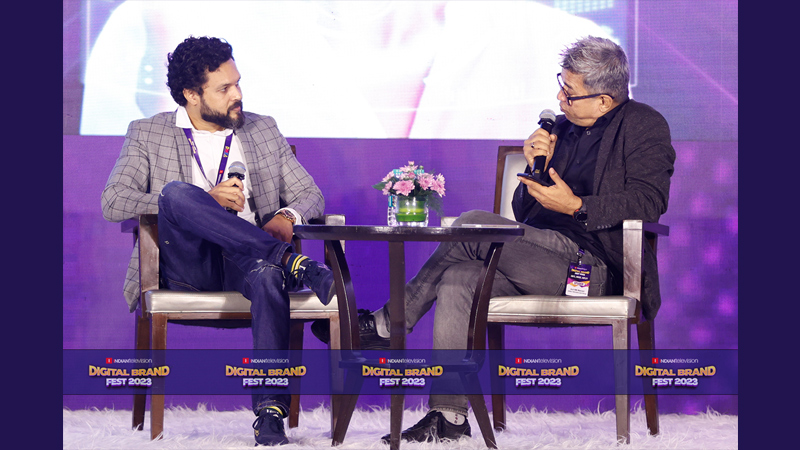
    Mumbai: Beginning the session on a lighter note, Wanvari, who was intrigued by the earrings Bopche was wearing, asked him what was so special about it. To which Bopche said that it was more from a religious point of view, and it was not a fashion statement.

    Wanvari then asked, “There are various studios out there, but what makes EC Studios so special?”

    Bopche replied, “I think the first part is, yes, there are a lot of studios, a lot of content houses but EC is special because it has been owned by an agency. So, it works as a one-stop solution. Also, I think for brands to tell them compelling narratives, not just the creative, but production, post-production end-to-end, we take care of. First of all, this is medium agnostic, agency agnostic, as well as platform agnostic. So that’s one of the biggest USP and that kind of differentiates us from the rest of them. Also, we are web 3.0 already. So, I think that kind of sums it up in terms of the difference.”

    Wanvari then asked Bopche, “How does it work? Does a brand approach you or an agency approach you?”

    Bopche replied saying, “As I said, it’s more like end-to-end. At the same time, it’s piecemeal which is also available. Today, brands are looking for a quicker turnaround time, lower budget, and mostly the ecosystem as you have a creative agency production house, post-production house, and then technically, the content distribution partners. What we focus on is a flexible model. Brands can choose to engage with us for a one-neck-to-grab approach, where we handle everything end-to-end. Alternatively, they may already have an established agency that handles scriptwriting and then passes it on to us for production. There’s also the option for smaller projects, which might involve post-production, including CGI and VFX. So, it’s a matter of offering a full-service experience or fitting seamlessly into their existing supply chain, wherever they see the best fit.”

    Adding on to it, Wanvari asked, ”You have a full-fledged creative team in-house, including scriptwriters and crew, right?”

    Bopche said, “Not only do we have our creative team, which is standard for any agency or content house, but we also have our streamlined workflow tailored towards producing high-volume content. In today’s market, we’re witnessing a surge in live commerce activities and an increasing demand for content from DTC brands. The days of creating a single TV advertisement are behind us. Brands now aim to become content destinations, focusing on continuous engagement across platforms. That’s where we come in with our comprehensive in-house capabilities, encompassing studio setup, creative teams, production units, and post-production. If a script requires an external shoot, we arrange for it, but for the most part, our operations are fully in-house.”

    Moving on to his next question, Wanvari asked, “When working with an agency or brand, how closely do you all work?”

    To which Bopche replied, “Many names in the industry are primarily post-production houses, often comprising just two or three individuals with a set of producers who outsource post-production work. Companies like Famous or Prime Focus are typical examples, focusing exclusively on post-production and not involved in the creative aspect such as scriptwriting. The industry has traditionally been quite fragmented in this way. However, what sets us apart is our one-stop-shop approach. We handle everything in-house, from scripting to campaign development. Whether it’s engagement campaigns, ROI-focused ad campaigns, or any other type of content, we manage it all internally. It’s not about outsourcing; it’s about having everything under one roof, which allows us to pass on cost-efficiency and shorter timelines to our clients. In today’s landscape, content is the currency that brands are dealing in, and we aim to be at the forefront of helping brands optimize their content strategies.”

    Wanvari then asked, “How does being a part of the chain network help you?”

    Bopche answered, “Being part of a larger network is immensely beneficial for us. Countries like Korea and China are well ahead of India in terms of content marketing and production, covering everything from virtual reality to live commerce. We draw inspiration and best practices from these markets. This is one of the reasons why we confidently say we are well-prepared. While the media’s focus has been on meta, we believe that as we transition to web 3.0, there will be a significant demand for content creation in that space. Today, we create content for platforms like Instagram, Facebook, and YouTube, which operate within the web 2.0 framework. Content will always play a crucial role in advertising, just as newspapers, TV, and radio did in the past. Some platforms may coexist while others may fade away over time; the future will reveal this. Additionally, we are gearing up for the Metaverse era, including digital human creation and Metaverse content production. Learning from more advanced markets, such as Indonesia and developed countries, where content is concerned, they are approximately two years ahead of India. This ongoing learning process greatly benefits us.”

    Following the presentation of an AV for EC Studios, Wanvari then highlighted the tagline displayed in the last frame of the video and inquired, “Could you please share some insights about ‘Kaam se hi Naam’?”

    Bopche replied saying, “We believe that our work should speak for itself, much like the approach taken by individuals like Sachin Tendulkar, MS Dhoni, or Shahrukh Khan, who have earned their names through their achievements. While there may be countless others with the same name, it’s the work that distinguishes them. This philosophy is at the core of our values, and with every project we undertake for our clients, our aim is to not only meet their satisfaction but also elevate the pride and satisfaction of our team.”

    Talking further about the pleasant feeling of the video, Wanvari said, “I’m sure clients will also feel comfortable when they come in there.”

    Bopche then went on to say, “We’ve been in operation for the past four and a half years, and we’ve recently expanded with a new facility, including two studios located in Gurgaon. One of these studios is exclusively dedicated to Samsung, where we manage their live commerce operations. While we certainly create entertaining content that engages audiences, we also produce educational content that delivers ROI for the brand. Additionally, we craft content designed to foster engagement and build communities for our brand partners.”

    Wanvari then shot his next question, “What is the one thing that we wished the client understood about the production side?”

    Bopche answered, “While production may appear easy and glamorous to outsiders, it presents a myriad of challenges. One of the key challenges is coordination and collaboration. Production involves managing large teams with diverse skills and responsibilities, making it crucial to maintain effective communication and coordination. Failure to do so can impact costs and timelines, both of which are critical. Staying within budget and adhering to tight schedules are essential in this line of work. Safety is also a paramount concern when dealing with crews of 120 to 150 individuals. Ensuring safety on set is a top priority. Furthermore, client satisfaction post-shoot is vital. In the world of production, there is a significant degree of unpredictability, as we’re experiencing today. This necessitates a team with skills like adaptability, problem-solving, and the ability to make quick decisions on the set. These aspects often go unnoticed but are instrumental in the success of any production.”

    Wanvari then asked, “How does coordination take place at EC Studios? Is it facilitated through cloud-based systems, with clients providing feedback online?”

    Bopche replied, “In today’s fast-paced world, convenience is key. People want to access content with a simple tap on an app, and nobody has the time to deal with downloading links or managing files through WhatsApp or WeTransfer. That’s why we’ve developed a cloud platform that streamlines the approval and feedback process for decision-makers, such as senior CMOs or marketing heads, even when they’re on the move, like at the airport. They can easily provide feedback on content with a few clicks, and it’s automatically relayed to us. We make the necessary changes, and it goes back to them seamlessly. There’s no need for manual link transfers; it’s all automated. This approach not only simplifies content production but also enhances the logistical aspects of the creative collaboration between the brand and the agency. Everyone can work together efficiently on a single platform to achieve the desired output.”

    Moving on, Wanvari asked Bopche whether they welcome clients on their shooting floor. To this, Bopche replied with a laugh, “Obviously, they are the ones putting the money.”

    Adding on to it, Wanvari said that it gets very painful at times after the storyboard is approved and after everything’s approved.

    Bopche then said, “When we have clients on the set, it comes with its own set of pros and cons. Let’s start with the pros. Having the brand or client present on the set allows for quick feedback, as they can see the production in action. It promotes transparency, as they witness the communication firsthand. Moreover, it enables swift decision-making, especially in unpredictable situations. Additionally, client feedback often contributes valuable creative nuances that enhance the final film, from a brand hygiene perspective. However, there are also cons to consider. Having the client on set can sometimes be distracting, adding pressure to the production crew. Excessive interference from the client in the creative process can be challenging, as it may undermine the expertise of the production and creative teams. So, while there are definite benefits, it’s essential to strike a balance when clients are on set.”

    Wanvari asked, “How do you respond to clients’ expression that budgets are constrained but promise significant exposure in return for your services?”

    Bopche answered, “While we always maintain a smiling demeanour externally, internally, we engage in critical evaluation when clients mention tight budgets and the promise of exposure. This assessment considers several factors, such as the state of our business at that time, the value the project brings to our portfolio, and whether it’s worth undertaking even if the financial compensation is limited. Given the choice, we often lean towards managing tight timelines over tight budgets, as it offers an opportunity to showcase our skills under pressure.”

    Pointing out that Bopche didn’t answer the question properly, Wanvari said, “Would you choose to undertake the project, strike a balance between the two by possibly compromising on the budget for exposure, or opt for a different approach altogether based on the demand?”

    Bopche replied, “We need to establish the value of what’s achievable. Content can be created at various price points, and it’s important to convey what clients can realistically expect based on their investment. It’s not a matter of categorically refusing projects; we don’t work for free, as no one can sustain that. We have a track record of successful projects and satisfied clients, supported by testimonials. However, there’s a delicate balance. We always consider whether a project adds substantial value or if it’s worth undertaking. It’s about helping clients understand the value they’ll receive in return. While there’s often humour around client expectations versus reality in memes, in real life, we’re committed to maintaining quality. We believe that, ultimately, people remember the one goal you miss, not the ten you save. So, we uphold our commitment to delivering quality work.”

    Wanvari added, “You’ve worked for a Korean company. Korean companies are known to look at bottom lines.”

    Adding on to the same, Bopche said, “Yes, business is crucial, and everyone in this room, regardless of their role or department, is connected to it in some way. It’s a shared goal. However, it’s equally important to consider how to approach it ethically. Bottom lines hold significance, but there are instances where projects may have tight budgets, yet they are worth pursuing. Not all content will deliver a high ROI, just as not all content will directly impact the bottom line.”

    Wanvari then asked Bopche, “What role does technology play as far as your studio is concerned and production is concerned?”

    Bopche said, “Technology has played a pivotal role in the evolution of film production. We’ve witnessed significant advancements in cameras, cinematography techniques, editing software, and special effects, including the exciting realm of virtual reality. Now, we can pre-visualize scenes with precision, addressing safety concerns proactively. Technology has become an integral part of filmmaking, especially for creating unreleased content and product launches where the product hasn’t been seen before. CGI and VFX have always been present, but its utilization is increasing. They enable us to depict what’s otherwise challenging to capture, and with the rise of OTT platforms and global content consumption, this demand has surged. People are enjoying content from various countries with diverse exposure levels. As a result, we see a growing use of VFX, virtual reality, and technology as a central component of this dynamic landscape.”

    “We’ve formed a partnership with a Korean company specializing in digital humans for the Metaverse. This involves creating a digital archive. A notable case study is the use of a digital avatar to continue filming when a Fast and Furious cast member passed away. We anticipate that Bollywood celebrities, influential figures, and even politicians will establish their digital archives. In this futuristic vision, even after their physical presence has departed, these digital personas can continue to endorse brands, perpetually earning royalties. The concept of royalties is not new, but it’s poised to take on a whole new dimension,” added Bopche.

    Wanvari then asked, “More and more brands are going the B2C route. So how do you see this entire thing?”

    Bopche answered, “In the B2C realm, there’s a notable shift towards increased brand control and awareness. Data-driven insights are becoming central, and content marketing is playing a significant role. As Neeraj mentioned earlier, live commerce, like what we do for Samsung, is a prime example. Many clients are realizing the power of creating content to support their sales efforts, whether through live video commerce or other means. D2C is an exciting space, emphasizing the need for a higher volume of content. It’s no longer solely about crafting a single TV commercial but about producing a plethora of content aimed at educating and engaging consumers to foster brand loyalty. This dynamic landscape has witnessed an abundance of content creation, with even companies like Whirlpool generating thousands of recipe videos to promote a microwave, showcasing the immense potential of this space.”

    Moving on Wanvari asked, “What is your stance regarding clients establishing in-house studios?”

    Bopche answered, “Having in-house studios is always an option, and it’s similar to the earlier concerns advertising agencies had when setting up in-house creative teams. However, this doesn’t eliminate the entire industry ecosystem. This industry relies heavily on talent and professionalism. While some content can be managed in-house, it doesn’t replace the need for skilled production and large-scale expertise. Establishing something like that would typically require significant resources.”

    Wanvari then asked his final question, “I believe you’re doing something special for clients, you have some loyalty programs going on, can you let us know a little more about that?”

    Bopche said, “I’d like to clarify that this is more of a reward program rather than a loyalty program, as loyalty comes with time and usage. We operate in the content creation industry, and we saw this as a way to introduce a unique experiment for EC Studios. Today, we’ll be distributing the EC card, which is essentially a reward program card pre-loaded with 50,000 points, equivalent to 50,000 rupees. My team will be distributing these cards here, and they can be redeemed for any content creation services, big or small. As they continue to use our services, they’ll accumulate more rewards. While reward programs aren’t new, they are somewhat unique in our industry. It’s a way of bringing the concept of rewards, which we see in various sectors from Google Pay to others, into the B2B landscape, which we believe can add value to our clients.”

    Adding on to it,  Bopche said, “This offer is exclusively for companies, and you can utilise it for various services. Whether it’s creating static posts, producing videos, designing motion graphics, or other services we offer, the options are diverse. It’s essentially a way for your organization to save 50,000 bucks.”