Tag: Ebitda

  • Sun TV moots 50% interim dividend as numbers jump in Q2

    Sun TV moots 50% interim dividend as numbers jump in Q2

    BENGALURU: Sun TV Network Ltd (Sun TV) reported improved year-on-year (y-o-y) standalone numbers across all important parameters for the quarter ended 30 September 2018 (Q2 2019, quarter or period under review) as compared to the corresponding quarter of the previous year (Q2 2018). The company reported 13.8 percent higher y-o-y standalone total income in the quarter under review at Rs 811.67 crore as compared to Rs 713.13 crore in Q2 2018. Standalone operating revenue increased 10.9 percent y-o-y to Rs 749.55 crore in Q2 2019 from Rs 675.90 crore in Q2 2018.The board of directors of the company has declared an interim dividend of 50 percent (Rs 2.50 per equity share) for the quarter under review as compared to100 percent or Rs 5 per equity share of face value of Rs 5 each in the immediate trailing quarter Q1 2019. This means that during the six month period ending 30 September 2018 (H1 2019), the company has declared dividends to the extent of 150 percent.

    The company has stated in its earnings release that standalone subscription revenue at Rs 311.27 crore was up 21.33 percent y-o-y.
     

    The company’s standalone profit after tax or PAT in Q2 2019 improved 23.4 percent y-o-y to Rs 351.32 crore as compared to Rs 284.67 crore in Q2 2019.

    Sun TV standalone EBITDA in Q2 2019 was Rs 553.97 crore (70.5 percent of operating revenue), 11.8 percent higher as compared to Rs 495.69 crore (63 percent of operating revenue) in Q1 2018. Total comprehensive income or TCI for the quarter under review was up 23.4 percent y-o-y at Rs 351.38 crore as compared to Rs 284.73 crore in Q2 2018.

    Total Expenditure (TE) during the period under review reduced 1.7 percent y-o-y to Rs 278.04 crore as compared to Rs 283.96 crore in the corresponding quarter of the previous year.

    Operating expense in Q2 2019 incresed 40.6 percent y-o-y to Rs 90.11 crore from Rs 64.08 crore in the corresponding quarter of the previous year. Employee Benefits Expense in Q2 2019 reduced 5.1 percent y-o-y to Rs 73.47 crore as compared to Rs 77.39 crore in Q2 2018. Other expenses (OE) in the Q2 2019 reduced 16.5 percent to Rs 32 crore as compared to Rs 38.34 crore in the corresponding quarter of the previous year.
     

    SunRisers Hyderabad adds to operating profits of Sun TV
     

    Sun TV paid 16.6 percent lower IPL Franchisee Fees in H1 2019 at Rs 71.33 crore as compared to Rs 85.48 crore in H1 2019. Sun TV’s IPL franchise had turned operationally profitable as per the notes in Sun TV’s financial statement  for Q1 2019. The company has included income of Rs 386.28 crore from Sun Risers Hyderabad and costs incurred on it of Rs 187.20 crore in its H1 2019 numbers. Corresponding numbers for Sun Risers Hyderabad for the year ago half year (H1 2018) were income of Rs 143.20 crore and costs of Rs 165.82 crore.

  • PVR announces results for the Quarter and Half-year Ended Sep 30, 2018

    PVR announces results for the Quarter and Half-year Ended Sep 30, 2018

    MUMBAI: PVR Limited today announced its audited standalone and consolidated financial results for the quarter ended 30th September, 2018

    Consolidated revenues for quarter ended September, 2018 were Rs. 715 crores as compared to Rs. 560 crores during the corresponding period of last year, witnessing a robust growth of 28 per cent led by a 25% growth in admissions. Consolidated EBITDA for the quarter was Rs. 130 crores as against Rs. 96 crores in the same period last year, a growth of 36%. EBITDA margins for the quarter increased by 110 bps to 18.2%. Consolidated PAT for the quarter was Rs. 33 crores as compared to Rs. 25 crores during the corresponding period of last year, a growth of 31%.

    The revenues for half-year ended September 2018 were Rs. 1,415 crores as compared to Rs. 1,213 crores during the corresponding period of last year, witnessing a growth of 17 per cent. Consolidated EBITDA for the half-year was Rs. 272 crores as against Rs. 227 crores in the same period last year, witnessing a growth of 20%. EBITDA margins for the half-year increased by 50 bps at 19.2%. Consolidated PAT for the half-year was Rs. 85 crores as compared to Rs. 70 crores during the corresponding period of last year, a growth of 22%.

    During the current financial year, PVR added 34 new screens across 7 properties and now operates a network of 727 screens spread over 156 properties in 61 cities across the country. The company intends to add 99 screens in FY 18-19.

    During this quarter, PVR completed acquisition of majority stake in SPI Cinemas, one of the largest cinema exhibitor in South India with presence in key markets of Tamil Nadu, Telangana, Andhra Pradesh, Karnataka, Kerala and Mumbai. SPI Cinemas has a network of 76 screens (72 operational & 4 expected to commence operations soon) across 17 properties & 10 cities. Further during this quarter PVR also renewed its ticketing agreement with BookMyShow and Paytm for 3 years for a total upfront consideration of INR 410 crores.

    Commenting on the results and performance, Mr. Ajay Bijli, Chairman cum Managing Director, PVR Ltd said “We are extremely pleased with the business performance in the current quarter with strong all round performance led by strong footfall growth. Our acquisition of SPI Cinemas in the current quarter has further cemented our leadership position in India. Post this acquisition PVR has become 7th largest cinema operator globally, serving over 100 million customers annually.

    We will continue to innovate and find newer ways to provide our customers with unparalleled movie watching experience by introducing cutting edge technology, newer cinema formats and innovative customer engagement initiatives. Our introduction of PVR Onyx Screen in PVR ICON, Vasant Kunj, New Delhi, continued focus on building on our loyalty program PVR Privilege, initiatives such as seat cancellations are steps in that direction. We are extremely excited by the growth prospects of our business and will continue to work towards taking the business to the next level.

  • ACT Fibernet seeks funding; discloses financials

    ACT Fibernet seeks funding; discloses financials

    MUMBAI: In its prospectus with SEBI, ACT Fibernet submitted the financial details and is looking for fund-raising to expand the business across India. ACT Fibernet reported revenue of Rs 1,217 crore and EBITDA of Rs 211.67 crore in fiscal 2017.

    In the six months ended 30 September 2017, the revenue was Rs 684 crore and EBITDA was Rs 286 crore. In fiscal 2016, ACT Fibernet posted revenue of Rs 874 crore and EBITDA of Rs 323 crore. Moreover, in fiscal 2015, it registered the revenue of Rs 618 crore and EBITDA of Rs 468 crore.

    According to the reports, ACT Fibernet had approximately 1.28 million wired broadband internet customers and 0.71 million cable TV customers as at 31 December 2017. It reported a monthly ARPU of Rs 813 in fiscal 2017, Rs 756 in fiscal 2016 and Rs 684 in fiscal 2015 from retail wired broadband internet business.

    The wired broadband internet market is expected to grow from 18.1 million subscribers as at 31 December 2016 to 24 million by 31 December 2021, according to a study by MPA.

    Revenue from wired broadband internet service business accounted for 82.77 per cent, 90.31 per cent, 91.61 per cent and 91.38 per cent of total income for fiscals 2015, 2016 and 2017 and the six months ended 30 September 2017 respectively.

    Revenue from cable TV service business accounted for 11.86 per cent, 6.13 per cent, 4.61 per cent and 5.21 per cent of total income from operations for fiscals 2015, 2016 and 2017 and the six months ended 30 September 2017 respectively.

    Standing at the third largest position across the wired broadband internet service provider in India, the company bags the market share of 6.9 per cent as at 30 September 2017 according to MPA. Its fibre broadband network covers 5.4 million plus residential homes in the markets in which it operated as at 30 September 2017, according to MPA.

    ACT Fibernet said it invested significantly to develop fibre broadband network. The majority of the fibre network utilises an advanced Metro Ethernet Active FTTX technology. It also utilises GPON technology in certain parts of the network.

  • Siti relooks at broadband as cable subscription drove revenues in FY18

    Siti relooks at broadband as cable subscription drove revenues in FY18

    BENGALURU: In FY 2017 (fiscal or year ended 31 March 2017, previous year), the Essel Group’s Siti Networks Ltd (Siti) was all gung-ho about broadband. In its annual report for fiscal 2017, the company said that it had become the largest multi-system operator (MSO) and a leading wired broadband services provider. The tone of the company’s 2017 annual report showed that Siti was fired up by the doubling of broadband revenue in FY 2017 as compared to FY 2016 to Rs 97 crore (about 8 per cent of total revenue for fiscal 2017) from Rs 48.6 crore (about 4 per cent of total revenue for fiscal 2016). The company’s broadband operations added 7.2 lakh home passes during the year taking the total footprint to 16.1 lakh homes. Broadband customer base grew to 2.28 lakh by Q4 2017 exit, up 73 per cent year-on-year (y-o-y). Further, Siti said in its FY 2017 annual report that it planned to channelise more capital to its broadband division, which it then felt was a highly scalable opportunity.

    Cut to FY 2018 and the story has changed. Siti’s broadband operations with a total footprint of 16.8 lakh homes had a base of 2.5 lakh customers.  Siti added just about 22,000 broadband subscribers in fiscal 2018, and y-o-y broadband revenues grew by only 4 per cent to Rs 101 crore in FY 2018.The company said that it was working on building a growth strategy in the sector.

    Quoting from its fiscal 2018 Annual report:

    “We are also looking closely at better and centralised inventory controls, besides identifying unsustainable locations running on IP bandwidth with the objective of phasing them out. We also aim to focus more aggressively on high definition (HD) penetration, broadband expansion, and improving monetisation in digital addressable system (DAS) phase III and IV areas.”

    At another place in the 2018 annual report Siti states:

    “In broadband, your company is looking to deepen its penetration levels in its existing markets to better utilise existing capital expenditure incurred. Going forward, we are also looking to arrive at an ideal business model that will allow us to grow profitably and sustainably in this segment, especially considering the disruptive pricing environment prevalent in mobile internet currently and the entry on new entities in wired broadband.”

    It must be noted that broadband contributed to just about 8 percent and 7 percent to Siti’s revenues in FY 2017 and FY 2018 respectively. Cable business is and has been the major revenue earner for Siti.

    While its broadband business has not met with Siti’s expectations, its cable business and more so subscription revenue has been the revenue growth driver. Cable subscription (Video) revenue in FY 2017 grew 39 per cent to Rs 569 crore as compared to Rs 410.2 crore in FY 2016. Siti’s cable subscription revenue grew 41 per cent in fiscal 2018 to Rs 799.7 crore as compared to the previous year. Carriage revenue, which had grown by 17 per cent in FY 2017 to Rs 300.1 crore from Rs 256.8 crore was almost stagnant in terms of growth in FY 2018. It grew by about 1.3 per cent to about Rs 303.8 crore in fiscal 2018. Siti’s activation revenue has also been almost constant and will taper off once its entire subscriber base has been digitised, since this is generally a one-time revenue. Activation revenue in FY-2016 was Rs 170.6 crore, it was Rs 170.1 crore in FY 2017 and was Rs 175 crore in FY 2018. Advertisement revenue had declined in FY 2017 to Rs 13.5 crore from Rs 32 crore in FY 2016 has increased in FY 2018 to Rs 18.5 crore.

    Siti has yet to report profit after tax and reward its shareholders with dividends. But, the good thing is that Siti’s operating profits (EBITDA) without activation revenue have grown 2.6 times in FY 2018 to Rs 150.7 crore from Rs 58.6 crore. Overall EBITDA including activation has grown 41.9 per cent in FY 2018 to Rs 324.5 crore from Rs 241.2 crore in the previous year.

    All numbers in this report are consolidated unless stated otherwise.

    Siti’s position with regards to broadband is more of a norm rather than an exception. Many other MSOs’ and LCOs’ that have also been providing broadband internet services have had muted numbers from this business stream in FY 2018 as compared to the previous year. This implies either a slow growth or even de-growth of subscriber numbers, reduced ARPUs’ or even both.

    Mukesh Dhirubhai Ambani’s Reliance Jio Infocomm Ltd (Jio) has been the biggest disrupter that has got both wireless and wireline internet service providers struggling to match up. With its plans to start FTTH wired internet services, with strategies that many in the industry term as ‘predatory’, it is likely to make the ground difficult to sustain and grow for incumbents.

  • GTPL Hathway revenue up for Q1

    GTPL Hathway revenue up for Q1

    BENGALURU: Indian multi-system operator and internet service provider GTPL Hathway Limited (GTPL) reported 15.7 per cent increase in total income for the quarter ended 30 June 2018 (Q1 2019, quarter or period under review) as compared to the corresponding year-ago quarter  (y-o-y) Q1 2018. GTPL’s total income in Q1 2019 was Rs 303.55 crore, for the corresponding year ago quarter it was Rs 262.41 crore.

    GTPL’s consolidated profit after tax (PAT) was almost flat (declined 0.9 per cent) y-o-y in Q1 2019 to Rs 12.57 crore from Rs 12.69 crore in Q1 2018. Consolidated total comprehensive income for the period reduced 1.3 per cent y-o-y to Rs 12.50 crore from Rs 12.66 crore. Consolidated operating profit (EBITDA) excluding other income increased 18.6 per cent in Q1 2019 to Rs 77.49 crore (26.1 per cent of operating or op revenue) from Rs 65.35 crore (25.4 per cent of op revenue) in the previous fiscal.

    GTPL has two segments – cable TV business and internet service. Cable TV business operating result increased 9.9 per cent y-o-y to Rs 10.17 crore in Q1 2019 from Rs 9.26 crore in the corresponding quarter of the previous year. Operating revenue of GTPL’s cable TV business increased 17.4 per cent y-o-y to Rs 260.93 crore from Rs 222.18 crore.

    GTPL’s internet service operating revenue in Q1 2019 increased 2.6 per cent y-o-y to Rs 35.98 crore from Rs 35.07 crore. Internet service segment’s operating results for Q1 2019 declined 30.2 per cent y-o-y to Rs 2.40 crore from Rs 3.44 crore in the corresponding quarter of the previous year.

    Let us look at the other numbers reported by GTPL Hathway

    Consolidated total expenditure increased 17.2 per cent y-o-y during the quarter under review to Rs 283.11 crore from Rs 241.49 crore in Q1 2018. Pay channel cost in Q1 2019 increased 17.8 per cent y-o-yto Rs 126.44 crore from Rs 107.37 crore in the corresponding quarter of the previous year. Other operational costs reduced 15.4 per cent y-o-y in Q1 2019 to Rs 21.48 crore from Rs 25.40 crore in Q1 2018.

    Employee benefits expense in Q1 2019 increased 18.6 per cent y-o-y to Rs 35.32 crore from Rs 29.78 crore in the corresponding quarter of the previous fiscal. Finance costs increased 57.2 per cent y-o-y during the quarter under review to Rs 16.12 crore from Rs 10.26 crore. Other expenses in the period increased 23.3 per cent y-o-y to Rs 36.19 per cent in Q1 2019 from Rs 29.36 crore in the corresponding quarter of the previous year.

  • Siti Networks operating EBITDA up by 146% at Rs. 549 million

    Siti Networks operating EBITDA up by 146% at Rs. 549 million

    MUMBAI: SITI Networks has released its Consolidated Financial Results for Q1FY19, ending June 30, 2018.

    In line with SITI’s Profitable Growth Strategy, SITI has maintained persistent elevation in Operating EBITDA reporting 146 per cent growth over first quarter of last fiscal. SITI reported Operating EBITDA of Rs.549 Mn in Q1FY19 as against Rs.223 million on Y-o-Y basis.

    The company’s Operating EBITDA Margin expanded by 892 bps to ~17 per cent. This has been driven by Subscription Revenue surge of 26.3 per cent to Rs. 2,149 million and nearly flat growth in expenses.

    SITI has initiated a country-wide monetization increase program in June 2018. This has resulted in a 17 per cent increase in ARPU. The Company has also improved its subscription collection efficiency, surpassing 93 per cent in June 2018 exit, which has further risen to 97 per cent exit July’18.

    The Company’s active digital subscriber base also reached 11.7 Mn by end of the first quarter with 3.5 lakh fresh additions. The company now serves ~55 Mn+ consumers in ~580+ locations across the country. SITI’s HD base also increased to 3.56 lakh by adding 41,000 subscribers in the quarter.

    In preparation for the New Tariff Order, SITI is working on Smart Tiered Packaging to offer customers bespoke options and great value. This will further help SITI in implementing the New Tariff Order regime later in this fiscal. The Company has undertaken significant technological and process enhancements for its Subscriber Management System while initiating training and education modules for all stakeholders on the New Tariff Order.

    As an Industry first, SITI implemented the “eMIA Initiative” to ensure digitization of agreements with all partners.

    To drive employee engagement and enhance operating efficiencies, SITI launched a customized app for its employees called “My SITI”. This has helped to promote a high-performance culture across the organization through real-time monitoring and evaluation of various operational and strategic parameters. With a clear focus on last mile connect, a customer engagement application is under beta testing phase which will provide real-time details of consumer package, profile information
    & social connect.

    While commenting on the results, SITI Networks chief business transformation officer Rajesh Sethi said, “SITI had a great start to FY19 with strong improvement across all operational metrics. Our “Customer First” strategy helped drive superlative 146% Operating EBITDA growth coupled with expansion of 892 bps in the margins.

    While we increased our Subscription Revenue nearly 26 per cent year on year, we have further initiated an ARPU increase program and the results will be visible in the coming Quarters.

    With the New Tariff Order notification, we are well positioned to move to the new regime. Our systems and processes are ready for this seismic transformation of last mile operations.

    In FY19, we intend to drive efficiencies along with solid EBITDA and Margins growth, in line with our core strategy of profitable and sustainable growth.”


  • Siti reports improved numbers for Q1

    Siti reports improved numbers for Q1

    BENGALURU: Backed by higher subscription revenue and a 93 percent collection efficiency, Indian multi-systems operator (MSO) Siti Networks Limited (Siti) posted 146 percent higher operating profit (EBITDA) for the quarter ended 30 June 2018 (Q1 2019, quarter or period under review) as compared to the corresponding quarter of the previous fiscal year Q1 2018. The company says that collection efficiency in July 2018 has increased to 97 percent. For the immediate trailing quarter (Q4 2018), the MSO had reported a collection efficiency of 95 percent.

    Siti’s operating profit (without considering activation charges) for Q1 2019 increased to Rs 54.9 crore as compared to Rs 22.3 crore in Q1 2018. The company attributes the growth in EBIDTA to a 26.3 percent surge in subscription revenue to Rs 214.9 crore in Q1 2019. EBITDA including activation declined 24.1 percent during the period under review to Rs 76.71 crore from Rs 101.01 crore in Q1 2019.

    Total comprehensive loss (TCL) for the period was higher at Rs 56.96 crore as compared to Rs 15.19 crore in corresponding quarter of the previous year. However, on quarter on quarter basis Rs.70 Cr has gone down to Rs.57 Cr, an improvement of 18.8 per cent. It must be noted that all numbers mentioned in this report are consolidated unless stated otherwise.

    Siti’s consolidated total income in Q1 2019 was Rs 352.45 crore as compared to Rs 371.11 crore in Q1 2018. Consolidated operating revenue in Q1 2019 was Rs 350.05 crore as compared to Rs 364.96 crore in Q1 2018.

    The MSO says that it has added 3.5 lakh (0.35 million, 0.035 crore) digital subscribers in Q1 2019 and has reached a 117 lakh (11.7 million, 1.17 crore) active digital subscriber base. Siti had added 31 lakh (3.1 million, 0.31 crore) digital subscribers in fiscal 2018 (year ended 31 March 2018) It claims to have added 40,000 new HD subscribers to reach a HD subscriber base of 3.56 lakh (0.356 million, 0.0356 crore) during the period under review.

    Let us look at the other numbers reported by Siti

    Siti’s consolidated total expenditure (TE) increased 10 percent in Q1 2019 to Rs
    406.72 crore from Rs 369.52 crore in Q1 2018. Carriage sharing, pay channels and related costs in Q1 2019 increased 5.4 percent to Rs 164.46 crore from Rs 156.06 crore in Q1 2018. Employee benefit expense during the quarter under review reduced 12.9 percent to Rs 20.41 crore from Rs 23.45 crore in the corresponding quarter of the previous year. Other expense in Q1 2019 increased 3.5 percent to Rs 87.10 crore from Rs 84.18 crore in Q1 2018.

    Company speak

    Siti chief business transformation officer Rajesh Sethi said, “Siti had a great start to FY 2019 with strong improvement in all operational metrics. Our ‘Customer First’ strategy helped drive superlative 146 percent EBITDA growth coupled with expansion of 892 bps in the margins. While we increased our subscription revenue by nearly 26 percent year on year, we have further initiated an ARPU increase program and the results will be visible in the coming quarters. With the New Tariff Order Notification, we are well positioned to move to the new regime. Our systems and processes are ready for the seismic transformations of the last mile operations. In FY 2019 we plan to drive efficiencies along with solid EBITDA and margins growth, in line with our core strategy of profitable and sustainable growth.”

  • Dish TV reports profits in first full quarter post merger with Videocon d2h

    Dish TV reports profits in first full quarter post merger with Videocon d2h

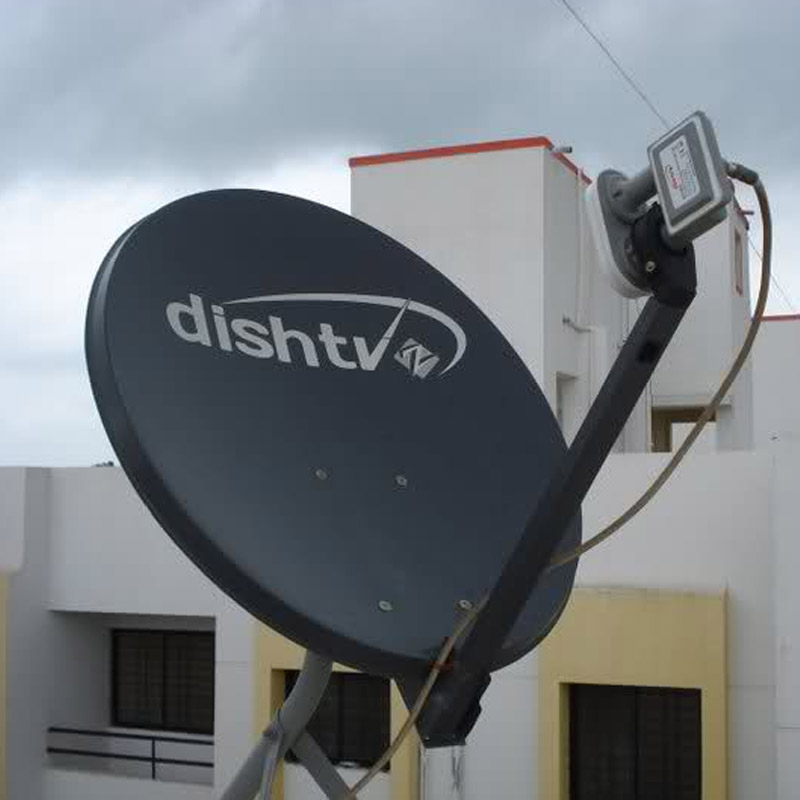
    BENGALURU: Indian direct to home (DTH) behemoth Dish TV India Limited (Dish TV) reported profit after tax (PAT) of Rs 22.5 crore for the quarter ended 30 June 2018 (Q1 2019, quarter under review). Dish TV and Videocon d2h were merged on 22 March 2018 and hence Q1 2019 was the first full reporting quarter for the merged entity. In the immediate trailing quarter – Q4 2018, the company had reported more than four times the PAT of Q1 2019 at Rs 118.2 crore, but that could be attributed to differed tax to the extent of Rs 147.1 crore. In Q1 2019, the company reported differed taxes to the extent of Rs 1.8 million.

    Since results of the year ago quarter are not comparable, a quarter on quarter (q-o-q) comparison of the numbers of the joint entity has been done here. Operating profit or EBITDA in Q1 2019 was Rs 556.8 crore as compared to an adjusted EBITDA of Rs 400.6 crore in Q4 2018. The company says in its earnings release that adjusted EBITDA is EBITDA adjusted for merger expenses to the tune of Rs. 600 million booked in Q4 2018 that have been excluded while calculating adjusted EBITDA.

    The company reported an eight percent q-o-q increase in operating revenue for the quarter under review at Rs1,655.6 crore as compared to Rs 1,532.4 crore in Q4 2018. Dish TV says that subscriber additions picked up speed during the first quarter. The net number of 301 thousand additions took Dish TV’s subscriber base to 2.33 crore.

    The company says that higher revenue is attributed to an 8.1 percent q-o-q increase in subscription revenue for Q1 2018 at Rs 1,489.3 as compared to Rs 1,377.1 crore. Incrementally higher HD viewership, lower discounts at package levels and a price hike across a majority of recharge packages brought about this increase in subscription revenues during the quarter. Dish TV says that 44 percent of all subscriber additions were of High Definition and that in total, HD subscribers formed 17 percent of the total net base of the company. ARPU for the quarter increased to Rs 214 from Rs 201 in the previous quarter.

    Dish TV CMD Jawahar Goel said, “Price hikes initiated during the quarter were a result of some pricing power gathered over the months. It is a positive sign and should stand us in good stead in the year ahead. The first quarter often sets the pace for the full year. Our performance in the first quarter gives us the confidence to deliver in line with our expectations going forward.”

    “We remain positive on achieving the Rs 5.1 billion synergies that we have envisaged from the merger for the current fiscal. Part of the estimated synergies are going to be due to a more rational programming cost. Our interactions with our broadcasting partners so far reinforce our belief in the strength of the new Dish TV platform,” added Goel.

    Let us look at the other numbers reported by Dish TV

    The merged Dish TV’s consolidated total expenditure reduced 2.9 percent q-o-q in Q1 2019 to Rs 1,098.9 crore from at Rs 1,131.7 crore in Q4 2018. Cost of goods and services in Q1 2019 increased 1.7 percent q-o-q to Rs 884.1 crore from Rs 868.9 crore. Employee benefit expense during the quarter under review reduced 13.7 percent to Rs 57.7 crore from Rs 66.8 crore in Q4 2018. Finance cost in Q1 2019 increased 33.5 percent q-o-q to Rs 177.5 crroe from Rs 132.9 crore. Other expenses in Q1 2019 reduced 19.9 percent q-o-q to Rs 157 crore from Rs 195.97 crore.

  • UFO Moviez board recommends 125% dividend for fiscal 2018

    UFO Moviez board recommends 125% dividend for fiscal 2018

    BENGALURU: The board of directors of Indian digital cinema distribution network and in-cinema advertising platform UFO Moviez Ltd (UFO) has mooted a dividend of Rs 12.50 (125 per cent) per equity share of face value of Rs 10 each subject to shareholder approval for the year ended 31 March 2018 (FY 2018, year or fiscal under review). UFO says that this dividend including dividend distribution tax translates to 68 per cent of its FY 2018 consolidated PAT.

    UFO reported almost flat (up 0.8 per cent) consolidated PAT for FY 2018 at Rs 60.64 crore as compared to Rs 60.13 crore in the previous fiscal. Total comprehensive income or TCI for the fiscal under review increased 3.2 per cent to Rs 60.35 crore from Rs 58.50 crore in FY 2017. Simple EBITDA including other income for FY 2018 declined 7.5 per cent to Rs 172.93 crore (29 per cent of total revenue) from Rs 186.89 crore (31.1 per cent of total revenue) in the previous year.

    UFO’s operating revenue in the fiscal under review was almost flat (reduced 0.8 per cent) at Rs 594.03 crore as compared to Rs 598.95 crore in FY 2017. Total revenue declined 0.6 per cent in FY 2018 to Rs 596.96 crore from Rs 600.65 crore in FY 2017. In its earnings press release, UFO says that advertisement revenue grew by 19.3 per cent to Rs 213.6 crore (In FY 2017 it was Rs 179 crore) million. Average advertisement minutes sold per show per screen grew to 5.19 per cent (FY 2017 – 4.34) minutes during FY 2018.

    Total expenditure in FY 2018 increased 2.5 per cent to Rs 424.03 crore from Rs 413.76 crore in the previous year. Purchase of digitalcinema and lamps in the year under review was flat at Rs 67.56 crore as compared to R 67.57 crore in FY 2017. Ad revenue share expense in FY 2018 increased 26 per cent to Rs 65 crore from Rs 51.58 crore in the previous fiscal. Virtual print fees sharing expense in FY 2018 reduced 28 per cent to Rs 52.36 crore from Rs 72.72 crore in FY 2017. Other operating direct costs in FY 2018 increased 2.4 per cent to Rs 55.22 crore from Rs 53.40 crore in FY 2017. Employee benefit expense in FY 2018 increased 3.2 per cent to Rs 83.70 crore from Rs 81.12 crore in FY 2017. Other expenses in the year under review increased 11.3 per cent to Rs 94.81 crore from Rs 85.15 crore in FY 2017.

    Company speak:

    “UFO ended fiscal 2018 on a strong note by delivering robust advertisement revenues,” said UFO founder and managing director Sanjay Gaikwad. “Growing advertisement contribution to overall profitability minimised the impact of planned reduction in D-Cinema VPF revenue. Additionally, the Scheme of Arrangement and Amalgamation between UFO and Qube is progressing as per schedule and is currently awaiting requisite approvals from regulatory bodies. We are extremely excited about the future of the merged entity and the opportunities across in-cinema advertising. Also, the board recommended an enhanced dividend of Rs 12.5 per equity share in fiscal 2018. This marks the third consecutive dividend in line with UFO’s shareholder value creation philosophy. Going forward, we will continue to achieve our goals and are confident of delivering long term sustainable growth and shareholder value creation.”

  • Merged Dish TV reports maiden numbers for fiscal 2018

    Merged Dish TV reports maiden numbers for fiscal 2018

    BENGALURU: The merged entity comprising of two Indian DTH players – Dish TV India Ltd reported its maiden fourth quarter and fiscal numbers for the periods ending 31 March 2018 (Q4 2018, quarter under review, FY 2018 year or fiscal under review). The two entities of the new behemoth Dish TV India Ltd were – Dish TV India Ltd and Videocon d2h Ltd before the merger. Dish TV and Videocon d2h had reported profit after tax (PAT) of Rs 82.12 crore and Rs 30.44 crore respectively for fiscal 2017. Individual revenues in fiscal 2017 were Rs 3,014.38 crore and Rs 3,071.73 crore for Dish TV and Videocon dh2 respectively. On 22 March 2018, Videocon d2h had merged with and into Dish TV India Ltd with the appointed date of the merger being 1 October 2017, or for the latter half of financial year 2018. The post merger consolidated operating revenue of Dish TV post merger for FY 2018 was Rs 4.634.16 crore and consolidated net loss was Rs 84.50 crore. Subscription revenue was Rs 4,216.7 crore. Consolidated total comprehensive loss (TCL) for FY 2018 was Rs 81.33 crore.

    Dish TV’s fiscal 2018 numbers are not comparable with FY 2017 in the form presented by the company for FY 2018. Financials of Dish TV India Ltd for the quarter ended 31 March 2018 thus represent three months’ financial performance each of Dish TV India Ltd and Videocon d2h Ltd. Similarly, financials of Dish TV India Ltd for the year ended 31 March 2018 represent 12 months’ financial performance of Dish TV India Ltd and six months financial performance of Videocon d2h Ltd. Both companies had reported separate financials for the quarter ended 31 December 2018 (Q3-2018, immediate trailing quarter, previous quarter).

    Subscriber numbers

    The merged company – Dish TV India Ltd had a subscriber base of 2.3 crore with a market share of about 37 per cent at the end of Q4 2018. This makes it the largest private DTH player in the country. ARPU (average revenue per user) of the merged entity for Q4 2018 was Rs 201. For Q3 2018, individually Dish TV had reported ARPU of Rs 144, while Videocon d2h had individually reported ARPU of Rs 208.

    Let us look at the other numbers reported by the merged Dish TV

    Simple consolidated EBIDTA for fiscal 2018 was Rs 1316.02 crore (28.4 per cent of operating revenue). Total expenditure for FY 2018 was Rs 4,786.23 crore. Employee benefit expense during the year under review was Rs 209.61 crore. Operational cost in fiscal 2018 was Rs 2,476.60 crore. Finance costs were Rs 396.37 crore. Other expenses were Rs 620.82 crore.

    Dish TV’s numbers for the fourth quarter

    Since the Dish TV-Videocon d2h merger happened in the third quarter of fiscal 2018, a year on year (y-o-y) comparison would not be an apples-to-apples comparison. We have compared how it fared in the fourth and third quarters (quarter over quarter or q-o-q) of 2018.

    The merged Dish TV India Ltd consolidated revenue from operations reduced 5.1 q-o-q in the quarter under review to Rs 1,532.37 crore from Rs 1,614.33 crore in Q3-2018. Consolidated total revenue reduced 5.7 per cent q-o-q to Rs 1,545.11 crore from Rs 1,638.50 crore.

    The merged entity reported consolidated PAT of Rs 118.21 crore (7.7 per cent of operating revenue) as compared to a loss of Rs 118.21 crore in the immediate trailing quarter Q3 2018. Consolidated simple EBITDA in Q4 2018 was 19.5 per cent lower q-o-q at Rs 400.65 crore (26.2 per cent of operating revenue) as compared to Rs 497.84 crore (30.8 per cent of operating revenue). Adjusted consolidated EBITDA (Dish TV claims that a onetime merger expense of Rs 60 crore was accounted for in Q4 2018) was 7.5 per cent lower q-o-q in Q4 2018 at Rs 460.65 crore (30.1 per cent of operating revenue) as compared to Rs 497.84 crore). Consolidated TCI in Q4 2018 was Rs 119.86 crore as compared to a consolidated TCL (total comprehensive loss) of Rs 166.31 crore in the previous quarter.

    The merged Dish TV’s consolidated total expenditure was almost the same at Rs 1,611.80 crore in Q4 2018 as compared to Rs 1,612.36 crore in Q3 2018. Operational cost in Q4 2018 increased 2.2 per cent q-o-q to Rs 866.36 crore from Rs 847.74 crore. Employee benefit expense during the quarter under review reduced 0.7 per cent to Rs 66.856 crore from Rs 67.30 crore in Q3 2018. Finance cost in Q4 2018 reduced 7.3 per cent q-o-q to Rs 132.94 crore from Rs 143.38 crore. Other expenses in Q4 2018 reduced 1.5 per cent q-o-q to Rs 195.97 crore from Rs 198.92 crore.

    Company speak

    In Dish TV’s earnings release, the company’s CMD Jawahar Goel said, “There is significant growth potential both in the short and the long term when it comes to acquiring new subscribers. While in the short term, digitisation will continue to feed subscriber additions, government schemes focused on bridging the urban/rural divide, increasing farm incomes and electricity connection to rural households will create demand for new televisions and pay-tv connections in the years to come.”

    On the merged Dish TV, Goel said, “It’s time to now put all thoughts to action and deliver what is expected from two leading platforms when they come together. I am happy to share that merger integration across functions has been successfully completed and new roles, responsibilities and key deliverables have been well received by our team.”

    “I see a new sense of passion and urgency all around in the company and believe that we have everything we need to surge ahead,” added Goel.

    Three well recognised and powerful brands- Dish TV, d2h and Zing are now being marketed under the Dish TV India Ltd umbrella. Dish TV group CEO Anil Dua said, “Revenue would be further fortified through Value Added Services, some of which have already been cross rolled-out on all three brands. With demonetization, poor rural demand and merger related distractions behind us, we are confident of a sharp turnaround in our operating and financial performance in this fiscal.”

    Also Read :

    Videocon d2h, Dish TV merger comes to fruition

    Dish TV-Videocon d2h to bank on economies of scale

    Videocon d2h delists from NASDAQ, merger with Dish TV likely on 22 March