Tag: Ebitda

  • Truecaller makes all the right calls with solid growth in Q1 earnings

    Truecaller makes all the right calls with solid growth in Q1 earnings

    MUMBAI: If quarterly results were a missed call alert, Truecaller’s would be marked “important.” Truecaller has dialled into success once again, with its January–March 2025 quarter ending on a high note further cementing its reputation as the go-to app for caller verification and spam blocking. The company reported a 14 per cent year-on-year rise in net sales in India, with global revenues also making all the right noises.

    Worldwide net sales surged 16 per cent to 51.2 million dollars, up from 44 million dollars in Q1 2024. Meanwhile, earnings before interest, tax, depreciation and amortisation (EBITDA), excluding incentive costs, jumped 22 per cent to 20.4 million dollars, translating to a healthy 40 per cent margin.

    However, when incentive programme costs were factored in, EBITDA dipped slightly by 1 per cent to 15.3 million dollars. Profit after tax saw a drop from USD 13.7 million to USD 10.4 million.

    Where Truecaller truly rang loud was in user growth and business services. The platform’s active monthly users (non-iOS) grew by nearly 53 million, hitting a total of 411.9 million. Premium subscriptions surged 40 per cent, while Truecaller for Business racked up a 60 per cent jump in revenue led by strong gains in both Verified Business and Business Messaging segments.

    India remains the biggest market, clocking a 14 per cent growth, followed by the Middle East and Africa at 29 per cent, and the rest of the world at 19 per cent.

    As spam continues to plague digital communication, Truecaller appears to be not just answering the call, but leading the charge with a business model that blends user trust, tech innovation and timely monetisation.

  • BSNL rings in a revival with Rs 4,969 crore revenue

    BSNL rings in a revival with Rs 4,969 crore revenue

    MUMBAI: BSNL has dialled up a major financial comeback, posting a profit before tax of Rs 262 crore in Q3 FY25, a staggering reversal from a Rs 1,569 crore loss in the same quarter last year. With revenue growth, strategic cost reductions, and a push for 4G and fibre-optic expansion, the state-run telecom operator is charting a path to profitability while reinforcing its position in India’s evolving telecom landscape.

    BSNL’s revenue from operations climbed to Rs 4,969 crore in Q3 FY25, up from Rs 4,546 crore in Q3 FY24, reflecting a steady rise in demand for its mobility, fibre-to-the-home (FTTH), and leased line services. These key growth segments saw year-on-year increases of 15 per cent, 18 per cent, and 14 per cent, respectively.

    “This milestone reflects the company’s focus on innovation, aggressive network expansion, cost optimisation, and customer-centric service improvements,” the BSNL said in an official statement.

    With improved revenue and reduced costs, BSNL’s EBITDA surged to Rs 1,466 crore in Q3 FY25, up from just Rs 316 crore in the same quarter last year, marking a 364 per cent increase. For the nine-month period, EBITDA stood at Rs 2,369 crore, nearly tripling from Rs 893 crore in the previous year. 
    Total expenditure for Q3 FY25 (excluding depreciation and finance costs) was Rs 4,210 crore, significantly lower than Rs 4,741 crore in Q3 FY24, demonstrating effective cost control measures.

    For the nine-month period ending December 2024, revenue grew to Rs 14,197 crore, up from Rs 12,905 crore in the same period last year, demonstrating consistent business expansion. Other income for Q3 stood at Rs 706 crore, a significant 38 per cent increase from Rs 511 crore in the same quarter last year. However, for the nine-month period, other income was Rs 1,406 crore, slightly lower than Rs 1,528 crore in FY24. BSNL’s loss before tax for the nine-month period ending December 2024 was Rs 2,527 crore, a sharp improvement from the Rs 4,522 crore loss recorded last year. Significantly, 20 BSNL circles reported EBITDA-positive performance in Q3 FY25, compared to just 12 in Q3 FY24.

    Announcing the quarterly financial results, BSNL chairman & managing director Robert J. Ravi stated, “We are pleased with our financial performance this quarter, which reflects our focus on innovation, customer satisfaction, and aggressive network expansion.”

    “With these efforts, we expect revenue growth to improve further, exceeding 20 per cent by the end of the financial year. BSNL has successfully reduced its finance cost and overall expenditure, leading to a decline in losses by over Rs 1,800 crore compared to last year. To enhance our customer experience, we have introduced new innovations such as national wifi roaming, BiTV – free entertainment for all mobile customers, and IFTV for all FTTH customers. Our continuous focus on quality of service and service assurance has further strengthened customer trust and reinforced BSNL’s position as a leading telecom service provider in India.” Ravi added.

    Today is a significant day in the history of the Indian telecom industry, according to minister Jyotiraditya Scindia. He added, “the prime minister intends for the telecom industry to lead India’s digital future, and all the nation’s telecom service providers are honestly working towards this goal.”

    With total quarterly income touching Rs 5,675 crore, up from Rs 5,057 crore in Q3 FY24, BSNL is firmly on a growth trajectory as it expands its digital footprint. One of the biggest reductions came in network operating expenses, which dropped to Rs 1,336 crore, down from Rs 1,397 crore in Q3 FY24. This streamlined network management approach is helping BSNL maximise efficiency while maintaining service quality.

    Employee benefits expenses also saw a notable decline, falling to Rs 1,735 crore from Rs 2,011 crore in the same quarter last year. The reduction in workforce-related costs has played a crucial role in improving BSNL’s financial health while ensuring operational effectiveness.

    A significant shift in BSNL’s financial strategy is reflected in its depreciation and amortisation costs (DAC), which nearly halved to Rs 814 crore from Rs 1,443 crore. This sharp reduction underscores the company’s commitment to next-gen infrastructure and digital transformation, as BSNL accelerates investments in modern telecom technology while efficiently managing legacy assets.

    Meanwhile, finance costs saw a 12 per cent decline, falling to Rs 389 crore from Rs 442 crore, further easing financial pressure and contributing to stronger bottom-line performance.

    Ever since it last posted a quarterly net profit in 2007, the state-owned telecom services company turned a profit for the first time in the last quarter. In a remarkable turnaround, BSNL’s subscriber base has risen to about nine crore in December from 8.4 crore in June. During the same quarter, leased line services revenue increased by 14 per cent, mobility services revenue by 15 per cent, and fibre-to-the-home (FTTH) revenue by 18 per cent. A key priority is fast-tracking 4G and 5G rollouts, aimed at enhancing network coverage and service quality while keeping pace with industry advancements. 

  • Sun TV Q3 profits plunge to Rs. 347 crore-Has the network lost Its signal?

    Sun TV Q3 profits plunge to Rs. 347 crore-Has the network lost Its signal?

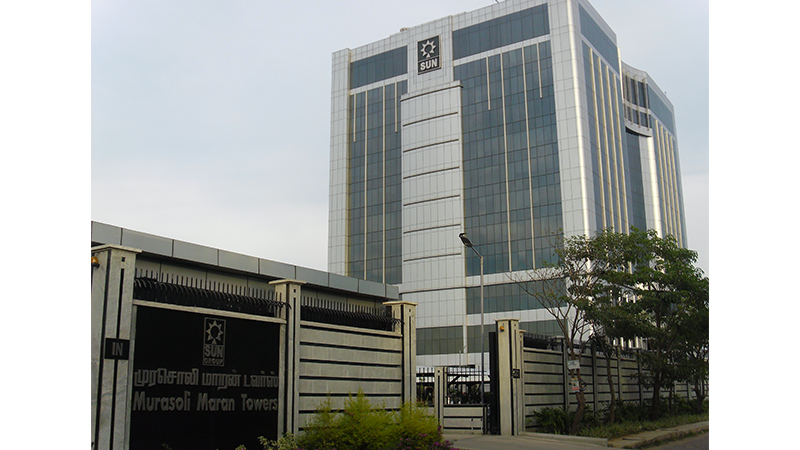
    MUMBAI: Sun TV Network, once the prime-time champion of regional television, is now facing more reruns than fresh hits. The third quarter of FY25 has been less ‘superhit serial’ and more ‘filler episode’—with revenue, EBITDA, and profits all taking dramatic dives. While audiences may still be watching, advertisers have clearly flipped the channel, leaving Sun TV’s earnings on mute.

    Is this a brief ad break before the comeback, or is Sun TV headed for a season finale?

    Standalone Results

    Sun TV’s Q3 FY25 numbers resemble an ageing sitcom—still on air, but struggling for ratings. The company reported total income of Rs 927.66 crore, a decline from Rs 1,014.81 crore in Q3 FY24. The advertisement revenue stood at Rs 332.17 crore, sliding from Rs 355.43 crore last year. Clearly, advertisers are swiping right on digital and left on traditional TV.

    Subscription revenue, however, managed a 2.03 per cent growth, reaching Rs 434.51 crore—a small consolation prize in a sea of red ink. Meanwhile, EBITDA took a nosedive to Rs 432.13 crore, down from Rs 573.76 crore in Q3 FY24, reflecting higher operational costs and the ever-shrinking TV margins.

    Profit before tax (PBT) slipped to Rs 454.61 crore, down from Rs 591.31 crore last year. The real kicker? Profit after tax (PAT) dropped to Rs 347.17 crore, a steep decline from Rs 437.34 crore in Q3 FY24. A 20.6 per cent drop in net profits is enough to make any investor reach for the remote control.

    Consolidated Results

    On a consolidated level, total income stood at Rs 967.56 crore, marking a drop from Rs 1,058.66 crore in Q3 FY24. Revenues from operations were Rs 827.56 crore, a slump compared to Rs 923.15 crore in the corresponding quarter last year.

    The profit before tax on a consolidated basis stood at Rs 473.87 crore, down from Rs 611.85 crore in Q3 FY24. The after-tax profits also followed the downward trend, clocking in at Rs 363.26 crore, compared to Rs 453.09 crore in the previous year’s Q3.

    While cricket franchise revenues from Sunrisers Hyderabad and Sunrisers Eastern Cape offered some cushion, their combined contribution stood at a modest Rs 0.11 crore this quarter, a stark contrast to Rs 8.98 crore in Q3 FY24. The cost of maintaining these franchises remains high at Rs 1.09 crore this quarter, squeezing margins further.

    Sun TV Network’s board has approved an interim dividend of Rs 2.50 per share, a 50 per cent payout on a face value of Rs 5.00 per share—a small consolation prize for investors watching their returns shrink faster than a bad soap opera plot twist. While this cash giveaway might sweeten the deal, will it be enough to distract from the sinking profits?

    Meanwhile, ad revenue has taken a nosedive, as brands shift their budgets towards digital darlings like YouTube and OTT platforms. Is Sun TV stuck in an old-school rerun while the world streams ahead? Or does it have one last prime-time comeback left in its script?

    With advertising dollars migrating to digital, subscription revenues becoming the lifeline, and cricket franchise earnings proving inconsistent, Sun TV has its work cut out. Will it manage to reinvent itself, or are we witnessing the beginning of a long-term fade-out? 

  • ITC profit rises eight per cent as revenue hits Rs 18,953 crore in Q3 FY25

    ITC profit rises eight per cent as revenue hits Rs 18,953 crore in Q3 FY25

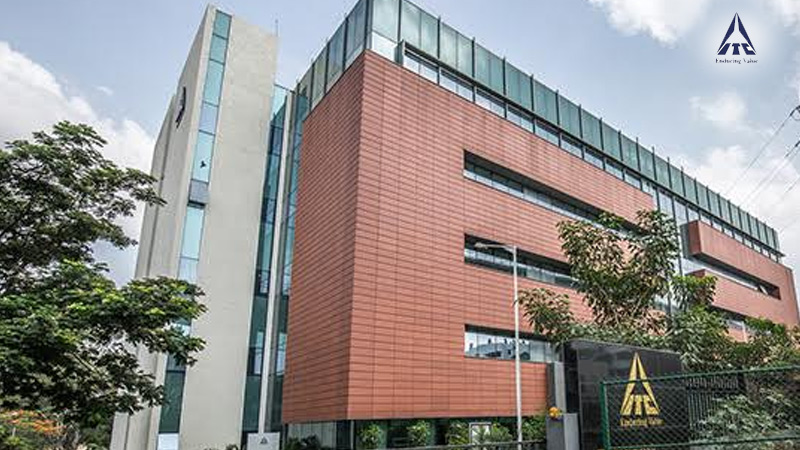
    MUMBAI: ITC has wrapped up the third quarter of FY25 on a strong note, delivering an eight per cent year-on-year (YoY) growth in gross revenue to Rs 18,953 crore, despite facing inflationary headwinds. The company’s diversified portfolio—spanning FMCG, agri-business, cigarettes, and paper—helped offset rising input costs in wheat, edible oil, and tobacco.

    The cigarette segment, ITC’s profit engine, recorded an 8.1 per cent YoY rise in net revenue, with segment profit before interest and tax (PBIT) up 4.1 per cent, aided by strategic portfolio interventions and premium offerings. FMCG (excluding cigarettes) grew four per cent YoY, driven by atta, spices, frozen snacks, and personal care products. The agri-business segment surged 9.7 per cent, powered by leaf tobacco and value-added agri exports, lifting PBIT by a robust 21.6 per cent.

    ITC’s paper and packaging business remained under pressure due to low-priced Chinese and Indonesian imports and rising domestic wood prices, though portfolio expansion and export growth provided some relief. Meanwhile, the recently demerged hotels business delivered its best-ever quarterly performance, with a 14.6 per cent YoY revenue jump to Rs 922 crore and a 43.4 per cent rise in PBT to Rs 302 crore, driven by weddings, retail, and F&B. The Hotels business was officially demerged into ITC Hotels Limited (ITCHL) with effect from 1st January 2025 and is now reported as ‘Discontinued Operations’ in line with Indian Accounting Standards.

    EBITDA for the quarter rose 3 per cent YoY, with a 4.5 per cent increase excluding the paper segment. Profit before tax (PBT) before exceptional items stood at Rs 6,847 crore, while profit after tax (PAT) reached Rs 5,638 crore. Earnings per share (EPS) for the quarter stood at Rs 4.51.

    The board has recommended an interim dividend of Rs 6.50 per share, reinforcing ITC’s strong shareholder returns. Looking ahead, the company remains optimistic, banking on premiumisation, strategic cost management, and sustained investments in emerging growth segments.

  • Decoding Next Mediaworks Q3 and nine month results

    Decoding Next Mediaworks Q3 and nine month results

    MUMBAI: Next Mediaworks Limited is a holding company with a colourful portfolio in multimedia—think of it as the Swiss Army knife of the entertainment world. Helmed by HT Media and with deep roots in Indian broadcasting, the company has evolved into a jack-of-all-trades, dabbling in everything from FM radio to online news.

    Let’s start with its bread and butter: FM radio broadcasting. Through its Radio One FM stations, Next Mediaworks has become a household name in seven cities, including the media powerhouses of Mumbai, Delhi, and Chennai. Feeling nostalgic for some old-school TV magic? The company also markets television programmes, films, and software—the behind-the-scenes wizardry that keeps your screens alive.

    And it doesn’t stop there. Acting as an advertising agent, providing online music and news, and even diving into internet commerce, Next Mediaworks spreads its wings wide. But how does one juggle all these pies while staying profitable? That’s the million-dollar question as we dig deeper into its financials.

    When you’re in the business of radio, every quarter brings a new tune. For Next Mediaworks Limited, this time, the notes were both harmonious and dissonant. The financial results for the quarter and nine months ending 31 December 2024, paint a picture of a company striving to balance its operational challenges with strategic resilience.

    Standalone Results

    The standalone results for Next Mediaworks in Q3 present a smaller slice of the financial pie—or should we say crumbs? Total income for the quarter was Rs 43 lakh, bolstered entirely by other income, as revenue from operations took a vacation. For the nine months, the total income barely inched up to Rs 44 lakh. The real story, however, is the expenses—and it’s a thriller.

    Employee benefit expenses for the nine months amounted to Rs 24 lakh—impressive if you’re running a lemonade stand, but less so for a media company. Meanwhile, finance costs gobbled up Rs 323 lakh, a jump from Rs 271 lakh last year, making one wonder: Are they financing or fine dining? Other expenses, at Rs 56 lakh, added more salt to the wound. This cocktail of costs stirred up a quarterly standalone loss of Rs 97 lakh and a nine-month loss of Rs 359 lakh.

    EBITDA, the trusty metric of financial health, barely registered a pulse, with Rs 15 lakh in Q3 and a cumulative Rs (36 lakh) for the nine months. Exceptional items stayed out of the picture, leaving the losses to hog the spotlight. The loss per share for Q3 was Rs 0.15, and for the nine months, Rs 0.54.

    Can this standalone operation hit the reset button and find its groove, or is it destined to stay on mute?

    Consolidated Results

    The consolidated revenue for Q3 stood at Rs 1,124 lakh, reflecting a decline from the Rs 1,172 lakh posted in the same quarter last year. However, the nine-month revenue was nearly flat at Rs 3,090 lakh, compared to Rs 3,077 lakh in 2023. Despite these figures, the company faces mounting challenges, as total expenses for the nine-month period surged to Rs 5,233 lakh, up from Rs 5,065 lakh.

    Now, let’s spice things up with the consolidated results—the section where the numbers get all the attention. EBITDA, the shining knight in an otherwise troubled kingdom, stood at Rs 143 lakh for Q3 and Rs 680.76 lakh for the nine months. However, profitability has been elusive, with the company posting a consolidated loss of Rs 632 lakh in Q3 and a whopping Rs 2,143 lakh over the nine months. Talk about a steep hill to climb!

    Let’s not sugarcoat it: the losses weren’t small. Employee expenses totalled Rs 597 lakh for the nine months, and radio license fees alone devoured Rs 1,048 lakh. Meanwhile, finance costs ballooned to Rs 1,739 lakh, up from Rs 1,539 lakh in 2023.

    As Next Mediaworks faces these towering costs, one has to ask: can they trim the fat without losing muscle?

    In a world where Spotify dominates playlists and podcasts grab ears globally, where does traditional radio fit? The consolidated losses may seem like a dirge, but Next Mediaworks is no stranger to finding harmony in chaos. Can it pull off a comeback and compose a more profitable tune?

    Next Mediaworks, through its flagship subsidiary Next Radio, is a prominent player in the radio broadcasting space. Yet, operating in an era dominated by streaming platforms has amplified the pressure to innovate. Radio license fees for Q3 were Rs 351 lakh, while employee benefits expenses climbed to Rs 597 lakh for the nine months, compared to Rs 634 lakh the previous year. Finance costs were another thorn, growing to Rs 1,739 lakh for the nine months, compared to Rs 1,539 lakh in 2023.

    Despite these hurdles, the company maintains a “going concern” assumption, bolstered by support from its holding company, HT Media. How long will this financial backing shield the group from market headwinds?

    While the overall narrative appears grim, there are glimmers of hope. The company has avoided external borrowings and maintains a favourable current assets-to-liabilities ratio. Its strategic focus on maintaining operational liquidity could provide the breathing room needed to recalibrate its business model.

    Moreover, the appointment of Sameer Singh as a non-executive non-independent director introduces a seasoned hand with global experience. His prior leadership roles at GroupM, Google, and ByteDance could inject a fresh perspective into the company’s strategic planning.

    The radio industry may no longer be the dominant force in entertainment, but its relevance endures. The challenge for Next Mediaworks is to harmonise traditional broadcasting with the demands of a tech-savvy audience. Will the company invest in digital transformation, or will it double down on its current model?

    As the financial results highlight, the road ahead is far from smooth. Yet, with strategic backing and seasoned leadership, Next Mediaworks has the potential to rewrite its tune. Investors and stakeholders will be keen to see whether the company’s next quarter hums a more uplifting melody.

    Key financial highlights

    . Consolidated Revenue: Rs 1,124 lakh for Q3; Rs 3,090 lakh for nine months.

    . EBITDA: Rs 143 lakh for Q3; Rs 680.76 lakh for nine months.

    . Consolidated Loss: Rs 632 lakh for Q3; Rs 2,143 lakh for nine months.

    . Standalone Loss: Rs 97 lakh for Q3; Rs 359 lakh for nine months.

    .  Finance Costs: Rs 1,739 lakh for nine months, up from Rs 1,539 lakh in 2023.

  • Nettlinx Q3 results shine PAT of Rs 13.87 lakh despite sector challenges

    Nettlinx Q3 results shine PAT of Rs 13.87 lakh despite sector challenges

    MUMBAI: In the wild, ever-changing jungle of technology and network solutions, Nettlinx Limited has swung in with its financial results for the quarter and nine months ended 31 December 2024.

    But before we dissect those numbers, let’s meet the lion leading the pride – Nettlinx’s visionary managing director Manohar Loka Reddy, the kind of leader who turns challenges into stepping stones—and let’s not forget, he’s worth a pretty penny himself! With Nettlinx’s market cap roaring at Rs 172.62 crore, this Telangana-based powerhouse is proving it’s not just surviving the tech-sector jungle but thriving.

    Founded in 1994, the company started as a regional player, quietly building its empire. Fast-forward to today, and Nettlinx has muscled its way into the big leagues of tech stalwarts.

    So, what’s the secret sauce behind their rise? Is it Reddy’s razor-sharp vision, the team’s unyielding dedication, or maybe a pinch of both? Let’s not forget—every stronghold needs its moat, and Nettlinx seems to have found just that.

    Despite the stormy weather of economic headwinds, Nettlinx’s ship has stayed the course, delivering solid standalone and consolidated performances. With such a rich history and an inspiring trajectory, the company’s tale of growth and grit continues to keep investors intrigued and stakeholders on the edge of their seats. The big question, though, remains: Can Nettlinx keep the magic alive in the quarters to come?

    Standalone Results

    The quarter witnessed Nettlinx achieving standalone revenue from operations of Rs 777.45 lakh, a 6.1 per cent increase over the preceding quarter’s Rs 733.40 lakh. With additional contributions from other income, totalling Rs 4.49 lakh, the company’s standalone income reached an impressive Rs 781.94 lakh. EBITDA for the quarter came in at Rs 109.66 lakh, and PAT was Rs 13.87 lakh, reflecting a promising recovery from the narrow profit margins seen in Q2. Clearly, Nettlinx isn’t just surviving; it’s thriving. Who knew numbers could look this good?

    For the nine-month period, standalone revenues soared to Rs 2,417.56 lakh, marking a 12 per cent increase compared to the Rs 2,162.13 lakh reported in the same period last year. EBITDA for these nine months stood at Rs 314.18 lakh, and PAT registered a steady Rs 54.05 lakh.

    The performance suggests that Nettlinx has found its rhythm, balancing growth with operational efficiency. Still, can they iron out inefficiencies lurking beneath?

    Consolidated Results

    In Q3 FY25, consolidated results brought a show-stopping total income of Rs 1,592.59 lakh, while EBITDA flexed its muscles at Rs 467.42 lakh. PAT for the quarter stood at Rs 173.58 lakh, a testament to the company’s ability to maintain profitability in a challenging market environment. Nettlinx’s financial workout routine seems to be paying off. Can it keep up this streak without pulling a muscle?

    Over the nine months ending December 2024, consolidated revenues surged to Rs 2,477.66 lakh, showing consistent growth across all fronts. EBITDA hit a robust Rs 680.76 lakh, and PAT reached Rs 242.54 lakh. With earnings per share (EPS) at Rs 2.78, shareholders have every reason to celebrate. However, administrative expenses—the financial equivalent of carrying extra weight—remain a concern.

    Will Nettlinx embrace the Marie Kondo method to declutter its cost structure?

    Nettlinx’s resilience begs the question: How does the company sustain its upward trajectory despite market volatility? Is its diversified subsidiary structure the safety net it appears to be, or are there untapped potential efficiencies yet to be unlocked?

    Exceptional items, including a Rs 2.92 lakh provision, highlight the company’s cautious risk management strategy. Yet administrative expenses surged to Rs 442.79 lakh, calling for a closer look at streamlining operations.

    Key financial highlights

    .  Standalone EBITDA: Improved by 15 per cent, reaching Rs 109.66 lakh.

    .  Depreciation: Increased to Rs 80.18 lakh, reflecting sustained infrastructure investments.

    .  Earnings per Share (EPS): Stabilised at Rs 1.79 per share (basic and diluted) in Q3.

    .  Consolidated Operating Margin: Marginally improved to 18 per cent, signalling steady subsidiary performance.

    .  Administrative Costs: Increased, warranting cost rationalisation.

    As Nettlinx moves forward, its commitment to innovation and expanding its digital ecosystem remains evident. The company’s efforts to enhance its network capabilities are likely to strengthen its market presence in the coming quarters.

    The financial results underscore a dual narrative. On one hand, Nettlinx is showcasing solid growth. On the other hand, it needs sharper focus on profitability and cost containment. Investors and stakeholders alike will be keenly watching how the company navigates the evolving landscape while turning revenue gains into sustainable net income.


  • Adani Green Energy’s H1 FY25 revenue soars 20 per cent on capacity expansion

    Adani Green Energy’s H1 FY25 revenue soars 20 per cent on capacity expansion

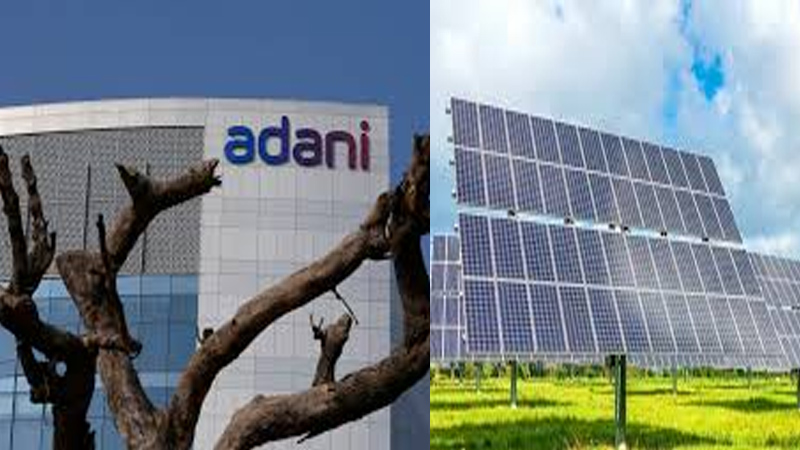
    Mumbai: In a world marred by industrial grime and chemical plumes, a green energy beacon shines brighter than ever. Adani Green Energy Ltd (AGEL) emerges as a trailblazer, showcasing stellar results for the quarter and half-year ending September 30, 2024. The company’s remarkable growth story—driven by ambitious capacity expansion, surging energy sales, and shrewd financial strategies—cements its place at the forefront of India’s renewable energy revolution, where it continues to shape a cleaner, more resilient future.

    The company reported a 16 per cent year-on-year increase in quarterly revenue, reaching Rs 2,309 crores in Q2 FY25, driven by the addition of 2,868 MW in greenfield capacity and consistent plant efficiency. For the half-year period, revenue surged by 20 per cent to Rs 4,836 crores, while EBITDA rose 20 per cent to Rs 4,518 crores, maintaining an industry-leading margin of 92.2 per cent. Cash profit surged by 27 per cent to Rs 2,640 crores, reflecting the company’s operational prowess and disciplined cost management.

    CEO Amit Singh stated, “Our financial performance continues to be strong, driven by significant greenfield capacity additions and robust operational efficiency. Our entry into the commercial and industrial (C&I) segment and the redemption of a $750 million Holdco bond illustrate our commitment to sustainable growth and systematic deleveraging.”

    The recent redemption of the $750 million bond has markedly improved the company’s leverage ratios. This move, combined with a steady increase in operational capacity to 11.2 GW—an impressive 34 per cent year-over-year rise—positions AGEL for further growth. The ambitious development of a 30 GW renewable energy plant in Khavda, Gujarat, promises to set new benchmarks for the sector. The Khavda project is rapidly progressing, with 2 GW of solar and 250 MW of wind capacity already operational.

    The company’s use of advanced technologies like machine learning and AI for operations and maintenance continues to pay off, leading to a reduction in O&M costs. AGEL’s consistent electricity generation has not only met but exceeded annual commitments under power purchase agreements, reaching 57 per cent of the annual target in H1 FY25. Additionally, the company remains a leader in sustainability, maintaining top ESG rankings and setting ambitious decarbonisation targets, with a goal to achieve 50 GW of renewable capacity by 2030.

    While AGEL’s growth trajectory remains strong, the company faces ongoing challenges, including a volatile financing environment and ambitious expansion plans that necessitate substantial capital expenditure. Yet, the consistent reduction in leverage and strategic focus on high-margin segments bode well for sustaining growth. As the renewable energy sector matures, AGEL’s proactive measures and strong operational base position it favourably against its peers.


  • Sun TV Q2 net profit up marginally to Rs 400.71 cr; revenue from operations declines

    Sun TV Q2 net profit up marginally to Rs 400.71 cr; revenue from operations declines

    Mumbai: Sun TV has reported that its second quarter net profit was Rs 400.71 crore, up marginally by 1.88 per cent from Rs 393.32 crore in the same period of the previous fiscal.

    Ebitda (earnings before interest, taxes, depreciation, and amortisation) was Rs 610.89 crore in September 2022. This was a 4.15 per cent increase over the previous fiscal period of Rs 586.57 crore.

    Profit after tax rose significantly by three per cent to Rs 407.31 crore, compared with a profit of Rs 395.46 crore in the same quarter of the previous fiscal.

    However, revenue from operations fell by 2.7 per cent to Rs. 825.65 crore compared to Rs. 848.67 crore in the same quarter of the previous fiscal.

    A dividend of Rs 3.75 per share has been declared by the company.

  • NxtDigital reports revenue of Rs 548.9 crore in H1 FY23

    NxtDigital reports revenue of Rs 548.9 crore in H1 FY23

    Mumbai: Hinduja Group’s NxtDigital has reported consolidated half-yearly financial results for the fiscal ended 30 September 2022.

    In comparison to the previous fiscal’s equivalent half-year revenue of Rs 543.2 crore, revenue of Rs 548.9 crore has been generated.

    Profits before interest, depreciation, and taxes (Ebitda) increased to Rs 109.3 crore from Rs 102.9 crore in the same period of the previous year.

    For the quarter ended 30 September, the company has improved its Ebitda performance to Rs 55.26 crore as against Rs 51.64 crore recorded the previous year and Rs 54.09 crore for the immediately preceding quarter of the current year.

    Due to the company’s continued focus on new growth drivers, all of its media and communications platforms, including its digital television and broadband verticals, experienced stability in the second quarter.

    Last month, it introduced its 100th honourable NXTHUB, giving users seamless access to broadband, digital television, and OTT content.

    Based on a legally binding MoU with Thaicom, one of the top satellite operators in the world, and following extensive and fruitful testing, NxtDigital is soon to introduce broadband-over-satellite services. In addition to public WiFi and drones to improve rural digital solutions and space-based data technologies for agriculture and resource management, this will be the first step of providing satellite AI solutions.

    The organisation has also concentrated on creating digital solutions based on market dynamics throughout this quarter. It will soon introduce ONEDigital, a one-of-a-kind and cutting-edge all-in-one service that provides consumers with access to the internet, digital television, OTT, public and building WIFI, CCTV systems, and voice over IP/intercom. The company has also created the digital content aggregator app NXTPLAY, which is ready for release and offers over 3,00,000 hours of content from top international and regional OTT networks.

    It has started its ambitious project, NXT Sangram, with the goal of training over 10,000 of its last mile owners or franchisees to make the paradigm shift and become digital services partners, capable of meeting all the digital needs of their communities, in line with these initiatives and building out a digital ecosystem on a national scale.

    NxtDigital MD & CEO Vynsley Fernandes said, “We have remained committed this fiscal to developing solutions to drive growth, based on the dynamic environment and changing consumer preferences. Those focused efforts and technological innovations will now take centre stage as we look to shortly roll out our broadband-over-satellite services, our digital content aggregator app NXTPLAY and ONEDigital, an integrated all-in-one solution that defines true digital convergence. Our ecosystem too has been upgraded in line with delivering solutions for digital communities.”

    The draft scheme of arrangement between NxtDigital, Hinduja Global Solutions, and their respective shareholders has been approved, among other things, by the board of directors of the company. Minority shareholders strongly approved the scheme, with 99.99 per cent of them voting in favour of it at the extraordinary general meeting of shareholders held on 2 September  to approve the scheme of arrangement between the company and Hinduja Global Solutions. On 13 October, the NCLT will have its last hearing.

    In the second corporate action, the company’s board of directors approved the proposed scheme of arrangement between NxtDigital and Hinduja Leyland Finance (HLFL) and their respective shareholders, subject to regulatory and shareholder approvals, for the merger of HLFL with the company. The share exchange ratio for the proposed transfer was also approved by the board. The company is working to get all the required legal, regulatory, and other clearances for the deal.

  • Sun TV Q1 results: Revenue rises 47.38% to Rs 1,193.90 crore

    Sun TV Q1 results: Revenue rises 47.38% to Rs 1,193.90 crore

    Mumbai: Sun TV Network revenue increased by 47.38 per cent (including IPL) to Rs 1,193.90 crore in Q1 FY23, compared to Rs 810.10 crore in Q1 FY2022.

    The advertisement revenues for the quarter were up by 40.84 per cent for the quarter ended June 2022 at Rs 343.17 crore as against Rs 243.66 crore from the previous year’s same quarter. Ebidta increased by 54.32 per cent to Rs 763.83 crore from Rs 494.97 crore. For the same period, profit after taxes increased by 26.15 per cent to Rs. 491.68 crore, up from Rs 389.76 crore the previous year.

    At the board meeting held on Friday, the board of directors declared an interim dividend of rupees five per share (100 per cent) on a face value of rupees five per share.

    Sun TV operates satellite television channels across six languages: Tamil, Telugu, Kannada, Malayalam, Bangla, and Marathi. It also airs FM radio stations across India and owns the SunRisers Hyderabad cricket franchise of the Indian Premier League and the Digital OTT Platform Sun NXT.

    Sun TV has been awarded a licence to operate a team in the city of Gqeberha (Port Elizabeth) by the Africa Cricket Development (Pty) as part of Cricket South Africa’s T20 league to be staged from January 2023 and annually thereafter.