Tag: E-Governance

  • Efficient digital transition; MyGov.in pockets citizen engagement award

    Efficient digital transition; MyGov.in pockets citizen engagement award

    NEW DELHI: MyGov website has won the Platinum Award for the Most Innovative Citizen Engagement while the Online Management, Monitoring and Accounting System (OMMAS) for Pradhan Mantri Gram SadakYojana (PMGSY) won the Gold Award.

    The Silver Award was won by Coimbatore City Municipal Corporation. The Jury Choice was given to IT Initiatives of SimhasthKumbh, Ujjain.

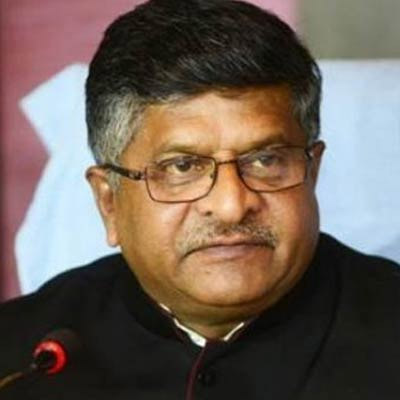
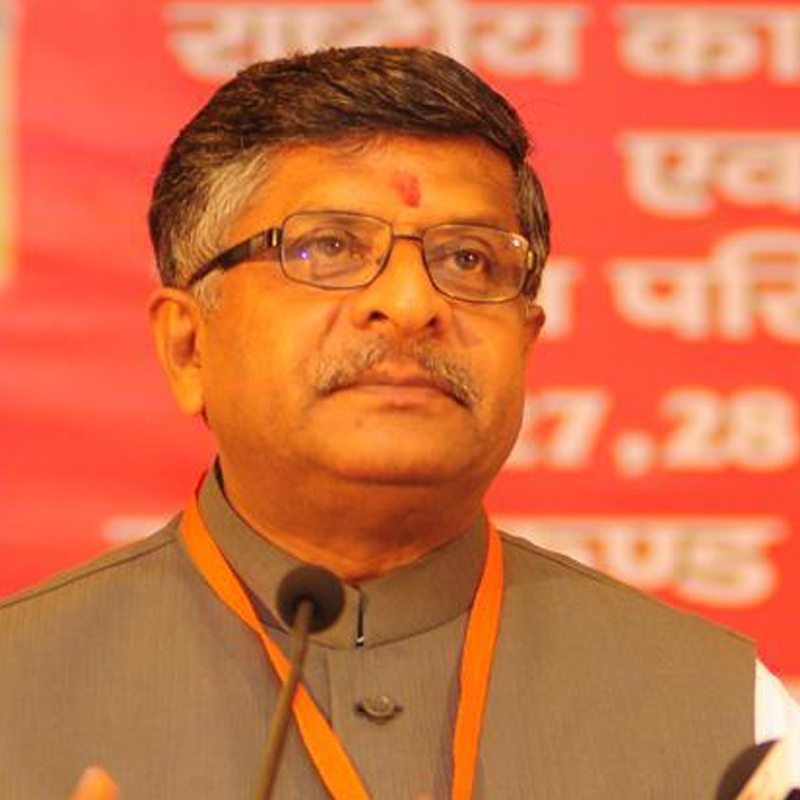
    Communications and Information Technology Minister Ravi Shankar Prasad presented the first “Digital India Awards” as part of the Government’s ambitious programme of “Digital India” on its axiom of “Minimum Government and Maximum Governance”.

    The awards are for those who facilitate the Government’s efforts to promote and uphold the use of World Wide Web for enhancing efficiency and transparency of Government Machinery and encouraging its speedy transition towards Digital India.

    The first edition of the awards was organized by the National Informatics Centre (NIC) under the ambit of India Portal (http://india.gov.in).

    Digital innovation along with E-Governance initiatives of Government Ministries and Departments across India were evaluated under various categories. Three awards Platinum, Gold and Silver were presented in each category to the winners shortlisted from the nominations received under each category.

    The categories included Exemplary Online Service, Open Data Champion, Most Innovative Citizen Engagement, Outstanding Digital Initiative by Local body, Best Mobile App, Web Ratna – Ministry/ Department, Web Ratna – State/ UT, Web Ratna-District.

    In the Outstanding Digital Initiative by Local Body Platinum Award was bagged by Surat Municipal Corporation, followed by Greater Visakhapatnam Municipal Corporation and Web and Mobile based Integrated Complaint Logging and Resolution Tracking System – Madurai Corporation winning the Gold and Silver award respectively.

    The Jury Choice was given e-NagarSewaUP – Electronic Workflow based Reform for ULBs in Uttar Pradesh.

    In the Exemplary Online Service Category Platinum Award was bagged by VYAS- VarnijYakar Automation System for Department of Commercial Taxes, Uttar Pradesh, followed by E-permit, Commercial tax department, Gujarat and One Stop Clearance System, Punjab Bureau of Investment Promotion winning the Gold and Silver award respectively.

    In the Open Data Champion Category Platinum Award was won by Office of the Registrar General, India. The Health and Family Welfare and Directorate of Marketing & Inspection won the Gold Award. The Silver award was bagged by the Rajya Sabha and National Crime Records Bureau.

    For Best Mobile App, Citizen Cop Mobile App Chattisgarh won the Platinum Award. Mid-Day Meal Mobile App, Himachal Pradesh won the Gold Award. The Silver Award was won by GARV – GrameenVidyutikaran App Ministry of Power.

    For Web Ratna – Ministry / Department category, the Platinum was bagged by Human Resource Development Ministry, Gold by Health & Family Welfare Ministry, and Silver by External Affairs Ministry.

    For Web Ratna – State/ UT category the Platinum award has been won by Rajasthan followed by Tamil Nadu and Haryana in the Gold and Silver section respectively. For Web Ratna – District category the Platinum award has been won by Website of Collectorate, North Goa, followed by e-Governance friendly website & Initiatives of District Kupwara, J&K and district administration Udham Singh Nagar website, Uttarakhand in the Gold and Silver section respectively.

    A Compendium for Digital India Awards 2016 was also released on this occasion. A comprehensive government services portal was also launched by the Shri P. P. Chaudhary on this occasion.

    Minister of State for Communications and Information Technology P P Chaudhary; Electronics & Information Technology|(MeitY) Secretary Aruna Sundarrajan, Principal Scientific Advisor R Chidambaram; MeitY Additional Secretary Ajay Kumar, NIC DG Neeta Verma, and Senior officials from (MeitY), NIC, state and Central Senior dignitaries were also present.

    Digital India Awards plays a major role in recognizing the noteworthy and sustainable initiatives in the realm of e-Governance for better delivery of information and services. At the same time Digital India Awards have re-established itself as an important platform to disseminate information about such path breaking initiatives, encouraging others to customize and replicate the successful solutions. The Awards through its unique initiative has contributed to the overall increase in quality and quantity of web presence of various government departments across the country. Most importantly, it has created an atmosphere for further innovation in the web based services sphere promoting and encouraging Government Departments/Ministries and States to come out with their best.

  • Efficient digital transition; MyGov.in pockets citizen engagement award

    Efficient digital transition; MyGov.in pockets citizen engagement award

    NEW DELHI: MyGov website has won the Platinum Award for the Most Innovative Citizen Engagement while the Online Management, Monitoring and Accounting System (OMMAS) for Pradhan Mantri Gram SadakYojana (PMGSY) won the Gold Award.

    The Silver Award was won by Coimbatore City Municipal Corporation. The Jury Choice was given to IT Initiatives of SimhasthKumbh, Ujjain.

    Communications and Information Technology Minister Ravi Shankar Prasad presented the first “Digital India Awards” as part of the Government’s ambitious programme of “Digital India” on its axiom of “Minimum Government and Maximum Governance”.

    The awards are for those who facilitate the Government’s efforts to promote and uphold the use of World Wide Web for enhancing efficiency and transparency of Government Machinery and encouraging its speedy transition towards Digital India.

    The first edition of the awards was organized by the National Informatics Centre (NIC) under the ambit of India Portal (http://india.gov.in).

    Digital innovation along with E-Governance initiatives of Government Ministries and Departments across India were evaluated under various categories. Three awards Platinum, Gold and Silver were presented in each category to the winners shortlisted from the nominations received under each category.

    The categories included Exemplary Online Service, Open Data Champion, Most Innovative Citizen Engagement, Outstanding Digital Initiative by Local body, Best Mobile App, Web Ratna – Ministry/ Department, Web Ratna – State/ UT, Web Ratna-District.

    In the Outstanding Digital Initiative by Local Body Platinum Award was bagged by Surat Municipal Corporation, followed by Greater Visakhapatnam Municipal Corporation and Web and Mobile based Integrated Complaint Logging and Resolution Tracking System – Madurai Corporation winning the Gold and Silver award respectively.

    The Jury Choice was given e-NagarSewaUP – Electronic Workflow based Reform for ULBs in Uttar Pradesh.

    In the Exemplary Online Service Category Platinum Award was bagged by VYAS- VarnijYakar Automation System for Department of Commercial Taxes, Uttar Pradesh, followed by E-permit, Commercial tax department, Gujarat and One Stop Clearance System, Punjab Bureau of Investment Promotion winning the Gold and Silver award respectively.

    In the Open Data Champion Category Platinum Award was won by Office of the Registrar General, India. The Health and Family Welfare and Directorate of Marketing & Inspection won the Gold Award. The Silver award was bagged by the Rajya Sabha and National Crime Records Bureau.

    For Best Mobile App, Citizen Cop Mobile App Chattisgarh won the Platinum Award. Mid-Day Meal Mobile App, Himachal Pradesh won the Gold Award. The Silver Award was won by GARV – GrameenVidyutikaran App Ministry of Power.

    For Web Ratna – Ministry / Department category, the Platinum was bagged by Human Resource Development Ministry, Gold by Health & Family Welfare Ministry, and Silver by External Affairs Ministry.

    For Web Ratna – State/ UT category the Platinum award has been won by Rajasthan followed by Tamil Nadu and Haryana in the Gold and Silver section respectively. For Web Ratna – District category the Platinum award has been won by Website of Collectorate, North Goa, followed by e-Governance friendly website & Initiatives of District Kupwara, J&K and district administration Udham Singh Nagar website, Uttarakhand in the Gold and Silver section respectively.

    A Compendium for Digital India Awards 2016 was also released on this occasion. A comprehensive government services portal was also launched by the Shri P. P. Chaudhary on this occasion.

    Minister of State for Communications and Information Technology P P Chaudhary; Electronics & Information Technology|(MeitY) Secretary Aruna Sundarrajan, Principal Scientific Advisor R Chidambaram; MeitY Additional Secretary Ajay Kumar, NIC DG Neeta Verma, and Senior officials from (MeitY), NIC, state and Central Senior dignitaries were also present.

    Digital India Awards plays a major role in recognizing the noteworthy and sustainable initiatives in the realm of e-Governance for better delivery of information and services. At the same time Digital India Awards have re-established itself as an important platform to disseminate information about such path breaking initiatives, encouraging others to customize and replicate the successful solutions. The Awards through its unique initiative has contributed to the overall increase in quality and quantity of web presence of various government departments across the country. Most importantly, it has created an atmosphere for further innovation in the web based services sphere promoting and encouraging Government Departments/Ministries and States to come out with their best.

  • e-governance should work towards creating & sustaining a vibrant ecosystem for growth: Prasad

    e-governance should work towards creating & sustaining a vibrant ecosystem for growth: Prasad

    NEW DELHI: Noting that Information Communication Technology (ICT) is the tool of development and progress, which is the very ethos and purpose of e-Governance, Communications and Information Technology Minister Ravi Shankar Prasad said, “The thrust of good governance is on creating and sustaining an ecosystem which fosters strong and equitable development.”


    In a message on Digital India at the start of the e-Governance week, Prasad said, “The foundation of a strong, prosperous nation is built on the quality of governance that it provides to its citizens. The recent rapid advances in ICT have made e-Govemance a very potent tool for ushering in an era of good governance.”


    He added that “Citizen-First” is the mantra, motto and guiding principle. “We are committed to bridge the digital gap between the ‘haves’ and ‘havenots’,” he said.


    “With this vision in mind, we bunched the “Digital India” Programme that will create a strong communication and IT infrastructure for enabling e-services like e-banking, e-Commerce, e-education, e-governance, e-entertainment, e-health etc. across the country to give a new fillip to the inclusive growth of Indian economy,” he added.


    Good Governance is the key to a nation’s progress, he said adding that Prime Minister Narendra Modi had emphasised “Minimum Government, Maximum Governance” on more than one occasion, which can help in easy, effective and economical governance.

  • e-Governance necessary for citizens’ digital empowerment

    e-Governance necessary for citizens’ digital empowerment

    NEW DELHI: “There is need to focus on strengthening of e-Governance, which is an important pillar of the Government’s ‘Digital India’ campaign – to digitally empower the administrative and Governance process for providing Citizen Centric Services,” said Administrative Reforms and Public Grievances secretary Devendra Chaudhury.


    Inaugurating a workshop on ‘UN e-Government Development Index,’ Chaudhury highlighted the importance of process change, which can be effectively enabled by IT tools and consequential changes in approach to e-Governance as a business model similar to e-Commerce. 


    Commending the government’s plans to transform governance, UN resident coordinator and resident representative of the United Nations Development Programme Yuri Afanasiev said, “e-Governance is like building a house. Build a strong foundation and everything works.”


    In his view, the key challenge for the country was to deliver services to the last mile population, removing the digital divide, towards improving the quality of their lives. 


    Acknowledging India’s progress, Inter-Regional Adviser on e-Government with the UN Department of Economic and Social Affairs Richard Kerby said, “e-Government has to be a part of the national development strategy and sustainable development. While open data is a key to empowering people, it should support a bottom-up approach, with citizens contributing to the data collection process equally with governments.”


    Electronics and IT additional secretary Tapan Ray stressed on the need to “integrate efforts across government to achieve the vision of a digitally empowered India.” 


    A key focus of the workshop was to understand the United Nations e-Government Survey, which assesses e-Government development across all 193 member states of the UN launched in 2003. The global Survey has three components – Telecom Infrastructure Index, Human Capital Index and an Online Services Index. The Workshop threw up a number of innovative and transformative ideas of which the States have undertaken to serve the Citizens. 


    The workshop featured presentations by four States, Karnataka, Andhra Pradesh, Himachal Pradesh, and Uttar Pradesh on innovative e-Governance initiatives launched by them to improve service delivery to citizens.

  • Slew of e-Governance tools for aqua and other farmers launched by Govt

    Slew of e-Governance tools for aqua and other farmers launched by Govt

    NEW DELHI: With the government keen to take advantage of the renewed interest in digital technology with the marking of a ‘Digital Week’, several e-Governance initiatives were launched on 9 July to benefit farmers and fishermen.


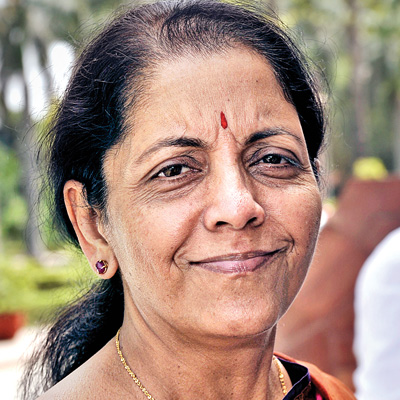
    Commerce and Industry Minister Nirmala Sitharaman said that the programmes had been developed by Marine Products Export Development Authority (MPEDA).


    Two of these programmes – Shrimp Price Information over SMS by a missed call, and mKRISHI – Mobile App for aquaculture operations – have been developed for mobile phones, providing digitally enabled services on demand to the aqua farmers in the country.


    Two additional e-Governance initiatives were launched aimed at providing single window solution to exporters and other stakeholders through two new websites – Online MPEDA Registration portal for Exporters, and MPEDA Portal – www.mpeda.gov.in.


    The Minister also held an online conference with farmers from Machilipatnam, Andhra Pradesh relating to SMS service and the mobile app.  She talked to farmers from Valsaad, Gujarat regarding jhinga farms. Farmers expressed happiness at the launch of these e-Governance initiatives and expressed the view that these initiatives will help them with readily available information. 


    MPEDA is providing price related market information of Vannamei shrimp and BT shrimp to farmers over SMS on a missed call to a predetermined number. On receipt of the missed call, information on price of Vannamei shrimp and BT shrimp for different grades in major markets like Japan, USA and EU are provided by SMS.


    Farmers can dial +918590100800 for getting price information on Vannamei shrimp and call at +918590200800 for getting price information on BT shrimp. The prices (indicative C&F price in Indian Rupee) are obtained from INFOFISH (an Inter governmental organization of FAO) published data.


    The price information to farmers will provide them the current market trends enabling them to make an informed decision on harvest of their produce. The service is provided free of cost to farmers.  The information can be obtained by farmers all over India. MPEDA hopes that this information power about shrimp prices will empower the farmers to get better price realization.


    The mKrishi is a pilot project presently operated in Gujarat and will be extended all over India in 3 months.  Aquaculture of shrimp is a complex set of activities wherein huge amount of data is to be captured, analyzed and decisions are to be taken on a dynamic basis.  Currently farmers are keeping the records in manual form on a sheet of paper which may not provide them with on growth and trend of the aquaculture operations.


    This app will provide an easy tool for book keeping, advisory services and weather information.  It is an Android mobile application which has been developed by MPEDA and TCS Innovation Lab, Mumbai (as part of its CSR initiative).


    Farmers will require an android mobile handset (post 2013 models) with a data/GPRS connection (2G, 3G or WiFi).  The farmer has to enter the basic information regarding his farming activities, after which he gets expert guidance for all operations making his operations both economical and profitable.  The reports can be seen in the graphical format. An option to view the trends or reports in the computer is also provided to give seamless data entry and visualization.


    The mobile app is expected to revolutionalize the way the farm activities are carried out.  The app being used in a large scale can provide the trend of aquaculture activities across the country.  It will also help in resolving the farmer’s issues quickly on a more personalized approach.


    Registration of an exporter with MPEDA is a mandatory requirement under MPEDA Act, 1972.  Presently the registration process is being done manually.  The exporters are required to submit a physical application in the prescribed format along with certain mandatory documents.


    In the new system developed by NIC, exporters are expected to fill in their application form online with their log in ID also pay the fee online for which a payment gateway has been used. The mandatory documents are to be scanned and uploaded online by the applicant which will be verified by the registering authority. After due process the Certificate of registration will be generated.


    The stakeholders, mainly the exporters, will be benefitted by reduction of processes, time delay, transparency, status updation.  The objective of the new system is to facilitate ease of doing business and thereby provide the enabling environment for exporters to export more seafood from India. 


    In order to provide extensive information in public domain on various aspects of marine products sector, MPEDA has revamped its website into a portal and renamed the existing URL www.mpeda.com as www.mpeda.gov.in 


    The website has both static and dynamic pages on MPEDA, Exports, Production of Capture Fisheries, Culture Fisheries, Ornamental Fish, Services for Exporter, Farmer, Fishermen etc, Trade and Quality Control.


    Marine products of India are going to get a fillip in the international markets with the exhaustive information about it in the new website.  It will provide links to all important sites on fish & fishery products and export & marketing.

  • Use social media as a tool for participative governance: Pranab Mukherjee

    Use social media as a tool for participative governance: Pranab Mukherjee

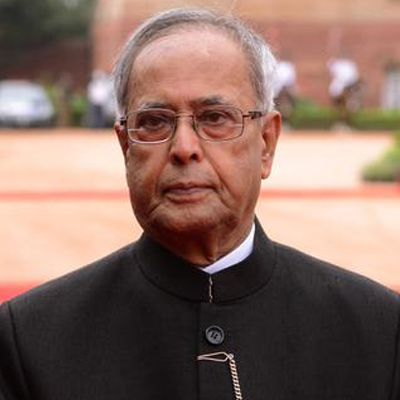
    NEW DELHI: Social media will be used as a tool for participative governance, directly engaging people in policy making and administration and “fully realizing our softpower potential,” said President Pranab Mukherjee on Monday, 9 June.


    He also acknowledged the fact that there is a need to integrate emerging technologies like social media into “external interchange, with particular emphasis on the country’s rich spiritual, cultural and philosophical heritage.” According to Mukherjee, the government will revive ‘Brand India’ riding on the strengths of 5T’s: Tradition, Talent, Tourism, Trade and Technology.


    He added that e-governance brings empowerment, equity and efficiency and has the power to transform peoples’ lives.


    In his first address to the joint sitting of the 16th Lok Sabha and the Rajya Sabha, he said: “The backbone of my government’s new ways of working will be a Digital India. IT will be used to drive re-engineering of government processes to improve service delivery and programme implementation. We will strive to provide Wi-Fi zones in critical public areas in the next five years.”


    He added: “My government will rollout broad band highway to reach every village and make all schools e-enabled in a phased manner. Technology will be used to prepare our children for a knowledge society. The National e-governance plan will be expanded to cover every government office from the centre to the Panchayat; to provide a wide variety of services to citizens.”


    He noted: “Our rich cultural heritage is the very foundation on which rests the unity of our diverse nation. Indian languages are repositories of our rich literature, history, culture, art and other achievements. My government will launch a national mission ‘e-Bhasha’ that will develop digital vernacular content and disseminate our classic literature in different languages. My government will also provide the required resources for the maintenance and restoration of national heritage sites.” 


    FICCI president Siddharth Birla has welcomed the announcements relating to national e-governance plans and usage of social media for participative governance, as that “would help restore the credibility of institutions, improve investor confidence and reignite investment inflow in the country,” he said.  

  • Greater Boost to e-governance, new scheme for software export industry


    NEW DELHI: The Government today announced its proposal to enhance the allocation for e-governance from Rs. 395 crore in the year 2006-07 to Rs. 719 crore in 2007-2008.

    Presenting the Budget proposals in the Lok Sabha today, Finance Minister P. Chidambaram said the Government had launched an ambitious programme for e-governance with the objective of improving efficiency, convenience, accessibility and transparency in Government functions and take Government services to the common citizen. He said the Central Government supports e-governance action plan at State levels and therefore it was proposed to increase the allocation for such support from Rs. 300 crore in 2006-07 to Rs. 500 crore in 2007-08.


    The Minister also proposed to provide Rs. 33 crore for a new scheme of manpower development for the software export industry.


    Mr Chidambaram noted that e-filing of corporate returns introduced this financial year had been a resounding success and until January 31, 2007, 301,736 returns were electronically filed by corporates. The Ministry’s analysis showed that ‘the effective rate of tax paid by all corporates, thanks to numerous tax concessions and exemptions – several of them well-intended – was only 19.2 per cent’. He therefore decided to extend Minimum Alternate Tax (MAT) to income in respect of which deduction is claimed under sections 10A and 10B of the Income Tax Act.

    MAT had been introduced in 1996-97 for companies with book profits, and its purpose was to bring about horizontal equity in taxation.


    Extending service tax to renting of immovable property for use in commerce or business, the Minister excluded residential properties and land for entertainment.


    While bidding goodbye to 200,000 assesses through service tax proposals, the Minister said he proposed to bring new assesses into the fold by extending service tax to fields like the Development and supply of content for use in telecom and advertising purposes; asset management services provided by individuals; and

    Design services.


    The Empowered Committee of State Finance Ministers had agreed to work with the Central Government to prepare a roadmap for introducing a national level Goods and Services Tax (GST) with effect from April 1, 2010.


    Keeping in mind the special needs of several sectors and the interest of the consumers, the Minister mooted a proposal to raise the exemption limit for small scale industry (SSI) from Rs.1 crore to Rs. 1.5 crore. The exemption limit for small service providers was being increased from Rs. 400,000 to Rs. 800,000. While noting that this will mean 200,000 assesses out of a total of 400,000 assesses will go out of the service tax net, he said he was happy to give away the revenue loss of Rs. 800 crore in the interest of the small service provider and the consumer.


    The Minister said the telecommunications industry had repeatedly requested that the multifarious taxes, charges and fees applicable to the industry should be unified and a single levy on revenue should be collected. He had accepted this proposal and proposed to request the Department of Telecommunications to constitute a committee to study the present structure of levies and make suitable recommendations to Government.


    He proposed to exempt from service tax all services provided by technology business incubators to encourage innovation. Similarly, their incubatees whose annual business turnover does not exceed Rs. 50 lakhs will be exempt from service tax for the first three years.


    As a measure to encourage small and medium enterprises to invest and grow, the Minister said the surcharge on income tax will be removed on all firms and companies with a taxable income of Rs. One crore or less, benefiting about 1,200,000 firms and companies.


    Since VAT (Value Added Tax) had proved to be an unqualified success and VAT revenues of the implementing States increased by 13.8 per cent in 2005-06 and by 24.3 per cent in the first nine months of 2006-07, the next logical step was to phase out Central Sales Tax (CST) and the Central Government had reached an agreement with State Governments in this regard. Consequently, the CST rate will be reduced from 4 per cent to 3 per cent with effect from April 1, 2007 and Rs. 5,495 crore had been provided for compensation for losses, if any, on account of VAT and also on account of CST.


    Noting that venture capital funds were a useful source of risk capital for start-up ventures in the knowledge-intensive sectors, the Minister said it was necessary to limit the tax benefit to investments made in truly deserving sectors. He therefore announced that among other industries, information technology relating to hardware and software development would be given pass-through status to venture capital funds only in respect of investments in venture capital undertakings.

  • Telecomm ’07 core committee narrows down on themes, issues

    Telecomm ’07 core committee narrows down on themes, issues

    NEW DELHI: The second core committee meeting of the Telecomm 2007, held on Friday, has narrowed down the theme of this year’s Summit and Exhibition (November1-3, Mumbai) as either “Role of telecom and IT: changing lifestyles”, or “Role of telecom and IT as economic multiplier.”

    The theme, either way, would be consumer-centric. This is a broad consensus that emerged at the meeting, which also decided on having eight conference sessions.

    These would be E-governance (including education, health, etc.); two sessions on the more complex issues of New Generation Network and WiMax; another two sessions on the emerging technology of IPTV / mobile TV, with emphasis on content provider; spectrum and infrastructure sharing; need for a new telecom policy initiative; and investment opportunities and challenges in the sectors.

    The meeting, chaired by former BSNL CMD Prithipal Singh, has sent the recommendations to the chairperson, who will finalise the issues and the main theme.

    Most of the speakers followed the initial argument of Satya Narayan Gupta, chief regulatory advisor (SAARC region) of BT Global Services, who said that the theme has been more or less settled by the government, with the I&B minister’s slogans of 2007: Year of Broadband and Trai’s slogan of 2007: Year of the Consumer.

    What emerged at the Core Committee meeting, in which indiantelevision.com was also an invitee, is a fair merger of the two slogans, as is reflected in the theme as well as the special attention, in the form double sessions, for the topics of NGN and WiMax and two for IPTV and mobile TV.

    There was considerable discussion on the lack of enough data and services not reaching the people in the languages they understand. In fact, one speaker pointed out that the Edusat, created at a cost of Rs 1,000 crore, is yet to achieve its basic targets.

    Indra Mohan, president of India-tech, an industry association for international techno-economic cooperation, said that there was need for technology that can bridge the two Indias: urban and rural.

    In fact, Sanjeev Kumar Seth, Deputy Director General (Commercial), BSNL, bluntly asserted that all the talk about teledensity of 11 in India is a distorted image, and especially in rural India, it will not be more than 2.

    NK Mohapatra of Midas Communication Technologies Pvt Ltd said there is a failure in adequate data generation, and held that in the absence of a proper data delivery system, telecom would become a bottleneck.

    Mohaopatra also raised the important point of why financing agencies are not investing in telecom infrastructure business. He said that these institutions have shown a remarkable reluctance in investing, because they must have realised that the returns are much too low.

    Mohapatra raised the issue of ferreting out what ails investment, and this was supported by many industry leaders attending the meeting, leading to the decision on a full session on challenges and opportunities in investment in the sector.

    Prithipal Singh pointed out also to the vast expansion of the telecom sector, and yet, stressed that there were too many problems in customers getting adequate service. “The mobile service quality in the second phase of the mobile sector growth is not at all what the first phase had given,” he said.

    The organisers also announced the rates for sponsorship in four categories: Diamond (Rs seven lakh); platinum (Rs 4.5 lakh); gold (Rs 3’5 lakh) and silver (three lakh).

    The organisers have asked the participants to give written notes on specific topics under the issues for discussion at the conference, and also suggest names of the experts who would head the various discussions.