Tag: E-commerce

  • Connected consumers in India plan to spend 42% more than last year: InMobi

    Connected consumers in India plan to spend 42% more than last year: InMobi

    Mumbai: Indians are all set to welcome the festive season with a larger online shopping budget compared to last year, despite the initial few tough months this year. Almost 68 per cent of the respondents plan to shop online this festive season, with 43 per cent of Indians increasing their online shopping budgets this year, and parallelly, 39 per cent decreasing their offline shopping budgets, according to the new report launched by InMobi on Wednesday.

    The report titled ‘Decoding the 2021 Festive Shopper’ reveals that connected consumers in India plan to spend Rs 21,230 on average, 42 per cent higher than last year. Clothing and accessories, personal-use gadgets, and home appliances top the charts as the most popular shopping categories.

    InMobi surveyed over 2500 smartphone users across 80 tier 1, 2, and 3 cities and clusters in India using its consumer intelligence platform Pulse, to throw light on consumer preferences, shopping patterns, peak-shopping timelines, and device usage patterns. Additionally, one in three respondents that hail from tier 2 and 3 cities claim to be first-time online shoppers.

    “The festive season always remains about larger-than-life emotions, get-togethers, and a plethora of traditions. Amongst all this constancy, mobile has emerged as the medium for connected consumers to learn, explore, communicate, and buy,” said InMobi MD for Asia Pacific Vasuta Agarwal. “Our research shows that over 60 per cent of respondents use their mobile to research, explore, or make the final purchase. This makes it extremely critical for brands to be mobile-first in their festive strategy to win the connected festive shopper this year.”

    In India, the seasonal celebrations continue from the beginning of September to the end of the year, and the one thing that stays consistent throughout these four months is shopping. Almost 60 per cent of respondents in tier 1, 2, and 3 cities plan to make purchases in the period before Dussehra, defining the peak timeline for their festive shopping.

    The report also reveals deeper insights on the evolving shopping patterns this year among the Bargain Hunters, Category Explorers, and Brand Lovers segments.

    • 47 per cent of festive shoppers fall in the Bargain Hunters segment, as they are unsure on the categories they plan to purchase and are primarily on the hunt for attractive offers, irrespective of category.

    • 39 per cent of festive shoppers fall in the Category Explorers segment as they have decided the categories that they intend to shop in but are yet to finalize the exact brand or product. They are expected to spend 20% higher than last year.

    • 14 per cent are Brand Lovers as they have already made their decisions on the specific brands and the products that they will purchase. With focus on jewellery and home decor, brand lovers have the largest budgets of all the three segments.

    “Over the past year, we have seen a diverse set of brands leverage InMobi’s shoppable mobile experiences and online to online/ offline commerce solutions to drive relevant engagement with connected consumers,” added Agarwal. “These solutions will play an even more significant role in the upcoming festive season as brands look to strengthen their online presence and drive growth.”

  • Amazon India expands language support ahead of festive season

    Amazon India expands language support ahead of festive season

    Mumbai: Ahead of the festive season, Amazon India on Monday announced that customers can now access the shopping portal in Marathi and Bengali in addition to the six previously available languages – Hindi, English, Kannada, Malayalam, Tamil, and Telugu.

    In the coming weeks, Amazon will expand its regional language offering further with the launch of the voice shopping experience in Hindi. These launches break the language barrier and make e-commerce more accessible and convenient for millions of customers across India, said the brand in a statement.

    In 2021, more than five million customers shopped on Amazon in the Indian language and customers using voice shopping in English grew two times YoY, it added.

    Amazon customers can select their preferred language across Android and iOS apps, mobile and desktop sites.  Once selected, the language preference will be recorded and remembered for future visits.

    The upcoming launch of the voice shopping experience in Hindi follows the launch of voice shopping in English in 2020. With this customers will be able to use their voice in Hindi to search for products or check their order status after updating their Amazon app. The voice offering will be available only for Android devices, said the statement.

    “Every month, tens of millions of customers visit Amazon India in regional languages and 90 per cent of the customers are from tier-2 and below cities. Our aim with regional language shopping experience is to make e-commerce accessible, relevant, and convenient for customers,” said Amazon India director of customer experience and marketing Kishore Thota.

  • Snapdeal opens 130 new distribution hubs across India

    Snapdeal opens 130 new distribution hubs across India

    Mumbai: E-commerce marketplace Snapdeal announced that it has opened 130 new distribution hubs across all of India since January, covering 26 states and two union territories. The expanded network is designed to cater to the surge in demand ahead of the festive season starting in India from early October. 

    The e-tailer further shared that the maximum number of these hubs are located in Maharashtra, Karnataka, Telangana, and Uttar Pradesh. In addition, Snapdeal has augmented its logistics network in Jammu & Kashmir and in the North-East. 

    The network expansion serves the growing demand for online shopping from smaller cities, said the e-tailer, such as Baramulla (J&K), Saharanpur (Uttar Pradesh), Khammam (Telangana), Alwar (Rajasthan), Sambalpur (Odisha), Tumkur (Karnataka), Latur (Maharashtra), Dimapur (Nagaland) and is designed to speed up deliveries for customers in these cities and in surrounding areas.

    “The new hubs are located in areas where there is either growing buyer demand or higher seller concentration. The new facilities are designed towards rapid pick-ups from sellers and faster deliveries to buyers”, a Snapdeal spokesperson said. “The network expansion will also reduce the distance that some of our shipments travel by helping fulfill some of the demand from within the region,” the spokesperson added. 

    With the addition of these new hubs, Snapdeal now serves over 26,000 pin codes, reaching over 90 per cent of Indians across India, including metros, tier 1 & 2 cities, and most of tier 3 and 4 towns of India, stated the e-tailer.

    The growing importance of online consumers from India’s smaller cities in driving India’s e-commerce growth was highlighted in a recent report by global consulting firm Kearney. The report shared that aspiring & mass households earning less than Rs 10 lakh per annum account for nearly 70 per cent of India’s non-food, value-driven retail demand. However, this segment today accounts for only 16 per cent of value e-commerce demand. This is expected to grow to 38 percent by 2026 and to nearly 50 per cent of value e-commerce demand by 2030. 

    Growing internet adoption and whittling away of resistance towards online shopping during the pandemic is driving online adoption in this segment. The Gen-Z users in India’s smaller cities are digitally savvy and they are joining the millennials as independent shoppers, which is expected to accelerate the growth of value e-commerce in India. 

    The rise of value-conscious shoppers, especially beyond the bigger cities in India is expected to be one of the key drivers of value e-commerce growth in India, the Kearney report added.

  • Amazon to hire 8,000 direct workforce in India this year

    Amazon to hire 8,000 direct workforce in India this year

    Mumbai: Amazon has announced its plans to hire more than 8,000 direct workforce across 35 cities in India this year, across corporate, technology, customer service and operations roles. 

    The global e-commerce giant has embarked on a hiring spree recently and this latest announcement comes on the back of its plans to hire 55,000 people worldwide, announced earlier.

    “We have more than 8,000 direct job openings across 35 cities in the country, including cities like Bengaluru, Hyderabad, Chennai, Gurgaon, Mumbai, Kolkata, Noida, Amritsar, Ahmedabad, Bhopal, Coimbatore, Jaipur, Kanpur, Ludhiana, Pune, Surat. These job opportunities are spread across corporate, technology, customer service, and operations roles,” Amazon HR leader – corporate, APAC, and MENA Deepti Varma told PTI.

    Varma added that the company is also hiring for machine learning applied sciences and roles in support functions like HR, finance, legal, among others.

    She said the e-tailer aims for 20 lakh job openings, both direct and indirect, by 2025, and has already created 10 lakh direct and indirect jobs in India. “Even during the pandemic, Amazon gave jobs to three lakh people, both direct and indirect, and made the entire hiring process virtual,” she stated.

    Meanwhile, as Amazon is growing in India and has plans to hire in big numbers, the company plans to showcase itself as an exciting place to work through its first-ever Career Day in India on 16 September.

    This virtual and interactive event will bring together Amazon leadership and employees to share what makes the company an exciting workplace, what it is like to work here and how the company is steadfast in its commitment to help India unleash its true potential in the 21st century, Varma said.

    Besides, she said, the multiple global and India-focused sessions in the event, 140 Amazon recruiters will conduct 2,000 free, one-on-one career coaching sessions with job seekers across the country.

    The recruiters will offer advice on how to approach the job search process effectively, resume-building skills, and interview tips that will help candidates in their search for the right jobs, she said.

    Currently, Amazon employs over one lakh professionals across diverse areas like engineering, applied sciences, business management, supply chain, operations, finance, HR to analytics, content creation and acquisition, marketing, real estate, corporate security, video, music and many more, Varma said.

    India is the second-largest technology hub for Amazon with Indian talent innovating for not just India, but also globally, noted Varma, while adding, “We are just getting started, and we are seeking passionate builders out there to join us in this once-in-a-lifetime opportunity to digitally transform India.

    “This Career Day, we look forward to sharing our long-term commitment to tapping into India’s potential in the 21st century, and career opportunities to empower and enable this legacy,” said Amazon India, global senior vice president and country head, Amit Agarwal in a statement.  

  • Cashify ropes in Rajkummar Rao for its first marketing campaign

    Cashify ropes in Rajkummar Rao for its first marketing campaign

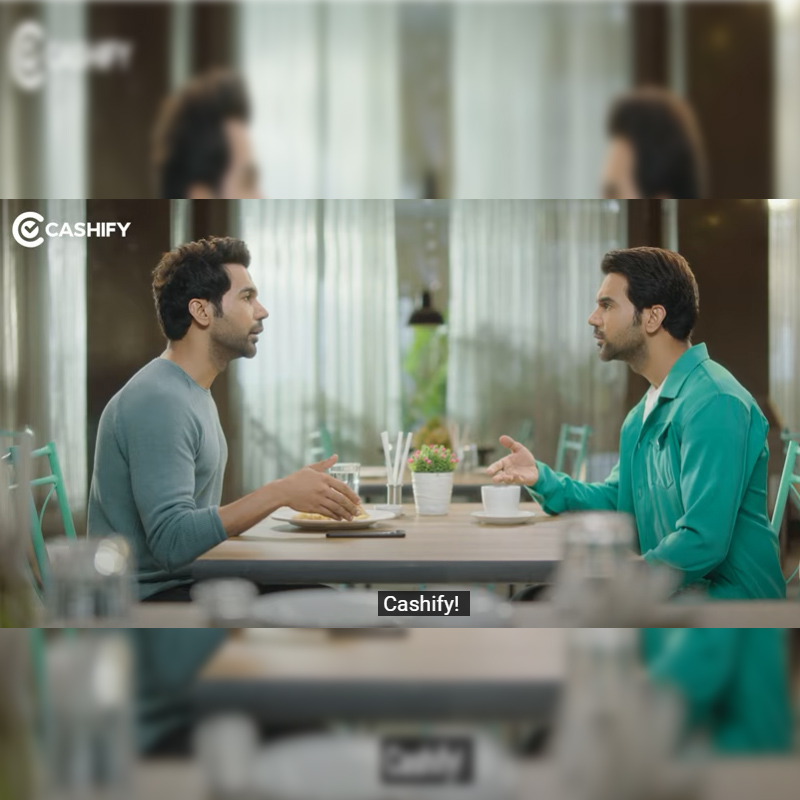
    Mumbai: Cashify has launched their first TVC with National Award winner Bollywood actor Rajkummar Rao as the brand ambassador.

    Conceptualised and executed by the in-house team & MotifGlobal, the 30-second creative uses humor, wit and clear messaging to draw awareness among the prospective and existing customers about the ease and convenience of selling old or used mobile phones using Cashify for instant cash and free home pick-up.

    The campaign comprises two films. The first film opens up with a conversation between two brothers, one being stuck in a real-life situation, struggling to recover the loan. That is when Cashify is stitched in the narrative as a solution highlighting various value propositions to the users including trust, convenience, maximum value, safe & hassle-free, free pickup, and instant payment.

    In the second ad, the protagonist is asking the audience if they are planning to buy a new phone and what they will do with their old phone. We all have that temptation of buying a new smartphone. And selling the old phone to help fund the new purchase is always a great option. But the question is how to get the best resale value for your phone? The protagonist explains step-by-step how Cashify simplifies the process of managing your devices by helping you with price discovery, cash in hand, and other such features in a streamlined and efficient manner.

    The company had roped in Rajkummar Rao earlier this month as its first brand ambassador to promote its products and services across offline and online mediums. The company will run this campaign across Television, OOH, Radio and Social media channels for the upcoming months making it a 360-degree campaign.

    “As the country went into lockdown, the need to have a smartphone with internet connectivity and the supportability of apps became a necessity. Be it keeping up with jobs or education, digital became the new normal. People couldn’t make do without a gadget in hand. And for those who couldn’t walk into a showroom and grab a new smartphone, refurbished devices came as a sigh of relief,” said Cashify, head-content strategy, Puneet Arora. “With this campaign, we are trying to reiterate how Cashify makes selling or buying phones hassle-free. Rajkumar as a brand ambassador is a strong face to our brand philosophy. We are looking forward to a multi-year engagement with him.”

  • Snapdeal bats for southern markets with new digital campaign

    Snapdeal bats for southern markets with new digital campaign

    Mumbai: E-commerce platform Snapdeal has announced its brand campaign called “Brand Waali Quality, Bazaar Waali Deal” in southern markets, including Karnataka, Andhra Pradesh, Telangana, Tamil Nadu, and Kerala. The campaign targets savvy, value-conscious buyers while communicating the e-tailer’s unique value proposition for high utility items, including fashion, accessories, homeware, and more.

    The campaign takes a lighthearted dig at the burden users feel about desiring a “branded” lifestyle. Moving the humorous narrative forward, it showcases how the users are liberated from this burden when they discover the depth of high-quality, affordable selection available on Snapdeal. The campaign comes to life through a series of videos in Kannada, Telugu, and Tamil and will be live across all social media platforms like YouTube, Facebook, Instagram, Twitter, and OTT entertainment networks like Hotstar and MX Player.

    However, taking a unique approach in the Malayalam speaking market, Snapdeal will run the campaign with Youtube Creator Promotions and Facebook Branded Content Ads only and has partnered with 30+ creators/influencers like Kalidas Jayaram, Ahaana Krishna, and Shamees Kitchen to create 100+ content pieces that will reach out to relevant audiences in Kerala & other southern states.

    So far, many people believe that online shopping cannot match their experience of local shopping, which caters to their choices and sensibilities and assures them the comfort of buying from known places. While value retail has traditionally thrived in India’s bazaars and in more recent times through modern format value retailers, an online equivalent of the same was missing.

    Speaking on the launch of the campaign, Snapdeal brand marketing director Soumyadip Chatterjee said, “With Snapdeal’s Brand Waali Quality Bazaar Waali Deal, we are breaking the myth that only expensive & branded products offer good quality. It also highlights our positioning as a leading value e-commerce platform. We also want to create awareness among people that good quality doesn’t have to cost extra, and they can now find many suitable options and choices online from the comfort of their homes.”

    “Tamil Nadu/Karnataka/Kerala/Andhra Pradesh and Telangana are a significant customer base for Snapdeal, and the scope & potential to increase our reach in these markets is immense,” he added.

    Earlier this year, Snapdeal had launched its Brand Waali Quality, Bazaar Waali Deal, for its Hindi speaking market with a series of 10 videos starring  Bollywood actors Riteish Deshmukh and Genelia Deshmukh.

  • Ed-tech, OTT platforms bring about 30% of our revenue: GoPaisa’s Ankita Jain

    Ed-tech, OTT platforms bring about 30% of our revenue: GoPaisa’s Ankita Jain

    One of the early players in the cashback and rewards category functioning within the e-commerce space in India, product and offer aggregator platform GoPaisa.com was co-founded by the husband-wife duo of Aman Jain and Ankita Jain in 2012. The bootstrapped start-up has come a long way, with the platform currently recording more than three million user interactions daily. For online retailers, the platform acts as a massive ground for the promotion of their products and related deals. With an association of over 1,000 brands across categories, GoPaisa.com has already distributed over Rs 50 crore plus as cashback over the years.

    Having co-founded GoPaisa at the young age of 23, Jain was awarded the tag of the Youngest Female Entrepreneur, in addition to bagging the ‘Unconventional Women entrepreneur of the Year’ award for her fresh marketing perspectives and take on traditional norms of media as CMO. The brains behind the brand’s popular ‘Don’t be a Kaddu’ TV campaign that emphasised its core philosophy of “Why wait for discounts when you can get Cashback every time you shop”, Jain has always sought to go beyond demographics in defining and engaging consumers, in context with the brand proposition. The app already flaunts a portfolio of reputed brands including Amazon, Flipkart, Myntra, Ajio, OnePlus, mamaearth, Oneplus, 1mg, Norton, etc., and is present across key categories like BFSI, Fashion, Medicines, Grocery, Personal care, travel, digital products. Her ultimate dream is to make GoPaisa synonymous with ‘shopping’.

    ‘Bridging the gap between a solution and a seeker’ is a concept that always intrigued Jain. Expanding further on this premise, the scope for a more user-friendly platform that also enables extra income for users was identified. And thereof was born the couple’s new baby- the deal-sharing platform, Earnly. The latest entrant in the E-commerce space aims to eliminate all the technical challenges of affiliate marketing, by introducing an easy-to-use platform tailored to users who want to earn extra money by sharing curated online retailer deals.

    IndianTelevision’s Anupama Sajeet had an in-depth chat with GoPaisa CMO & cofounder Ankita Jain about the growth of GoPaisa during the pandemic, the company’s new platform, Earnly, and what it plans to achieve through micro-influencer marketing.

    Edited excerpts…

    On the GoPaisa business model

    We started back in 2012 when e-commerce was at a nascent stage. We had a tough task explaining our business model when we approached brands, for they would demand to know ‘what is it that our marketing agencies cannot do, that you can’. It is all about performance marketing- we only charge for sales, as we realise that at the end of the day it’s the conversion that matters. It’s not about the number of clicks or traffic, for these are fictitious by nature, and until and unless it leads to conversion it is of no use.

    Eventually, it became easier with big brands coming onboard- first was Snapdeal then we had Flipkart and Amazon. We work on a ‘cost per converted unit’ basis with the brands, which could differ from brand to brand. For some brands, the converted unit could mean the actual sales transaction. For some others, the premium paid or a credit card dispatched could be the converted unit, instead of sales.

    On the impact of the pandemic on consumer behaviour

    Our total traffic has gone up in the aftermath of the pandemic. Another major difference that I noted during this phase is the trend of adoption of new brands, unlike pre-pandemic, where people were hesitant and more comfortable with their ‘safe’ purchases from known brands like Parachute or Dove. The pandemic has changed that. Especially in tier-3, tier-4 markets, consumer behaviour has changed drastically. They have come online and are open to experimenting – ready to try new products from relatively newer brands like, say, a mamaearth’s onion hair oil or a beard cream from Beardo, which previously did not have penetration in these markets. The learning curve of the customer has been phenomenal and the entire gamut of D2C brands post-pandemic is the result of this.

    Since we work with all these brands, we completely know where the trend is now shifting. We closed the financial year with Rs 15 crore revenue. We are growing 15-20 per cent month-on-month. So based on sheer numbers we have performed quite well in the last year and a half.

    Also, there is this whole new category of products that has sprouted during the pandemic- digital products. By that, I mean the ed-tech platforms, OTT platforms, which comprise 30 per cent of our revenue. Right now our top five categories would be medicines, digital products, electronics, and furniture.

    On the marketing & advertising media mix adopted by the digital-centric brand

    Influencer content marketing has always been a major part of the Gopaisa marketing plan, along with the traditional digital advertising through Google, Facebook, etc. We did a small trial campaign on TV and then we went ahead with a marketing split of 50-50 between TV & digital mediums. Initially, we did TV advertising for three years, mostly during the festive season, so that we are assured of ROI on it. I wouldn’t say the ROI that we got on TV was bad. That’s also the reason why we plan to get the TV back in our marketing mix this quarter itself. But print and radio not so much.

    On the platform’s consumer demographics

    Our audience age group usually ranges from 18 to 34 years, with the core being from 24 to 34 years. Till last year 60 per cent of our consumers were from metros and 40 per cent were from non-metro cities. However, now the skew is towards non-metro. This is more so after we initiated regional marketing assignments, where we tied up with local micro-influencers from different regions and different languages like Kannada, Tamil, Telugu, Gujarati, Marathi for influencer marketing. That’s when we began seeing increasing returns from the tier 3, tier 4 towns.

    On influencer marketing & the idea behind Earnly

    As a policy, we did not approach the big influencers, instead, we tried the local influencers with a limited following. These influencers had high relatability and also had the tracking factor of their audience. We saw that the reach of these micro-influencers was phenomenal. But still, they did not make money. Because the branding deals only went to the top five per cent, and brands do not grant marketing budgets to micro-influencers.

    So how can they make money? And that is how we arrived at the idea of Earnly. With this new platform, they can actually commercialise their marketing efforts. And they rightfully ought to, for they make good sales through their video promotions of deals etc. When people see individuals like themselves, from a similar stratum of society or having a similar mindset, they buy due to the relatability aspect. Hence, we want to open up our entire gamut of 1,500 brands to these kinds of influencers with Earnly.

    On the USP of Gopaisa & Earnly platforms

    While competition has always been there in this space, our USP has been to work from an analytics angle. With advanced analytical tools, advertisers now have the freedom to pay for achieved results. We also understand the fact that we cannot be bombarding the customer with all 1,500 odd brands. So, for us to understand our customer is very important. Hence, we work a lot on our data analytics, which helps us to give the right offer to the customer at the right time. For that, we capture all the footprints that he/ she makes while or before making a transaction. So, ours is a very analytics-driven approach. And that is why our customer loyalty is high. Gopaisa has amassed 3.5 million subscribers as of today and with Earnly, we plan to cross 30,000 to 40,000 users by the end of this quarter.

    On the challenges ahead for the new e-commerce platform

    For three months, Earnly was in a Beta stage and we have already onboarded a thousand plus influencers to the platform, so the response has been really good. Right now, our main challenge is how fast we can spread the word. We have some campaigns going live on Earnly with big brands going on right now, and we are doing a lot of barter deals, where we can get the micro influencers’ costs for the product covered. We have negotiated with the brands such that the entire product cost, and commission- in cases when sales happen- is paid for by the brand so that there are zero investment charges for the influencer.

    It is said that 21 days is what it takes to build a habit. So in terms of consumer behaviour shift to shopping online- habit formation has happened. Because people are just too used to it plus the advantages of the price and the convenience of not having to step out. More so, one’s everyday routine requirements- it has shifted from offline to online, which is a major shift in consumer behaviour and which is here to stay I think.


  • “Leaked WhatsApp chat” gives a sneak-peek into Zomato’s birthday celebrations

    “Leaked WhatsApp chat” gives a sneak-peek into Zomato’s birthday celebrations

    MUMBAI: Known for its witty marketing campaigns, the food delivery app Zomato has once again sent social media into a tizzy, choosing an innovative way to give a sneak peek into the company’s birthday month celebrations.

    The Gurgaon-based food-delivery company turns 13 this month and has made big plans to celebrate its anniversary on 10 July. As part of its marketing outreach, the brand shared a screenshot of a purported “leaked WhatsApp chat”, that reveals conversations between its CEO and various departments, wherein they discuss their ideas to celebrate Zomato’s Birthday Month.

    The chat is a satirical take on the brainstorming sessions between the finance, marketing, and other departments with the company’s boss. The screenshot shared by Zomato shows the CEO initiating the discussion around the celebration with inputs from various teams. It depicts quite simply and hilariously how each department suggests a plan which doesn’t have a collateral effect on it, while also trying to thwart any suggestion which could potentially involve any risks for it or backfire on it later.

    While the marketing team merrily pitches a ‘ten-day holiday’ plan, the Boss puts in a timely reminder that it’s supposed to be a celebration ‘with the customers’. The growth team then generously comes up with a ‘BIG Discount’ idea to which the Finance team cautiously adds that it’ would be a good idea to have a discount ‘on the birthday’ only. But as the proposed discount gets bigger and gets extended to more number of days the finance team is no longer amused, till finally its unanimously decided to have an offer of “60 per cent OFF for the entire July ”. The chat ends with the finance team exiting the chat, declaring its disapproval.

    The screenshot of the quirky chat was shared by Zomato as a mailer to its customers as well as on the app’s social media handles across platforms. On LinkedIn, the post sparked a light-hearted banter between the company’s chief executive officer Deepinder Goyal, and its chief financial officer Akshant Goyal.

    This isn’t the first time that the Food delivery app has used this idea to draw users’ attention and start social media chatter. At the start of the year, Zomato had come up with a similar ‘leaked WhatsApp chat’ mailer, that ‘revealed’ conversations around ‘New year resolutions’ with the boss. The group chat, while fun to read, even managed to drive across the message that the delivery app is on point & prompt with its orders and deliveries.

    Now with its latest ‘leak’ revealing a “60 per cent discount”, the brand looks set to win more than just eyeballs for the month of July!

  • Swiggy COO Vivek Sunder moves on, CEO Majety to take charge

    Mumbai: After serving the company for three years, Swiggy’s chief operating officer (COO) Vivek Sunder has put in his papers at the company and will transition out by October-end.

    Swiggy’s chief executive officer (CEO) Sriharsha Majety told employees in an internal email on Wednesday that Sunder, who oversees its food delivery business, has decided to pursue interests outside of the company.

    Majety added that he will be overseeing the marketplace business directly. “We have been discussing this for a while now, and over the course of the past few weeks, have been planning the way forward as well,” he wrote.

    Sunder had joined the company in 2018 after spending close to two decades at FMCG major Procter & Gamble as its managing director. He had been responsible for scaling Swiggy’s key businesses, including food delivery, and its foray into grocery.

    “Vivek has played a very significant role in the growth story of Swiggy – as a brand, as a service, and as an organisation, since joining us three years ago. He played a pivotal role in expanding the geographical footprint of the marketplace business taking Swiggy beyond 500+ cities, and later rallied the organisation to drive a step-change in the unit economics of the marketplace business,” Majety added.

    This is the second big exit at Swiggy after co-founder and chief technology officer Rahul Jaimini exited to join Pesto Tech, last year.