Tag: E-commerce

  • BBC Worldwide launches Doctor Who online store in Australia

    BBC Worldwide launches Doctor Who online store in Australia

    MUMBAI: UK pubcaster the BBC‘s commercial arm BBC Worldwide has announced the arrival of its first dedicated Doctor Who e-commerce site in Australia with free delivery.

    Fans who want to mark the show‘s 50th anniversary with a keepsake or a gift can now get direct access to the latest and most popular products at the official BBC Worldwide Australia website.

    Over 400 clothing, merchandise, toys and DVD products from the world‘s longest running sci-fi series will be available to purchase.

    Other features of the site include: the ability to search products by Doctor as well as by price bracket; recommendations based on browsing; and the opportunity to sign up to a Doctor Who newsletter.

    A special Time Lord Express service is also offered for fans who can‘t wait to get their hands on their Doctor Who goodies.

    The e-commerce site follows the launch of the Doctor Who pop-up shop in Newtown, Sydney, which proved immensely popular, with fans lining up for over three hours for the opening day. The shop has been so successful that it closed after 25 days, due to so much of the product selling out. Now fans can find many of these products on the new online store.

    BBC Worldwide ANZ manager licensed consumer products Elie Mansour said, “The Doctor Who pop-up shop reinforced just how passionate our fans are and we‘re thrilled to be able to offer them the convenience of a dedicated Doctor Who e-commerce site, which will allow us to connect directly with our consumers.”

    BBC Worldwide ANZ has partnered with C8 Group for the fulfillment operations, customer service and, in collaboration with C8 Digital, designed and built the e-commerce website.

    C8 group director Laurie Macolino said, “We‘re excited to be partnering with the BBC to launch their first dedicated e-commerce website for Doctor Who. Offering free delivery to customers in Australia and the quickest delivery service we can, orders will be dispatched on the same day if placed before 1pm and customers have the option of upgrading to a Time Lord Express service.”


  • Rediff.com introduces new redesigned website

    Rediff.com introduces new redesigned website

    MUMBAI: Rediff.com has launched the new version of its website featuring a new and enhanced homepage sporting a tiled interface.

    The new Rediff homepage brings alive an assortment of content and services using the contemporary grid layout that is visually rich. Each unit of the grid features the latest information photographs and videos, giving it a more interactive and image-friendly appearance.

    Featuring thirty headlines, the new homepage offers a wide range of relevant news items from across sections like news and politics, business, movies, get ahead, cricket and sports.

    Additionally, its e-commerce platform gets a boost with a large footprint on the homepage to capitalise on the growing usage of e-commerce platforms throughout India.

    The new design is based on user feedback and provides a seamless experience on personal computers and laptops as well as touchscreen handheld devices like tablets and smartphones.

    Rediff.com chairman and CEO Ajit Balakrishnan said, “The Indian internet user base is quickly moving to consuming our services on various types of mobile devices, whether at home or on the go. As a result, this transition required us to take a fresh and innovative view of how our users are likely to interact with our portal. Our new tiled interface is a step towards making it easy for a rapidly growing segment of users who access our website from tablet like touchscreen devices.”

    “We have also redesigned the site in terms of providing users with the content and imagery they desire on our home page, while adding more e-commerce options, which have been in higher demand from this growing population. We believe, the steps we‘ve taken will enhance the overall user experience and over time, contribute to a growing Rediff user base and more widespread adoption of the Rediff brand,” Balakrishnan added.

  • Myntra acquires online fashion boutique Fitiquette

    Myntra acquires online fashion boutique Fitiquette

    MUMBAI: E-commerce portal Myntra has acquired San Francisco-based Fitiquette, a technology solutions company that aims at solving size and fit issues for online shoppers.

    Through this acquisition, Myntra aims to strengthen and expand its technology platform and drive transformational change in the online shopping space in India by providing world-class experience to its customers.

    Without revealing financial terms of the deal, Myntra said that the acquisition was part cash, part stock.

    This is Myntra‘s second acquisition in a short span of four months. It had acquired Sher Singh, a global private label online brand specialising in sports-inspired lifestyle apparel for men and women and its New York based parent company Exclusively.in in November last year.

    Myntra CEO and co-founder Mukesh Bansal said, “Myntra aims to create the most compelling Fashion Shopping experience for Indian consumers at par or better than global standards. Fitiquette has developed pioneering technology for solving the Fit/Size problem online. This acquisition will not only help us improve the experience significantly, but will also enhance our technology team with addition of top tech talent from Fitiquette.”

    The Fitiquette team will be joining Myntra with Andy heading Myntra‘s newly formed Innovation Labs in San Francisco.

    Fitiquette CEO and co-founder Andy Pandharikar said, “The Indian e-commerce industry is growing at breakneck speed and it is a great time to be a part of this journey. I am confident that Fitiquette‘s powerful technology will benefit Myntra‘s vision of providing world class solutions to online shoppers across the country.

  • Internet ad spend up 16% to $84.8 bn in 2011: GroupM study

    Internet ad spend up 16% to $84.8 bn in 2011: GroupM study

    MUMBAI: According to GroupM study, Internet advertising has seen a 16 per cent rise over the previous year reaching to $84.8 billion in 2011 and accounting for over 17 per cent of all global measured advertising expenditures.

    With maximum digital ad spend of $34.5 billion, North America leads the chart. Asia-Pacific with $24.8 billion and Western Europe with $21 billion are next in the list.

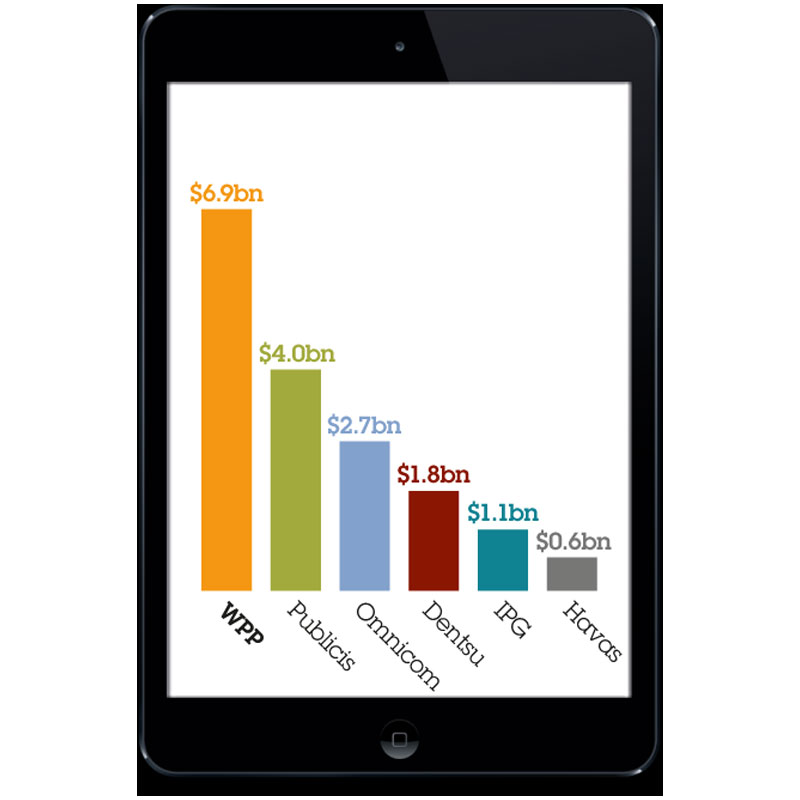
    The study titled ‘This Year, Next Year: Interaction 2012’ is GroupM‘s media and marketing forecasting series drawn from data supplied by parent company WPP‘s worldwide resources in advertising, public relations, market research, and specialist communications.

    GroupM forecasts digital ad spend to touch $98.2 billion globally this year. The figure represents almost 19 per cent of all measured advertising investment.

    In 2011, digital advertising spending hit $32.2 billion in the U.S. This represents a 22 per cent share of the overall domestic market and a 12 per cent increase over the previous year. This year those figures are expected to reach $35.4 billion for a 23 per cent share and a 10 per cent increase over 2011.

    New York-based GroupM Interaction global CEO Rob Norman said, “At the risk of an ‘oh really?‘ response, it‘s possible to argue that for the first time since these reports began that the last year has been one of evolution rather than revolution. It seems that less is brand new and that a combination of scale of usage of an increasingly social and mobile web, the penetration of devices supported by it, and the continued atomization of audiences and content, in both their creation and distribution combine to tell the story of the year.”

    Norman added, “In 2007 we speculated about a world that would be truly social, searchable, mobile, addressable and interactive and illuminated by data that could be collected and applied across all marketing functions; in 2012 that is no longer a matter for conjecture.”

    The 20-country report also details ad investment in paid search and Internet display as well as providing data on broadband penetration, media time spent online and e-commerce per user data.

    Digital advertising‘s share of total ad investment rose from 4.4 per cent worldwide in 2004 to a projected 18.8 per cent in 2012. The average percentage of consumers‘ ‘media time’ spent online increased from 11 per cent in 2006 to 19 per cent in 2011. The absolute number of broadband homes worldwide has nearly tripled in this period to reach 500 million, and the typical country has seen broadband penetration grow by half. Aside from general monetary inflation, ad investment growth has two main vectors: aggregate audience hours, and advertising intensity per individual. Average online advertising investment per online user doubled between 2006 and 2011. For 2011, Norway had the highest per-capita online ad investment in the study‘s sample – $200.

    Additionally, e-commerce accounts for about 5 per cent of global retail sales today, with instant-on devices, secure and simple payment, vouchering, and the optimisation of retail for mobile serving as catalysts for growth. Consumer tablet penetration reached double digits in only three of the survey‘s countries in 2011: the US, Finland and South Korea. However, take-up is expected to be rapid and nine countries should reach double digit penetration in 2012.

  • Music industry seeks protection of IPR, enforcement of laws

     
    Music industry seeks protection of IPR, enforcement of laws
     

    MUMBAI: Riding high on technological changes, the music industry and its affiliates in India are not seeking much intervention from the finance minister this time round, except for better enforcement of laws.

    The Indian Music Industry (IMI), the body that looks after the interests of most of the music companies in the country, says that there is not much it expects from the Union Budget. But the Phonographic Performances Limited (PPL), the licencing arm of the IMI, is looking at some concrete intervention.

    PPL CEO Vipul Pradhan believes there should be a provision in the budget to reduce the VAT on cassettes. He says, “We are hoping the government reduces the VAT on cassettes, which is 12 per cent currently. The VAT applicable on CDs is four per cent which makes it more feasible for the people to opt for CDs instead of the audio cassettes. Reducing the VAT on cassettes also at four per cent will help in their sales.”

    “Also, the government has to undertake some kind of initiative for protection of intellectual property and rights. The growth of a country is determined by and large by the sale of computer and entertainment software and piracy is killing the industry. So, it is necessary to form a separate body to protect the intellectual property and also funding is required to educate the common masses about the ill effects of piracy,” adds Pradhan.

    The governing body for the music industry down south, Simca, too is not looking for drastic changes, but a stricter adherence to prevailing laws. Simca general secretary SL Saha says, “There are no budgetary or fiscal requirements that I expect in the budget but proper enforcement of the prevailing acts to promote the industry.”

    PDM Entertainment COO Aman Anand, who recently organised the Sunburn Music Festival in Goa, wants a lowering of entertainment tax in the budget.

    Mobile content company DNS Networks is looking at tax benefits for producers and film making companies, to enable good production values in films, which in turn help mobile content get marketed profitably throughout the world. “Mobile content based on movies, including music, will get an indirect but big boost if filmmaking corporate houses can avail of these tax benefits,” says DNA Networks’ MD Devashish Mishra.

    The Internet and Mobile Association of India’s wishlist for the Union Budget recommends that the nascent e-commerce industry in the country be encouraged by the removal of service tax on online internet transactions done through credit cards, debit cards and net banking transactions, a move that might help the online music stores that have been started by some music companies and content aggregators in the country.

    The IAMAI has also recommended that the state governments be directed not to impose entertainment tax on internet and broadband services.

    People Infocom CEO Manoj Dawane says, “The Indian Mobile VAS Industry is on a growth path, and the times ahead promise opportunities that will need to be capitalized on and avenues that will have to be chartered. Given the existing scenario, we hope for a Budget that provides our space the support to make the most of the opportunities presented.

    “Telecom and media are two of the most important interrelated industries for the MVAS space. Considering both these sectors, we would look forward to the implementation of a single levy system for the telecom sector making telecom services more affordable. We would also look forward to some relief in the Fringe Benefit Tax (FBT).”

    “It would be favorable for service tax regulations to be kept simple, which will result in increased compliance and greater tax collections, along with making Tax filings and administration simpler and taxpayer friendly,” adds Dawane.