Tag: E-commerce

  • OLX and Flipkart ink unique marketing tie-up

    OLX and Flipkart ink unique marketing tie-up

    MUMBAI: With more and more people accessing the internet through smartphones and tablets, the internet user base has grown to be around 243 million.  


    This has led to an exciting and booming e-commerce sector in the country. Last week, Flipkart announced that it had raised fresh capital of $1 billion; soon afterwards Amazon too announced that it will invest another $2 billion in India.


    And keeping the momentum going, OLX.in and Flipkart have tied-up for a unique marketing campaign that will leverage each other’s strengths to offer combined benefits of their platforms to the fast growing internet user base.


    OLX is marketplace for used goods, and Flipkart is a destination for online shopping, making this alliance between the two online brands an unprecedented one. The joint initiative by the two e-commerce leaders has been launched to further increase the awareness levels and accelerate the adoption of their online platforms for buying and selling. The campaign will run for one month, and will include several verticals within the electronics categories.


    OLX CEO Amarjit Batra said, “The idea for this tie-up was conceived keeping in mind the strong and independent position of OLX and Flipkart in their respective space. The rationale for the number one online classifieds platform and the leading e-commerce platform coming together for a marketing campaign is a seamless one. This tie-up will enhance consumer experience on OLX and Flipkart by giving users a more holistic online shopping experience in which they can sell their used goods on OLX before buying new products on Flipkart.”


    Flipkart sr VP marketing Ravi Vora added, “At Flipkart, our constant endeavor has been to make online shopping convenient and attractive to the masses in the country. With this partnership with OLX, we will be able to provide an end-to-end solution to customers especially in the electronics categories where selling old products is an integral part of the buying process.”

  • FirstCry.com to expand offline footprint

    FirstCry.com to expand offline footprint

    MUMBAI: The last couple of months have been an exciting one for the blooming e-commerce sector. As more and more investors fund the e-commerce sites, the sector’s purple patch is here to stay for a long time.


    However, the niche e-commerce sector, FirstCry.com, which was launched in 2010 to solve Indian parents’ problem of not having access to the best brands and products for their kids, is planning to take the offline route as well.


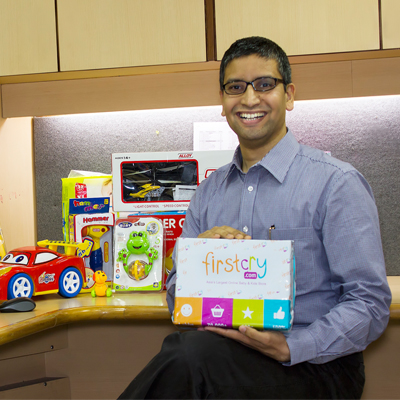
    The company feels that e-commerce’s future is looking promising in the country as more and more people come online and continues to be a big focus for us. “But what we see as a larger vision is to build an ecosystem of solutions for parents. Since, parents exhibit hybrid behaviour of shopping online and offline, we decided right at our inception that it was important to have offline stores as well. Today with a footprint in over 20 states with more than 70 stores, we are in a great position to offer the right variety of brands and products to parents,” says Firstcry.com founder and CEO Supam Maheshwari.


    With more than 95 per cent sales happening offline, there is still a large part of baby products market to be tapped, it has a vision of reaching 400 stores offline by December 2017. Currently, FirstCry stores have their presence in many Tier I, II and III cities in 45 cities.


    However, by entering into the untapped markets, where offline presence of baby products is low, it is highly optimistic about the company’s growth.


    On the marketing front, one of the key aspects of its strategy is to keep online and offline integrated. A parent who shops with FirstCry.com should be able to get the same experience online and offline. “We have a strong e-mailing program through which we are able to send personalised mailers making parents aware of store openings, promotions etc. In addition, we have introduced a highly innovative concept of a 32 inch digital Kiosk installed in each store – since a store is limited by physical space, we have used the Kiosk to allow parents to browse the large online variety and order what they like and the order will be delivered at the store. We also have a FirstCry Box program wherein we reach over 60,000 new parents each month with a complimentary gift box. Through this box, we make new parents aware of stores in their area and also offer a gift coupon which can be redeemed online or offline. Through a lot of such initiatives, we are able to ensure that we scale up our marketing plans with the highest ROI metrics,” says Maheshwari.


    Franchisee investment of about Rs 3,000 per square feet is required for setting up a store, which ranges anywhere from 1000 square feet to 2000 square feet. The stores act as experience centers, successfully tackling the touch-and-feel challenges faced in purchasing online.


    Overall, Firstcry keeps its model robust and scalable by controlling the franchisee’s investments, giving high return on investment and faster payback that has been instrumental in a break-even since inception. Firstcry.com along with its stakeholders looks forward to growing in terms of business and loyalty both.

  • Snapdeal.com looks at inorganic expansion

    Snapdeal.com looks at inorganic expansion

    MUMBAI: Snapdeal.com has appointed Abhishek Kumar as its corporate development head. Kumar comes with a vast experience in venture capital investments, strategic partnerships, business management and M&A in technology and media businesses.


    Kumar said, “I feel fortunate to be a part of the young, energetic and dynamic team at Snapdeal. The platform is a remarkable example of a successful home-grown e commerce brand in India. I am extremely thrilled and excited to be a part of this company and contribute to its development going forward.”


    At Snapdeal, he will be responsible for acquisitions, investments and deep partnerships that can lead to mergers for the e-commerce giant. He will look at all avenues of inorganic expansion as Snapdeal moves towards the next phase on the back of heady organic growth over the last three years.


    “This is a very exciting phase for the e-commerce industry and we are seeing tremendous opportunities of discontinuous growth in the market. We recognise that no company can do everything well by itself, and hence we would look forward to working closely with the burgeoning ecosystem of entrepreneurs and venture capitalists in India to build deep partnerships. Abhishek with his rich and diverse experience in venture capital and business management brings the necessary skills to take Snapdeal into newer orbits of success through strategic partnerships.” said Snapdeal co-founder Kunal Bahl.


    In his last assignment, Kumar was investments head at Palaash Ventures where he led the investment team in deploying early stage capital in consumer internet, SaaS, Ad-tech, hardware and e-commerce enablers. He was earlier with TV18 Broadcast, leading the new ventures function for the media group.

  • Packaging is the ‘silent salesman’: Loe Limpens

    Packaging is the ‘silent salesman’: Loe Limpens

    MUMBAI: In the world where the ‘little black dress’ has created enough waves, Yellow Dress Retail (YDR) is trying to leave a mark.


    YDR is an agency specialised in retail design and communication, founded in 2009 by Loe Limpens, Marcel Gort and Esther Koetsier and is part of the Dutch brand consultancy Brand Dialogue which forayed into the Indian market in 2013.


    The name does raise eyebrows but the story behind the selection of the name is an interesting one. The first time the founders visited India, they met a lady with a very impressive ‘live’ story, she couldn’t speak but only communicate by sign language and she was dressed in a vibrant yellow dress. Both of them were so impressed that they decided that if they ever start an agency it will be called Yellow Dress.


    It recently made news for creating Flipkart’s latest DigiFlip Pro. The tablet is the first from the e-commerce portal’s private label stable and has been an instant hit especially for its innovative branding and packaging which has received great reviews.


    The dual-SIM tablet, DigiFlip Pro XT712, with 7 inch touchscreen, 5 MP primary camera, Android v4.2.2 OS and 1.3 GHz processor is available only on the e-commerce platform at an affordable rate of Rs 9,999. DigiFlip Pro comes backed with additional benefits, where buyers will get shopping benefits worth thousands by shopping from the Flipkart app on the tablet.


    The tablet is in response to the growing demand for quality devices at great prices. To add to its appeal, Yellow Dress Retail provided simple yet upmarket packaging for the product.


    The agency specializing in retail agency, which creates store design, in store communication, packaging design and interactive design, believes that packaging is ‘the silent salesman’ as it is the real point of contact with the customer. “With Flipkart’s DigiFlip Pro tablet, we at Yellow Dress Retail have engaged with this product for creation of logo, packaging design and boot animation,” says YDR partner and chief creative officer Loe Limpens.


    When asked if there is a need to have an agency specialised in retail design and communication, Limpens says, “The retail business has its own rules, speed, time to market, flexibility, specialism, etc. We felt there is room for an agency that specialises entirely on retail. And here we are.”


    Business is getting better for the agency which has successful examples to its credit. Developing overall concepts for the worldwide strategic brands of Metro Cash & Carry is one of them. However, it still feels that a lot of attention is needed.


    Understanding the Indian market wasn’t easy as well and it needed time, initially, to get to know the Indian market better and the challenge was to find the right people and to train them as retail designers.


    The retail design agency has been working for more than 20 years at leading retailers in Europe, which gives it a lot of insight in the day to day business of retailers, price levels, speed to market and focus in retail companies. “Our experience is a subtle mix of both International and Indian markets that helps us in relating with the issues from a local and global level,” highlights Limpens.


    Retail design and particularly private label is where the agency’s stronghold lies. He elaborates, “Private label development is our main focus currently, if you look at the share of private label in Europe which have around 50 per cent market share in 2025, the potential for the Indian market is enormous with a current share of 7 to 8 per cent.”


    In India, the consultancy started with just three people in its office in Chennai. It currently employs eight people in Chennai and also has an office in Mumbai through the Brand Dialogue association.


    Today, when the team meets its clients, most want the focus point to be on how to establish a good private brand assortment and how to secure the quality and production. In the near future, it thinks that sustainability will become immensely important for the industry.


    “We have had our share of good luck in India, so we can’t complain. It’s hard work but we are also on track with our objectives,” concludes Limpen.

  • Do celebs really push the online gamut?

    Do celebs really push the online gamut?

    MUMBAI: Everyone is talking about it. Everyone is on it as well. Online retailers have caught everyone’s fancy and if stats are to be believed then they are here to stay.


    The e-commerce industry has been growing at a rapid pace; 2013 saw the industry grow over 65 per cent which is currently estimated to be at $3.2 billion. As new competitors entered the space to encourage the shopaholic in all of us to click on the ‘buy now’ button and get parcel at the place of convenience, the competition has only grown manifold.


    To woo the ever-confused shopper who has too many options to choose from, thanks to new players entering the lucrative e-commerce market, the online retailers have to lure them with various offerings. Be it delivery in one day or exclusive brands on board, they have done it all to make sure customers come to them, time and again.


    Discounts are offered every now and then, and on special occasions like anniversary through various contests, customers are awarded shopping points and gifts. For instance, eBay India launched a Way Too Fab (WTF) campaign for its ninth birthday bash. As part of the celebration, it created a special page www.ebay.in/waytoofab that allowed any user who purchased products which valued more than Rs 500 on 12, 13 and 14 March 2014, to spin the Wheel of Magic which offered consumers an assured gift ranging from special coupons to mobile phones and tablets to name a few.   


    However, the latest mantra has been to launch eye-catching TVCs. Amazon India launched its first TVC during the most-sellable property on Indian television – Indian Premiere League (IPL). Having said that, who can forget the ads of Flipkart? The ads featuring children role-playing as adults went viral and soon many others followed. After a lull period, the war on the television screen has begun again as the new entrants want to leave their mark on people’s mind.


    Like Victoria Secret would be just another brand without its angels, similarly, each e-commerce platform is trying to be different than the other.  And for this, these portals have decided to attach popular faces to the brand. The hottest fad currently is popular Bollywood faces associating themselves with various e-retailers.


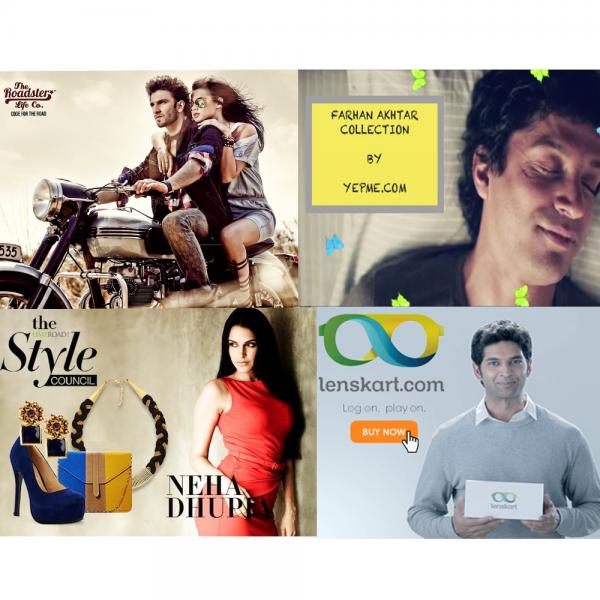
    Ranveer Singh, Lisa Haydon, Neha Dupia, Farhan Akhtar, Purab Kohli are just a few names associated with lifestyle e-retailers. When asked how does it help the platform, Myntra’s chief marketing officer Vikas Ahuja says, “By associating with celebrities, Myntra is making an effort to not just provide fashionable apparel and accessories but also be a thought leader in the latest style trends that are driving the fashion industry. Our association with celebrities such as Ranveer Singh for Roadster and Lisa Haydon for the Myntra brand has strengthened our focus on fashion, providing fans and customers an enthralling experience that goes beyond just shopping on our site.”


    LimeRoad, which caters to women’s sensibilities only, believes that though it has differentiated itself from other e-commerce players by moving away from a discount led offering, it did bring in Neha Dhupia on its management team. The reason behind it was that the team felt that her style could inspire a lot of women who shop on the site and those who make scrapbooks to express their style on LimeRoad. “Celebrities who reflect the brand’s promise help you get the right people to the site. They also bring in a lot of freshness and relevance to the context,” says CEO Suchi Mukherjee and adds, “Neha Dhupia is not only a pretty face but she epitomises the hard work, grit and dedication needed to make it big in life.”


    Others like YepMe, Lenskart etc too have celebs endorsing them. The rationale behind it is that most of them believe that celebrity associations help to create awareness, provide credibility and stature to the brand and rub-off of the celebrity’s personality and appeal onto the brand which strengthens the brand positioning / attributes further.


    Online apart, many companies have shopping on television ventures as well. However, these 24*7 channels which cater to mostly housewives don’t have celebs promoting them.   “Celebrity endorsement is beneficial for instant recall of the brand. When customers watch their favourite stars endorsing the brand or promoting a clothesline it does garner some visibility and helps draw eyeballs. But in the long run it’s all about the products and propositions that any brand has to offer,” believes HomeShop18 CMO Vikrant Khanna.


    The channel through its offerings, customer relationship management, value proposition, three-screen presence on TV-Web-Mobile and technology, wants to stand apart from the competition.


    HomeShop18 recently announced its TVC around the mantra “Shopping Makes Me Happy,” which had (talking) cats connecting with consumers to establish an emotional connect appealing to their desire for shopping. Similarly, Star CJ Alive, which parted ways with Star Network, introduced new mascot ‘Shoppie’ which works at bridging the gap between the current name and until the new name is finalised.


    TV has the highest media reach so irrespective of the industry, it’s still one of the most effective advertising medium. However, with changing times most of these brands have a 360 degree approach. New mediums like digital and social media have become an essential part of business today.


    Companies are taking extra efforts in the digital space to supplement the tools social media offers. Facebook, Twitter, YouTube channel, Instagram etc. are deployed to engage with peers and reach out to existing and potential customers across the digital platform.


    One of the best examples of luring youngsters today who are perpetually online is Myntra’s latest campaign -‘Live for Likes.’ The platform so far has also conducted other campaigns, both online and offline like the survey of India’s Most Fashionable Politician, Indian Fashion League, the Online Treasure Hunt, Online shopping fest, celebrity engagement through Fashion Icon of the Month among others. All this to encourage shoppers to be a part of its brand story.


    Online analysts believe that whatever be the case – online dominance or celeb in hand – a brand needs to be very clear of what it wants to accomplish. “There is a string of young actors who are willing to come on board. However, partnering with a right celeb is also very important. He/she should be able to generate interest among visitors on the site which should invert into sales to be successful,” says an analyst.


    A brand expert adds that these celebrities come at a certain price, so have to be used wisely. 


    Celebs might help generate initial traffic, but loyalty is dependent on product offerings, propositions, value, after-sales service, ease of use of the portal, hassle free delivery and return policies and lastly an overall virtual shopping experience. “If these important things are in place, shoppers will return to explore more, irrespective of the portal being endorsed by a celebrity or not,” concludes the expert.

  • E-commerce gives thumbs up to Budget 2014

    E-commerce gives thumbs up to Budget 2014

    MUMBAI: The e-commerce sector is a happy lot. Finance Minister Arun Jaitley in his maiden budget announced that manufacturing units will be allowed to sell their products through retail including e-commerce platforms without any additional approval.


    This paves path for the foreign direct investment (FDI) in the manufacturing sector.


    Foreign consumer brands with manufacturing units in the country have been piggybacking on the online retailers’ potential growth which is currently estimated to be at $3.2 billion.


    PwC India technology leader Sandeep Ladda says, “Liberalisation of FDI in e-commerce sector will provide much-needed certainty to foreign players and to a sector that has the promise to provide increased commerce and generate employment in the country. This will also provide boost to the sector and create healthy competition so as to benefit all the constituents in the ecosystem – consumers, government, e-commerce players, and retailers in general.”


    While the Department of Industrial Policy & Promotion (DIPP) is keen on opening e-commerce to FDI, as was made abundantly clear in the meeting with industry stakeholders, they were also clear that they needed to understand how FDI would help boost manufacturing.


    American Swan CEO and director Anurag Rajpal says, “A more robust online retail sector will spur manufacturing and help an economic revival. India currently does not allow global online retailers from selling goods directly to customers but allows them to own 100 per cent of a marketplace business, where third-party suppliers can use their platform. Both Amazon and eBay use such a platform to operate in the country.”


    Amazon India, which recently launched its first TVC in the country during IPL 7 and promises delivery on the same day, feels that FM’s announcement is a positive statement of intent for the e-commerce industry. “It recognises the role of e-commerce companies in the growth of manufacturing sector. Following this statement, we are hopeful of a more positive and liberalised policy on e-commerce in the near future aimed to help grow the manufacturing industry,” says a spokesperson from the e-retailer.


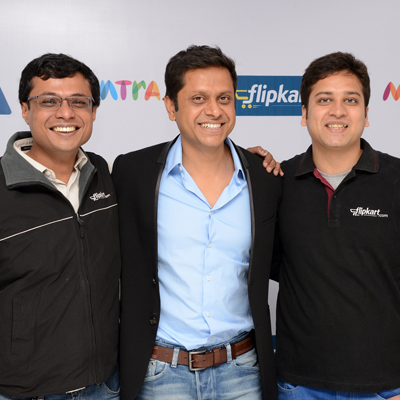
    One of the biggest players of this space in the country, Flipkart co-founder and CEO Sachin Bansal thinks this is a forward looking budget and hopes to see results over time. “The focus on giving a fillip to infrastructure and skill development is very encouraging. The fact that we could see a GST roll out by the end of the year is very positive and will augur well for all sectors. The attention to facilitating entrepreneurship and the allocation towards the National Rural Internet and Technology Mission is an extremely positive move, as collectively they provide the opportunity for both individuals as well as businesses to go digital,” he opines.


    Brands feel that the move will give a push to the manufacturing sector, and will also encourage foreign companies to set up manufacturing facilities in India.


    Currently, India allows wholly-owned overseas subsidiaries in single-brand retailers that sell products under a single label through physical stores such as Zara, Panasonic or Marks & Spencer. However, the catch is that they have to get clearance from Foreign Investment Promotion Board (FIPB) and produce 30 per cent of their products within the country.


    Moreover, other announcements in the budget too signal a positive way for the online sector. More internet penetration and connection in the rural areas, increase in logistics because of increase in railway freight and decrease in excise duties on shoes, apparel etc bring in good news for the portals.


    Jabong’s co-founder & MD Praveen Sinha feels that though it is still unclear that how increase in service tax on online advertising will impact the sector, one will have to wait and watch how these announcements will be implemented. 

  • FoodFood launches e-commerce section

    FoodFood launches e-commerce section

    MUMBAI: FoodFood brings to its patrons a value-added service. The channel launched its e-commerce section on 1 June in its website – www.foodfood.com. It focuses on brining a variety of selective quality products from kitchen appliances, kitchen accessories, lifestyle products all shown on television shows


    The service will facilitate safe transactions on both card payments and cash on delivery, thus integrating with leading payment providers in the country. The site offers customers the best shopping and buying experience. According to the channel, the products are of outstanding quality, value, good service and guarantee. Every product that sells will give complete satisfaction and money’s worth.  Service will be provided in India only.

  • Flipkart and Myntra join hands

    Flipkart and Myntra join hands

    MUMBAI: The e-commerce sector saw a purple patch last year and continues to do so.


    Recently, LimeRoad raised $15 million series B funding; Jabong too closed a multi-hundred million dollar investment deal and Amazon India entered the fashion and lifestyle category.


    Keeping up with the competition is surely going to be tough. Therefore, to bring high quality and affordable lifestyle products to the customers, Flipkart has joined hands with Myntra, an e-commerce platform for fashion and lifestyle products. Bangalore-based Myntra has partnered with more than 650 leading fashion and lifestyle brands in the country.


    Sachin Bansal and Binny Bansal, the co-founders of Flipkart, and Myntra’s founders, Mukesh Bansal and Ashutosh Lawania, are excited to work with each other. In this new association, along with being the CEO of Myntra, Mukesh Bansal will also head the fashion business for Flipkart and join the board.


    “We believe that the future of fashion in India is e-commerce. We have known Mukesh for a long time and are delighted to partner with him. Myntra has a strong team with excellent domain knowledge. They also have the best relationships with lifestyle brands. This partnership will strengthen both our positions in the fashion space. We will continue to work as independent entities and grow together as leaders in the Indian fashion and lifestyle industry,” said Flipkart co-founder Sachin Bansal and Binny Bansal jointly through a statement.


    “We are excited to partner with Flipkart, the biggest e-commerce platform in India. Sachin, Binny and their team have built a pioneering e-commerce platform on a foundation of strong technology and customer centricity. Flipkart is the most powerful e-commerce brand in India and has a very ambitious agenda to build the next generation of retail in India. Leveraging mutual strengths, we will build Myntra into India’s leading fashion powerhouse and create many original fashion brands,” said Myntra co-founder and CEO Mukesh Bansal.


    This partnership will support Flipkart’s and Myntra’s shared mission to bring high quality and affordable fashion and lifestyle products to each and every Indian consumer. Post this announcement, Flipkart and Myntra will continue to work as independent entities and grow together as leaders in the Indian e-commerce industry.

  • After raising funds, LimeRoad bets high on “intelligent” marketing

    After raising funds, LimeRoad bets high on “intelligent” marketing

    MUMBAI: India’s online retail market has grown multi-fold in the past couple of years, courtesy the growing use of the internet and smart phones. According to a Crisil report, e-retailers have earned revenues close to Rs 139 billion ($2.24 billion) in the financial year ended 31 March, 2013.


    However, to succeed or for that matter survive in an exceedingly cut-throat online environment, these companies have to time and again generate money through equity funding or merge with other online players.


    One such player is LimeRoad, an online social discovery platform for women, which has raised a second round of funding of $15 million, led by Tiger Global, with participation from existing investors Lightspeed Venture Partners and Matrix Partners India. The company had in 2012 raised $5 million through its first round of funding, with participation from Lightspeed Venture Partners and Matrix Partners India.


    LimeRoad’s advisory team helped it build a strong proposition to get the right kind of investment partners for its business. The team comprises Ahti Henla who is the founding architect of Skype and Michael Swaiij, who is credited with the launch of e-bay and AOL in Europe.


    So what is on the agenda now? The website will be investing a large part of the funds in technology to further build the user interface on the platform and on mobile. “We have a great team on-board and we are looking to build it further with the help of these funds. So far, we have kept marketing flat, but we are now looking to increase spends on some intelligent marketing,” says co-founder & CEO Suchi Mukherjee.


    The blueprint of the marketing is a work in progress but the focus will largely be on social networking websites. “Currently, our primary focus will be on building our mobile app further. We intend to make the LimeRoad experience for women nothing short of addictive. Our plan is to win over women mobile users across the country with our mobile app that is light, super-fast and extremely easy to use,” adds Mukherjee.


    What made Lightspeed Venture Partners invest in the e-commerce site for a second time? Says Lightspeed Advisory Services India MD Bejul Somaia, “We continue to invest in what we believe is a truly exceptional team that consistently refuses to take short-cuts and instead, focuses on finding scaleable, long-term solutions to difficult problems.  The LimeRoad team has already disproved many accepted notions in the world of Indian online commerce. For example that it is not possible to grow without offering heavy discounts or that Indian users aren’t savvy enough to embrace deep social activities like scrapbooking, curating collections or sharing.”


    However, there are experts who feel that it is not easy to raise money. Seedfunds’s founding partner Mahesh Murthy says, “It is getting increasingly difficult for e-retailers to raise money these days and the only ones who seem to manage it these days are those doing second rounds. This is not because of a paucity of new retailers – but because of the belief – not necessarily true – that it takes a lot of money to build a successful retail brand. Conversely, the raise of a big round is no guarantee that your brand will survive – just ask those who have been purged or merged into nothingness.”


    With an already overcrowded online retail market, how does LimeRoad plan to break away from the clutter?


    LimeRoad.com believes that unlike the rest of the players which are still using conventional methods of ecommerce, LimeRoad uses Web 2.0 elements. Through these, it has engaged with consumers with its proprietary Scrapbook feature. “We measure our success basis how well we engage our users and today, we have a community of 5000 + Scrapbookers who have curated more than 75,000 looks and our most avid Scrapbookers create between 5-7 looks every week,” says Mukherjee.


    About the TG, Mukherjee feels it is no longer about appeal but more about ease and convenience. “Since youngsters are more socially active, they like to discover new websites, new products and share with their friends. So, they are the ideal shoppers for e-commerce sites. However, at LimeRoad, we see an equal traction from shoppers aged 18-25 years and in the 30+ category, as our large collection of unique and exclusive products appeal to a more discerning, mature audience as well,” he says.


    The site isn’t scared of competition either and is aware that with too much competition, many try to woo and acquire customers through discounts. “Our approach is different, we believe in acquiring customers and creating brand loyalists through engagement. If you simply put up products on discounts, the customer loyalty is towards discounts,” states Mukherjee.


    The lifestyle online retailer promises its customers products from the deepest corners of the country, and to fulfill this, promise, it has 60 per cent vendors who retail exclusively on the platform. To give you an example, DAMA, which is Dastkar Andhra Marketing Association, closely engages with the weavers through handloom co-operatives. The fabrics and garments are hand woven and flawlessly handcrafted from natural fibres and dyes. They retail exclusively with LimeRoad.com and are not available anywhere else online.


    “Also, our vendors update stocks every 15 days, which fulfils our promise of enabling discovery and freshness,” says Mukherjee.


    On the e-retailer business model, Murthy opines, “LimeRoad follows the Pinterest-type model, with a mobile app front end. While UI will go some way -and is easy to replicate, it is your mastery over margins, unique designs and supply chain that will help you win in the long run. Executing on those fronts will be LimeRoad’s key challenge.”


    The e-commerce space in India has grown exponentially over the last couple of years and has witnessed a growth of 88 per cent in 2013, as compared to 2012 alone, as per various reports.


    Talking about the purple patch the e-commerce sector is enjoying these days, Mukherjee says, “e-commerce is here to stay and grow. Increasing internet penetration, fast adoption of 3G, and smart phones in tier II & III cities, and more retailers entering the e-commerce space will ensure that the e-commerce industry will remain a sunshine sector.”


    The year 2013 was a good year for the site and this year, its goal is to be the largest platform for social discovery of lifestyle products in south East Asia. LimeRoad aims to cater to everything that interests women when they are browsing online.

  • Ranveer Singh makes Facebook debut

    Ranveer Singh makes Facebook debut

    MUMBAI: Bollywood’s boldest youth icon Ranveer Singh today made a dramatic entry on Facebook with his official page www.facebook.com/ranveersinghofficial. The exuberant actor will now interact with his fans on the platform about the news, his views and give them clues as to how to kill his dil.


    Consistent for making headlines with his bizarre yet lovable antics, the dynamic  and  zestful actor has partnered with CA Media Digital’s first venture, Fluence for this initiative to further create and leverage his digital presence across different digital platforms including Facebook, Twitter, Instagram, Tumblr, Youtube, E-commerce, Games/Apps, Voice Blog, Telcos & OEMs and many more.


    Fans will also get a glimpse of the man behind the enigmatic personality, hints to imitate his  unique style statement and get a peek of the boy who grew up to be Ranveer Singh.


    “I am looking forward to being more active on social media platforms. The success of my first ad campaign that was carried out exclusively online opened my eyes to the potential of social media. It’s certainly the way of the future. Also, I wasn’t keen on being this active on social media platforms initially, but I’ve had to relent now given the number of people that have been urging me to be more connected so I’ll be using these platforms to stay connected with my fans whom I adore so much,” said Ranveer Singh.


    “After the stupendous success of the Durex Ad online and the subsequent signing of an e-commerce brand like Myntra, Ranveer now takes a plunge into the digital world by launching himself on social media. No one in Bollywood is as charged about things the way Ranveer Singh is, he doesn’t believe in doing things half way. With his debut on Facebook, I’m sure that his fans will get the full Ranveer experience. We look forward to unleashing his dynamism like never before across digital platforms,” added Fluence VP digital & business head Ashish Joshi.


    On joining Facebook Ranveer will interact with his fans on a live Q&A session for 30 minutes taking questions, asking some of his own and getting to know his fans better.