Tag: E-commerce

  • Quikr gets a new CMO in Vineet Sehgal

    Quikr gets a new CMO in Vineet Sehgal

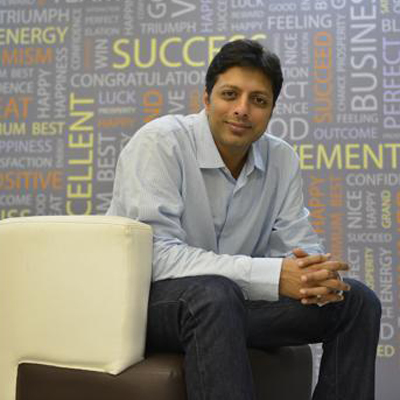
    MUMBAI: After receiving Rs 365 crore funding earlier this month, the online classified company Quikr announced the appointment of Vineet Sehgal as the company’s chief marketing officer. He will be responsible for marketing strategy and plan across all areas including brand building, performance marketing, partnership and alliances at the portal.


    Quikr founder and CEO Pranay Chulet said, “We are delighted to welcome Vineet to Quikr. Quikr is made in India and for India, and Vineet has built his career scaling consumer businesses in the country so there was natural chemistry here.”


    “Vineet also knows the Indian consumer and he knows the Indian consumer on mobile. His arrival was particularly well timed with our own plans, as the fun is just beginning,” he added.


    Beginning his career in consumer marketing with Nestle, Sehgal headed Nokia’s programs and planning portfolio before joining Quikr. He also founded the Nokia Money start up team and drove its growth from conception to market roll out and held large scale launches of some of the most used mobile devices in India.


    With more than 18 years in marketing and business strategy, Sehgal has worked across diverse industries such as telecommunication, FMCG, banking and management consulting. He has been associated with brands including Nokia, Nestle, Accenture, Cadburys and HSBC.


    Sehgal said, “It is a pleasure to have the opportunity to join Quikr which is writing such an interesting chapter of the Indian internet story.  Quikr’s business is growing exponentially and its super exciting for me to be a part of this growth curve. I look forward to further building the company as the Indian internet becomes more and more synonymous with mobile internet.”


    Quikr records 30 million users a month across 940 cities in India and so far has received funding of around Rs 1,300 crore since its inception in 2008.

  • New ‘gourmet category’ coming soon on Snapdeal

    New ‘gourmet category’ coming soon on Snapdeal

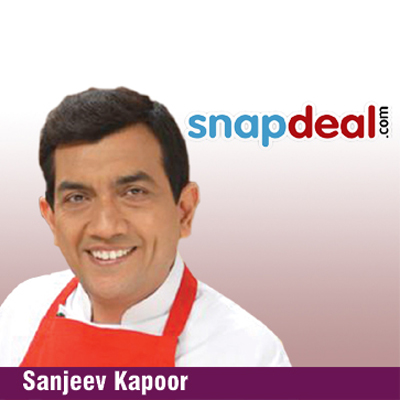
    MUMBAI: Continuing its category expansion spree, Delhi-based e-retailer Snapdeal.com has become the first online major to enter into non perishable food category. In a deal with the veteran chef Sanjeev Kapoor, the e-commerce company will soon offer a gourmet section to its customers.


    The industry pioneer, also known to author various cookbooks will be working closely with the website to launch the category.


    Talking about his latest venture with Snapdeal.com, Kapoor said, “This collaboration will bring good quality products to India at par with the rest of the world. People here find it difficult to find good gourmet products, through this tie-up, we will be able to provide excellent products to the customers.


    “All my endeavors are in line with the aim to glorify the richness of our food culture and to keep alive the traditions of the Indian kitchen. This new association with Snapdeal.com will now enable people across the country to order products like snacks, confectionery, international groceries, exotic dry fruits and nuts at their doorstep just with a simple click of a button,” he added


    The gourmet category will launched with chef’s brand WonderChef which already sells some of its products on the site.


    The section will include assortment of food products and beverages including ready to cook items, spreads and jams, wide range of Indian and international groceries, confectionery, chocolates and desserts.


    Snapdeal VP fashion Amit Maheshwari said, “This launch will further strengthen Snapdeal’s leadership as a marketplace and a destination of choice for all kind of products across categories which fulfill customers’ both home and business requirements.”


    The chef added, “We have been dealing with Snapdeal at a strategic level with our brand WonderChef which has seen huge success on the portal. So when they approached us this new deal and we jumped on board.”


    Even though the chef did not comment on how much the deal is worth, he added that if someone as credible as Ratan Tata is trusts the site, it’s not tough to take that extra leap of faith.


    Recently Snapdeal also tied up with Tata homes to sell houses online and also entered into a partnership with Croma to sell its electronics products online. Ratan Tata, the former chairman of salt-to-steel Tata conglomerate also bought a stake in the online retailer.

  • Alibaba in talks with Snapdeal to enter India

    Alibaba in talks with Snapdeal to enter India

    MUMBAI: As it is ready to embark upon a new journey by launching what may be the biggest IPO ever, Chinese e-retailer Alibaba may also be making a move to tap into the growing Indian retail market through an investment in local e-retailer Snapdeal.


    According to an Economic Times report, Alibaba, is in talks with online retailer Snapdeal to enter India. The e-commerce giant is in discussion for a possible investment in the Indian company, but no decision has been taken yet.


    The report also quoted a source saying that the deal will be announced in a month.


    The Chinese company is expected to be valued at over $165 billion at the conclusion of its initial public offer. So far, Alibaba has only been linking Indian merchants with overseas buyers and sellers.


    With its entry in the Indian online retail space by aligning with Snapdeal, the Chinese e-tailer will be competing directly against market leaders like Flipkart and Amazon. Even though the Chinese company would be a late entrant, it has the advantage of size — as per sales Alibaba is bigger than Amazon and eBay combined.


    While on the other hand, the Delhi-based company has already raised a total of $233 million in two rounds of investments this year. The last round in May valued the firm at $1 billion. It is expected to be worth Rs 50,000 crore by 2016, according to a market rating agency Crisil.


    The company, in which Ratan Tata holds a stake, is also attracting attention from Japan’s largest e-commerce company Rakuten Inc and telecommunications firm SoftBank Corp, the report added.


    On contacting Snapdeal, the spokesperson said, “As a policy, we do not comment on such speculations.”


    Alibaba’s shares are set to debut on the US market on 19 September, in what could be the world’s largest ever initial public offering. It increased the price range on its offering from $66 to $68 on 15 September, reflecting strong demand from investors for the year’s most anticipated debut.

  • After Tata Housing, Snapdeal now ties up with Croma

    After Tata Housing, Snapdeal now ties up with Croma

    MUMBAI: Tata Group promoted electronics retail chain Croma and Snapdeal.com have entered into a strategic partnership to sell products online.


    According to the press release, Snapdeal.com would create Croma’s Flagship Store on its portal to sell electronic items including mobiles, tablets and laptops. The two will jointly work towards market development initiatives, establish joint collaboration on customer and vendor outreach programmes and category development.


    Talking about the collaboration, Snapdeal CEO Kunal Bahl said, “This is a big moment for us, where Croma and Snapdeal.com will now leverage their offline and online presence respectively and work jointly to offer a more holistic shopping experience to consumers across the country.”


    Both brands would also be looking at exclusive launches of products and brands belonging to the select categories.


    Infiniti Retail MD & CEO Ajit Joshi said, “Today’s dynamic retail industry demands an infrastructure that is equally robust on the online and brick-and-mortar fronts.”


    “Omni-channel retail is undoubtedly the way forward in the Indian retail industry, and therefore the association is designed to enable Croma and Snapdeal to leverage from each other’s strengths, to provide a winning proposition for customers and business alike,” he added.


    This is second tie-up of Tata with the New Delhi-based e-commerce major after its chairman Ratan Tata picked up a stake in the portal. Last month, Tata Value Homes, a 100 per cent subsidiary of Tata Housing, entered into a first-of-its-kind, strategic and exclusive partnership with Snapdeal.com to sell residential properties.


    Infiniti Retail Ltd, a 100 per cent subsidiary of Tata Sons runs Croma stores. Launched in October 2006, Croma has 96 outlets across 16 major cities of India and sells over 6000 products.


    Started in February 2010, Snapdeal.com is country’s online marketplace.

  • Flipkart launches third private brand – Citron

    Flipkart launches third private brand – Citron

    MUMBAI: Bangalore-based e-retailer Flipkart announced its in-house home appliances and personal healthcare brand — Citron.


    The label includes a wide range of cooking utilities and grooming products. According to the press release, the product range in electronics includes electric kettles, sandwich makers, hand blenders and pop-up toasters while the range in the personal healthcare category has shavers and trimmers, hair straighteners and dryers.


    Flipkart, which has so far raised $1.75 billion from investors forayed into the private labels segment in 2012 with Digiflip, selling digital accessories, before launching tablets under the brand. Flipkart had also launched lifestyle private brand Flippd in January this year.


    Excited with the recent launch, Flipkart SVP-Retail Kalyan Krishnamurthy said, “The launch of Citron is our next step in expanding the private labels offering at Flipkart. This enables us to offer our customers quality products at a great value for yet another category after lifestyle and tablets.”


    “In the next three months we will expand into selling various other products such as irons, induction cooktops, juicers, mixers etc.,” he added.


    While the home appliances products are priced between Rs 500 and Rs 999, the personal healthcare products are available at Rs 549- 949.


    While most online fashion portals like Jabong and Myntra (which Flipkart recently acquired) have multiple private labels in clothing, Flipkart has been one of the first to introduce its own range in electronics like tablets and other gadgets.

  • “We are customer obsessed, not competition obsessed”: Amit Agarwal

    “We are customer obsessed, not competition obsessed”: Amit Agarwal

    Since its inception over 20 years ago in the United States, Amazon.com has been obsessed with a fervor to serve its consumer and being the ‘earth’s biggest bookstore’. It has grown from a ‘dot-com’ corporation into a king in the domain of internet retail. And now, its Indian arm under the leadership of Amit Agarwal, is looking at achieving the same landmark.  


    Describing his current role as ‘Bringing Earth’s Biggest Selection to India; building India’s most customer-centric company’ on Linkedin, the new role has countless firsts for Mumbai-born Agarwal, now an American citizen. He has never worked in India in a business-facing role and never headed country operations as well.


    The IIT-Kanpur and Stanford alumnus has been with Amazon since 1999. He has worked in various departments in the company including technical advisor to CEO Jeff Bezos between 2007 and 2009, before heading the operations in India.


    Born in 1974, Agarwal joined Amazon as a part of its technology team.


    Just a year old and Amazon India has already become the biggest threat to the seven-year old Flipkart in the Indian e-retail market. With an action-packed first year, the global online retail giant is gearing up to play a dominant role in the $13 billion Indian e-commerce industry.


    In an interview with Indiantelevision.com’s Pranati Deva, Amazon India VP & country manager Amit Agarwal discloses Amazon India’s journey in the Indian e-commerce space and plans for the future.


    Excerpts…


    What inspired you to finally start an arm in India? Flipkart started in 2007, why did you think 2013 was the right year to jump into the Indian e-commerce space?


    We believe that we entered the India market at the right time. Indian e-commerce space is still in a very nascent stage with significant potential for innovation to improve customer experience. We believe that the growth is at an inflection point and there is tremendous opportunity. 


    We have received a fabulous response from both customers and sellers in the last 14 plus months of our India operations. We launched in India with two departments – Books and Movies & TV Shows – and in these 14 plus months, our total selection now stands at more than 17 million products across 30 departments and hundreds of categories. We have witnessed phenomenal selection growth across several categories and are already the largest store  in 12 of the 30 departments that we have on amazon.in including Books, Music, Video Games, Toys, Home & Kitchen, Luggage and Backpacks, Fashion Jewellery, Beauty Products, Movies & TV shows, Men’s inner wear , Sports, Fitness & Outdoors and Pet Supplies.


    What is your current strategy in India? And how will your strategy change if the e-commerce sector opens up to FDI?


    Our strategy for amazon.in is the same as our global vision to be India’s most customer-centric company by giving customers more of what they want – low prices, vast selection, fast and reliable delivery, and a trusted and convenient experience – and provide sellers a world-class e-commerce platform. The execution of this strategy is local. If you look at the logistics infrastructure, Amazon has built one of the most sophisticated logistics infrastructures that has ever been built to serve sellers and customers


    We start with the customer experience and work backwards from it. Building a great customer experience drives traffic; traffic attracts sellers; more sellers drive more selection and this further improves the customer experience.


    We have always maintained that opening up this sector to FDI will be good for consumers and Indian businesses as it would allow us to partner with local manufacturers to source products not carried by other sellers in the marketplace, giving Indian consumers unique and wider choices at lower prices. Allowing FDI, also, positively impacts infrastructure development in the country.


    The announcement for the $2 billion investment in Amazon India came in just days after Flipkart announced fundraising of $1 billion. Was the announcement strategically placed?


    We are customer obsessed and not competition obsessed.  We aspire to provide Earth’s biggest selection and the most trustworthy and convenient online shopping experience to our customers in India.  And we have been investing aggressively right from the beginning.


    Our rapid growth in a short time and the significant opportunity ahead of us makes us very comfortable in making this large additional investment. We are not surprised if our rapid growth and customer experience ambitions have increased investment elsewhere as well.     


    What areas will you mainly focus on now, after the investment?            


    We don’t talk about any of our future plans but essentially it will go towards growing our business and enhancing customer and seller experience. 


    Which categories contribute the most to your revenue?


    Categories with the strongest growth are Books, Consumer Electronics, Shoes, Baby Products, and Watches.


    To increase your demand in the Indian space, which brands have you associated with recently for their products?


    We are witnessing that both brands and SMEs are willing and are excited to use the Amazon India marketplace to reach to consumers nationally. Brands and sellers see a lot of value in their association with us. We not only play a significant role in driving sales but also in building consumer awareness about products and educating them about the benefits of these offerings so that they are able to make smart purchase decisions.


    Today several sellers and brands are keenly exploring possibilities of exclusive associations with us. For example Amazon India is the exclusive retail partner for Microsoft’s entire Interactive Entertainment Business portfolio which includes Xbox One, Xbox 360, Kinect, Xbox Live, Xbox Accessories and all Microsoft-published Xbox game titles. Similarly, Philips has made available its new Philips Disney Imaginative Lighting range for kids exclusively on www.amazon.in. In mobiles we have exclusive launch deals with Samsung for the Samsung Galaxy K Zoom, Karbonn, Lava, XOLO, OPPO mobiles, etc.


    We are also the exclusive online partner for KitchenAid, a premium kitchen appliances brand from Whirlpool that launched in India in March, for Waterlily LA, a premium leather handbag brand headquartered in Los Angeles that made its India debut on Amazon.in as well as for many more. There are several such examples across the 30 departments that we, at present, have on Amazon.in. We are very excited to see this response from brands and sellers and this stands proof to the value that they see in associating with us.


    What is Amazon India doing differently to stay ahead of the competition in India?


    In terms of services – we were the first ones in India to introduce premium guaranteed delivery services including the ‘One-Day Delivery’ service for items fulfilled by Amazon. Within a short time we have been able to make available over 300,000 products for next day delivery across hundreds of pin codes in India. More than 60 per cent of our customer demand is already eligible for next-day shipping on products fulfilled by Amazon.


    We are investing in making sellers successful; continually looking for ways to do the heavy lifting for them; and enabling them to sell more and make more money. We started with over 100 sellers and today this base has grown to more than 10,000 sellers.


    We now have seven fulfilment centres in India with a total storage capacity of half million square feet. All FCs are aimed at meeting fulfilment needs of retailers and small and medium-sized businesses and to help them achieve nationwide scale.


    We are the first ones in India to introduce customised, personalised and multi-lingual Amazon.in Gift Cards that enable customers to buy over 15 million products (excludes ebooks) from our marketplace. Customers can purchase the Amazon.in Gift Cards of any value starting from Rs 10 up to Rs 10,000. Available in nine Indian languages including Hindi, Kannada, Marathi, Tamil, Gujarati, Telugu, Malayalam, Bengali and Punjabi in more than 200 designs that celebrate various special and memorable occasions in a person’s life.


    Indian Postal Services (IPS) is one of the prime carriers that Amazon India uses as a delivery channel Amazon uses the extensive IPS network to service over 19,000 pin-codes through 140,000 post-offices across all 35 states and union territories in India. Number of deliveries through India Post has increased from 800 (June 2013) to 35,000 (in July 2014)


    For us it is always ‘Day 1’ and today we believe we have the right ingredients to entice and delight our customers with a trusted online shopping experience.


    Learning points so far about the Indian consumer and the e-commerce market in India?


    Our experience of working around the world has shown one thing, that customers around the world are similar. Customers around the world always want a vast selection at low prices and a convenient, reliable and trustworthy online shopping experience. Indian customers are no different.  I am yet to come across a customer who will say that they want a smaller selection or higher prices. And we are focused on ensuring that we are able to deliver and raise the bar for online shopping in India.


    What are your views about the Indian e-commerce industry and what are your expectations from the sector in the coming future?


    Indian e-commerce space is still at a very nascent stage with significant potential for innovation to improve customer experience. The growth is at an inflection point. With increasing internet penetration, both broadband and smartphones, there is an interest and demand from mini metros and smaller towns across the country. We see as a tremendous opportunity and are very excited by it.

  • Amazon.com enters into the world of online gaming

    Amazon.com enters into the world of online gaming

    MUMBAI: E-commerce giant Amazon.com bought Twitch Interactive, a popular Internet video channel for broadcasting and watching, people play videogames, for about $970 million in cash.


    The move, announced by the two companies is the largest deal in Amazon’s 20-year history and will help the US e-commerce company vie with Apple and Google in the fast-growing world of online gaming, which accounts for more than 75 per cent of all mobile app sales.


    Talking about the acquisition, Amazon.com’s founder and CEO Jeff Bezos said, “Broadcasting and watching gameplay is a global phenomenon and Twitch has built a platform that brings together tens of millions of people who watch billions of minutes of games each month – from The International, to breaking the world record for Mario, to gaming conferences like E3. And, amazingly, Twitch is only three years old.


    “Like Twitch, we obsess over customers and like to think differently, and we look forward to learning from them and helping them move even faster to build new services for the gaming community,” he added.


    Twitch is a multi-channel online platform for people who not only enjoy playing video games, but find it entertaining to watch others who might impart tricks and tips for excelling at their favorite games. In July, more than 55 million unique visitors viewed more than 15 billion minutes of content on Twitch produced by more than 1 million broadcasters, including individual gamers, pro players, publishers, developers, media outlets, conventions and stadium-filling e-sports organisations.


    “Amazon and Twitch optimise for our customers first and we are both believers in the future of gaming,” said Twitch CEO Emmett Shear. “Being part of Amazon will let us do even more for our community. We will be able to create tools and services faster than we could have independently. This change will mean great things for our community and will let us bring Twitch to even more people around the world.”


    Twitch will help Amazon accelerate a push into web video that is brought it into competition with Netflix and Google’s YouTube. Twitch seized on the popularity of games like League of Legends and Minecraft, developing tools to let players broadcast their game sessions to an audience of more than 55 million users and generating revenue from advertising and subscriptions.


    According to media reports, Google also held talks about potentially acquiring Twitch as early as May.


    The deal, expected to close in the second half of the year, is an unusual step for Amazon, which tends to build from within or make smaller acquisitions.

  • Jabong expects up to 1000 orders a day from ‘Next-Door’ service in a year

    Jabong expects up to 1000 orders a day from ‘Next-Door’ service in a year

    MUMBAI: With logistics one of the biggest challenges in the country, physical delivery of products is not feasible in a number of villages and rural communities. Coming up with a solution to the concern and an opportunity to increase its consumer base, one of India’s biggest fashion retailers, Jabong.com has come up with a new ‘Next-Door’ service.


    The service will enable customers to pick up their order at the nearest coffee shop, petrol station or tour operator. The trial for the pickup service is going to start soon in 39 towns, including Murshidabad in West Bengal, Chandausi in UP, Dahod in Gujarat and Udhampur in Jammu and Kashmir.


    Talking about the new initiative, Jabong’s cofounder and managing director Praveen Sinha says, “This will open channels for the consumers in the rural areas. The pilot for the pickup service will be launched in 469 pincodes and 114 pickup points.”


    Piloting the most extensive initiative of its kind by an Indian company, the Delhi-based online fashion retailer, Jabong.com gets about 55 per cent of its revenue from non-metro centres and Sinha expects a double digit contribution in sales from this new scheme once the services scale up.


    “We are expecting about 20 orders a day in the first round of the service while anticipating it to go up to 200-1000 orders a day within a year,” he adds.


    While the revenue model for the new collaboration is still undecided, Sinha said that it is most likely to be a mixture of giving some per cent out of the revenue to the partners or on the number of orders it receives. It will find a balance between the two so that no one is at a loss.


    With 700 per cent growth in mobile usage, Jabong is banking more on the smart phone users in the non-metro regions for the success of this new venture. At Jabong, mobile users now contribute 25 per cent of its orders and Sinha expects it to cross 50 per cent in the next five years.


    Even though Jabong declined to share financial details about the partnership Sinha reckons, “The company is growing 100 per cent year-on-year and was valued at $26 million in the month of December 2013.”


    Since e-commerce in India is still booming, 60-65 per cent of its customers use the cash on delivery (COD) mode of payment and according to the co-founder, it will still be open to the customers in the pickup service launched by them.


    E-commerce sector companies are now beginning to experiment with newer techniques, mergers and acquisitions. While companies like Flipkart-Myntra are already in collaboration, Jabong is not currently looking at any mergers or acquisitions but is not closed to the idea.


    E-commerce space in India has been growing like gangbusters with an annual growth rate of 56 per cent. Over the past four to five years, competition from online retailers such as Flipkart (in books, music and electronics) and Myntra and Jabong (in apparel) has hurt physical retailers. Commenting on the advancing E-commerce industry, Sinha states, “Indian e-commerce space will increase up to eight times by 2018-2020 to $30 billion.”

  • Arvind forays into e-commerce with Creyate

    Arvind forays into e-commerce with Creyate

    MUMBAI: Keeping pace with the rising online sector, textile manufacturer Arvind group announced its entry into the e-commerce space with the launch of its online custom clothing brand, Creyate.


    Arvind Internet Limited (AIL), a subsidiary of Arvind group will anchor all the company’s e-commerce initiatives. Arvind group executive director Kulin Lalbhai will drive the e-commerce initiative at the company, which will be a major growth driver for Arvind moving forward.


    Elaborating AIL’s vision Lalbhai said, “Arvind Internet Ltd will be the vehicle that will enable Arvind’s e-commerce vision. As pioneers in bringing global fashion to India, Arvind now intends to extend innovative and best in class brand experiences to the online world. We are all set to be a leading consumer lifestyle player in the digital space by engaging in several business models that can scale globally.”


     “In an attempt to break away from norms, labels and quick-fixes, Creyate strives to bring to you a fashion identity that is uniquely you, created by you. You can create garments on a 3D visualisation engine, which would then be made for you – it’s like having a very own factory at your fingertips. With more than 100,000 unique products to create, this is the next generation of fashion retail,” added Lalbhai.


    Arvind has so far invested close to Rs 20 crore into building capacities for Creyate, Lalbhai said, adding that the company would scale up investment going forward. Creyate has plans of launching stores in 15 cities within the next year. It already has stores in Bengaluru, Ahmedabad and Delhi and offers home visits in major cities.


    Creyate intends to offer an alternative to ready-wear as well as traditional custom clothing and targets to be Rs 100 crore plus brand by next year and Rs 1000 crore revenue from e-commerce in three years.


     AIL COO Tejinder  Singh said, “Creyate can be experienced in our digitised retail stores or alternatively, one can visit our website (www.creyate.com)  to design garments online and then schedule a home visit by our ‘Style Stewards’. Style Stewards not only take a customer’s measurements, they also give them style advice and complete wardrobe solutions. And once measured, customers can ‘Creyate’ their own garments from anywhere and they will be delivered as per their exact fit at their door step.”

  • Private labels coming soon on Jabong

    Private labels coming soon on Jabong

    MUMBAI: As the e-commerce wars continue, online fashion retailer Jabong.com is all ready to jump in. According to PTI report, the company is planning to launch private label brands in the next 4-5 months.


    Talking to PTI, Jabong.com’s founder and CEO Arun Chandra Mohan said,  “We are setting up a full-fledged design team in London because we also want to create our own brands that provide good, fast, western fashion to the Indian consumers. We are in the final stages of setting up a top end design studio in London. It will be a team of the best fashion companies in the world that are going to be focusing only on creating the design. There is an immense opportunity to develop our own brands.”


    Jabong.com sells over 1,500 brands like Adidas, Puma, Levi’s, Converse, Proline, Nike among others. It also has apparels from leading fashion designers.


    Mohan added, “About 55-60 per cent of the company’s revenue comes from tier II and III cities. There are not enough malls in the smaller cities, which makes it conducive for people to shop online. We are growing at 10-15 per cent month on month. We are doing sales of about $30 million a month.”


    Commenting on the increasing e-commerce market in India, Mohan said that India is at an inflection point, where China was nearly three-four years ago.


    Jabong has also invested heavily on its mobile app because nearly 50 per cent of people are accessing internet through their mobile phones and that brings about 30 per cent revenue to the company.