Tag: E-commerce

  • Indian AdEx to increase by 12.6 per cent in 2015: GroupM

    Indian AdEx to increase by 12.6 per cent in 2015: GroupM

    MUMBAI: India’s advertising investment is expected to reach an estimated Rs 48,977 crores in 2015, up 12.6 per cent from last year. This was revealed in GroupM’s biannual advertising expenditure futures report titled This Year Next Year (TYNY).


    As per GroupM, for the calendar year 2014, the ad spending stood at Rs 43,490 crores, which was an increase by 12.5 per cent over 2013. This growth was attributed to the heavy ad spending due to the General and State Elections and industry categories like e-commerce and Telecom. The FMCG sector, which contributes to nearly a third of the AdEx, had a steady year, growing broadly in line with the industry average.


    Last year began with uncertainties on the political and economic front. Once a stable government came to power the mood changed to one of cautious optimism.


    GroupM South Asia CEO CVL Srinivas said, “With a new Government coming to power the negative sentiment has lifted but there is still some bit of caution amongst advertisers. We continue to operate in the same zone as last year at an overall level. Digital, TV and cinema are expected to be the high growth media channels. We are seeing a lot more confidence amongst local businesses to invest in brand building than before. This is a positive sign for the industry. Penetration of smartphones coupled with the popularity of online video is making FMCG spend more on digital. Another trend is the emergence of categories like e-commerce and the increased competition in telecom both of which are aiding the growth of traditional media channels including print and TV apart from digital.”


    As per the report, e-commerce is expected to lead the charge in 2015 in terms of ad spend growth although from a relatively smaller base than more established categories. There is increased competition in this sector and no dearth of funding. The FMCG, auto and telecom sectors are expected to do better than the previous year. More multinational entrants under single brand retail are likely to add to ADEX spending in the retail category.


    The report added that the recent rate cuts by the Reserve Bank of India (RBI) will stimulate the banking sector, reactions of which are evident on a buoyant stock market. This year will possibly see a number of IPOs as there is a sense of stability in policy and investors are willing to take more risks. The market will also see higher spends from the Central Government as they showcase their new initiatives.


    As per GroupM’s research of the Indian media industry, digital media continues to show the maximum growth with 37 per cent in 2015. Digital has been growing at an average rate of 35 per cent over the last two of years. Within digital media, video, mobile and social will be the biggest growth drivers this year.


    Television shows a higher growth percentage in 2015 compared to last year with 16 per cent. TV channels will especially be bullish with cross media integration via their own digital platforms. The big ticket event this year is the ICC Cricket World Cup in February and March, with scope for programming and advertising innovation during the tournament.


    Even with pressures on advertising revenues, the print medium shows an increase by 5.2 per cent as against the 2014 estimate of 7.6 per cent; however print magazines continue to be on the decline, as several are looking at digital delivery mechanisms.


    The surprise element in the media mix has been cinema advertising, which finally closed 2014 with a 25 per cent increase. This year too, GroupM estimates this media category to grow at 20 per cent, as multiplex chains consolidate, leading to a more organised and accountable environment. With technology fuelling exhibition and distribution, especially in smaller towns, consumers will get a better viewing experience.


    GroupM South Asia managing partner – Central Trading Group and Mindshare South Asia CEO designate Prasanth Kumar added, “Over the last few years, Indian media has been in a state of change. The next three to five years will be about embracing technology, which will allow both advertisers and media owners to customise distribution to a premium niche audience with very nominal margin of error. In 2015, programmatic buying will see an impetus, as all media in the future will see automation, backed by smart data and analytics.”

  • Spencer’s to finalise e-commerce plan next fiscal, aims to increase private labels

    Spencer’s to finalise e-commerce plan next fiscal, aims to increase private labels

    KOLKATA: RP-Sanjiv Goenka Group’s Spencer’s Retail aims to finalise its e-commerce plan by April next fiscal (2015-16). Spencer’s Retail sector head Shashwat Goenka confirmed that prices at the brick and mortar stores and the e-commerce would be the same once the company offers the product online in April.

     
    Additionally, Spencer’s Retail, a CESC subsidiary, also said that it has decided to augment and increase its private labels, mostly in food and apparels.

     
    “We would freeze the e-commerce business model within next couple of months and implement it over a time period. We are likely to begin with a few categories of products for our on-line store,” Goenka said in Kolkata on Friday.

     
    To make a differentiation and to cut down logistics cost, the company would depend on local sourcing more than pan-India collection. “In West Bengal, we are focusing on local food items including varieties of fish and rice,” he said.

     
    It should be noted that within a short span of its operation, Spencer’s has become a family store since it offers regional flavours in the product vertical. “Spencer’s has decided to stress more on local sourcing and bring in regional flavours in the product baskets,” Goenka said.

     
    Talking about the plans for apparel section, he said, “In the apparel segment, we are looking for a new sourcing point in Kerala. We have developed seven apparel brands including men’s, women’s, kids and sports wear.”

    The retail chain is also looking to expand its chain but mainly through large-format in the range of above 25,000 square feet, said Goenka, explaining that all these efforts were geared to make Spencer’s profitable.

     
    Speaking about the company’s expansion strategy, Goenka said that Spencer’s would focus on expanding in the eastern and southern markets of the country. “We would also be present in the north, particularly in Uttar Pradesh and the National Capital Region,” he said.

     
    However, western region will continue to see a token presence in Gujarat.

    In the next fiscal 2015-16, Spencer’s is looking at commanding a presence in 12 – 15 large format hyper stores, with a majority of stores being in the eastern and southern regions.

     
    Currently, Spencer’s has around 125 stores in 36 cities including 33 hyper stores. The total store area now stands at over one million square-feet.

     
    For expansion, Spencer’s would spend approximately Rs 3 -5 crore for each hyper store. When asked about the funding for expansion, Goenka said, “CESC, our parent company, would fund the projects.”

  • “Digitisation will boost GDP growth” – Ravi Shankar Prasad

    “Digitisation will boost GDP growth” – Ravi Shankar Prasad

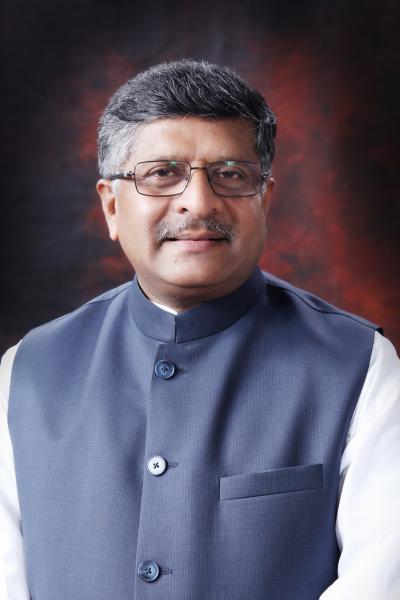
    MUMBAI: Taking a leaf out of Prime Minister Narendra Modi’s Digital India initiative, Union Minister of Communication and Information Technology Ravi Shankar Prasad today stressed on how the country’s growth is interlinked to this programme.
    “The government is dedicated to creating a digital ecosystem that will enable internet to touch the lives of all Indians,” Prasad, who was speaking at the 9th India Digital Summit of IAMAI, said.
    He further pointed out how it was imperative to create hubs in rural India that will help the growth of e-commerce, which remains unexplored so far. “Unless connectivity reaches every village of India, the dynamics of growth will remain unchanged,” he said.
    Speaking on access, Prasad said, “It took 30 years to cover 10 lakh kilometres of optic fibre laying, and in just next three years, seven lakh kilometres will be added, making rural connectivity a reality.”
    Releasing the IAMAI &The Boston Consulting Group (BCG) report India@Digital.Bharat, Prasad said, “For the internet economy to touch $200 billion by 2020 that will contribute five per cent of GDP, we need to move at a fast pace towards computer literacy. The other key areas which will help the internet economy to grow is mobile internet. The government is committed to digitisation and we look at extensive public-private partnerships (PPP) to the have successful implementation.”
    The India@Digital.Bharat report establishes that India is headed towards an internet economy worth $200 billion by 2020, that will contribute five per cent of the GDP growing at 23 per cent compared to 13 per cent overall.

    As the following chart shows, Internet in India by 2018 will be more mature and mobile will be more predominant.

    The number of internet users in rural areas will touch 210 million by 2018, aiding India’s internet user base to cross 500 million by 2018.

    Speaking at the launch of the report, BCG senior partner and director Alpesh Shah said, “India will have more than half a billion internet users in the next three years – this growth has the potential to fundamentally change the way in which consumers save, learn, play, move and work. However, the extent of shift will depend a lot on how the government and the industry come together to unlock the true potential of the internet.”
    IAMAI chairman and Google India managing director Rajan Anandan, stressed on the growth of internet in India and successful roll-out of the government’s Digital India programme. “India is the third country in the world to have over five Internet companies valued at over $1 billion. India is the fastest growing Internet country but we need to move from narrow band to broadband at the earliest,” Anandan said.


  • TRAI ready to consider proposal for e-commerce but says it is already over-burdened

    TRAI ready to consider proposal for e-commerce but says it is already over-burdened

    NEW DELHI: With more and more people depending on their computers and smart phones to transact business transactions and transfer money, the Government appears to have woken up to the need for someone to regulate this.
     
    While confirming this, a source in the Telecom Regulatory Authority of India (TRAI) told indiantelevision.com that the role of the regulator had remained confined to telecom until 2004 when it was asked to also look into issues relating to broadcasting and had later drawn up regulations relating to telemarketing following complaints by telecom consumers about mobile calls.
     
    The need for an e-commerce regulator was felt after the Confederation of All India Traders (CAIT) sought the Commerce Ministry’s intervention over ‘predatory pricing’ strategies of e-tailers during festival sales last year. It asked the government to set up a taskforce to “probe into the working and business model of e-commerce companies” and to set up a regulatory authority to monitor the business.
     
    The source said TRAI will consider the proposal but will have to consider that it is already burdened with issues like spectrum e-auction and the digital addressable system for cable television.
     
    Now, an inter-ministerial panel has requested the Authority to take up the role or suggest if there is a need for a separate regulator for e-commerce. The panel has sought an update from the Consumer Affairs Ministry on measures taken to introduce online dispute resolution in e-commerce.


    The inter-ministerial panel will prepare a paper, sought by the Data Security Council of India, on imposing restrictions on the location of servers and on getting companies like Google and Amazon to set up data centres in India.


    The Department of Industrial Policy and Promotion has informed the committee there is no plan to change the foreign direct investment (FDI) policy in e-commerce. The Department is understood to have said there was no lack of clarity in the FDI policy for e-commerce. If required, the Department noted, issues related to e-commerce funding and operations could be addressed by formulating guidelines for the sector rather than by modifying the FDI policy.


    Last month, the DIPP had suggested up to 49 per cent FDI in consumer e-commerce following representations by several US companies. FDI is barred in e-commerce companies selling directly to consumers and there are restrictions on sourcing from local manufacturers. The DIPP also suggested a mechanism to facilitate US investments in India after Amazon, which has invested about $300 million in India, sought the government’s approval for further investments.


    Foreign e-commerce companies are allowed to operate as online marketplaces. FDI of up to 100 per cent is permitted in business-to-business e-commerce.


  • GOSF: Bringing out the shopping bug

    GOSF: Bringing out the shopping bug

    MUMBAI: The e-commerce sector is booming and how. The very purple patch, every now and then, gets a boost with OTT sale bonanzas.

    The addictive online shopping portals lured customers through Big Billion Sale or Diwali Dhamaka Week throughout this year, but the icing on the cake has been the Google promoted Great Online Shopping Festival (GOSF).

    The 72 hour shopping festival was expected to bring out the crazy shopaholic within us all, and if stats are to be believed then it has succeeded in many ways. For instance, in  December LimeRoad, witnessed explosive growth that sent its implied revenue run rate shooting up to Rs 450 crore on the first day of GOSF 2014 – this despite the platform being only focused on women.

    Quick deliveries, cash on delivery, and big deals have made it hard for even non-shoppers to resist the temptation to shop online.

    The portals too are glad to have made the most of it.

    “Successful in creating a delightful shopping frenzy, Google Online Shopping Festival this year has witnessed a great response from the consumers. Three days of this shopping carnival is not less than some annual festival that customers await around this time of the year. On the first day itself, we have observed an extraordinary leap with our revenue rising four times compared to our sales on any regular day.  There has been a rise in revenue from mobile at least by six times as compared to the last GOSF.  Even the traffic from GOSF on the website has significantly risen by eight times as compared to the last year. This tremendous excitement shown by our customers has made us open doors to some of the best offers from exclusive brands like River Island, Dorothy Perkins, Miss Selfridge and more. All in all, we are geared to double the excitement and make this festival bigger, better and brighter like never before,” said Jabong.com founder and MD Praveen Sinha.

    Added, LimeRoad founder and CEO Suchi Mukherjee, “Whilst the growth in sales is interesting and a reflection of our non-linear growth curve throughout the rest of this year, we are super delighted both at the scale and at the trajectory of our organic traffic.”

    Speaking about the response on GOSF 2014, CouponDunia.in CEO and founder Sameer Parwani said, “So far we have seen a very good response to GOSF. Our traffic increased 4X as compared to the daily traction on the website. There was a massive spike as soon as GOSF started during midnight however the traffic peaked the highest on the first day of GOSF during lunch hours.”

    However, he believes that GOSF 2014 was comparatively lukewarm if 2013 edition is taken into account. One of the reasons for this is the kind and number of deals merchants provided compared to GOSF last year or even for that matter deals during Diwali, a few months back. “GOSF 2014 deals were both, less in number and not providing as deep discounts as we’d expected. Also some of the bigger players, have already exhausted their best offers due to their own festivals like Flipkart’s Big Billion Day, Amazon’s Appiness day and Snapdeal’s ongoing 9am to 9pm shopping fest. Most of them have offered almost 40-50 per cent discounts on regular days or their special days, so they do not have anything bigger than that to offer at the moment.”

    He also added, “As a result of frequent online shopping festivals, these festivals are no longer a novelty factor for the consumer. They have higher expectations and expect the best from everyone and are not impressed easily now it is the e-tailer’s turn to come up with better and bigger deals every festival to meet these demands and expectations.”


  • Mobile commerce: The key to impulse shoppers

    Mobile commerce: The key to impulse shoppers

    E-commerce industry’s success stories and reliability are the key factors determining its popularity. Customers have gained a new edge of convenience with products and services available at a click. Apparently, a new wave of innovation in the name of mobile commerce is gaining prevalence by driving new avenues for the e-commerce industry in India.


    Accessing an e-commerce portal on desktops and laptops has never been a hindrance; however, accessing the same website on phones have bulged various problems because they were primarily designed for big screens. Considering the mounting usage of mobile phones over big screen computers, mobile commerce has emerged as a key to impulse shoppers.


    Mobile commerce offers dual benefit – ease of navigation tools and the flexibility to shop; therefore, attracting a large number of customers. Nowadays, more and more e-commerce websites have become mobile friendly, which has accelerated the footfall on such websites by a huge number. The trend is gradually catching up in India like our European counterparts.


    According to a study conducted by global financial group ING, Europeans are now shopping frequently via mobile phone, British being the most impulsive shoppers. India has adapted to this innovation extensively and is observing its acceptance from customers on a large scale. Currently, a major chunk of our tech savvy population is inclined towards mobile commerce. Various studies have shown that mobile devices such as smartphones and tablets are leading to an increase in impulse buying among consumers. There is also a lot of scope for growth in this segment as only 40 per cent users make purchases using their mobile devices.


    Impulse shopping is triggered among consumers due to the availability of simple and easy to use technology that is used widely in m-commerce platforms. Its usage is rapidly increasing with evolution of mobile technologies. This innovative transformation is creating seamless opportunities for prospective businesses. While adding greater convenience to customers by providing more personalised services, mobile commerce equally benefits the retailers by reducing their cost of production.


    According to an independent study conducted by Manusis Technologies, 42 per cent purchases made on mobile devices are based on impulsive decisions. The attractive offers and discount coupons offered by mobile apps create a sense of urgency among buyers. Often, they make hurried purchases fearing an impending stock-out situation or rising prices of the commodity. Eventually, it positively impacts the store owners’ sale and revenues.


    M-commerce is a great opportunity for these retailers and e-commerce owners to tap impulse purchases from customers. Snapdeal, one of India’s biggest e-commerce stores, has witnessed an increase in sales via mobile purchases in the past year. Many of these purchases might have been made at the spur of the moment.


    (These are purely personal views of StoreHippo.com CEO and founder Rajiv Kumar and indiantelevision.com does not necessarily subscribe to these views.)

  • Online shopper base in India to reach 100 million by 2016

    Online shopper base in India to reach 100 million by 2016

    MUMBAI: Convenience and variety is what today’s shoppers look for. And the platform giving them these both is e-commerce.


    As per Google in its annual online shopping growth trends report, consumer confidence to shop online will only continue to rise and India will have 100 million online shoppers by 2016.


    The report compiled by combining an extensive research conducted by Forrester Consulting and Google search trends revealed that India’s e-tailing market is at an inflection point and will see rapid growth to become a $15 billion market by 2016.


    The research conducted by Forrester Consulting by interviewing 6859 respondents covering both online buyers and non-buyers in 50 cities/towns, found out that online shoppers base will grow three times by 2016, and over 50 million new buyers will come from tier I and II cities.  The confidence to shop online was on the rise as 71 per cent non-buyers from tier I and II cities said they plan to shop online in next 12 months. The findings also revealed that women buyers in tier I cities were more engaged in online shopping, and outspend men by double. Women were also responsible for driving growth in categories like apparels, beauty & skincare, home furnishing, baby products and jewellery.


    Over 60 per cent respondents also felt that buying online was directly correlated with social status. Mobile phones emerged as an important access device for online shoppers with one out of three online buyers transacting on their mobile phones in tier I and II cities. In tier III cities, one in two buyers said they use mobile phones to purchase products online. This was also reflected in Google search trends with mobile phones queries growing three times in last three years. Today, over 50 per cent of shopping queries were coming from mobile phones; this share was as low as 24 per cent just two years back.


    Google India local and classified ecommerce industry director Nitin Bawankule said, “The consumer confidence to shop online has grown significantly in  last year and a half, and our objective was to understand the factors that are driving this growth and arrive at indicators that will help propel the Industry forward. As the report indicates, behavior of Indian online buyer is fast mirroring buyers in more developed markets as more subjective product categories have started to see significant growth. The e-tailing Industry needs to act now to cater to this strong user growth trend. Improved customer experience across all touch points, easy to use mobile apps can create a strong pull for non-buyers to shop online in tier I and II cities. Women buyers are set to become the most significant contributor to the growth of online shopping and there is a huge opportunity waiting to be unlocked in this user segment.”


    Amongst the challenges, 62 per cent buyers said they were not satisfied with their online shopping experience. 67 per cent buyers also highlighted that the current return process was too complicated and expensive. Trust was a major issue with non buyers, 55 per cent non buyers did not trust the quality of products sold online, 63 per cent said they were concerned about the safety of transacting online and 65 per cent said, they don’t feel comfortable sharing personally identifiable information online. 66 per cent of total respondents said that poor connectivity was also a major barrier for them to shop online.


  • Zomato raises $60 million from Vy Capital and existing investors

    Zomato raises $60 million from Vy Capital and existing investors

    MUMBAI: Zomato, the popular restaurant search and discovery service, has closed a fresh round of funding of $60 million at a post-money valuation of $660 million.

    These funds will be used to accelerate Zomato’s global expansion and new product development. This round of funding is being led jointly by Info Edge (India) and Vy Capital, with participation from Sequoia Capital. This takes Zomato’s total funding to over $113 million. Zomato has earlier raised $53 million from Info Edge (India) and Sequoia Capital over multiple rounds of funding.

    Founded in 2008, Zomato provides up-to-date detailed information, menus and photos for over 300,000 restaurants across the 18 countries it is present in on both web and mobile.

    Zomato founder and CEO Deepinder Goyal said, “Zomato is well on its way to becoming the world’s local expert in dining out. In the past year, we have added eight countries and millions of new users to our foodie truck. From just restaurant discovery and menus, Zomato has now become a vast global community driven by social interactions. This is an exciting point in our journey, as we accelerate our way across the globe, and build a product that will continue to redefine the way people dine.”

    Info Edge founder Sanjeev Bikhchandani added, “Our first investment in Zomato was made almost 4 years ago, and the team has shown phenomenal progress since then to build the Zomato that we know and use. The company is growing very fast, and we are proud to back them up to further grow the business – both inside and outside of India.”

    Vy Capital founding partner Alexander Tamas said, “Zomato is one of the first internet companies out of India with a consumer product that is scaling on a global basis and a team that is executing extremely well against the opportunity. We look forward to being long-term partners of the company as it establishes itself among the global internet leaders.”

    Headquartered in New Delhi, Zomato plans to expand to 14 more countries across Europe, Southeast Asia, Australia, and the Americas.


  • From advertising to selling saris, Arvind Sharma turns entrepreneur

    From advertising to selling saris, Arvind Sharma turns entrepreneur

    MUMBAI: The e-commerce sector in India is going through a purple patch and the latest one to enter the bandwagon is none other than Arvind Sharma.

    After spending over three decades in the advertising industry, Sharma has been bitten by the entrepreneur bug. He along with one of the founding members of Yepme, Amit Gaur, has launched an online platform for the treasured Indian outfit – sari.

    The self-funded, Indiasarihouse.com, aims to enhance and simplify the sari shopping experience along with benefitting the weaver community.  

    “A sari is more than a piece of commerce.  It is the Indian women’s attire for every day and for special occasions. It represents the spinning, dyeing and weaving arts of India, nurtured by kings, queens, and princesses and perfected by India’s craftsmen over centuries. Each sari woven by a weaver’s family represents a piece of Indian history and culture. India Sari House aims to build a self-sustaining long-term channel directly between the weavers and sari consumers around the world. Amit’s wealth of experience in sourcing and e-commerce operations will help us hugely in our ambitions,” says Sharma.

    The platform has recruited textile and fashion graduates, who find and verify the weavers across 20 centers in the country.  From pure silk offerings like Kanjivarams, Dharmavarams, Banarasis to pure cottons ones like Ikkats, Mangalagiris, Tants and Kerala Cottons, the recently launched website has everything a woman would desire in her wardrobe.

    Apart from increasing the number of sari centers in the near future, the sari house plans to get some of India’s famous designers to each adopt a weaving center and help modernise the designs some of these centers produce.

    On funding the project, Sharma highlights that after three to four months he will start talking to the investors to raise funds for the platform and take it to the next level.

    Gaur says, “We are building a channel with quality and integrity. To deliver these to the consumers, we have deployed a team that visits and identifies weavers that India Sari House will deal with. They hand pick saris from these weavers. We have put together another team of qualified textile and fashion experts to examine each sari and rate it on 4F factors – Fabric authenticity, Fine workmanship, Fashion quotient and Fitness for occasions. Each sari we sell will come with a 4F certificate. Since, India Sari House buys and stocks all the saris it sells, consumers can be sure that all saris will be shipped to them within 24 hours.”

    Indiasarihouse.com is accessible to consumers around the world. However, initially it is being promoted in the US, Canada and the UK. Over time, it plans to cover 23 major countries of the world where there is a significant Indian diaspora presence.

    Currently, Resultrix is handling the digital promotions of the web store while Underdog is the creative agency for the account.

  • DTH, an innovative platform for advertisers: Matrix Publicities & Media

    DTH, an innovative platform for advertisers: Matrix Publicities & Media

    MUMBAI: It has been a stupendous growth story. Contrary to popular trade perception the DTH advertising growth story has only ended up surprising all.


    With approximately 65 to 68 million households across India and about 55 per cent of the C&S base in the country, this is one of the primary reason why a lot of advertisers are looking to engage customers on the medium. 


    What began with a low scale, low noise start with barely two to three advertisers three years ago, has grown more than 10 times in a very short span, says Matrix Publicities & Media India, a WPP company, which has been at the forefront of this revolutionary advertising blitzkrieg. 


    There are in all six DTH operators, who operate out of the paid DTH subscriber sphere, whilst planning, the agencies need to keep in mind the fact that DTH as a medium is a frequency builder and should necessarily be used to ensure incremental reach.  Like television, DTH reaches out to all SEC and demographic profiles, unlike otherwise perceived.  There are various options within the medium, however, to delivery impact too and on a case to case basis the medium allows innovations, albeit at a very competitive outlay.


    As a media sales aggregator for all the DTH operators to GroupM & non-GroupM clients and agencies, Matrix has been able to bridge the gap between the science, art and commerce for sales on this new age media platform. 


    The agency feels that the platform acts as a gatekeeper to the TV viewing audience and they are exposed to the DTH visuals prior to the TV channels.  Additionally, TV also faces a lot of clutter with regard to the various genres available for viewing.  With the 10+2 ad cap in place, in principle, with most channels, getting inventories across is also an issue.  All the factors put together have ensured that this medium has turned into a ‘pull’ medium from the erstwhile ‘push’ medium. 


    Hence, the company has not stopped at just mere vanilla sales as this is a philosophy that does not appeal to its business head Sparsh Ganguli, who has been at the forefront of this business since its inception three years ago.


    With this idea in mind, the advertisers have been divided into broad categories and an in-depth analysis has revealed a lot about the spending patterns of all advertisers on this medium.  Needless to say the research not only takes into consideration the brand spent from the GroupM set of clients but even some part of the non-Group M clients to help present a more clear and fair picture.  The efficacy of the study can be gauged from the fact that the entire categories can be bifurcated month wise and the spend patterns can be highlighted for future strategic pitches.


    The broad categories that have been the top spenders across this medium are: automobiles (two and four wheelers), FMCG, F&B, BFSI, e-commerce, watches and jewellery.


    A FMCG media planner says, “The DTH platform has been influential in targeting the housewives through sustained awareness campaigns during afternoon hours and worked phenomenally well for our client’s brands.  That’s the very reason why they look to optimise spends on these platforms.” 


    The ad rates are in sync with the growth of the medium.  The rates range from Rs 40,000 to Rs 1,00,000 depending on the options that are availed, highlights the agency.


    Ganguli, however, feels that there is still a lot of ground to be covered from the advertiser’s front.  He feels that technologically the platform is evolving in a positive manner that is both beneficial to the viewer as well as for the advertiser.  According to him, “The next revolutionary way of reaching out to the viewing household is on the spliced beam format which allows the advertiser to geo-target their consumers.  This has in turn made it possible for the brands to reach out and give a customised pre-buying experience, thus resulting into more reach and effective frequency for the brand campaign.” 


    He adds, “DTH has shown tremendous growth but I still feel clients can do a lot more, as of now we have been able to break new grounds by providing upgraded technology and this helps the clients and new clients to optimise the medium for every campaign as innovation is the way ahead.”