Tag: E-commerce

  • Rural India gets e-commerce & TV ready via optic fibre network

    Rural India gets e-commerce & TV ready via optic fibre network

    NEW DELHI: The BharatNet project, which aims to deploy high-speed optical fibre cables across rural areas of the country, has now reached 83,000 gram panchayats, according to Department of Telecommunications Secretary Aruna Sundararajan.

    Speaking at ‘i-Bharat 2017’ on the theme ICT Elucidations for Unserved and Unsolved, organised by FICCI in association with the Ministry of Electronics and Information Technology, Sundararajan said that by December this year the first phase of BharatNet will be complete. This would provide 100,000 gram panchayats with broadband connectivity by laying underground optic fibre cable lines.

    The DoT is aggressively monitoring the prestigious BharatNet initiative that aims to provide Internet connectivity to 2,50,000 gram panchayats or village blocks by March 2019.

    The entire project, when complete, is expected to give a fillip to e-commerce services, including e-governance, education and television services to far flung areas of the country.

    The DoT Secretary said fibre-isation was a national imperative and the government, industry and chambers of commerce needed to work in coalition to achieve the objective of doubling the telecom footprint in the country by 2020.

    Quoting from internet guru Mary Meeker’s 2017 report released in May this year, she said there are over 355 million monthly active internet users in India, while nearly 109 million smartphones were shipped in 2016. Nearly 46 per cent of internet users in India consume content in local languages. In the first quarter of 2017, 27 million smartphones were shipped. Most Indians used the internet on their mobile phones (80 per cent usage was on mobile as compared to the global average of 50 per cent). The most used browser in India was UC Browser, followed by Chrome and Opera. WhatsApp, Facebook Messenger, Shareit, Truecaller and Facebook are the most used apps in India.

    She said these figures threw up challenges in the policy domain, particularly in terms of security; data privacy and protection, data regulation and data monetisation.

    Hewlett-Packard Enterprise MD Som Satsangi said that with the impending large-scale migration of people from the rural areas to the proposed smart cities, the challenge before the industry would be to meet their rising expectations and services on demand. The industry must be ready to provide low-cost, affordable solutions to the aspirational people at the bottom of the pyramid.

    Indian Express Group executive director Anant Goenka said India would soon overtake China as the consumer base for telecom and IT and therefore, if the objective was to shape digital India, there was a need to look beyond the current trends. The Aadhaar database must be leveraged while tackling privacy issues.

    FICCI ICT & Digital Economy Committee Chairman Virat Bhatia said following the government initiatives, the internet landscape of India is about to experience a tectonic-shift. The next millions of users that will come on the internet by 2020 will utilise ICT as a socio-economic tool of development. To fulfil the dream of ‘New India’, “we all have to work towards good governance and streamlining the marginalised section of the society and transforming India into an empowered and inclusive knowledge-based society,” he said.

    FICCI secretary general Sanjaya Baru emphasised the need to have pre-policy consultations between the government and industry rather than resort to post-policy alterations which leads to needless confusion. FICCI, he said, would initiate closed-door consultations for industry so that its representatives can have a free and frank discussion with policy makers in the government.

  • TV in India may grow 10.3%, overall AdEx by 11.5% in ’17: IPG Magna

    MUMBAI: India is recovering from the aftereffects of demonetisation, and the currency deficit faced during this period has helped the country leap frog towards a lesser cash economy.

    The country is set to move towards a uniform tax regime with Goods & Services Tax (GST), effective July 2017, while this fuels growth it is likely to create a fleeting disruption in the short term when the industry realigns and adapts to the new tax structure. GDP in real terms is estimated to grow +7.2% in 2017 compared to +6.8% in 2016 according to International Monetary Fund (IMF). Within the next decade India will gallop to become one of the largest consumer markets in the world according. Rising affluence, ease of doing business, urbanization and enabling infrastructure will contribute to this status.

    Advertising revenue which is accounts for 0.38% of GDP (gross domestic product) is likely to grow CAGR of +12.6% to touch INR 992 bn by 2021. Within Advertising, offline is estimated to grow at a CAGR of +9.7%, while digital will grow at +25.5% CAGR in the next five years. Mobile is projected to overtake desktop by 2020. Television will still be the largest media in 2021 with a market share of 39%.

    In 2017, Adex is estimated to grow +11.5% to touch INR 611bn, predicts Magna, the intelligence, investment and innovation strategies agency of IPG Mediabrands. Ad spends will be driven by sectors like social, fin-tech, and payment banks, telecom service, content distribution platforms etc., in addition to FMCG, Auto and Ecommerce.

    Television, the foundation of advertising spends, continues to dominate the industry with its market share of 41% and will grow+10.3%.  With BARC release of rural audience data, new revenue stream in the form of FTA channels have gained significance. Quality localized content and HD experience will help regional TV to keep their audiences hooked. Sporting leagues outside of Cricket is finding way to generate mass involvement and Television will play a larger role. Star Sports Tamil demonstrating tangible results will increase fandom for local/state level formats.

    Print in India has been successful in guarding its revenues well with revenue expected to grow by +5.7% and India is one of the large markets where circulation is still growing thanks to rising literacy. The second biggest category with 36% share despite growing is losing its share to Digital year-on-year. Traditional sectors like auto, telecom and education will contribute to ad spend growth.  After a gap of 3 years, the category will invigorate with the release of new IRS and help publishers realize merit based value. Audit Bureau of Circulation (ABC) measuring digital consumption will lend authority and help in monetization. We expect the ad spends to grow beyond the estimated +5.7% in 2017 thanks to government’s focused campaign to popularize their marquee initiatives.

    Digital will grow +28%, and, within digital, mobile is driving spends with a growth rate of +65.7%. The launch of 4G triggered low price data products there by increase in usage. With improved speed Video, native and customized content has tremendous potential to grow.  BARC putting out a road map on digital panel takes India one step closer to a robust measurement not only for digital but also to showcase capabilities in incremental metrics. With expanding content library, OTT viewing is no more restricted to national languages. Aggressive push by Amazon and Netflix to address the original content gap will attract larger base of audience. With mobile increasingly being the choice of access, traffic will be higher than desktop resulting in advertising propelled by mobile which is estimated to expand at CAGR of 48%. E-commerce, Telecom, Auto, BFSI, Durables are large contributors to the revenue.

    Radio reach with around 150 new frequencies sold during phase III is set to deepen further and will help generate incremental revenue. We estimate radio to grow +13% and continue to grow at CAGR of 13.8% in the next 5 years. Currently the measurement is limited to 4 cities, widening this will help radio increase its share from the current 4%

    OOH will grow +12% in 2017. Technology integration will increase effectiveness and helps DOOH to drive ad spends. Urbanization in the form of new Metro lines and smart cities, modernization of Indian Railways and their new advertising policy etc., will provide opportunities for a planned development of quality assets and also push the industry to innovate and move beyond billboards. Regional cinema is pushing boundaries to outdo Bollywood cinema which augurs well for the industry.

    Table 1 – Media owner revenue by category in INR Cr Net

    public://F1_12.jpg

    Table 2 – Traditional Vs Digital Adex growth rate

    public://F2_5.jpg

    Table 3 – Mobile gaining shares over desktop

    public://F3_0.jpg


  • Goafest 2017: Carat chief strategist observes data’s great tool, but gut feeling critical

    GOA: As the upside-down slide indicated and exhorted — “see things differently” — Carat global chief strategy officer Sanjay Nazeralli, on Friday, went on to explain why it was important so, and to also focus on the changing perspective, setting the tone for the day.

    “We can’t carry on doing what we have been doing in the past decade. We have to change our perspective on four things — globalisation, convergence, data and innovation,” said Nazeralli, adding that data had indeed helped strategists to get close to the consumers.

    Pointing out that today cross-border e-commerce was worth around ‘USD 25 billion’ representing 10 per cent of total e-commerce, Nazeralli said that, by 2020, it is expected to represent 30 per cent of e-commerce in the world.

    He also spoke about the “transformation” from physical goods to data and information (age of design), highlighting the emphasis on transformation from “capital-intensive to knowledge-intensive culture” and how the digital revolution had impacted the education market (connected education realm is expected to be worth USD 450 billion by 2020).

    He was quick to point out that businesses based on transferring knowledge were “winning over” businesses transferring physical products.

    “17.8, 15.1, 13.7, 10.8 and 9.3. It shows that the numbers are consistently going down and that is the rate of growth of spend in digital advertising. Convergence is changing (everything). India is now going faster than Google,” Nazeralli said, explaining how digital was no longer a screen one goes to, but is omni-present — “it’s everywhere”. He added: “There’s a reverse takeover of life by digital. The dish of the day is data, and this marks the return of marketing.”

    According to Nazeralli, data was the most powerful tool, but it is needed to be seen differently. “We grew up writing copies, not code. Why it (data) does makes us feel down and creatively handcuffed?” he asked.

    Holding forth on innovation, he said that there was a difference between doing things differently and doing things different, and concluded his session with the message: There’s a huge difference between what is true and the truth. And sometimes, gut is more powerful than data.

    ALSO READ:

    Goafest 2017: Change is possible when one takes risks, says Patanjali’s Balkrishna

    Goafest 2017 gets bigger and better

    Goafest 2017: Mindshare & Maxus win big, Dainik Jagran leads publisher category

  • Indian entertainment channel in US for Amazon’s Prime subs

    MUMBAI: E-commerce giant Amazon is planning to entice the fans of Indian TV shows and movies with a new on-demand subscription service called Heera which will showcase serials, movies and children’s content in five regional languages — Telugu, Tamil, Marathi, Hindi, and Bengali.

    Heera, meaning “diamond” in Bengali, Hindi, Urdu and Punjabi, will have new shows and movies added every month, Amazon says. It’s being seen as the second SVOD channel brand from Amazon, after it debuted the Anime Strike channel earlier.

    Priced at $5 per month, the service is being started only in the U.S. and needs membership of $99-per-year in sync with other Amazon channels.

    Amazon claims ‘Heera’ plans to offer hundreds of recent releases and classic titles including the most popular Bollywood films such as “Fan” starring Shah Rukh Khan, “Sultan” starring Salman Khan and Anushka Sharma and “Kapoor and Sons” with Sidharth Malhotra and Alia Bhatt.

    Heera’s regional best collection would have Marathi classic “Mee Shivajiraje Bhosale Boltoy”, Rajinikanth’s “Kabali,” the best Tamil movie of 2016, and Telugu-language “Eega” starring Sudeep.

    For Prime members, the Amazon Channels lineup includes over 100 add-on video subscription services for Showtime, HBO and Cinemax, Starz, NBCUniversal’s Seeso, Fullscreen, Machinima, Warner Bros.’ DramaFever, A+E Networks’ Lifetime Movie Club, Cinedigm’s Dove Channel, CuriosityStream, Comedy Central’s Stand-Up Plus, PBS Kids, Fandor, Cheddar and Outside TV.

    Almost all the Amazon services are also available separately without subscription.

  • Paytm is Forbes India’s ‘Outstanding Startup for the Year’

    Paytm is Forbes India’s ‘Outstanding Startup for the Year’

    MUMBAI: Paytm, the Noida-based e-commerce platform which would be the biggest gainers of the government decision to scrap Rs 500 and Rs 1000 notes, has pocketed the ‘Outstanding Startup for the Year’ award at the Forbes India Leadership Awards (FILA) here yesterday. India Inc’s brightest, biggest and bravest entrepreneurs were honoured at FILA.

    Lupin’s Vinita & Nilesh Gupta won Forbes India ‘Entrepreneur for the Year 2016’ award and YK Hamied was conferred the Lifetime Achievement award.

    The awards across nine categories acknowledged the outstanding contributions of CEOs, entrepreneurs and business leaders who have built enterprises that have had a deep and enduring impact on the economy and the wider society.

    “As chroniclers of entrepreneurial capitalism, Forbes India has been celebrating leadership for years. FILA is a one important way we do this where we honour a set of such inspirational business leaders. Now in its sixth year, the awards celebrate those who, by their actions, have made a difference to their organisations, their employees and also to the business segments in which they operate,” said Forbes India editor Sourav Majumdar.

    The achievements of this year’s winners assume significance since many of the business leaders felicitated have braved difficult local and global economic conditions to steer their organisations towards operational excellence.

    Winners of the FILA 2016:

    Outstanding Startup for the Year
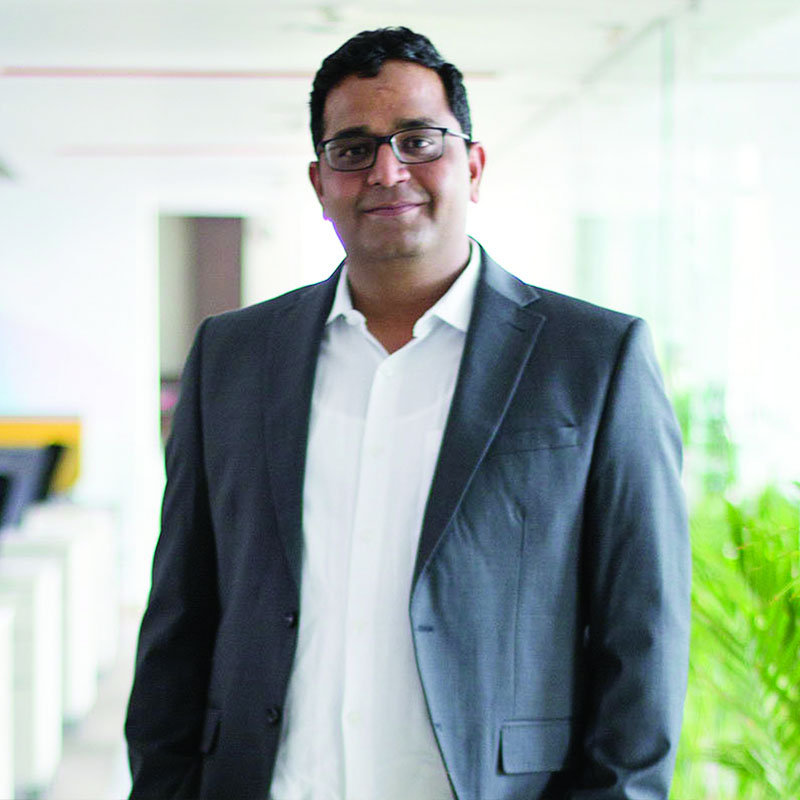
    Vijay Shekhar Sharma – Paytm

    Nextgen Entrepreneur for the Year
    Pranav Amin & Shaunak Amin – Alembic Pharmaceuticals

    Entrepreneur with Social Impact
    P Namperumalsamy – Aravind Eye Care System

    Conscious Capitalist Company for the year
    Mahindra Finance

    Best CEO – Multinational Company
    Kenichi Ayukawa – Maruti Suzuki India

    Best CEO – Public Sector
    Sutirtha Bhattacharya – Coal India

    Best CEO – Private Sector
    KBS Anand – Asian Paints

    Lifetime Achievement Award
    Yusuf K Hamied – Cipla

    Entrepreneur for the Year
    Vinita Gupta & Nilesh Gupta – Lupin

    The selection process started with an extensive research along qualitative and quantitative parameters. The long list of nominees for each category was narrowed down to a strong set of three to five nominees per category. A jury headed by Harsh Mariwala, chairman of Marico Ltd, examined the nominations and selected the winners.

    Other members of the jury were — AZB & Partners founder and senior partner Zia Mody, TeamLease Services co-founder and chairman Manish Sabharwal, McKinsey India managing director Noshir Kaka, KKR India managing director Sanjay Nayar, and Omidyar Network partner and Omidyar Network India Advisors managing director Roopa Kudva.

    KPMG, Forbes India’s knowledge partners for the event, helped with the
    nomination process.

    Transformational leadership, which the 2016 edition of the Forbes India Leadership Awards seeks to honour, includes individuals and organisations who have achieved success through their vision, foresight, and business ethics.

  • Paytm is Forbes India’s ‘Outstanding Startup for the Year’

    Paytm is Forbes India’s ‘Outstanding Startup for the Year’

    MUMBAI: Paytm, the Noida-based e-commerce platform which would be the biggest gainers of the government decision to scrap Rs 500 and Rs 1000 notes, has pocketed the ‘Outstanding Startup for the Year’ award at the Forbes India Leadership Awards (FILA) here yesterday. India Inc’s brightest, biggest and bravest entrepreneurs were honoured at FILA.

    Lupin’s Vinita & Nilesh Gupta won Forbes India ‘Entrepreneur for the Year 2016’ award and YK Hamied was conferred the Lifetime Achievement award.

    The awards across nine categories acknowledged the outstanding contributions of CEOs, entrepreneurs and business leaders who have built enterprises that have had a deep and enduring impact on the economy and the wider society.

    “As chroniclers of entrepreneurial capitalism, Forbes India has been celebrating leadership for years. FILA is a one important way we do this where we honour a set of such inspirational business leaders. Now in its sixth year, the awards celebrate those who, by their actions, have made a difference to their organisations, their employees and also to the business segments in which they operate,” said Forbes India editor Sourav Majumdar.

    The achievements of this year’s winners assume significance since many of the business leaders felicitated have braved difficult local and global economic conditions to steer their organisations towards operational excellence.

    Winners of the FILA 2016:

    Outstanding Startup for the Year
    Vijay Shekhar Sharma – Paytm

    Nextgen Entrepreneur for the Year
    Pranav Amin & Shaunak Amin – Alembic Pharmaceuticals

    Entrepreneur with Social Impact
    P Namperumalsamy – Aravind Eye Care System

    Conscious Capitalist Company for the year
    Mahindra Finance

    Best CEO – Multinational Company
    Kenichi Ayukawa – Maruti Suzuki India

    Best CEO – Public Sector
    Sutirtha Bhattacharya – Coal India

    Best CEO – Private Sector
    KBS Anand – Asian Paints

    Lifetime Achievement Award
    Yusuf K Hamied – Cipla

    Entrepreneur for the Year
    Vinita Gupta & Nilesh Gupta – Lupin

    The selection process started with an extensive research along qualitative and quantitative parameters. The long list of nominees for each category was narrowed down to a strong set of three to five nominees per category. A jury headed by Harsh Mariwala, chairman of Marico Ltd, examined the nominations and selected the winners.

    Other members of the jury were — AZB & Partners founder and senior partner Zia Mody, TeamLease Services co-founder and chairman Manish Sabharwal, McKinsey India managing director Noshir Kaka, KKR India managing director Sanjay Nayar, and Omidyar Network partner and Omidyar Network India Advisors managing director Roopa Kudva.

    KPMG, Forbes India’s knowledge partners for the event, helped with the
    nomination process.

    Transformational leadership, which the 2016 edition of the Forbes India Leadership Awards seeks to honour, includes individuals and organisations who have achieved success through their vision, foresight, and business ethics.

  • Amagi’s Mix  challenge

    Amagi’s Mix challenge

    MUMBAI: “Small and medium enterprises that participate in TV advertising, can help broadcasters expand their revenues. While the combined media spends of 100 such SMEs would equate to the TV spends of one of heavyweights in the brand world, SMEs can contribute around 15 per cent of total advertising dollars in India, if trends in other markets are to be believed,” Amagi Media Labs co-founder Baskar Subramanian said.

    Giving a fresh new twist to the line ‘anything can be bought online these days,’ Amagi recently launched the much-talked-about online media buying and planning platform Amagi Mix that aims to make media buying more inclusive for small and medium-sized enterprises (SMEs) and the ever-growing start-up companies in India. While the service is currently available for only television buying, Amagi intends to expand it for other media as well.

    A senior broadcasting professional and advertising industry expert, however, was skeptical of Amagi Mix calling it an “evaluation biz” that does not focus on profit-making. He did not think Amagi’s geo-targeting model was very successful either. He also doubted the broadcasters on board had a bulk inventory on sale on the platform.

    But, Amagi Mix, as per Subramanian, is win-win initiative for both broadcasters and brands. On the one hand it allows brands with limited budget to access a national television broadcaster’s reach and customise it to reach its target audience. This is enabled by Amagi’s existing geo-targeting technology that allows a single ten second slot to be multiplied according to different regions, so that different advertisement plays on the same spot in different locations.

    “TV goes national with the help of satellite signals – which could be DTH or cable – and these then come down to different headends in the country, which pipe the content to your homes. We intercept these signals in each of these headends in thousands of locations in the country. It allows us to change the content only for 10 or 30 secs of the ad slot. We buy one spot which then gets spliffed to different content at the headends,” Subramanian explained, adding that the broadcasters install it on Amagi’s behalf as part of their deal. Some of the networks that Amagi has partnered with for its geo-targeting service are ZEEL, Viacom18 group and Times Network.

    “Since we are not competing with the big agencies, we are actually adding or expanding the advertising pie rather than eating away from it,” Subramanian added. It is good for broadcasters to have a variety of advertisers rather than few spenders, because if there is a cost cut in one, it adds more burden to the broadcaster.

    Since going online, the platform has already attracted 5500 visitors, some even resulting in buys starting as Rs 25,000 to tens of lakhs. As per Subramanium, the ideal budget for an average SMEs should start at at least Rs 1 lakh to see the effectiveness of a campaign on Amagi Mix.

    Given the restricted budget of the said advertisers, Amagi is also offering to create creative content for the ad spots in a cost-effective way. “We also create advertisements for those who don’t want to spend a bomb on making ads via big name creative agencies, some of them for as low as Rs 20,000. It is an add-on to our services that ties up well with the rest,” Subramanian informed.

    As to how SMEs would embrace being hands-on with the complex work of buying the right TV media mix for themselves, Subramanian clarified that they have deliberately kept the website simple and easy to use. So far, Subramanian observed that Maharashtra, Uttar Pradesh, Tamil Nadu and Delhi have emerged as strong markets where SMEs are interested in buying media online.

    The idea was to leave the complex knowledge of media buying at the backend, while brands can concentrate on their simple marketing needs.

    “The challenge,” Subramanian said, “is to grow the breadth of media options the SMEs have now. We want to ensure that Amagi Mix is the most trusted platform available to them so that these advertisers, who used to shy away from buying national TV ads thinking it’s too expensive, feel comfortable buying online. It’s not easy to spend lakhs of rupees on a faceless online transaction. Therefore, making ourselves the most trusted brand is very critical.”

    To address this, Amagi has also launched a television commercial, titled ‘Yaari Yaari’ which has gone on-air across Amagi’s vast channel bouquet to educate TV audiences about the viability of the tool. The entire TVC has been scripted, conceptualized, financed, shot, produced and edited in-house at Amagi.

    Amagi Mix works on an algorithm that extrapolates and processes historical data of successful campaigns from around 4000 brands to learn and take intelligent decisions for an advertiser using the service.

    Currently the service offers an ad inventory of 70 national and regional channels, who are already partners with Amagi for its other services. “It’s at a nascent stage now so we don’t have clear figures but channels have come on board with some thousands of 10 seconders for now. We are aiming to broaden the width of channels as well to be more relevant to regional SMEs.”

    About the kind of commissions Amagi expects from transactions online, Subramanian made it clear that currently they aren’t looking at making money right now. “We haven’t really planned the commissions yet. Our primary focus is to make Agami Mix the best place for SMEs to trade in media by making it really user friendly. We will figure out the economics of it once we have established Amagi Mix as the most trusted brand for being media online for SMEs.

    He however affirmed that the company expects the platform to reach maturity in 18 months, post which it is expected to contribute 20 per cent of the agency’s overall business.

    “We had to wait till online buying became more commonplace in the county. It took us two to three years to be ready with everything, in our wish to give a quality service. Especially for brands in the tier II and tier III cities who often complained about the lack of skills or access to the right media inventory for their campaign needs. Either relevant media agencies didn’t exist there or they didn’t have the heavy budget to deal with the media behemoths of the country,” Subramanium shared.

    While media reports suggest that the company is looking to raise series D funding of $25 million, Subramanian stated that the company is adequately funded for the time being and looking to execute in three areas — smooth sailing of Amagi Mix in India expanding into online video business by providing targeted advertising solutions to broadcasters for streaming videos online, and growing its international base.

  • Amagi’s Mix  challenge

    Amagi’s Mix challenge

    MUMBAI: “Small and medium enterprises that participate in TV advertising, can help broadcasters expand their revenues. While the combined media spends of 100 such SMEs would equate to the TV spends of one of heavyweights in the brand world, SMEs can contribute around 15 per cent of total advertising dollars in India, if trends in other markets are to be believed,” Amagi Media Labs co-founder Baskar Subramanian said.

    Giving a fresh new twist to the line ‘anything can be bought online these days,’ Amagi recently launched the much-talked-about online media buying and planning platform Amagi Mix that aims to make media buying more inclusive for small and medium-sized enterprises (SMEs) and the ever-growing start-up companies in India. While the service is currently available for only television buying, Amagi intends to expand it for other media as well.

    A senior broadcasting professional and advertising industry expert, however, was skeptical of Amagi Mix calling it an “evaluation biz” that does not focus on profit-making. He did not think Amagi’s geo-targeting model was very successful either. He also doubted the broadcasters on board had a bulk inventory on sale on the platform.

    But, Amagi Mix, as per Subramanian, is win-win initiative for both broadcasters and brands. On the one hand it allows brands with limited budget to access a national television broadcaster’s reach and customise it to reach its target audience. This is enabled by Amagi’s existing geo-targeting technology that allows a single ten second slot to be multiplied according to different regions, so that different advertisement plays on the same spot in different locations.

    “TV goes national with the help of satellite signals – which could be DTH or cable – and these then come down to different headends in the country, which pipe the content to your homes. We intercept these signals in each of these headends in thousands of locations in the country. It allows us to change the content only for 10 or 30 secs of the ad slot. We buy one spot which then gets spliffed to different content at the headends,” Subramanian explained, adding that the broadcasters install it on Amagi’s behalf as part of their deal. Some of the networks that Amagi has partnered with for its geo-targeting service are ZEEL, Viacom18 group and Times Network.

    “Since we are not competing with the big agencies, we are actually adding or expanding the advertising pie rather than eating away from it,” Subramanian added. It is good for broadcasters to have a variety of advertisers rather than few spenders, because if there is a cost cut in one, it adds more burden to the broadcaster.

    Since going online, the platform has already attracted 5500 visitors, some even resulting in buys starting as Rs 25,000 to tens of lakhs. As per Subramanium, the ideal budget for an average SMEs should start at at least Rs 1 lakh to see the effectiveness of a campaign on Amagi Mix.

    Given the restricted budget of the said advertisers, Amagi is also offering to create creative content for the ad spots in a cost-effective way. “We also create advertisements for those who don’t want to spend a bomb on making ads via big name creative agencies, some of them for as low as Rs 20,000. It is an add-on to our services that ties up well with the rest,” Subramanian informed.

    As to how SMEs would embrace being hands-on with the complex work of buying the right TV media mix for themselves, Subramanian clarified that they have deliberately kept the website simple and easy to use. So far, Subramanian observed that Maharashtra, Uttar Pradesh, Tamil Nadu and Delhi have emerged as strong markets where SMEs are interested in buying media online.

    The idea was to leave the complex knowledge of media buying at the backend, while brands can concentrate on their simple marketing needs.

    “The challenge,” Subramanian said, “is to grow the breadth of media options the SMEs have now. We want to ensure that Amagi Mix is the most trusted platform available to them so that these advertisers, who used to shy away from buying national TV ads thinking it’s too expensive, feel comfortable buying online. It’s not easy to spend lakhs of rupees on a faceless online transaction. Therefore, making ourselves the most trusted brand is very critical.”

    To address this, Amagi has also launched a television commercial, titled ‘Yaari Yaari’ which has gone on-air across Amagi’s vast channel bouquet to educate TV audiences about the viability of the tool. The entire TVC has been scripted, conceptualized, financed, shot, produced and edited in-house at Amagi.

    Amagi Mix works on an algorithm that extrapolates and processes historical data of successful campaigns from around 4000 brands to learn and take intelligent decisions for an advertiser using the service.

    Currently the service offers an ad inventory of 70 national and regional channels, who are already partners with Amagi for its other services. “It’s at a nascent stage now so we don’t have clear figures but channels have come on board with some thousands of 10 seconders for now. We are aiming to broaden the width of channels as well to be more relevant to regional SMEs.”

    About the kind of commissions Amagi expects from transactions online, Subramanian made it clear that currently they aren’t looking at making money right now. “We haven’t really planned the commissions yet. Our primary focus is to make Agami Mix the best place for SMEs to trade in media by making it really user friendly. We will figure out the economics of it once we have established Amagi Mix as the most trusted brand for being media online for SMEs.

    He however affirmed that the company expects the platform to reach maturity in 18 months, post which it is expected to contribute 20 per cent of the agency’s overall business.

    “We had to wait till online buying became more commonplace in the county. It took us two to three years to be ready with everything, in our wish to give a quality service. Especially for brands in the tier II and tier III cities who often complained about the lack of skills or access to the right media inventory for their campaign needs. Either relevant media agencies didn’t exist there or they didn’t have the heavy budget to deal with the media behemoths of the country,” Subramanium shared.

    While media reports suggest that the company is looking to raise series D funding of $25 million, Subramanian stated that the company is adequately funded for the time being and looking to execute in three areas — smooth sailing of Amagi Mix in India expanding into online video business by providing targeted advertising solutions to broadcasters for streaming videos online, and growing its international base.

  • Bang in the Middle customises IndiaMART’s campaign

    Bang in the Middle customises IndiaMART’s campaign

    NEW DELHI: Zero in on the specifics is the new e-commerce mantra. A new digital ad campaign that highlights a unique value proposition of offering customized products to the buyers has been launched by the IndiaMART, online marketplace connecting buyers with suppliers

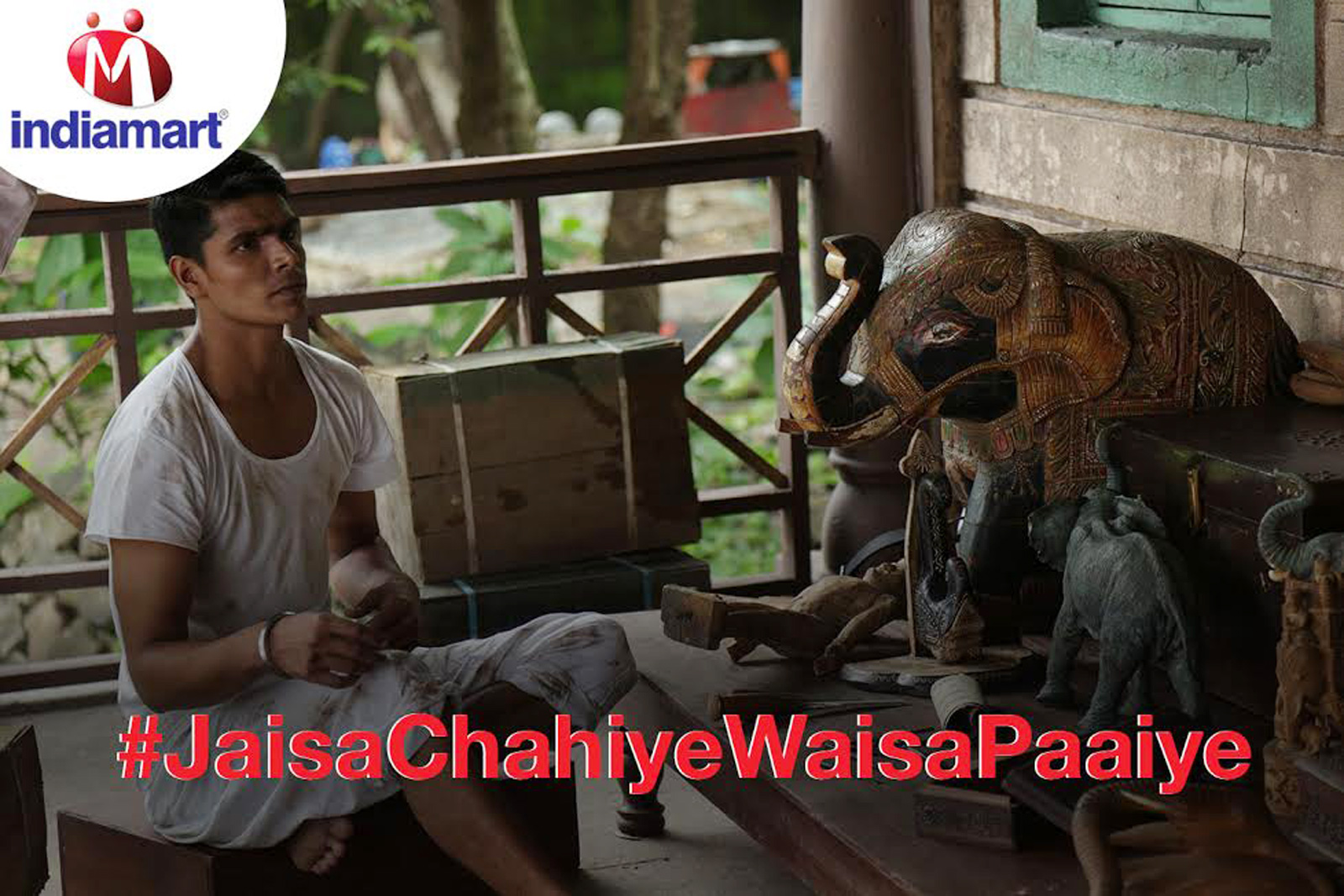
    Conceptualised by ‘Bang in the Middle’, the film #JaisaChahiyeWaisaPaaiye depicts a hunt for an ‘exotic’ elephant to emphasise on how consumers no longer only seek products that are easily available in the market. The campaign uses humour and curiosity to strike a chord with the audience and shows India’s largest e-marketplace’s ability to tap into the inexhaustible possibilities of a buyer’s demands.

    IndiaMART Vice President – Marketing Sumit Bedi said, “In the clutter of marketplaces, IndiaMART is the only one offering customized products as per the buyer’s need. Whether it is furniture for your office or handicrafts for home decor or machinery for your factory, we can fulfil any demand because of a strong base of more than 25 lakh sellers. We keep hearing from our buyers about how IndiaMART helps them get products tailored according to their needs and not just run-of-the-mill products. And, that is what inspired us to roll out this #JaisaChahiyeWaisaPaaiye campaign.”

    Bang in the Middle chief strategy officer and managing partner Naresh Gupta said “IndiaMART is not the usual brand. It’s a pioneer and thought leader. It is the definitive place where the small business-owners come searching for growth and profitability. As a brand, IndiaMART has to build its expertise with the small business-owners, and yet come across as a warm and friendly place which powers millions of small businesses across the country. We have ensured that the market sees value in differentiated offerings of the brand”.

    With technology at the heart of its business, IndiaMART’s success lies in its vision to provide enhanced and improvised solutions that meet market demands. The e-commerce platform has been at the helm of creating a simple but workable B2B ecosystem. A one-stop destination for connecting buyers and sellers, IndiaMART offers customized and full-service offerings.

  • Bang in the Middle customises IndiaMART’s campaign

    Bang in the Middle customises IndiaMART’s campaign

    NEW DELHI: Zero in on the specifics is the new e-commerce mantra. A new digital ad campaign that highlights a unique value proposition of offering customized products to the buyers has been launched by the IndiaMART, online marketplace connecting buyers with suppliers

    Conceptualised by ‘Bang in the Middle’, the film #JaisaChahiyeWaisaPaaiye depicts a hunt for an ‘exotic’ elephant to emphasise on how consumers no longer only seek products that are easily available in the market. The campaign uses humour and curiosity to strike a chord with the audience and shows India’s largest e-marketplace’s ability to tap into the inexhaustible possibilities of a buyer’s demands.

    IndiaMART Vice President – Marketing Sumit Bedi said, “In the clutter of marketplaces, IndiaMART is the only one offering customized products as per the buyer’s need. Whether it is furniture for your office or handicrafts for home decor or machinery for your factory, we can fulfil any demand because of a strong base of more than 25 lakh sellers. We keep hearing from our buyers about how IndiaMART helps them get products tailored according to their needs and not just run-of-the-mill products. And, that is what inspired us to roll out this #JaisaChahiyeWaisaPaaiye campaign.”

    Bang in the Middle chief strategy officer and managing partner Naresh Gupta said “IndiaMART is not the usual brand. It’s a pioneer and thought leader. It is the definitive place where the small business-owners come searching for growth and profitability. As a brand, IndiaMART has to build its expertise with the small business-owners, and yet come across as a warm and friendly place which powers millions of small businesses across the country. We have ensured that the market sees value in differentiated offerings of the brand”.

    With technology at the heart of its business, IndiaMART’s success lies in its vision to provide enhanced and improvised solutions that meet market demands. The e-commerce platform has been at the helm of creating a simple but workable B2B ecosystem. A one-stop destination for connecting buyers and sellers, IndiaMART offers customized and full-service offerings.