Tag: E-commerce

  • Amazon India’s new monthly subscription plan

    Amazon India’s new monthly subscription plan

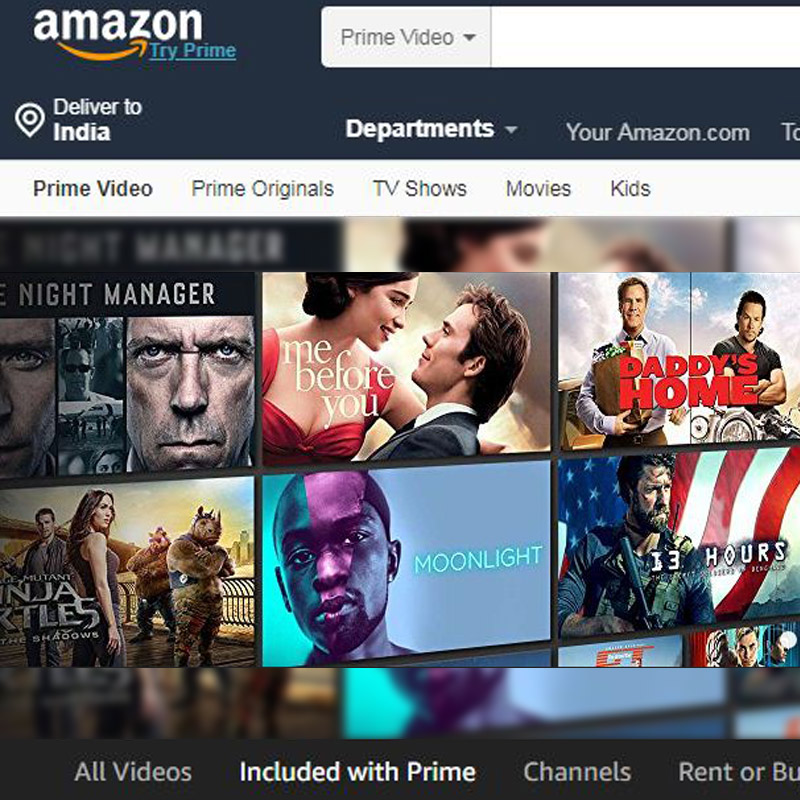
    MUMBAI: Amazon India has added a new monthly subscription plan for its Prime members available at Rs 129.

    With an auto-renewal mechanism activated by default, the payment methods for this subscription are currently limited to debit and credit cards only. While users can pay by any credit card, the payment option from debit card is limited to a select few.

    Earlier, Amazon India offered only a yearly subscription plan at Rs 999. However, consumers that have subscribed to it cannot switch to a monthly plan now.

    Amazon Prime users can access Amazon Prime Video, Amazon Prime Music store as well as get the facility of free and fast delivery. 

    Amazon Prime service was launched in India in 2016, three years after its  global launch.

    Also read:  India fastest-growing market in first year for Amazon: Jeff Bezos

    Netflix, Amazon may contribute to rising production cost in India


  • Google invests $550 million in Chinese e-commerce company

    Google invests $550 million in Chinese e-commerce company

    MUMBAI: American multinational technology company, Google, is all set to invest $550 million in China’s second largest e-commerce company JD.com. The move comes as part of the technology giant’s effort to expand its presence in fast growing Asian market.

    Under the agreement, Google will receive 27,106,948 newly issued JD.com Class A ordinary shares at an issue price of $20.29 per share, equivalent to $40.58 per ADS, based on the volume-weighted average trading price over the prior 10 trading days.

    With this partnership, Google will own less than a per cent stake in the company. Beyond the cash investment, the deal will also include promotion of JD goods on Google’s shopping service. This will also help JD.com expand its base beyond China and Southeast Asia to establish a string presence in U.S. and European markets.

    By applying JD’s supply chain and logistics expertise and Google’s technology strengths, the two companies aim to explore the creation of next generation retail infrastructure solutions, with the goal of offering helpful, personalised and frictionless shopping experiences.

    In a blog post, Google president of Asia-Pacific Karim Temsamani said, “We want to accelerate how retail ecosystems deliver consumer experiences that are helpful, personalised and offer high quality service in a range of countries around the world, including in Southeast Asia.”

    “By applying JD.com’s supply chain and logistics expertise and our technology strengths, we’re going to explore new ways retailers can make shopping effortless for their consumers, giving them the power to shop wherever and however they want,” Karim added.

    It is noteworthy that Google’s main services are essentially blocked in China ver its refusal to censor search results in line with local laws. For this, Google announced that the  agreement initially would not involve any major new Google initiatives in China. 

    JD.com chief strategy officer Jianwen Liao in an official statement said, “This partnership with Google opens up a broad range of possibilities to offer a superior retail experience to consumers throughout the world. This marks an important step in the process of modernising global retail. As we celebrate our June 18 anniversary sale, this partnership opens a new chapter in our history.”

    The Asia-Pacific region is one of the largest and fastest growing e-commerce marketplaces in the world. People in Southeast Asia alone are expected to spend $88.1 billion online by 2025. These consumers in Asia-Pacific are ready to buy, but hard to please. The growth of access to the internet and online retail has led to rising expectations for top-notch experiences at every step of the shopper’s journey.

  • Pepperfry bets big on digital

    Pepperfry bets big on digital

    MUMBAI: Eight years ago, the concept of buying home furniture online seemed nothing more than an impossible task and worth a laugh or two. But today, things have changed drastically and buying furniture online seems so much more convenient and time saving than making rounds of multiple stores and choosing from the limited options each of them have.

    Furniture is one of those few categories in e-commerce wherein quality triumphs over discounts. People are willing to spend a few extra bucks for better quality.

    Even today, 90 per cent of India’s furniture sector continues to remain unorganised. Of the organised, only one per cent is online as per estimates. According to a report by Redseer Consulting, the home furniture industry in India was worth $25 billion in 2016 and is expected to grow to $35 billion by 2020 of which, the online section will be worth $700 million.

    Launched in 2012, Pepperfry was one of the earliest entrants in the online furniture selling business. The company initially started off by selling furniture, home decor, furnishing, kitchen utilities, fashion and jewellery all under one roof. But after a year’s time, it decided to drop fashion and jewellery and keep its core to furniture.

    Pepperfry, which commands a 65 per cent share of India’s organised furniture market, has its target audience in metros and mini metros. Urban youth, newer cities, complexes and migrant professionals are Pepperfry’s core customers. The majority of its sale comes from Bengaluru. Additionally, Pune, Gurgaon, Hyderabad, Chennai, Delhi and Mumbai are also the company’s largest markets. In terms of sale, Pune is bigger than Chennai, Gurgaon is as big as Delhi, Bengaluru is bigger than Delhi and Mumbai combined.

    public://cmo_118.jpg

    Catering to a large number of young customers, the brand communication must be in their preferred medium – digital. Pepperfry CMO and head of new business Kashyap Vadapalli says that increasingly people are becoming extremely comfortable buying furniture on-the-go (on mobile devices) which wasn’t the case earlier as they preferred shopping only via desktops and laptops.

    Digital will also change the way we shop going forward and enhance the entire shopping experience. Technology is reshaping the way we look and shop today. Brands across sectors are experimenting with technologies such as augmented reality (AR) and virtual reality (VR) to give a better shopping experience to consumers. Vadapalli affirms that over the next couple of years, we will see a lot of innovation in online furniture space. Pepperfry is investing in enhancing the AR capabilities on phone and if that happens, customers can judge the images much better, they can rotate the images much better and that will help them in taking smart decisions. The company is also looking at investing in VR to set up zones where people can try on different looks and set ups in a virtual fashion.

    Although Swedish furniture major IKEA is using these technologies in the US, the renewed shopping model is still fairly new for the Indian audience and the technology back here in India hasn’t been perfected yet. He says that the technology is a little rough in India but it is improving very quickly. Pepperfry has looked at a lot of VR options but the images are very grainy and shifting between looks is a task. Vadapalli thinks it should take only six to 12 months for Indians to perfect the glitch and once it happens, consumers in India will prefer shopping only online.

    While quality wins over discounts for urban consumers, the situation in rural areas is far from this. Although the digital penetration in smaller towns is increasing, the concept of buying furniture is still unpopular. This is mainly because touch and feel are still prominent in smaller pockets of the society and people still prefer going to their carpenters or brick and mortar store. Pepperfry doesn’t consider rural as its market as 90 per cent of its business comes from 27 cities that it already functions in but believes rural to be its growth market five years down the line.

    Although one of the earliest entrants in the Indian market, Pepperfry today faces stiff completion from other players including FabFurnish, Urban Ladder and a new sub-segment in the category: rental furniture companies like Furlenco and Rentmojo. Pepperfry delivers to 150 cities using its own vehicles across the country, which is the highest reach in this segment. Its competitor Urban Ladder is present in over 100 cities, whereas FabFurnish’s specialised logistics service FabOne is available in seven cities, although the company uses third-party logistics firms to cover more than 100 cities.

    After six years in existence, Pepperfry has launched 10 house brands that contribute 50 per cent to its business, 27 Pepperfry studios across 15 major metros and mini metros in the country and is planning to launch 12 more. Vadapalli states that modular furniture is the fastest growing category for Pepperfry today and while furniture drives maximum sales from the entire bouquet, all other categories are expected to grow faster in the next 12 months.

    Pepperfry roughly spends anything between Rs 80 and 100 crore annually on its marketing which is split 50-50 between digital and offline (television). He adds, “Digital has always been our core focus and TV only comes in for big campaigns and it provides a business uplift. When we run a TV campaign, we see the traffic going up within an hour. We know TV works and so we will use it strategically, while digital is our continuous bread and butter.”

    Although the company does not export to other counties right now, Vadapalli considers it to be a definite plan and idea for the future.

    In today’s time, creating brand awareness is one of the key necessities for a successful brand image and Pepperfry has been a part of few branded content on digital platforms and will continue to do brand integration and create branded content.

    In the second half of 2018, Pepperfry is all set with its huge campaign around non-furniture categories including kitchen and home decor. Vadapalli says that this campaign will be a major push for its sales.

    Some new ad films from the campaign were launched on 14 April 2018.

    Also Read :

    Going from clicks to bricks

    Ideation to execution is shorter today: Forsman & Bodenfors’ Akesson

    FabIndia sets aside 40% on digital advertising

    Is India ready for the impact of AI on marketing?

  • Pricekart.com wants online shoppers to save Rs 1000 cr

    Pricekart.com wants online shoppers to save Rs 1000 cr

    MUMBAI: Over the last few years, there has been a rapid growth in the number of e-commerce stores in the country. Every store offers various discounts, deals and offers for each product. Due to this, buyers visit multiple online stores and spend a lot of time to find the right product and get the best deal.

    Nethority Technologies recently announced its savings engine, pricekart.com with an aim to help shoppers save money every time they shop online. Pricekart’s mission is to help save Rs 1000 crore of 100 million online shoppers this year. To help make this decision easier and convenient for online shoppers, Pricekart’s proprietary system uses machine learning to gather data like prices, reviews, deals, coupons and more from over 100+ online stores. This makes it easier for users to find everything in one place and save a lot of time and money every time they shop online.

    Pricekart founder and CEO Ruturaj Kohok says, “We want our users to save a lot and online sellers to sell a lot so it is a win-win for all. With this, we also want to be shoppers’ first stop before they shop online”

    Pricekart plans on helping small and medium online retailers publish their products on its platform. With over 15,000+ such online stores and number growing rapidly, this will be an opportunity for these retailers to grow their sales drastically.

    Pricekart co-founder and CTO Nitin Nagar says the company’s focus is user experience, accurate data and lots of sources.

    Pricekart, plans to raise its next round once the website reaches 5 million monthly users. The future plans of the company also include increasing its product range by including categories like fashion, travel and finance at the same time expanding its reach to online buyers in the UK and the Middle East soon.

  • Amazon India to launch in-house beauty products

    Amazon India to launch in-house beauty products

    MUMBAI: Online e-commerce giant Amazon India will soon launch its own line of in-house beauty and personal care products. Amazon India is talking to contract manufacturers and will be launching private labels (in-house brands) in a few categories within skincare and makeup.

    While Flipkart-owned Myntra has invested heavily in growing its personal care segment, Amazon is set to follow suit. With this, the race between India’s two top e-commerce majors to acquire customers will be further fuelled. 

    The cosmetics and personal care category is fast growing in India and dominated by smaller startups like Nykaa, Purple, etc. The category also has major international brands such as Loreal, Maybelline, Bobbi Brown, MAC among others that are well present offline and via online vendors.

    Amazon came to India in mid-2013 with a massive investment of $2 billion and launched its first in-house brand AmazonBasic in 2015. AmazonBasic had products like consumer electronic products like USB cord, backpacks, tripods, Alkaline batteries, etc. The brand also forayed into fashion segment with its Myx and Solimo a year later.

    According to Red-Seer consulting, the online beauty and personal care market in India is worth $300 million which is expected to cross $3.5 billion in 2 years. 

    Amazon declined to comment on the issue when a call was made from Indiantelevision.com seeking their confirmation on the same.

    If Amazon adds beauty and personal care segment to its category, the move would challenge its direct rival e-commerce platform Myntra that recently announced its plan to open beauty and offline stores. 

    Also Read :

    Amazon India to launch 10 originals in 2018

    Dairy Milk innovates Silk for Valentine’s Day 

  • M&M to revamp e-commerce platform

    M&M to revamp e-commerce platform

    MUMBAI: Mahindra & Mahindra (M&M), India’s largest utility vehicle maker, has decided to revamp it’s digital platform by engaging with experts BCG, Microsoft and Dassualt to engage with prospective buyers right through their purchasing cycle according to a Brand Equity report.

    Being the first to sell vehicles through e-commerce platform, the company today gets 6 per cent of its sales lead from online platform, by revamping the digital platform, M&M’s intent is to bring the showroom home of the buyers through a mix of physical and virtual experience to keep its prospective buyers hooked to its brand at a time when the buyers are spoilt with choice, the report said.

    The company expects about 15 per cent of its retail sales to be generated through online platform in FY-19 from the current 7-8 per cent.

    The company has started the concept of “taking showroom at home” on a pilot basis at one of its dealership in Mumbai and the company claims it is doing well and very soon it will roll it out to the other parts of the country

    The company has worked with Microsoft Consulting to envisage the pre-sales strategy. M&M created SyouV Platform along with Microsoft, Dassault Systemes & Hard n Soft Technologies. For the post purchase platform Mahindra With You Hamesha, the company had engaged with Extentia Technologies and BCG helped the company “Bring The Showroom Home” initiative for which application has been developed by Artificial Reality.

    The new digital strategy takes into account the experience a prospective buyer may have pre-purchase during purchase and post purchase and the idea is to offer transparency, convenience and personalisation option.

  • Flipkart re-launches fashionable ads with kids

    Flipkart re-launches fashionable ads with kids

    MUMBAI: Online fashion portal Flipkart has released its latest all-rounder campaign on making trendy fashion accessible and affordable. It will last for 10 weeks and connect with customers on all touch points like television, YouTube and social media.  

    The ad series reiterates Flipkart as the preferred destination for any kind of shopper, from celebrity fashion lovers or brand enthusiasts or exclusive fashion lovers or the fashionistas who hate repeating their clothes or even the divas who love especially curated looks.

    As an extension to the campaign, ‘Be trendy. Always’ launched earlier this year, the latest campaign also features the Flipkart kids. The kids have made a memorable impact on the shoppers’ minds and have always succeeded in convincing consumers that shopping with Flipkart is always worthwhile.  

    Flipkart head of marketing Shoumyan Biswas says, “On the back of deep consumer research, we understood that every fashion shopper has a different method to get what they want from fashion. Being relevant to every kind of fashion shopper, Flipkart can be the best place for everyone to look their best. Our new campaign is centred around this insight and brings alive different fashion shopper archetypes in a fun and interesting manner.”

    The campaign that went live on 26 December also includes a video series with Rohan Joshi (leading stand-up comedian) that will help fashion forward men discover what’s best for specific looks and tips on how to style and dress themselves. The campaign will also feature a game on YouTube where celebrities will be challenged to put together certain looks under themes by shopping on Flipkart. The series will be followed by Weekly Hues where fashion shoppers will be given tips on how to shop a look based on a theme like size, or trend or colour or occasion very much in line with the shopping experience offered on the platform itself.

    Additionally, Flipkart has partnered with fashion magazine GQ, to showcase how to get trendy like your favourite celebrity by shopping on Flipkart.

  • Going from clicks to bricks

    Going from clicks to bricks

    MUMBAI: Nothing beats the feeling of being served at your doorstep and this convenience is what has thrust e-commerce to pole position among shoppers worldwide. Add to it the ease of picking, cross-checking prices across sites and the frequent discounts are the cherries on the cake.

    The growth of e-commerce became evident since 1994, with the first sales of Sting album in the United States. Soon, products like wine, chocolates and flowers became the pioneering retail categories which further fuelled the growth of online shopping. Before long, researchers dug out that some products are more appropriate for e-commerce buying than others – most of them turned out to be generic items which didn’t need physical touch validity. Nothing isn’t online today, you name a product and it’s up for purchase.

    India officially went online publicly in 1995; before that, it was only for research and educational institutes. It was in the early 2000s when India was introduced to a novel way of purchasing – teleshopping. With the advent of the internet age here, this hopped onto the web with Flipkart being one of the earliest entrants. Starting with books, the Softbank-backed company is now giving a tough fight to America’s Amazon.

    Old teleshopping TVC:

    Today, India has an internet user base of over 450 million, which accounts for 40 per cent of the country’s population. NASSCOM has projected the country’s e-commerce market to be worth Rs 2 lakh crore this year. As per Google, there were 100 million online shoppers in India in 2016. Online apparel is one of the most popular verticals, which along with computers and consumer electronics, makes up 42 per cent of the total retail e-commerce sales. According to various media reports, India’s online retail market grew at about 25 per cent in 2017 and is projected to touch $20 billion by the year 2020. It won’t be incorrect to say that it has been a joyride for online websites and e-commerce platforms in India.

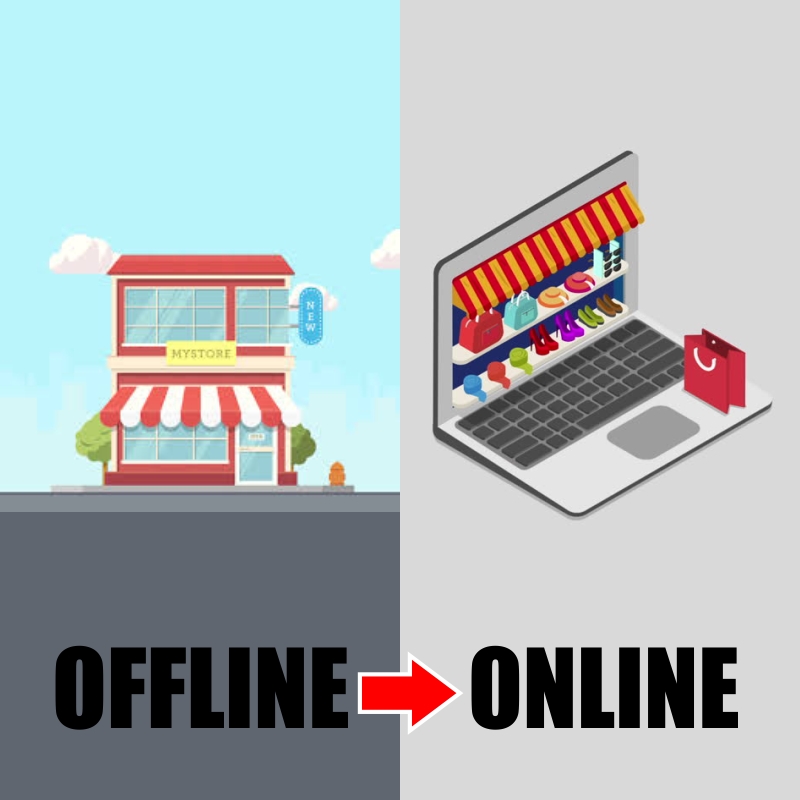
    But things seem to be changing now. Following a successful run in the online world, e-commerce companies are now venturing into a space they once thought would soon see the same fate as dinosaurs— brick and mortar stores.

    Globally, this phenomenon has taken the industry by a storm. Large organisations that were leaders in online have taken the route of opening physical stores or pop up shops. E-commerce marketplace Amazon is one such example. The global giant has teamed up with Calvin Klein to open holiday-themed pop-up stores in New York City and Los Angeles. Chinese e-commerce titan Alibaba is all set to steal a page from Amazon’s playbook by opening its first store in Shanghai.

    In India, lifestyle and fashion company Myntra, beauty and cosmetics website Nykaa, eyewear company Lenskart, housing and furniture websites Pepperfry and Urban Ladder and lingerie website Zivame are a few of those who have taken the online-to-offline route.

    Lenskart has established its strong presence in the offline space and is targeting to take its total brick and mortar count to over 900 in the next two years. Its current 400 offline stores contribute 50-60 per cent of its business. Online furniture website Pepperfry currently has over 23 physical stores which contribute 20 per cent to its overall sales.

    Flipkart owned online fashion marketplace, Myntra is considering launching its own multi-brand offline stores where customers can walk in and shop for all the collection that is also available on its online platform. Earlier in March 2017, Myntra launched its first offline store in Bengaluru for its homegrown brand – Roadster. The decision is in line with the company’s effort to aid profitability.

    Pepperfry, Lenskart and Urban Ladder are aiming to come up with their Initial Public Offering (IPO) in the next two to three years.

    Chinese mobile handset manufacturer Xiaomi, which was only available in India via Flipkart and Amazon in 2016, decided to open up stores here to boost sales and boy, did that work for the company!

    Xiaomi, which currently has 13 Mi Homes in top six metro cities, plans to increase the count to 100 by the end of next year. The Chinese manufacturer clocked revenue of about Rs 7000 crore in 2016 but doubled it in 2017 posting Rs 14,000 crore.

    Online leaders are investing heavily in setting up physical stores to fuel their next phase of growth. The move aids them in getting more customers and the hybrid strategy helps in gaining double-digit growth figure while expanding the business.

    Setting up offline stores also helps brands in balancing the high cost of acquisition that the online store demands. Although this is an emerging trend which will play an important role for online retailers in the days to come, brands have begun to embrace this omnichannel approach.

    Having said that, it is also a gamble that not every brand might have an appetite for. Setting up physical stores means investing heavy money into infrastructure and land acquisition while also running the risk of the store being an utter dud! It is a win-win situation for brands that are willing to embrace the step back.

    Also read:

    A year after demonetisation: E-payment services emerged winners

    BFSI’s changing communication in the digital era   

    E-commerce ad wars are the result of marketing myopia: experts


  • 55% marketers make better decisions with machine learning: iProspect report

    55% marketers make better decisions with machine learning: iProspect report

    MUMBAI: Digital agency iProspect has released its third annual Future Focus whitepaper geared to examine how machines and technology are impacting marketing and advertising in the year ahead. The paper takes a look at how brands can make the most of machines in 2018, from facilitating seamless consumer experiences to delivering greater efficiencies.

    iProspect interviewed 250 of its global clients, including FTSE 100 and Fortune 500 companies, and used real-time feedback to outline key insights and priorities necessary for businesses to thrive in our fast-moving, high expectation digital economy.

    Feedback shows that the transformative impact of voice, artificial intelligence (AI) and machine learning (ML) is being felt across the entire business landscape with 55 per cent of marketers surveyed agreeing that ML will allow them to make better decisions in 2018. 56 per cent of the marketers surveyed highlighted effective management of large data sets to deliver personalisation and relevant one-to-one experience as their main priority in 2018.

    The 2018 Future Focus whitepaper discusses some new machine rules. Brands enhanced customer experience by closing the gap between consumer expectation and brand reality. While 2017 was about understanding how best to connect data to understand consumers better, 2018 will be the year where marketers put consumers firmly at the centre of communications.

    The concept of ‘consumer moments’ will become widespread in 2018, encouraging marketers to seek out data signals that help them understand not just who their customers really are, but what are the moments that matter most as those consumers interact with brands at different stages of the purchase journey.

    Digital assistants have become the new gatekeepers and are set to fundamentally change the relationship between brands and consumers. According to market intelligence company Tractica, more than 700 million people use some form of digital assistant today, be it Siri on their mobile phone, or Amazon’s Alexa via a home device. With word error rate now at parity with humans, digital assistants can understand us better than ever, and usage of assistants is expected to soar to almost two billion by 2021. Within the next five years, most of the developed world will be using a digital assistant in one form or another to automate and manage many aspects of their daily lives.

    And it’s not just millennials who are early adopters of this technology. Forrester estimates that while 66 per cent of 18-24 year olds are using digital assistants, almost 40 per cent of the 70+ age group are also engaged. For marketers, this represents a new challenge in 2018 and beyond on learning how to market not to the consumer, but to the machine.

    AI & ML have transformed marketing and it is time for brands to get ahead of the intelligence curve. Simply put, AI aims to emulate human cognitive capabilities through artificial systems. One of the specialities of AI is machine learning, which enables computers to solve a problem by themselves, learning through examples, rather than being programmed especially to solve a distinct problem. If AI and ML capabilities are sought-after by tech companies, it’s because those companies understand the benefits for customer experience (eg., personalised recommendations on Netflix), security (eg., fraud detection on Paypal transactions), or product development (eg., autonomous cars for Uber).

    In 2018, we can expect mainstream brands to truly start testing the potential of AI and ML in advertising, taking marketing efforts to the next level. ML has the power to improve efficiency, help scale personalisation, and predict consumer behaviour with greater accuracy. As a result, 2018 will bring greater investment and experimentation in this area.

    VR will take commerce to new horizons and the distance between inspiration and conversion is now smaller than ever. Global e-commerce sales reached nearly $1.9 trillion in 2016, and are forecasted to grow to $3.9 trillion in 2020. As consumers expect to be able to buy everything, everywhere and at any time, this staggering growth will be increasingly supported by ecosystems which weren’t designed to be transaction first, but are now developing commerce features.

    There will be a rise of Amazon, the ‘everything store’. There can be little doubt that 2017 was a significant year for Amazon, as its seemingly irresistible expansion broke new ground across some of the biggest categories in the world. Amazon’s enormous capital power and evident knack for winning in any division it turns its attention to means it truly is becoming the oft-quoted ‘everything store’, apparently achieving the impossible — major, simultaneous expansion without sacrifice of either product or profit.

    Yet the company remains highly secretive, rarely announcing its intent or offering strategic insight. This means that as Amazon claims not only more net shoppers, but also creates new shopper behaviours, the onus is on today’s marketers to be proactive, rather than reactive, in developing their understanding of it. The good news is that there’s no more opportune time to learn than now. As Amazon finally turns its attention to the long dormant opportunity in ads by outlining plans for it to become a major income stream, marketers should seize the opportunity to get in at ground zero and start including it on media plans today.

    iProspect global chief strategy officer Shenda Loughnane says, “Advances in ML will allow for greater effectiveness and efficiency in marketing communications, freeing both marketers and agencies to focus on adding strategic value. Brands will need to understand how to balance the human versus machine elements of their business in order to leverage the full value of both.”

    iProspect India CEO Rubeena Singh adds, “In an increasingly complex digital economy, ML is set to play a pivotal role in our ecosystem. In India, we are already feeling these forces of change are driving better data understanding, enabling personalised conversation at scale and delivering greater efficiencies. We are at an inflection point where brands need to learn how to marry human capital and machines in order to succeed in the transformation that lies ahead.”

    Advances in ML will allow for greater effectiveness and efficiency in marketing communications, allowing both marketers and agencies to focus on adding strategic value, whilst allowing machines to take on more of the more complex administrative tasks associated with digital optimisation.
  • Myntra endorses hassle-free returns in latest campaign

    Myntra endorses hassle-free returns in latest campaign

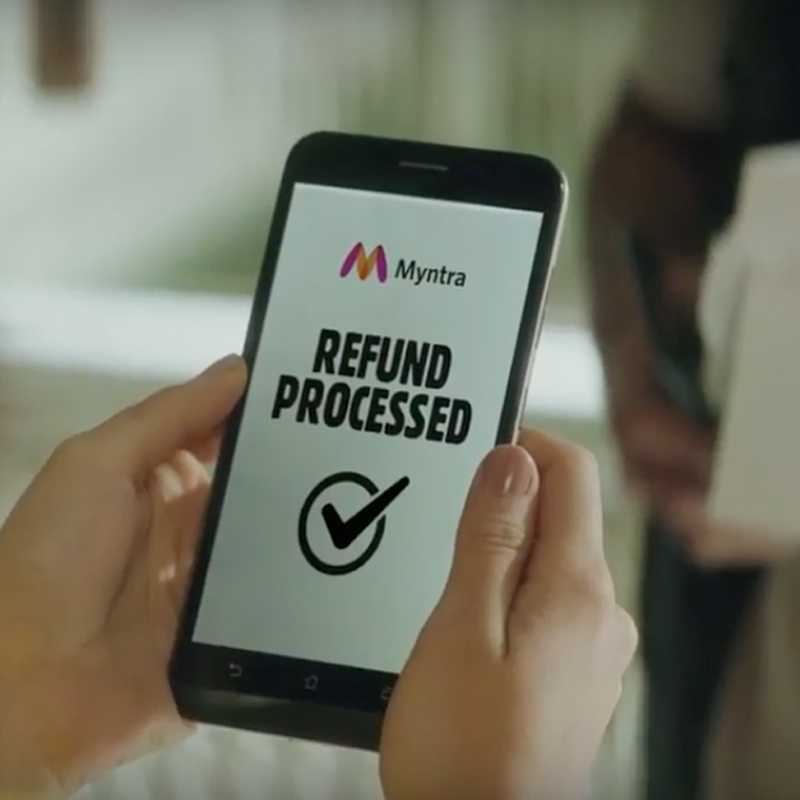
    MUMBAI: Fashion e-commerce site Myntra is wooing new customers, people who have never shopped online, from non-metro cities and smaller towns. The marketing campaign will focus on pain points such as seamless returns and instant refunds, which inhibit them from taking the online leap. The TVCs have been conceptualised by Taproot Dentsu.

    Commenting on the campaign, Jabong head and Myntra CMO Gunjan Soni said, “Non-metro cities are very important markets for Myntra as we see our next phase of growth coming from there. Our research shows that over 30 million SEC A internet users in non-metros do not shop online and, as a market leader, we have launched this campaign to drive adoption among them. We see about 25 per cent of our daily acquisitions coming from this segment. With this campaign, we are looking at acquiring half a million new customers from this target group over the next three weeks.”

    One of the TVCs features Dangal star Fatima Sana Shaikh as she threatens the Myntra delivery boy with dire consequences if the refund money gets stuck in the process. To this, he says that she can be assured of instant refund at Myntra. The second TVC talks about how someone can go to a great extent to convince a person the shirt doesn’t fit well and so needs to be returned. The Myntra executive says it has a no-questions-asked return policy.

    Taproot Dentsu creative director Neeraj Kanitkar said, “Myntra is undisputedly one of India’s most fashionable shopping outposts. But some shoppers, especially from non-metro cities, worry about the practicalities of the service features. Will my return be accepted? Will my return have to meet any requirements? When will I get a refund? And as a result simply stay away from shopping for fashion online. This campaign addresses these questions in a thoughtful, warm yet joyful manner. Which will hopefully get them to try Myntra because once people try Myntra, they really do love it.”

    The campaign will use other mediums like TV, digital, online and outdoor as well.