Tag: E-commerce

  • SugarBox Network’s seamless offline video delivery tech, ZEE5 integration & monetisation plans

    SugarBox Network’s seamless offline video delivery tech, ZEE5 integration & monetisation plans

    MUMBAI:  While data revolution has catalysed the emergence of over-the-top (OTT) platforms and e-commerce services in the last two-three years, there are still challenges existing in the ecosystem regarding data speed and patchy internet connectivity. SugarBox Networks is offering an alternative plan as it is a platform that enables a user to use mobile apps and digital services seamlessly without requiring internet connectivity. Although the OTT industry is of utmost importance for the company's business strategy, SugarBox is also looking at the e-commerce sector, educational apps and the gaming industry as well.

    SugarBox Networks CEO Rohit Paranjpe spoke to Indiantelevision.com on its product USP, business strategy, revenue models and target markets. Edited excerpts: 

    When did you start the journey? If you could tell us about your initial experience…

    We started the company in August 2016. We started out as very similar to what offline content distribution companies do but it was slightly different. What they do is they put some content on the box, they create an application that talks in the box so that you can watch the content on the application which is very similar to the system inside Jet Airways and Vistara Airlines.  What we always wanted to achieve was to not make a separate platform for this. The endeavour was to see if an OTT app really works from this box rather than having to create a separate platform altogether.

    In September and October of 2016, ZEE had an app called OZEE. We made OZEE work off the box. At that time what happened is any player who would install this box would be able to watch OZEE. But OZEE was a very simple OTT app. It did not really have all the layers. Then, we tried integrating with ZEE5. Then we realised there are far more complex equations. That’s what the product completely evolved to what it is today.

    How does your platform differentiate itself from others?

    So today if we want to describe it in a nutshell, we are something that can be attributed as a hyperlocal or intermittently-connected content distribution. What I really want to mean is, if you take an equivalent of an Akamai, which is CDN, what it does is deliver the content file for an OTT where everything else is coming from the OTT. Because we are hyperlocal we are doing two things, the first thing we have done is figured out an Akamai CDN server and miniaturising it so the CDN can work from anywhere in the world instead of requiring a data centre. It can fit in a bus, train, plane, hotel, mall, corporate park, residential complex etc. Anything that is a physical constraint, I can configure a box to support that place and install a CDN server. The second thing is because it is in a premise, I can expose the CDN server over what we call as LAN. So, the moment you expose it over a LAN, you are not dependent on the internet anymore because a device can talk to a CDN server without the help of the internet. Most importantly, today a CDN has to be permanently connected, so that is why it is put in a data centre. What we manage to do is we make a CDN run without being permanent.

    How does it benefit end consumers?

    As a product what this does is for consumers, it facilitates three things. A consumer who is using an OTT app that is using SugarBox, can now get unlimited, uninterrupted, unrestricted service. Today, the problem OTT industry is facing that the data speed is going down, so the buffers are getting worse and the availability of the data is going down. As I go beyond tier 1 cities, I don’t get 4G most of the times. SugarBox acts as a perfect alternative. It’s not about OTT only.

    How do you plan to monetise your product?

    Because we are a CDN, we monetise like one. A CDN typically works on how much data I am delivering to you. Data hosting and data delivery are the two main revenue models for us because we host the data for OTTS, we deliver data for OTTS. But in addition to this, we are right down to premise and consumers. We also act as a marketing channel and we also act as a payment gateway. I also act as a channel where people can communicate and acquire customers. And also I act as a channel wherein people can use my network to do billing, voucher distribution, offline payment, etc.

    Who are your major clients?

    Today, the only client we are live in the market is ZEE5 as an OTT app. We are in the process of integrating with a few more apps. These are not just OTT. We were keenly looking at certain industries such as e-commerce, education, gaming, etc. Gaming is a very large industry for us. The biggest problem with gaming is, if you look at the popularity of PUBG, everyone wants to play PUBG but the game needs uninterrupted connectivity and low-latency streaming. SugarBox can solve all of these problems. The fourth industry that is very important for us is hyperlocal communication.

    Which are the segments you are primarily targeting?

    The reality of the situation is every place is relevant. But if I started saying every place is relevant, I would not know where to go. So, typically our strategy has been threefold. We began with places that would give us the biggest bank in the market. By biggest bank I mean, where I can get the highest number of people with the least amount of effort. And in this fashion, something like transport has the biggest opportunity. We work with multiple metro bodies, railways and a lot of bus bodies. We also intend to work with a lot of multi-city bus operators where a person’s need for entertainment is also very high. The second thing is we have not gone into households yet but we did a lot of pilots in what we call a Basti (settlement). We also did a lot of deployments in places like hostels. The second foray which is now coming along is going right down to the grassroots being a part of the digital India movement, going right down to the panchayats, villages and seeing if we can power them there. The third is we come to establishments like five-star hostels, housing societies, complexes, corporate parks. We consume a lot of content when we are in the office, hence going to the office is more important.

    How do you strike deals usually?

    Sometimes, we only install SugarBox which is typically an 11-month long deal. There are lots of places where we install the entire wi-fi system. We work on a lease model of 3-5 years contract.

    How big your team is currently?

    Currently, we are about 90 people. We are now growing at 5-7 people per month. Out of the 90, 65 are tech guys. But we started scaling up our business functions. I think over the next 2-3 quarters there will be a substantial increase in the business function. So, the marketing team will be also bulked up.

    Going back to your initial days, how did you find investors?

    Investment part was actually completely unforeseen. What really happened is we had this idea and founders got together. As a pilot, we went to Goregaon station and we literally put our box and four access points. There were 200 movies on the box that we had. We went to vegetable vendors and promoted it. On average, people ended up watching the entire 200 movie collection. Realising the demand for content, we understood we need more content and that's why we need one of the major broadcasters. Zee said I am not giving you content unless I buy you out. They invested Rs 75 crore for 80 per cent stake and essentially acquired us in 2016 and we have been a subsidiary of the company since 2016.

    Who are your major competitors?

    The data delivery ecosystem in the world is $220 billion per year. From a competition standpoint, there is nobody in the world who does what we do. And which is the reason why we also have a few patent applications at a global level. One of the patents has been granted, another is expected soon. If you ask me who my competitor is, it is everyone who delivers data.

  • Amazon revenue rises 20% y-o-y to touch $63.4 bn

    Amazon revenue rises 20% y-o-y to touch $63.4 bn

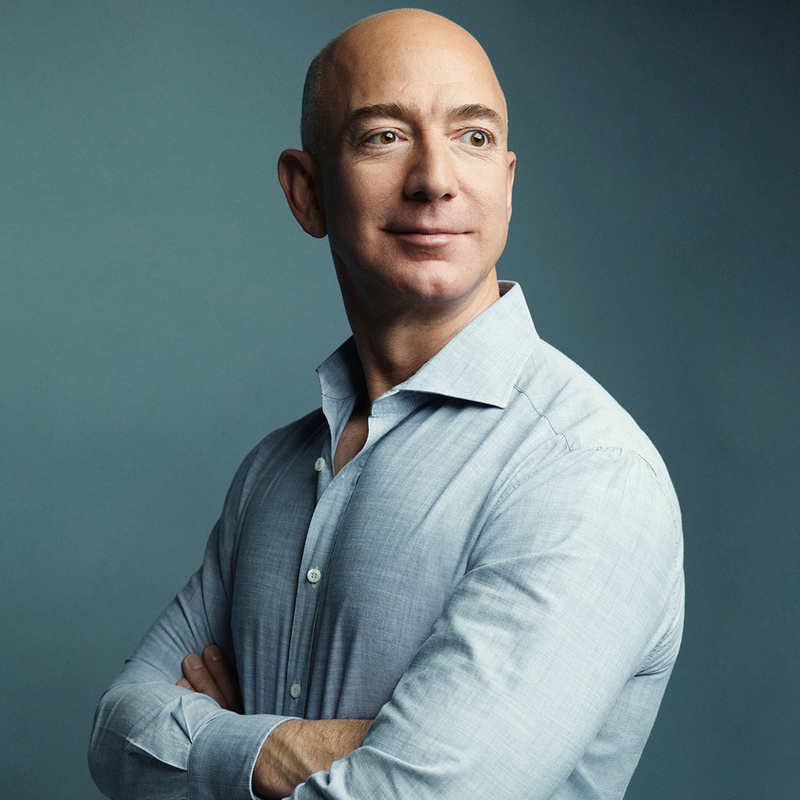
    MUMBAI: Jeff Bezos-led Amazon reported mixed second quarter results as it missed earnings estimates but beat estimates on revenues. The e-commerce giant reported earnings per share (EPS) of $5.22 in contrast to $5.55 expected EPS. At the same time, it posted revenues of $63.4 billion while market estimation was $62.52 billion.

    Amazon’s revenue rose 20 per cent Y-o-Y, compared to rebound 16.8 per cent in the first quarter, which was the slowest in four years. However, Amazon’s net income of $2.6 billion was the lowest since the second quarter of last year.

    The company has guided net sales to be between $66 billion and $70 billion, or to grow between 17 per cent and 24 per cent compared with third quarter 2018. This guidance anticipates an unfavourable impact of approximately 30 basis points from foreign exchange rates. Operating income has been expected to be between $2.1 billion and $3.1 billion, compared with $3.7 billion in the same quarter of last year.

    Amazon’s highest growing business, Amazon Web Services reported 37 per cent growth, slipping from 41 per cent in the previous quarter. The revenue of its “other” category, including its increasingly important online ad business, climbed 37 per cent to $3 billion. However, international sales grew 12 per cent to $16.4 billion.

    “Customers are responding to Prime’s move to one-day delivery — we’ve received a lot of positive feedback and seen accelerating sales growth,” said Amazon founder and CEO Jeff Bezos.

    “Free one-day delivery is now available to Prime members on more than ten million items, and we’re just getting started. A big thank you to the team for continuing to make life easier for customers,” he added.

    While Prime Video premiered the Jonas Brothers documentary Chasing Happiness, and Original Series Good Omens, based on the novel by Neil Gaiman, it will debut new Original Series The Boys, from creators Evan Goldberg and Seth Rogen, on 26 July and Carnival Row, starring Orlando Bloom and Cara Delevingne, on 30 August.

  • Pepperfry launches gift registry an industry first service in indian e-commerce

    Pepperfry launches gift registry an industry first service in indian e-commerce

    MUMBAI: Pepperfry.com, India’s No.1 Furniture and Home products marketplace, announced the launch of Gift Registry – a first of its kind service by an Indian e-commerce company. A unique service, it will make gifting social and convenient for home and furniture consumers across the country. Through this launch, Pepperfry wants to partake in important buying occasions like weddings, housewarming, anniversaries, childbirth, etc. which is in line with Pepperfry’s mission to ‘spark a feeling called home’ in the lives of millions of Indians.

    Pepperfry is known for its pioneering spirit in organizing the unorganized home and furniture segment.  The introduction of Gift Registry service is another step in the direction to make branded home and furniture products easily accessible to consumers.  It also establishes Pepperfry to be India’s first interior and home e-commerce marketplace as a full stack service provider offering interior solutions and an exclusive gifting avenue.

    As the leader in the furniture and home segment, Pepperfry is known to provide enhanced and hassle-free shopping experiences to its customers. Over the past 7 years, Pepperfry has built a highly differentiated and curated portfolio of over lakh products on the marketplace. Pepperfry’s unparalleled catalogue is design diverse and caters to a varied consumer demographic. This is backed by Pepperfry’s robust big-box logistics service spread across 500 cities with the shortest turn-around time in the industry.

    Leveraging these strong service capabilities and its deep understanding of the Indian consumer, Pepperfry has introduced Gift Registry – a convenient and technologically superior service for consumers across the country who are seeking avenues of gifting home and furniture productsto their friends and family in a seamless and hassle-free manner. It is positioned to transform home and furniture gift shopping by making it social thus further enhancingPepperfry’s consumer experience. It strengthens Pepperfry’s position as a one-stop-shop for its consumers not only for their own home and furniture requirements but, also while choosing presents for their special occasions.

    In an endeavour to make an arduous task of gifting a simple, virtual and social activity Pepperfry users can create a Gift Registry on the marketplace by adding their desired products to a wish list through a single click of a button.  This list can be shared with their friends and family via Whatsapp, Facebook and other social channels. To further simplify the process the contribution amount can also be split easily for a selected product by different individuals. Once Pepperfry receives the complete value for the wish listed product the order will be delivered to the recipient. Taking the promise of convenience, a step further, the Pepperfry Gift Registry is available across various payment modes like ATM/Debit cards, Credit cards, Net Banking, EMI and Pepperfry Gift Cards.

    Talking about the launch of this service, Abhimanyu Lal, Chief Product Officer, Pepperfry said, “As the leaders in this segment, Pepperfry continues to bring groundbreaking introductions to expand the home and interior market. While the concept of a Gift Registry is popular in various markets globally, we are delighted to have pioneered the concept in Indian e-commerce at a grand scale by offering this service across 500 plus cities.  Through this service, we aim to change the landscape of the gifting process and form a deeper engagement with our consumers through improved shopping experiences.”

    The Gift Registry service is available across all existing Pepperfry platforms- Desktop, WAP and APP and the products will be delivered to 500+ cities that the company currently caters to. All the products available on the Pepperfry marketplace can be availed through this service.  

  • Amazon saw most ever Prime subscriptions in Q4 2018

    Amazon saw most ever Prime subscriptions in Q4 2018

    MUMBAI: E-commerce giant Amazon beat analysts' expectation for the fourth quarter of 2018 after falling short of revenue expectations for the last two quarters. The company posted revenue of $72.4 billion and a record net profit of $3 billion. Despite the strong result, Amazon’s weak guidance for quarter 1 in 2019 dragged the stock down in after-hours trading.

    While the revenue was of $72.4 billion against consensus expectation of $71.89 billion, earnings per share(EPS) came at $6.04 compared to $5.65. Though the result represents 20 per cent increase in revenue, the pace was slowest till the first quarter of 2015. Moreover, Amazon finished the year with $232.9 billion in annual revenue, passing the $200 billion milestone for the first time.

    In the earnings release, the company claimed that tens of millions of customers worldwide started Prime free trials or began paid memberships during the Holiday season. It also added that more customers signed up for Prime worldwide in 2018 than ever before but did not reveal exact number.

    The success of Alexa has been especially mentioned in the release. “Alexa was very busy during her holiday season. Echo Dot was the best-selling item across all products on Amazon globally, and customers purchased millions more devices from the Echo family compared to last year,” Amazon founder and CEO Jeff Bezos said.

    Amazon Web Service’s growth has again shown unbeatable revenue growth of 45 per cent reaching to $7.43 billion in the quarter. The company’s “other” category which primarily comprises advertising services jumped 95 percent to $3.4 billion in revenue.

    Jeff Bezos led company called out the introduction of localised Hindi, Tamil, and Telugu language user interfaces in Amazon Prime Video India. It also mentioned the nomination of Inside Edge as the first Indian show from a video streaming service for the International Emmy Awards.

    “Amazon partnered with ICICI Bank to launch the Amazon ICICI Bank credit card to preselected customers in India. This is the first card in the country to offer Prime members 5 per cent in reward points for their purchases on Amazon.in and reward points for all other payments where Visa is accepted,” the release read further.

    However, the new FDI e-commerce rules in India, which include an e-commerce company with a marketplace model will not exercise control or ownership over the inventory that will be sold, is highly concerning the investors of Amazon. E-commerce restrictions can hit Amazon badly as it prevents to drive down prices in the country also. Moreover, it comes at a time when the company’s international sales growth also slowed to 15 percent compared to the previous year's 29 percent growth rate.

  • The year M&A changed the face of the media and entertainment industry

    The year M&A changed the face of the media and entertainment industry

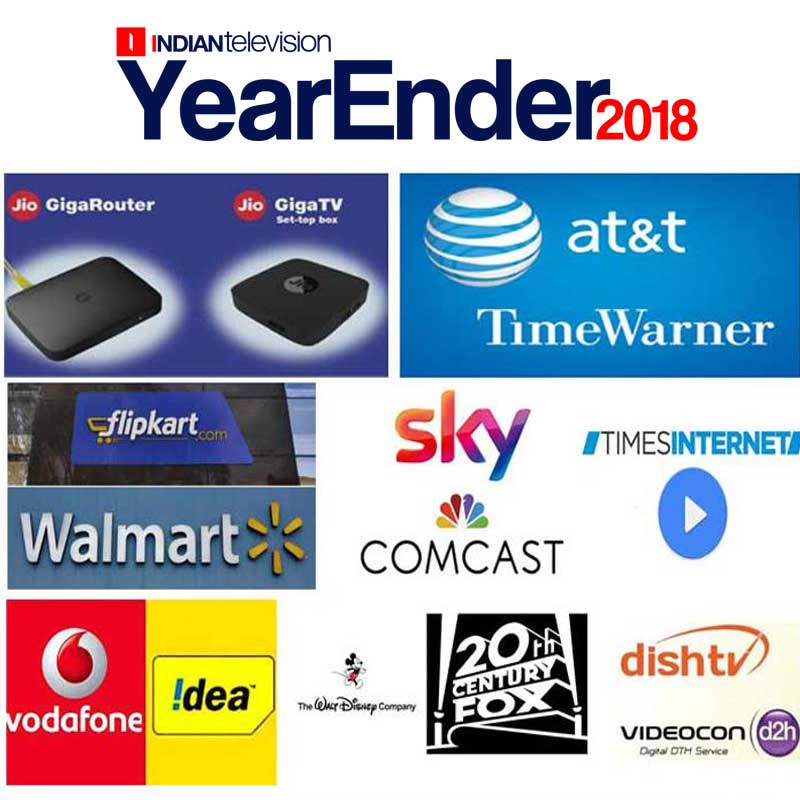
    MUMBAI: The emergence of numerous streaming platforms and convergence between technology, media, and telecom companies shook the core of the media and entertainment business globally. Giant tech and telco players, on the back of their direct customer reach, started taking content creation and distribution a lot more seriously. Rapid change in content consumption pressurised traditional players to invest more in technology and focus more on the B2C model. The ongoing flux brought the industry on the brink of instability, leading to consolidation in the form of mergers and acquisitions.

    In the last couple of years, the nature of competition in the global ecosystem has witnessed a gradual swing. Organisations like Netflix, Amazon Prime and Google have brought a structural shift forcing traditional players to rethink their approach to content and distribution. Legacy brands upped the ante to attract and retain more consumers even through cross-border deals. PwC India partner Raman Kalra points that everybody in this world of media disruption is trying to be relevant in reach and scale, the two critical factors that are driving deals. To corroborate his thesis, he highlights the AT&T-Time Warner deal where the former, with a huge reach, wanted to scale up its content play with the collaboration.

    Closer to home, billionaire Mukesh Ambani’s RIL rode the TMT convergence wave better than most. India’s richest man started the year with a bang, intensifying TV18’s stake to 51 per cent by acquiring 1 per cent of Viacom18’s equity from Viacom Inc. for a cash consideration of $20 million. The RIL-owned Jio Infocomm also acquired a controlling stake in two large MSOs – DEN and Hathway – building ammunition for its FTTH’s foray. That’s not all, RIL also pocketed a small but significant five per cent stake in Eros International.

    E&Y media and entertainment advisory services partner Ashish Pherwani expects more deals to materialise in 2019.

    “Especially technology-driven deals because so many changes are happening in that space, and consolidation, led by inbound investments. There are three types of deal. One type of deal is happening in order to build efficiency and scale in the business, led by cost pressures. Another type of deal is around relevance and market share – to get a bigger slice of the market to monetise a larger base of consumers.  The third type of deal which is happening is basically technology driven – for access to technology that could drive competitive advantage in the digital future. Hence, the three reasons market share, efficiency, technology are driving the deals,” he adds.

    There were other interesting deals struck through the year that are likely to reshape the media and entertainment business going forward.

    Birth of the world’s second largest DTH company

    The Indian market wasn’t exempted from the global merger frenzy. The coming together of two large DTH operators – Dish TV India and Videocon d2h – was finally concluded this year, creating the largest DTH service provider in the country with a subscriber base of about 29 million. Apart from leveraging their individual strengths, it was expected that the combined entity would benefit from economies of scale. One of the biggest attractions for Dish TV as the acquirer was Videocon’s significantly higher average revenue per user (ARPU). Significantly, the combined entity’s ARPU was Rs 207 in the second quarter as opposed to Dish TV’s standalone ARPU of Rs 144 pre-merger. The deal also helped Dish TV position itself better when it came to negotiating with broadcasters.

    Decks cleared for FTTH warfare

    From formally launching FTTH service Jio GigaFiber to acquiring majority stakes in two large MSOs to speed up the rollout, the Mukesh Ambani-led Reliance Jio was definitely the centre of attention in 2018. Reliance Industries Ltd (RIL) made an investment of Rs 2,290 crore for 66 per cent stake in Den and Rs 2,940 crore for 51.3 per cent stake in Hathway. It will save RIL the cost of reaching out to customers as well as making the last mile connectivity easier in its ambitious bid of seizing control over India’s wired broadband business. With the launch of its telecom service, RIL gave rise to what many call ‘digital democratisation’. As the Jio juggernaut marked its entry into India’s multi-billion-dollar cable TV and DTH businesses, traditional players eyed the development with a healthy mix of scepticism and optimism.

    Rivals joined hands

    The Indian telecom sector this year saw the marriage of two giant companies, creating the country’s largest telecom company. In the month of August, Vodafone India and Idea Cellular completed the merger after getting approval from National Company Law Tribunal (NCLT). The consolidation of India’s telecom sector was a direct result of Jio’s relentless pricing war. Post the Idea-Vodafone deal, India’s telco business now comprises of just three players. Analysts expect the combined entity to yield better coverage than before as it would have access to a more robust ecosystem of cellular towers. COAI also believes that as competitive pressures drive consolidation, customers and the industry stand to benefit from the greater stability and better networks which will emerge. Surprisingly, a few years ago, the Indian telco sector had 13 operators.

    Bansals became billionaires

    Walmart gained a strong foothold in India’s this year as it completed its much-talked-about $16 billion acquisition of the country’s largest e-commerce company Flipkart. Poster boys of India’s start-up community Sachin and Binny Bansal became billionaires in a big win for Indian talent and home-grown businesses. Despite protests from traders across the country, as the deal could potentially harm their business, the Competition Commission of India (CCI)’s green signal came earlier this year. The biggest e-commerce deal globally bolstered Walmart’s repertoire in its war with Amazon internationally. With India being one of the most attractive retail markets in the world, a strong play here is bound to further boost the American behemoth in a rapidly changing environment.

    Times Group joined the streaming sweepstakes

    With almost major broadcasters and media companies trying to grab a slice of the hottest piece of the M&E business – OTT, the Times Group too jumped on the bandwagon. To get a stronger foothold in the space, Times Internet invested over Rs 1,000 crore to acquire a majority stake in video playback app MX Player. According to media reports, the company will introduce a streaming service within the app. The large cross-border deal which surprised the industry will definitely help Times Internet in the OTT race thanks to the huge base and popularity of MX Player in south Asian countries. With over 30 OTT players vying for consumers’ attention in India, the game has just begun with enough opportunities for new platforms. Earlier in the year, MX Player content head Gautam Talwar had told Indiantelevision.com that like many other OTT platforms, MX Player too wants to tap into the millennial audience. It wants to cater to users with 50,000 to 100,000 hours of premium curated licensed content along with a high focus on originals, he further added. 

    The telco takeover

    Giant wireless carrier and telco AT&T’s acquisition of content powerhouse Time Warner is just one example of how the lines between distribution companies and content creators are blurring. With the $85 billion deal, the telco gained ready access to the content pool of CNN, HBO, and Warner Bros.

    “Under the terms of the merger, Time Warner Inc shareholders received 1.437 shares of AT&T common stock, in addition to $53.75 in cash, per share of Time Warner Inc.1 As a result, AT&T issued 1,185M shares of common stock and paid $42.5B in cash,” said AT&T providing the financial details of the deal.

    Though the deal was first announced in 2016, it had to negotiate past several subsequent legal hurdles. The Donald Trump-led US Department of Justice (DOJ) even filed a lawsuit against AT&T and Time Warner to block the proposed merger. Following a six week trial, a US district court approved the deal without any conditions on 12 June and also urged the government to not seek any stay. The main argument of the US administration was that the merger would hand over too much power to AT&T, making the market less competitive.

    A once-in-a-lifetime deal

    Another blockbuster deal that came through this year was the $71 billion acquisition of 21st Century Fox assets by Disney. After a long and sustained bidding war with Comcast, the Mouse House got its hands on much of the Murdoch empire. “Combining the 21CF businesses with Disney and establishing new ‘Fox’ will unlock significant value for our shareholders,” 21st Century Fox executive chairman Rupert Murdoch said. The shareholders of both the companies approved the deal immediately, with foreign approvals and regulatory reviews now the final procedural hurdle.

    Disney is now in pole position to take on streaming giants like Amazon and Netflix with its OTT Disney+. The company has also already indicated its desire to stop licensing content to Netflix by ending the deal in favour of its own B2C service. Moreover, Disney now has majority control of Hulu, Endemol Shine Group and Star India, making it the most powerful content owner in the world. The reaction to the growth of OTT services has clearly shown that joining forces with rivals and competitors is not unacceptable anymore to survive in the market.

    Second time lucky

    After a failed attempt to buy 21st Century Fox, US cable giant Comcast won the bid for European entertainment biggie Sky. The former sealed the deal for a controlling stake in the British broadcaster with a winning bid of $40 billion. Analysts said that Comcast and Sky would become the biggest private sector provider of pay TV in the world with 52 million customers. Given the vast reach and growing customer base of Sky in Europe, Comcast took the step to expand its international business with it losing ground in the domestic market. This deal was a direct effect of cord-cutting as Netflix’s growth in the US has posed a major threat to the likes of Comcast. According to an analysis from Ampere, post the media mega-mergers of Comcast/Sky and Disney/Fox, two in every 10 dollars spent on content worldwide will now be spent by these two entities.

    The merger madness from 2018 is likely to continue in 2019, as corroborated by experts we spoke to. Not only would it be interesting to track which companies opt for consolidation, but 2019 will also give us a sense of how the deals from 2018 take shape and play out.

  • ASICS launches online marketplace in India

    ASICS launches online marketplace in India

    MUMBAI: Fitness brand ASICS has announced the launch of its e-commerce website for the Indian market. The newly launched website is a one-stop destination for all ASICS products across its categories and has been specifically introduced to meet the growing demand in the country with a focus on catering to the fast-paced lifestyle of millennials.

    A company statement shares that the e-commerce site is a step to make the brand more accessible to consumers in tier II and III markets, strengthening its reach in the country by extending a safe avenue to access authentic brand offerings. The new e-commerce portal is designed to make ordering, deliveries and payments easier and faster for all ASICS consumers.

    ASICS India MD Rajat Khurana said, “With the launch of the website, we are looking to rapidly expand our consumer base and delight users across new and upcoming markets. The launch of the website allows us to be a step closer to our consumer so that we can directly and constantly communicate with them.”

    ASICS brand ambassador Bhuvaneshwar Kumar said, “It is very important for an athlete to have the right kind of fitness gear for an effective training and ASICS not only provides the necessary support but has also devised path-breaking technologies which can impact one’s performance greatly. Considering the fast-paced lives in today’s world, it’s of great convenience to everyone to be able to shop the best – quality and authentic ASICS products online. The launch of the retail website makes it easier for fitness enthusiasts to shop for good sportswear at their ease.”

    The new ASICS website will host all the latest collections and favourites from the brand portfolio, including many global top sellers, like GEL Kayano, Hyper GEL, GEL KENUN, GEL Nimbus among other popular styles.

    In the future, the website will have an ASICS One ID integrated on the website, which will enable consumers to buy apparels and shoes from all three brands; ASICS, Onitsuka Tiger, and ASICSTIGER all in one cart.

  • Big B launches campaign for Lux Inferno ahead of winter

    Big B launches campaign for Lux Inferno ahead of winter

    MUMBAI: LUX Industries manufactures more than 300 products across 14 brands under its belt, such as Lux Venus, GenX, Lux Cozi, ONN, Lyra, Cott’swool, Inferno etc.  

    Now the company has announced its new range of Lux Inferno thermal wear collection. With winter just around the corner, keeping in mind the seasonal demand, Lux has reintroduced the brand Lux Inferno, endorsed by Bollywood legend, Amitabh Bachchan, in an all new avatar in the advertisement, where he takes selfies with the Eskimos.

    Lux Industries is offering its customers with the entire range of Lux Inferno, crafted with double layer knit and warmth retaining fabric which soothes one’s body. The range is available for men, women and kids at an attractive price point. The body warmer comes in dark grey shade in long round neck top, as well as soft thermal trousers. Lux Inferno comes prepared with the body warmer designed as an undershirt and under pant. Lux Inferno provides an amazing and soft experience without any itching or irritation and as well as coming in various sizes from 75 – 100 for the customers.

    Lux Industries senior vice president Udit Todi says, “Lux Inferno has earned the trust of the consumers over the years. Besides providing comfort from the chilly winters in North, West and Eastern India, it has a definite style factor which has been liked by all. We have worked on the material and made it more soft and light which makes it easy to wear undershirt or trousers. The thermal wear range from Lux Industries contributed 10 per cent last year to our overall sales and we foresee a lot of potential in this market segment this year as well.”

    Lux Industries senior vice president Saket Todi adds, “Continuing the brand promise of comfort, style, quality and affordability we are confident that the entire winter wear range of Lux Inferno will strike a chord with our target audience and satisfy the consumers on these parameters. We are proud that a legendary actor and personality like Mr. Amitabh Bachchan has agreed to endorse our products. This association will help us make further inroads in tier II and tier III towns which are a part of our strategy to maintain steady growth.”

    The price range of men uppers and lowers starts from Rs 273, the range for women starts from Rs 255 and that for kids Rs 90 onwards. Besides retailers, the new range of Lux Inferno will be available on e-commerce platforms such as amazon.in and flipkart.com

  • Amazon Q3 results fall short  of Wall Street expectations

    Amazon Q3 results fall short of Wall Street expectations

    MUMBAI: E-commerce giant Amazon could not beat Wall Street expectation with its revenue and fourth quarter guidance in its third quarter earnings despite turning in a record profit. The company has reported a $2.9 billion profit for the three months ending in September topping $1 billion for the fourth consecutive quarter. Revenues of $56.58 billion fell short of expectations for $57.1 billion as well as guided revenue of $66.5 billion to $72.5 billion for next quarter.

    Its high margin business including cloud, advertising and third-party seller services propelled the growth of its profit more than its core retail business. Its cloud business by revenue saw sales up 45.7 per cent to $6.68 billion. On the other hand, its advertising business, jumped 123 per cent to $2.5 billion in revenue.

    “Net sales increased 29 per cent to $56.6 billion in the third quarter, compared with $43.7 billion in third quarter 2017. Excluding the $260 million unfavorable impact from year-over-year changes in foreign exchange rates throughout the quarter, net sales increased 30 per cent compared with third quarter 2017,” the company said in a release.

    For the fourth quarter guiding too, Amazon has anticipated an unfavorable impact of approximately 80 basis points from foreign exchange rates. But this quarter is most important for the company’s sales due to the holiday season.

    While total revenue increased 29 per cent from last year, a considerable trait has to be discussed. Though in its home market its growth was at high speed, in international markets that was lower. North American sales were $34.3 billion, up 35 per cent from last year but international sales grew just 13 per cent to $15.5 billion. The disappointing international result indicates that competition in e-commerce space is escalating.

    “Amazon Business has now reached a $10 billion annual sales run rate and is serving millions of private and public-sector organisations in eight countries,” said Amazon founder and CEO Jeff Bezos especially mentioned this segment.

    “Amazon Business is adding customers rapidly, including large educational institutions, local governments, and more than half of the Fortune 100. These organisations are choosing Amazon Business because it increases transparency into business spending and streamlines purchasing, with increased control. The team is doing a fantastic job building and innovating for customers,” he added.

    Though Prime Video is a part of its attempt to turn customers for shopping by engaging through the video content, it has become a major competitor of streaming giant Netflix. “Prime Video continues to announce original series debuting in 2018, including: Homecoming, a psychological thriller starring Julia Roberts, and produced and directed by Sam Esmail; as well as season 2 of The Marvelous Mrs. Maisel, recent winner of eight Emmy awards including Outstanding Comedy Series,” the company added.

    Amazon is also launching monthly Prime membership in Canada and Mexico, quarterly Prime membership in China, and monthly Prime Student membership in Germany.

  • Amazon scaling up investment for Indian marketplace biz

    Amazon scaling up investment for Indian marketplace biz

    MUMBAI: E-commerce giant Amazon has invested additional Rs 2,700 crore for its Indian marketplace unit at a time when it continues to battle its local rival Flipkart along with investing about Rs 100 crore for food retail business in India, according to a report from Mint.

    According to the regulatory documents filed with the Registrar of Companies sourced by Paper .vc, the marketplace arm of Amazon India , Amazon Seller Services, received the funds earlier this month. Now its total investment in India stands roughly at $4 billion. The company has been spending all its cash on building massive warehouses, a large logistics unit, marketing, discounts and increasing product assortment.

    Earlier the online retailer pledged to invest at least $5 billion in India along with allocating an additional $500 million to build its food retail business. Back in June 2016, Amazon Inc CEO Jeff Bezos committed an additional $3 billion after fulfilling the initial target of $2billion made in 2014. The Indian market holds high importance for Amazon Inc’s international expansion.

    The report also says that earlier Amazon India chief Amit Agarwal indicated that the company will invest as much as necessary to conquer the Indian market. Flipkart is also leaving no stone unturned, especially on the back of the deal with deep-pocked Walmart. Both the companies are focusing on sales growth rather than cutting losses.

  • Flipkart, Amazon reduce ad spends on Google

    Flipkart, Amazon reduce ad spends on Google

    MUMBAI: With Google launching an e-commerce platform in the near future, the country’s largest online retail stores, Flipkart and Amazon India, have slashed advertising spends on the web-search company. Both the players see this as a serious threat, as a Mint report quoted two people, familiar with the matter.

    According to a person quoted above, Flipkart and Amazon have reduced spending on Google by more than 30 per cent in the previous three months compared to months before and shifted some of that ad spending to other platforms. Until last year, the two online retailers used to spend hundreds of crores of rupees buying ads on Google.

    Google’s interest in e-commerce stems from its worry that some shoppers are going straight to Amazon to search for products rather than using Google. If this trend continues, it could threaten Google’s core business of digital advertising. Amazon is already generating billions of dollars in ad revenues in the US.

    The people added that, Google was keen on investing in Flipkart because it wanted a strategic partner to help it with its e-commerce push. However, Google wanted a much closer collaboration than Flipkart and its new owner, Walmart, were willing to offer.

    Google’s e-commerce push and the rising importance of Flipkart and Amazon in digital ads are the latest examples of how intertwined the tech business has become and how internet firms are increasingly encroaching on each other’s turf.

    Google’s retail entry may result in higher losses for existing e-commerce firms. The e-commerce market grew 23 per cent to $18 billion in 2017, according to RedSeer Consulting. India’s e-commerce market is a fraction of the size of China’s or the US. Yet, Flipkart, Amazon India and Paytm Mall bear huge losses while specialty e-commerce firms are struggling to grow sales quickly.

    A new serious entrant with deep pockets like Google will strengthen the view that India’s e-commerce market is overcrowded.