Tag: E-commerce

  • Marico reports double-digit volume growth in Q3 FY21

    Marico reports double-digit volume growth in Q3 FY21

    NEW DELHI: FMCG major Marico has posted strong performance with double-digit volume growth in its India business in Q3 2021. In an investor update on BSE, the company has shared an update on the overall summary of its operating performance and demand trends witnessed in the quarter ended 31 December 2020.

    The quarter was characterised by a faster than expected recovery in consumer sentiment in India, aided by the festival season and a declining Covid2019 graph. The company registered strong performance across its portfolio with general trade continuing to grow healthily and rural markets staying ahead of urban. In the new age channels, while e-commerce continued its stellar run, modern trade fared better in Q3 after a soft first half. CSD continued to decline, albeit improving sequentially.

    Revenue growth was in tandem with volume growth. Parachute Coconut Oil delivered ahead of its medium-term aspiration. Saffola Edible Oils continued its growth momentum, delivering double-digit volume growth. Value added hair oils also exhibited strength with a broad based sharp recovery across sub-segments leading to overall double-digit growth for the category. The foods portfolio continued to witness exponential growth in line with the near-term aspiration, backed by strong performance in both the base foods and the new product launches. There was a steady revival in discretionary categories with the premium personal care portfolios witnessing improving trends sequentially, however, still posting a modest decline on a year-on-year basis.

    The quarter was also characterised by inflationary pressure in key raw materials necessitating cutting back of some promotions and taking effective price increases across both Parachute and Saffola edible oil portfolios. The company expects to deliver a healthy profit growth on the back of various cost optimisation initiatives and judicious A&P spends.

    International business had a resilient quarter with high-single digit constant currency growth, led by double-digit constant currency growth in Bangladesh and recovery in few other markets.

    Marico maintains an optimistic outlook for the rest of the year provided the Covid2019 and the economic situation continues to improve. The company remains steadfast in its medium-term aspiration of delivering sustainable and profitable volume led growth, building on strong brand equity across core franchisees and progressively driving and scaling up new engines of growth.

    In Q2 2021, the company increased its advertising spends, taking it back to its pre-Covid2019 levels. While its food segment, Saffola, and Parachute performed well, the brand also launched several new products during this time. 

  • Throwback2020: Not in moolah but digital marketing grew in virtue

    Throwback2020: Not in moolah but digital marketing grew in virtue

    NEW DELHI: It has been quite a few years that the digital marketing industry is enjoying a fabulous run rate in India. It is a no-brainer that growing internet penetration, cheap data rates, and just the sheer availability of digital entertainment and logistical options have contributed to its stellar rise. While the traditional modes of advertising have been struggling to keep the  cash registers ringing, partly because of the continuing dip in the economy and partly due to the Covid2019 lockdown’s impact on businesses across the spectrum, digital marketing enjoyed quite a positive stay in an otherwise positively uncomfortable 2020. 

    The year was a mixed bag of challenges and opportunities for the digital marketing industry, though the latter were overpowering. Despite a slump in growth numbers, the industry seems to be staring at a rather bright future. Tech advancements, positive sentiments within the industry, and the sheer scope of growth ahead makes the ride an interesting prospect for the future too. 
    The spike in digital adoption

    For nearly two-months, starting March, the whole country was forced to stay indoors following strict lockdown rules, courtesy the global viral pandemic Covid2019. It forced people to work online, connect online, shop online, teach online, consult online and do what have you online. This led to a crazy uptake in digital adoption. 

    Logicserve Digital founder & CEO Prasad Shejale said: “The pandemic has definitely caused a huge shift in the industry. While the country’s economy and GDP took a massive hit, the digital industry has been rapidly growing with regards to its consumption, penetration as well as engagement. The global e-commerce sales growth and number of digital adopters accelerated in the initial three months; in the normal course that would have taken three years.”

    According to a Kantar report released in May this year, India’s monthly active internet user base is estimated to reach 639 million by the end of 2020, from the currently estimated 574 million. The country had clocked 734.82 million wired and wireless broadband subscribers up to 31 October 2020 according to Telecom Regulatory Authority of Indian monthly telecom data reports.

    Mobile became the preferred choice of internet consumption and the average time spent on smartphones in a day grew with average usage growing 11 per cent to 5.5 hours in March 2020 (pre-Covid) from about 4.9 hours on average in 2019. This further grew by another 25 per cent to 6.9 hours April onwards (post-COVID), a report by Vivo and CMR highlighted. 

    India also saw the biggest jump in video consumption, of 40 per cent to over 2.9 billion hours during the week starting 22 March as compared to the last week of December 2019, when it was 2.1 billion hours, as stated by an Internet & Mobile Association of India (IAMAI) and Nielsen report. 

    Naturally, this sharp spike in digital consumption had a positive impact on digital marketing and advertising too. 

    Digital marketing growth story 2020

    At the beginning of the year, a DAN report had predicted that the digital advertising industry would grow 27 per cent in 2020. However, that might not turn out to be the case entirely. 

    The sector, much like every other business, took a hit in Q1 FY21, because of the market uncertainties and lockdown. Ad rates went down as much as by 15-20 per cent according to an industry insider. 

    A panel discussing the widening scope of digital marketing with Indiantelevision.com founder, CEO, and editor-in-chief Anil Wanvari in June stressed that the growth digital marketing has clocked in the year will not be immediately visible in the CAGR, but will be a defining factor in how the advertising pies of individual marketers changed. It insisted that after six months of struggle in 2020, the industry will have a very prosperous six years ahead. 

    iProspect India AVP-strategic solutions Nihal Nambiar had said: “Digital, in 2020, will definitely not have a similar CAGR of 27 to 30 per cent as it has been recording for the past few years.” But he mentioned that he is looking forward to some positive quarters ahead in terms of brands moving to digital platforms.

    Shejale pointed out: “Various reports suggest that in spite of the slowing economy, the digital segment has seen a growth of around 20-27 per cent by November 2020. The numbers might vary in different research articles. However, this is the broad range within which the growth is seen, and it’s very promising.” 

    However, GenY Medium co-founder & CEO Yashwant Kumar is more hopeful and is expecting that the industry will grow by 35-40 per cent in 2020-21. 

    He noted: “Digital advertising has gained tremendously during the pandemic and has become the preferred medium with a huge surge in e-commerce across categories together with consumers spending a lot more time with their families at home on their connected TVs and mobiles. Digital has been consistently growing at 27 per cent CAGR over the past few years ahead of television, print and outdoor. We are seeing a significant movement towards digital in Q2 and Q3 this year after a slow Q1. My expectation is that digital advertising will grow by 35 to 40 per cent for the year 2020-21.” 

    While the industry has contrasting views towards the growth numbers, KPMG’s ‘A Year Off Script’ report released in September indicated that online advertising is expected to result in a 12 per cent growth overtaking traditional media like television which will contract by 17 per cent this year. 

    The report added, “At ₹22,300 crore, total digital advertising revenue will beat the ₹21,700 crore revenue of TV over FY21.”  

    Trends that defined the industry in 2020

    The biggest trend that strengthened the roots of the digital marketing industry in 2020 was the sheer influx of rural users in the internet world. As per a report by the Internet and Mobile Association of India (IAMAI) and Nielsen, rural India had 227 million active internet users, 10 per cent more than urban India’s about 205 million, as of November 2019. A Kantar report further suggested that this number will increase to 304 million by 2020. “Local language content and video drive the internet boom in rural India, with a 2.5 times increase in penetration among the population in the last four years,” it added. 

    This, added with digital retailers going deep into the heartland India, led to a great jump in the need for “hyperlocal” content by brands. This kept the digital agencies busy through the year. 

    Additionally, giants like Facebook, Swiggy, and Instagram entering the local market with thier own shopping platforms, growth of edtech companies like WhiteHat Jr, Vedantu, and Instagram releasing a new content section called Reels, were some new found opportunities for the digital industry to explore. 

    Wavemaker India chief client officer and head-west Shekhar Banerjee had mentioned in an earlier conversation with Indiantelevision.com that brands went heavy on performance marketing in 2020. “Apart from the usual search, social, and e-commerce mix, one platform that has become the biggest gainer during the period is the e-groceries section, taking a huge part of the digital pie. Going ahead, hyperlocal platforms, with their changing business models will be more conducive to advertising.”

    Another interesting opportunity for the digital marketing industry came in the form of online events. Almost 95 per cent of the physical events moved to online platforms giving digital agencies great opportunities to work with brands. It included marquee events like IPL, which was hosted without a live audience and saw viewers engaging with it either through TV or digital platforms. 

    OTT platforms also saw a remarkable rise in viewership during 2020. Kumar highlighted, “According to one industry report (Velocity MR Study), Amazon and Netflix saw +60 per cent growth in their subscriber base in the AMJ '20 quarter. Similar numbers have been reported for other platforms like Hotstar, YouTube and others. This massive shift towards the OTT platforms becoming the go to destination for entertainment, sports and news is driven by increased consumption of video content by consumers across all the age groups and demographic segments. Daytime video usage by the working professionals has become the new norm as they have started watching TV or streamed video content during their work breaks or while actively working.” 

    Additionally, what moved the industry significantly was FMCG brands getting more serious about digital platforms. As per industry experts, FMCG brands increased their expenditure on digital platforms to 12 per cent, compared to around 7 per cent in 2019. 

    This also paved the way for a significant hike in influencer marketing activities. 

    Mompresso co-founder & COO Prashant Sinha said, “Digital marketing has seen transitional growth in the year 2020. The majority of advertising and marketing spends by brands this year has been towards digital channels and with no doubt, this will continue to grow further in 2021. We can also expect to see big portions of these budgets to go towards influencer marketing and macro and micro-influencer led campaigns. The overall digital marketing industry has seen a boost this year, where creators, brands, and marketers have learned to work together. Brands have revaluated the metrics and shifted focus to prioritize channels where they receive the most engagement. While video content has dominated the space, more diversification is expected. Live streaming and user-generated content will continue to be popular among influencers and marketers.” 

    The growth in the e-gaming industry resulted in increased ad spends by players and also the development of a whole new media option for the brands. While most of the marketers still sat on the fence about exploiting the medium, it is expected that it will flourish in the coming quarters. 

    The year was a mixed bag of challenges and opportunities for the digital marketing industry, though the latter were overpowering. Despite a slump in growth numbers, the industry seems to be staring at a rather bright future. Tech advancements, positive sentiments within the industry, and the sheer scope of growth ahead makes the ride an interesting prospect for the future too. 

  • Kiranas, MSMEs hop onto e-commerce with Flipkart Wholesale app in 2020

    Kiranas, MSMEs hop onto e-commerce with Flipkart Wholesale app in 2020

    NEW DELHI: Over a million small retailers in the country and hundreds of MSMEs continued to repose their faith on online platforms and digitisation as the entire retail ecosystem opts for e-commerce as a mode of doing business during the challenging times of the pandemic. Flipkart Group’s B2B businesses — Flipkart Wholesale and Best Price cash-and-carry stores — have witnessed an increased uptake of e-commerce in 2020.

    Flipkart Wholesale, the digital B2B marketplace of India’s homegrown Flipkart Group which was launched in September, and 29 Best Price modern wholesale stores enabled growth and prosperity for small kiranas by offering a wide range of selections at great prices.

    Flipkart Wholesale and Walmart India SVP & head Adarsh Menon said, “As India’s leading omni-channel B2B marketplace, we strive towards making e-commerce inclusive for every small kirana and drive growth for every MSME in the country. As the entire retail ecosystem was grappling with unprecedented challenges posed by the pandemic, suppliers and buyers came together seamlessly to unlock the potential of technology and e-commerce. At Best Price, during the lockdown, we encouraged members to place orders on our e-commerce platform and have products delivered to them. We also launched a revamped Best Price app and website and saw order volumes surge through our e-commerce channels. Our members adapted very quickly to ordering online and we believe this trend will continue going forward. Flipkart Wholesale, launched in September, has also seen tremendous success from retailers who can now order fashion products just at the touch of a button. We have consistently worked towards creating an ecosystem that serves kiranas’ growing needs and helping Indian MSMEs access the pan-India market more effectively and we will step up our efforts in the coming year as well.”

    Future is Digital 

    Flipkart Wholesale app which currently offers fashion products — clothing, footwear and accessories — to retailers across 23 cities has also just launched the grocery category in NCR on its platform.

    Fashion retailers, who were not able to travel to fashion hubs for sourcing products in the aftermath of Covid2019, came on board Flipkart Wholesale which is a one-stop destination for a wide selection of men’s wear, women’s wear, kidswear and footwear from hundreds of suppliers across all the fashion mandis of India such as Jaipur, Kolkata, Mumbai, Kanpur, Delhi, Surat, Agra, Tirupur, among others.

    Flipkart Wholesale has already recorded 50% month-on-month growth in fashion category suppliers and enabled 2.5 lakh listings on its platform since its launch, delivering a major boost to MSMEs in the country and helping realise the Atmanirbhar Bharat dream.

    Bharat Retailers opt for E-commerce 

    Within just a few months of its launch, Flipkart Wholesale app has become a runaway success with 90% month-on-month growth in transactions on its platform. Encouraging trends have emerged from retailers in small towns who have taken onto e-commerce as a preferred mode to do business at ease. Infact, one in every five customers on Flipkart Wholesale is from tier 2 or tier 3 cities.

    Through the year, Best Price cash-and-carry business worked closely with its supplier partners on transportation and logistics and significantly ramped up e-commerce and delivery capabilities to ensure members could order and receive products conveniently amidst the pandemic. As a result, its e-commerce channels saw a significant uptick.

    E-commerce adoption by Best Price members grew over 10X across 29 stores, with smaller towns such as Meerut, Kota, Guntur, Rajahmundry, Aurangabad, Karimnagar, Amravati and Vijayawada accounting for a large part of the e-commerce traction at Best Price, which signals a surge in Bharat transacting online.

    Kirana is King 

    Flipkart Wholesale app saw 75% month-on-month growth in customer base since launch in September. This growth is the affirmation of the trust that kiranas place with e-commerce and the potential it has to enable convenience, value for products, reach and selections, thus helping small businesses thrive.

    Despite the challenging business environment posed by the pandemic, Best Price launched a new store in October in Tirupati to cater to kiranas and small businesses. The newly launched store in Tirupati is Best Price’s 29 store in the country where it is present across nine states, and serves kiranas, offices and institutions, and hotels, restaurants and caterers (HORECA) through a membership model. The launch of the new Tirupati store further ensured that the retail ecosystem has a safe and robust omnichannel option for retailers who are constantly looking for avenues for business continuity.

    MSME Champions 

    Best Price’s suppliers, most of which are MSMEs, showed exemplary entrepreneurship amidst the pandemic and created opportunity out of adversity. 

    Shree Shakti Enterprises director Rahul Bajaj who has been selling kitchenware to Best Price stores for the last decade, pivoted to manufacturing hands-free sanitiser dispensers and hand wash stations at a time when the outbreak had just started. Best Price helped this supplier during the product building stage through insights on technical feasibility and commercial viability. Sarangi Creations' Babita Gupta who sells bed sheets and pillowcases to Best Price stores, pivoted to selling cotton masks during the lockdown using surplus cloth she had at her factory. Ananth Sagar of Sagar Asia Pvt, a ladder supplier, pivoted to building disinfection tunnels and Covid2019 testing booths and supplied these to local hospitals. Flipkart Wholesale’s connection with the retail ecosystem helped several MSMEs become atmanirbhar (self-reliant) despite challenges posed by the pandemic.

  • Flipkart sees tier 3+ markets as the new frontier for e-commerce

    Flipkart sees tier 3+ markets as the new frontier for e-commerce

    KOLKATA: With the need for social distancing and prioritising safety, the pandemic has led to millions of people turning to e-commerce this past year, not only in metros but in tier-3 regions and beyond as well. Etailers have focused on ecosystem partnerships, technological advancements and new tools that enable ease of experience for first-time users and to meet the needs of consumers this year, while ensuring business continuity for millions of MSMEs and sellers.

    Flipkart has witnessed interesting demand patterns across India in 2020 as it catered to an array of consumer requirements in this unprecedented year. The company focused on consistently addressing the needs of aspiring customers in tier-3+ regions, who seek the latest products but have limited access, and customers in metros who seek new products with a minimum delivery time frame.

    From changes in category preferences, the emergence of the ‘new essentials’ category, to the adoption of native languages, and surge in new-age forms of payments, 2020 has borne witness to an array of unique consumer trends.

    ‘Bharat’ consumers lead the race in a post-pandemic world

    E-commerce established deep inroads in different regions of the country this year. As people turned to online shopping to meet daily necessities as well as non-discretionary purchases, Flipkart witnessed a new user growth of close to 50 per cent right after the lockdown, with tier-3+ regions registering the highest growth of 65 per cent during the Unlock (July-September) phase. Consumers from tier-2 and tier-3+ regions also spent the most time on the platform, signalling a continuing rise in user engagement and a shift in shopping preferences.

    Increased adoption courtesy voice assistant and vernacular interface

    To ensure that first-time users are at ease while shopping, Flipkart introduced two new capabilities to handhold them through the purchase journey – a voice assistant in grocery, and vernacular interfaces across multiple languages including Hindi, Tamil, Telugu and Kannada. As more consumers joined the e-commerce bandwagon this year, a growing preference to shop in their local language was seen. This year, the adoption of native languages saw a 2.5X increase from pre-Covid to the festive period (January to November 2020).

    Digital transactions reach new heights with UPI surge

    This year, consumers across India embraced and increasingly relied on the convenience of online financial transactions. UPI adoption on the Flipkart platform increased nationally by 4.5X from January 2020 to August 2020, with Maharashtra taking the lead with a 5.2X growth. Andhra Pradesh, Telangana, Kerala, Karnataka and Tamil Nadu were the other states that were at the top of the list for UPI adoption on the platform.

    MSMEs and micro-businesses become atmanirbhar

    E-commerce, over the last few years, has played a significant role in accelerating the growth of MSMEs, micro-businesses, artisans, weavers and handicraft makers across the country. This year, e-commerce played an even more essential role in extending livelihood opportunities and a chance of operational revival as these businesses were hit severely due to the pandemic.

    Flipkart saw close to a 35 per cent increase in sellers onboarded in 2020, in comparison to the same period last year. These sellers came from tier-2 and tier-3 regions such as Tirupur, Howrah, Zirakpur, Hisar, Saharanpur, Panipat, and Rajkot. They primarily catered to categories such as household needs, women’s ethnic wear, grooming, home decor and toys and school supplies.

    To ease the transition of MSMEs to online retail, Flipkart has offered working capital support, constant counsel to leverage unique benefits on its marketplace model, analytics and market intelligence to support business decisions as well as on-ground support to ensure smooth movement of goods.

    The emergence of ‘new essentials’ in 2020

    The term ‘essentials’ got a whole new interpretation in 2020, as consumer needs evolved dynamically throughout the year. Moving beyond what was previously perceived as critical goods, the definition has now shifted to include daily items that a consumer needs, not just for food or health, but also for work and even remote learning. Pre-Covid, the most searched products included personal care, men’s clothing, footwear and women’s clothing. During the lockdown, food and nutrition, household, toys and audio products witnessed the highest demand.

    In fact, this year has been marked by catering to evolving consumer preferences, said Flipkart Group chief corporate affairs officer Rajneesh Kumar said.

    “The emergence of ‘the new essentials’ has seen the creation of greater opportunities and partnerships on our marketplace. This past year, we have strived to expand our offerings across categories to ensure our consumers are well-equipped with everything that they need. We have consistently worked towards creating an ecosystem that serves consumers’ growing needs and also helping Indian sellers and MSMEs access the pan-India market more effectively and efficiently,” Kumar added.

  • How Bikano successfully shed its traditional mien for a modern positioning

    How Bikano successfully shed its traditional mien for a modern positioning

    NEW DELHI: Uprooting themselves from the comfort and security of home sweet home in Bikaner to the narrow, bustling galis of Delhi 6, the forerunners of Bikanervala believed in taking measured risks and ensuring that they paid off. It’s probably the reason why they were able to make their street-side stall in Chandni Chowk into a Rs 1,000-crore enterprise with outlets dotting nearly every metro and town in the northern half of the country, and a diverse range of packaged snacks – Bikano – flying off the shelves in grocery stores and supermarkets.

    It didn’t take long for the brand to make the leap from national to international presence, and the Indian diaspora in Canada, US, Singapore, Australia, New Zealand, and the Gulf countries welcomed Bikano – the taste of home in a bag – into their lives. Over the course of 70 years, the brand has stood the test of time and taste, and to underscore this fact, it came up with the Barson se Bikano campaign, which invokes nostalgia and goodwill enjoyed by the sweet and savoury manufacturer.

    “Bikano is one of the major brands in the F&B category, specifically in the traditional snacks or namkeen category. Our main competitor is Haldiram’s and what we are doing in terms of volume, no one else comes close. With Barson se Bikano campaign we wanted to put across the message that there’s a legacy behind the brand, it comes from a strong position which delivers quality and authentic taste. It gives us that edge over the competition,” stated Dawinder Pal, head of marketing at Bikanervala Foods Pvt Ltd.

    It was Pal who conceptualised and deployed the Barson se Bikano campaign to great effect. He is confident that going forwards, the brand will remain a force to be contended with when it comes to marketing in the F&B space.

    “Given the current scenario and the way the consumer is changing, their behaviour is changing, innovation and differentiation will be a key factor for us. It’s going to be in terms of products and taste. First, we are working a lot on distribution and the second driver for us is availability and visibility. So we are focusing on evolving our network across the country,” he said.

    In the west, the namkeen maker is focusing on Gujarat and Maharashtra because these markets contribute 27 per cent to the total category, as per Singh. Apart from this, it is setting up a facility in Hyderabad from where it will cater to the south markets and Maharashtra.

    Acknowledging that there are big players who have a firm hold on the palates of the southern states, Singh said, “Bikano is presently not looking to move in aggressively in Tamil Nadu and Karnataka. But we are going to start with Andhra Pradesh and Telangana.”

    Not only is the brand expanding in the traditional ways, it’s also gaining traction on social media with upbeat and topical creatives. From Covid2019 precautions, to work from home readiness, the IPL opener or the new season of KBC, Bikano’s social media handles are shooting from the hip when it comes to timely and on-point marketing vignettes.

    “We have a digital agency – Bytebox – on board with us for our digital media marketing. We have initiated a lot of BTL activations, and in the near future, we’ll go into ATL channels also. For a brand like us, retail visibility is very handy because impulse buying takes place at the retail counter itself. We’re also targeting consumers in their homes, especially those who are family-driven. For them social presence is also important,” he elaborated.

    While the Covid2019 pandemic threw businesses across the board into turmoil, Bikano was one of the few brands which managed to weather the crisis and emerge relatively unscathed, related Singh. In fact, in his own words, the namkeen manufacturer has done “decently well.”

    “There have been certain challenges in terms of procurement – of raw material, packaging material, etc. The team managed to overcome the hiccups. Otherwise the market has been fair enough to cater to consumers. In the last two quarters, we have registered double digit growth. During and even after lockdown, there’s been no negative or lasting impact of Covid.”

    There has also been a marked shift in consumer behaviour from the pre-Covid to the post-Covid phase. “Earlier, buyers preferred fresh products and felt the packaged ones weren’t as fresh. But come the pandemic, and products like packaged sweets and gol-gappa sets started taking off. People are more hygiene-conscious now, they want the things they consume to be safe,” he said.

    In order to cater to a new generation of consumers, the brand has introduced a range of diet namkeen mixtures – for those who don’t wish to skimp on taste for the sake of health. And for those with a sweet tooth, there is the option of Bikano multigrain cookies, and other tinned confections.

    “We’re trying to deliver taste with health. With the millennial population in mind, we’re also targeting taste with convenience in the form of ready-to-eat products,” said Singh. These ready-to-eat meals – such as dal makhni, matar paneer, jeera rice – can already be purchased in markets, both offline and online. 

    Bikano’s extensive catalogue of products is available on leading e-commerce sites, something which contributed immensely to the brand’s sales during the lockdown period. In the sale of gift packs alone, the company in the last three-four months has registered 10X growth as compared to last year.

    Going from strength to strength, the brand has now set sights on the festive season. As is its custom, Bikano introduced a fresh range of products and gift packs in time for Diwali, the festival which is the biggest money-maker for the traditional snacks category. In a market that is chock-a-block with delectable festive offerings, Bikano stands apart with its bright packaging in jewel-toned hues; even from a distance, the consumer is able to identify Bikano goodies, and makes a beeline for them. Is the choice of colour and packaging a conscious decision by the brand, we wonder. 

    “We want to have that vibrancy in the entire product range. When the products get packed into the retail shelves, it sets you apart and gives you that edge over other brands. When it’s time to pick the packaging, we prefer strong, vibrant colours and yes, it’s a conscious decision,” explained Singh.

    Another reason why customers stick with Bikano is the brand’s adherence to quality. Be it namkeen or sweets, there is strict quality control by in-house as well as external agencies to ensure hygiene and consistency of taste. The company takes feedback on product and marketing, studies it, compares its offerings against competitors’, and keeps improving, asserted Singh.

    “With too many options available with the consumer in every category, the consumer is becoming more-fickle minded and shifting preferences more often. Marketing and innovation is key, yes, but what keeps the brand going is the patrons’ trust, and we are grateful that they have been with us consistently in that regard,” he signed off.

  • Facebook ad revenue up 22% in Q3

    Facebook ad revenue up 22% in Q3

    New Delhi: Facebook has announced its third quarter results. The ad revenue for the social media giant stood at $21.2 billion dollar up by 22 per cent for this quarter. The corresponding figures for the same time in 2019 stood at $17.3 billion.

    The total revenue for the quarter also stood at $21.5 billion up by 22 per cent. The corresponding revenue for the same duration in 2019 stood at $17.6 billion.

    The net income for the quarter stood at $7.8 billion up by 29 per cent. The corresponding net income for the same duration in 2019 stood at $6.09 billion.

    The earnings per share is $2.71 up by 28 per cent. The corresponding earnings in 2019 was $2.12.

    Facebook founder & CEO Mark Zuckerberg said, "We had a strong quarter as people and businesses continue to rely on our services to stay connected and create economic opportunity during these tough times. We continue to make significant investments in our products and hiring in order to deliver new and meaningful experiences for our community around the world."

    The daily active users for FB stood at 1.82 billion on average for September 2020, an increase of 12 per cent year-over-year. The monthly active users were at 2.74 billion as of 30 September 2020, showing an increase of 12 per cent year-over-year. Family daily active people were at 2.54 billion on average for the quarter showing an increase of 15 per cent year-over-year. Family monthly active people (MAP) were at 3.21 billion for the same time showing an increase of 14 per cent year-over-year. Capex including principal payments on finance leases were $3.88 billion for the third quarter of 2020. Cash and cash equivalents and marketable securities were $55.62 billion as of 30 September 2020. Headcount was at 56,653 as of 30 September 2020 witnessing an increase of 32 per cent year-over-year.

    The company further stated that it continues to face a significant amount of uncertainty in 2021. Facebook believes that the pandemic has contributed to acceleration in the shift of commerce from offline to online, and the company has experienced increasing demand for advertising as a result of this acceleration. Considering that online commerce is the company’s largest ad vertical, a change in this trend could serve as a headwind to our 2021 ad revenue growth.

    Facebook further expects more significant targeting and measurement headwinds in 2021. This includes headwinds from platform changes, notably on Apple iOS 14, as well as those from the evolving regulatory landscape.

    There is also continuing uncertainty around the viability of transatlantic data transfers in light of recent European regulatory developments. The social media company is closely monitoring the potential impact on its European operations as these developments progress.

    It expects the fourth quarter 2020 year-over-year ad revenue growth rate to be higher than the reported third quarter 2020 rate, driven by continued strong advertiser demand during the holiday season.

  • Parliament panel issues summons to Google, Paytm on data privacy

    Parliament panel issues summons to Google, Paytm on data privacy

    MUMBAI: Google and Paytm have been directed to appear before a joint parliamentary committee on 29 October on the issue of data protection and privacy. Social media platforms Facebook and Twitter have also been called in to provide oral evidence. Meanwhile, e-commerce giant Amazon has refused to appear in front of the panel.

    BJP MP Meenakshi Lekhi, who heads the committee, stated, “Amazon has refused to appear before the joint committee of Parliament on the Data Protection Bill on 28 October and this amounts to breach of privilege."

    The panel has decided to send a privilege notice if representatives of Amazon do not turn up. “Coercive action can be suggested to the government against the e-commerce company,” she added.

    The summons to Facebook and Twitter is strictly pertaining to the issue of citizen’s personal data protection. The notice to Twitter assumes significance as these come close on the Centre’s letter to the microblogging site’s chief Jack Dorsey.

    Taking strong exception to the misrepresentation of India’s map, the government wrote a stern letter to the Twitter CEO, saying that any attempt by the platform to disrespect the sovereignty and integrity of India, which is also reflected by the maps, was totally unacceptable.

    On the other hand, social media giant Facebook has been interrogated by the parliament panel about the quantum of their revenue, profit and tax payouts in India and asked what portion of their earnings were being used for data security in the country.

    Commenting on the questions raised by the panel, Facebook spokesperson said, “We deeply appreciate the opportunity to discuss data regulation issues with the hon’ble members of Joint Committee on the Personal Data Protection Bill. We believe that India’s data protection law has the potential to propel the country’s digital economy and global digital trade, and we wholeheartedly support this effort.”

    Facebook India’s policy head Ankhi Das was examined for two hours by the panel members of the joint committee and has been asked tough and searching questions from across the political spectrum.

    During the meeting, a member suggested that the social media platform should not draw inferences from the data of its users for commercial benefits of its advertisers or for electoral purposes.

    Last month, amid severe criticism over the alleged collusion of Facebook India executive Ankhi Das and the BJP, minister of Information Technology Ravi Shankar Prasad wrote a hard-hitting letter to Facebook CEO Mark Zuckerberg, blaming the social media network’s India management of alleged bias against people supporting the right-of-center ideology.

    The Personal Data Protection Bill proposes to put restriction on use of personal data without explicit consent of citizens. The draft bill, approved by Cabinet in December 2019, proposes a penalty of up to Rs 15 crore and up to three-years in jail for company executives for violating privacy norms.

    The bill was introduced in the Lok Sabha in February and has been referred to a joint parliamentary committee for examination and report.

  • Snapdeal targets low-end value shoppers in strategic shift

    Snapdeal targets low-end value shoppers in strategic shift

    KOLKATA: It has been more than six months since the onset of the pandemic. While most businesses have taken a major hit, e-commerce has been have a rollicking time with a further boost projected during this festive season.

    A recent report from ReedSeer Consulting said that goods with a gross merchandise value of  $3.1 billion were sold by e-commerce companies  like Flipkart, Amazon, Myntra, and Snapdeal  in less 4.5  days of starting their festive sales. Snapdeal’s Kum Mein Dum sale, which concluded on 20 October, saw a massive adoption in smaller cities. Eager to hold on to this fresh inflow of shoppers, the platform is widening the depth of the value segment, said Snapdeal communications & corporate affairs SVP Rajnish Wahi.

    He explained that a large part of the audience the company targets is in tier-2, tier-3 and beyond. Moreover, many of them have high aspirations but limited disposable incomes. After fulfilling basic expenditures, they may not have Rs 10,000 to buy a pair of shoes at the end of a month. But they shop often, mostly in local outlets. “Our target is to bring the same collection online which they would possibly go to local markets for,” he said, adding that most products on the platform are priced between Rs. 250-2,000.

    The e-tailer has added 10,000 small and local sellers  and manufacturers in the last couple of months.

    Along with creating the value shopping segment, Snapdeal is also trying to make the service easier and more accessible for buyers of all shades and income levels. As a number of them are not comfortable with English, it has also added eight Indian local languages to its user interface. 30 per cent of the overall users opt for the UI in vernacular languages. Not only can they shop in their mother tongue, but also get promotional messages in that language as well.

    “India is a very heterogeneous market. At first, the 80-100 million who came online were largely urban, English-speaking with high disposable incomes. In the second phase, up to 300-400 million are going digital, and these people have different tech-awareness, different language preferences, and lower disposable income. Those who seek to discover, who want to explore further are our target segment. What differentiates us is the depth of merchandise in  our "value" segment,” said Wahi.

    He emphasised that owing to its good brand awareness and high recall value, Snapdeal is among the top three e-commerce players in India.

    With the change in its business strategy, Snapdeal has also started going hell for leather by investing increasingly in digital marketing, especially on social  media. Wahi explained that the platform has moved beyond the brand-building phase and is now looking at a more targeted, result oriented marketing strategy.  While social media can also help to explain a product, it’s word of mouth that greatly helps a discovery-led platform like Snapdeal, he added.

    Will visitors make a great deal out of Snapdeal's  broadbasing strategy?-

  • Festive Sale: Flipkart’s star power vs Amazon’s emotional appeal

    Festive Sale: Flipkart’s star power vs Amazon’s emotional appeal

    NEW DELHI: 2020 has been an exceptional year. After months of stress and self-imposed austerity, the festive season is here – and the people are looking to make the best of circumstances, even in the midst of a pandemic. Amazon and Flipkart, the two biggest e-commerce rivals, are all set to start to kickstart their annual festive season sales.

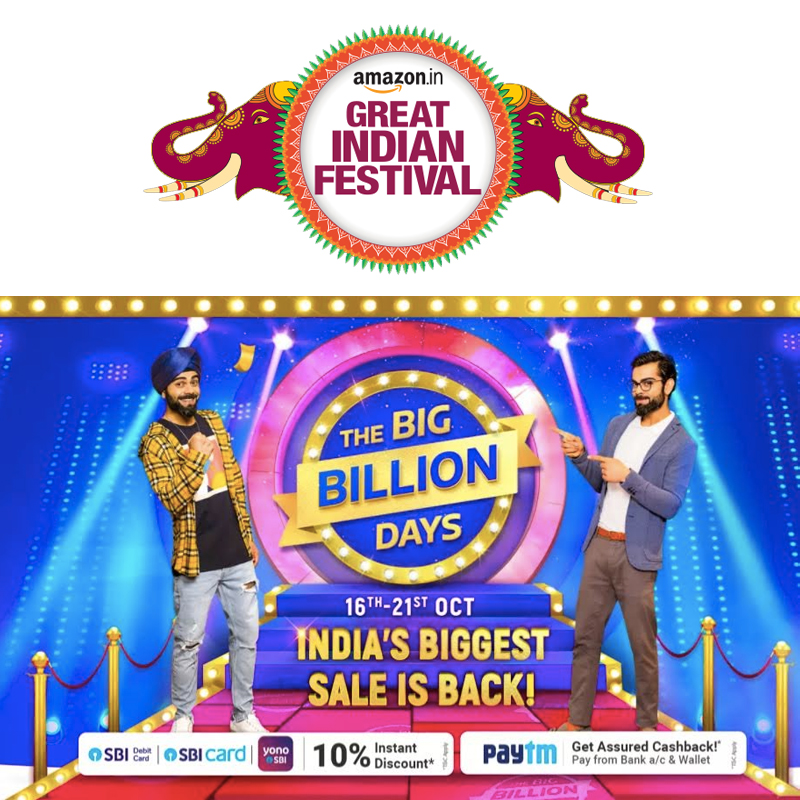
    Amazon’s Great Indian Festival and Flipkart’s Big Billion Day coincide every year, and both e-tailers go head-to-head to garner attention and achieve the maximum sales. To leverage this golden period of festivities, both brands rely on advertising channels, spending hundreds of crores on marketing, to reach out to the masses. This year too, they have been campaigning extensively on ATL mediums to attract more and more buyers.

    While the strategy of these rivals might differ, their purpose remains the same.

    If we look at the last few years of their marketing strategy, it is evident that Flipkart follows the celebrity-driven approach, whereas Amazon focuses specifically on social media and content generation along with its ATL campaign.

    Flipkart has been popular for its media campaigns like Big Billion Day, Kidults, Ab Mehengaai Giregi, Kidding No Worries, and Shopping ka Naya Address. Amazon, too, has some memorable campaigns to its credit: Aapki Apni Dukaan, Kitne me Mila, Apno ka Saath, and The Great Indian Festival.

    As is customary, Flipkart in 2020 has created a number of video capsules featuring celebrities like Virat Kohli, Alia Bhatt, Deepika Padukone, and Amitabh Bachchan.

    According to angel investor and business strategist Lloyd Mathias, Flipkart believes that celebrities help break the clutter and reach a wider audience for its Big Billion Sale. But Amazon has the advantage of ‘connecting’ with its customers.

    "Amazon has worked at building an emotional bond with Indian consumers with their Aapki Apni Dukaan spot highlighting the ease of shopping through the Amazon App. I think both brands' campaigns have been equally effective, though Amazon’s emotional appeals tend to stick. Also, celebrities used tactically are limiting – until they become part of the story,” said Mathias.

    Amazon this year has tried to align with the Prime Minister’s call for atmanirbharta and come up with the tag lines, 'Made by India Made for India’ in addition to ‘Your trusted store for new beginnings’ and ‘delivering smiles to homes' – all aimed at appealing to Indian families.

    Dentsu India EVP and head- strategy Vishal Nicholas feels that Amazon has ironically been baking an endearing Indian-ness into its positioning, quite consistently at that. “Their strategy seems to be to own cultural truths about India, shopping, and relationships, and most importantly to stay the course on this strategy.”

    Agreeing with this line of thought, 22feet Tribal Worldwide business head – north Vishal Mehra shares, “For Amazon, the problem was to connect with the Indian public-at-large and dispel the notions of a foreign behemoth coming in and taking away all the business. To show a softer and more local side of its personality, the Apni Dukaan campaign was launched and since then they have continued using images of family and are even branching into promoting local kaarigars in their marketing outreach.”

    As for Flipkart, its celeb approach is mainly used to bring aspirational value to product marketing, and it could be more effective. “Flipkart’s spotlight sale items are more around individual needs, whereas Amazon regularly pushes products which also involve family usage,” he explains.

    A few years ago, Flipkart launched a marketing campaign for its fashion segment India ka Fashion Capital comprising different celebrities from Bollywood and TV Industry. The videos were used in GEC channels and digital media platforms to maximize reach.

    Amazon has not opted for the celebrity path yet, and usually tries to have two-way communication with the help of social media – be it contests or shout outs – to keep the consumer engaged. The campaign #ApniDukaan focused on the core proposition of the sale: family buying a lot at lesser prices. Last year, it also came up Amazon Festive Yatra, a house-on-wheels concept that took a multi-city tour, to highlight the e-commerce brand’s offerings, especially the home-based and local products. But will it be viable for Amazon to go the Flipkart route in the future?

    Nicholas claims that theoretically, it is still possible for Amazon to go down the celeb path. “But I see no need for them to do whatsoever. Their strategy is to be seen as an e-retailer who ‘gets’ India. So, if a celeb helps them do that, they could consider an apt celebrity if it furthers their cause disproportionately.”

    Having a line-up of celebs in one campaign can potentially magnify star power like never before but only if they are united by the brand’s promise, purpose, or personality, he opines, adding: “Then the stars appear as a ‘team’ and star power works like a harmony – different instruments but a pleasing melody, else they can turn into a cacophony. Take the case of Mile Sur Mera Tumhara or some Nike all-star ads where the purpose is common – national unity in diversity for the former, whereas it’s winning in the case of Nike.”

    Mehra shares that Amazon’s usage of the Indian family has been very wise and has helped it connect deeply with consumers. “The room for family-led marketing might have been limited with Amazon, but that hasn’t made any less impact on their business performance.”

    Flipkart has been trying to woo customers in rural areas and Tier towns through its own brand of consumer products. The brand is expanding its private-label products in categories such as electronics, furniture, large appliances, and staples. While Amazon is also trying to catch up in small towns, its core strength lies in metro cities.

    According to a research firm Redseer Consulting and Unicommerce, shoppers from rural cities, towns, and regions will be the top contributors to online sales during this year’s festive season.

    Also, due to the pandemic, there has been a change in consumer buying behaviours – people are preferring to shop online frequently instead of stepping out of homes. This phenomenon has led both the companies to focus on all touchpoints of marketing. From TV spots to trending hashtags on Twitter, dropping sneak-peeks for exclusive sale items, and news articles on scoring the best deals – all to generate buzz for what’s shaping up to be an exceptional festive sale in an exceptional year.

  • From her to him: Nykaa unveils men’s fashion on its platform

    From her to him: Nykaa unveils men’s fashion on its platform

    NEW DELHI: Women’s shopping destination Nykaa Fashion is now wooing men with the launch of men’s fashion category on its website and app. This is the next big step for the brand after it unveiled the Nykaa Man website and app dedicated to men’s grooming back in 2018. With this, Nykaa will now offer men fashion and grooming products across 560+ brands and 42,000 products.

    Social media platforms like Facebook, Instagram, YouTube and WhatsApp have exposed men, both in urban and rural areas, to global fashion and self-care trends. Nykaa Man aims to provide male customers a personalized one-stop shop where they can explore products suited to their grooming needs. Designed to cater to all lifestyle shopping needs, the men’s category will offer clothing, footwear, eyewear, sportswear and accessories across 60+ brands including GAP, Louis Phillipe, Raymond, Adidas, Skechers, Pepe Jeans, Hidesign and more.

    Read more news on Nykaa

    Nykaa chief marketing officer Anchit Nayar said, “It has long been the vision of Nykaa to bring the pillars of our brands – curation, content and convenience to both women and men across India. With the launch of our men’s category of fashion products on Nykaa Fashion and our already existing grooming offer on Nykaa Man, men across India will be able to shop for all their lifestyle needs at Nykaa with a guarantee of 100 per cent authenticity, as well as exciting content to discover new trends and products.”

    In recent months, Nykaa saw an increase in average order values and prepaid payments, reflecting the growth of online shopping. As a leader in women’s fashion and beauty shopping, Nykaa will now extend its retail expertise to a male audience by catering to the high growth categories of fashion and grooming.