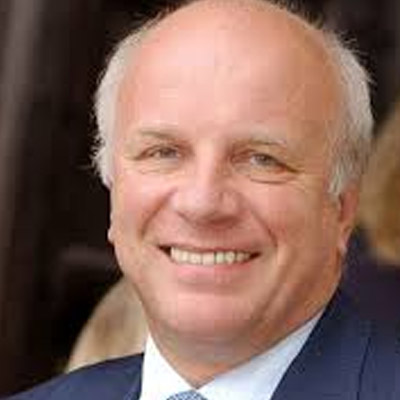
Tag: Dyke

  • Dyke hits out at Hutton, says report full of errors

    Dyke hits out at Hutton, says report full of errors

    MUMBAI: Any hopes that 10 Downing Street may have harboured that Gerg Dyke, dubbed “Tony’s Crony” when he took the reins at the BBC four years ago, would quietly ride away into the sunset look certain to be dashed.

    A day after he quit as BBC director-general, Dyke, who’d said his resignation should draw the line under the Kelly affair as far as the rest of the BBC top management were concerned, fired his first salvo.

    Speaking on BBC radio and GMTV television, Dyke said he did not accept all of Lord Brian Hutton’s report into the death of weapons expert David Kelly, saying it was lacking in balance and tainted with errors.

    “I would be very interested to see what other law lords looking at Hutton thought of it. There are points of law in there in which he is quite clearly wrong,” Dyke said.

    Dyke said he agreed with the departing BBC chairman, Gavyn Davies, that one could not “choose the referee” and had to accept his decision, but quipped: “The government did choose the referee.”

    Dyke also blasted prime minister Tony Blair’s former spokesperson and chief spinmaster Alastair Campbell, calling him “remarkably ungracious” for the tenor of his comments in a series of interviews that he gave yesterday. A clearly gloating Campbell stated he had always told the truth and that he had been vindicated by Hutton.

    Vindicated by Hutton maybe, but certainly but not so by the British public. A YouGov poll in the Daily Telegraph found that 56 per cent of Britons believed Hutton’s report was a “whitewash”, and that 67 per cent trusted BBC journalists compared with 31 per cent who trusted Blair’s government.

    The public response to the whole sorry affair as well as the outpouring of spontaneous support that came from across the rank and file of the BBC might well explain the combative stance that Dyke has taken the “morning after typhoon Hutton” left the Beeb desperately trying to find its bearings again. Dyke’s resignation triggered walkouts and demonstrations by hundreds of BBC staff around Britain.

    A comment made last night by John Tusa, the former head of BBC World Service, and reported in The Guardian is relevant in this context. Tusa has been quoted as saying he believed the government’s satisfaction with resignations at the top of the BBC could backfire.

    Tusa noted that Dyke had offered an apology on Wednesday when the Hutton report came out, but that he had backtracked on Thursday, questioning the governors’ decision to offer an unreserved apology for the way the corporation handled the Kelly affair.

    “If I were the government, I would say this is an argument which is not going to go away, because the two most dangerous men involved are out there and they have got an argument to make,” Tusa was quoted by The Guardian as telling BBC2’s Newsnight.

  • BBC’s Dyke takes a dig at US coverage of Iraq

    BBC’s Dyke takes a dig at US coverage of Iraq

    MUMBAI: “If Iraq proved anything, it was that the BBC cannot afford to mix patriotism and journalism. This is happening in the United States and if it continues will undermine the credibility of the US electronic news media.” This was the crux of director general BBC Greg Dyke’s speech which he delivered at a journalism symposium at the Goldsmiths College, University of London
     

    As reported earlier by indiantelevision.com, the BBC has made major gains through its coverage of the conflict. It was also reported that Americans were increasingly turning to BBC America for news.

    He also reflected on the importance of allowing the viewer to see the whole picture saying, ” We must never allow political influences to colour our reporting or cloud our judgement. Commercial pressures may tempt others to follow the Fox News formula of gung-ho patriotism but for the BBC this would be a terrible mistake.”

    Elaborating on the differences between the way the US broadcasters cover the news and the BBC, Dyke gave the example of a BBC interview with the American Defence Secretary Donald Rumsfeld, by David Dimbleby. He said, “When excerpts were played in the States, many commentators agreed that American interviewers wouldn’t have taken such a robust approach. The aim certainly wasn’t to win some intellectual battle of wills or to trip Mr Rumsfeld up. It was all about testing his arguments and not letting him gloss over difficult issues.

    On American television today, politicians don’t face that sort of interrogation. For the health of our democracy, it’s vital we don’t follow the path of many American networks and lose the will to do this.”

    Recalling that at times of conflict and crisis the BBC’s coverage always comes under intense scrutiny from all sides, Dyke said: “Only by constantly resisting any pressures which threaten our values will we be able to maintain the trust of our audiences. That’s why we must temper the drama and competition of live, rolling news with the considered journalism and analysis people need to make sense of events.”

    Outlining the challenges raised by the recent conflict such as more 24-hour news, the risks faced by embedded reporters and un-attributed, unreliable information on the internet, Dyke said: “These are serious challenges for any news organisation aiming to increase the quality as well as the quantity if its coverage. For the BBC, as the UK’s most trusted source of news and current affairs, we have a particular responsibility to take account of them. While seizing every opportunity to improve the range and choice of our output, we cannot afford to compromise on its honesty and integrity.”