Tag: DVD

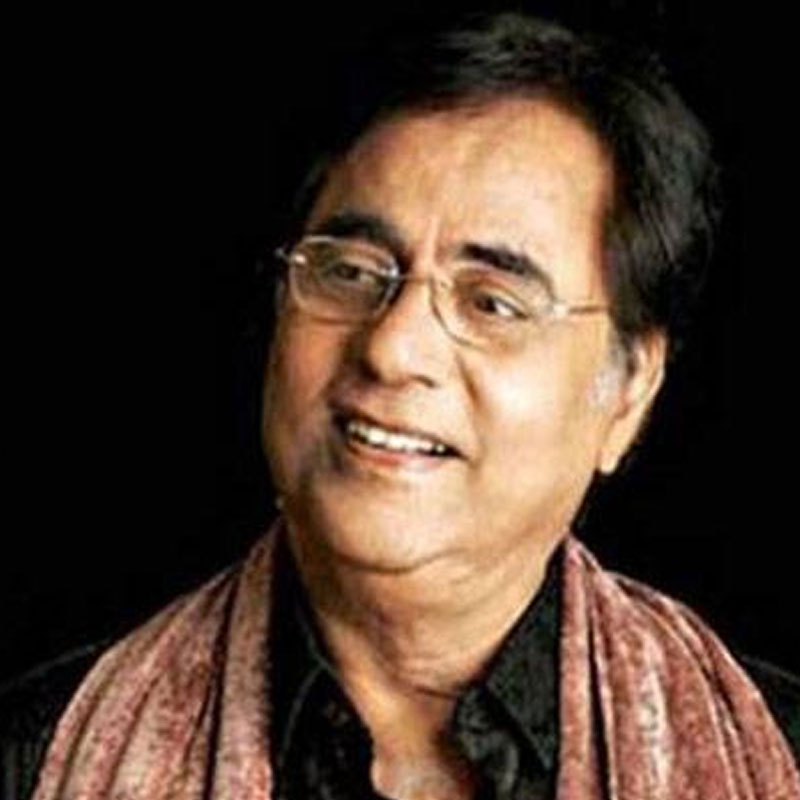
  • ‘Lightness of being’, a coffee table book to be launched on Jagjit Singh’s 77th birthday paying him an unforgettable tribute

    ‘Lightness of being’, a coffee table book to be launched on Jagjit Singh’s 77th birthday paying him an unforgettable tribute

    8th February will mark 77th birth anniversary of the man who made Ghazals synonyms with romance in India. On this special occasion, a seven cities musical concert has been planned to pay tribute to the Maestro starting with Mumbai on 8th.

    A special pack of a beautiful coffee table book, a DVD of never seen before footage from his Paris concert and a documentary called Kaagaz Ki Kashti based on Jagjit Singh’s life, made by Brahmanand Singh will be launched that day for the fans of Jagjit Singh.

    The documentary also  has people like Gulzar Sahab, Subhash Ghai and Jagjit Singh’s wife chitra sharing anecdotes about the maestro’s life.

    “While Jagjit was a man of depth and gravitas, he never took himself seriously. This is a small effort to pay a humble tribute to him. The book celebrates his life, music, success, failure, the pain and personal tragedies in all its glory, told through photographs and unheard of anecdotes .”Said Bharmanand Singh who is behind this effort to organize the 7 cities musical concert. 

    The evening is  aimed to recreate and reinterpret the maestro’s immortal, soulful and rare ghazals celebrating and bringing out the very essence of the magic created by Jagjit Singh.

  • Dharmendra releases Shemaroo’s ‘Dastaan-E-Rafi’ docu DVD

    MUMBAI: Shemaroo Entertainment has released Dastaan-E-Rafi, an award winning documentary film based on Mohd. Rafi’s life on DVD to mark his 37th death anniversary. It was launched by the legendary actor Dharmendra who is a self-confessed fan of Mohd. Rafi and for whom Rafi sang several popular songs.

    Recalling his struggling days, Dharmendra shared that he always wished for Rafi Sahab to sing for him. His happiness knew no bounds the day Rafi Sahab sang his first song for him in “Shola Aur Shabnam”. He actually wanted to shout from rooftops telling the world that Rafi Sahab sang for him. He always found him to be a saintly and a simple man. In fact, when other singers started to give playback for him, Dharmendra used to become very uncomfortable and took a long time to adjust. Such was his unconditional love for Rafi Sahab.

    Dastaan-E-Rafi was subsequently presented to Anandji (of Kalyanji Anandji fame), Pyarelal (of Laxmikant Pyarelal fame), singers Anuradha Paudwal and Usha Mangeshkar at their respective residences.

    Dastaan-E-Rafi, directed by Acharya and Vinay Patel, features Bollywood personas who have worked closely with Rafi Sahab including Shammi Kapoor, Manoj Kumar, Rishi Kapoor, Randhir Kapoor, Jeetendra, Khayyam, Pyarelal, Shamshad Begum, Ghulam Ali, Pandit Jasraj, Bappi Lahiri, Uttam Singh, Amit Kumar, and many more. His brother and children also share their memories about the great man. Prakask Karlekar is the cinematographer of the film.

    The documentary is an introspective attempt to discover the real human being behind the glory of legendary singer Mohd. Rafi as industry celebs and his dear ones recall his life journey. The film traces his beginnings, right from his birth in Amritsar to his entry in Bombay; his days of struggle to his achieving stardom; the various ups and downs in his life including differences with Lata Mangeshkar over royalty issue; his being sidelined after the emergence of Kishore Kumar as a playback singer post 1969 to his powerful comeback in the mid-1970s and then his untimely death in 1980. Even decades after his death, Mohd. Rafi is fondly loved and remembered by fans all over the world and that proves his genius and greatness.

  • Insurgency issues, lack of cinemas plague NE India filmmakers

    Insurgency issues, lack of cinemas plague NE India filmmakers

    MUMBAI: An interaction with first-time filmmakers from north-east India showed that their primary concern was the lack of exhibition facilities in the seven states where the number of theatres has come down substantially.


    The filmmakers, who were part of workshops held by the Films Division, had the satisfaction of showing their films at the ongoing Mumbai International Film Festival of documentary, short and animation here in a separate package – Telling Tales from the Northeast.


    The films also showed that they were disturbed by insurgency in their part of the country and were struggling to find peace.


    Lallianpuii (Mizoram), Aldrin Zosangliana (Mizoram), Anungla Longkumer (Nagaland), Tiakumzuk Aler (Nagaland), Megotsolie Dolie (Nagaland), and Arup Mazumder (Assam, Director of Photography) had trained with the Division beginning in 2014 and this is the first phase of a continuing programme. States like Manipur and Tripura might be on the Films Division map soon. Of these states, only Assam has an organised film industry but there too, FD deputy director general Joshy Joseph chose to go to Silchar instead of the state capital, Guwahati.


    Over a mere nine days, the participants completed a film each: three days to write, three to shoot and three to edit. Since there are virtually no cinemas in Nagaland and Mizoram, the six will never see their films in a local theatre.


    Tranquility (Lallianpuii) is about car drivers in Aizawl, a relatively ‘crowded’ capital, who are amazingly patient and tranquil, even when stuck in traffic jams. Sounds of horns are conspicuous by their absence. In a mere three minutes, Lallianpuii provides a capsule of a horn-free city and its polite drivers, with car registration numbers beginning with MZ. The story is in the form of a mother and child going shopping.


    Songs of the Marbles (Ao) uses playing marbles as currency among children and a child bully as a symbol of political extortionists. It is made in the organic unity style, cyclically, practically ending where it began. The idea of taking marbles by extortion was a symbolic picture of the true scenario, the filmmaker said.


    Birth of a Poem (Mazumder) highlights the plight of a lover waiting to meet his beloved and how his longing gives birth to a romantic poem.


    Misty Voyage (Losanghina) focuses on the Mizos who do not venture out after dark because of the two-decade old insurgency, and watch films and, in terms of entertainment, programmes dubbed in Mizo, on TV.


    Of the two Nagaland films, one addresses displacement, and unsung heroes. It is called Untitled and uses only one Naga folk song, and no dialogue whatsoever. The other version of the film was called the ‘faculty version’, or ‘Anungla’, because it was ideated by her.


    Lack of regular cinemas in the region also means virtually no censorship, and filmmakers can make films of their choice. But they have to depend upon DVD distributors and cable TV operators. The filmmakers from Mizoram said Mizos generally do not speak or understand any language other than Mizo and even Salman Khan’s films are dubbed in the local language. Songs, however, are left intact. In Nagaland, the filmmakers said Nagamese is the link language among many tribes so the dubbing is into Nagamese. Most people in the state love to watch Korean soap operas and identify a lot with Korean culture. Nagas are also very fond of Korean content.


    Insurgency has almost ended in Mizoram after 1986, but Nagaland continues to face the problem. There is no state help for filmmakers in either state, films being low on their priority list.


    The North East Zone Cultural Centre, set up in the 1980s by the then Prime Minister Rajiv Gandhi, still functions with headquarters in Dimapur (Nagaland). Though it funds cultural activities, and even documentation, cinema is not on their agenda.


    Joshy pointed out that the camera, sound and editing were handled by professionals and the equipment was sourced from the nearest big city, Kolkata.


    Many more such workshops are needed before the outreach can have full impact, but all six filmmakers were of the unanimous view that this was a breakthrough. As ‘Puii’ summed it up, “I was so touched when, after the screening of my film, some members of the audience expressed their hope that other cities will follow Aizawl in becoming horn free.”

  • Insurgency issues, lack of cinemas plague NE India filmmakers

    Insurgency issues, lack of cinemas plague NE India filmmakers

    MUMBAI: An interaction with first-time filmmakers from north-east India showed that their primary concern was the lack of exhibition facilities in the seven states where the number of theatres has come down substantially.


    The filmmakers, who were part of workshops held by the Films Division, had the satisfaction of showing their films at the ongoing Mumbai International Film Festival of documentary, short and animation here in a separate package – Telling Tales from the Northeast.


    The films also showed that they were disturbed by insurgency in their part of the country and were struggling to find peace.


    Lallianpuii (Mizoram), Aldrin Zosangliana (Mizoram), Anungla Longkumer (Nagaland), Tiakumzuk Aler (Nagaland), Megotsolie Dolie (Nagaland), and Arup Mazumder (Assam, Director of Photography) had trained with the Division beginning in 2014 and this is the first phase of a continuing programme. States like Manipur and Tripura might be on the Films Division map soon. Of these states, only Assam has an organised film industry but there too, FD deputy director general Joshy Joseph chose to go to Silchar instead of the state capital, Guwahati.


    Over a mere nine days, the participants completed a film each: three days to write, three to shoot and three to edit. Since there are virtually no cinemas in Nagaland and Mizoram, the six will never see their films in a local theatre.


    Tranquility (Lallianpuii) is about car drivers in Aizawl, a relatively ‘crowded’ capital, who are amazingly patient and tranquil, even when stuck in traffic jams. Sounds of horns are conspicuous by their absence. In a mere three minutes, Lallianpuii provides a capsule of a horn-free city and its polite drivers, with car registration numbers beginning with MZ. The story is in the form of a mother and child going shopping.


    Songs of the Marbles (Ao) uses playing marbles as currency among children and a child bully as a symbol of political extortionists. It is made in the organic unity style, cyclically, practically ending where it began. The idea of taking marbles by extortion was a symbolic picture of the true scenario, the filmmaker said.


    Birth of a Poem (Mazumder) highlights the plight of a lover waiting to meet his beloved and how his longing gives birth to a romantic poem.


    Misty Voyage (Losanghina) focuses on the Mizos who do not venture out after dark because of the two-decade old insurgency, and watch films and, in terms of entertainment, programmes dubbed in Mizo, on TV.


    Of the two Nagaland films, one addresses displacement, and unsung heroes. It is called Untitled and uses only one Naga folk song, and no dialogue whatsoever. The other version of the film was called the ‘faculty version’, or ‘Anungla’, because it was ideated by her.


    Lack of regular cinemas in the region also means virtually no censorship, and filmmakers can make films of their choice. But they have to depend upon DVD distributors and cable TV operators. The filmmakers from Mizoram said Mizos generally do not speak or understand any language other than Mizo and even Salman Khan’s films are dubbed in the local language. Songs, however, are left intact. In Nagaland, the filmmakers said Nagamese is the link language among many tribes so the dubbing is into Nagamese. Most people in the state love to watch Korean soap operas and identify a lot with Korean culture. Nagas are also very fond of Korean content.


    Insurgency has almost ended in Mizoram after 1986, but Nagaland continues to face the problem. There is no state help for filmmakers in either state, films being low on their priority list.


    The North East Zone Cultural Centre, set up in the 1980s by the then Prime Minister Rajiv Gandhi, still functions with headquarters in Dimapur (Nagaland). Though it funds cultural activities, and even documentation, cinema is not on their agenda.


    Joshy pointed out that the camera, sound and editing were handled by professionals and the equipment was sourced from the nearest big city, Kolkata.


    Many more such workshops are needed before the outreach can have full impact, but all six filmmakers were of the unanimous view that this was a breakthrough. As ‘Puii’ summed it up, “I was so touched when, after the screening of my film, some members of the audience expressed their hope that other cities will follow Aizawl in becoming horn free.”

  • Technicolor to acquire Cinram’s DVD business for €35 – 40 million

    Technicolor to acquire Cinram’s DVD business for €35 – 40 million

    MUMBAI: Technicolor is planning to acquire Cinram Group’s North American optical disc manufacturing and distribution assets. The move comes in the wake of Technicolor’s advanced negotiations with two large US customers to assume their contracts for the replication and distribution of packaged media products (DVD and Blu-ray discs) in North America.


    The value of the acquisition in the range of €35 – 40 million and will be entirely funded out of available cash.


    As a result of this acquisition, Technicolor’s expanded operational platform could also serve to support other new customer additions in North America, in a manner consistent with the Group’s strategy of optimising the operating leverage of its packaged media products activities.


    The purchase agreement with Cinram Group, Inc. is subject to obtaining certain consents as well as other customary closing conditions.


    The transfer of the contracts and assets to Technicolor could occur as early as November 2015.


    The customer contracts, if concluded, would add in excess of €190 million in annualised revenues to Technicolor’s Entertainment Services segment. This would have no impact on the Group’s Adjusted EBITDA and Free Cash Flow objectives for 2015.

  • Prime Focus Technologies launches secure screener application for movie studios

    Prime Focus Technologies launches secure screener application for movie studios

    MUMBAI: With awards season around the corner and multiple screeners currently in circulation, Prime Focus Technologies (PFT) will be offering SecureScreener as the industry’s first digital, contemporary and safe screener application.


    SecureScreener, a superior substitute to DVD and online channel distribution, is part of Clear, the world’s first and most proven hybrid cloud-enabled Media ERP Suite that virtualises the content supply chain.


    SecureScreener provides entertainment companies with a robust alternative to the logistical hassle of shipping DVD screeners, as well as peace of mind that screener content is always secure. The application offers access to content anytime, anywhere, while also providing instant feedback including exactly who has viewed, shared and downloaded watermarked content with the option to further customise with expiration and access settings. Recipients even have the option to view the content offline.


    Through Clear’s unbreakable Secure Player, SecureScreener delivers a safe, high-quality viewing experience on a variety of platforms, ensuring a seamless end-to-end experience.The Secure Screener is also available as an iPad app.


    The cloud-based application also addresses the financial commitments made by studios by eliminating recurring costs that has no productive use. In fact, it is estimated that for every $20 of direct cost spent on physical screeners, $80 more are lost in indirect costs. SecureScreener provides a solution to this monetary drain, reducing the overall cost of screener distribution.


    “As studios continue to grapple with the challenges of security in the digital age, SecureScreener stands alone as the safe, cloud-based solution to piracy threats, providing peace of mind that content is secure. In addition to the threat of piracy, there’s a large financial commitment made each year to screeners, both direct and indirect. SecureScreener reduces costs, while also providing studios with more control over their content than ever before,” said Prime Focus Technologies founder and CEO Ramki Sankaranarayanan. 


    SecureScreener is one of five Clear modules addressing specific business challenges to help broadcasters, studios, brands, sports and digital businesses drive creative enablement, enhance ecosystem efficiencies and sustainability, reduce cost and realise new monetisation opportunities. SecureScreener is available as a standalone business solution or bundled together as a Cloud Media ERP Suite with: Cloud MAM, Operations Cloud, Broadcast Cloud and Production Cloud.

  • Paramount to distribute ‘Selma’ DVD in every US high school

    Paramount to distribute ‘Selma’ DVD in every US high school

    MUMBAI:In celebration of the home entertainment debut of director Ava DuVernay’s inspirational and Academy Award-winning epic Selma, Paramount Home Media Distribution will send a copy of the DVD free of charge to every high school in the US, both public and private.

    In addition, teachers can receive free companion study guides to help further illuminate the remarkable historical events depicted in the film.

    “Our Selma filmmaking journey has had many highlights, but to me, the response from students and educators has been the most magnificent part of the experience. To think that this triumphant story of dignity and justice will be available to every high school in this country is a realization of many dreams and many hopes. I applaud Paramount on this extraordinary effort, and salute the teachers who will provide classes and context on the work of Dr. King and his comrades to the young minds of our nation. The response from students and teachers to our ‘Selma for Students’ initiative was overwhelmingly positive and we are delighted to be extending the campaign,” said DuVernay.

     Paramount Pictures president, worldwide distribution and marketing Megan Colligan added, “During the film’s theatrical run more than 300,000 young people were able to see the film for free. By providing DVDs to all of the high schools in the country, we hope to reach all 18 million high school students with the film’s powerful and inspiring story. With many of these students preparing to vote for the first time in next year’s elections, it is especially fitting that they witness the bravery and fortitude of those who fought to establish the Voting Rights Act of 1965.”

    Selma won the Academy Award and the Golden Globe Award for Best Original Song for “Glory” by Common & John Legend. The film was nominated for an Academy Award for Best Picture and Golden Globe Awards for Best Picture, Best Actor and Best Director.

    From Paramount Pictures, Pathe, and Harpo Films, Selma, a Plan B, Cloud Eight Films, and Harpo Films production in association with Ingenious Media, tells the incredible story of how Dr. Martin Luther King Jr. led the epic march from Selma to Montgomery to secure equal voting rights in an event that forever altered history.

    The film is produced by Christian Colson, Dede Gardner, Jeremy Kleiner, and Oprah Winfrey. The film is executive produced by Brad Pitt, Cameron McCracken, Diarmuid McKeown, Nik Bower, Ava DuVernay, Paul Garnes and Nan Morales. The film is written by Paul Webb.

  • Gerard Butler may star in ‘Point Break’ remake

    Gerard Butler may star in ‘Point Break’ remake

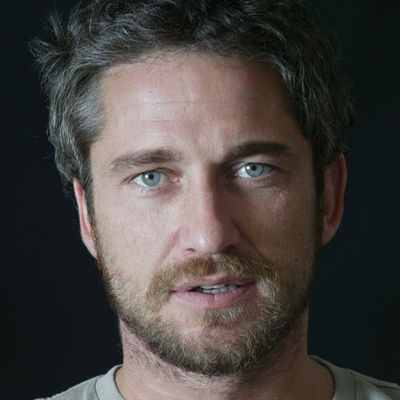
    MUMBAI:  Gerard Butler is in negotiations to star in a remake of the Keanu Reeves and Patrick Swayze action thriller, Point Break directed by Kathryn Bigelow. Released in 1991, the film got a worldwide cult following in DVD and Blu-Ray releases.


    According to The Hollywood Reporter (THR), the movie is looking at a summer shoot with Ericson Core, the cinematographer behind 2001’s The Fast & the Furious and Daredevil as the director. For the remake, Kurt Wimmer (Salt, Total Recall) wrote the screenplay which revolves around the international world of extreme sports. The original film had the Southern California surf scene as the main theme. However, the storyline about an FBI agent infiltrating a crime ring as well as the names of the principle characters remains the same.


    If the film is finalised, Butler will play Bodhi, an expert extreme-sports athlete who seeks nirvana through the conquest of a series of athletic feats such as surfing 100-foot waves, reports THR.


    However, for the time being the actor will next be seen in Liongate’s epic fantasy Gods of Egypt, which starts shooting in March. Later in the year, he will be seen in London Is Falling, the sequel to his action hit Olympus Has Fallen.

  • Disruptions are a necessary evil

    Disruptions are a necessary evil

    CANNES: We live in times of fast changing technology where more often than not, the only way to keep pace is to unlearn what we’ve just learnt and re-adapt ourselves to the transformation.

    Exactly the point Deluxe Media Europe senior director, sales and business development Darren Baker was trying to drive home when he said: “Every time you think you have learnt everything, you have to adapt and learn again. The need is to adapt quickly and learn again.”

    Baker was addressing a gathering at Verriere Grand Audi Level one at the Palais on day two of Mipcom.

    “The important thing is to learn quickly and react to the disruption,” he further stressed.  
    Referring to cinema, TV, VCR, DVD, BluRay and now VOD as techniques used for disruptions, Baker said that while the disruptive nature of some technological shifts was immediately evident, in other cases, it became clear only through tracking the patterns of adoption.

    Speaking of one too many portals in the content supply chain, he said: “The consumer wants the content, the content provider wants to provide the content and the portals are ready to carry them. But then there are too many contracts. There needs to be a disruption here.”

    Not just portals, he also pointed out that there are just too many schemes and updates. “By the time the consumer is happy that they have got all the programmes, the portal updates its software and the consumer has to change the entire system yet again,” he said.

    In his view, the proliferation of vendors too posed a problem. “If you have a large number of vendors, you should reduce them,” he advised buyers.

    Offering his take on successful disruptions, he said: “There is a need for constant improvement in every company. A fresh approach is always welcome and refreshing the digital policy every few months also helps,” adding that with every four year old ignoring television and moving towards mobile and social media, “companies need to be open to disruptions”.

  • Cannes Classics 2013

    Cannes Classics 2013

    Cleopatra by Joseph L. Mankiewicz © DR

    Jean Cocteau, 20th Century Fox, Liz Taylor and Richard Burton, the World Cinema Foundation, a 1964 Palme d’or, Ted Kotcheff and Duddy Kravitz, birthdays and celebrations, Yasujiro Ozu, the return of Lino Brocka and Semb?ne Ousmane to Cannes, the Munich Olympic Games, a meet up with Alain Resnais, a Grande Bouffe and a bit of Saké will be the ingredients for Cannes Classics 2013.

    As cinema’s link to its own history was about to be turned upside down by the arrival of digital and because films from the past are an integral part of the Festival de Cannes, 2004 saw the creation of Cannes Classics, a programme presenting old films and masterpieces from cinematographic history that have been carefully restored. A natural, vital part of the Official Selection – and an idea which has made its way into other international festivals – Cannes Classics is also a way to pay tribute to the essential work being down by copyright holders, film libraries, production companies and national archives throughout the world.

    Thus, Cannes Classics lends the prestige of the Festival de Cannes to great works from the past, accompanying their release in theatres or on DVD.

    The films selected for the 2013 edition will be screened in the company of those who restored the films as well as those directors that are still with us today.

    This year’s programme of Cannes Classics is made up of twenty feature-length films and three documentaries. The films will be screened according to the wishes of copyright holders in 35mm, DCP 2K or DCP 4K.

    As announced previously, Kim Novak will come to present the restored print of VERTIGO by Alfred Hitchcock. Furthermore, the Cannes Classics 2013 program will be placed under the sign of a movie having marked the history of the Festival de Cannes LA GRANDE BOUFFE by Marco Ferreri, who aroused during her presentation in 1973 one of the biggest scandals of Croisette.

    The films will be screened according to the wishes of the copyright holders, in 35mm, DCP 2K or DCP 4K.

    • To mark the 50th anniversary of one of the best known and most controversial epics in the history of the cinema, 20th Century Fox, in partnership with Bulgari, presents a restored copy of Joseph L. Mankiewicz’s CLEOPATRA (1963, 4h03).
    Digital restoration was carried out in 4K by 20th Century Fox. The screening will take place in the presence of Richard Burton’s daughter Kate Burton, and Chris Wilding, Elizabeth Taylor’s son.

    • The film of the 1972 Munich Olympic Games: VISIONS OF EIGHT (1973, 1h49) by Youri Ozerov, Milos Forman, Mai Zetterling, Claude Lelouch, Arhur Penn, Michael Pfleghar, John Schlesinger, and Kon Ichikawa. Presented by the International Olympic Committee.
    Digital restoration 4K from the original negative by Warner Bros. Motion Picture Imaging, Burbank. Sound restoration from the original magnetic tracks by Audio Mechanics, Burbank.

    • LA REINE MARGOT by Patrice Chéreau (1994, 2h39) presented by Pathé.
    Twenty years have passed since Patrice Chéreau, produced by Claude Berri, shot La Reine Margot, which he presented at Cannes the following year. Now twenty years on, ten years after serving as Chairman of the Jury, Patrice Chéreau returns to the Croisette, in the company of some actors from the film, including Daniel Auteuil, member of the Cannes 2013 Jury.
    Ahead of the 20th anniversary of the film’s release, Pathé restored the film in 4K in 2013 and entrusted the work, under the direction of Patrice Chéreau, to Eclair Group for the image and L.E Diapason for the sound.

    • As part of Cannes 2013’s celebration of the centenary of the birth of Indian cinema, RDB Entertainments presents CHARULATA (1964, 1h57), one of the masterpieces of Satyajit Ray (1921-1992), a filmmaker who figured in the world pantheon from his beginnings and whose work is gradually being restored in his country of origin.
    The film is presented in a copy restored from the negative, restoration supervised by RDB Entertainments and carried out in Studios Pixion in Bombay, India.

    • Another celebration, that of the 110th anniversary of the birth of Japanese filmmaker Yasujirô Ozu: Schochiku Studios continue the restoration of his immense body of work with the presentation of SANMA NO AJI (AN AUTUMN AFTERNOON) (1962, colour, 2h13), the filmmaker’s last film.
    Digital restoration by Shochiku Co., Ltd., the National Film Center and the National Museum of Modern Art, Tokyo. The film will be distributed in France by Carlotta Films.

    • LE JOLI MAI by Chris Marker and Pierre Lhomme (1963, new length 2013: 2h25) distributed by La Sofra and Potemkine Films.

    When the project to restore Le Joli Mai was launched, Chris Marker was still with us. He died on 29th July 2012, and the Cannes screening of this film, now very rare, will be a tribute to the filmmaker by the Festival de Cannes and his friends, including Pierre Lhomme, co-director of the film who also supervised the restoration.

    The photochemical restoration followed by digitization and restoration of the original film in its complete version were carried out by Mikros Images with the support of CNC/Archives Françaises du Film. According to the wishes of Chris Marker, Pierre Lhomme, co-director of the film, then made some twenty minutes of cuts for the restored version.

    The 2K scans, and restoration of the image and sound were carried out by the Mikros Images laboratory.

    • GOHA by Jacques Baratier (1957, 1h18)
    As it does every year, Archives Françaises du Film du CNC present one of their restorations of French film heritage. This year the honour goes to a rarely seen filmmaker, Jacques Baratier, director of the 1967 film Le Désordre ? vingt ans, thanks to the support of his daughter Diane. It should be recalled that Goha, presented at Cannes in 1957 under the Moroccan flag, was Claudia Cardinale’s first film and that Omar Sharif, who came to Cannes for the first time with Youssef Chahine, appeared in it as Omar Cherif.

    Restoration from the negative by Archives Françaises du Film du CNC in collaboration with Diane Baratier. Digital restoration of the sound (originally in mono).

    • The indefatigable Martin Scorsese carries on with the restoration of historical masterpieces of contemporary film from New York, thanks to the Film Foundation. While waiting to see his next excursion into Italian film, it turns out he has found the financing to present a 4K restored copy of Francesco Rosi’s LUCKY LUCIANO (1973, 1h55).

    Restoration financed by the Film Foundation and the Hollywood Foreign Press Association and carried out by the Cinémath?que de Bologne at the L’immagine Ritrovata laboratory, in collaboration with Cristaldi Film and Paramount Pictures.

    • IL DESERTO DEI TARTARI (THE DESERT OF THE TARTARS) by Valerio Zurlini (1976, 2h20).

    Taken from the novel by Dino Buzzati, The Tartar Steppe brings together Vittorio Gassman, Philippe Noiret, Max von Sydow, Jean-Louis Trintignant, Francisco Rabal, and Fernando Rey, not forgetting Jacques Perrin who produced the film. No longer possible to screen, it was time to restore it.

    Digital conversion by Digimage Classics. 4K Image restoration from the original negative with the consent of Cinecitta and under the supervision of Luciano Tovoli, the film’s director of photography. Sound restoration by Gérard Lamps. Produced by Galatée Films and distributed in France from 12th June by Les Acacias. World sales: Pathé International.

    • THE APPRENTICESHIP OF DUDDY KRAVITZ by Ted Kotcheff (1974, 2h)
    Known worldwide as the director of the first Rambo, Ted Kotcheff (born 1931 in Toronto) is also the stage director of the great Australian classic Wake in Fright (1971), Who is Killing the Great Chefs of Europe (La grande Cuisine, 1978) and The Apprenticeship of Duddy Kravitz, with Richard Dreyfuss, who had a major international career. The film will be screened in the presence of Ted Kotcheff, the restoration and production crews, as well the staff of the Toronto international festival.

    Digital restoration in 2K by the crew of Technicolor Creative Services Toronto. The film was cleaned frame by frame. Colour and sound correction was supervised by Ted Kotcheff. The project was financed by The Academy of Canadian Cinema and Television, Astral, Technicolor Creative Services Canada, Telefilm Canada, The National Film Board of Canada and La Cinémath?que Québécoise.

    • LES PARAPLUIES DE CHERBOURG (THE UMBRELLAS OF CHERBOURG) by Jacques Demy (1964, 1h31)
    Following on from La Bataille du Rail by René Clément and Il gattopardo (The Leopard) by Luchino Visconti, here comes another Palme d’or now reserved and visible in digital. As part of the exhibition taking place at the Cinémath?que française (until 4th August 2013), a restoration of the complete filmography of Jacques Demy.
    A digital restoration in 2K from the 2K scan of the trichrome selection, made by Ciné Tamaris at the Digimage laboratory, with the support of the Festival de Cannes, LVMH, the City of Cherbourg, the Basse-Normandie region and a crowd-funding campaign on kisskissbankbank. All the restoration work was supervised by Agn?s Varda and Rosalie Varda-Demy. Mathieu Demy supervised the calibration.

    • HIROSHIMA MON AMOUR by Alain Resnais (1959, 1h32)
    Last year saw Alain Resnais presenting Vous n’avez encore rien vu (You Ain't Seen Nothin' Yet) in competition, and this spring 2013, he is shooting his new film, Aimer boire et chanter. Hiroshima mon amour was his first fiction film, produced by Anatole Dauman, whose daughter Florence looks after the catalogue, and presented at Cannes in 1959. Here we see him presented reborn in sparkling digital form.

    The restoration in 4K was carried out from the original negative by Argos Films, the Technicolor Foundation, the Groupama Gan Foundation and the Cineteca di Bologna, with the support of the CNC. It was supervised by the director of photography Renato Berta. The work was done by L’Immagine Ritrovata laboratory with manufacture of conservation materials as well as digital and 35 mm copies for distribution. Scheduled for re-release in French cinemas on 17th July 2013.

    • BOROM SARRET by Ousmane Sembene (1963, 20’) and MANILA IN THE CLAWS OF LIGHT by Lino Brocka (1975, 2h04) will be presented by the World Cinema Foundation, an association launched in Cannes in 2007 by Martin Scorsese and a number of filmmakers, in order to restore treasures from around the globe, especially from those countries that have no tradition of heritage preservation.

    Sembene Ousmane’s short film has been restored by the L’Immagine Ritrovata laboratory and the Éclair laboratory, in collaboration with the Institut National de l’Audiovisuel. Lino Brocka’s film was digitally restored in 4K also by L’Immagine Ritrovata, supported by the Philippines National Council.

    • THE LAST DETAIL by Hal Ashby (1973, 1h44)
    To mark the occasion of the 40th anniversary of its cinema release, Sony Pictures is giving a second lease of life to one of the great American films of the 1970s: Hal Ashby’s The Last Detail, by now unwatchable on the big screen. It will be recalled that Jack Nicholson won the Male Acting prize when the film was presented at Cannes in 1973.
    Digital restoration in 4K by Sony Pictures carried out by Grover Crisp at Sony Pictures Entertainment – Sony Pictures Colorworks. Cinema release scheduled for November 2013 by Park Circus Films.

    • THE LAST EMPEROR 3D (LE DERNIER EMPEREUR) (1987, 2h43) by Bernardo Bertolucci
    Restoration in 4k by Recorded Picture Company and Repremiere Group in Technicolor Rome’s laboratories. The restoration was supervised by Bernardo Bertolucci, by the producer Jeremy Thomas and the cinematographer Vittorio Storaro. The conversion to 3D was done by Prime Focus.

    • FEDORA REMASTERED by Billy Wilder (1978, 1h50)
    FEDORA is Billy Wilder’s second-to-last film and was originally presented Out Of Competition in Cannes in 1978. It is one of Wilder’s most underestimated films and can been seen as the testimonial of the great director of “Sunset Boulevard” and “The Apartment”. It stars Academy® Award winner William Holden ("Stalag 17", "The Bridge on the River Kwai") and Marthe Keller ("Marathon Man") in the lead roles, next to a roster of high-caliber international stars such as Henry Fonda, José Ferrer, Frances Sternhagen, Michael York, Hildegard Knef and Mario Adorf.

    Restoration by Bavaria Media in cooperation with CinePostproduction, Germany. The source material for the restoration were the original picture negative and sound elements. Custom solutions in the 2K digital restoration workflow were designed with the aim to preserve the original look of the work in the new release for cinema and BluRay.

    • PLEIN SOLEIL by René Clément (1960, 1h55)
    The film was restored in 4K by Studio Canal and La Cinémath?que francaise with the support of the Franco-American cultural fund (DGA, MPAA, SACEM, WGAW). The work was done by L’Immagine Ritrovata in Bologna.

    Marking fifty years since the death of Jean Cocteau
    Jean Cocteau was Chairman of the Festival de Cannes Jury and was a great contributor during the fifties with his constant efforts and his part in making it what it rapidly became. Cocteau died in 1963 and will be commemorated in 2013: the writer, poet, painter, and diarist. Cannes will be paying tribute both to the man and to the filmmaker with a special evening screening of La Belle et la B?te (Beauty and the Beast), selected at Cannes in 1946, followed by Opium, a musical comedy directed as part of the Cocteau year by Arielle Dombasle which recounts the loves of Raymond Radiguet and Jean Cocteau in the early 1920s.

    LA BELLE ET LA BETE (BEAUTY AND THE BEAST) by Jean Cocteau (1946, 1h34)
    Digital restoration carried out by SNC / Groupe M6 and La Cinémath?que française, with the support of the Franco-American cultural fund.

    OPIUM (2013, 1h15) a musical comedy directed by Arielle Dombasle and produced by MARGO cinéma, with the support of Pierre Bergé and Canal Plus. With Grégoire Colin, Samuel Mercer, Julie Depardieu, Hél?ne Filli?res, Niels Schneider, Philippe Katrine and Anna Sigalevitch. French release in October 2013 (Ad Vitam).

    TWO DOCUMENTARIES SCREENED AT THE BUNUEL THEATRE

    • CON LA PATA QUEBRADA (2013, 1h23), a documentary by Diego Galán produced by Enrique Cerezo P.C and El Deseo. From the thirties to the present day, a chronicle on the representation of women in Spanish film, which is also a look back at the country’s history.

    • A STORY OF CHILDREN & FILM (2013, 1h40) by Mark Cousins is the first global portrait of children in the cinema. Using excerpts from 53 films from 25 different countries, this documentary is a “infantile” sequel to THE STORY OF FILM : AN ODYSSEY by the same director. A documentary produced by Mary Bell and Adam Dawtrey of BofA Productions.

    Lastly, in a tribute to Joanne Woodward (whose presence is still unconfirmed), whose picture appears with her husband Paul Newman on the poster of the 66th edition, the Festival will screen a film that she has produced and which she wanted to show: SHEPARD & DARK by Treva Wurmfeld (2013, 1h29).

    In addition, Cannes Classics will also be part of Cinéma de la Plage where the following restored films will be shown:

    CINEMA DE LA PLAGE

    JOUR DE FETE de Jacques Tati (France, 1949, 1h27)
    Digital restoration in 2K by Les Films de mon Oncle

    THE GENERAL de Buster Keaton (1926, 1h18)
    Digital restoration in 4K made by la Modern Videofilm under the supervision of Cohen Film Collection.

    THE BIRDS d’Alfred Hitchcock (1963, 2h09)
    Restauration in 4K made by Universal Studios Digital Services to mark their Centenary. (2012)

    SIMEON (1992, 1h55) d’Euzhan Palcy
    Euzhan Palcy’s film will be screened to mark the 2013 centenary of the poet Aimé Césaire.

    LE GRAND BLEU (THE BIG BLUE) (1988, 2h16) de Luc Besson
    Digital restoration in SCOPE made by Gaumont in partnership with the Eclair Group laboratory.

    THE LADIES’ MAN de Jerry Lewis (1961, 1h35)
    Digital copy from the restoration of the negative carried out by Technicolor for Paramount and Swashbuckler Films.

    L’HOMME DE RIO (THAT MAN FROM RIO) de Philippe de Broca (France, 1964, 1h52)
    Restoration in 2K supervised by TF1 Droits Audiovisuels with the support of the CNC. Re-released on cinemas on 29th May and in DVD, Blu Ray and VOD on 15th May.

    SAFETY LAST (USA, 1923, 1h13) de Fred C.Newmeyer and Sam Taylor
    Restoration by Janus Films, Criterion and Harold Loyd Entertainment.

    DAS crosses 100% 6 weeks after switchoff;many homes yet to get STBs

    Aurangzeb: Just another duplicate drama
    This is only his second film and Arjun Kapoor has been cast in a double role in Aurangzeb. For its content, the writer-director Atul Sabharwal dips into two old-time classics, China Town (which has inspired many twin brothers lost-and-found movies) and Yash Raj's own Trishul. This gives him scope to pen a drama with some veterans in the cast.Jackie Shroff rules the underworld around Gurgaon, a small town in the shadow of Delhi which has grown into a mini-metropolis. With construction and corporate houses mushrooming all over, his might and power help seal all deals. He is aided by his son Ajay (Arjun Kapoor), an uncouth and aggressive youth.