Tag: DTT

  • Vestel Releases First CASTVs with Integrated Broadcast Pay TV Services

    Vestel Releases First CASTVs with Integrated Broadcast Pay TV Services

    AMSTERDAM – 15 January 2019 – Home appliance and consumer electronics manufacturer, Vestel has launched the first TVs which allow consumers to access premium pay TV services directly through their TVs without the need for a separate set-top box (STB), CI CAM or any other external device. The 43” UHD CASTV will be available in Croatia under the JVC brand, offering content from local Croatian DTT pay TV operator EVOTV.

    The launch has been enabled by Irdeto and Vestel’s partnership to implement Irdeto’s TV Cloaked CA solution. This allows the secure delivery of premium content direct to Vestel’s 4K TVs. The new JVC UHD CASTVs can directly receive broadcast DVB Satellite, Cable or Terrestrial content with pay TV protection, through integrated tuners and demodulators. This makes subscribing to pay TV even easier for consumers as they only need to connect the TV to the broadcast network to get started.

    “The launch of the JVC CASTVs addresses a market need in providing more cost-effective content delivery choices for pay TV operators while also drastically reducing subscriber acquisition costs, with no hardware subsidy required,” said Hakan Kutlu, Vice President of Marketing and Product Management, Vestel. “The partnership with Irdeto has enabled this launch as Irdeto TV Cloaked CA ensures that we can give a great experience for our customers, providing easy and secure access to premium pay TV content directly through the TV.”

    “This partnership, and subsequent launch of JVC UHD CASTVs, is a real innovation in the industry,” said Steeve Huin, Vice President of Strategic Partnerships, Irdeto. “With no need for a separate STB or CI CAM module, consumers can have easier access to services, making new subscriber acquisition seamless for operators. All the while, Irdeto TV Cloaked CA provides premium software security to protect high value content.”

    “We’re focused on offering our customers a great experience in all stages of the customer lifecycle and with the JVC CASTV product, customers can easily start enjoying our DTT and OTT services immediately after product installation,” said Domagoj Frank, CEO at EVOTV. “The new JVC CASTVs allow consumers to watch pay TV straight out of the box and will help us to reach new customers through retail sales channels. We will continue to make our content and services as easily accessible as possible, with the highest levels of content security.”

    Irdeto TV Cloaked CA is a key solution offered in the Irdeto 360 Security suite, which is designed to ensure future-proof end-to-end security that can quickly and easily react to changes in the market in a cost-effective fashion. By partnering with Irdeto, Vestel ensures the highest level of content security for operators and content owners who want to deliver premium content and pay TV services directly through the TV. In the coming months, Vestel plans to release CASTVs in 49” and 55” screens as well as launching in new markets including Germany, Austria and Uzbekistan.

  • India, China to provide 50% of global pay TV subs by 2023

    India, China to provide 50% of global pay TV subs by 2023

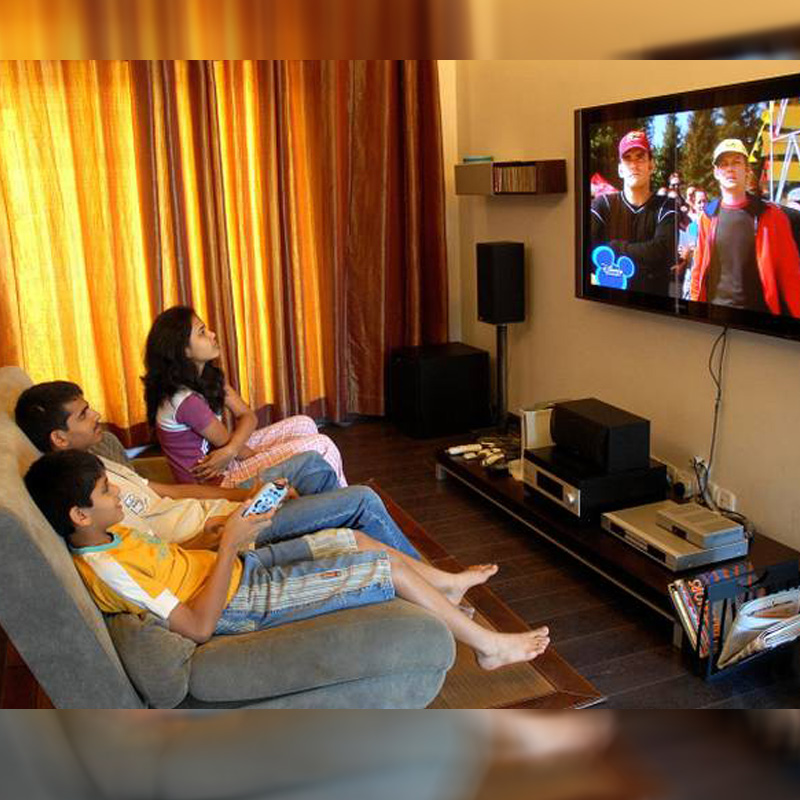
    NEW DELHI: India and China will together provide half the world’s pay TV subscribers by 2023, according to a new global report that forecasts 95 million additional pay TV subscribers would get added between 2017 and 2023 to take the global total to 1.10 billion.

    China will continue to supply about a third of the world’s pay TV subscribers with 375 million expected by end 2023, while India will bring in another 16 per cent of the total by 2023 that translates into 180 million subs, a global report released by London-based Digital TV Research stated.

    Based on forecasts for 138 countries, the number of pay TV subscribers passed 1 billion in 2017.

    Satellite TV will grow by 31 million subs and pay DTT by 10 million. Digital cable TV will add at 61 million subs between 2017 and 2023, but analogue cable TV will lose 88 million subs – a net loss for cable, an official statement from Digital TV Research stated on Tuesday.

    Siti Networks Ltd chief business transformation officer Rajesh Sethi said: “The Asia Pacific Pay TV Sector is expected to show multi-fold growth in the next five years with digital cable expected to account for half of the overall pay TV subscriber additions of 78 million. India will account for around 59 per cent of the incremental revenue growth of $2.7 billion in Asia Pacific for the said time frame, which is evidence of the strong adoption of digital distribution mediums in the country, in line with the government’s digital India initiative.”

    “We, at Siti, while being cognizant of the immense utility that this brings to our fellow citizens, are well positioned to participate in this exciting opportunity and are diligently ensuring that the digital wave in India is ubiquitous and impactful.”

    There were still 90 million analogue cable TV subscribers by end-2017. Although this figure is down from 335 million in 2010, it still represents a major hurdle for pay TV operators to convert. It is not all gloom as there will be 525 million cable TV subs (both analogue and digital) by 2023, similar to the 528 million recorded in 2010.

    Simon Murray, principal analyst at Digital TV Research, said: “It’s no secret that pay TV subscriber numbers are falling in North America. We forecast 92 million pay TV subs in the region by 2023; down by 20 million from 112 million in the peak year of 2012.”

    The number of pay TV subscribers was flat in Latin America in 2017. Fewer than five million more pay TV subscribers are expected between 2017 and 2023, bringing its total to almost 76 million.

    Eastern Europe will lose 2.4 million subscribers between 2017 and 2023, down by 2.9 per cent to 79 million. This is more to do with poor economic conditions than cord-cutting. Eastern Europe also has a legacy of low-paying analogue cable TV subscribers to convert to digital. Year 2017 was the peak year for the region. The 2017 total included 20 million analogue cable subscribers.

    According to the report, Western Europe will still gain subscribers between 2017 and 2023. Although this only represents a 2.6 per cent increase, it means nearly three million more subs to take the total to 106 million.

    Sub-Saharan Africa will climb by 74 per cent between 2017 and 2023 to 41 million pay TV subscribers. In the Middle East and North Africa, the number of pay TV homes are expected to increase by 4.5 million between 2017 and 2023 to 21 million.

    The Asia Pacific pay TV sector is vibrant with subscribers likely to rise by 78 million over the next five years to 686 million.

    Interestingly, the Global Pay TV Subscriber Forecasts report concluded that IPTV would win most of the additional subscribers, or 81 million. IPTV will overtake pay satellite TV subs in 2018. “Some operators, such as Telefonica in Spain, are encouraging subscribers to convert to IPTV from other platforms. IPTV/broadband subs are more lucrative than satellite TV ones,” Murray concluded.

    Also Read :

    Pay-TV: India among four countries which contributed $16 bn rev between ’10 & ’16

    Indian pay-TV expanding by 10.6 pc, 77 pc to be digitised, ARPUs to rise by ’22: MPA

    Only 3% of Indian households paid subs of SVoD services: Global study

    Dish TV, Hathway & Den amongst top 10 global Pay TV platforms

  • Govt extends support to M&E sector in fighting digital piracy

    Govt extends support to M&E sector in fighting digital piracy

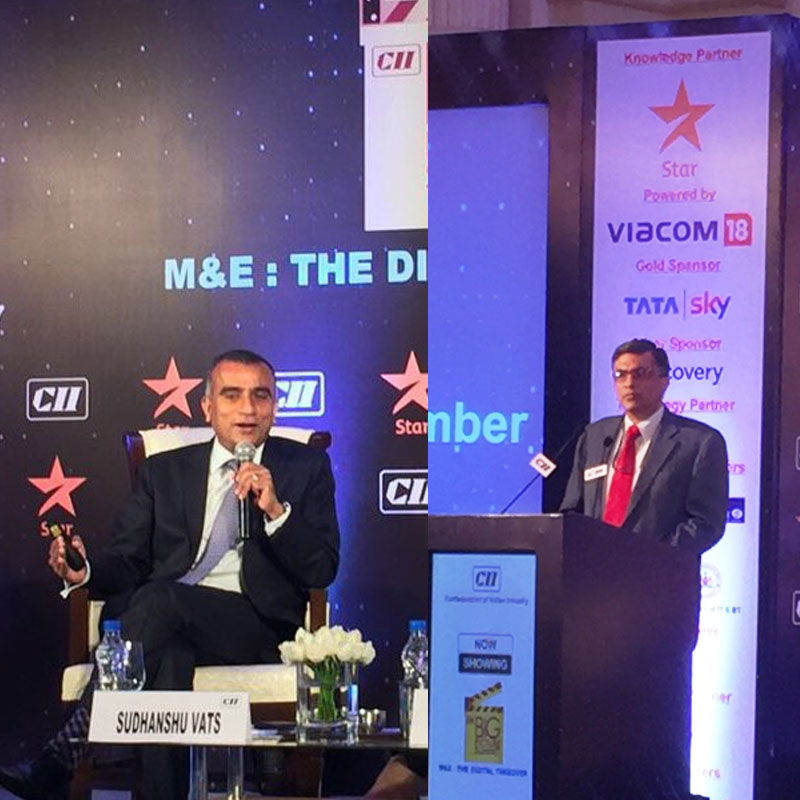
    NEW DELHI: The government of India yesterday stressed that it stood alongside the media and entertainment (M&E) industry in fighting digital piracy to safeguard loss of revenue and ease norms for doing business, while CII entertainment committee head and Viacom18 group CEO Sudhanshu Vats, on behalf of the industry, admitted that automation could result in loss of jobs leading to challenging times, but said the core of the industry will be ‘automation-proof’.

    “The government will stand with you on the issue of digital piracy,” department of industrial policy & promotion (DIPP) joint secretary Rajiv Aggarwal told the audience on Tuesday at the CII-organised Big Picture Summit here, adding that they were exploring a national anti-piracy regulation or regime and there was no need to get further into enacting complicated laws but finding solutions based on global experiences.

    Digital or online piracy is not only a big global challenge for the M&E industry, but has awakened stakeholders in India too who are feeling the heat of heavy loss of revenue due to rampant piracy of Indian content worldwide.

    Pointing out that the Indian government is alive to the issue of digital piracy and the potential of the M&E industry in being able to generate revenues and employment in the country, Aggarwal said that they were looking at how global and some local bodies (like PIPCU of the UK, TIPCU in Telangana and Maharashtra’s online anti-piracy unit) were addressing this challenge.

    Dwelling further on this issue, he exhorted the industry stakeholders to give feedback that will help India in forming a strong case and point of view for submission at WIPO where discussions are on to formulate standards for a global broadcast treaty.

    This year’s Big Picture Summit, an annual two-day conference on issues related to M&E industry, has been themed `The Digital Takeover’, which lays emphasis on the creeping digitisation in general and of delivery services like cable, HITS and OTT, and an impending automation (egged on by the likes of AI) of the various industry sectors.

    TRAI non-committal on exploring auctioning of TV licences

    SK Gupta, telecom regulatory authority of India (TRAI) secretary, which is the telecoms and broadcast regulator, while dwelling on various issues of the recently issued recommendations on net neutrality said the organisation’s efforts have always laid emphasis on consumer interest, while creating a level playing field for all players.

    Incidentally, at a time when the FCC has dismantled net neutrality norms in the US, put in place by the Obama regime earlier, favouring walled gardens of content and premium tiered pricing of various services, India’s TRAI has upheld net neutrality stating that all content should be made available to all distribution platforms on a non-discriminatory basis, apart from other level playing initiatives.

    Later, asked by journalists on the sidelines whether TRAI was exploring a consultation paper on auctioning of TV licences or permissions on the advice of the ministry of information and broadcasting (MIB), Gupta said he at least was not aware of any such move. He was non-committal when pressed on the issue.

    Asian Age newspaper a week back had reported that the government was exploring auctioning of television channel frequencies on the lines of telecoms spectrum, coal blocks and FM radio licences. Reason: bid to increase government revenues as presently permission to uplink and/or downlink TV channels cost a fixed amount with the applicant fulfilling certain set out financial norms, apart from getting clearances for satellite space and internal security. The newspaper report had added that MIB had sought advice from TRAI in this regard. What the report did not clarify was whether the auctioning was of TV licences pertained to DTT (digital terrestrial transmission) or satellite-delivered TV channels later distributed by cable and online.

    M&E industry holds key to creating future-proof, dynamic workforce: Vats

    Earlier in the morning, setting the agenda for the two-day conference, CII entertainment committee head and Viacom18 group CEO Sudhanshu Vats in his opening address said that the theme of ‘Digital Takeover’ was a topic that had “loads of nuances” that needed to be addressed in a proper perspective.

    “In my honest assessment, this is an extremely provocative theme – and one that can mean different things to different people. I can imagine some of my colleagues from the broadcast sector feeling upset. I can also imagine what some of my younger colleagues, who are already social media influencers thinking – this theme is passé, the takeover was complete a few years ago. I don’t want to pick a side at this stage and I’m certain that no definitive side can be picked,” Vats said, adding that he hoped the theme would help delegates form their own distinctive understanding of the future of the Indian industry in general.

    Pointing out that digital takeover could mean greater automation and fewer human jobs, a trend that could is likely to play out slowly in India because of availability of cheap labour, Vats said the Indian M&E sector directly employs between 1.1-1.2 million Indians and in the next five years one million more jobs would be added, thereby playing a role in “assuaging the challenge”. He added: “If we achieve breakout growth, that number can also touch five million. However, I would like to draw your attention not to the number of jobs but to their quality.”

    Explaining that skills, like creativity, story-telling, emotional intelligence and cognitive ability, in M&E sector were most ‘non-routine’ jobs, Vats said, “These are also the skills that can be transferred to other sectors, making us a part of the solution. Of course, we too will face our share of the burden. Some roles will be automated, and the media organisation might look very different in 2027, but our core will still be automation-proof.”

    Vats also pointed out that the private sector needed to be more ‘creator-friendly’ or ‘freelancer-friendly’, which also meant that the M&E sector could hold the key to “creating a future-proof, agile, dynamic workforce” that can take its skills and drive impact across industries even as the government continued to create a better business environment.

     ALSO READ:

    M&E industry to hit Rs8 trillion revenue by 2022: report


  • Prasar Bharati CEO Shashi Shekhar Vempati on SC verdict, pushing DD Sports and DTT

    Prasar Bharati CEO Shashi Shekhar Vempati on SC verdict, pushing DD Sports and DTT

    Shashi Shekhar Vempati is probably one of the youngest CEOs to occupy the Prasar Bharati hotseat.  Additionally, he is the first private sector executive to have got the job. So, media observers expect a lot from him, especially considering his background in Infosys, one of India’s most respected infotech companies.

    And, it is during his watch last month that the Supreme Court issued a verdict upholding the Delhi High Court order which disallowed the pubcaster from sharing with cable operators through Doordarshan (DD) channels the live feed of cricket matches of which private broadcasters ESPN and Star had the exclusive rights. The bench had said under the provision of the Sports Act, the live feed received by Prasar Bharati from content rights owners was only for the purpose of retransmission of signals on its own terrestrial and direct-to-home (DTH) networks and not to cable operators.

    Many would have considered that a loss. But, not Shashi Shekhar Vempati. Clarity and optimism is something you can credit him with. He terms that loss as an opportunity. Read on to get some Vempati-speak as he talks to indiantelevision.com.

    How do you view the verdict of the Supreme Court preventing you from airing sports feeds to private cable TV operators and DTH operators which you share with private sports rights holders?

    The verdict of the Supreme Court on the sports side on the face of it looked like  a setback. And, if you go by the reactions of the viewers to them it was available by default  on Doordarshan. Several matches are not available now.

    But, in reality it was an opportunity.  Many decisions that we just postponed or did not aggressively move on.  Now, there is a real reason to do that. First is on  DD Sports. All along cricket was on DD National. The only sports channel of DD had no purpose or identity, it was just drifting.

    Now we have a reason to make DD Sports the go-to destination for cricket and other sporting events of national importance because of the manner in which the verdict forces us to operate. It creates an avenue  to make DD Sports the place for cricket.

    You cannot air cricket because of the verdict right?

    We will air it. The way the verdict on the act will be operationalised is: the signal sharing for games of national importance is meant for DD’s FreeDish and DD terrestrial. So, we will carry future matches on DD Sports, as a channel available on FreeDish and on terrestrial through DTT.

    Analogue where we have one or two transmitters where we either show DD National or News, there we will ensure that the feed is sports so that one of the transmitters will show the match on analog wherever it is available.

    For the private guys, cable and DTH operators today what are they doing? They are blanking out our screen then they are putting their own commercials, their own promotion. What we are saying is — we will have a separate feed in the future so that they don’t blank out DD National.

    It is atrocious that you can blank out a must-carry channel and put in a commercial message saying “go buy my sports pack.” That we will straightaway address.

    Now because cricket is available on DD Sports, the channel gets a facelift.  Its branding improves – brand recognition goes up. People will have a reason to periodically  tune into DD Sports. So that just takes that channel up. We have enough content on DD National.


    Which of the matches will you show?

    Well, the act,…the government has to notify what are the games of national importance.  And a that list is periodically reviewed. As of now it is all home games of India for one day and T20, then the big tournaments like the World Cup, the challenger and ICC trophy and so on.  Then certain tennis matches, certain soccer matches.

    The big thing is the FIFA under-17. The entire 52  or 56 matches we will show. The  government sees it as a big way of promoting soccer.  For the first time they are holding an international event. And if you look at the generation that we want to attract – which is what I have been talking about. Today, there is no mindshare for Doordarshan in the youth as this generation did not grow up with it. They have no memories of Doordarshan, they don’t relate to it.

    Now with FIFA Under-17 being available this soccer crazy young crowd (chuckling) have an avenue to go and see soccer on FreeDish and DD Terrestrial. DD Sports gets a facelift and it gets a mindshare in this demographic  that we have always wanted to attract and bond with.

    Second thing that I get out of this whole thing is that for all those people who think today I cannot watch those matches on DD on either my private cable or DTH…now I have an avenue to go and promote FreeDish and my digital terrestrial which is just languishing in 19 cities which are the main population centres of India.

    Now I am going to tell them you don’t have to buy that Rs 60 or Rs 120 package. Forget about all that, many of your TVs have an inbuilt digital tuner. There are certain models of Sony, LG and Samsung which have them.

    We will educate people that if you have one of these models, you already have a digital terrestrial tuner, all you need to do is turn it on.  And if you don’t have it, here is an app which you can download. And if your mobile is one of these models, using this app and the DVB-T2 dongle, which is available on Flipkart and other ecommerce platforms you can watch the matches.

    Then, there are certain makes of mobile phones where there is an inbuilt DVB chip available in the marketplace.

    The fourth innovation and I have seen certain products, there are some startups working on it: you need to plug in this hotspot, into the wall, it will get the DVB signal, it will create the wifi – and on all your devices at home you can watch it as a TV channel. We will say these products can support your app.

    How will you monetise the DTT signal?

    When we do the rights sharing under the act , the rights holder and DD both bid on who gets to market the inventory. The highest bidder then gets the rights to sell the entire FCT for the matches on DD DTT and DTH. But the sharing is 75:25.

    Now DTT becomes a new viewership base. So, for the advertisers it is a new way of connecting to the consumers. To me it is new medium to be clipped to the viewership and it’s something where we have a traditional strength because nobody else has terrestrial. We will see how that goes.

    How do you see FreeDish progressing?

    The biggest challenge with FreeDish was that STBs were not  addressable and the signals were not encrypted.  Now for a long time we have had this project to move to MPEG4…the infrastructure is in place, but it required a new STB. That spec was tendered out, iCAS was brought in. Now those boxes are getting ready and soon they will be rolling out. The biggest challenge was what was the motivation for a customer who has an MPEG 2 FreeDish STB to switch to MPEG 4. Now there is a reason, because we can go to the audience and tell them that if you want to watch cricket or any of the sports which you don’t want to pay for your Tata Sky or Dish TV or Videocon or whatever, here is a new iCAS box, it gives you all of these features. That’s another promotional avenue for me. So I am getting two promotional avenues and I am getting to rebrand and relaunch my DD Sports. So in a sense what was a setback in one aspect has opened up opportunity for me.

    One interesting thing that the TRAI is now pushing is the open STB standard with a return path. I think the return path is going to be interesting. It is going to be important for several reasons: for audience measurement, and we would all want interactivity.  Through the regulator’s efforts, and maybe a common standard – and if everyone supports that, it can bring now the price point.

    DD Kids is something which was to be launched?

    There are several ideas. And we will look at each one of them in time.

    What other steps are you taking?

    We have taken some measures following the board meeting recently. It was a long pending board meeting. A lot of decisions were taken. One of the decisions was analog.  We will start sunsetting analog. And that frees up resources. Frees up manpower. Frees up certain operating funds. Those can be put to use in areas where we definitely need a lot of things to be done.

    Information technology being a long pending area where we have not invested. Digital is another area. Then there is the sheer creativity in programming which has come down. The quality of in-house programming has come down drastically. So that requires us to invest in the right talent so we can bring it back in-house.

    DD is the largest network, it has 30,000 people and above… but it has the largest network. We have challenges that nobody else has.

    I chanced upon this report. There was a committee set up in early 2000, late nineties, led by Mr Narayana Murthy which looked at Prasar Bharati (one of the many reports). And, very interestingly, they had a chapter on engineering: they looked at the number of engineers to transmitter ratio, they said this is the highest in any country. That means there is very little automation.

    So, clearly there is a lot of opportunity to get this great talent out and put them to problems which require real attention – be it IT, be it digital, be it reskilling them and repurposing our workforce.

  • After DTT, TRAI launches exercise on digital radio broadcasting

    NEW DELHI: Even as it noted that All-India Radio is active in implementation of digital radio in MW and SW bands, the Telecom Regulatory Authority of India has noted that there appears to be no initiative in FM radio space either by public or private FM radio broadcasters.

    Since FM is primarily used for analogue transmission, it appears as if the frequency allocations under these policy guidelines are only for analogue transmission. Analogue FM technology can provide only one channel per frequency. Therefore, existing FM radio channels provide limited services to their listeners. In addition, analogue radio broadcasting is facing competition from emerging technologies and other platforms like webcasting, podcasting and internet streaming etc.

    In view of this, the TRAI has suo moto issued a consultation paper on Issues related to digital radio broadcasting in India. Stakeholders have been asked to respond to the various questions raised by TRAI by 4 September with counter-comments if any by 18 September 2017.

    Late last year, TRAI had commenced a similar exercise in digital terrestrial television. Interestingly, both DTT and digital radio broadcasting have been the domain so far of the pubcaster Prasar Bharati.

    At the outset, TRAI has noted that radio is a prevalent source for providing entertainment, information and education to the masses due to its wide coverage, portability, low set-up cost and affordability.

    At present, terrestrial radio coverage in India is available in Frequency Modulation (FM) mode and Amplitude Modulation (AM) mode (Short Wave and Medium Wave). All India Radio (AIR) along with private sector radio broadcasters are providing terrestrial radio broadcast services throughout the country transmitting programs in AM and FM frequency bands.

    AIR has 420 radio stations (AM & FM) that cover almost 92 per cent of the country by area and more than 99.20% of the country’s population. Private sector radio broadcasters transmit programmes in FM mode only and presently operate through 293 radio stations. Private sector radio broadcasters are licensed to operate in FM frequency band (88-108 MHz).

    In Phase-I of FM Radio, the government auctioned 108 FM radio channels in 40 cities. Out of these, only 21 FM radio channels became operational and subsequently migrated to Phase-II in 2005. Phase-II of FM Radio commenced in 2005 when a total of 337 channels were put on bid across 91 cities having population equal to or more than 300,000. Of 337 channels, 222 channels became operational. At the end of Phase-II, 243 FM Radio channels were operational in 86 cities.

    In Phase-III expansion of FM radio, 966 FM radio channels are to be made available in 333 cities. In the first batch of Phase-III, 135 private FM Radio channels in 69 cities were auctioned in 2015. Out of these, 96 FM Radio channels in 55 cities have been successfully auctioned.

    In the second batch of Phase-III, 266 private FM Radio channels in 92 cities were auctioned in 20162. Out of these, 66 FM Radio channels in 48 cities have been successfully auctioned3. As on 31st March 2017, 293 FM radio stations have been made operational in 84 cities by 32 private FM Radio broadcasters.

    In order to encourage radio broadcasting for the specific sections of society, the government has allowed setting up of Community Radio Stations (CRS). CRS typically broadcast in FM band with low power transmitters restricting its coverage to the local community within approx 10 KM. There are 206 operational CRS at present.

    Radio signals on FM are presently transmitted in analogue mode in the country. Analogue terrestrial radio broadcasting when compared with digital mode is inefficient and suffers with operational restrictions as discussed below:

    Transmission in analogue mode is susceptible to Radio Frequency (RF) interference resulting in poorer reception quality.

    Only one channel per transmitter is possible.

    Spectrally inefficient as frequency reuse is limited and radio channels require more spectrum per channel.

    Signal quality may suffer in portable environment such as moving vehicles and on handheld devices.

    No flexibility to provide any Value Added Service

    Digital radio broadcasting has existed since quiet sometime around the world. The International Telecommunications Union (ITU) recommendations have described four major standards for broadcast of digital radio which are DAB, ISDB-TSB, HD Radio and DRM.

    Countries around the world are moving towards digital radio broadcasting by drawing the roadmap for switchover to digitisation broadcasting on the selected digital radio broadcasting standard.

    In keeping with the pace of deployment of digital radio around the globe, the government in 2010 took a decisive step forward for transition from analogue radio services of AIR to digital mode of transmission. AIR conducted rigorous trials over the years and adopted the Digital Radio Mondiale (DRM) standard for low frequency band (MW and SW). It has initiated digitization of its MW and SW radio network in three phases. It has recently concluded phase-I of digitisation of its network with deployment of 37 digital (DRM) transmitters throughout the country, which are now operational and is now in the process of launching phase-II of the DRM project by offering full features/services from these DRM transmitters and further improving service quality. In phase-III, AIR, will complete transition of its radio services to the digital DRM platform, further improving the number and quality of radio services and extra features for the listeners, while also saving large amounts of transmission power every year.

    According to Policy Guidelines for Phase-III expansion of FM Radio broadcasting services through private agencies of 25 July 2011 issued by the Information and Broadcasting Ministry, the maximum number of FM radio channels permitted in Category A+, Category A, Category B, Category C and Category D including ‘Others’ cities are 9, 6, 4, 4 and 3, respectively.

    The questions posed by TRAI are:
    Is there a need to encourage or facilitate introduction of digital radio transmission at present? If so, what measures do you suggest and in which market?

    Is there a need to frame a roadmap for migration to digital radio broadcasting for private FM broadcasters? If yes, which approach, mentioned in para 4.7, should be adopted? Please give your suggestions with justification.

    Should the date for digital switch over for radio broadcasting in India need to be declared? If yes, please suggest the date with suitable justification. If no, please give reason to support your view.

    Is present licensing framework or regulatory framework is restrictive for migration to digital radio broadcasting? Please explain with justification.

    Should single digital radio technology be adopted for entire country or choice of technology should be left to radio broadcasters? Support your reply with Justification.

    In case a single digital radio broadcast technology is to be adopted for the entire country, which technology should be adopted for private FM radio broadcasting? Please give your suggestions with detailed justification.

    How issues of interference and allocation of appropriate spectrum allocation can be settled in case the option to choose technology is left to radio broadcasters?

    Should the permission for operating FM channel be delinked from technology used for radio broadcasting? If yes, please provide a detailed framework with justification.

    Should the existing operational FM radio channels be permitted to migrate to digital broadcasting within assigned radio frequency? If yes, should there be any additional charges as number of available channels in digital broadcasting will increase? Please provide a detailed framework for migration with justification.

    Should the future auction of remaining FM channels of Phase-III be done delinking it from technology adopted for radio broadcasting? Please give your suggestions with detailed justification.

    In case future auction of remaining FM channels of Phase-III is done delinking it from technology, should the present auction process be continued? If no, what should be the alternate auction process? Please give your suggestions with detailed justification.

    What modifications need to be done in FM radio policy to use allocated FM radio channels in technology neutral manner for radio broadcasting?

    What measures should be taken to reduce the prices of digital radio receivers and develop ecosystem for migration to digital radio broadcasting?

  • ASEAN plan: Malaysia begins switchover to DTT, to go digital by ’20

    NEW DELHI: With an aim to meet the deadline of end of analogue transmission by 2020 set by the Association of South East Asian Nations (ASEAN), Malaysia has launched digital terrestrial television (DTT) with free decoders to 4.2 million low-income households or about two-thirds of all familie.

    Named myFreeview, the DTT is is operated by the state-appointed company MYTV Broadcasting, which has been tasked to build the infrastructure for the migration from analog to digital under a 30-year concession.

    The aim is in line with the move in neighbouring countries including India to move away from analogue and radio wave technology in line with the global digitisation trend that began in developed economies, according to Nikkei Asian Business Review.

    The broadcast currently carries nine free-to-view local TV channels and four radio programs through 24 transmission towers, covering about 87% of the country’s population.

    The coverage will be extended to 98% by the end of the year before terminating analog services by June next year.

    Launching the service, the Malaysian prime minister Najib Razak said: “That is the manifestation of the government’s efforts to improve the quality of life, on par with other developed countries.”

    MYTV, which has the capacity to air 30 standard and high-definition channels, said it would introduce online shopping and video-on-demand services in the future, competing against paid-TV operator Astro Malaysia Holdings.

    myFreeview broadcast can be received by connecting a decoder to a TV set or through digital TV with a built-in receiver.

    The 10 members of the ASEAN aim to switch off analogue broadcasting by 2020, starting with Singapore by the end of the year after successfully rolling out DTT services since December 2013.

    Thailand had started digital broadcasting in 2014, while other countries including Indonesia, the Philippines and Vietnam also began the service in selected cities within their markets.

    Digitising TV transmission frees up broadcasting frequency spectrum that governments could let to other industries, including telecommunications. It could also generate revenue through advertisements and creative content, enhancing business opportunities for the creative industry.

  • DTH & cable gap being tapped by FTAs like FreeDish, DTT to reach 60 cities: Naidu

    MUMBAI: Minister for Information & Broadcasting M Venkaiah Naidu has said the Government’s initiatives like Make in India, Skill India and Digital India campaigns were clearly positive signals for new transformation including GST which would prove to be a game-changer for Indian Media and Entertainment sector, especially the Broadcasting sector. The Minister stated this while inaugurating the Two Day seminar organized by Telecom Authority of India on the occasion of completing two decades here today.

    Elaborating further, Naidu mentioned that the broadcasting sector in the country was at the threshold of entering into new era of digital broadcasting, which would open lots of opportunities to use latest technological innovations to not only enhance reach but also enhance the quality of the reach. The revival of radio, the digitisation of cable and the free to air DTH audience growth point to the latent demand for broadcasting in the Indian market at a time when broadcasting in advanced markets in the west is losing out significant space to digital on-demand media platforms. The push towards Digital Terrestrial Television (DTT) thus comes at a critical juncture as Doordarshan, the public broadcaster in India looks to expand its DTT footprint from the current 16 cities to another 44. The Minister acknowledged and appreciated TRAI’s recent recommendation on time bound implementation of DTT in India.

    The Minister stated that the government was committed to provide an enabling environment through various policies for the further growth of the Media and Entertainment sector. The Digital India campaign along with the Make in India campaign would strengthen the industries such as video streaming, online music services and gaming in India taking advantage of the increased internet penetration. The Minister also mentioned that indigenous manufacturing of various digital broadcasting equipment had taken roots under the initiative of Make in India and that. He urged all the stake holders to encourage and promote indigenous development of equipments in the country.

    Naidu stated that the gap between the premium Direct To Home (DTH) market and the low quality cable market, lay an opportunity that was currently being tapped by the free to air (FTA) DTH platforms like Doordarshan’s FreeDish. With transparent online auctions allowing for market based discovery of the value of these free to air channels, there was an audience revolution of sorts with rural audiences getting on the FTA DTH bandwagon and contributing for enhanced number of entertainment channels.

    Speaking on the role of the Telecom Regulatory Authority of India, the Minister said that the transition to Digital Broadcasting had posed several challenges and the role of TRAI was extremely crucial in this regard for overcoming any hurdles that may put the transition to newer technologies on a slow path. Naidu congratulated TRAI for completing two decades of regulatory services to the nation, which had contributed immensely to the growth of Telecom and Broadcasting sectors while keeping consumer protection in mind.

  • Zee accelerates growth plan for Africa, partners TNTSAT

    MUMBAI: Aiming to further strengthen its presence in Africa, leading Indian content company, Zee Entertainment Enterprises Limited (ZEEL) today announced its entry into the French-speaking country of Mali with the launch of its leading channels, Zee Magic and Zee Cinema on DTT network – TNTSAT Africa in Mali. Additionally, from today, ZEE Africa is partnering with the continent’s largest DTH platform, DStv for the launch of Zee Bollymovies (channel 114), a specially customized, English-dubbed, Bollywood movie channel for the African market.

    ZEEL CEO – international broadcast business Amit Goenka said: “ZEE will be making further inroads into the vast continent of Africa with our entry into the French-speaking country of Mali. Sharing our existing channels – Zee Magic and Zee Cinema with new audiences is a huge achievement for us and we thank TNTSAT for allowing us to bring the best of Bollywood to all their viewers in Mali.”

    Zee TV Africa CEO Harish Goyal stated: “In another major deal, within just four weeks of its launch, our 24-hour dedicated English-dubbed Bollywood movie channel, Zee Bollymovies will now be available on DStv, the largest DTH platform in Sub-Saharan Africa. ZEE has already witnessed tremendous success over the past two years on DStv with Zee World, its English-dubbed General Entertainment channel and with the addition of Zee Bollymovies on this platform, we hope to further raise the level of entertainment for our dedicated viewers.”

    Zee Magic, launched in October 2015, is a General Entertainment channel dubbed in French which brings the best of Bollywood series and food shows to Francophone Africa, while Zee Cinema is a 24-hour Hindi Bollywood Movie channel catering to South Asians on the continent. In Mali, Zee Magic and Zee Cinema will be available on TNTSAT Africa in the ‘Divas offer’, a high standard package that is tailor-made for viewers.

    Zee Bollymovies, a 24-hour specially customized movie channel dubbed in English, launched in January 2017 in Africa. DStv will first premiere Zee Bollymovies in South Africa and then take it to the rest of the continent to market Bollywood entertainment to Africa. With these exciting new additions from ZEE, Africa now has a first-row seat to watch the best of content – Bollywood movies, television series and food shows – that India has to offer!

  • Pvt b’casters also to gain from new DTT model by Feb; Rs 320 cr budgeted

    Pvt b’casters also to gain from new DTT model by Feb; Rs 320 cr budgeted

    MUMBAI: Pubcaster Doordarshan is making strategic plans to expand its digital terrestrial transmission (DTT) service across India. The public broadcaster, which runs the service in 16 cities at present, will be expanding it to three more cities by March 2017. Plans are afoot to further expand DTT to 44 additional cities in two years. The pubcaster will invest around Rs 320 crore to achieve its targets by 2018.

    Doordarshan has, for this purpose, also tied up with Indian Institute of Management – Ahmedabad (IIMA) to develop a relevant business model for the platform which it expects will be drafted by February 2017.

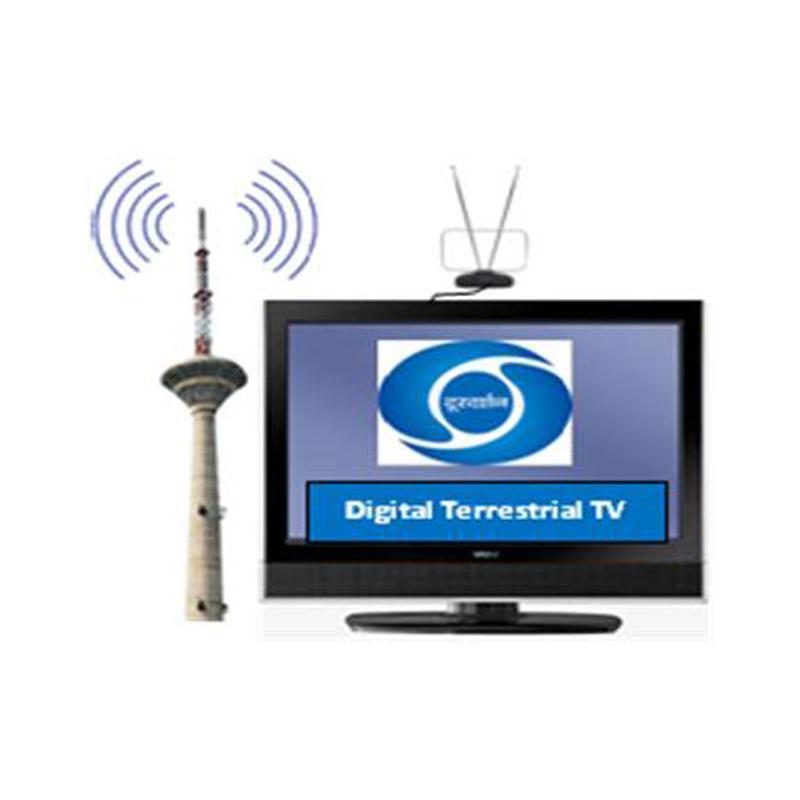
    The DTT service is an internet-free distribution service, through which consumers are able to receive television channels on the move or at home through television sets, tablets and smartphones with the use of a unique dongle and a DD application.

    Doordarshan director-general Supriya Sahu said that the business model would be ready by February. As reported by indiantelevision.com earlier, they might, Sahu added, share the capacity by auctioning channel slots to the private broadcasters, which could be a game-changer for the industry.

    As reported by indiantelevision.com earlier, a consultation paper on Digital Terrestrial Transmission by the Telecom Regulatory Authority of India has been pending finalisation. Meantime, Doordarshan on 23 December held a workshop with stakeholders to explore the potential of DTT services. Experts from the Indian Institute of Management Ahmedabad, various stakeholders including Content providers, private broadcasters, receiver manufactures, and officers at Doordarshan participated.

    DD, which presently has the exclusive domain over terrestrial broadcasting, ranks amongst the world’s largest terrestrial television networks. It has a network of 1412 analog transmitters that provide TV services through two national channels namely, DD National and DD News. In addition to this, the network also broadcast several regional TV channels over the terrestrial network in a time sharing mode to meet the local and regional needs of people in different parts of the country. All TV channels provided by DD are free-to-air.

    In its paper, TRAI had asked whether DTT broadcasting should be opened for participation by the private players, and which model or a combination thereof for DTT will be most suitable in Indian context.

    Also read

    http://www.indiantelevision.com/regulators/trai/dtt-could-be-thrown-open-for-pvt-sector-companies-160606

    http://www.indiantelevision.com/regulators/trai/dds-digital-terrestrial-transmission-meet-tomorrow-as-trai-paper-awaits-finalisation-161222

    http://www.indiantelevision.com/regulators/trai/trai-extends-time-for-views-on-opening-up-dtt-to-private-players-160723

  • Pvt b’casters also to gain from new DTT model by Feb; Rs 320 cr budgeted

    Pvt b’casters also to gain from new DTT model by Feb; Rs 320 cr budgeted

    MUMBAI: Pubcaster Doordarshan is making strategic plans to expand its digital terrestrial transmission (DTT) service across India. The public broadcaster, which runs the service in 16 cities at present, will be expanding it to three more cities by March 2017. Plans are afoot to further expand DTT to 44 additional cities in two years. The pubcaster will invest around Rs 320 crore to achieve its targets by 2018.

    Doordarshan has, for this purpose, also tied up with Indian Institute of Management – Ahmedabad (IIMA) to develop a relevant business model for the platform which it expects will be drafted by February 2017.

    The DTT service is an internet-free distribution service, through which consumers are able to receive television channels on the move or at home through television sets, tablets and smartphones with the use of a unique dongle and a DD application.

    Doordarshan director-general Supriya Sahu said that the business model would be ready by February. As reported by indiantelevision.com earlier, they might, Sahu added, share the capacity by auctioning channel slots to the private broadcasters, which could be a game-changer for the industry.

    As reported by indiantelevision.com earlier, a consultation paper on Digital Terrestrial Transmission by the Telecom Regulatory Authority of India has been pending finalisation. Meantime, Doordarshan on 23 December held a workshop with stakeholders to explore the potential of DTT services. Experts from the Indian Institute of Management Ahmedabad, various stakeholders including Content providers, private broadcasters, receiver manufactures, and officers at Doordarshan participated.

    DD, which presently has the exclusive domain over terrestrial broadcasting, ranks amongst the world’s largest terrestrial television networks. It has a network of 1412 analog transmitters that provide TV services through two national channels namely, DD National and DD News. In addition to this, the network also broadcast several regional TV channels over the terrestrial network in a time sharing mode to meet the local and regional needs of people in different parts of the country. All TV channels provided by DD are free-to-air.

    In its paper, TRAI had asked whether DTT broadcasting should be opened for participation by the private players, and which model or a combination thereof for DTT will be most suitable in Indian context.

    Also read

    http://www.indiantelevision.com/regulators/trai/dtt-could-be-thrown-open-for-pvt-sector-companies-160606

    http://www.indiantelevision.com/regulators/trai/dds-digital-terrestrial-transmission-meet-tomorrow-as-trai-paper-awaits-finalisation-161222

    http://www.indiantelevision.com/regulators/trai/trai-extends-time-for-views-on-opening-up-dtt-to-private-players-160723