Tag: DTH

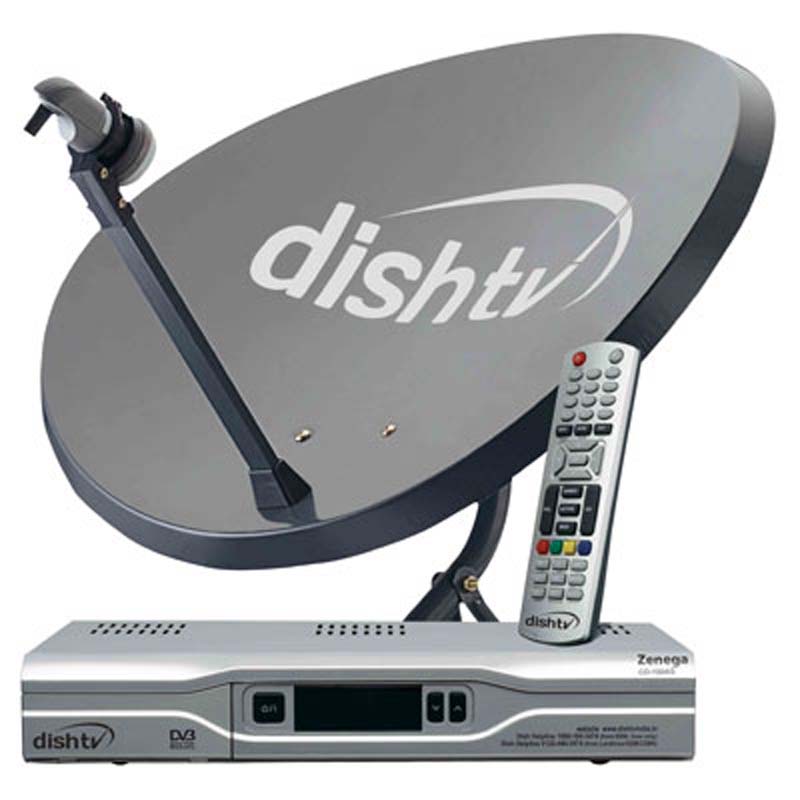
  • Dishtv announces special pricing for Cas

    Dishtv announces special pricing for Cas

    MUMBAI: With conditional access (Cas) coming in shortly in Dehli, Mumbai, Kolkatta, the war is on for the consumer. Direct-to-home (DTH) service provider Dishtv has announced pricing offers for the Cas cities.

    Dishtv has worked on a 2 pronged pricing strategy – both for the hardware as well as for the monthly subscriptions.

    For a dishtv connection, there is now an entry option and an overall value proposition.

    The new pricing options are as follows:

    Down Payment Offer: To deliver better value to its consumers, the existing scheme has been enhanced for all new incumbent subscribers in Delhi, Mumbai and Kolkata

    On the payment of monthly subscription of one month of any of the two packages, the consumer can enjoy six months viewing. This is applicable on the acquisition of hardware at Rs 2950 along with Rs 200 as installation charges.

    Easy Pay Offer: In order to enable an easy ‘getting started’, Dishtv offers the following scheme for Cas notified areas in Delhi, Mumbai and Kolkata.

    A pay out of Rs 1300 (to take the entire equipment home, on right to use basis) + Rs 200 as installation charges. Thereafter, a monthly rental of Rs 35 for the hardware will apply for a period of five years. This will be charged along with the monthly subscription of any of the two packages that the consumer subscribes to.

    Multi TV households can now get started with dishtv at a special price. For instance, for four TVs in a typical south city home, one now needs to foot a bill of only Rs 6000 to get four dishtv connections. Further, the monthly subscriptions on the second, third and fourth connections would cost only Rs 100 + taxes each month.

    In addition its monthly subscription packages are also two tiered – one with 85 channels at Rs 210 +taxes per month and the other enhanced package with 125 channels at 240 + taxes per month, keeping in view the entertainment needs of varied users.

    Clearly, DTH service providers are taking the fight to the multi-system operators (MSOs). Tata Sky recently announced it would offer free subscription for six months to consumers who fall in the Cas area.

  • ‘An outlook towards the future of Television’

    In this article, penned for Indiantelevision.com, Media e2e chief evangelist Atul Phadnis is of the view that the media landscape is changing rapidly and new distribution technologies would alter business models.

    As 2006 comes to an end, some of us, who had embarked on a new journey of creating a new thought within our industry, feel vindicated. The key changes that we had envisaged, envisioned and expected are taking place rapidly within our media & entertainment (M&E) environment. These changes are in terms of distribution platforms, newer business models, interactivity, new content formats and experimentation. This piece looks at the change catalysts and an outlook on how things would continue to develop within our space.

    End of distribution platform insulation

    Before we look at the current and future, a quick glance at the past. The history of TVs popularity among consumers can be gauged from the amount of advertising on satellite TV chasing consumers. As veteran industry folk would recall, the early 90s was all about DD when only experimental advertising monies would come onto satellite channels. In the mid-90s substantial chunks of budgets were diverted into satellite channels. By the late 90s and early 2000s, the satellite TV environment had reached a level of stability and maturity. Here’s where the story takes an interesting u-turn. The legislation changed and allowed newer distribution technologies on the scene. These new technologies ended the technology insulation that persisted in India vis-?-vis other Asian markets like Hong Kong, Korea and Japan.

    Distribution: set to change the ground rules

    Globally, whenever distribution channels explode, it sets off a chain reaction in terms of market segmentation, newer revenue opportunities, newer pricing models. The hectic activities since early 2000 to present day on laying cables, dishes, optical fibre, upgrading cable facilities, are today creating competition among satellite TV platforms such as DTH, HITS, IPTV, CAS, and even traditional cable.


    Creating the ‘Long Tail’

    For those who have read Chris Anderson’s book The Long Tail: Why the Future of Business is Selling Less of More (2006) would immediately associate that phenomenon with what’s happening with our television today. The Long Tail phenomenon occurs when distribution platforms become very large helping the smaller products collectively gain market share rivaling that of market leaders!

    The TV business has been growing a long tail as niche content offerings are getting acceptance in small pockets. Take the example of television news. Already, the kids channels are going the same way as the news channels. Animated, non-animated, teens, tweens, pre-teens! The good news – each of the niche segments that have been launched has shown Viewership.

    If the current trend continues and if distribution platforms get more and more addressable, one can imagine channels aimed at extremely niche communities. Surgeon’s channel, lawyers channel, chartered accountants channel to weather news channel, celeb news channel to even a Mumbai traffic channel! Considering that some of these formats exist in other economies expecting that in our environment seems fairly reasonable.

    Specialization to Segmentation

    The specialization in this industry is already segmenting the market. Groups of consumers who are watching specialist programming are extending the long tail of content. The specialist content has an impact on TV programmers and the TV production houses as resistance to experimentation could lead to certain death or marginalization. This impact should mostly be felt immediately post the universe adjustments of the TV ratings panels to latest estimates.

    Applications, on-demand

    Our environment is also critically poised to propel demand for applications that satiate this new consumer thirst for content which is typically instant and on-demand. Considering that for a bulk of Indian consumers, TV-watching emerges in the Top-5 daily activities, it’s not impossible to imagine the lengths to which consumers could go to better that experience. Gadgets like Digital Video Recorders (DVRs), Video on Demand (VoD), Personal Video Recorders (PVRs) can do exactly this if the pricing gets it right.

    Content mobility, malleability

    The consumer need for on-demand content in other Asian markets has made content both mobile and malleable. Content mobility is to do with being able to record and transfer content off television onto your phone, laptop or desktop. The last few months I have been an amazed, animated user of Bluetooth and the possibilities that emerge from being able to transfer data, music, and video from one device to another. Content malleability is something that TV, music and film companies would have to learn else the consumer is going to teach them a thing or two!

    Newer contact points via localization

    The newspaper business in the last 3 years has been growing faster on ad revenues than television. It’s done so on the back of distribution changes and reform that has resulted into micro editions. That has in turn propelled localized advertising through a slew of first time advertisers on print. The same is bound to happen to television. The only question is the timeframe. Local pizza stores, restaurants, banks, grocery and electronic retail, multiplexes would all jump in if micro-reach was possible via TV. It’s not as if all that is not possible today via local cable and regional stations. It’s possible and it’s happening. But while regional channels still score, there are questions on quality and popularity of local cable advertising.

    Branded Entertainment : winds blow stronger

    The Branded Entertainment Awards 2006 held in Mumbai have demonstrated a new industry-wide vision in this space. The promise that this specialist stream holds is that in a perpetually fragmenting media scene, TV could be used via innovation, integration and multimedia support. Activation is the powerful new word in this area and it’s expected to be initiated by regional channels. Activation would derive tremendous strength either from channels promising micro-reach or distribution platforms undertaking sampling/ contact programs. One of my recent favorites is a DTH company distributing sample set-top boxes to school children preloaded with education channels!

    Distant possibilities

    What seems to be now distant in our market but is very prevalent in the West and some parts of Asia is CGM or Consumer Generated Media (such as Blogs, and home or personal videos). This is a current rage even in the US if one is to see the popularity of sites such as YouTube. Low penetration of capture devices in India would typically see this as fairly futuristic. Having said that we are seeing news channels in India currently test this through Viewer reported stories.

    Finally in conclusion – expect key changes in television that’s bound to affect all stakeholders. These changes are expected to alter business models, revenue models as well as content formats.

    And the creatures aren’t too far away from us now. Stop! I hear the door creaking open. Wait! I can hear them growl…
  • DTH services to launch shortly in Pakistan

    DTH services to launch shortly in Pakistan

    MUMBAI: Pakistan will soon open its doors to direct-to-home (DTH). Pakistan’s minister for information and broadcasting and senator Muhammad Ali Durrani says that the ministry would soon launch DTH in collaboration with the private sector.

    Media reports state that he was addressing the participants of a capacity building course of Information Group Officers here at the Information Service Academy (ISA). Director General ISA Ghulam Hazoor Bajwa was also present.

    The minister, during his lecture, said the government believed in development of an independent media which is the most effective accountability tool.

    The government he says, believes in the development of an independent media, which is the most effective accountability tool. If the government policies are free of corruption, nepotism and malpractices, the independent media helps its functioning by making it more efficient and vibrant.

    He says that the government will fully facilitate the capacity building of the private media and the ministry is taking steps to ensure transmission launching of private TV channels from Pakistan.

  • Bharti likely to enter DTH arena

    Bharti likely to enter DTH arena

    MUMBAI: The direct-to-home (DTH) space is set to get more crowded in India with the telecom majors planning to join the fray in addition to their IPTV gameplan.

    Bharti Group is the latest player to have shown interest to enter an arena which will be occupied by Kalanithi Maran’s Sun Direct and Anil Ambani’s Reliance Group next year along with the existing DTH operators Dish TV, Tata Sky and Doordarshan’s DD Direct Plus.

    “We are looking at DTH and are rolling out IPTV,” Bharti Enterprises Ltd chairman Sunil Mittal tells Indiantelevision.com.

    Bharti, it is reliably learnt, had preliminary discussions with Indian Space Research Orgainsation (ISRO) officials. With several players interested to kick off DTH operations, Isro is finding it a challenge to meet the growing demand for Ku-band transponders.

    Sun, for instance, has had to wait after the unfortunate failure of the GSLV-F02 launch rocket carrying the Insat-4C communication satellite in July this year. Maran had booked seven high-power Ku-band transponders in this satellite, out of which six would have been used for DTH and one for digital satellite news gathering.

    Bharati, however, has not yet applied for a DTH licence. “We are still evaluating. We haven’t yet applied for a licence,” says Mittal.

    Though telecom companies in India have chalked out ambitious triple play plans, they have not yet managed to sort out the technical issues. Last mile access to customer homes has also remained a big hurdle and private telcos, who have built a strong mobile phone business, have even looked at striking alliances with local cable operators. On the content front, there is no regulatory clarity yet for IPTV rights.

    Bharati, for instance, had conducted test trials with UTStarcom as the digital service provider for IPTV, but later made it open for other vendors as well. A leading mobile service provider, Bharti’s (like the other private telcos) progress on fixed telephone connections has been slow. With an eye to increase this base and raise ARPUs (average revenue per user) by delivering video content into consumer homes, the company has taken several steps for IPTV rollout including setting up a digital headend in Gurgaon on the outskirts of Delhi.

    “With IPTV still to kick off, some telcos feel DTH offers good opportunity and synergy,” says a trade analyst.

    Reliance, thus, is launching DTH under the Bluemagic brand and has roped in former Dish TV CEO Sunil Khanna to head the operations.

    The formula now being worked upon by the telcos is obviously to have a DTH footprint as well as IPTV which would give them access to homes for delivering video content.

  • HBO in awareness building drive for CAS; looks for further customisation

    HBO in awareness building drive for CAS; looks for further customisation

    MUMBAI: 2006 has not been an easy year for the English movie genre. Firstly there was the order from the Mumbai High Court, which saw HBO and Star Movies off air in a key market. While Star Movies is still off air, HBO recently came back on.

    The second challenge is that viewership share of English film channels has been falling. Then the distribution landscape is changing. DTH is growing. Conditional Access (CAS) comes in next year.

    HBO South Asia country manager Shruti Bajpai says that the key in this period of change is to build brand loyalty.

    “Our first challenge is to make sure that we are in the priority list of channels in homes which will get the set top box. New platforms mean that there is more room for new English entertainment channels. At the same time you have to be on your toes. To educate the viewers on HBO with the advent of CAS, we will be running a campaign, which will kick off in the final week of this month. This will be on air on our channel and possibly across Zee Turner and also in print, radio and outdoors.

    “While the final touches are being given, our campaign talks about the brand and what the channel has to offer for those who take a set top box. Our push will be along the lines of our tagline for next year – bigger and better. Our concern at the moment is not the pricing of Rs 5. It is to see that we get into enough homes. That is why we have a big property King Kong at the start of the year.

    “We are platform neutral and we will wait and see how the new platforms fare. Perhaps two or three years down the line we might have an offering without ads for a platform if the growth of that platform and the customers demand justifies it.”

    In terms of the fall in channel share, she notes that the challenge is that not only does one have to compete with new entrants but also the fact that the viewer is spoilt for choices. “There are games, multiplexes. While there will be volatility with CAS coming in, in the long run it is the strong brands that will survive. I think that HBO has done a good job in building up its brand over the years. If you look at it, the English entertainment genre share has fallen as a whole.

    “While viewers of our channels do watch other genres, what you see on English films is that there is more stickiness. On a genre like infotainment there is dip in and dip out viewing. On the other hand if a viewer likes a film he/she will stay tuned. We also expect new viewers to come in from the mini Metros and small towns that are growing. As the economy booms and more people become affluent more of them will start watching English films.” This, the channel hopes will compensate for the fact that some of its core audience is also watching other genres.

    The other issue is how HBO is working with the Censor Board. To this Bajpai says that the results so far have been good. Films she says have been cleared on a priority basis and as of now there has been no trouble with the scheduling. HBO has so far not encountered the situation where it could not air a film. Some films have been cut and then aired. It also helps that its major films like the upcoming King Kong have aired in cinemas and thus have a certificate.

    Further Customisation: The focus in 2007 for the channel will rest on customisation. The aim is to build up the non-primetime slots. One way of doing this is to have slots that appeal to certain demographics. So there is Time Out at 11:30 in the morning for the housewife. In addition to this the channel has added It’s A Guy Thing for men. This airs at 2 pm on Saturdays. Then there is Whazz up? for youth. This airs on the weekdays before the 9pm film.

    HBO has SMS contests for this block and also a mini site on hboindia.com. Bajpai asserts that HBO will also be more focussed on co-ordinating specials with Indian festivals like Holi. While it has been done in the past, more effort will go into this from next year to make it more cohesive.

    HBO’s next big film is King Kong with Naomi Watts. It airs next month. A microsite will go up where fans can find downloads and basic games. There will also be an on-air contest and the grand prize could involve a trip to a foreign destination. Bajpai adds that HBO will air four to five of its series next year. This year just two had been aired.

    While declining to divulge further details Bajpai says that one show will look at men’s lives in a big city.

    This could well be a counter point to Sex And the City, which had looked at the lives of single women.

    As has already been reported by Indiantelevision.com, HBO will air Tsunami: The Aftermath on 26 December without any commercial breaks. In terms of its original movies, the situation at the moment is a little uncertain, as titles have to be cleared. HBO also gets involved with the theatrical releases of films from its studio partners. It will push the animation film Happy Feet as well as the Denzel Washington film Deja Vu. There will be features like The Big Preview as well as public screenings.

  • DTH Television Group, Romania selects MagnaQuest for its digital services

    DTH Television Group, Romania selects MagnaQuest for its digital services

    MUMBAI: MagnaQuest is extending its subscriber billing solutions to Romania. The Hyderabad-based company has bagged a contract from DTH Television Group, Romania for providing its convergent customer management and billing solution, MQSubscribe.

    MQSubscribe will manage the subscriber billing, inventory, dealer and customer care operations. DTH Television Grup has launched digital TV services, which would include different packages of video channels, pay-per-view programmes (PPV) and interactive television.

    Says MagnaQuest CEO Vijay Debbad, “This is one of our important wins in Europe, which strengthens our position in the region. We look forward to supporting DTH Television Grup in their endeavors to offer pay TV, PPV and other value-added services on our convergent billing platform.”

    MQSubscribe is being deployed to support DTH Television Grup’s increasing subscriber growth and billing operations and will enable the company to quickly launch value added services. MQSubscribe will be integrated with NDS, a leading conditional access system.

  • Kingfisher Airlines and DishTV introduce Live TV In-flight

    Kingfisher Airlines and DishTV introduce Live TV In-flight

    MUMBAI: Dishtv and Kingfisher Airlines have joined hands to bring Live TV entertainment for the very first time in the Indian skies. As a part of the tie-up, DTH player DishTV, will demonstrate its services on Kingfisher Airlines.

    The first aircraft empowered by DishTV complete with the Live TV service, will be ready to take-off by the end of December.

    Now on flying with Kingfisher Airlines, guests will be able to keep themselves updated and entertained with critical news or business event, sporting action, Hollywood and Bollywood movies, latest music, and popular sitcoms, with DishTV’s technology of making digital content services available on board, asserts an official release.

    Speaking on the occasion Essel Group chairman Subhash Chandra said, “We are extremely pleased to join hands with Kingfisher Airlines, marking dishtv’s presence and dominance in the Indian skies. This marks a red letter day, yet again in the history of Indian entertainment when we have been able to take TV entertainment to completely unprecedented levels. This reiterates our commitment to not just be the pioneers in the DTH category but as true leaders, continue to innovate and lead from the front, giving the consumer the best he could ever imagine in entertainment, constantly. We look forward to such historical innovations with like minded corporates in the future as well.”

    Kingfisher Airlines Limited chairman and CEO Vijay Mallya added, “Today we take our commitment to take the best of Good Times, one step further for our guests. Our association with DishTV has helped us create yet another path-breaking innovation which will revolutionise the way Indians perceive In-flight Entertainment and we are very proud that dishtv will now enable Live TV onboard every Kingfisher Airlines flight. With the launch of Live TV onboard, we are not re-defining In-flight Entertainment, but creating history”.

    With this alliance, DishTV will now empower Kingfisher Airlines’ Fun TV with 16 Live channels from its platform. Fun TV also has five channels of the broadcasted video content and one moving map channel. In addition guests can enjoy 10 channels of chartbusting music from hip-hop to retro to old Hindi melodies on Kingfisher Radio, adds the release.

  • India outshines China in media business: Credit Suisse

    India outshines China in media business: Credit Suisse

    NEW DELHI: Media companies in India are achieving double the advertising revenue than in China due to a favourable regulatory regime, says the Credit Suisse report titled “Opportunities of Hollywood in Bollywood.” This is despite China enjoying a larger economy, 2.5 times the per capita GDP and a higher spending in advertising.

    The Indian media market is experiencing a double-digit growth in advertising revenue, fuelled by a strong GDP growth and supported by the emergence of a strong consumer market and introduction of new product categories.
    The report says that progress would be much higher in the coming years due to the government-mandated shift to conditional access systems (Cas), with additional competition coming in from direct-to-home (DTH).

    While the growth in advertising revenue will be higher than at present, the report predicts that the revenue growth from subscriptions will be even faster with the transition to Cas and the available choice of DTH.

    More interestingly, the benefit to the broadcaster will be more in actual terms because the Cas and DTH systems both help solve the problem of “perennial underdeclaration” of number of households by cable operators.” At present, the actual subscription revenue stands at $2.4 billion with the broadcasters receiving as low as only 18 per cent of that amount, the report says.

    It, however, observes that broadband is unlikely to emerge as a mass platform in the foreseeable future due to difficulties in last-mile access. As mobile phone platforms become increasingly sophisticated, it will become a better environment “for broadcasters to exploit their video content further”.

    The cable industry is expected to experience considerable consolidation as the last mile operators sell out to Multi-Systems Operators (MSOs) due to inability to fund digital upgradation.

    There has been a significant shift of advertising revenue over the past 15 years from newspapers to TV, though “estimates suggest a stabilisation of shares” (between TV and print media in India) “as growing literacy rates support newspaper readership growth (in India) not supported in other parts of the world”, the reports comments.

    It also says that the growth of the radio sector will be higher “supported by issuance of new licenses, even as the government moves close to the public sector”.

    Regarding the Cas tariff restrictions (Rs 77 for free-to-air channels, plus Rs 5 per pay channel of choice) does not seem to be a long term regime. The report comments that it seems that the freeze in tariff is a temporary issue, with the government determined to protect the consumer over the transitory period.

    Once the CAS reaches five to six million households, “pricing caps will be removed”, is asserts.

    The report notes that the “fragmentation of the cable industry results in significant challenges in rolling out digital infrastructure. Last mile operators have limited capability to fund rollout of STBs due to lack of access to finance. The consolidation of LMOs is highly difficult but inevitable, (as it is) driven by government mandated transition to Cas in notified parts of Kolkata, Delhi and Mumbai and entire Chennai… plus the competition from DTH.”

    Of the subscription revenue, the report says that news segment takes in 4 per cent viewership and 11 per cent of advertising, but it is a highly competitive arena, with 15 players in the fray. Annual revenue from sport events stands at around $125 to 150 million, “excepting mega events like World Cup/ Champions Cup”, which together add another $100 m annually.

    Disney, which has entered the market in a multi-faceted manner (with consumer products, books, magazines and TV broadcasting) has “rapidly achieved dominance in the kids’ space, and should benefit from growing market share of advertising, supported by subscription revenue”.

    With foreign ownership rules expected to ease progressively, “India looks to be an important country for the expansion of Disney’s global footprint”. About Sony, the report cryptically says that “restructuring opportunities may provide for greater transparency of business.”

  • ‘Fall in STB prices make digitisation affordable in low ARPU countries.’ : Dr. Abe Peled – NDS chairman & CEO

    ‘Fall in STB prices make digitisation affordable in low ARPU countries.’ : Dr. Abe Peled – NDS chairman & CEO

    With conditional access system (Cas) coming in next year and DTH already in, the time is right for television technology firms to take a serious look at India. One such firm is NDS, which provides technology solutions for digital pay-TV. It has opened a dedicated sales and support operation in Mumbai. Indiantelevision.com’s Ashwin Pinto caught up with NDS chairman and CEO Dr. Abe Peled for a lowdown on the company’s plans and the emerging digital age.


    Excerpts:

    For NDS, DTH is a high revenue earner. How is the company gearing up to new delivery technologies, particularly at a time when investments are coming into IPTV and growth in DTH subscribers is slowing?

    The market for satellite is getting competitive and complex because of triple play. We have 70 per cent of our revenues coming from DTH. We expect our growth in this area to stay strong as DTH service providers are going in for advanced technologies. We will benefit not primarily from subscriber growth but because of penetration of new technologies. We, for instance, have shipped 4.2 million digital video recorders (DVRs) and there is a scope for explosion in this segment as prices drop. But we realise that IPTV is also offering opportunity and have 14 different contracts including Yahoo in Japan which has 200,000 subscribers.


    You have just acquired for $107.5 million Jungo Ltd. which is a leading provider of software for residential gateways. Will this help you penetrate the broadband television market?

    It will definitely help us better serve the telecom network operators to offer reliable video over broadband services. We are looking at acquisitions in the IPTV and mobile space even as pay-TV operators are looking at different delivery platforms.


    With Cas coming in next year and DTH already present, how is NDS tapping the growing opportunity in India?

    We actually started selling our products in India three years back with Hathway Cable & Datacom. The reason why DTH and Cas are coming in now is that the technology is sufficiently inexpensive to be able to be used even in countries where subscriber revenue is a few dollars each month. The first set-top box (STB) launched by DirecTV in the US cost $700. But now the cost of the STB is below $50. Also, the cost of digital compression has fallen. All this makes digitisation affordable in countries which have low ARPUs (average revenue per user). China and India are key growth markets for us.

    NDS is seen as a high-cost encryption system. Do you have a pricing strategy for the low ARPU countries like India?

    We have a product called VideoGuard which addresses this issue. There is a myth spread by our competitors that we are not affordable. We are very competitive and cable operators will have to take a long term view. It is not the Cas mandate that they have to service but also look at interactive features. Besides, we see a consolidation take place in the cable TV industry here.


    DTH has grown wherever there has been premium content. How do you see the Indian DTH market evolve?

    I have a word of caution. While we would like to supply technology to lots of people, the experience is that in satellite very few places have room for more than one player; it is just not cost effective. In France, the two operators merged this year. The US has two operators as it is a large country. So maybe India will follow the US. But surely there can’t be space for so many players who have expressed their intent to join the fray. Exclusive content is also not allowed and the sectoral cap on DTH of 20 per cent stake by broadcasters can seriously hamper big capital coming into the business. But Tata Sky is off to a good start. And with DVR prices falling, we see it as an incentive to push digitisation.


    Are you in talks with the major telcos like Reliance Infocomm for IPTV?

    We are looking at expanding business in India and are in talks with several companies. But I can’t give any specific details. We have opened office in Mumbai specifically for this purpose.


    Are you also ramping up the research and development facility in Bangalore?

    We have almost 600 people in our Bangalore lab and are still hiring. We have just moved into our new office premises which can house double the capacity we are operating in now. Bangalore is a key part of our research and development operations. The EPG (electronic programme guide) was developed out of here and the middleware was adapted for our two clients, Tata Sky and Hathway, in India.

    What are the challenges that lie ahead for NDS?

    As the media landscape changes, pay TV operators are facing more competition. There are new modes of delivering and distributing content that perhaps bypass traditional avenues. Our challenge is firstly to help our pay TV customers embrace new technologies and broaden the entertainment experience that they offer. At the same time, we want to work with telecom firms or people who want to distribute content directly to the PC or are keen to get into triple services play. We will be an enabler in this changing, fluid media landscape.


    How has NDS been able to quickly identify consumer tastes and preferences with evolving technology?

    While consumers are not our direct customers, our success critically depends on them enjoying the entertainment experience. For example, in the early days of interactive television the first instinct was to say that we will allow consumers the technology to access the web to view television. We did not do that, as we understood that is not the case. We, instead, moved towards enhancing the television experience, which means interactive sports and other programmes. Companies came to us wanting to sell stuff through interactive TV. MTV wanted to sell music CDs. But we learned quickly that there isn’t a good enough business model to do that. The margins are not enough after you account for all the costs. We focussed on things that allowed channels to increase their viewership share like interactive quizzing. This way they could hike their ad rates. One of the key lessons was that T-commerce does not really work. We are working with Nickelodeon in the UK for games that you can overlay onto the programme.


    There is something called Pie in the face. So if you score enough points you can throw pie on an actors face. These things enhance the television experience.

    Is there a resistance from consumers for digital TV?

    The only resistance from the consumer is the price. They appreciate what the DVR and EPG have done. Price is determined by two factors. One is the absolute cost of the technology, which is coming down. Second is the business model of the operator. Will they bundle the cost into subscription and spread it out over several years or expect consumers to pay upfront? That is what dictates the rate of adoption. If the payment asked for upfront is modest, the adoption is quite quick. If the upfront is higher, the adoption is slower.

    What are the key markets for NDS in terms of revenue?

    The US accounts for 35 per cent of our revenues while 20 per cent comes from the UK. Asia is about 11 per cent. Our hope is that in five years time Asia will contribute at least 20 per cent. Last year in China, one million STBs with our technology were deployed in Shenzhen. This year we expect three million deployments.

    Market for DTH service providers is getting competitive & complex because of triple play

    Has China been a more difficult market to penetrate vis-a-vis the rest of Asia as you need to show demonstrable commitment and the fact that the Chinese government takes a personal interest in how TV technology develops?

    The Chinese government takes an active interest in content. I don’t think that it takes a greater interest in technology than governments in other countries. We have a small development lab in Beijing as we are committed to it. The challenge is that there is no premium content that an operator can offer. So digitilisation is a result of government initiatives rather than a demand from consumers for getting more premium content. NDS has contracts with the larger Chinese provinces.

    How is NDS coping in the face of competitors like Kudelski and Irdeto?

    In terms of scale, NDS has 66.6 million STBs deployed worldwide. Irdeto has two to three million. Kudelski, a Swiss firm, is our main rival but we are ahead. The fact that we have so many deployments gives us the scale to invest in research and development. That enables our technologies to be more sophisticated and secure.


    Secondly NDS has a much broader offering for pay TV operators. While conditional access is necessary, you have other technologies like interactivity and games. None of our competitors have this broad range of technological capabilities. It is not just about providing Cas but also about providing an enhanced experience. We are at much better place to do that vis-avis our competitors. Our competitors can offer price but we are competitive there as well.

    NDS recently was ranked as the top research and development investor among all UK-based software companies. Could you talk about your R&D centers and their importance?

    We believe in being a leader in television technology. We spend over 30 per cent of our revenues on research and development. We have centres in Israel, UK, Bangalore, France, Korea, US etc.

    Is NDS also working in the mobile sphere which allows for content viewing anytime, place?

    We have a DVB H system that we are doing trials with. Korea is the most advanced country in terms of mobile deployment. We are doing a trial there with WiFi Hotspots. If you go into that Wi Fi it will pick up different channels that you can watch by streaming.

    Finally what are the major changes you see in the digital television landscape five years from now in India and Asia?

    A large percentage of homes will have a box. It will offer interactive TV. A percentage of that will be DVR I would hope at least eight per cent. A similar percentage will have broadband capabilities. I am not sure about the potential of High Definition. It will be a small percentage.

  • Tata Sky upping subscription rate to Rs 300

    Tata Sky upping subscription rate to Rs 300

    MUMBAI: Tata Sky is increasing the monthly subscription rate of its direct-to-home (DTH) service to Rs 300, sources in the industry say. The revised rate, up from Rs 200, is likely to come into effect from 1 December.

    Tata Sky, however, has decided not to offer “tiered” channel packages at this stage of the DTH market. “Bundling channels and fixing different rates is confusing to the consumers. The mobile telephony market has shown that to everybody in this country. Tata Sky will continue to offer a single package unlike its competitor Dish TV,” sources add.

    When contacted for a comment on the developments,Tata Sky CEO Vikram Kaushik remained noncommital.

    Tata Sky offers 102 channels (including Star, Sony, Zee, Discovery, Cartoon Network, Disney, ESPN Star Sports and National Geographic) and six interactive services (Actve Khabar, Actve Newsroom, Actve Star News, Actve Games, Actve Sports and an on-screen guide).

    Tata Sky had stuck to the introductory offer price of Rs 200 even after Zee Turner’s 32 channels had hopped on to the DTH platform in late September. As the interim pricing of these group of channels (fixed by The Telecom Disputes Settlement and Appellate Tribunal till the dispute gets resolved) was Rs 75, a rate revision was in the pipeline. But the debate was whether Tata Sky would subsidise the content cost to the subscribers in the wake of CAS (conditional access system) being introduced on 1 January with a la carte choice of channels that would pull down cable TV rates.

    Tata Sky claims to have a subscriber base of 250,000 and says it is on target to achieve one million within a year of operations. The southern region continues to be a weak spot with the Sun group of channels yet to join the platform. Tata Sky has moved the TDSAT, hoping to get a positive verdict which would ensure the supply of the channels from the Sun stable.

    The Tata Sky set-top box (supplied by News Corp owned NDS), hardware and installation cost has been priced at Rs 3,999 (inclusive of taxes) with a full service warranty for one year.