Tag: DTH

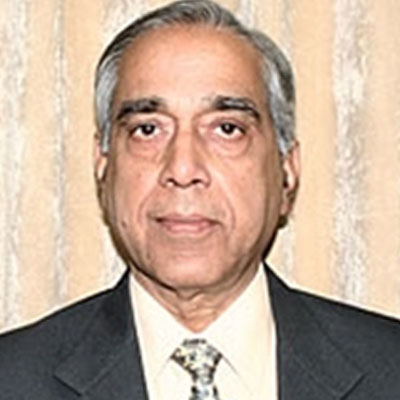
  • ‘Cas is here to stay’ : Nripendra Misra – Trai chairperson

    ‘Cas is here to stay’ : Nripendra Misra – Trai chairperson

    Nripendra Misra is a suave IAS officer with a reputation of being completely above board, and perhaps lacking the ‘guile‘ that puts many others in the topmost slots of the bureaucracy, fellow officials say of him in a positive sense. After the first initial setback for Conditional Access System in 2003, it was during Misra‘s tenure that Cas was enforced in parts of Mumbai, Kolkata and Delhi. And it was war… MSOs had to be readied, LCOs trained to shift to higher technology, broadcasters‘ resistance to be broken down by assuaging their fears and yet, the court order had to be implemented within the deadline: 31 December 2006.

    It could not have been a pleasant task. Amidst all this, Misra and his dedicated but small team is going about handling one of the noisiest of industries in the country, issuing consultation papers, and ushering in new technologies.

    Misra took his stand on various contentious issues during an interview with indiantelevision.com‘s Sujit Chakraborty.

    Excerpts:

    It has been nine months since Cas was implemented in parts of Kolkata, Mumbai and Delhi, after Chennai was brought under Cas. Towards the beginning there were uncertainties, and some people even opposed Cas. So today, what is your assessment of Cas? Is it a success or a failure in numerical terms?
    Well, we never had a target in terms of penetration percentages. It was left to the subscriber who wanted to opt for choice, whether he wanted pay channels or FTAs and which are the ones he wanted. The latest numbers tell me that about six lakh (600,000) homes have opted for Cas in the mandated areas.

    That is out of a universe of around 1.6 million cable homes…?
    Yes, so that is about 30 per cent of subscribers. Then you have also a similar facility in DTH, which has also been accepted by many. In Kolkata particularly, the response has been poor because most of the popular channels are FTAs. So if the criterion is in terms of numbers, I think it has been a very satisfactory performance.

    But it is not the number that is important. Unfortunately, we are always missing the true substance when attempting to evaluate Cas.

    What is it we are trying to do? We are trying to set up a mode of digital transmission, which is more efficient and more accommodative. It is the global practice. Analogue is gradually getting out of the scene, and so we have to make a beginning. That was made into a kind of a pilot in these four areas.

    Today you have a choice, you have DTH and you have Cas. Tomorrow you may have HITS… which is another option. You have voluntary Cas. So a beginning has been made, a seed has been sown, which must someday fructify in terms of an all India feature. Success has to be measured in terms of whether it is a trendsetter or not, and not in terms of how many people have opted for it or not.

    So would you say that the target of becoming a trendsetter has been achieved?
    Oh yes! It is perhaps a watershed in that in the broadcasting industry, digital transmission has begun.

    But one main area that remains disturbing is the quality of service, which in many parts of the mandatory Cas zones remains highly dissatisfactory. Lots people are not getting the channels they have opted and paid for.
    Firstly, I do not want to defend the quality of service, and there are problems of channels being discontinued. But it is not just at the level of local cable operator. I think somewhere down the line, the MSO also has to take his role seriously. Unlike in non-Cas areas, the role of the broadcaster and MSO in implementing Cas is far more important than that of the LCO. So, if these things have happened, they have happened because of the inadequacy of the functioning of MSOs.

    When it started in January, we wanted to take a very liberal view. We did not want to enforce all the regulatory provisions in the first four or five months. They wanted time so that the consumer preference could be registered, and we gave them enough time. The subscriber register that has to be maintained was not complete to the extent we wanted. Therefore billing got delayed, payments also got delayed… subscribers have also not made payments. But we have made it clear that come 1st of July, we are not going to forgive anyone.

    But how do you enforce this, as it has clearly not happened in many places till now?
    There are three ways of how to enforce this. First is the awareness of the consumer. There is a quality of service regulation in the Cas area which is operational. Therefore the subscribers must reach to and judge the performance of the MSOs and cable operators. There are great details in the regulation about the kind of rebate that has to be given if the channels are not coming, or how much time it should take which kind of interruption, what should be the response time for the MSOs… these are all standardised and fixed.

    Broadcasters have been cooperative in rolling out Cas, despite serious reservations about the Rs 5 channel price

    But that brings us to a moot point…. The consumer is not truly aware and also does not seem to care about implementing his rights?
    It takes time…

    So you are saying that MSOs are primarily responsible for QoS, so where have they failed? Because there are lots of complaints about failure across the board.
    The MSOs initially were perhaps not ready with the level of demand. That has settled down, STBs have been imported and they are in plenty today. The second stage was to get the reference of the subscribers. Now, I know and it is correct to say that the MSO representatives have gone to the homes four or five times, asking the subscribers to fill up the forms. But the gentleman says, you have come at the wrong time, that he will have to consult his family.

    But gradually, that too has ceased to be a problem. Ninety percent of the subscriber registers have been completed and the choice is now there. Now the stage is where the subscribers must know what their right is. That is, the manual of practice of the MSOs must be made available to the subscribers. That manual of practice in most of the cases is not available. The contractual conveyance, that we have between us signed a contract, and this is our right, that message is still not being passed on, which is reflecting in the lack of awareness.

    Broadcasters have been extremely cooperative in rolling out Cas, despite serious reservations about the RS 5 channel price, and all the Reference Interconnect Offers are in place.

    So what have you told the MSOs about this?
    We have conveyed to them that look, we shall view very seriously if there are defaults. We have written to the state governments, because they are the enforcement machinery.

    So what is holding back the extension of Cas in the three metros?
    The Central government wanted us to report back on this, we have sent that report, we have said it will take six to eight months‘ time to implement after notification of the extension. But then the state governments said that it is better to evaluate before extending Cas. We on our own without waiting for such instructions have engaged some outside agency to advice us on the level of implementation.

    Has that audit been completed?
    It will take another two months, we are expecting the reports by the end of October or beginning of November.

    So it will further delay Cas extension by that much time?
    Well this has nothing to do with Cas extension, this is something we are doing independently, and as far as the government goes, they can extend Cas, and we have just said that it would take six months from the day of notification to implement the extension. It is for the government to take a view when they wish to notify.

    Resistance to Cas had been from the broadcasters, but even from the grassroots level, due to privileges of piracy and under declaration, there had been resistance from the cable operators as well, so have the realised that this is the business model of the future?
    I think they have realised this more than anybody else. Today there is demand from many, many parts of India that they be given the permission for implementing voluntary Cas.
    Like Ortel and Sristi in Orissa and West Bengal?
    Ortel is one, then Pune is another, and there is demand from Bangalore, Mumbai and many other places. Some have in fact gone ahead with the implementation of voluntary Cas. So what the LCOs know very well is that the competition from DTH is very strong. The LCOs thus know that of they have to remain in the industry, two or three things are required.

    First, investment is required, which is not come if the industry is so disorganised as it is today. Second, they know that there has to be some regulatory provisions to give stability, which will ensure certain amicable relations between them the broadcasters and the MSOs. So to answer your question as to why they are not implementing voluntary Cas, perhaps for that some regulatory initiative is required.

    Now, for that the expert committee had been set up, and it has suggested that voluntary Cas be rolled out in 55 cities and towns. But they have also said that you have got to have a regulatory regime for at least one year. Even for voluntary Cas, certain things are important, like Standard Interconnection Offer, what should be the connectivity, what should be the revenue sharing formula. So these are the issues we are looking at, and we are going to put up the paper on voluntary Cas.

    “Fixing of channel pricing in non-Cas is a challenge, but we shall come out with something that meets the expectations of both the high and low income groups”

    When is that likely?
    Oh any day, we are working on HITS and next is the paper on voluntary Cas.
    The consultancy paper on HITS is already out?
    Yes, but we have to now recommend the terms and conditions of licensing provisions to the ministry of Information & Broadcasting. Even the voluntary Cas paper is also in the pubic domain, and so we have to now concretise our views. And then specifics like what are the regulatory issues, what are the areas in which facilitation is required… perhaps some technical training is required, and the go ahead.
    But voluntary Cas would mean that channel prices will be dictated by the broadcasters and subscribers may suffer?
    Let‘s see. Voluntary Cas does not mean it cannot be regulated, and as such I do not have any views on the subject now.
    It follows that even in voluntary Cas you could regulate prices?
    If it requires so in the case of DTH I can regulate prices. In fact, there has been some judicial expectations on this, when TDSAT in one of its judgments asked that if channel price is regulated in Cas, why it is not there in DTH? We had our reasons, it is an infant industry, we wanted DTH to grow.
    But then Cas is also an infant system?
    The difference is that DTH is a new initiative, and I am of the view that there should be minimal regulation. Cas was a shift from the old cable industry.
    The cable industry has been insisting on a level playing field and they are pointing out to the IPTV and DTH consultation papers as proof that Trai is not creating that level playing field. And in Trai‘s own meetings on Cas in Kolkata and other places, LCOs and MSOs have accuse Trai of siding with broadcasters?
    There was never such an accusation. You may have been told so, but never, never has a single cable operator said that Trai is favouring broadcasters. It is all a matter of which platform you are utilising. You fix the price at RS 5, and someone will say, it is against broadcasters. If you do not do that, they will say you are favouring the broadcasters. There is a bogey being raised that in many of the countries channel prices are fixed. The truth of the matter is channel prices have not been fixed in a majority of the countries. And majority means, more than 90 per cent of the countries.
    So there, prices have panned out according to market pull and push?
    Of course.
    So how much time do you think we will need for market forces to create prices that are compatible with the pockets of the average consumer, who are the vast majority, that is, when would deregulation start and prices shape up as per market forces?
    It is already there, because in non-Cas it is already there according to the market forces. I haven‘t regulated prices there. The prices have been fixed by the cable operators and the subscribers. In 2004 when there was such a noise, there was an order on freezing the prices. You know that order was an interim measure. The ideal situation, which is there in our consultation paper, is it should go to forbearance. And I think that the day is not very far. The moment there is healthy competition and prices should be put on forbearance.

    There is the issue of price freeze versus price cap?
    That I won‘t answer because we have not issued the regulation on that so far.

    It is important for the cable industry to grow and I am not a great votary for centralised economic activity, or vertical integration, so franchise should be the mode.

    Is it in the offing?
    Yes, the next thing for the non-Cas areas.
    In recent meetings the ministry of broadcasting has said that content control in IPTV is not in their domain because that platform is under the ministry of telecom. Despite that Trai has said that it is I&B which should control content in IPTV, so do you think you have usurped some of the government‘s prerogatives?
    No, not all. It is a viewpoint. I can‘t say anything on content regulation, who will or who will not do. It is not within my powers. It is simply this, that we are of the view that the control of all content of all broadcasting and on all technological platform is best done by the broadcasting ministry. It is just a view point.
    So what are the forthcoming issues in the cable or rather the video-related industry?
    Well after introducing digitisation in non-Cas, there will be the issue of pricing. Then the other issue will be also of the structure of the cable operators. Can we contribute to their organisational strength? This comes from the understanding that there is the issue of investment, because we know there is an opportunity.
    But that investment with such small players would not be possible, so what does one do to ensure investment?
    In some manner it has to be there. Whether in the franchise mode, or through takeovers, or vertical integration. But I think that in countries such as India, perhaps there will be a role for everybody. I am not a great votary for a centralised form of economic activity. So it is better that we perhaps have a relationship in which franchise is the mode and there is mutually shared revenue principles.
  • ”In the entertainment field there is nobody else who does what E! does’ : Kevin MacLellana – Comcast Entertainment Group, International president

    ”In the entertainment field there is nobody else who does what E! does’ : Kevin MacLellana – Comcast Entertainment Group, International president

    With the advent of digitisation in India, more international broadcasters are looking to launch channels in the country. A case in point is E! Networks. It runs E!, which focusses on Hollywood news, stories and features. It will also launch its fashion and lifestyle channel Style internationally later this year.


    E! Networks is looking to launch at least one, if not both of these channels before the end of the year in India. It is in talks with distribution networks to negotiate deals. Indiantelevision.com’s Ashwin Pinto caught up with Comcast Entertainment Group, International president Kevin MacLellan to find out more.


    Excerpts:

    Could you give me a brief overview of E!’s international business and the content it offers?
    E! has two sources of revenue. One is its programme sales. It has been selling foreign programming into foreign markets as far back as 1992. This was after it launched in 1991. Then in 2002 we started to sell the E! Network into foreign markets in 2002. Over the last five years we have garnered 46 million subscribers in over 100 countries.

    How important is Asia in terms of content consumption and revenue vis-?-vis Europe and the US? Which are your top three markets in this region?
    It is very important. The 46 million subscribers that I mentioned did not exist till five years ago. Over a third of E! Networks subscribers come from outside the US. Malaysia, Indonesia and Singapore are the top three markets in Asia. They account for 65 per cent of viewership in Asia.

    We have 12 feeds globally not including the US. In Asia there are three feeds.

    India is going through a period of digital transition with Cas and DTH. How do you view this market in terms of potential and has a timeline been set to launch E! and Style?
    The Indian market has always been extremely interesting to me. I was part of the team that helped launch Sony in the 1990’s. India has been interesting on account of the success of HBO. I was quite skeptical about how it would fare as I felt that Bollywood would be the programming that everybody wanted to see.

    Now it has become apparent to me that due to the upper echelon of Indian society in terms of the wealthier people with larger disposable incomes they have a significant interest in Hollywood films. From our perspective, India is a big market to reach for in Asia. The problem was that E! launched internationally pretty late in the game in 2002-2003. Analogue was pretty full by then.

    We had to find other platforms that had available capacity. We are so pleased to see DTH, IPTV taking off in India. We believe that the audience that has the money to invest in these platforms has a strong interest in Hollywood. We would like to launch E! and Style by the end of this year.

    The English entertainment and lifestyle segment in India is getting more competitive. What is E!’s USP that you feel will help it stand out from the other players?
    In general, entertainment and lifestyle programming is becoming more popular everywhere. In the entertainment field there is nobody else who does what E! does. We are the experts in Hollywood. We are not experts in Bollywood and to try and pretend to be anything we are not is a big mistake. We have learnt that by going into many markets, whether it is the UK, Italy, Japan, Malaysia.

    We cover Hollywood better than anybody else and this is what sets us apart. To find out everything on Hollywood and see it done in a high quality rich looking channel is what viewers expect from us.

    From Style’s point of view there are many lifestyle channels out there from the likes of Discovery and Scripps. Most of those channels appeal to 25-49 year old females. The Style channel has been successful in the US as it appeals to a younger female crowd. You are talking about a 12-34 year old female. Women at that age are just setting their buying trends. They are choosing brands that they will use for the rest of their lives. Style targets a young, technologically savvy woman. E!’s target is 18-49.

    The similarity between the two networks is that we are appealing to what we call the ABC1 demographic. This refers to a high income, highly educated, metropolitan audience.

    Over the last three years how has E! gone about creating awareness in Asia?
    Our aim was to go into each market and secure sophistication. There is no point in marketing unless you are strong in distribution. So what we have done is countries like Thailand, Hong Kong, Singapore, Indonesia is spending money with the local operators. Due to the limited distribution in all Asian markets doing general marketing like ads in newspapers makes very little sense. It is important to market to viewers who can access the channel.

    A good way to do that is to do marketing campaigns with the operators themselves. We do outdoor campaigns and it helps that E! has famous faces appear on the channel. We can do ads in print magazines with pictures of Brad Pitt, Angelina Jolie, Jennifer Aniston. The A-list names grab people’s attention a lot more than say an ad for a documentary would.

    In India you have licensing deals with broadcasters like Zee and Star. When you launch, will this side of the business get affected?
    Yes! I believe that there is an important mix between sales and channels. While we do sell content to channels it is important for the viewers to know that the main place to get E! content is on the channel itself and not on other networks. Viewers must know that the best place to get news on Hollywood is E!.

    However, to go back to the marketing issue, it helps to put a little of your content on the bigger networks with a broader reach. It helps familiarise the audience with the E! brand. I am sure that there will be a reduction in the content we sell once we launch.

    Right now, we do volume deals with Indian broadcasters where we sell 200-250 hours of programming. This will change. The number of hours sold will come down.

    Apart from India, China is a key market for most channels but has proven difficult to crack. What is your gameplan there?
    We have been lucky in China. We shoot the content ourselves. We own the rights. Other studios have financing partners and they all have some rights. We produce 1100 hours of programming. We do not acquire programming nor do we commission very much. We own our content across multiple platforms. We have the flexibility to be more realistic in doing deals in China.

    What has prevented some studios and production firms from being able to have a business in China is that they are inflexible in terms of what they are willing to do with their rights. We can sell 700 hours each year to multiple channels. On CCTV for instance there is an hour of content. CCTV can also use this content as they expand their broadband and mobile businesses.

    The disappointment in China is not our ability to sell there. It is to have our brand be available. However the good thing about China is that the rules for online are not as restrictive. So we can sell our content on television and maintain a brand presence online.

    What is the split between advertising and subscription revenues? What targets have been set?
    In Asia it is all affiliate revenues. There is no advertising. In Australia and New Zealand we have a significant amount of ad revenue – 35 per cent. In Latin America most of our revenue comes from advertising as is the case with the US.

    Our biggest goal is to launch Style later this year globally and to increase the subscription revenue of E!


    Are you looking at working with retail firms as well with Style as it is about fashion and accessories?
    What is good about Style is that it comes built in with a bunch of cross-promotional exercises. In the US the network has a lot of high-end brands. We have worked out global ad sponsorship deals. For instance, we do a programme that focusses on the Versace fashion shows.

    To what extent has E! Networks’ programming budget gone up over the last couple of years?
    It has gone up hugely by over 50 per cent in the past five years. Most of this is due to the amount of money being spent on high end reality shows. There was a time when reality shows were inexpensive. They are now becoming almost as expensive as scripted drama and comedy. Talent has become more expensive. In general I would say that there is more creativity in the reality genre.

    There was point when you had elimination reality shows and home based reality shows (like Big Brother) where you lock people in a house. Now you see reality shows that are based on game shows that are on mockumentary formats. This would be a hybrid scripted reality show. You will see more shows like MTV’s Laguna Beach, which is partially scripted and partial reality.

    I believe that there is an important mix between sales and channels. While we do sell content to channels it is important for the viewers to know that the main place to get E! content is on the channel itself and not on other networks.

    What are the new shows that E! is developing?
    There is a show called Paradise City, which is similar to Laguna Beach. It follows the biggest performers of Las Vegas. One character can be a playboy bunny. Another one can be a rock star.

    Another show Sunset Tan looks at Beverly Hills, Malibu beach life. The wealthiest mansions and homes in the Summer become vacant. They rent for $30,000 a week from June till the end of August. Rich families from across the world come in. Their kids hang out in nightclubs, drive sexy cars.

    We are doing a show on the New York socialite scene. Our aim is to expand beyond Hollywood. We will look at other wealthy people who are becoming a part of what we call pop culture.

    I believe that you are creating original content for Asia. Could you shed light on this?
    We will premier a show called Young Hot Asia. This is a documentary about 15 of the hottest young Asian stars. They are making a mark not just in Asia but also in Europe and the US. There have always been the Jackie Chans. Chow Yun Fats and Michelle Yeohs but in the last three years you are starting to see Asian talent that nobody had heard of before making a noise
    overseas.

    We will do specials on film festivals held in Asia. We will look at how Asian content is influencing television content in the US and in Europe. Ideally with India there should be 70:30 mix of
    Hollywood and Bollywood content. We can also have the Indian perspective on Hollywood. We can shoot in India and focus on people who are fascinated with Hollywood.

    The problem is that since we are launching on digital tiers it cannot support a great deal of local production.

    You recently hired American Idol host Ryan Seacrest. How has he helped boost the channel’s profile?
    He has become more than just our news anchor. He is also our Red Carpet host like for the Oscar Awards. He is pretty much the spokesman for the channel now. Our news ratings have risen by 50 per cent.

    The median age for our news has dropped to 32 from 38 which is very low. It is also rare. National broadcast news tends to have a viewer age above 50. Ryan is bringing the younger American Idol audience with him.

    What are the challenges in doing celebrity news vi-a-vis regular news?
    Access is a challenge. The audience has an unending desire for gossip and for paparazzi type footage of celebrities. They want to celebrities particularly when they are not on the Red carpet all beautiful and made up. There is huge interest in looking at celebrities when they are not prepared. With E! our main source of content are celebrities and their publicists and agents.

    We have to ride the line to feed the audience what they want. A lot of people cover celebrities in a mean spirited way. We need to avoid that and provide the audience with what they are looking for. When cover celebrity news you have to remember that the publicists are very powerful. Unlike other kinds of news where you are just reporting the facts here you have publicists and PR agents who are constantly trying to skew the way we cover things.

    Don’t you get accused of pandering to the stars to get access?
    (Laughs) We are not a news company like CNN whose aim is to report in an unbiased manner. We pander to the stars on some shows but there are others where we do not. We have a documentary series E! True Hollywood Story that looks at stars who have fallen due to factors like drug use, sexuality, extra marital affairs.

    We are doing one on Kirsten Dunst who am I sure is not going to be happy about everything that is on the show. We did not get information by talking to her but through sources. It is covered in a very realistic, unflattering way. On the other hand Celebrity Profile celebrates stars. So we do both types of programming. We don’t apologise for it.

    What are the other channels in E!’s portfolio?
    We have a channel called Versus. It focusses on outdoor sports like skiing, hockey, snowboarding. It is not about extreme sports but sports that viewers are very familiar with. The other channel is G4 and it focusses on videogames. Its target group is boys 12-29. We will not launch Versus in Asia right away.

    That is because you buy sports regionally. So it is difficult to have a pan regional network for it. I am more interested in launching G4 in Asia and India. Internationally G4 will launch late next year.


    In India the government has banned FTV for two months. A similar fate had fallen on AXN at the start of the year. I would appreciate your views on government regulation.
    India is not quite as strict as Malaysia and Singapore. We have a feed for those two countries and the content is not as open as what we air in Australia and New Zealand. We could air the Malaysia and Singapore feed in India.

    This feed is more on the conservative side. As India grows I would eventually look at having a feed just for India. At the moment though the digital platforms in India do not make it economically viable to have a feed just for this country. Any international broadcaster who is planning to enter India and have a separate feed just for it has no plans to breakeven. When subscribers grow for our channel in India then we would look to have a separate feed and we would be looking for more leeway compared to Malaysia and Singapore.


    One challenge for media firms in the digital age is re-purposing of content for mobile and the Internet where consumption is increasingly taking place anytime, anywhere. How is E! going about this task?
    We have done well in this regard as we own all our content. Normally people who make films, dramas and comedies do not own the rights to their properties. We do not face this difficulty. Broadband and mobile can be done on a region-by-region case. We have group called Short Programming and New Media Content (Spanc).

    They launched a year and a half back and already everyday we put 90 minutes of streamed content up for mobile. It is a cut down version of the shows we make and the news that we provide. Operators can also take 20-25 minutes of clips either on a VoD basis or on a SVoD basis. Some operators only take the streamed content while others only take the VoD content. Some take both.

    Online we have a broadband channel called The Vine. It is available at E! Online. The site has 80 editorial people. The Vine is streaming video. One popular section is called Planet Gossip. It has video stream segments from gossip columnists all over the world.

    What role are merchandising and DVDs playing in helping E! diversify its revenue streams?
    I am just launching a DVD business. E! has never released DVDs overseas. We will be coming with an international DVD called Beverly Hills Plastic Surgery Secrets. It features 10 of the top plastic surgeons in Beverly Hills talking about the best way to do procedures. It looks at what procedures leave scars and which ones do not.

    How has E! Online boosted its content offerings?
    We cover entertainment news from an aspirational perspective. Other sites only have a section for entertainment news. Some sites cover entertainment from a paparazzi, lowest common denominator view.

    We were profitable through the dotbomb era and it is still profitable. Our site has been profitable for the last seven years.

    E! Online 2.0 will launch this Summer. This will have social networking. So people can chat about their favourite stars. They can go into our library, find photos of their favourite stars and swap them with each other. One can upload one’s photo of a star if one has a digital camera. Taking photos of stars is happening more frequently in Los Angeles.

  • ‘Our aim is to come up with total telecom solutions’ : Rajiv Agarwal – Essar Telecom Retail

    ‘Our aim is to come up with total telecom solutions’ : Rajiv Agarwal – Essar Telecom Retail

    The mobile retailing space is hotting up in India. Essar Telecom Retail, an Essar group company has entered mobile retailing in India with the launch of its “The MobileStore” outlets across the country. The basic aim is to be a complete telecom solutions provider.


    It has tied up with global media firm Virgin to provide the backend solutions like customer care. This marks Virgin’s entry into India’s burgeoning mobile sector. Virgin founder Richard Branson believes that this is an opportunity for the two parties to fundamentally change the face of mobile retailing in India.


    Indiantelevision.com caught up with Essar Telecom Retail CEO Rajiv Agarwal for a quick chat on the plans.


    Excerpts:

    Could you give me an overview of Essar’s mobile retailing initiative?
    This is a chain of retail stores that will serve as one stop shop for the needs of the mobile consumer. We are looking to fill a void that is present in the retail market. Today we have international players on the operators side, on the manufacturers side. But on the retail side we do not have an organised player. The customer is the most important element as all these people are working for him/her.

    As the number of mobile subscribers, users becomes more and more the market is becoming more complicated, which has created a void. Our aim is to come up with total telecom solutions for the customer.

    What are the different products and services being offered?
    One can buy cell phones, get repair services, do bill collection. We also have value added services like ringtones. We have media services like games, DTH connections, ipods, cameras. All are fast moving.

    What is the synergy that the group has in setting up telecom retail?
    Essar has decided to be in retailing in all their core businesses. We have been in telecom over the last 12 years. Our aim is to get closer to the customer. We have knowledge and awareness about telecom.

    As per research, what does the mobile user expect from a mobile retail chain and how is Essar going about fulfilling his/her needs?
    The mobile customer is looking for a range of products that he can touch and feel. He/she wants a store that is next to his house. He wants value for money, after sales service.

    Why did you decide against going the franchise route for your stores?
    There would have been the risk of our brand value being diluted. Also you have to manage many entrepreneurs if you walk down that road. This is a business where you cannot allow your service proposition to get diluted.

    The franchise route would have meant that there would have been no difference between us and any other mobile store.

    We have media services like games, DTH connections, ipods, cameras. All are fast moving

    Given that Indians are an extremely price sensitive won’t it be difficult for mobile retail to make a margin and have sustained revenue?
    That is the case for any product. We have developed our business model keeping this in mind.

    What is the investment being made and how many stores are being set up?
    In the next three years we are setting up 2,500 stores at an investment of Rs 1,250 crores (Rs 12.5 billion) across 600 cities.

    Over 70 stores have already been launched in places like Mumbai, Delhi, Kolkata, Hyderabad. In the next six to eight weeks we will have opened up another 100 stores. In the next six months we would be operating 700 stores.

    The stores are in three formats – large (1,000-1,500 sq ft), medium (800-1,000 sq ft) and compact (200-500 sq ft). The ratio being identified is 20:60:20 across large, medium and compact stores respectively.

    We are looking at a breakeven of three years for the business. The stores will cost between Rs 500,000 – Rs 5 million each to set up.

    What are the factors looked at to select each location?
    You look at places where customer footfalls are high. This could be in a mall or on a busy street. We will have the shop in shop concept to a certain extent going forward. Around 15-20 per cent of the stores will be in Metros.

    In terms of revenue how much comes in from where and who are the companies you have tie-ups with?
    Handsets contribute to 75 per cent of our revenues. We have tie-ups with all the major manufacturers like Nokia, Motorola, Sony. Mobile repairs are our core area. We have trained people in our stores who can look after the problem. We have straight tie-ups with the manufacturers and operators.

    We have a tie-up with Mauj Telecom for mobile games. For DTH there is Tata Sky, Dish TV. There are also opportunities for in-store advertising and merchandising.

    Could you talk about the back end solutions that have been put in place?
    We have a tie-up with Virgin. They bring retail knowledge in terms of softer skills in terms of customer relationship management. The deal is for brand licensing, technical and consultancy services.
    Virgin will provide their expertise in the areas of branding, marketing, customer care, store operations and staff training.

    We chose Virgin as that brand stands for good quality, brilliant customer service, innovation, fun and good value.

    Finally what marketing activities are being done to create awareness?
    We are airing ads during the broadcast of the cricket World Cup. A large portion of mobile users will be watching the event. We will also be doing a lot of print and outdoor activities.

  • Intelsat to distribute ViewAfrica, ViewAsia Networks programming

    Intelsat to distribute ViewAfrica, ViewAsia Networks programming

    MUMBAI: Intelsat has announced that UK-based View Africa and ViewAsia Networks have launched two regional platforms on the Intelsat system, expanding their program offering in Africa and Asia.

    Through its multi-year contract on the Intelsat 7 and Intelsat 10 satellites, ViewAfrica Network is distributing a free-to-air programming bouquet that now reaches all the Sub-Saharan countries with specific DTH focus on South Africa and Nigeria, and ViewAsia is distributing its programming into the cable headends of Asia.

     
    ViewAfrica Network, uplinking out of Telemedia in South Africa, carries a free-to-air bouquet of religious programming that currently includes the following networks: Daystar, LoveWorld, Divine Truth Broadcasting and Emmanuel TV. ViewAfrica is among 27 DTH platforms built on the global Intelsat system.

     
    Intelsat 7 provides video, direct-to-home and telecommunications services throughout Europe, the Middle East, Africa and Asia. Intelsat 10’s Ku-band payload contains multiple high-powered beams focused on Africa, Europe, India, the Middle East, Central and Western Asia as well as Northeast Asia.

    The beams on Intelsat 10 can be switched between the various regions, offering greater flexibility in the creation of new platforms for the delivery of video, data and IP-based services, a company release says.

  • IOL Broadband to soon offer 3 main bouquets on IPTV

    IOL Broadband to soon offer 3 main bouquets on IPTV

    MUMBAI: IPTV service platform IOL Broadband has announced that it is set to offer the three main channel bouquets available in India – Star, Set-Discovery OneAlliance and Zee Turner – totaling to over 60 Premium Pay IPTV channels along with 90 free-to-air channels.

    The announcement comes ahead of IOL’s “imminent” commercial deployment of IPTV in the country.

     
    This represents a watershed event in that a credible option to CAS & DTH has now become available for the first time in India, the company asserts.

    Company director AS Oberai said that with the introduction of commercial services by IOL IPTV on fibre and ADSL networks; India has joined an elite club of developed countries like Japan and Korea where IPTV has been recently introduced.

     
    IOL is deploying IPTV all over the country after integrating proven technology providers, a company release states.

  • Sony to offer interactive feed for World Cup in DTH, Cas homes

    Sony to offer interactive feed for World Cup in DTH, Cas homes

    MUMBAI: With the World Cup scheduled to kick off later this month, Sony is ready with a few plans up its sleeve. One of these involves adding a value added feed for direct-to-home (DTH) and Cas (conditional access system) subscribers.

    Addressing a media briefing this afternoon Sony Entertainment Television (SET) India CEO Kunal Dasgupta says that the channel is looking at having two angles – stumps and mid wicket. They are also looking at making this interactive feed available in Cas homes. “The coverage from different camera angles will help DTH. We are also in talks with multi-system operators (MSOs) to offer this to their set-top box subscribers,” Dasgupta adds.

    SET India has sold out its entire inventory for the World Cup and expects an all-time high audience for the big event with the matches favourably positioned for prime time viewing in India. The company had earlier indicated that it was targeting Rs 5 billion in ad revenues from the ICC Championship and World Cup.

    The matches will not be shown on flagship Hindi general entertainment channel Sony TV (they will be telecast on Max, Sab and Pix) as the cricket telecast will disrupt viewing of its tradional programming content. Instead, the movie list on the Sony channel will be enhanced during the World Cup.

    “We are in the process of rebuilding Sony TV which has slipped from its number two position. When we put up matches on the channel in the last World Cup, we suffered. We won’t make that mistake this time. We are getting Indian Idol back and in the coming three to four months we will be coming out with new shows that we are confident will see the channel move up,” says Dasgupta.

    Sab TV, which Sony acquired to have a two-channel strategy in the general entertainment space, will be relaunched after the World Cup.

    In terms of viewership, Dasgupta says that the number of C&S homes have more than doubled from 32 million when the previous World Cup took place in 2003 in South Africa. DTH platforms will also give a boost. “There is a strong lead in which was not the case in South Africa where matches started at 2:30 in the afternoon.”

    He adds that this time there will be a lot of out of home viewing as the match starts at 7 pm. Already 70 organisations have asked Sony for permission to air matches during parties. “Places like Goa will have a carnival atmosphere. The trend will be for people to watch matches till late in the night. The World Cup will really kick off from 23 March when India plays Sri Lanka.”

    Dasgupta, however, was critical of the high acquisition cost for cricket properties. “As a standalone, it is a loss leader in the portfolio. You take it to boost other areas of the network like distribution and weaker properties.”

    In terms of ad revenue Sony recently came out with a 12 match package for spots. This involves the India games, the semi finals and the final. The other spots package it offers to advertisers is for the final 27 matches.

    Doordarshan will get to telecast 19 (including the India contests, semi-finals and final) out of the 51 World Cup matches.

  • Neo Sports targets Pan Asian expansion by mid 2007

    Neo Sports targets Pan Asian expansion by mid 2007

    MUMBAI: Neo Sports has announced the details of its Pan Asian expansion as part of its mission to be a Pan Asian cricket channel by the middle of 2007. These markets include the Middle East, Bangladesh, Hong Kong, New Zealand, Sri Lanka and Nepal. Shortly, the cricket dedicated channel will also commence broadcasting in Malaysia and Singapore.

    Neo Sports Broadcast Pvt Ltd CEO Shashi Kalathil said, “In barely three months of our commercial launch in India, we have succeeded in a comprehensive Pan Asian roll-out. Asia is a very important market for us as it is an amalgamation of cultures and nationalities with a huge Indian ethnic community.”

    The revenues from the Pan Asian operations of Neo Sports outside India, between subscription and advertising are expected to add up to approximately $ 26 million in 2007-2008 with an approximately 30 per cent EBIDTA margin, as incremental cost for international operations is relatively insignificant since the bulk of the costs are already absorbed in the Indian operations, informs an official release.

    Neo Sports was launched in Nepal through Pacific Traders on Cable and MMDS and has also partnered with the Pehla bouquet on the ADD platform in the Middle East, which is the pay TV platform management company in the Middle East, North Africa and Europe.

    Neo Sports has also been launched on Cable in Bangladesh via SAARC Media in January 2007 and in Sri Lanka through Sri Lanka Broadband Network. In March 2007 Neo Sports will commence broadcasting on Hong Kong’s Cable system I-Cable and via DTH on One Broadcast Ltd, in New Zealand.

    Neo Sports, which had its soft launch in October 2006 and its commercial launch in the first week of January 2007 in India, has secured platform partnerships across Asia, as part of its mission to be a Pan Asian cricket channel by the middle of 2007.

  • Impasse over Tamil Channels continues in Bangalore

    Impasse over Tamil Channels continues in Bangalore

    BANGALORE: The impasse over the airing of Tamil channels continues here, the capital of the southern state of Karnataka, with seemingly no end in sight since the Kannada organizations are strongly against broadcast of the same.

    MSOs had stopped telecast of Tamil channels after the verdict on sharing of Cauvery river waters that Karnataka finds unfavorable for it.

    A source in the Karnataka State Cable TV Operators Association reveals that MSOs and cable operators are in favor of restarting airing Tamil Channels, but are facing stiff resistance from Kannada activists. “We fully support the people of Karnataka on this issue, as do the Tamil people based here in Karnataka. Entertainment should be kept away from issues that are politicized. Have Tamil channels on DTH been stopped? Have flights or trains between Tamil Nadu been stopped?” pleads a cable operator. “Cable is reachable and hence threatened,” adds another.

    The Tamil basket in Karnataka consists of around eight or nine channels, depending upon the MSO, area and the cable operator, from a possible bouquet of 11-12 channels. Of these, the Sun Group has five, Raj TV three, Jaya TV two, along with one each from DD and Vijay.

    Currently 2-3 channels are being aired in Bangalore. Sun’s KTV and Star’s Vijay were available in some areas while some had DD’s Tamil channel and other areas had Sun being aired since today, and yesterday. One Sun Tamil channel was switched on in monochrome in some areas.

    Regular Tamil channel broadcast in many areas of the state are on against token resistance from activists, as per information from some districts. However, the situation in some sensitive areas such as Mandya, Mysore and the surrounding areas could not be verified at the time of filing this report.

    The sharing of the Cauvery waters issue has plagued the southern states, with the major protagonists’ being Karnataka and Tamil Nadu since the past few decades. The interim water sharing verdict in December 1991 saw riots break out in Bangalore and the state, with loss of life and property. Even the 5 February verdict saw protests and a ‘bandh’ recently.

    The Karnataka government has yet to file an appeal against the 5 February verdict – they have 90 days to do so.

    Meanwhile, the people of Bangalore, a significant percentage of whom are non-Kannadigas, with Tamils forming a big chunk, are impatient and want entertainment to be kept away from these kinds of issues and enjoy their TV fare.

  • Tata Sky files case against Sun TV in Delhi High Court

    Tata Sky files case against Sun TV in Delhi High Court

    NEW DELHI: Direct-To-Home (DTH) satellite TV operator Tata Sky has approached the Delhi High Court seeking directions to broadcaster Sun TV to share its feed. TataSky had filed the petition in this regard on 22 February.

    The petition said that though Tata Sky had filed a petition with TDSAT, the Tribunal was delaying issuing the necessary orders, due to which TataSky was not getting the feed from Sun TV, as a cosequence of which it was losing business.

    In its petition in the High Court, Tata Sky has alleged that Sun TV was violating the regulations of broadcast and cable sector regulator Trai (Telecom Regulatory Authority of India). A Bench comprising Justice Vikramjit Sen and Justice J P Singh asked Sun TV to file its reply and posted the matter for further hearing on 13 March.

    Tata Sky has contended that as per section 3.2 of Trai Regulations, no broadcaster can deny signals to any DTH operator or service provider.

    However, Sun TV has refused to do so by quoting very high rates. This amounted to violation of broadcasting guidelines of Trai, Tata Sky alleged.

    The company also said by such denial Sun TV, controlled by Kalanidhi Maran, was depriving its customers in the southern region from viewing many regional channels.

    It is learnt that TDSAT had asked Tata Sky to file written submissions and the case is still pending with TDSAT, but the DTH player meanwhile decided to approach the High Court.

  • FDI nod for Sun’s DTH

    FDI nod for Sun’s DTH

    MUMBAI: Kalanithi Maran’s Sun Direct TV has secured government approval to induct 20 per cent foreign equity worth $150 million. Malaysia-based Astro is making the investment in the direct-to-home (DTH) venture through its wholly owned subsidiary company South Asia Entertainment Holdings Ltd (SAHEL) of Mauritius.

    The cabinet committee on economic affairs gave its nod today to Sun Direct to issue equity shares to SAHEL. The approval is subject to guidelines issued by the ministry of information and broadcasting.

    Sun, which was waiting for a satellite and regulatory approvals, can be ready to kick off its services after Insat-4B launches on 10 March.