|
|
|
|
NEW DELHI: In the 2008-09 budget, the Union Finance Minister P Chidambaram has no major giveaway to the media and entertainment sector except in the areas of convergence and digitalisation. The budget has waived duties on the set-top boxes, giving a boost to the cable TV, direct-to-home (DTH) and IPTV operators. Chidambaram has also reduced duty on convergence products from 10 per cent to 5 per cent. Presenting the budget, Chidambaram said specific parts of STBs and specified raw materials for use in IT and electronic hardware industry have been fully exempted from customs duty. The minister also announced that to establish parity between devices used in the information/communication sector and the entertainment sector, he was reducing the customs duty on convergence products by half. While the announcement partly meets the demand by the Indian Broadcasting Foundation relating to STBs, it has failed to meet the long-standing demands of the film industry articulated through various organisations including Ficci and representations to the Information and Broadcasting ministry. Noting that India‘s music, literature, dance, art, cuisine and especially films are attracting huge interest around the world, Chidambaram announced a provision of Rs 750 million to the Indian Council of Cultural Relations to design and implement a programme to project these in a sophisticated and subtle manner. He described this as the ‘soft power‘ of India. In a move that may help the printing and newspaper industry, Chidambaram announced reduction of the excise duty from 12 to 8 per cent on “paper, paper board and articles made therefrom manufactured out of non-conventional raw materials by units not having an attached bamboo/wood pulp making plant.” There would be a further reduction on clearances up to 3,500 tonnes from 8 per cent to nil. Furthermore, the excise duty on certain varieties of writing, printing and packing paper will be reduced from 12 per cent to 8 per cent. |
Tag: DTH
-
STB duties waived, duty on convergence products cut to 5%
-

B.A.G’s News24 is now available on Tata Sky
MUMBAI: B.A.G Films and Media’s newly launched Hindi news channel is now available on direct-to-home (DTH) platform Tata Sky.
Currently a free to air channel, News24 is expected to go pay by next month.
B.A.G Films and Media MD Anurradha Prasad, “Television viewers will have one more platform to watch News24 wherein Tata Sky would definitely work as a catalyst in better brand positioning of the Channel. Going forward, we are confident of bringing back the discerning Hindi viewers to watch News24 as our message to all the viewers is that News is Back.”
-

‘Cable companies should start thinking like DTH operators’ : EVS Chakravarthy – You Telecom CEO
Having acquired a broadband company in 2006, Citigroup Venture Capital International has set its eyes on the cable TV business. You Telecom has floated a subsidiary to meet the FDI (foreign direct investment) guidelines for cable and acquired Bangalore-based Digital Infotainment, a small-sized cable network.
You Telecom intends to invest Rs 7 billion over four years as it takes steps to enter the digital convergence space. Banking on building a Headend-In-The-Sky (HITS) platform, the company plans to invest Rs 1.2 billion in the first phase of infrastructure.
In an interview with Indiantelevision.com’s Sibabrata Das, You Telecom CEO EVS Chakravarthy talks about the onslaught from direct-to-home (DTH) players to grab the digital space and the need for cable TV operators to up their services and invest in brand building.
Excerpts:
Since Citigroup Venture International holds 85 per cent in You Telecom India, how are you restructuring the foreign holding to stay within the regulatory cap of 49 per cent so as to kick start cable TV operations in India?
We have set up a company called Digital Outsourcing where Citigroup holds 49 per cent. The balance 51 per cent is being held by high net worth individuals. We have done the capital restructuring in the cable TV company to meet the FDI guidelines.Did Citigroup buy out the Mumbai-based broadband company from British Gas in 2006 because it saw opportunity in expanding the footprint to cable TV?
We will probably be the only pure broadband player to get into cable TV. Unlike Sify and the other ISP operators, we have built a cable-based infrastructure. So it is a logical extension for us.Are you looking at acquisition of cable networks as the entry route in different markets?
Digital Outsourcing has bought 50 per cent stake in Bangalore-based Digital Infotainment. This is our entry into cable TV operations. We will be rolling out digital services in the next couple of weeks. In other markets, we are also looking at people who could partner with us through joint ventures where we will be offering multiple services.Why have you set up a headend in Delhi but not yet rolled out services? Is it that you don’t have a content tie-up with broadcasters?
Though we have set up a headend in Delhi, we haven’t started operations. We are looking at opportunities like a JV or a 100 per cent buy out. We are also looking at an outsourced service model for digital solutions to cable operators as one option.You are banking heavily on the HITS model. How much are you going to invest in the venture?
We will be investing Rs 1.2 billion in the first phase for setting up the HITS infrastructure. We are waiting for the government to come out with the regulations before we go ahead. We expect the Telecom Regulatory Authority of India (Trai) to come out with its recommendations on HITS in the next 2-3 weeks. For the digital solutions including set-top boxes, we will be using Scientific Atlanta. And for HITS, we will also be looking at Motorola.How much are you going to invest in the overall business?
We plan to invest Rs 7 billion over four years. This will be in addition to Rs 4 billion that we have already put in for laying out the infrastructure for broadband. We will be doubling our footprint to 24 cities.Why are you so bullish on digital cable when there is a very low STB penetration in the Cas (conditional access system) belt?
2008 will be the defining year for digital. After Reliance launches its DTH service, expect fireworks on the ground to start. The cable industry is not fully prepared to combat the DTH onslaught. Cable operators will have to figure out who is going to provide them with the right ammunition to fight DTH tomorrow.‘MSOs should have a one-million digital box seeding plan. Then everything will fall in place’What will you offer that will make cable operators come to you?
It’s high time cable companies started thinking like DTH operators. Cable TV has to match DTH service standards – be it brand building, billing, marketing and services. Multi-system operators (MSOs) today are not concentrating on that. They will have to support the last mile operators with all these things. Otherwise, how are the operators going to fight DTH on behalf of the MSOs. The old mindset has to change. There has to be a complete revolution in digital cable and related services like broadband. If the old MSOs don’t do it, new players like us will show the way.Cable operators are willing to part with equity to those MSOs who are offering them more. Isn’t that the deciding factor?
In the initial land grab situation, it is capital. But in the medium term, it will be quality of management and the systems and processes they work with. The valuations operators are asking for has gone up dramatically with new MSOs entering the field. But it is like the sensex; it will not last forever. We are not willing to pay exorbitantly just because we want to expand our size. In cable, it is important to remember that there is no case of first mover in the consumer’s mind. The future battle in cable will be for grabbing attention in the consumer space through brand building and quality of service. The MSOs have never thought of this as a strategy. And don’t forget that HITS will open up the smaller towns and networks. So the opportunities down close down for any new entrant.What brand building exercise you have put in place?
We have an equity capital reserved for brand building. Bennett & Coleman Company Ltd (BCCL), the holding company of the Times of India, has a five per cent stake in You Telecom. We are looking at doing more such media deals. We are setting in a discipline by allocating equity for brand building.We have also invested in technology. We have introduced the Oracle-based billing system which we are willing to outsource to others. We have 170,000 broadband subscribers, spread across 12 cities including Mumbai, Bangalore, Chennai, Hyderabad, Gurgaon, Surat, Baroda, Ahmedabad, Rajkot and Pune. Our broadband ARPU (average revenue per user) is Rs 460. Our revenues will be Rs 1.10 billion this fiscal with just broadband in our business mix at this stage.
Won’t the cable business require huge doses of capital?
We realise that growth needs capital. Citigroup is committed to infusing capital to grow the business. We have a plan in place.But for a venture capital fund, isn’t analogue cable a matter of concern for its revenue leakages across the last mile?
When Citigroup bought out the company from British Gas, they looked at the convergence space. We are uniquely positioned in that we already have a good broadband play. When we are in cable, we are only extending our laid out infrastructure to a new area of business. It is important to remember that a single service play is like an analogue video play. We see alliances emerging with broadcasters and cable networks across the value chain.What is the challenge for MSOs in digital cable?
MSOs should have a one-million digital box seeding plan. It is possible with a well-evolved cable eco system. Once an MSO has such a deployment, then everything will fall in place. It will be like building a long lasting real estate value – with multiple services including broadband, cable TV, gaming and VoIP. Later we will see bigger cable companies converting carriage fee into equity in broadcasting networks.What are your views on Trai’s regulation for non-Cas areas?
The regulator has given it some shape. If the MSOs had implemented Cas more successfully and effectively, then Trai perhaps would have been confident of extending it to other areas. -

‘Once digitalisation happens, let a thousand channels come’
It is not looking so high-priced now because T-20 was not a factor in that purchase and now it’s there as a very high value part of that.
T-20 is the best thing that happened to Indian cricket.It completely re-energised sport and completely reignited interest in it. Now between ICL and IPL, it has really brought the sport back. But the price points, because there is no distribution revenue in this model of note, it’s not robust at all.
The lament is that distribution channels are clogged and yet we have all these channels launching? Isn’t that a big contradiction?
Well distribution and then everything that will happen as a result. Some people look at this business and they say that, ‘Oh so many new players are launching there is no space.’ On the one hand we talk about how the market is growing, the media sector is growing. The other version is that it is growing but there is no space for new players, which is actually the exact opposite of growth. You know its like saying that the movie industry is growing but let’s any not make any more movies.They are completely contradictory terms. So once digitalisation happens, whichever version they choose to refer it by, I’d say let a thousand channels come. Because water finds it own level, and people decide what they want to see, when they want to see, how they want to see and what they want to pay for and it all sorts out in the end.
But saying let not a thousand channels come, is not progress at all. It does not mark progress for consumers, or for operators. or for anyone as a matter of fact.
The TV business needs is one nice kick in the butt, like the telecom business got. This is what will help it really surge forward. So far it has been sort of ambling along.
Everybody is expecting that Reliance will give that kick. Reliance is launching DTH this year, Bharti is launching.
This is why 2008 will be a year to write home about. We hope that 2008 will be the year for the industry to really surge forward and make that big leap forward. That the big leap forward had much been spoken about but has not actually occurred for many years.Each year we talk of the big leap forward, but it’s not happened. 2004, 2005, 2006. You know few things occurred here and there, like suddenly in 2006 the cricket purchase was big. But the rest of the industry didn’t keep up. The whole $ 612 million price point was based on some assumptions, and those assumptions didn’t really come through.
The fact is that all of business is predicated over some basic parameters, which is that people will go to movies, people will buy movie tickets. People will pay their cable bills. Advertisers do need to reach to consumers and they will buy advertising. That’s basic, and our problem is that we don’t have this in the TV part of the business. We don’t have this one little basic matter about people will pay their cable bills which will then be passed on.
So it leaves a lot of things in the air when you talk about the television business.

You are talking about pricing, subscription?
It is already priced. Subscription is priced. But when you try and compare talk time, in the telecom context to TV, that doesn’t really work. Because the input cost on TV for example is not talk, it is real cash. If people play cricket, make movies, shows, that is like a real cost. It is not talk time. So when you say that every home will pay Rs 5 per month for a channel to see movies and serials, at some point the mathematics are not going to add up.So it is just that these things will get sorted out as it goes along. As more players get into it I think that the industry itself will sort it out.
But there is also the theory that the government will not allow the market to determine costs of TV (and cricket) because other forms of entertainment are becoming too expensive for too many. Multiplexes for example are out of reach for many. So there is only TV. This would mean that tomorrow the IPL will be termed as being of national importance and will become free to view?
You must note that there is no such thing as a free lunch ever, so somebody has to pay the bill. What’s been happening in the last so many years is that the advertisers have been paying the bill. The advertiser is the ultimate God who is paying for everybody’s lunch.
Currently there is a combination of private equity money and advertisers who are footing the bill. But eventually, the bill will have to be paid by the consumers, who consume content in whatever manner or the price points will have to come down. So either all the price points return to normalcy by which market settles and everything will sort, or you will have to pay the bill.
Anywhere in the world in a mature TV / entertainment business, you have the twin model (advertising / subscription). That’s the way the business works. For us, it’s always been immature, fully lopsided towards the one side. Do you know any other market which boasts of 300-400 channels which are all essentially ad supported because distribution as a model is all over the place.
You go to any other country where it is supported this way, you will find 5-10-15 channels. So that’s something which has to be sorted. It is not like players have to think that India is unique. And I think this has to happen.
It is just a functional evaluation. This is what it needs, that leap forward. The input cost is going through the roof, return is coming down, and for the majors it is flattening their margins.
For others what would be the plan be then? So that, I think that has to happen and as they see that as the defining moment. Whether you define a moment or the moment defines you, in any case the industry will have to define the way forward. Whether it is collective or individual something has to happen.
That is exactly the contradiction in this. That it is true. But it needs resolution. Otherwise a lot of these contradictions can co-exist for a long time. Things can go round and round and circle and circle without imploding or exploding.
Something has to give?
Over the last 6-8 months, and with the spate of these new announcements in the last 2-3 weeks, there has been more addition into the TV space. This is obviously going to create enormous amount of pressure on the current infrastructure, obviously we are all new, we wish to make a mark for ourselves, so everyone will do things to try and make a good impression. There will be the existing players, who will obviously look to protect their turf.
But it is at an interesting point because there is pressure on the system. Now this has never happened before, that there have suddenly been so much, forget new channels, so many new platforms that are all coming at the same time. There is this huge interest in the movie business all of a sudden. In the last year and a half all that has happened.
Screens are opening up…
Screens are opening up, It’s happening. So, as the pressure increases, obviously people will find newer and newer ways to do things. New minds enter into it, lots of different people, younger people, coming out with even cleverer ideas. It has to go through a change.
So 2008 has a lot of potential?
We hope, though these predictions have been made many times in the past and have sorely let you down. But 2008 seems to have a chance than most years to make a real impact.
-

‘2007: The Year of New Beginnings’
When I was asked to do a round up for the year gone by, only one word resonated in my mind – 2007 was the year of strong emergence for the Industry. It was a year when the media and entertainment Industry galloped ahead and consolidated its growth on many fronts such as animation, the kids’ space, licensing & merchandising, DTH and the ever increasing number of channels aggressively competing for a piece of the Indian TV pie.
Kids’ television has been the catalyst for televised animation produced in India for some time now and will be one of the key drivers. Delightedly, the Indian Animation Industry seemed to have come of age in 2007 with the badshah of Indian entertainment, Bollywood discovering the potential of animation. In fact one of the greatest challenges that Cartoon Network faced when it pioneered kids’ television entertainment in India was to elevate animation to the level of general entertainment.

Local animation talent pool is fast growing and the Industry got a further fillip with homegrown animation hits like Hanuman, Krishna movie series etc. International studios have also recognised the potential available in India and are increasingly outsourcing work, beyond the sweat shops to creative hot spots to animation studios here. In the coming years, one will surely see a huge spurt of growth in animation studios followed by an inevitable consolidation.
Similar to Indian animation, the demand for original content in 2007 actively fueled customized content creation and production especially for kids. Reading the signs of the times to come, locally produced content in India would be created for a larger audience footprint, not restricted to India, offering a significant leverage of economies of scale to kids’ TV players here, both local and international.
Acquisitions, whilst is a very critical part of this genre, but to be able to have a sustainable business model, there is an imperative need to owning Intellectual Properties. For e.g. the very successful original production on POGO – M.A.D is a classic example of how quality content that is well researched and creatively executed, is critical, as audience tastes are becoming increasingly sophisticated
Television continues to be the dominant and the first medium of choice for kids. Kids spend on an average of two hours watching TV and have relatively very low preference for other media. (To be fair, they spend about the same time playing at home or outdoors as they spent watching TV). Source: New Generations TM
So no wonder that we saw an outburst of kids’ television channels launching in the country, not very unlike what happened in the news’ television space a few years back. From a couple of channels in 1995, we now have nine kids’ channels in the country today, of which two new players joined in 2007.
On a more professional note, 2007 really spelt “leadership” for Turner India, as our clear focus of the year was to constantly innovate and continue to rule the roost with each of our brands in India: CNN, Cartoon Network & POGO and we did succeed!
- Even with seven kids’ channels in the country, Cartoon Network and Pogo continue to be #1 and #2, garnering almost 50% of channel shares in 2007! Cartoon Network and POGO accounted for 98 of the top 100 transmissions across all kids’ channels in 2007, up from 91 in 2006! Even the highest raters on kids’ channels – shows that rate 2+ TVRs – have exclusively been on Cartoon Network and POGO in 2007!
- Ad sales for India and South Asia region achieved a new height with 32% growth, of which kids’ entertainment grew by 26%, HBO by 16%, CNN by 41% and Cartoon Network Pakistan by 73%!
Our 2008 mission is to continue to blaze the trail and the lead the Industry from the front.
- Even with seven kids’ channels in the country, Cartoon Network and Pogo continue to be #1 and #2, garnering almost 50% of channel shares in 2007! Cartoon Network and POGO accounted for 98 of the top 100 transmissions across all kids’ channels in 2007, up from 91 in 2006! Even the highest raters on kids’ channels – shows that rate 2+ TVRs – have exclusively been on Cartoon Network and POGO in 2007!
-

2nd most significant year in broadcast media history
The media space has always been explosive over the past years but this year, in my opinion, has been the second most significant year in the history of media (since the launch of cable TV in the early nineties).
DTH, though having being launched in 2005/06 really became “noisy” and aggressive this year.
CAS, though with more than just teething troubles, was finally implemented this year.
Lastly, one also saw launches or impending launches of channels in the general entertainment space and other important categories and therefore creating more networks other than the 3-4 networks that rule currently. Overall, with the launch of channels, change in the viewership habits and DTH & CAS taking off, the industry has been extremely dynamic.
Of course, the audience still continues to have limited time now that with a crazy set of choices. Moving forward, this will automatically mean that launching a platform or a channel will be the easiest part of the story. Competing well and sustaining the respective businesses will be the biggest challenge in the coming years. I, for one don’t believe that all new entrants are here for the long term so it will be interesting to see how this space pans out in the next five years and what consolidation of businesses take place.
With regards to HBO, the channel has been growing year on year and is more than a channel …it is a brand that epitomizes quality Hollywood entertainment. We will continue to offer the best in Hollywood entertainment. However, we too, will need to be mindful of the changing viewing “formats” if you like and the plethora of choices that viewers now have and that will form an important part of our game plan for the next few years.
-
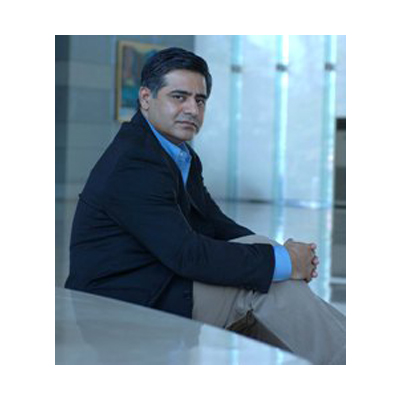
‘Working on an umbrella brand strategy is a good way to build a presence in the entertainment space’
You will start your television business with film channels. With more movie channels coming in what affect will this have on rights prices?
We are working on our plans. We are building our teams. We will launch two channels next year. What the genres are I cannot comment on. You however have to run channels across all genres to be taken seriously in the broadcasting space.In terms of more film channels coming in the price of content will rise. We are also seeing the evolution of different business models where content is not sold outright. It is syndicated to multiple players. I believe that movie channels will have to differentiate themselves and become genre specific. New models of presentation will have to emerge. The challenge for the players is that to achieve this, a library is needed.
Do you see a shakeout in the Hindi GEC space?
Three years back when there were 100 channels people said the same thing. Today there are 300 channels. Tomorrow there will be 1000 channels. We are moving to a situation where you will have thousands of channels when IPTV, DTH come into their own. When we move to a digital world niche channels become more viable. The long tail becomes viable. Today it is difficult to have more than 30 channels in an analogue model.The other area is your TV content production business. How is activity at Synergy Communications being scaled up?
As the TV space explodes the demand for quality content is growing,. Synergy will be one of the beneficiaries of this change. They face choices in terms of how they grow the business. We have an arms length relationship with them. It is not a captive production house.
‘We are moving to a situation where you will have thousands of channels when IPTV, DTH come into their own’ _____****_____
In terms of the push towards complete digitisation the belief is that when companies like Reliance, Bharti enter DTH it will be the next inflection point for DTH growth as well as for the cable industry to push for complete digitisation. Your views?
I hope that this happens. DTH is a huge opportunity as there is a need for addressability. Corporatisation will help improve the quality of service. While the penetration of existing players might not be great the industry is poised for a rapid change. You have to provide a differentiated service level to the consumer. You also have to provide services in the smaller towns which are neglected. Content offerings need to be differentiated which is not happening. There is scope to create exclusive, niche channels and service like e-commerce. We will push quality of service.At this point in time shoddy service is being provided in most parts of the country. The DTH industry has grown but if you expect it to touch 10 million in a day that will not happen. There are issues to be dealt with. But the consumer wants a change. We will differentiate as far as the last mile is concerned.
What are the key changes that you expect to see happen in terms of how films are being made and consumed? Is the solo, independent producer a thing of the past?
India makes 1,000 movies a year. The studio model has emerged but there will be scope for the solo producers to also work. In the US film corporates have helped grown the independent studios. The value of the content is being discovered now. But quality consciousness is important. If you are a small player niches need to be created. The issue is to find talent. This will be the biggest challenge in 2008. Talent needs to be broad based.On the social networking front how did the concept of Bigadda come about? What is its USP vis-a-vis sites like Orkut and Facebook?
I believe that social networking platforms are for real. A new set of technologies have merged to connect people. It is becoming the centre of their social graph. We are in the very early stages of this phenomenon. It will take off with the evolution of broadband. When we talk of social networking sites there are two aspects. One is social networks while the other is social media. Social networking sites focus on connectivity and communication. Social media sites look at user generated, user rated content.The user becomes a creator or a filter or a participant of content. Bigadda looks at both aspects. We believe that there is a huge space for an Indian platform. We launched it three months back and are satisfied with the response. We already have a million users. We get a million page views a day. We add 12-15,000 users a day. In 2008 competition will emerge but we are confident of the innovations that we will be doing. Social networking will also depend on what is done in the mobile space.
As per research, what extent is gaming competing with film and television for the Indian youth’s time?
Zapak is not competing with traditional forms of entertainment. It is creating a new form of entertainment. Like any iconic brand, it is creating its own language, vocabulary and loyal set of consumers. Zapak has four million registered users. On Comscore it is the number one gaming site. Next year we will bring in MMOGs. We believe that India is ready and as broadband takes off value creation will happen. It is not that Indians are watching less films. It is just that Zapak is creating its own set of loyal consumers.When you talk about entertainment you can’t get away from cricket which is why Reliance is bidding for an IPL team. How useful do you see this as a brand building excercise?
I cannot comment on IPL. -
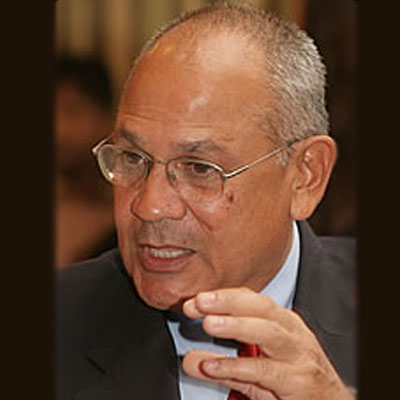
‘We are keen on bringing in more channels’ : Deepak Shourie – Discovery Networks India MD
For Discovery Networks India, 2007 has been a year of growth. The company carried out a slew of local initiatives including celebrating 60 years of India’s Independence. It is also looking at airing more HD content from overseas, coming out with thematic week slots for Discovery Travel and Living, and doing local productions.
In an interview with Indiantelevision.com’s Ashwin Pinto, Discovery Networks India MD Deepak Shourie talks about the company’s eagerness to bring in more channels, address different target segments, and prepare the ground for exploiting new media.
Excerpts:
Discovery globally has been undergoing major restructuring this year. Has India been impacted?
There is more sharing of resources happening now. We see Discovery as one brand rather than saying, for instance, that what is happening in the UK is separate from other countries.India is an important part of this brand story. We take content from other parts of the world and what we produce in India travels abroad. With India today being the flavour of the world, this of course helps.
As cable operators digitalise their networks, do you see this as an opportunity to bring in more channels from the Discovery stable?
We are examining this possibility. We are keen on bringing in more channels even though we realise that there is no space on analogue cable networks and getting distribution is tough. Cable operators are in a position to demand higher carriage fees due to lack of space. Digitisation will not become a complete reality unless consolidation within the cable industry happens.Are you satisfied at the growth of digitisation in terms of Cas and DTH?
With direct-to-home (DTH), we are happy to see Tata Sky and Dish TV spreading their reach. But with Cas (conditional access system), what we feared would happen has happened. We have been saying that Cas can’t be mandatory; it has to be voluntary. You can’t force it down people’s throats. That is why the uptake of set top boxes (STBs) in the Cas areas has been low.Broadcasters are suffering as they have no idea as to how many homes have taken their channels. The multi-system operators (MSOs) do not have a proper billing system in place.
We are entering a phase when we will see the launch of more English channels. How do you view this scenario of fragmentation?
We are happy to see more channels come in. Since Discovery is a well established brand, we are not worried about our share of viewership; we have grown to be the number one international channel in the country. We have achieved the aim of making Discovery mainstream as opposed to being niche. The new channels that come in will find it difficult to build viewership.Discovery has boosted its reach partly due to its Hindi feed. Are you looking at regional languages?
No! We were evaluating this possibility. However, we decided that these two languages give us enough reach. In the South, English is well respected.‘For Discovery, we are seeing more male viewership. Discovery Travel and Living targets SEC A men and women. For Animal Planet, a global strategy is being worked out‘Has there been a change in terms of how viewers have consumed the channel over the last couple of years?
For Discovery, we are seeing more male viewership. This is because of the kind of shows we air. We focus on things like engineering, science and cars which appeal more to men.Discovery Travel and Living targets SEC A men and women.
For Animal Planet, a global strategy is being worked out. We are waiting for this.
India is a young country with high aspirations. Over time we will see some movement away from entertainment television towards television that is informative. This is how growth will happen for us.
One of Discovery’s major initiatives was celebrating 60 years of India’s independence. How has the experience been working with India’s scientific and technological community?
Our aim was to showcase innovations at a grassroots level. It seemed a good way to show the progress India is making. We also want to encourage innovation. The technological community was very open and appreciative to what we did. Local shows play an important part in driving viewers to the channel.What has Discovery’s strategy been to lure in more viewership?
Our main aim has been to ensure that the primetime is very strong. We start with the ‘Wild’ section, then move on to technology, trends and India hour.Our aim is to two-fold. Firstly during primetime, the content on our channel must be important and matter to our viewers. Our second aim is to ensure that viewers return to our channel even during non-primetime.
What are the major properties coming up on the channel?ce?
The biggest one is Atlas which will kick off towards the latter part of next month. This will look at different countries – India, Australia, Italy and South Africa. The show looks at different facets – be it culture, topography, etc. It has been filmed in high-definition. It looks to combine the quality of a blue-chip documentary with the detail and clarity of HD.Another property we are excited about is Into Alaska With Jeff Corwin. Alaska has America’s highest mountain; it has a great element of wilderness as well as fascinating animals. A population of less than that of New York City spreads out over an area three times the size of Texas. Jeff Corwin brings this wilderness to viewers.
Race To Mars looks at the race to first reach the Red Planet by 2030. China is leading the way.
Once again, America and its partners, including Canada, are thrust into a winner-take-all space race. Six individuals from Canada, the US, Russia, France and Japan are selected for this gruelling two-year mission. This crew sets out on humanity’s first expedition to another world; nothing can prepare them for the unexpected danger and staggering wonder of what they will experience.
Abroad Discovery is focussing on the environment with its major eco green initiative. Are you looking to do something in India along these lines?
We will air this in India. Discovery US has tied up with Leonardo DiCaprio for the eco green initiative. Once this content becomes available we will see what can be done in India to add value.Discovery Asia and Nokia teamed up for a filmmaker’s initiative. How has this worked out?
It was a marketing relationship. This was for mobile filmmaking where the winner got the chance to work in Discovery Asia’s Singapore headquarters and learn about making documentaries. The initiative gave people the chance to innovate.How does Discovery Travel and Living reach its viewers?
Viewers have found us. We have more SEC A viewers watching us than any other channel. Income levels are going up. Where will this money be spent? On lifestyle. That is why they will watch us for information and also entertainment.It is a difficult proposition for most channels to catch this audience. People in this segment do a lot of things during their leisure time.
Has this helped you in roping in big advertisers?
We have sold most of our inventory. Every lifestyle brand that launches a new product comes to Discovery Travel and Living. At the moment we are doing something for India Today Travel Plus. In the past we have done initiatives for companies like AmEx Platinum Card.Is the channel also looking at forging tie-ups with tourist resorts, tourist boards etc?
In the past, we have done shows for states like Chattisgarh. We did a France Week recently and we did a press event at the French embassy. Sometimes, tourism boards advertise on our channel.Could you shed light on Discovery Travel and Living’s plans for the first quarter of next year?
We have a couple of interesting shows lined up. There is a show called The Petra Nemcova Project; it is about this international supermodel who is grooming six other potential models. The show chronicles the real story of what it takes to be a model in New York City, without staged eliminations or contrived challenges.Six new models are brought to the biggest stage in modelling and viewers follow them from their first test shoot to the runways of New York Fashion Week.
Nemcova serves as a mentor and friend to the prospective models, as they learn the trade of modelling and the business of fashion. Using her own life experiences, Petra advises the models on how to succeed and underscores the importance of having a well-rounded life.
We will also premiere a show called Nigella Express. Nigella Lawson is a popular TV chef on our channel.
She takes viewers on a quick and easy journey through the world of getting fabulous healthy food on the table fast. It is the sort of food viewers can cook fast around the clock, any day of the week, to fit whatever amount of time is available. Starting with everyone’s everyday nightmare of what to eat for dinner, to getting entire banquets on the table in less than 30 minutes, this is a series that will resonate with everyone struggling with hurried, time-squeezed, modern life.
We are also looking at a couple of Indian productions.
The channel is doing thematic weeks. Could you elaborate on this?
These run from Monday to Friday at 9-10 pm. It allows us to showcase special programming for viewers. This also works for advertisers as they can sponsor a particular week’s programme. During this quarter, we are doing a lot of country-specific programmes, looking at the adventure spots and opportunities for tourism and travel.Abroad, Discovery has looked to expand through new media. What plans are there in India to tap into mobile and internet?
Both of these are under review. Global strategies are being worked out for them. It will be a different ballgame as the mobile screen is small; it will complement traditional TV viewing as it is good for snippets of news, music and sports. -
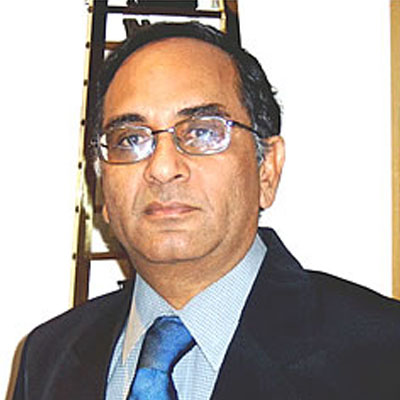
‘Challenge is to scale up the production slate’ : Ravi Gupta – Mukta Arts CEO
Subhash Ghai-promoted Mukta Arts has churned out several blockbusters in the past. But it has had to wait till 2006-07 to cross Rs 1 billion in turnover, dwarfing its earlier best performance of Rs 511.63 million in 2004-05.
The plan now is to increase its production bandwidth and quickly build a large library. As part of this script, Mukta Arts has acquired a 50.01 per cent stake in Manish Goswami’s (who runs a TV content company Siddhant Cinevision) start-up movie company Red Carpet Films. A three-movie distribution deal has also been stitched with Eros for Rs 730 million.
In an interview with Indiantelevision.com’s Sibabrata Das, Mukta Arts CEO says the company is set to produce 10 films a year by 2010 and create a talent pool from its film institute Whistling Woods International before it starts playing the real big game.
Excerpts:
How has Mukta Arts been able to hit record revenues in 2006-07?
We had a 12-movie satellite telecast rights deal with Zee Cinema. The total size of the transaction is Rs 220 million; we got Rs 180 million in the fiscal 2006-07. We also sold the five-year home video rights to Shemaroo Entertainment for Rs 32.5 million. But there are other reasons for our strong performance in the fiscal. We released four movies in the year – Shaadi se pehle, 36 China Town, Apne sapna money money and Khanna and Iyer.Mukta Arts has a basket of 26 movies. Will we see the revenue rub-off from the remaining 14 movies even in 2007-08?
The library will come up for renewals in different periods. We expect the total earning potential of the fully amortised library of 26 movies to be upward of Rs 400 million in every five-year window.This will come from re-issue rights of satellite, direct-to-home (DTH), cable, home video, terrestrial TV and other electronic media rights. It will add to our bottomline and our turnover. But the challenge is to scale up the production slate and build a larger library in quick speed.Which is why Mukta Arts acquired a 50.01 per cent stake in start-up company Red Carpet Films?
The idea is to increase the bandwidth of our production capability. We bought the stake in the newly started movie company at par value. Though Red Carpet Films has not produced any movie so far, it has a distribution deal in place with Eros; it will also have Eros financing four mid-budget movies.Manish Goswami already runs a successful TV content company. We expect Red Carpet Films to produce at least four movies a year. We will have another source to ramp up our production. We hope to have a film project every quarter through Red Carpet Films. We are also talking to other potential filmmakers for projects.
Are you creating divisions inside Mukta Arts to produce movies for different segments?
Mukta Arts will produce big budget films. Mukta Searchlight will make movies for niche audiences while Malpix will be engaged in regional language films. The segmentation approach is necessary since these are films having distinct identity. We expect to step up our production to 10 films a year. This should be further ramped up including movies produced to release directly on digital format.But 2007-08 doesn’t look like a scale up year for Mukta Arts?
We should be having four films in the year. We have already released Good Boy Bad Boy. While Bombay to Bangkok will be on 18 January, Black & White (directed by Subhash Ghai) will release on 7 March. The Marathi movie will also get reflected in the year. Cycle Kick may come up in the fiscal but Right yaa Wrong will get into the next financial year. We are also producing Yuvraaj (Rs 400 million budget film directed by Ghai) which is slated for release in 2008-09.The acceleration in producing more movies will be possible once we build an infrastructure for it. Our long term vision is to create a backward integration into education which will drive up talent pool. We expect to benefit from the talent that will get created at Whistling Woods International.
 ‘You can’t lock in stars and star directors. The model works with younger talent; lock them at an early phase‘
Are you widening the base of Whistling Woods International?
We plan to franchise it beyond the mother campus. We are looking at other key production centres like Bangalore, Hyderabad and Chennai. We also plan to take it overseas like Dubai Media City, South Africa and Nigeria.Exhibition contributes to 34 per cent of the company’s revenues. Will this go up this year?
We do bookings for PVR (all theatres), Adlabs (north), Fun City (north) and Wave Cinema. We also distribute 6-7 movies every year.Why did you then get into a deal with Eros for distributing three of Mukta Arts’ films?
We will get paid Rs 730 million and Eros will have the distribution rights for five years. It made business sense for us as we were getting a higher amount.Many film production houses have gone in for long term deals with stars and directors. Why has Mukta Arts stayed out of it?
There are only limited number of stars and star directors. Besides, we also don’t believe that this is the best way forward. You can’t lock in stars. The model works with younger talent; lock them at an early phase.Why did Mukta Arts sell out to Adlabs and exit from the digital cinema joint venture?
Adlabs bought out our 50 per cent stake in the joint venture company, Mukta Adlabs Digital Exhibition. We realised that there is no standardisation in the marketplace. Globally, there is no technology which meets industry standards. We felt that if we were betting on the wrong technology, it could be a high risk business and our investments would go down the drain.Does Mukta Arts have a digital plan?
We are learning how to create and repurpose content for digital media. We are also launching two websites – bollywoodmoviemax.com which will have digital downloads and indianfilmtrade.com. Both are on the testing stage.Mukta Arts had floated a subsidiary for TV production. Is there any move to energise this company?
Mukta Telemedia is developing concepts. We are open to TV but the hurdle is that the IPR stays with broadcasters. We want to retain IPR.Why did Mukta Arts not pick up equity in Dubai-based Arab Venture Corporation?
We had the option in the Dubai-based company which was launching a channel but decided against it. We took it up as a turnkey project.Mukta Arts had a movie production deal with Zee. Is it being extended?
It was a single project deal. We have released Khanna and Iyer (featuring talent from Zee’s Cinestar Ki Khoj) and there is no plan yet to do more movies for Zee.Do you see movie producers holding on to rights rather than selling them for a longer period as other forms of exploitation like direct-to-home (DTH) open up?
The number of DTH subscribers are too limited now. It will take a few more years to grow. We don’t want to deny ourselves the revenues by holding on to the rights. We lock ourselves into five-year deals like we recently did with Zee. -
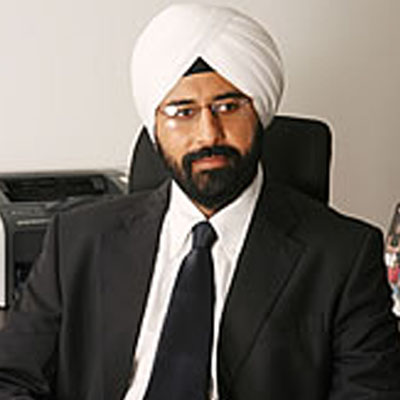
‘Ten Sports’ distribution is open for negotiations’ : Gurjeev Singh Kapoor – Set Discovery head
Riding high on the ICC World Cup, Set Discovery reaped a harvest of $120 million (around Rs 4.8 billion) in 2006-07.
The challenges, though, are stiff this year as flagship Hindi general entertainment channel Sony TV is floundering. But direct-to-home (DTH) revenues will start kicking in substantially as subscribers have doubled. And the cricket play is not over yet.
The One Alliance, Set Discovery’s brand, has recently added three news channels from TV Today including Hindi market leader Aaj Tak. It is also planning to form regional bouquets with presence in Tamil, Telugu and Bengali markets.
In an interview with Indiantelevision.com’s Sibabrata Das, Set Discovery head Gurjeev Singh Kapoor speaks about the distribution company’s interests in bidding for Ten Sports and HBO as they come up for grabs while chalking out its expansion plans.
Excerpts:
Will Set Discovery manage to retain its last fiscal revenue of $120 million in a year where it doesn’t have strong cricketing properties?
I wouldn’t like to comment on the revenue front. But we would surpass it this fiscal, thanks to DTH (direct-to-home) where the numbers have doubled. We are also close to signing up with Reliance ADAG and Bharti Airtel’s upcoming DTH ventures. We have done IPTV deals with players like IOL Broadband, HFCL and Aksh Optifibre. And don’t forget that Ten Sports had a lineup of live cricket telecast.But Ten Sports admits that not having India cricket will affect their ad revenues this fiscal. Won’t this same logic extend to distribution?
Ten Sports is a good sporting channel for distribution. Though it doesn’t have live India playing content this fiscal, we could capitalise on other cricket as it was exclusive. Having no India cricket may affect advertising. But our experience shows that distribution profits if there is live and exclusive content on the channel. Besides, Ten Sports has WWE which is a good property for distribution.Will Ten Sports not slip out of The One Alliance after the term ends in March 2008, particularly after Zee has taken a 50 per cent stake in the sports channel?
Ten Sports’ distribution is open again for negotiations, despite Zee having taken a 50 per cent stake. The channel strategically helped us in pushing our bouquet and with the ICC World Cup, we had back to back cricketing properties. We gained from the ‘synergy effect.’ We are going to bid for it again. The distribution is up for grabs.Why didn’t Sony bid for the ICC World Cup, if it is crucial to have a cricketing property to push distribution bouquets?
Our experience shows that on the distribution revenue front, it is always good to have 2-3 boards if you are getting live and exclusive cricket. We, undoubtedly, gained in subscription revenue because of the World Cup. But it is also true that we couldn’t encash on smaller markets because the World Cup is a largely shared property. We had to share with Doordarshan the India and other important big matches.Which is why Sony bid and took the New Zealand cricket board?
Our cricket story will not stop there. We are looking at cricketing properties that make business sense for us. The thought process is that we will bid for IPL and other boards that come up for renewals. ‘We are actively seeking a regional presence. We are looking at having Tamil, Telugu and Bengali channels‘
Sony was in talks to distribute Neo Sports. Did it fail because Neo was asking for very high minimum guarantees?
We couldn’t agree on the commercial terms. Though Neo has the BCCI rights to international cricket played in India, matches will have to be shared with DD. We felt the asking price was on the higher side.Set Disocery has recently signed a pact with TV Today Network to distribute Aaj Tak, Headlines Today and Tej. Will Aaj Tak help you to push Sony TV, which has weakened its position, and Sab TV in the Hindi heartland?
It will complement our two Hindi general entertainment channels. But more than that, it will open up the Hindi news channels to go pay. Star News and Zee News are virtually free. As Aaj Tak is the No. 1 in its genre, cable operators will now have to understand that Hindi news channels are also pay. Already NDTV India is planning to go pay.Our bouquet will have pay channels in every genre. We already had NDTV as the leading English news channel; and with Aaj Tak, we will now have the leader in the Hindi news segment.
How much of an upside do you see in revenue terms?
The only way we can ask for more revenues from cable operators is by expanding our content. As we are adding the three TV Today news channels, we are hiking our second bouquet price from Rs 58 to Rs 65. We have a 40-month deal with TV Today which extends across all distribution platforms – cable, DTH, IPTV.Is The One Alliance planning to add more channels?
We will be pitching for English movie channel HBO as its distribution deal with Zee Turner comes up for renewal early next year.What about forming regional bouquets?
We are actively seeking a regional presence. We are eagerly looking at having Tamil, Telugu and Bengali channels. While Andhra Pradesh has an estimated 11 million cable households, in case of Tamil Nadu it is 10 million and West Bengal five million. Even if we manage to convert 50 per cent of that, that is a lot of pay revenues. Kerala is not on our radar as even popular channel Surya is free-to-air.Along with the regional channels, we can push our national bouquet more aggressively into these markets.
Will more existing channels go pay as carriage fee shoots up?
Several existing channels are looking to go pay fast. Carriage or placement fee is going to shoot up and up as cable networks have no frequency available. Between Star, Set Discovery, Zee Turner and ESPN Star Sports, there are about 70 pay channels. So where is the space on analogue cable. Bandwidth is going to be a big problem for everybody to handle.The telecom regulatory authority of India (Trai) has asked for a la carte pricing from broadcasters in non-Cas (conditional access system) areas. Do you see this contributing to more carriage fee?
If the tariff order sails through, Trai will actually be promoting carriage as a concept. The multi-system operators will charge for carrying the channels while we have to offer them on an a la carte basis.Why has Sony moved the Tdsat (Telecom Disputes Redressal and Settlement Tribunal) against the Trai tariff order for non-Cas areas?
We have two points of contention. Even if broadcasters offer channels on a la carte basis, how do we get paid for the exact number of our subscribers? The other reason is that we will have to reduce the rates of our channels for non-Cas areas. In Cas areas we do so but are compensated in a way because there is exact declaration of subscribers.And for whose benefit is this a la carte rate for? How the hell does the consumer benefit as technology won’t allow for a la carte choice of channels without a set-top box?
If the Trai tariff order for non-Cas areas goes through, it will be a disaster for the broadcasters. It will send bad signals to a new channel wanting to come to India.
Aren’t broadcasters also unhappy with the progress of Cas?
For the first time, all of us came under one roof to foster Cas. But what we realised is that MSOs were in a way curbed by the last mile operators who did not want Cas.We are concerned about the low penetration of set-top boxes. There was the T20 World Cup on ESPN Star Sports, India won the championship, and it was live and exclusive. How in a Cas market, there was no big upside? This defeats the purpose of Cas and leads to a lot of questions.
Besides, Trai came out with a particular reporting format, but we haven’t got anything of that from the MSOs. We have no choice but to knock at the doors of Trai. We want the sector regulator to intervene.
Why aren’t broadcasters joining hands with MSOs to market for set-top box penetration?
We are willing but the MSOs have internal problems. The last mile operators see a bigger threat from digital cable rather than DTH.How do you see new entrants impacting the market?
Competition is healthy for everybody so long as the new MSOs can invest in technology and have financial stability. If cable monopolies are attacked in towns, it means more choice for customers and more revenues for us.
