Tag: DTH

  • Industry doing nothing to transform biz models for digital world: Uday Shankar

    Industry doing nothing to transform biz models for digital world: Uday Shankar

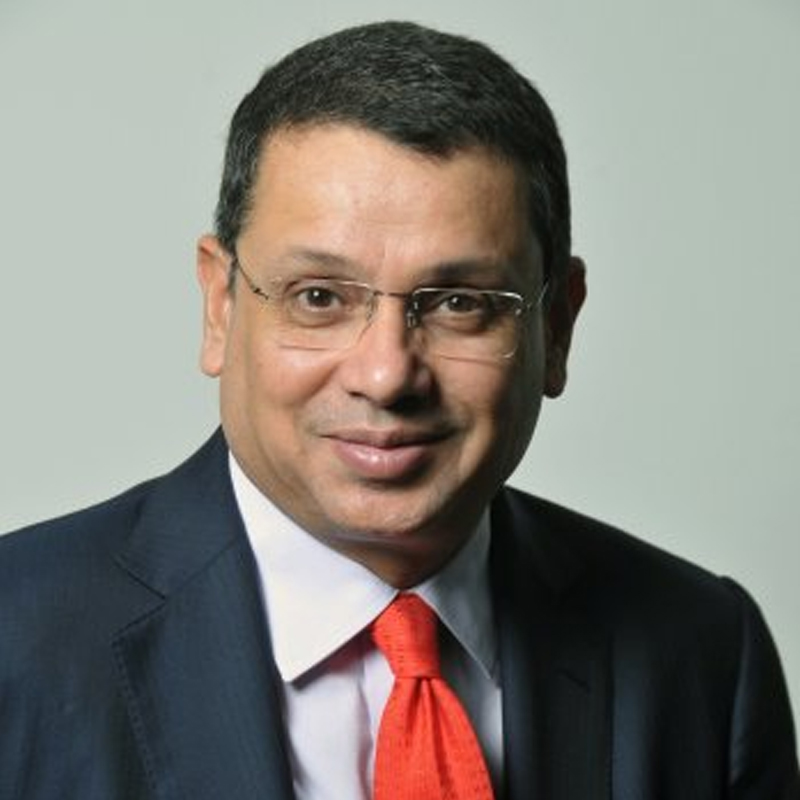
    MUMBAI: Star India CEO and Ficci Broadcast Forum chairman Uday Shankar set the ball rolling at the inaugural of the 13th edition of the Ficci Frames by saying that the industry is at the cusp of what is set to completely transform broadcasting in India, forever.

    Shankar was talking about the universal digitisation of television distribution. A subject that has dominated all discussions at all forums last year and which he presumed will continue to do so for a long time to come.

    “Most of the discussions that I have participated in are still around whether digitisation will happen and if it indeed were to go through, how chaotic it would be. With all humility may I suggest that it is a meaningless discussion triggered by a bunch of retrograde interests who are living in denial,” he said.

    The Cable Television Networks Amendment Act is not the beginning of digitisation. Digitisation of distribution is a big reality and the 40 – 45 million homes that have bought DTH boxes at some point or the other are a conclusive evidence of that. “In fact as we speak, India may just have overtaken the United States as the world’s largest DTH market,” he said.

    Shankar added, “The critics and the cynics who are still wondering whether digitisation would happen, my answer is: Look around, it is already happening and the rest of it is bound to happen because even in this country it would be difficult to undo such a momentous shift. To those who wonder how chaotic it would be, my response is that there would be some chaos, but chaos is not necessarily bad if the alternative is status quo or regression.”

    However, he also cautioned that his biggest concern now is a chaos of another kind that we are all set to create by our inaction. “Whether we like it or not, in a few years time, the vast majority of this country will receive its content through digital media – digital cable, DTH, 4G, wireless and Internet. But are we preparing for that? The answer is a big no,” he regretted.

    He said that while we debate a digital future day-in-and –day-out, the industry is doing nothing to transform or find business models for a digital world. “Let’s face it. Universal digitisation is going to force us to change the way we do business and we are not ready for it. We often blame the cable operators and MSOs that they are not ready but I am afraid that even the broadcasters and the content creators are not ready for a digital world. Are we then setting ourselves up to become uncompetitive and irrelevant?,” he asked.

    DTH has launched services like HD, Dolby sound and digital video recorder” and yet the broadcasters are doing nothing differently to service this segment. DTH has been around now for about six years and broadcasters or the content community have done nothing as an example of a strategy to exploit the new technology. This, he said, is despite an intuitive and an experiential understanding that the behaviour and the consumption patterns in DTH homes are significantly different from analogue homes. “The data also show that the average time spent on content in digital homes is much more and yet we do not treat them differently,” he said.

    Shankar said that it is scary how “we have force-fitted an analogue broadcasting model into the digital domain.”

    Is that what we are going to do even after cable goes digital, he asked. “I am afraid if the past behaviour is anything to go by, we are not ready to offer anything significantly different and therein lies the biggest crisis and risk of a chaos,” he said.

    He said there is enough global experience to suggest that digitisation leads to decentralisation, regionalisation or localisation of content creation and distribution.

    “Creatively, it is a huge catalyst for innovation and diversity. Essentially what it means is that with universal digitisation the business models of broadcasting, which are built on centralised creation and distribution of content and even a centralized advertising revenue model, may come under a huge pressure,” he cautioned.

    Shankar said that the cable community is still busy lamenting the potential loss of carriage fees and not realising what an amazing opportunity it has to participate in the local economic boom that is sweeping most parts of this country.

    “The first phase of digitisation that covers the 4 metros will be a huge unshackling of broadcasting and content opportunities. These are the cities that have crumbled under the weight of analogue frequency limitations. Just imagine the opportunities that these metros also our economic hotspots present when, from the first of July access to frequency will no longer be a constraint. So to my mind the MSOs and the cable operators may potentially become a powerful content creator that the traditional broadcasters have to contend with. There may be new creative talent ready to ride this technological transition. As the subsequent phases roll on, the decentralisation of broadcasting is bound to gain enormous momentum. However, I don’t see anyone trying to race ahead to take a pole position here,” he said.

    He also pointed out that HD TV sets have been available in this country and while many people were buying them, their off-take was still low primarily because there was no HD content and nobody was willing to invest in HD content because there were not enough HD consumers. “It was the classic chicken and egg problem. However early last year, when we at Star launched 5 HD channels with Dolby 5.1 surround sounds, even we were surprised by the rapidity with which HD gained acceptance. Today, in less than a year there are around 25 HD channels. But, I have to admit with a touch of disappointment that I am yet to see an adequate recognition of the potential of HD and a superior sound possibility by my fraternity. It is a classic case of the old mindsets struggling with a new technology,” he rued.

    Are we going to stay locked into this struggle or are we going to create a new generation of television which would be designed for the digital world?, he asked.

    Shankar said he has been an admirer of the current information and broadcasting dispensation which he thinks has shown more vision than any other dispensation in his two decades of interaction with the broadcasting establishment. “However, let me point out that we still need a lot of official and legislative enablers to remove the bottlenecks on this expressway. For instance, a clear policy to enable multiplicity of beams and splits would be a powerful trigger for proliferation of content and revenue opportunities,” Shankar said.

    He ended his keynote with the example of the latest Oscar success from Hollywood – The Artist – which is a portrayal of how a talented and accomplished artist from the silent era could become completely irrelevant because he refused to see that the times have changed.

    “Let’s not try to thwart a revolution which people are crying for. We will only hurt ourselves. The question is whether we will lead the change or whether we will vacate the space for a new set of entrepreneurs and visionaries who will replace us. It is up to us to use it or lose it,” he said.
  • Tata Sky launches new TVC focusing on services

    Tata Sky launches new TVC focusing on services

    MUMBAI: Creative agency Ogilvy and Mather‘s Mumbai team has created the latest TVC for DTH provider Tata Sky. The commercial is based on the insight that the value of quality service has been lost and that consumers have the right to get prompt and proper services on purchase.

    The campaign showcases how the customer is pleasantly surprised, thanks to the “efficient service offerings” brought to them by Tata Sky. The campaign aims to highlight two features by the digital service provider – all India relocation service and 24 X7 helpline service.

    These ads of the ongoing campaign build on one particular service in each story. And signs off with a charming apology: “Sorry Sir, Tata Sky ki service, kuch hai hi aisi!”

  • A whiff of fresh opportunities for Prasar Bharati

    A whiff of fresh opportunities for Prasar Bharati

    Almost 16 years after it was formally set up, pubcaster Prasar Bharati may be able to tide over its most pressing crises in the next three years – provided it manages to avoid the bureaucratic pitfalls that it has been continually encountering.

    The passing of the Prasar Bharati Amendment Act 2011 taking a major financial burden of salaries off its shoulders, the government’s digitisation plan for both All India Radio (AIR) and Doordarshan, the ambitious expansion of Doordarshan’s free-to-air DTH DD Direct Plus, and the expansion of FM Radio which not only give AIR more stations but extra income by giving news slots to the private FM channels – these are all signs of major opportunities that the pubcaster can grab over the next two to three years.

    Added to this is the promise of early introduction of a comprehensive re-modeled Prasar Bharati Act which will take away a lot of the shortcomings noticed over the past 15 years since it was notified in 1997.

    But if the public broadcaster has to stay afloat in a sea of almost 750 TV channels and the over 800 private FM Channels that will become a reality after FM Phase III, it has to realise its weaknesses and attempt to overcome these. And its greatest weakness lies in its organisation, with Indian Administrative Officers manning key posts which should ideally be given to broadcasters or to officers of the Indian Broadcasting (Programme) Service which was created especially for this purpose in the early eighties.

    A comprehensive study made by the Information and Broadcasting Ministry has also identified the different forms of challenges the pubcaster faces. In the first place, it has to compete with different kinds of content being tried by broadcasters and which may not be possible on AIR or Doordarshan.

    The failure to successfully monitor the must-carry clause has resulted in most cable operators still resisting putting DD or Parliament channels on their prime bands.

    Competition from six private direct-to-home (DTH) delivery platforms – Dish TV, Tata Sky, Sun Direct TV, Airtel Digital TV, Reliance Digital TV, and Videocon d2h – is also a major challenge since DD Direct Plus only carries free to air channels and not popular encrypted channels.

    There is no record of subscribers to DD Direct Plus since it entails a one-time expenditure of purchase of dish antennae and there is no subscription base.

    Prasar Bharati also faces other problems: it is still dependent to a large extent on casual manpower for both AIR and Doordarshan and has been facing constraints of funds and manpower to implement schemes that may come in the way of progress. There have been constant time and cost overruns due to weak planning and implementation.

    There is also non-availability of land and tower infrastructure for Prasar Bharati in most of the cities proposed for expansion of FM channels and most states which have been asked to give land have so far not done so.

    But Prasar Bharati’s strength lies in a dedicated listenership to its FM Gold and FM Rainbow channels; a large viewership base of Doordarshan which offers immense potential; the inclusion of a large number of private regional and some foreign TV channels in addition to DD’s own on its DTH service; a wide network of DD Programme Production Centres throughout the country and availability of DD network throughout the country.

    The switch to High Definition TV with the Commonwealth Games in 2010 has opened up a lot of opportunities to DD, and Prasar Bharati is also set to earn revenue from giving content to viewers of TV on mobile phones. Digital technology would be more acceptable to listeners and viewers as it tremendously enhances the quality of transmission and broadcast.

    Both AIR and DD are now gearing up to meet the challenges, albeit riddled with bureaucratic wrangles and financial constraints.

    AIR has embarked upon a sweeping modernisation programme during 2011-16 that will see it broadcasting to the entire country with state-of-the-art technology. Having already covered 99 per cent of the population and area under the analogue mode, AIR has made detailed plans of increasing the coverage to 100 per cent under the digital mode. This coverage would strengthen broadcasting to all strategic border areas as well. Within this 100 per cent coverage on the primary grade signal (MW & SW), coverage by FM signal will increase from 37 per cent to 90 per cent of the population. This would entail digital broadcast in FM band from 50 places in the country including all State capitals and major cities.

    The digitalisation of the entire network including studios, transmission and connectivity would include replacement of old/obsolete equipment. In addition, strengthening of related civil infrastructure would also be taken up, particularly for imparting training to staff in the field of digital technology and intensifying related R&D programmes. Staff productivity will be further enhanced through implementation of Assured Career Progression scheme for existing staff and induction of fresh talent. Investment in e-governance will be made for ensuring efficient management of the vast AIR network.

    Digitalisation will enable AIR to make its broadcast available on alternate platforms such as webcasting / Podcasting / SMS / Mobile services. A 24-hour AIR news channel is planned besides a speech quality programme. The entertainment programme will be broadcast on the main channel to compete with the best in the industry.

    Introduction of value-added-services (Vas) like Interactive Text Transmission, Multimedia Object Transfer (MOT), disaster warning, etc have also been planned. News on Phone is already available and has been digitised in Delhi.

    A total of 137 studio centres have been partially digitalised by providing hard disc based systems. There are at present 215 studio centres in the AIR network, and digitisation of 98 Studios will be achieved in the XI Plan. The remaining studios are proposed to be digitalized during the next two years. These studios will have provision for stereo recording, production and transmission, all in the digital domain.

    There are 380 Transmitters in the AIR Network consisting of 149 Medium Wave, 54 Short Wave & 177 FM Transmitters. One 250 KW Short Wave Transmitter at Delhi has been converted to Digital mode and has been operational since January 2009. Another 78 MW (Medium Wave) Transmitters including six Mobile Transmitters are being digitalised as part of the XI Plan Digitisation schemes. The remaining MW Transmitters in the network are proposed to be digitalised during next few years. Nine SW (Short Wave) Transmitters (4 in Delhi, 4 in Aligarh and one in Bangalore) are being digitised as part of the Digitisation Schemes in the XI Plan. The remaining Shortwave Transmitters are proposed to be digitalized during the next two years.

    At present, Digital Uplink facility is available at 32 Centres, all downlink facilities have digitised except at 44 places, and there are Digital Studio Transmitter links at 20 places, apart from four DSNG Systems (Digital News Gathering Systems). A total of 115 Studio Transmitter links are being digitised, five new Digital Captive Earth Stations are being set up (32 are already available), 44 downlink facilities are being digitised, and 98 Studio Centres being digitalised in XI Plan are being networked to a Central Data Server System for exchange of programme.

    AIR programmes are presently available through terrestrial mode and DTH. As part of XI Plan, 20 AIR channels are proposed to be made available through Webcasting/Podcasting with a view to use the Internet platform to serve listeners having Internet connectivity. There are presently 21 radio channels available on the Ku band DTH platform of DD Direct Plus.

    AIR will spend Rs 668.5 million on new content creation, Rs 100 million on special activities like music concerts, Rs 62 million on coverage of important international and national events and production of programmes, and an estimated Rs 24.5 million on news activities like production of special flagship programmes etc.

    As far as Doordarshan is concerned, it is presently operating 35 satellite channels and has a vast network of 66 studios and 1415 transmitters providing TV coverage to about 92 per cent population of the country. Like AIR, DD will also be making a switch from analogue to digital transmitters, which would offer multi-channel transmission from single transmitter, spectrum efficiency and enhanced picture quality. Old studio, satellite broadcast and transmitter equipment will be replaced to maintain high quality of services.

    In line with the trend taking place all round the world, digitalisation will continue to be the top priority so that by the end of the XII Plan, a complete analogue switch-off will have been made.

    Doordarshan’s Eleventh Plan Scheme of Digitalisation involving an outlay of Rs. 6.2 billion was approved by the Government in April 2010. This essentially entails continuation of the XI plan schemes to fully digitalise the remaining 39 out of 66 studios and establishing 40 digital High Power Transmitters at existing locations. In addition, provision will be made for 590 low power digital transmitters during the XII plan. Additional infrastructure build up will include up gradation of 10 existing satellite Earth stations and setting up of 5 new ones, procurement of 15 DSNG and replacement of uplink PDAs/IRDs.

    A critical component of digitalisation would be setting up facilities for providing HDTV telecasts for viewers, which has a resolution five times higher than traditional television systems. This would entail conversion of a studio for HDTV production establishing a HDTV transmitter in each of the 4 metros.

    In so far as DTH service is concerned, DD will upgrade its DTH platform to accommodate 200 channels by the end of the 12th plan from the present level of 59 channels so that viewing of channels becomes less expensive than before. The programme entails establishment of 40 digital HPTs by 2013. There will be provision for 590 digital transmitters and digitisation of four analogue Studios in the 12th Plan.

    Projects of setting up of HDTV studios at Delhi and Mumbai; HDTV post production, field production and preview facilities, HDTV terrestrial transmitters at Delhi, Mumbai, Kolkata & Chennai; HD TV Play out facility at Delhi, Multi camera OB Vans at Delhi and Mumbai are under implementation.

    DD will develop and improve content delivery to the rest of the world on essentially four channels, which are visible in 86 countries on the IS10 satellite: DD-News, DD-Sports, DD-Bharati and DD-India. DD-India channel is additionally available in North American countries, viz., USA, Canada, Mexico. Prasar Bharati is presently drawing up a plan estimated to cost around Rs one billion for strengthening the international DD India.

    DD’s plans include production of 15,067 episodes for various channels in three years starting from 2010-11. Out of this, 12,400 episodes are being made in-house and 2,667 episodes commissioned through outside producers. The total cost of in-House episodes would be Rs 620 million and Rs 800 million for commissioned programmes.

    Strengthening network of terrestrial transmitters in border areas will be a high priority to check adverse propaganda from across the border. Until a complete analogue switch off takes place, both High and Power Analogue Transmitters will be set up in the border areas, both afresh as well as replacement for transmitters that have served their useful life. Existing analogue transmitters can be converted to digital transmitters at little additional cost. At present, 273 transmitters of varying power are operating in border areas.

    Apart from the schemes of digitization and HDTV, schemes of replacement and modernisation of satellite broadcast equipment and studio & transmitter equipment are included in the 11th Plan. Upgradation of 10 existing satellite earth stations, establishment of five new earth stations, and procurement of nine new DSNGs will be achieved this year.

  • Sandeep Goyal’s firm to manage Airtel’s ad inventory

    Sandeep Goyal’s firm to manage Airtel’s ad inventory

    MUMBAI: In a first of its kind move, telecom giant Bharti Airtel has awarded its entire advertising inventory management to Sandeep Goyal-promoted Mogae Media.

    A senior executive in the company, who did not want his name to be revealed, confirmed the news to Indiantelevision that there was a pitch involved and Mogae was selected to sell all advertising on Bharti Airtel’s mobile, DTH (Airtel Digital TV) and broadband platforms.

    The revenue-share deal will see Mogae operating Airtel’s full mobile commerce initiative including special offers.

    Goyal‘s Mogae will, thus, handle the Bharti Airtel‘s ad inventory that includes space on text messages, multi-media messages, IVR and recharge coupons in mobile services.

    Direct-to-home (DTH) service providers are also tapping advertising to supplement their main subscription fees that they charge from subscribers.

    Goyal, former Dentsu India chairman, was not available for his comments.

    When contacted, Airtel spokesperson said the company would not comment on market speculations.

  • ‘Digitisation will not spur irrational price war as the Santa Clauses are broke’ : Hathway Cable & Datacom MD and CEO K Jayaraman

    ‘Digitisation will not spur irrational price war as the Santa Clauses are broke’ : Hathway Cable & Datacom MD and CEO K Jayaraman

    Hathway Cable & Datacom has an ambitious investment plan of Rs 10 billion as India opens up to digitisation across the country.


    In the first phase, India’s leading multi-system operator (MSO) plans to invest Rs 1.75 billion even as it expects DTH to take away 10-15 per cent of its cable TV subscribers in the two lucrative markets of Delhi and Mumbai.


    Sitting on a cash pile of Rs 2 billion, Hathway will not source equity finance at this stage. Though net losses will drag on for a long period in a digital environment, the MSO hopes to regain its old valuations if it manages to successfully implement the early phase of digitisation.


    Even as carriage revenue will shrink, Hathway’s endeavour will be to have an Ebitda of 20-25 per cent right from the start of mandated digitisation.


    In an interview with Indiantelevision.com’s Sibabrata Das, Hathway Cable & Datacom MD & CEO K Jayaraman talks about how no cable or direct-to-home company is in financial health to launch an irrational price war. He also elaborates on the MSO’s digitisation gameplan.


    Excerpts:


    DTH companies have made rapid progress in recent years. How is Hathway Cable & Datacom prepared to exploit the first phase of digitisation?
    We plan to invest Rs 1.75 billion in the first phase. This will include Rs 200 million towards marketing in Mumbai and Delhi over the next 6-8 months. It is the first time that we are splurging on media campaigns.

    Are you comfortably placed on the funding part or you plan to raise fresh capital?
    We have a cash pile of Rs 2 billion. We will not source equity finance at this stage. We are comfortably placed and will manage with bank debt and vendor credit.

    Will you need funding in the second stage?
    We will see when we reach there. We have already digitised around two million homes. We will need to digitise our remaining 6-8 million existing homes (including multiple TVs). Our funding requirement will be Rs 10 billion as we need to subsidise the set-top box (STB) cost and make further investment in infrastructure.

    Hathway was selling at Rs 500 a STB to its customers in voluntary digitisation. Will you further subsidise the boxes in a mandated digitisation environment?
    We are looking at charging Rs 750-790 a STB (including taxes) as the rupee has depreciated against the dollar.

    “LCOs will get a revenue share of 30-35%. They will gain from 2nd TV homes, operational efficiencies and Vas. Distributors will get a 5% rev share. They will also get a 30% share in carriage revenues”

    But DTH could go aggressive and there could be a price war situation?
    We won’t sell below this even if there is a price war. We do not have the financial resources to further subsidise the boxes.


    We, however, feel that no player is in a position to indulge in an irrational price war. Nobody in cable can do so. DTH will fight for market share on the basis of perception and brand. All the Santa Clauses are broke.

    Are you expecting a migration to DTH?
    We expect DTH to take away 10-15 per cent of our cable TV subscribers in the two lucrative markets of Delhi and Mumbai. But we see a surge in second TV homes. Besides, we will launch three packages – lower, middle and top-end. In all the packages, we will have a price advantage. Also, we will have more channels on offer than DTH because of our bandthwidth superiority.

    Will the supply of STBs be impacted due to a sudden rise in demand?
    We have ordered 1.3 million digital STBs and signed a letter of intent for another 0.5 million. We estimate our subscriber universe to be 1.5 million in Mumbai and Delhi. About 20 per cent of this will be second TV sets.


    We also have a presence in Kolkata through our joint venture company, Gujarat Telelinks Pvt. Ltd (GTPL), which acquired a 51 per cent stake in Kolkata Cable and Broadband Pariseva. We expect to at least seed 400,000 boxes there.


    We have already seeded 250,000 STBs on a voluntary basis in Delhi and Mumbai.

    Crucial to the whole implementation of digitisation is the appeasement of the local cable operator (LCO). Have you fixed the revenue share terms with them?
    The LCOs will get a revenue share of 30-35 per cent. There will be a loss of revenue for them but they will make up to some extent with the second TV homes, where they don’t usually charge anything from the subscriber. Besides, they will gain from operational efficiencies and will discover new homes in a digital environment. Also, there will be a revenue share for them from value-added-services (Vas). So they should reasonably settle with us.


    The distributors will get a five per cent revenue share. They will also get a 30 per cent share in carriage revenues. In Mumbai, we are comfortable with the distributors. There may be some issues in Delhi but we will manage to strike a smooth bond with them.

    Why haven’t the MSOs sat down together and decided on a common share for the LCOs who control the last mile to the consumer?
    That would attract the Competition Commission of India. But in any other form, we will make efforts to drive consensus up. We don’t want any fissure surfacing among the stakeholders. We can’t afford to derail DAS (Digital Addressable System).

    Do you expect carriage revenue to shrink considerably?
    We expect it to shrink by 30 per cent in the digital environment. This can even go up to 50 per cent. But we will be somewhat compensated by a reduction in content cost.

    How?
    We will do fixed fee deals with broadcasters and believe content cost in a digital scenario will fall in the region of 35 per cent. We are close to sealing deals with two big broadcasting companies.


    Even sports channels should allow us to price reasonably; customers should take it round-the-year. Otherwise, we will offer it on a-la-carte basis to consumers.

    Analysts predict that net losses of MSOs will drag on till at least 2016 in a digital environment?
    We can’t predict now. But Hathway aims to stay Ebitda positive. We expect our Ebitda to be at least in the 20-25 per cent range. We know it will be difficult at the early stage of digitisation but our endeavour will be towards achieving that range from the start.

    Hathway had fixed it IPO price band at 240-265 and the scrip is now quoting at Rs 116 per share. When will the valuation be regained?
    We will regain good valuations if we manage to seed the boxes. Investors are bothered about that and not about net profitability at this stage.

    Do you expect the second phase to be tougher for you?
    For Hathway, the ride in the second phase could be even smoother as we have already got a large population of digital subscribers on a voluntary basis in some of these major cities like Bangalore and Hyderabad. Our digital penetration in some of these cities is as high as 60 per cent. In Gujarat we have seeded 150,000 (out of our
    estimated current subscriber universe of 220,000) STBs, in Hyderabad we have 350,000 (out of 800,000) and in Bangalore we have a digital population of 275,000 (out of 400,000).


    And in Jaipur, Indore and Bhopal, we have a digital penetration of 40 per cent out of our current subscriber base. In Phase II, we are far ahead.

    Will you follow the acquisition route?
    We will not pursue acquisitions and will prefer to conserve capital for digitisation. We will not do any more analogue consolidation. It is bad to add analogue weight in the current circumstances. Our focus will be on digitsation.


    Post digitisation, we may be interested in acquisition in some of these cities. But it should come at the right price.

    Are you looking at launching value-added services?
    We will tie up with either Ericsson or Cisco for Video-on Demand (VoD) services. We will decide in March whom to partner with. We have launched HD services and also bundled it with our broadband offering. We hope it will enhance our average revenue per user (ARPU). We have 2000 HD subscribers. Given that we get Star bouquet on HD and spend on marketing, we expect HD to eventually account for 10 per cent of our subscriber base.

    Are you bullish on your broadband growth?
    Yes, that gives us an advantage over DTH. We are also ahead of the other big MSOs so far as broadband goes. We will be bundling broadband with digital cable to offer better value to the consumers. The broadband homes passed stand at 1.7 million and our actual subscribers are 400,000.

  • Delhi High Court grants copyright protection for Speedy Singhs

    Delhi High Court grants copyright protection for Speedy Singhs

    MUMBAI: Following that of Singham and Bodyguard, the Delhi High Court has given the much-needed relief to Hari Om Productions, producer of Speedy Singhs, towards its copyright protection a day before its release on 22 September.

    The production house had moved the HC against a few cable operators and against unknown defendants for a temporary and permanent injunction for any copyright infringement.

    After hearing the producer‘s lawyers, the Delhi HC passed the ‘John Doe Order‘ against all the defendants, including unknown persons, restraining them from, in any way displaying, releasing, showing, uploading, downloading, exhibiting, playing, defraying the movie Speedy Singhs, without a proper licence from its producers.

    The order also restrains those who may wish to release or distribute the film without permission through CD, DVD, Blu-ray, VCD, Cable TV, DTH, internet, MMS, tapes, conditional access system or other media. The order is valid till December 19, 2011.

    The term ‘John Doe Order‘ is used to describe an injunction sought against someone whose identity is not known at the time it is issued.

    While the makers of Singham got the order from the Delhi High Court in July, Reliance Entertainment got the same in August for Bodyguard.

  • ‘Now there are four key players in the market’ : HBO South Asia country manager Shruti Bajpai

    ‘Now there are four key players in the market’ : HBO South Asia country manager Shruti Bajpai

    Adopting an aggressive posture, HBO is giving a push to its content as competition turns fierce in the English movie channel space.

    After its deal with Sony Pictures Entertainment (SPE) ended, HBO stitched deals with 16 studios. The focus will continue to be popular blockbusters, cutting edge titles and original content.

    The entry of Movies Now has shaken up the market and from a two-horse race it now has four key players. HBO, however, is looking at a double-digit growth this year and has brought in new category of advertisers to the genre.

    In an interview with Indiantelevision.com‘s Ashwin Pinto HBO South Asia country manager Shruti Bajpai talks about the challenges that the genre faces.

    Excerpts:

    New entrant Movies Now seems to have upset the applecart, pushing HBO to the third position. How do you plan to bounce back?
    Rating fluctuations are normal for any channel in this business. As the number of players grow, it is more important for the category to expand. As for HBO, there’s no reason to feel threatened because of the sheer differentiation in terms of our content. We are the only channel with the capability to bring the most popular blockbusters, cutting edge titles and original content. In terms of both quality and quantity, we are still unmatched.

    Movies Now’s strategy of showing popular films that have high repeat value seems to have worked. So have premieres gone down in value?
    No! That counts for a lot in terms of brand perception. At the end of the day it is about what your brand stands for. We show more premiere blockbusters than any other channel. Our focus is on having more premieres, strengthening our franchises and telecasting HBO Originals. Our USP is to offer something for everyone and be a one-stop shop.

    What impact are the new players having on the genre?
    From being just two key players in the market, now there are four – HBO, Star Movies, Movies Now and Pix.

    After HBO’s output deal with Sony Pictures Entertainment ended, how have you lined up content to take on competition?
    We have, in fact, expanded our content pipeline. Last year, we stitched deals with 16 studios. We have the very best of blockbusters like ‘Ironman 2’, ‘Inception’, our popular franchises include Rocky and Bond. We have cutting edge titles like Blind Side, Stieg Larsson’s Millennium Trilogy and ground-breaking original content like Temple Grandin.
    ‘There are plans to expand the base in India and HD will be a part of that‘

    Movies Now was the first HD channel in the English movie genre. Is HBO looking at HD feed?
    There are plans to expand the base in India and HD will be a part of that. We can’t really speak for others, but HBO has a multi-channel and HD presence in most of the countries across the globe. India will be no exception.

    Content costs are escalating due to intense competition in the genre. Has revenue also expanded?
    Rising content cost is a factor, but a point of concern more for our competitors and relatively less for HBO. Unlike the rest of the channels which are mostly home-grown or only operational in Asia, HBO is a global player with widespread presence. With multi-year output deals with three studios – Warner bros, Paramount and Universal -and content from 16 other movie companies, we are best equipped in the genre to manage content acquisition costs.

    English movie channels in combine earned an ad revenue of Rs 3 billion last year. Will the genre post a 20 per cent growth this year?
    Though this year has been a bit challenging for all non-sport categories with high influx of cricket, we wouldn’t like to speculate on what the genre has made. English movies has always been a very sought after genre with a wide variety of advertisers and HBO being the most preferred channel in this category, has maintained the growth rate as per the previous years.

    What revenue growth is HBO targeting this year?
    HBO has always maintained double-digit growth numbers and this year will be no exception. We don‘t have advertisers; we have partners.

    We are also perceived as a very premium, international brand among the viewers as well as the advertisers. Many high-end and prestigious brands like Audi and BMW spend a large chunk of their marketing budgets on HBO. In the English movie channel genre, we command the highest rate for our inventory.

    Are you tapping into new categories?
    Yes. In fact, this has been our biggest success this year. We have added more than 30 clients this year, with far more contribution from new categories. It’s our high value perception that has helped us bring some non-traditional categories like real estate on board.

    What are the challenges the genre faces?
    English movie and entertainment channels face the same challenges as any other channel in the country – intense fragmentation. In the last couple of years, this category has seen a significant number of new entrants. HBO, however, has always stayed a step ahead of the game. Since inception, we have been one of the strongest players in the market with superior content and high value to advertisers and viewers alike.

    The DTH base is growing rapidly. Are you looking at content innovations for this platform which can yield more revenues?
    Yes! As the base grows, there is a need to tailor content for DTH.

  • New Hindi news channel to spend Rs 400 mn on distribution

    New Hindi news channel to spend Rs 400 mn on distribution

    MUMBAI: Sai Prasad Media, part of the Rs 15 billion Sai Prasad Group, has earmarked Rs 400 million for the distribution of its upcoming national Hindi news channel on cable TV networks and DTH.

    News Express, the full high definition (HD) format channel, will launch in July.    
         
    “We are gearing up to launch the channel by mid-July. We are spending Rs 400 million on distribution. All our distribution deals are done and it is our biggest cost,” said the channel CEO and editor Mukesh Kumar.

    The channel has already signed carriage deals with all major multi-system operators (MSOs). “We have also signed up the direct-to-home (DTH) operators barring Tata Sky,” said Kumar.

    Sai Prasad Media is headquartered at Noida, the hub for most national news channels.

    “We have over 300 reporters across eights states,” said Kumar.

    On the content front, Kumar said that the channel will focus on politics in every walk of life. “We will have special programming based on hardcore politics, politics in a corporate setup, politics at home, in social life, etc.”

    Sai Prasad Group has varied interests in foods & beverage industry, agricultural products, petroleum, real estates, infrastructure, constructions, green energy, education and media and entertainment.
     

  • DTH bringing the second wireless revolution in India – Bharti Airtel Director and CEO digital TV services Ajai Puri

    DTH bringing the second wireless revolution in India – Bharti Airtel Director and CEO digital TV services Ajai Puri

    Launched in 2003, DTH revitalised India’s journey to media digitisation. Being wireless in nature, DTH has truly brought the power of affordable home entertainment to rural households.

    2010 has proved to be a remarkable year for the DTH industry in India. It was an action packed year that saw the market expanding to six private players, acting as the catalyst in speeding up India’s journey to digitalisation.

    The year saw many innovative interventions in the area of both hardware and interactive services by players, with festive occasions and sporting events being the major inflection points for the industry. The industry added 10 million customers in FY 2009-10 taking its tally to over 20 million, thereby adding as many as it did in its first five years, exemplifying the fact that the Indian consumer ‘wants’ to be at par with globally evolving entertainment standards. The industry is expected to add another 13-14 million customers in 2010-11.

    In moving away from the industry norm of treating DTH as a mere replacement to cable, newer entrants like Airtel see a huge potential market of 100 million households that have no access to cable or terrestrial TV. This has helped expand the category and enabled affordable home entertainment on wireless to reach markets hitherto beyond reach of incumbent distribution platforms. 
     
    In growing at the phenomenal pace that it has, DTH has made India the largest buyer of set-top boxes and it’s set to soon become the largest DTH market in the world. Though the increased demand of STBs has brought down the hardware cost that forms a major chunk of operators cost, the industry is still beset with many structural challenges.

    The absence of a level- playing field on content cost versus analogue cable, due rampant non-transparency / under-declaration by cable industry for years and the high incidence of taxes, make it a steep climb to profitability for DTH operators. Tax incidence of over 35 per cent is amongst the highest for any industry which plays such a critical role in fulfilling the Government agenda of reaching ‘infotainment‘ to the remotest parts of India. In particular, entertainment tax levied by states has no logical reasoning and custom duty imposed on STBs needs to be withdrawn. Also the license fee of 10 per cent is only levied on the DTH platform, amongst all other forms of distribution – an anomaly that needs to be corrected soon.

    At present wholesale tariffs from broadcasters, cost of all channels put together, comes to nearly Rs 14 billion for cable operators and 50 per cent of that is levied on DTH operators, while the Indian customer is willing to pay at best between Rs 150-250. It seems that the incumbent cable industry has taken recourse to under-declaration to correct this anomaly of high content cost. DTH though being a completely transparent addressable system has no such recourse.

    DTH today is less then 20 per cent of the total C&S households in India, but contributes over 50 per cent of broadcasters subscription revenue, thereby ending up subsidising the incumbent analogue cable industry.

    We believe that DTH has the potential to repeat the success story of telecom, where all the stakeholders – consumers, broadcasters, operators and government – will gain immensely. As DTH is already enabling many in rural India buy their first TV, every single household of the current 240 million homes across India deserves to have a TV. Just like mobile, DTH has shown that wireless is the way to go if world class home entertainment is to go mass in India.

    Apart from the width of availability of linear, regional content, DTH for many has become the means to catch up with latest movie releases that otherwise would probably have taken months or some quarters to be released beyond the top few towns. This will go a long way in helping fight piracy and protect the interests of the rightful producers of content.

    Advertising too has become a very rewarding, effective option on DTH. It furnishes better return on investment for advertisers by paving the way for authentic measurement of viewership compared to myriad forms of media. Also, it renders a new vehicle for localised advertising, tapping the targeted audience in an effective way.

    Being the largest integrated telco that has a presence across all screens– Mobile, PC and TV – Airtel finds itself uniquely positioned to participate in the next wave of growth for DTH-broadband hybrid models. The advent of new wireless access technologies like 3G & BWA will make it possible for customers to experience the true power of two-way interactivity even on DTH. With movies on pay-per-view (PPV) platforms already gaining growing acceptance and innovative solutions by Airtel such as its mobile recording & mobile self care feature that make convergence of screens a reality, superior viewing experience through better picture quality and Dolby digital sound output will redefine customer’s expectation out of the idiot box in a big way.

    With customers clearly opting for the newer, more advanced platforms like MPEG4 DVBS 2, HD, the industry is looking forward to start the New Year in a positive note. The need to be entertained coupled with diversity of broadcast channels, gaming & interactive services will be big growth drivers for DTH in 2011.

    Clearly, technological superiority and quality of customer service have emerged as the new differentiators for the industry and the DTH platform is leading the way in helping India digitalise faster.
     

  • Zee News Ltd Q3 net profit up as ad revenue surges

    Zee News Ltd Q3 net profit up as ad revenue surges

    MUMBAI: Zee News Ltd (ZNL) has posted a fiscal third-quarter consolidated net profit of Rs 61.84 million (after minority interest), gaining from the festive season and a better all-round performance coming from its old and new channels.

    Advertising revenue has seen a healthy growth while subscription has seen a slower pace in the quarter as it has moved into a fixed fee regime with DTH operator Tata Sky. The company posted a revenue of Rs 744.44 million for the three-months ended December.

    On a more positive note, ZNL has a 18 per cent margin, including the losses from the newly launched channels. The margins stand at 33 per cent for the existing businesses.

    ZNL had posted a net profit of 191.48 million for the third-quarter of FY‘10 on a revenue of Rs 1.71 billion.

    However, the company, which operates the news channels of the Zee brand, said that the corresponding quarter financials are not comparable as there were six regional general entertainment channels at that time under ZNL, which were demerged from the company with effect from 1 January 2010.

    ZNL has posted a strong sequential growth. For the fiscal second-quarter, the company reported a net profit of Rs 2.24 million on a revenue of Rs 615.87 million.

    ZNL chairman Subhash Chandra said, “The news genre on television is marked by intense competition in India, unlike any other country in the world. Most news channels in India are incurring losses. Our objective is to create a focused news organization which can create value for the shareholders in the long term. I am happy that Zee News Limited, not only differentiates itself by delivering unbiased, serious and credible news to its viewers, but does it profitably.”

    He added, “Our company continues to outperform competition due to its quality of manpower, which is kept motivated with several training schemes to build leadership in the organisation. We aim to create a news powerhouse which is close to the action and can reach out to every viewer in his/her preferred language and I am happy to say that we are progressing very well toward the goal.”

    ZNL MD Punit Goenka added, “Zee News Limited has shown significant growth in profitability in this quarter. Evidently, the editorial and business decisions taken by the company in the recent past are reaping rich dividends. The consistent emphasis on serious news has made Zee News Limited not just the largest, but also the No. 1 news network of India. The leadership position of the network has in turn helped augment the company’s financial position thus creating a win-win situation. Business performance during the slowdown and beyond shows great potential of growth from here. I am hopeful of continued improvement in business performance as we start are planning for the next fiscal.”

    Ebitda for the quarter under review stood at Rs 134.5 million and profit before tax at Rs 103.6 million In the previous quarter, Ebitda was Rs 70.2 million and PBT Rs 32.1 million.

    ZNL‘s advertising revenue grew stood at Rs 541.7 million, as compared to Rs 407.2 million in in trailing quarter (for year ago period figures see table). Subscription revenue for the quarter was Rs 185.9 million, which constituted 25 per cent of the total revenue.
      
           
      Though, the company has seen a surge in ad revenue (sequentially), the subscription revenue has fallen as compared to Rs 194.1 million in previous quarter (31.5 per cent of the total revenue).

    The expenses of the company stood at Rs 609.9 million, slightly higher on a sequential basis (Rs 545.7 million). In the year ago period, the expenses were Rs 1.34 billion.

    ZNL posted Ebitda profit of Rs 225.2 million (186.8 million in previous quarter) from its existing business (Zee News, Zee Business, Zee 24 Taas, Zee Punjabi and 24 Ghanta). The company, however, suffered Ebitda loss of Rs 90.7 million (from loss of Rs 116.5 million) from its new business (Zee Tamizh, Zee 24 Ghantalu and Zee News UP).

    ZNL CEO Barun Das said, “ZNL has shown that pragmatic and creative approach works best in the news market – national and vernacular. EBITDA margin of 18 per cent is quite healthy considering that there are three new channels which are still on way to break even; whereas the EBITDA of Rs 225.2 million and margin of 32.6 per cent for the group of existing channels demonstrates the quality of operational efficiency. In the context, the all-round performance of our bouquet of channels would continue to be our critical success factor. Our focus on “news that matters” has established our credentials as a network.”