Tag: DTH

  • Haasan calls ban on Vishwaroopam in TN cultural terrorism

    Haasan calls ban on Vishwaroopam in TN cultural terrorism

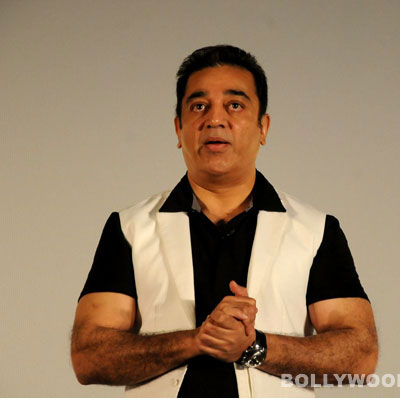
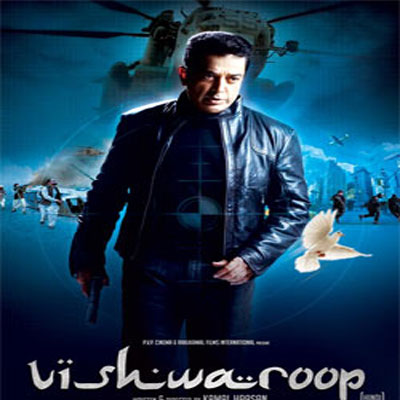
    Mumbai: Actor and filmmaker Kamal Haasan has described the ban on his silver screen extravaganza Vishwaroopam by the Tamil Nadu government as ‘cultural terrorism‘.

    The Rs 950 million film was to release on 25 January in around 500 screens in Tamil Nadu alone. According to media reports, “district collectors have been orally instructed to pass appropriate orders and to make sure advance booking is stopped”.

    The move came in response to Muslim organisations‘ expressing fear that the “film could disturb communal harmony” after watching a show, specially screened for them, a few days ago.

    The film has had its share of controversy in the run up to its release. Earlier the debate around the movie was over Haasan‘s intention to premier launch the movie on Direct-To-Home (DTH). This was thwarted when theatre owners opposed the move reasoning that it would affect their revenues and thus the actor had to launch the film on DTH a week after theatrical release.

    The following is the text of Haasan‘s statement:

    Dear Friends,

    While I am touched by the voices in support for me and my film, I am appalled at how my film is construed to be against my Muslim brothers.

    My statements in favour of that community have marked me as a sympathizer. I have always gone beyond the call of my duty as an actor to voice my opinion in favour of what was humane and civil. I have been part of an organization called Harmony India which worked for Hindu Muslim amity.

    I am not only hurt by these accusations of denigrating a community but my sensibilities are truly insulted.

    I have been ruthlessly used as a vehicle by small groups who seek political profile. Icon bashing is a great way to be noticed when you are not one yourself. It is happenning again and again. Any neutral and patriotic Muslim will surely feel pride on seeing my film. It was designed for that purpose.

    Now I will rely on law and logic to come to our support. This kind of cultural terrorism will have to stop.

    I thank those who rose to the occasion and to my support on the Internet.

    Kamal Haasan

  • Haasan approaches CCI in Vishwaroopam release row

    Haasan approaches CCI in Vishwaroopam release row

    MUMBAI: Actor and film maker Kamal Haasan has moved the Competition Commission of India (CCI) against certain theatre associations. Haasan alleged that these bodies restricted the release of his film Vishwaroopam report the Press Trust of India.

    A senior official from CCI told PTI, “”We have received a complaint from Kamal Haasan (related to Vishwaroopam)…We are likely to take a call on the issue next week.” The complaint has been filed by Haasan‘s production house Rajkamal Films International.

    Meanwhile, Haasan has virtually ruled out the premiere of his film Vishwaroopam on the Direct-to-Home (DTH) platform ahead of its release in theatres. He has reportedly admitted a ‘change of mind‘ on proceeding with his controversial decision that had met with stiff resistance from a section of exhibitors.

    “I have changed my mind on having the premiere (on DTH platform ahead of releasing it in theatres). I will discuss (with DTH partners) on how close or far to release date (will be a DTH show),” he said.

    Hassan observed that he had taken into account suggestions from many to consider the ‘good health‘ of Tamil cinema industry before going ahead with his decision.

    “Many had requested me to take into consideration the good health of the industry and proceed with DTH. It is my primary duty to make it happen,” he said after consulting with exhibitors and theatre owners here.

    He also said that talks were on with DTH players on the issue but declined to divulge on the matter. “They have been kind to me. Will say later when the film will come on DTH,” he said.

    Haasan said the film will be released in Tamil and Telugu on 25 January as announced earlier but its Hindi release will be finalized only after further talks with industry associates.

    The tech-savvy actor-filmmaker‘s decision to have a premiere of his much anticipated trilingual action film on DTH caused ripples in the multi-million rupee Tamil cinema industry, with a section of theatre owners deciding to boycott the film.

  • Specialised channels: The growing flavour of entertainment

    Specialised channels: The growing flavour of entertainment

    The Indian television industry is poised for a dramatic transformation. 2012 saw significant changes in almost every aspect–increase in channel offerings, high-decibel launches, variety in content, innovative programming formats, renewed interest in the regional market and a range of speciality channels being launched.

    At the same time, delivery technologies have been upgraded, demanding a review of broadcasters’ growth strategies. The defining event for the industry, undoubtedly, was the roll-out of digitisation process in the four metros. Six years ago there was no DTH. Today, DTH and digital cable are transforming the television viewing experience for thousands of Indian households.

    Digitisation will continue to be the game changer for the Indian television industry in 2013 as well, when it expands into 38 more cities in the second phase and beyond. Viewers will not be restricted for choice of content because of capacity constraints in analogue cable. Digital delivery, while providing superior broadcast quality to viewers, will highlight the real value of media brands and their unique offerings.

    Discovery‘s gains in digitisation

    The growing footprint of digitisation is important for Discovery Networks. It gives us the opportunity to offer viewers a complete spectrum of our channels, a wide variety of quality content and the highest possible viewing experience. It is one of the reasons for us expanding our portfolio to eight channels and adding multiple language feeds across brands.

    Our unmatched and robust bouquet of unique content channels–Discovery Channel, TLC, Animal Planet, Discovery Kids, Discovery Science, Discovery Turbo, Discovery HD World, and Discovery Tamil—enjoys immense brand equity and continues to delight viewers with its sheer range of programming.

    Our programmes probe myriad mysteries, explore countries, people and cultures, celebrate scientific, engineering and medical breakthroughs from around the world and delve into thought-provoking subjects to gain insights into some of the most fascinating subjects. We have been the market leader in introducing unique channels globally and in India such as Factual, Lifestyle, Auto, Wildlife, Science, Animation and High Definition. With the launch of Discovery Science, Discovery Turbo, Discovery HD World, Discovery Channel Tamil, and most recently Discovery Kids, we’ve even pioneered new genres in television programming.

    Importantly, the immense affinity to our networks has proven that viewers, when offered choice, will prefer well-defined, entertaining and high-quality content. All these channels have created new and distinct viewer groups. Others in the industry have also responded to this consumer trend by launching multiple channels across categories. In an emerging digital environment, this ability to innovate will be a crucial determinant of value for media brands.

    Digitisation to broaden scope of TV viewership

    Going forward, digitisation is bound to broaden the scope of television viewership. The growth in television audience population representing varied interests, languages and disparate content preferences has led to audience segmentation. This, in turn, is encouraging broadcasters to launch new and differentiated channels and innovative packaging.

    Post digitisation, it will be a different game plan for advertisers to reach their consumers. For advertisers who are continuously looking to reach out to their unique target group, digitisation allows them to customise their delivery according to content platforms, viewer demographics and distribution reach of channels.

    The new breed of Indian TV viewers seeks programmes dealing with information and experiences that have a direct bearing on their lives and lifestyle. They want insights into the world that they live, work and travel in just as much as they crave to see themselves through global points of view. Evidently, no single channel can hope to be a one-stop shop for entertainment anymore. Only those channels that have a distinct proposition will thrive in this new order, and emerge as the most-preferred destinations for viewers, advertisers and affiliates alike.

    Once digitisation is complete, we will enter into a pay-per-use scenario where television viewers can choose from among multiple options of specialised content according to their preferences. We foresaw this trend much ahead of others, and launched TLC in 2004, as we believed DTH will be a significant step in empowering viewers to demand content of their choice. The success of TLC fuelled our decision to launch more specialised channels like Discovery Science and Discovery Turbo. Our high-definition offering, Discovery HD World continues to woo viewers and the trade alike with its breathtaking content. Discovery Kids, our latest and 8th network offering, has already ignited the imagination of millions of kids across India.

    We believe that the pay-TV model will be dominant for years to come and will change the television landscape for everyone’s benefit.

  • Karunanidhi defends denial of licence to Arasu

    Karunanidhi defends denial of licence to Arasu

    MUMBAI: DMK chief M Karunanidhi has come out in support of the United Progressive Alliance (UPA) government for not giving Digital Addressable System (DAS) licence to the Tamil Nadu government-owned Arasu Cable TV Corporation.

    Karunanidhi, who had set up Arasu Cable TV Corporation during his reign as chief minister, said the UPA government was going by the Telecom Regulatory Authority of India‘s (Trai) recommendation that prevents government or government-owned entities from entering the television broadcasting or distribution business.

    “The Centre can decide on issuing DAS Licence only based on the recommendations of Trai guidelines. Trai had recommended that Centre and state governments should not involve in cable TV broadcasting,” he said in an interview to party mouthpiece ‘Murasoli‘.

    He also expressed disdain at Jayalalithaa‘s accusation that the government was deliberately not issuing licence to Arasu in order to benefit his family.

    The DMK chief also said it was not proper on her part to make such remarks at the National Development Council meeting.

    Jayalalithaa had at the National Development Council (NDC) meeting recently lambasted the government for deliberately holding licence in order to a ‘political‘ family in a veiled reference to Karunanidhi and his family.

    Arasu is yet to receive a DAS licence to operate in Chennai despite repeated plea by the state government and AIADMK MP‘s, who taken the issue to Prime Minister Manmohan Singh as well. Arasu had applied for a DAS licence in July.

    Karunanidhi and his family hold considerable interest in television and distribution business in Tamil Nadu. While Karunanidhi‘s family owns Kalaignar TV, his grand nephew Kalanithi Maran owns the Sun Group, which has interests in television, print, radio, DTH and cable distribution.

    Pertinently, Trai had on 28 December reiterated its November 2008 recommendation that central and state governments or entities owned by them should not be allowed to be in broadcasting and television channel distribution businesses.

    The regulator had submitted its recommendations to the Information & Broadcasting (I&B) Ministry on “Issues related to entry of government or government entities into the business of broadcasting and/or distribution of TV channels”.

    It also reiterated its view that the government should provide an appropriate exit route to government or government-owned companies which have already been accorded permission to carry on the business of television channel distribution.

    The recommendations are expected to impact Arasu, which had received licence in 2007 to operate in Tamil Nadu.

  • Star’s Bengali movie channel opens with 154 GRPs

    MUMBAI: Star India‘s Bengali movie channel Jalsha Movies which launched on 16 December made a debut with 154 GRPs in West Bengal, which the broadcaster claims is the biggest ever opening for any channel in the Bengali market since 2008.

    According to Star India president – ad sales and Star Jalsha president and GM Kevin Vaz, the channel‘s superior content coupled with aggressive marketing and distribution contributed to the ratings.

    “The channel is already setting new benchmarks and is redefining the pleasure of watching movies for our audiences within a week of its launch. This is a stepping stone for us and we hope to further live up to the expectations by offering a never before entertainment experience to our viewers,” he said.

    The channel was launched with the television premiere of Bengali superstar Jeet-starrer Awara that clocked 5.3 TVR.

    Jalsha Movies, which has a five-year deal with Bengali production house Shree Venkatesh Films, already has a library of 350 movies under its belt. The deal with Shree Venkatesh will give Jalsha Movies the exclusive right to air all the movies of the banner to be released in next five years.

    Going forward Vaz said that Jalsha Movies will continue to have big movie festivals like Dev festival, Mithun festival and so on.

    “We will also have one or two big movie premieres every month. We are soon premiering Challenge II which is the biggest blockbuster during Diwali in West Bengal market,” Vaz added.

    The free-to-air channel is available on all cable platforms including Manthan, DigiCable and Siti Cable apart from DTH platforms like Tata Sky, Videocon d2h and Airtel digital TV.

  • Niloufer Dundh calls it a day at Hungama Digital

    Niloufer Dundh calls it a day at Hungama Digital

    MUMBAI: Niloufer Dundh has resigned from Hungama Digital Media Entertainment as head – integrated media.

    Dundh told Indiantelevision.com that she will take a break for a while before she turns into an entrepreneur and launches her new venture in January-February.
    Over a stint of 3 years at Hungama, she was responsible for monetising properties across all of Hungama‘s lines of businesses like web, mobile, gaming and DTH.

    Prior to joining Hungama, she worked with UTV and Radio Mirchi in Sales division.

  • Sony Six strengthens presence on DTH

    Sony Six strengthens presence on DTH

    MUMBAI: Sony Six, the sports entertainment channel from Multi Screen Media (MSM) stable, has signed two new deals to strengthen its presence on direct-to-home (DTH) platforms.

    The channel is now available on Tata Sky and Airtel digital TV. It was already on Videocon d2h and Dish TV. With this, Six will have a total reach of 36.7 million C&S homes.

    Six, which went on air on 7 April, has been priced at Rs 14.70 on a la carte basis in digital addressable system (DAS) areas.

    MSM COO N P Singh said, "We are happy to announce that in addition to Dish TV and Videocon, SIX is now also available on TATA SKY and Airtel. DTH platforms have achieved a strong distribution reach and with this development, we will be able to further strengthen our distribution in India.”

    It has Indian Premier League (IPL) as its tentpole property in addition to Ultimate Fighting Championship (UFC) and National Basketball Association (NBA) as it looks to woo youths with fast-paced sporting events.
    Commenting on this development, One Alliance President Rajesh Kaul said, "The One Alliance always strives to create a strong product offering of diverse television content. The sports genre has always been a strong growth driver and with Six now available on an array of DTH platforms, viewers can enjoy their favorite sports with enhanced visual and sound quality."

  • ‘Digitisation will throw open acquisition opportunities’ : IndusInd Media and Communications chief executive officer Nagesh Chhabria

    ‘Digitisation will throw open acquisition opportunities’ : IndusInd Media and Communications chief executive officer Nagesh Chhabria

    T he Hindujas have started the first round of cable TV digitisation in the three metro cities of Mumbai, Delhi and Kolkata. The second phase will open up 15 more cities where IndusInd Media and Communications Ltd (IMCL), the cable TV company they own, operates. Aggression is being planned to take on 14 more cities through acquisitions, joint ventures or direct entries.


    The ambitious target set is deployment of four million digital set-top boxes (STBs) on top of the 1.5 million IMCL is expecting to achieve in the first phase of digitisation. The company is also planning to own one million last mile connections in two years, up from its current base of 300,000.


    IMCL, which operates its cable TV business under the Incablenet brand, will need Rs 6 billion in the new phase that will see 38 cities go digital by 31 March 2013. The company is in talks with private equity investors to raise $75 million.


    “There is a huge appetite now to invest in cable TV companies. The first phase of digitisation has been successfully implemented in the three metro cities of Mumbai, Delhi and Kolkata. There is also no uncertainty now about India’s digitisation programme across the country. We should see equity deals happening in the sector,” says IndusInd Media and Communications chief executive officer Nagesh Chhabria.


    Chhabria believes the cable TV ARPUs (average revenue per user) would rise to Rs 500 by 2015, while carriage income would see a 10-15 per cent drop in DAS (digital addressable systems) markets.


    “In the first phase, we are looking at a 15 per cent increase and believe our ARPU would settle at Rs 225. If the ARPU is lower than this, the local cable operator will not survive,” he says.


    In an interview with Indiantelevision.com’s Sibabrata Das, Chhabria talks about the changing cable TV environment and the multi-system operator’s (MSO) expansion plans.


    Excerpts:

    Q. Is IMCL in talks with private equity investors to raise capital for funding its cable TV digitisation programme?
    We are looking at raising $75 million and have mandated Ernst & Young for this purpose. There is a huge appetite now to invest in cable TV companies. The first phase of digitisation has been successfully implemented in the three metro cities of Mumbai, Delhi and Kolkata. There is also no uncertainty now about India’s digitisation programme across the country. We should see equity deals happening in the sector.


    Q. Will $75 million meet IMCL’s total funding requirement for the second phase?
    We will need Rs 6 billion as we expect to deploy four million set-top boxes (STBs). We have existing lines of credit from banks for $15 million. We can further raise $10 million of new debt. So along with equity financing, we should be comfortably placed. Of course, there is concern about the weakening of the rupee, which will mean STBs becoming costlier. But we are asking our STB manufacturer to offer us a better rate so that it offsets any rise in dollar value.


    Q. Hasn’t IMCL lined up vendor financing so that the pressure on funding upfront eases?
    We have not gone in for that option. The Cisco set-top boxes are 15-20 per cent more expensive than ours. Our model works out cheaper for us.


    Q. Isn’t your estimate of the STB requirement too high as IMCL operates in only 15 out of the 38 cities that fall under digitisation in the second phase?
    It is easier now to get into new cities because there is less entry cost. You don’t have to pay broadcasters for an assumed number of subscribers as digitisation would reflect your actual subscriber base. Capital expenditure, of course, is going to be higher but there is an assured revenue model.


    We plan to enter into 15 more cities and anticipate a requirement of two million STBs from the new operations. For our existing operational cities, we would need two million STBs.

    ‘Even in the second phase, DTH will hardly be able to make an impact. Since most of the cities that fall in this round of digitisation are carriage markets, the national MSOs have a presence in them. Already 10 per cent of this market is digitised by the MSOs‘
    Q. Will you take the acquisition route for entering into these markets?
    Digitisation will throw open acquisition opportunities. There are many operators who will find it difficult to fund for the STBS. So they will either want somebody to invest in their cable networks or completely sell out. We are in talks with many independent operators. We can also enter on our own through fibre or available bandwidth.
     

    Q. How are valuations getting decided?
    We look at the profits made in the last fiscal and offer four times that value. The other option is to look at future profits (sans STB investment) made from the first six months of digital operations and then fix a value. But this has few takers as nobody wants to take the risk.


    Q. Are you not looking at last mile acquisitions that will give IMCL direct ownership of the consumer homes without having to share a portion of the subscription revenue with the local cable operator?
    We have an aggressive plan to own last mile. Our target is to own one million primary points in two years, up from our current base of 300,000. The acquisition of primary points, however, is much costlier and the price could be in the region of ten times the subscription fee. In Mumbai, this could go up to 20 times. But with digitisation necessitating billing systems, the primary points will be up for grabs.


    Q. Has DTH been able to eat into IMCL’s subscriber base in the first phase?
    We have hardly felt the impact. Even in the second phase, DTH will not be able to win over cable TV consumers in a big way. Since most of the cities that fall in this round of digitisation are carriage markets, the national MSOs have a presence in them. Already 10 per cent of this market is digitised by the MSOs. DTH will stand a better chance in tier III and IV towns. Acquisition of primary points in these smaller places will be a good strategy for MSOs to follow.


    Q. How many STBs has IMCL deployed across three cities in the first phase?
    We have already seeded 1.3 million boxes and our target is to touch 1.5 million. In Mumbai we will do 850,000 million and 0.5 million in Delhi. The progress in Kolkata is slow but it will also pick up.


    ‘We are looking at raising $75 mn and have mandated E&Y. There is a huge appetite now to invest in cable TV companies. The first phase of digitisation has been successfully implemented in the three metro cities of Mumbai, Delhi and Kolkata. There is also no uncertainty now about India’s digitisation programme across the country. We should see equity deals happening in the sector‘
     

    Q. Is the conversion into second TV homes significant?
    The demand for second TV sets is higher in Delhi than in Mumbai. But at a combined level we are talking of a 25-30 per cent conversion rate. We are working out a pricing for second and third TV sets as we have to match the DTH offers. But we are yet to ink deals with broadcasters on this.


    Q. What is the kind of content deals that you have stitched with broadcasters?
    We have done cost-per-subscriber deals. This works out better in the long term and is a more transparent system. We get to know our cost per box and it is easier to work out negotiations later. Our content cost would work out to 33 per cent of our subscription revenue.


    We wanted to do three-year deals with broadcasters but they were not ready for it. Most of our content deals are on a yearly basis.


    Q. What is the revenue share you are giving to local cable operators?
    The value chain will take away 33 per cent of our subscription revenue. We also have operational costs and an investment on the STBs, but we also earn carriage or placement revenue. We are seeing a 10-15 per cent drop in our carriage deals for DAS (digital addressable system).


    Q. Will ARPUs go up?
    In the first phase, we are looking at a 15 per cent increase and believe our ARPU would settle at Rs 225. If the ARPU is lower than this, the local cable operator will not survive.


    ARPUs for MSOs should at least be Rs 300 for them not to be dependent on carriage income. MSOs with ARPUs below Rs 300 will have to be carriage dependent.


    Our forecast is that cable TV ARPUs would rise to Rs 500 by 2015. What will lift up ARPUs is HD and regional packages. Premium packages will also get sold.


    Q. So are we talking of financially healthy MSOs in digitised India?
    A lot on how the market shapes up will be decided over the next six months. We will know the actual seeding of boxes in consumer homes once the subscription collections happen.


    Q. Will IMCL rely only on video services or there is a serious plan to pump up broadband investments?
    We will be investing Rs 1 billion on broadband infrastructure in the next fiscal. We are also going to prepare for IPTV and OTT (over-the-top) services.


    Q. What about launching local cable channels?
    Yes, this is very much a part of the plan. Since there will be no constraints on bandwidth in the digital era, we are planning to put together 10-12 local channels, including local news. We are also looking at ad-free channels.
  • Tata Sky to make equity infusion of Rs 5 bn every year over medium term

    Tata Sky to make equity infusion of Rs 5 bn every year over medium term

    MUMBAI: Direct-to-home (DTH) television service provider Tata Sky has planned equity infusion of over Rs 5 billion every year over the medium term to meet its capital expenditure and for serving its debt.

    The additional equity will be raised from investors other than the promoters and will result in dilution of Tata Sons‘ shareholding from the current 60 per cent but is expected to be gradual.

    Tata Sons would remain the single largest shareholder in Tata Sky after the equity infusions over the next few years. Tata Sons holds 60 per cent stake in Tata Sky while News Corp. has an effective stake of 29.8 per cent.
    CRISIL, which has rated its bank facilities and debentures, believes that management control will remain with Tata Sons and Tata Sky‘s association with the Tata brand will continue even after its stake gets diluted.

    Tata Sky has Rs 17.01 billion of bank facilities and recently raised Rs 1.6 billion through a debenture issue.

    The Indian DTH industry is characterised by the presence of few dominant players, leading to intense competition. The competitive intensity is reflected in frequent launches of special offers and discounts and high marketing spends by these players, whose primary goal is to increase their market share. While the industry has witnessed healthy subscriber additions, the overall profitability remains low. CRISIL believes that Tata Sky’s operating performance will improve over the medium term. It also believes that the company’s financial risk profile will remain weak over the same period, marked by negative net worth and stretched debt protection metrics.

    Tata Sky narrowed its net loss in the year ended 31 March 2012 from a year earlier, on increasing subscriber numbers.

    Tata Sky’s net loss in 2011-12 was Rs 2.98 billion, 36 per cent less than Rs 4.7 billion a year earlier. The company‘s net loss in 2009-10 was Rs 6.26 billion on total income of Rs 11.10 billion. The company‘s net sales were up 18 per cent to Rs 15.9 billion from Rs 13.5 billion a year earlier.

    The continuing losses have resulted in piling up of accumulated losses. Tata Sky‘s accumulated losses as on 31 March 2012 would amount to Rs 43.03 billion with the addition of loss in 2011-12 to the accumulated losses of Rs 40.05 billion as on 31 March 2011.

  • Zee eyes Rs 1 bn from Sa Re Ga Ma Pa 2012

    MUMBAI: After a gap of two years, Zee TV is all set to woo its audience with the new season of its oldest flagship property ‘Sa Re Ga Ma Pa 2012’.

    Produced by Esselvision, ‘Sa Re Ga Ma Pa 2012’ will start on 29 September and will be aired every Saturday and Sunday at 9 pm.

    The channel has roped in 9 sponsors for the show. Continuing to present the show is Hero while the channel is in talks with a couple of brands for the powered by sponsorship and is expected to close the deals soon. Zee TV has got seven associate sponsors on board which include Ferraro Rocher, Tata Motors (Consumer Vehicles), Lux undergarments, Kraft Kitchenware, Toshiba Color TV, Dell laptops and Microsoft. Intel has tied-up with the property as the technology partner.

    “We are looking for one or two more associate sponsors depending on the category. It will either be an FMCG brand or a car brand,” Zee Entertainment Enterprises (Zeel) chief sales officer Ashish Sehgal said.

    According to Sehgal, the property had made around Rs 650-700 million in its last season. “Sa Re Ga Ma Pa is expected to make around Rs 1 billion this year,” he added.

    The channel has sold out 70 per cent of the Sa Re Ga Ma Pa inventory, which is being consumed by the sponsors themselves. The rest of the inventory will be sold to spot buyers.

    Marketing Blitz:

    With plans to use the digital media the most, the channel has created applications like ‘Call & Sing App’. It is a Mobile + Facebook app which will enable the viewer to sing on their mobile phones, post the audio clip on the ‘Sa Re Ga Ma Pa 2012’ Facebook page as well as their own Timeline even when they are ‘on-the-go’.

    “This app successfully integrates the ‘Sa Re Ga Ma Pa’ TV and web experience, giving individuals the ability to customise and engage simply. This will help to grow video-based user-generated content,” Zeel marketing head-national channels Akash Chawla said.

    “The focus in ‘Sa Re Ga Ma Pa 2012’ is to connect better with the audiences, who watch the show and create a stronger relationship with them. Our view is that multiple touch-points can enhance a viewer’s experience. It’s been seen that rather than being a distraction, these interactive methods in the digital domain tend to be programme ‘companions’, enhancing the viewer’s brand experience. Our attempt is to make all ‘other screens’ an ally of the television instead of being its competitor,” Chawla added.

    Among other initiatives are the ‘Hot or Not’ app where people will be singing one after the other and audiences rating them. There will be ‘interactive banners’ with jumbled lyrics that test their knowledge of music. The ‘Sur Tab’ will have ‘Sa Re Ga Ma Pa Dha Ni Sa’ as syllables on a tab that can be arranged by a viewer to produce different music. Once arranged, the sur can be heard and shared by the viewer immediately. There will be different instruments every week to keep the experience a “refreshing” one.

    The ‘Sa Re Ga Ma Pa Mobile App’ will have a media gallery of videos and photos, singing and music tutorials by mentors, anchor and contestants. Here, the viewers will get an opportunity to chat regularly with the mentors, anchors and contestants. There will also be a ‘Did You Know’ option with trivia related to music. All these will also be available on the microsite, saregamapa.zeetv.com.

    The channel is creating a roadblock on YouTube masthead on 28 September. It will also take-over on the ‘Yahoo’ site, through which the channel aims to drive maximum traffic towards the premiere of the show.

    The premiere of ‘Sa Re Ga Ma Pa 2012’ is being promoted on DTH players like Dish TV, Airtel and Tata Sky. All Dish TV subscribers will directly tune into ‘Sa Re Ga Ma Pa 2012’ on Zee TV when they switch on their sets on 29 and 30 September from 9 to 9.30 pm to increase sampling.

    The on-air campaign is being played out across Zee Network and also across news, music, Bollywood entertainment, Hindi movie and kids’ entertainment channels.

    On radio, the show aims to “heighten interactivity” through contests, RJ links and creating characters based on the mentors.

    Content innovation:

    The new season of Sa Re Ga Ma Pa promises to give audience more involvement in the show. As part of content innovation, the viewers have been given the opportunity to evaluate the performances with the use of voting meters. They have played a major role in selecting contestants through online auditions as well where a contestant’s entry depended on the number of ‘likes’ or ‘hits’ their uploaded video generated.

    Zeel – content head (Hindi GECs) Ajay Bhalwankar said, “With ‘Sa Re Ga Ma Pa 2012’, our aim is to customise the viewing experience with increased levels of audience engagement. Viewers now prefer watching content that not only entertains but also involves them. So, we have taken the interactivity route by understanding their inherent interest in music. There is a special round in the show where we will change the style and the chords of a song and the contestants will have to improvise it to gauge their knowledge of music.”

    Sa Re Ga Ma Pa 2012 will compete with big properties like Sony Entertainment Television’s Kaun Banega Crorepati 6 and Colors’ Jhalak Dikhhla Ja, which is going to end soon, and then Bigg Boss 6 which starts on 7 October. Star Plus airs its fiction property ‘Teri Meri Love Story’ in this slot.

    Talking about how the channel plans to compete with the properties, Bhalwankar added, “It’s not about competition but primarily we felt the need to innovate. We wanted to give them a genuine reason for watching our show. The judges, band and kinds of songs have all been selected taking many things into consideration. Even the audience on the sets is real audience whose voting is considered.”

    Taking the property to a bigger level, the stage set-up is like that of a concert with the musicians on the stage playing live as the contestants sing. To test the contestants’ music quotient and increase the level of competition, many elements will be introduced including changing the code or ‘sur’ of the song or throwing a request for a ‘jugalbandi’. A musical quiz contest will come on screens before every break and the answer will be given just before the opening of the next segment.

    ‘Sa Re Ga Ma Pa 2012’ will be judged by music director duo, Sajid and Wajid, lead vocalist of the band Indian Ocean Rahul Ram and music composer and singer Shankar Mahadevan.