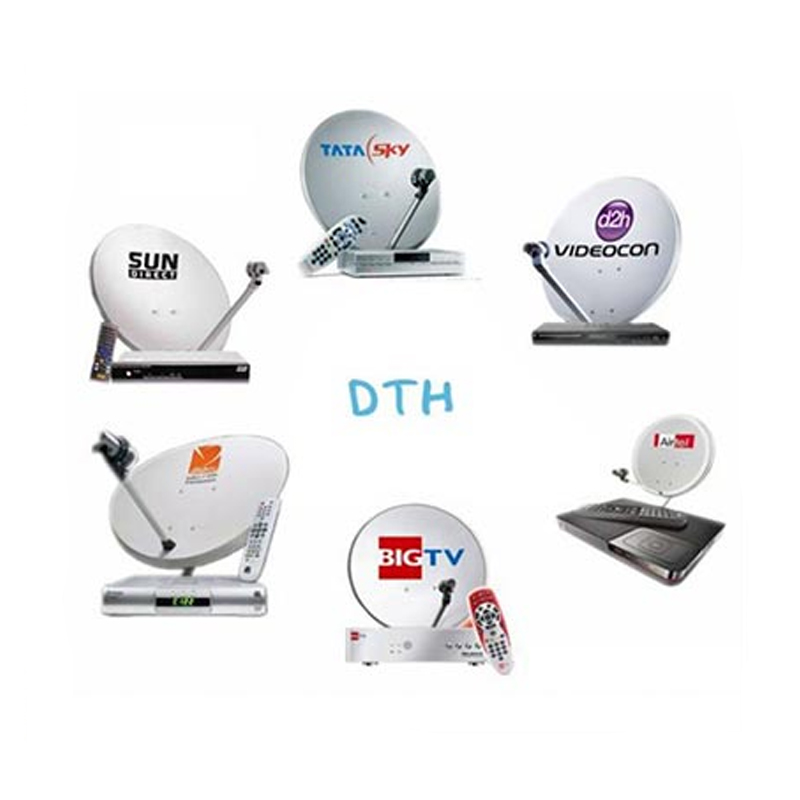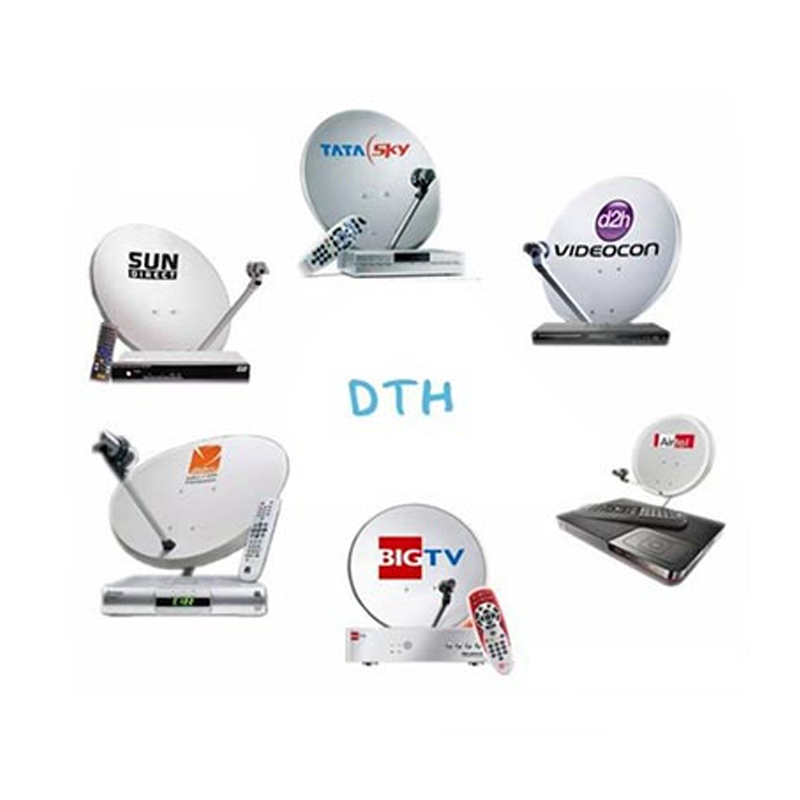
Tag: DTH

  • No relaxation on DAS Phase II; analogue switch-off in stages

    No relaxation on DAS Phase II; analogue switch-off in stages

    NEW DELHI: Information and Broadcasting Ministry Secretary Uday Kumar Varma today said that the cable television sector would gain much more in the long run from switchover to digital access system than direct-to-home (DTH) television.

    Speaking on the sidelines of the India Forum of the Cable and Satellite Broadcasters Association of India which he earlier inaugurated, Varma said that cable TV would be able to provide more value added services than being provided by DTH. He also said there was greater spectrum available to cable TV than DTH.

    Earlier while inaugurating the one-day meet on the theme of ‘Digital Visions and Dividends’, he said that there would be no extension of deadline of the second phase of switching off analogue signals on 31 March covering 38 cities.

    He claimed that the first phase covering the four metros had been launched successfully despite the court case in Chennai and the initial reluctance in Kolkata.

    Varma also claimed that 55 per cent of the Phase II cities had already been digitised and the multi-system operators (MSOs) had just over two million set top boxes in stock and another two million under procurement.

    The government was keen that indigenous production of STBs should be encouraged so that the country did not have to depend on countries like Korea and China and the boxes would be BIS compliant.

    Referring to Phase III of FM Radio, Varma said that the empowered Group of Ministers chaired by Finance Minister P Chidambaram had cleared the auctioning of 839 channels.

    He expressed confidence that all the auctions would be completed within one year and the government will earn revenue of Rs 15 billion.

    Casbaa CEO Christopher Slaughter also spoke on the occasion.

    Analogue switch off in stages

    Supriya Sahu, Joint Secretary in the I and B Ministry in charge of Broadcasting Policy, said at a session later that the government was contemplating an amendment to the DAS rules to go in for switch off of analogue signals in stages after Phase II commences.

    She said that some service providers had not given the access forms to the subscribers and this was causing concern, but the Telecom Regulatory Authority of India was examining the issue. It had issued show cause notices to many service providers and was holding a dialogue to ensure smooth switchover.

    She said teams of the Ministry were also visiting service providers who had failed to meet deadlines and were helping in creating subscriber awareness. At present, she admitted that revenue flow and consumer bills were still a problem but she was confident that Trai would soon sort this out.

    The biggest challenge, she said, was to reach out to every stakeholder and also convince the last mile operator of the benefits of digitisation. The availability of STBs at affordable prizes was another challenge.

    But she claimed that the progress in Phase II was smoother than in Phase I. Data was being collected every week and meetings were held regularly with MSOs on the progress.

    Answering a question, he wondered why the industry itself did not take the initiative to go digital and the government had to make it mandatory. She denied the claim that the government stood to gain through entertainment tax, as she said this was minimal as against the benefits to the industry. DAS protects the right of every user, she said.

    More Niche channels and VAS under DAS

    Trai’s Principal Adviser on Broadcasting N Parameshwaran said that one main benefit would be the growth of niche television channels.

    He admitted that subscriber forms had not been distributed and this was leading to problems relating to revenue sharing, but Trai was actively looking into this issue.

    Answering a question, he said there was enough place in the country for both DTH and cable TV.

    Doubling of Customs Duty unwise

    IndusInd Media & Communications Ltd managing director Ravi Mansukhani wondered why the government had doubled the customs duty on imported STBs at a time when an adequate number of indigenous boxes were not available. This would also complicate the issue since the imported boxes have to first get the BIS certification.

    DEN Networks Chairman and MD Sameer Manchanda said India had overtaken many other countries in undertaking DAS in a smooth manner despite complexities. Digitisation was irreversible and therefore all stakeholders had to get together to resolve the issues involved.

    Indian Broadcasting Foundation President and Multi Screen Media CEO Man Jit Singh said that the most crucial achievement was transparency in financial deals. He said it was necessary that MSOs are helped in putting up STBs as the average revenue per user (ARPU) was bound to go up. He also felt that the TV industry which was heavily dependent on advertising may also see a change in its revenue models.

    CSG International Vice President (Product management) Chad Dunavant said that the process had taken much longer in the United States. He also said that India had an advantage as it would be able to offer more VAS and already had more variety of channels.

    Raising of FDI Negated

    Star India President and General Counsel Deepak Jacob said the raising of foreign direct investment sector on the one hand and then coming down heavily on cross media ownership would create a major problem for growth.

    IndiaCast Group CEO Anuj Gandhi said the biggest challenge was to involve the last mile operator, while Essel Group President (legal affairs) Avnindra Mohan said the biggest advantage had been the change in mindset of the consumer. He also said that cable TV had greater bandwidth than DTH.

    He said that MSOs would work harder to make Phase II a success, while learning from the mistakes of Phase I.

  • MSOs have over 2 mn STBs in stock: Govt

    MSOs have over 2 mn STBs in stock: Govt

    NEW DELHI: The government has brushed aside claims that the second phase of digitisation in 38 cities by 31 March could hit a rough patch due to shortage of set-top boxes (STBs) in the marketplace. Providing fresh update, the government has said that multi-system operators (MSOs) have around 2.23 million STBs in stock while another 2.02 million are under procurement.

    A few days back, the government had claimed that the 38 cities had already gone through 55 per cent digitisation. Coupled with the new set of data, the government apparently feels that the second phase of digitisation should face no problems so far as availability of boxes go.

    Information and Broadcasting Ministry says while it is not responsible for seeding of the digital STBs, it had been constantly monitoring the preparedness for the implementation of digital addressable cable TV system (DAS) in the 38 cities of Phase II which comprise around 16 million television households.

    According to data received by the Ministry from the DTH operators and MSOs, a total of 8.77 million STBs have already been installed in Phase II cities as on 22 February. Out of the total of 8.77 million, DTH connections accounted for 4.07 million while cable STBs accounted for 4.7 million.

    The Ministry has set up a Task Force exclusively for Phase II cities to oversee and monitor the digitisation process. A public awareness Committee has also been constituted in the Ministry for spearheading awareness campaign and all TV channels have started to run a scroll informing consumers about the deadline for cable TV digitisation.

    Ministry sources said the STBs are being procured mostly from China and Korea, but some are also being obtained indigenously.

    The Consumer Electronics and Appliance Manufacturers Association (CEAMA) is also a member of the Task Force and is pushing the production of indigenous STBs.

    The Government announced a customs duty of ten per cent on imported STBs in the Union Budget in an attempt to encourage indigenous production.

  • Govt claims 55% digitisation achieved in Phase II

    Govt claims 55% digitisation achieved in Phase II

    NEW DELHI: Just two days after stakeholders expressed fears that imported digital set top boxes would become more expensive with the doubling of customs duty, the Information and Broadcasting Ministry claimed that over 55 per cent digitisation target has been achieved in the 38 cities set for switching off analogue by 31 March.

    According to data received by the Ministry from the direct-to-home (DTH) service providers and multi-system operators (MSOs), a total of 8.77 million set-top boxes (STBs) have already been installed in Phase II cities against the target of 16 million, registering an achievement of 55 per cent digitisation as on 22 February. Out of the total of 8.77 million, DTH connections accounted for 4.07 million while cable STBs accounted for 4.7 million.

    The Ministry said it had been constantly monitoring the preparedness for the implementation of digital addressable cable TV system in the 38 cities of Phase II.

    The Ministry has set up a Task Force exclusively for Phase II cities to oversee and monitor the digitisation process. A public awareness Committee has also been constituted in the Ministry for spearheading awareness campaign and all TV channels have started to run a scroll informing consumers about the deadline for cable TV digitisation.

    All India Radio (AIR) has also started broadcasting of the radio jingles on its national and regional networks for creating public awareness. Several other initiatives like SMS campaign, video spots and print advertisements etc. are on the anvil. The State Governments/UTs have already nominated nodal officers in 38 cities of Phase II. The Ministry had recently conducted a workshop for them.

    It is planned to organise a second workshop shortly to take stock of preparedness in Phase II cities. A regional workshop was also held recently at Bangalore to sensitize local MSOs, cable operators and other stakeholders.

    The Ministry had set up a Control Room during Phase I, which has continued to function to address the queries of consumers, cable operators and others. The Control Room which also has a toll free number has been receiving a number of calls from consumers of Phase II cities.

    In order to facilitate cable TV digitisation in 38 cities of Phase II, the Ministry has already issued provisional registration to 30 Independent MSOs to operate in Phase II cities. This would enable these MSOs to operate in their respective cities to provide digital cable TV services.

    For the second phase, the 38 specific cities and areas which have been listed in the notification are – Bangalore, Hyderabad, Ahmedabad, Pune, Surat, Kanpur, Jaipur, Lucknow, Nagpur, Patna, Indore, Bhopal, Thane, Ludhiana, Agra, Pimpri-Chinchwad, Nashik, Vadodara, Faridabad, Ghaziabad, Rajkot, Meerut, Kalyan-Dombivali, Varanasi, Amritsar, Navi Mumbai, Aurangabad, Solapur, Allahabad, Jabalpur, Srinagar, Visakhapatnam, Ranchi, Howrah, Chandigarh, Coimbatore, Mysore and Jodhpur.

    MSOs, however, believe that there will be a 3-6 months delay in Phase II digitisation. The STB shortage in the market is apparent, they point out.

    Even though digital STBs have been deployed in three of the four metros that came under Phase I digitisation, MSOs have been struggling to get billing implemented which would enable subscribers to pay according to the channel packages they select. The other issues like payment to broadcasters and collecting subscription money from the local cable operators have yet to be sorted out.

  • How the industry looks at the customs duty hike on STBs

    How the industry looks at the customs duty hike on STBs

    MUMBAI: With the country moving towards digitisation, the last thing that multi-system operators (MSOs) and direct-to-home (DTH) companies would have wanted is doubling of import duty on foreign manufactured set-top boxes (STB).

    However, finance minister Palaniappan Chidambaram did just that when he stood to present the Budget by increasing the customs duty on STBs to 10 per cent from 5 per cent to provide fillip to domestic manufacturers.

    The minister’s intention, though novel, will have repercussions for the industry in the short term, reckon industry experts. It will drive up the price of STBs and, with intense competition in the marketplace, it is highly unlikely that the MSOs and DTH service providers would be able to pass it on to the consumers.

    An overwhelming majority of the STBs are imported while the indigenous ones are negligible and inadequate to meet the industry’s demand which has only gone up with the roll out of cable television digitisation.

    That aside, the decision augurs well for the industry in the long run provided the Indian STB manufacturers rise to the occasion by matching to the growing demand of DTH and MSO companies.

    MSOs rue the duty hike

    Coinciding with the second phase of digitisation across 38 cities, the MSOs have found the government‘s decision to hike the customs duty on STBs as “utterly nasty”. They are already financially stretched in the short term with the need to subsidise the boxes to their cable TV subscribers while content costs have been on the rise and there is a growing demand among their local cable operators (LCOs) to lift their revenue share above the Telecom Regulatory of India‘s (Trai) prescription for DAS (Digital Addressable Systems) markets.

    “We are jacked because we need the STBs for Phase II digitisation and can‘t wait for the local manufacturers to gear into action. While there is a mandate for digitisation, there is not a single thing done by the government to incentivise us. We had asked for tax holiday and we are not even given industry status. On the contrary, the customs duty has been hiked,” says Digicable managing director and chief executive office Jagjit Kohli.

    Tagged along with the countervailing duty, the net impact of the hike in STB prices would be close to six per cent. For Phase II, industry estimates put the STB requirement to be around 15-16 million.

    Den Networks CEO SN Sharma feels that the government’s decision is futuristic, although it will have an impact in the short-term on the price of STBs. “In the long run, the move will encourage local manufacturers to scale up their business which would also help us to save on costs like freight, insurance and transportation etc. However, in the short term it will lead to an increase of Rs 50-60 per STB,” he says.

    DTH operators also feel the pinch

    Bogged down by heavy taxation and high subscriber acquisition costs, the DTH companies wanted relief on the customs duty side.

    Tata Sky MD & CEO and DTH Operators Association of India (DOAI) president Harit Nagpal feels that the government’s decision is ill-timed and will rob the DTH operators of $20 million annually that they have to shell out due to rise in customs duty.

    “We (DTH operators) hope that the government will roll back the hike in customs duty. The timing of the decision is not right as there is huge demand for STBs and there are no proven manufacturers of quality STB in the country,” says Nagpal.

    He also bemoans the fact that DTH operators who are already paying two-three times the normal tax will be further burdened by this hike.

    “We would love to buy indigenous STBs as it would save us from foreign exchange fluctuation, transportation, and import duty. However, the STB manufacturing industry is too small at this stage and we import majority of our STBs,” he adds.

    The DOAI had through a memorandum requested the Finance Minister for a duty waiver. However, the government granted the wish of local STB manufacturers who had demanded a hike in customs duty to give a fillip to the local industry.

    Airtel digital TV CEO Shashi Arora feels that the government’s decision has dampened the spirits of the DTH operators who are already reeling under three layers of taxation.

    “I don’t know what the government is thinking, but this is a cost which we could have done away with. The industry imports 95 per cent of STBs as there are hardly any Indian manufacturers. The industry imports one million STBs every month,” Arora states.

    Will the price hike be passed on to the consumers? “Too soon to say anything,” says Arora.

    However, not everyone is grieving. Videocon d2h, which manufactures its own boxes, is one of them. “We won’t be impacted by the government’s decision as we manufacture STBs locally,” says Videocon d2h CEO Anil Khera.

    A media analyst believes that the industry is grieving more than what the grim reality is. “There is a negative impact in the short term but it is not as if it is casting doom on the industry. The financial impact of a 5 per cent rise on STBs won‘t be substantial to deter digitisation,” he says.

  • DigiVive partners with Videocon to launch mobile TV service

    DigiVive partners with Videocon to launch mobile TV service

    NEW DELHI: DigiVive and Videocon Mobile Phones have jointly launched the mobile TV service – nexGTv, an embedded application in Videocon VT71 and Videocon VT10, enabling owners of these Videocon tablets to enjoy TV on the move at any given point of time.

    The Videocon Mobile Phones division has addressed the increasing consumer demand for a high quality and trusted product in the Tablet space by recently launching 7” (Videocon VT71) and 10” (Videocon VT10) tablets.

    This will enable users to view over 100 live channels, Replay TV and plethora of video on demand along with latest launched nexGTv music channel. This partnership is all set to take the concept of mobile TV to the masses. Currently, nexGTv caters to more than 8.5 million users and this will further help expand the market.

    DigiVive director G D Singh said, “We are excited to partner with Videocon Mobiles for embedding nexGTv app in their recently launched tablets. This tie-up is another step towards our objective of ‘massification of entertainment’ as this will open new avenues for reaching out to many potential users. With nexGTv expanding its reach, now more and more users can enjoy what we like to call, their ‘personal DTH’. With this tie-up, we plan to increase our subscriber base substantially.”

    Elaborating on the partnership Khalid Zamir, Head Product Planning & Development, Videocon Mobile Phones said, “We are glad to partner with DigiVive’s popular mobile TV service – nexGTv for an enhanced user experience on our tablets. VT71 and VT10 are our recent launches in the tablet space, and bring to our users the latest technology at affordable prices. nexGTv is a successful mobile TV service provider and hence it made sense for Videocon to partner with them for this valued added service on our tablet devices.”

    According to a release, nexGTv has maintained its top position on various online stores and on other app stores it remains among top five apps in the entertainment category. On an average there are 20,000 downloads every day of DigiVive’s nexGTv mobile TV service. nexGTv witnessed huge traction during cricketing action and the average new user toll is increasing day-by-day, the statement added.

  • Kamal Haasan’s Vishwaroopam crosses Rs 1 bn mark

    Kamal Haasan’s Vishwaroopam crosses Rs 1 bn mark

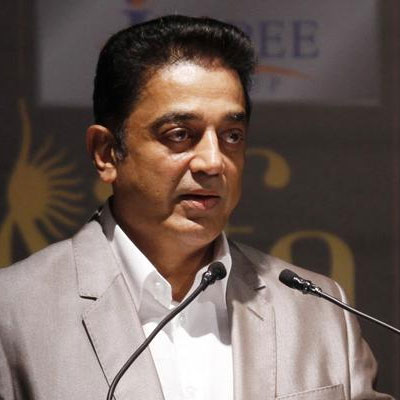
    MUMBAI: Controversies pay in the film world. For Kamal Haasan, it must have been worth swallowing all the problems his movie Vishwaroopam generated over its proposed release on the direct-to-home (DTH) platform ahead of the theatrical debut. Even as Haasan had to concede to the powerful film exhibition community and defer the DTH release, his much talked about magnum opus action thriller has crossed the Rs one billion mark at the box office.

    Actor Rahul Bose tweeted the milestone achievement on the micro blogging website, “Just received figures of the all India box office collections of Vishwaroopam. 120 crores and counting. Superb! Vishwaroopam‘s the first film I‘ve been a part of that‘s made over 100 crores. Congratulations to the team and mr haasan especially!”

    Bose plays the antagonist in the film. Other stars include Pooja Kumar, Andrea Jeremiah and Shekhar Kapur.

    The movie has been marred with controversies even before its release. The first tangle it got itself into was when actor-director Hasaan decided to release the movie on DTH platform before its theatrical release. Just when the issue of Vishwaroopam‘s release was resolved, Muslim bodies in Tamil Nadu opposed the movie since it showed the community in bad light which resulted in the movie being banned from release in Tamil Nadu.

    The film released worldwide on 25 January but in Tamil Nadu it hit the theatres as late as 7 February. Despite the delays and controversies, the film seems to have caught the fancy of the audiences.

    The film was also released in Hindi by the name Vishwaroop. This version, though, has failed to attract audiences since it has managed to rake in just Rs 117.5 million in its first week.

  • Times Group channels hop on to OneAlliance bouquet

    Times Group channels hop on to OneAlliance bouquet

    MUMBAI: MSM Discovery (MSMD), the distribution joint venture between Sony‘s Multi Screen Media (MSM) and Discovery Communications, has entered into a multi-year distribution deal with Times Television Network (TTN) to strengthen its TheOneAlliance bouquet.

    The move comes close on the heels of IndiaCast-DisneyUTV JV that further consolidated the Indian television distribution space. The consolidation will help broadcasters to grow their pay-TV business as India moves towards digitisation of cable TV networks.

    The news and entertainment channels of TTN – Times Now, Movies Now, ET Now and zoOm – will now be exclusively distributed in India for collection of subscription revenue over the cable (analogue and digital), DTH, IPTV and HITS platforms as a part of TheOneAlliance bouquet. The deal between TTN and MSMD comes into effect from 6 February.

    The channels were earlier distributed by Prime Connect, the distribution joint venture between Times Group and media entrepreneur Yogesh Radhakrishnan.

    In a related development, Radhakrishnan has moved the Delhi High Court. The matter came up for hearing even today and will now resume on Monday.

    “The channels have terminated their distribution contract with Prime Connect and moved on to TheOneAlliance bouquet. This has weakened the JV and even made it redundant in that sense as it has no Times Group channels,” an industry source said on condition of anonymity.

    TTN will, however, undertake the marketing and channel penetration plans independently.

    Strengthening the OneAlliance bouquet

    The addition of TTN channels will strengthen TheOneAlliance’s English news offering which will include Times Now and TV Today Network’s Headlines Today. The bouquet will also have a business news channel in ET Now.

    The English movie channel offering will also get a boost with the addition of Movies Now as the bouquet already has Sony Pix. Further, zoOm will combine well with Hindi movie channel Max.

    MSMD President Rajesh Kaul says that the addition TTN channels will take the bouquet strength to 28 from 24 and more importantly will maintain the quality of the bouquet.

    “These are top channels in their respective categories and adding them will certainly strengthen the bouquet,” avers Kaul.
    Kaul said the immediate priority is to increase the penetration of TTN channels and monetise it in metro markets where these channels are well distributed.

    TTN MD and CEO Sunil Lulla said, “The Times Group and Multi Screen Media share a similar perspective on the broadcast industry and together we are poised to help grow the industry by ushering in transparency, value creation across the chain and by building strong brands.”

    TTN said its channels reach over 100 million viewers in 30 million urban Indian households.

    “As part of TheOneAlliance bouquet our channels will benefit from penetration in more homes and availability on a wider choice of packages. TTN and MSMD will together be able to effect realisation of a fair share of subscription revenue as well as grow ARPUs (Average Revenue per User) of our premium content offerings,” added Lulla.

    MSM CEO Man Jit Singh said, “TheOneAlliance is a robust distribution force and offers the best of entertainment to viewers. Addition of the TTN channels will further strengthen the bouquet and together we can ride the digitisation wave to maximize the true potential of the business.”

    MSMD already distributes 24 channels across genres including Hindi General Entertainment, Sports, Movies, Factual Entertainment, News, Bollywood, Reality, Action, Animation, Adventure and Lifestyle. Apart from MSM and Discovery channels, TheOneAlliance also distributes TV Today Network and Neo Sports broadcast network channels.

  • Airtel Digital TV Q3 operating profit up amid strong subscriber growth

    Airtel Digital TV Q3 operating profit up amid strong subscriber growth

    MUMBAI: Airtel Digital TV, Bharti Airtel‘s direct-to-home (DTH) arm, continued to post operating profit for the second straight quarter amid healthy net subscription additions and a rise in ARPUs while churn rate has improved.

    The operating profit was at Rs 147 million in the fiscal third-quarter ended 31 December, up from Rs 33 million in the trailing three-month period.

    Airtel Digital TV added net 439,000 subscribers compared to a weak earlier quarter in which it grew just 55,000 new customers.

    “Digitisation and the festive season helped us grow our subscriber base in the third quarter. We expect this quarter (beginning January) to be good. Some of the gains from digitisation (38 cities by 31 March as mandated by government), though, will be captured in April,” Airtel Digital TV chief executive officer Shashi Arora told Indiantelevision.com.

    Airtel Digital TV‘s subscriber base grew 6 per cent to total 7.9 million.

    The company narrowed its fiscal third quarter loss before tax and interest to Rs 1.83 billion from Rs 2.23 billion in the earlier quarter. Revenue grew 29 per cent to Rs 4.28 billion from Rs 3.94 billion.

    A striking feature this quarter has been how Airtel Digital TV has lifted its average revenue per user (ARPU) while at the same time improving its churn rate. ARPU increased 5 per cent to Rs 186 from Rs 177 in the previous quarter. The monthly churn decreased to 1.3 per cent in the third quarter from 1.9 per cent.

    The improvement in ARPU has been achieved through product innovations, pricing corrections and upselling.

    “Our HD (high definition) contribution is relatively higher than the other DTH companies. This has led to a rise in ARPUs for us,” said Arora.

    Dish TV, India‘s largest DTH operator by subscribers, marginally increased its ARPU to Rs 160 from Rs 159 in the trailing quarter.

    During the quarter ended 31 December, Airtel Digital TV incurred a capital expenditure of Rs 1.35 billion in digital TV services.

  • Viswarooopam to be released in Tamil Nadu on 7 Feb

    Viswarooopam to be released in Tamil Nadu on 7 Feb

    NEW DELHI: Actor-filmmakar Kamal Haasan‘s Viswaroopam is being released in Tamil Nadu on 7 February following the lifting of the ban by the state government.

    In an announcement, Haasan thanked the Tamil Nadu government for all the help and moviegoers, fans and people in Tamil Nadu and all over India for supporting him.

    He said the cheques and money which his supporters sent to him would be returned.

    The film was first announced for release on January 11, after a premiere on three direct-to-home (DTH) platforms, but this was withdrawn after protests by the theatre owners’ organisation in the state, and the release was postponed to 25 January.

    Thereafter, the film was banned by the state government on 23 January which pointed out that the release of the movie would create law and order issues as a section of the Muslims had raised objections.

  • Zee TV is the most trusted Hindi GEC brand

    BENGALURU: Zee TV, despite a slide in its ranking, was ahead of all Hindi GECs in the third edition of The Brand Trust Report India Study 2013, a study of India‘s most trusted brands by the Trust Research Advisory (TRA).

    Zee TV fell six notches to 231 from last year’s 225. Star Plus saw a huge gain in ranking at 287 from 584 last year, but was still behind Zee TV.

    Tata Sky (DTH) moved up 156 places to rank 51 from last year’s ranking of 207. DISH TV (DTH) was ranked within the top 500 for the first time in 2013 with a ranking of 180.

    In entertainment, the most trusted brands are PVR (Cinema-Display) and Eros (Cinema-Other). The Times of India followed by DNA leads the Media – Print category.

    TRA says it expanded the scope of its study to 16 cities for the 2013 report with more than 13,000 hours of fieldwork which resulted in 3 million data points and 19,000 unique brands of which about 1,100 brands across 211 categories find mention.

    The top two contenders for Media-TV are Aaj Tak and ABP News (Hindi). Aaj Tak moved up 47 places to 121 in 2013 from 168 in 2012. ABP News (Hindi) entered the 500 most trusted brands list at 214. NDTV saw a fall of 41 places to 221 as compared to last year’s rank of 180. Discovery too saw a steep fall of 73 places to 278 as compared to last year’s 205 rank.

    For last year’s edition, TRA claims a readership of around 10,000 from about 400 copies of the 1000 copies published, each priced at Rs 10,000. This year TRA expects a readership of around 25,000, with the number of copies to be published undecided as of now. The price for the 2013 report has been enhanced by 40 percent to Rs 14,000 each. The target audience for the report is the brands who use the report in various ways, including improving upon the 61 attributes divided across 10 brand behaviors, the foundation of which lies on three fundamental layers of trust says TRA.