Tag: DTH

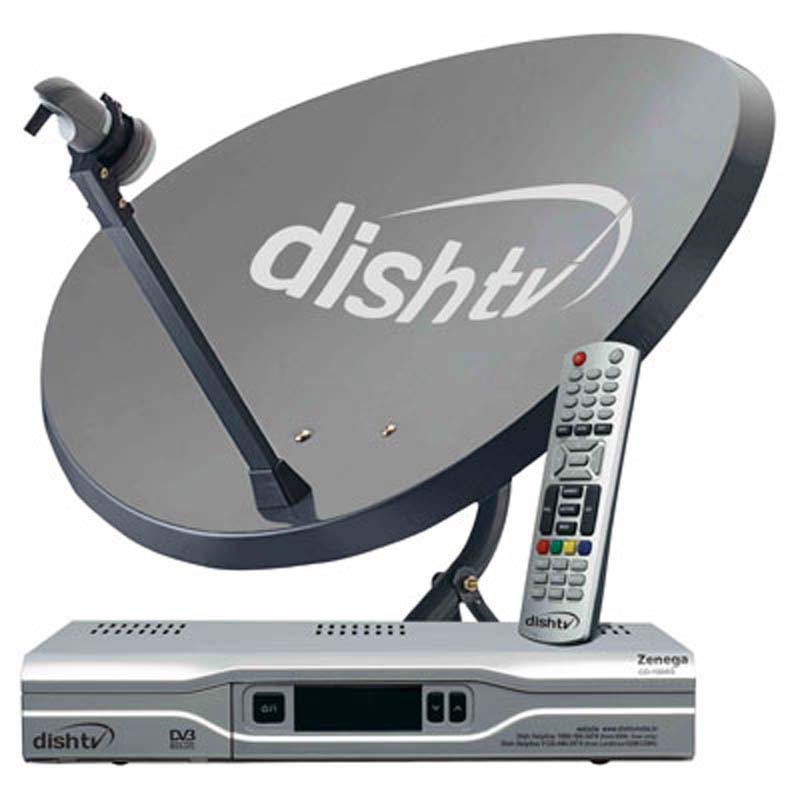
  • Dish TV records 11.2% revenue growth for Q1-2014; higher Arpu’s, lower losses

    Dish TV records 11.2% revenue growth for Q1-2014; higher Arpu’s, lower losses

    BENGALURU: India’s largest DTH services provider Dish TV India Limited (Dish TV) reported first quarter fiscal 2014 standalone operating revenues of Rs 578.4 crore, recording 11.2 per cent growth over the Rs 519.95 crore operating revenues it clocked during Q1-2013. Also, its Q1-2014 standalone revenues were higher by 4.1 per cent than the Rs 555.4 crore the company reported for Q4-2013.


    Let’s take a look at the other figures for Q1-2014


    EBITDA of Rs 121.7 crore was lower by around 22 per cent for Q1-2014 as against EBITDA of Rs 156.6 crore the DTH provider reported for Q1-2013. EBITDA margin for Q1-2014 stood at 21 per cent. It had reported a 29.9 per cent margin for Q1-2013. However, Dish TV’s net loss was down to Rs 30.4 crore as compared to Rs 32.3 crore in the corresponding quarter last fiscal (Q1-2013) and Rs 43.6 crore in the previous quarter (Q4-2013).


    Dish TV’s primary expenses include cost of goods and services, personnel cost, administrative cost, advertisement expenses and selling expenses. Expenditure at Rs 456.7 crore was significantly higher by around 25 per cent than the Rs 364.4 crore the company reported for Q1-2013 and 4.9 per cent more than the Rs 435.4 crore it had reported for the previous quarter (Q4-2013).


    Dish TV’s advertising expenses for Q1-2014 at Rs 30.7 crore (which were 5.7 per cent of revenues of Q1-2104) were more than double (127.4 per cent higher) the Rs 13.5 crore during Q1-2013, and 84.9 per cent higher than Rs 16.6 crore during Q4-2013. It’s selling and distribution expenses during Q1-2014 at Rs 59.3 crore were also higher by 14.9 per cent than the Rs 51.6 crore during Q1-2013 and 2.9 per cent more than the Rs 57.6 crore in Q4-2103.


    Dish TV saw a gain of around two lakh in net number of subscriptions during Q1-2014. It had added 5.04 lakh subscriptions during Q1-2013. Subscription revenues for Q1-2014 were up 15.9 per cent at Rs 528 crore as compared to Rs 455.6 crore during Q1-2013 and higher by 5.6 per cent than the subscription revenues in Q4-2013.


    ARPU for the quarter increased 5.1 per cent to Rs 165 resulting in a 15.9 per cent y-o-y increase in subscription revenues. Dish TV reported a free cash flow of Rs 48.4 crore for Q1-2014 as compared with Rs 22 crore in Q4-2014 and Rs 65 crore for FY-2013.


    Dish TV chairman Subhash Chandra said, “In an ever changing world, the Indian media industry is keeping pace. Digitisation, which happens to be the most talked about, has still a lot to achieve even in the digitized towns and cities. Though it is comforting to see the evolution towards a transparent distribution environment, the distribution industry needs to act fast to leverage the opportunity to weed out the long standing inefficiencies in the system.”


    “Too much focus on box seeding has diluted the addressability part of the digitisation mandate. In such a scenario, Dish TV’s focus on quality additions is a counter-intuitive move which has started delivering encouraging results. The first quarter saw the company deliver strong free cash flows while maintaining healthy customer retention and investing in brand equity,” added Chandra.


    Dish TV managing director Jawahar Goel said, “In line with our expectations, pack price hikes and improved subscriber quality in the recent months resulted in a strengthened ARPU. On the expenses front, higher investment in marketing, brand building and seasonal sports driven content along with the impact of a weak rupee on dollar denominated costs, resulted in a sequentially flat EBITDA margin.”


    “We remain committed to add quality subscribers who would be value accretive to the business. Our successful initiation of a series of entry level price hikes, even in a not so perfect macro environment, demonstrate our pricing power and resolve to eliminate subsidies in the medium term. At the same time, we continue to expand our distribution network and consider ourselves amongst the best placed to reach out to customers who fit the bill. We are also making strong progress towards lining up additional transponder capacity to beef up our existing, industry leading bandwidth. We intend to leverage the additional capacity for distributing localised content as well as strengthen carriage revenues,” said Goel.


    Commenting on the persistent weakness in the rupee and its impact on the financials, Goel said, “A flagging rupee has been an industry wide concern since some time now. To contain further widening of gap between the cost of the consumer premises equipment (CPE) and amount realized from the customer due to rupee depreciation, Dish TV initiated an acquisition price hike of Rs 250 on 4th July. Sensing the need, other players in the DTH industry followed suit within the next few days.”


    “We are evaluating possibilities for improvement in hardware economics of CPE sourced from India, given a depreciating rupee. We have also been considering options with our overseas suppliers to commence production at a base in India,” he added.


    Talking about Dish TV’s overseas ventures, Goel confirmed, “Work on Dish TV Lanka (Pvt.) Limited, the company’s subsidiary, is progressing as per plan. Since it is going to be a zero subsidy model, it makes us all the more excited about the expansion.”


    With a sustained focus on strengthening the balance sheet, Dish TV says that it looks forward to retiring a significant portion of its outstanding debt. The company claims that it is well positioned, through its internal accruals, to repay approximately Rs 750 crore outstanding debt through the current fiscal.
  • SES and MNC sky vision sign capacity deal for DTH market growth

    SES and MNC sky vision sign capacity deal for DTH market growth

    MUMBAI: SES and MNC Sky Vision, Indonesia‘s premier satellite Pay-TV provider with its well-known brand, Indovision, has announced an agreement to provide capacity on the SES-7 satellite to support Indovision‘s future Chinese-language direct-to-home (DTH) package.

    The multi-transponder and multi-year deal provides Indovision with access to the Ku-band capacity aboard SES-7 at the prime orbital location of 108.2 degrees east. Indovision intends to offer more than a dozen Chinese language channels using the capacity, which would allow Indovision to reach a niche audience segment in Indonesia‘s fast-growing pay-DTH market, beyond its current base of more than 2 million subscribers. Use of the capacity by Indovision is subject to regulatory approval.

    Rudy Tanoesoedibjo, CEO of MNC Sky Vision, said, “We see continued growth in the pay-DTH market in Indonesia and are delighted to be able to leverage SES‘ global network and deep industry expertise to broadcast more content to meet the diverse needs of our subscribers in Indonesia.”

    “The increasing maturity of the Indonesian pay-DTH market requires pay-TV operators to react swiftly in meeting the demands of different audience segments, as Indovision has done with the new Chinese-language pay-DTH offering. We are pleased to be the satellite operator of choice for Indovision and look forward to supporting Indovision‘s fast and robust growth strategy in this important market,” said SES sr. VP commercial Asia-Pacific and Middle East Deepak Mathur.

  • Cisco providing pay TV to 150 million viewers in India

    Cisco providing pay TV to 150 million viewers in India

    NEW DELHI: Cisco today claimed it was now enabling a rich and advanced TV experience for over 150 million viewers in India, using the industry estimated average of five people per household.

    Thus, it said it had established itself as the leading provider of enhanced TV viewing experiences to more than 30 million Indian homes, a milestone that reinforces the company’s leadership in the digital pay-TV solution market in India.

    Cisco service and solution platforms are in the prime position to address the changing needs of pay-TV operators now and into the future, with more than 10,000 R&D experts in Bangalore. It claimed that the company currently enjoys a leading market share in conditional access and middleware. (Source: MPA Media Route, 26 February 2013).

    Cisco claimed it is a trusted pay-TV technology partner for more than 100 operators worldwide, with leading direct to home (DTH) and cable operator customers in India including ADN, Airtel Digital TV, Asianet, Atria, CCN, Darsh Digital, DEN Networks, Fastway, GTPL, Hathway, JAK Communications and Tata Sky, to name a few.

    Cisco is fully committed to supporting the cable TV industry to meet the government mandate to roll out digital addressable systems in a phased manner by 31 December 2014.

    India is the leading DTH satellite market in Asia Pacific with the most subscriber homes and is second only to the US DTH satellite market, which it is expected to overtake in the next few years.

    Cisco is committed to delivering a host of world-leading, affordable and innovative solutions and services to help its satellite and cable customers to differentiate their services in their markets in India, which has an estimated 135 million pay-TV homes.

    Cisco India and SAARC senior VP sales Jeff White: “The Indian pay-TV industry is one of the fastest growing and most dynamic in the world. India now accounts for nearly a third of Cisco‘s subscriber homes in the Asia Pacific region. We are excited about our leadership in the industry, deep commitment to our customers and sharp focus on innovation in India.”

    Cisco service provider video technology group senior VP & GM Jesper Andersen said: “Achieving the milestone of over 30 million digital homes in India is a testament to our commitment to India over the last 18 years and our partnerships with some of the most successful cable TV and DTH satellite platforms in the country. The Indian pay-TV industry is one of the fastest-growing and most dynamic in the world. We confidently expect tens of millions more households to benefit from Cisco’s enhanced TV-viewing experiences, as the demand for advanced services and applications surges.”

  • Pay-TV revenue growth slowing down

    Pay-TV revenue growth slowing down

    MUMBAI: The days of rapid growth in pay-TV revenues are over, according to a Digital TV Research report, which predicts that global revenues from subscriptions and on-demand TV and movie services will rise just 3.2 per cent this year, with growth rates slowing to below 2 per cent from 2015 onwards.

    In 2018, Digital TV Research expects pay-TV revenues to be $203 billion, just $19 billion higher than the 2012 levels. In 2018, DTH will be the dominant platform by revenues, generating $96.7 billion, followed by $79 billion for digital cable and $21.3 billion for pay IPTV. This year marks satellite moving ahead of cable for the first time, accounting for 45.9 per cent of revenues.

    The US will remain the DTH market leader, accounting for 43.5 per cent of satellite TV revenues last year. This is expected to slip to 38.7 per cent in 2018. The biggest gains in DTH revenues are expected in Brazil and India. Cable, meanwhile, peaked in 2012 with revenues of $86.9 billion this is expected to drop to $82.6 billion in 2018.

    While pay-TV revenues will more than double in 18 markets between 2012 and 2018 largely in – Africa, plus Indonesia and Vietnam – they will fall in 15 countries, including the US.

  • Airtel Digital TV DTH adds Freemium PPV movie service in its kitty

    Airtel Digital TV DTH adds Freemium PPV movie service in its kitty

    MUMBAI: Though the concept of pay per view (PPV) isn‘t new to direct to home (DTH) operators in India, Airtel has tweaked that idea further. The service, known as Freemium PPV is essentially the ad-supported version of the PPV, while giving the customers the option of viewing the content without paying for it, or to pay for it and remove the advertisements.

    The free movie viewing will be available on 3/4 screen space, while L-shaped advertisements will be placed on the remaining 1/4th part. Anyone who wants to view the movie in full screen can do so, by paying the particular fee applicable for that particular movie. Airtel has timed the launch of this service to coincide with the celebrations for 100 years of cinema, and is the first DTH operator in India to launch such a service.

    The Freemium PPV service is available on channel no 155 on the Airtel Digital TV DTH platform, on standard, high definition and high definition recorder set top boxes.

    This is the first of its kind service, which gives customers the flexibility of either viewing the movie for free, or paying for it and getting an ad-free experience. If a consumer does watch it for free, the broadcaster still gets revenue for the advertisement, and the brand that is advertising gets its placement.

    At the moment, other operators like Tata Sky offer PPV movie channels, where you pay for a movie, or the viewing is blocked. Videocon d2h, on its part, runs three movie channels at a flat monthly subscription price, including d2h Cinema that shows relatively recent Bollywood releases.

  • India’s Pay TV market to create a demand of 140 million smart cards during 2013-2018

    India’s Pay TV market to create a demand of 140 million smart cards during 2013-2018

    MUMBAI: MARC Group in its latest report entitled “Smart Card Industry in India: SIM, Identity, Banking, Transport, Healthcare, Pay TV, Loyalty & PDS” expects India‘s Pay TV market to create a demand of 140 million smart cards during 2013-2018. Findings from the report suggest that with 155 million subscriber households in 2012, India is the third largest TV market after the US and China. TV signals in India are currently distributed in analogue as well as in digital and terrestrial formats. Most cable operators in the country are providing analogue TV service while all DTH operators are providing a digital TV service.

    The report found that the government of India amended the Cable Television Networks (Regulation) Act in October 2011 to announce implementation of a phase-wise digitisation programme of pay TV services throughout the country. Findings from the report suggest that this would result in all cable TV households to receive digital TV signals through a set top box (STB). As part of digitisation, every cable operator will be legally bound to transmit digital signals, which can be received at the subscriber‘s home only through a STB. Since smart cards are required in each STB, the growth in STB sales is expected to create a huge opportunity for smart cards in India.

    This study, an updated and far more extensive and analytical version of the 2011 study, provides and draws upon a comprehensive analysis of every major smart card segment in India. Key metrics and events such as smart card requirements, current and future volume and value demand, key smart card projects, project implementation timelines, success and risk factors, costs, etc have been comprehensively analysed in this report. This study aims to serve as a guide for investors, researchers, consultants, marketing strategists, and all those who are planning to foray into the Indian smart cards market in some form or the other.


  • SNL Kagan Survey 2012: Videocon d2h is world’s No 1 DTH player in new subscriber additions

    SNL Kagan Survey 2012: Videocon d2h is world’s No 1 DTH player in new subscriber additions

    MUMBAI: The sky is the limit it seems for Videocon d2h, the direct to home arm of the Videocon group. It apparently has unknowingly managed a unprecedented record of adding the highest number of gross subscribers in 2012 in the DTH category globally.This is one of the findings from a piece of research carried out by US research agency SNL Kagan on leading pay TV operators in the world. 

    According to the study Viideocon d2h, added 2.33 million subscribers in 2012, while Dish TV added 2.2 million subs and Tata Sky 1.9 million. As compared to that, the next highest additions in 2012 were Russian DTH firm Tricolor which added 1.29 million subscribers and Sky Brasil and Sky Mexico with 1.251 million new subs and 1.12 million sub additions.

    One of the youngest Indian DTH operators, the company was buoyed by this news. It says the term, ‘The Fastest Growing DTH Service provider‘, now assumes greater impetus and significance due to the global survey results.

    Says Videocon group director Saurabh Dhoot: “Videocon d2h has been constantly topping the charts with highest number of additions in the Indian scenario but achieving this on a global scale that too on an annual basis, is phenomenal and overwhelming. We have always raised the bar in various parameters in the category and this provides another instance for the same. Through all our endeavours we will continue adding value to our customers.”

    Adds Videocon d2h CEO Anil Khera: “This is a very proud moment for us as a company. We have not only maintained our lead within the country but have outshined even global competition. I am sure such an accolade will provide a strong motivation to our employees to raise the company‘s flag even higher. It is because of the belief that our customers have placed on the brand that we are able to achieve such success. We aim to delight them always with our services.”

    Also Read: 
    Indian pay TV operators making their mark globally: researcher SNL Kagan

  • Indians among top operators providing broadband in 2012

    Indians among top operators providing broadband in 2012

    NEW DELHI: China, India and the US accounted for 50 or nearly half of the 106 top operators, with 27 entities based in China and 12 in India.

    Media and communications analysis specialist SNL Kagan has compiled a database of 106 major operators serving no fewer than two million video subscribers or one million fixed-line broadband subscribers at year-end 2012 to facilitate a global comparison of the world‘s largest video and broadband providers.

    The United States came third with 11 operators, followed by France, Germany, South Korea, Brazil and Mexico, each with five.

    American cable giant Comcast Corp remained the world‘s largest pay TV provider as of year-end 2012 with 22 million video subscribers, while Chinese telco incumbent China Telecom was the top fixed broadband provider, reaching 90.1 million high-speed internet customers.

    On a regional level, China‘s ongoing cable consolidation and India‘s continued DTH surge have produced many top pay-TV operators in the Asia Pacific region with gigantic subscriber bases.

    At end-2012, the top 10 Asia Pacific operators each served more than 10 million video subscribers and still are on track for further growth.

    Strong DTH uptake has also taken place in Latin America, where top providers SKY Brasil, Sky Mexico and America Movil‘s Claro made the most aggressive subscriber net additions in 2012 in the region. In the advanced territories of North America and Western Europe, telecom providers are outpacing incumbent cable operators in terms of subscriber growth, with IPTV services from AT&T Inc, Verizon Communications Inc, France Telecom Group and Deutsche Telekom AG registering the most net additions, while cable giants such as Comcast Corp, Rogers Cable Inc, Kabel Deutschland GmbH and Numericable SAS continued to suffer subscriber loss.

  • Netflix dominating the subscription video-on-demand (SVOD) subscribers market

    Netflix dominating the subscription video-on-demand (SVOD) subscribers market

    NEW DELHI:The Telecom Regulatory Authority of India (TRAI) seems to be getting hyperactive. Just like its head the ever so aggressive Rahul Khullar.

    In the past month or so it has been releasing consultation papers and regulations like it is in a hurry. Today, it released another two draft regulations. Both relate to the interconnection agreements that broadcasters sign with distributors such as Cable TV, DTH and IPTV operators.

    Entitled the “Telecommunication (Broadcasting and Cable Services) Interconnection (Digital Addressable Cable Television Systems) (Second Amendment) Regulations, 2013” and the draft “Telecommunication (Broadcasting and Cable) Services (Fourth) (Addressable Systems) Tariff (Second Amendment) Order 2013,” they seek to amend some regulations that TRAI had passed earlier in relation to tariffs and interconnect agreements in earlier years. (Earlier, TRAI had notified the Interconnection Regulations for DAS dated 30 April 2012 as amended on 14 May last year and the Tariff Order applicable for the Addressable Systems dated 21 July 2010 as amended on 30 April last year).

    The amendments it has proposed state:

    * Multi system operators (MSOs) cannot seeks signals of a particular TV channel from a broadcaster under ‘must provide‘ clause while at the same time demanding carriage fee for carrying that channel on its distribution platform.

    * No minimum channel carrying capacity has been prescribed for the MSOs. However, the MSOs are mandated to carry the channels of broadcasters on non-discriminatory basis under the ‘must carry‘ provision.

    * The service providers of the addressable systems are allowed to price and package their offering of channels, however, they are required to comply with the modified twin conditions, as proposed in the draft amendment to the tariff order. These twin conditions are (a) the a-la-carte rate of a pay channel forming part of a bouquet shall not exceed two times the a-la carte rate of the channel offered by the broadcaster at wholesale rates for addressable systems (b) the a-la-carte rate of a pay channel forming part of a bouquet shall not exceed three times the ascribed value of the pay channel in the bouquet. The TRAI says it is doing this to ensure that the a-la-carte rates offered to the subscribers are reasonable vis-? -vis the bouquet/package rates.

    *As in the case of pay channels, operators can specify a minimum subscription period, not exceeding three months, for Free-to-Air (FTA) channels subscribed on a-la-carte basis by the subscribers.

    *Subscribers are free to choose channels on a-la-carte basis or bouquet/package basis or any combination of a-la-carte and bouquet/package.

    *Channels, such as HD orMUMBAI: According to The NPD Group, a global information company, growth in watching television programming is driving subscription video-on-demand (SVOD) viewership, and Netflix continues to clearly dominate the category.

    According to NPD‘s VideoWatch VOD report, in the first quarter of the year the number of viewers watching television shows using SVOD services increased by 34 per cent, compared to the same quarter year-ago. NPD‘s VideoWatch Digital tracking shows Netflix dominating the sector, with a 90 per cent share of video-streaming units during the first quarter, which was four percentage points lower than last year.

    In the TV category alone, which accounts for 80 per cent of streams, Netflix holds an 89 per cent share. HuluPlus showed healthy growth in 2013, with 10 per cent of TV streams in Q1, while Amazon Prime accounts for just two per cent of the overall TV units streamed.

    NPD senior VP of industry analysis Russ Crupnick said, “There‘s no doubt that Netflix is driving the growth in SVOD, particularly with increased attention to television programming. We are also seeing good gains in the streaming numbers from Hulu Plus and Amazon Prime, and while neither pose an immediate threat to Netflix it is interesting to see which services later adopters will try.”

    In the first quarter of 2012, 76 per cent of SVOD subscribers streamed only from Netflix. This year that figure fell to 67 per cent, while 10 per cent of SVOD streamers used both Netflix and Amazon Prime, and eight per cent used both Netflix and Hulu.

    Crupnick said, “Since its launch, Netflix Watch Instantly has enjoyed a virtual monopoly on the SVOD market, and the company still has a quite comfortable market-share lead. While Hulu Plus and Amazon both still have a long way to go before they come close to catching Netflix, we are beginning to see increasing trial of these services, even among some Netflix users.” 3D, requiring special type of set top boxes are to be offered on a-la-carte basis and if such channels are also offered as a part of a bouquet(s), corresponding to each such bouquet, the operator would be required to offer bouquet(s) excluding the HD and 3D channels, at a reduced price, commensurate to the rates of these HD and 3D channels.

    Written comments on these draft amendments have been invited from the stakeholders by 18 June.

    You can download the two new proposed amendment drafts by clicking on the following links:

    Telecommunication (Broadcasting and Cable Services) Interconnection (Digital Addressable Cable Television Systems) (Second Amendment) Regulations, 2013

    Telecommunication (Broadcasting and Cable) Services (Fourth) (Addressable Systems) Tariff (Second Amendment) Order 2013

  • TRAI releases draft tariff order and DAS interconnect regulations

    TRAI releases draft tariff order and DAS interconnect regulations

    NEW DELHI:The Telecom Regulatory Authority of India (TRAI) seems to be getting hyperactive. Just like its head the ever so aggressive Rahul Khullar.

    In the past month or so it has been releasing consultation papers and regulations like it is in a hurry. Today, it released another two draft regulations. Both relate to the interconnection agreements that broadcasters sign with distributors such as Cable TV, DTH and IPTV operators.

    Entitled the “Telecommunication (Broadcasting and Cable Services) Interconnection (Digital Addressable Cable Television Systems) (Second Amendment) Regulations, 2013” and the draft “Telecommunication (Broadcasting and Cable) Services (Fourth) (Addressable Systems) Tariff (Second Amendment) Order 2013,” they seek to amend some regulations that TRAI had passed earlier in relation to tariffs and interconnect agreements in earlier years. (Earlier, TRAI had notified the Interconnection Regulations for DAS dated 30 April 2012 as amended on 14 May last year and the Tariff Order applicable for the Addressable Systems dated 21 July 2010 as amended on 30 April last year).

    The amendments it has proposed state:

    * Multi system operators (MSOs) cannot seeks signals of a particular TV channel from a broadcaster under ‘must provide‘ clause while at the same time demanding carriage fee for carrying that channel on its distribution platform.

    * No minimum channel carrying capacity has been prescribed for the MSOs. However, the MSOs are mandated to carry the channels of broadcasters on non-discriminatory basis under the ‘must carry‘ provision.

    * The service providers of the addressable systems are allowed to price and package their offering of channels, however, they are required to comply with the modified twin conditions, as proposed in the draft amendment to the tariff order. These twin conditions are (a) the a-la-carte rate of a pay channel forming part of a bouquet shall not exceed two times the a-la carte rate of the channel offered by the broadcaster at wholesale rates for addressable systems (b) the a-la-carte rate of a pay channel forming part of a bouquet shall not exceed three times the ascribed value of the pay channel in the bouquet. The TRAI says it is doing this to ensure that the a-la-carte rates offered to the subscribers are reasonable vis-? -vis the bouquet/package rates.

    *As in the case of pay channels, operators can specify a minimum subscription period, not exceeding three months, for Free-to-Air (FTA) channels subscribed on a-la-carte basis by the subscribers.

    *Subscribers are free to choose channels on a-la-carte basis or bouquet/package basis or any combination of a-la-carte and bouquet/package.

    *Channels, such as HD or 3D, requiring special type of set top boxes are to be offered on a-la-carte basis and if such channels are also offered as a part of a bouquet(s), corresponding to each such bouquet, the operator would be required to offer bouquet(s) excluding the HD and 3D channels, at a reduced price, commensurate to the rates of these HD and 3D channels.

    Written comments on these draft amendments have been invited from the stakeholders by 18 June.

    You can download the two new proposed amendment drafts by clicking on the following links:

    Telecommunication (Broadcasting and Cable Services) Interconnection (Digital Addressable Cable Television Systems) (Second Amendment) Regulations, 2013

    Telecommunication (Broadcasting and Cable) Services (Fourth) (Addressable Systems) Tariff (Second Amendment) Order 2013