MUMBAI: As the headline states, Year 2013 will go down in history as the year of the big risk in Indian television and media. Whether it was with big jump into cable TV digitisation or in the area of experimenting with new programming formats or working on changing the status quo in TV ratings or in battling the Telecom Regulatory Authority of India’s (TRAI’s) ad cap, the year saw everyone playing a long hand. India’s economic growth slowed down; inflation went on the rampage as did the dollar when it appreciated drastically against the rupee, but the industry took things in its stride.
The biggest of the gambles was the leap of faith the industry took (as though it had a choice) on the government mandate of digitising India’s fragmented nearly 100 million subscriber strong cable TV market. With no clarity on how it would roll out, everyone in the ecosystem plunged ahead – almost recklessly – into phase I and phase II, distributing nearly 18 million set top boxes (STBs). This at a time – when even a year later after digitisation commenced – there is no understanding between the multi-system operators (MSOs) and the local cable operators (LCOs) or the broadcasters on who would do the billing and take a call on how the revenues would be split post the completion of the set top box (STB) seeding and who would own the subscriber.
 |
The other pieces of good news during mid-2013 were the $110 million investment the Sameer Manchanda-led MSO DEN Networks attracted from Goldman Sachs and the $18.5 million that Hathway got from Prudence.
|
The industry, however, took to digitisation in fits and starts. Some cities such as Chennai, thanks to a state government with a vested interest in cable TV, chose to not obey the centre’s digitisation order. Others went to court and delayed things a bit. The TRAI and the ministry of information and broadcasting (MIB) however kept at it doggedly. Though both played a soft hand, they pushed the industry hard. Deadlines were extended, consultation and supplementary consultation papers were issued and recommendations made to accommodate the industry. But they kept at it and the fact is that STBs moved into Indian cable TV homes on a scale unprecedented globally.
Some roadblocks remained in the 42 towns where digitisation has made some progress: complete collection of Consumer Application Forms (CAFs), incorporation of subscriber information into the subscriber management system and consumer billing. LCOs have been loathe to part with all their subscriber data, as there is no surety that the MSOs will not cut them off once they have all the info.
But just as the year was ending, light was showing through, with Hathway and the Maharashtra Cable Operators Federation (MCOF) working on hammering an agreement that could put in place a business model for LCOs and MSOs that could be replicated nationally. The other pieces of good news during mid-2013 were the $110 million investment the Sameer Manchanda-led MSO DEN Networks attracted from Goldman Sachs and the $18.5 million that Hathway got from Prudence. The efforts of InCable to set up HITS under the leadership of Tony D’Silva and the Rs 300 crore investment by Grant Investrade Limited (GIL) in InCableNet and InDigital was also notable. The cherry on the cake was the setting up of cooperatives across the country.
 |
|
DTH players, were not so lucky. Their efforts to consolidate or expand or raise capital did not meet with much success.
|
DTH players, however, were not so lucky. Their efforts to consolidate or expand or raise capital did not meet with much success. Reliance Digital TV and the Sun group talked for a large part of the year to merge their respective DTH services, but the dialogue stopped when expectations on valuations by each of them did not match. Airtel also had many conversations to raise capital from investors, but was unsuccessful. Tata Sky, however, managed to get an injection of funds from the Tata group, even as it failed to convince ISRO to give it its transponders which it so desperately needs to expand its consumer offering. But it has not deterred it as it went ahead and started a massive box replacement programme, upgrading millions of consumer STB’s to MPEG-4 so that it could pack more channels into homes.
The second gamble that the broadcast industry took was when it took on the advertiser and advertising agency fraternity in the gross vs net billing issue and on who is liable for the tax on the commission that agencies get from marketers. Advertisers and agencies had threatened to cut off the advertising lifeline for broadcasters if they even tried to change the century old tradition of gross billing. Indian broadcasters called their bluff, and even blacked out TV commercials for a day. Belligerent agencies, advertisers and broadcasters glared at each other for a while. Finally, a solution was worked out; net billing was introduced – in a format which was to the satisfaction of all concerned, including the tax collector who accepted that broadcasters need not make any payments for past commissions made to agencies by advertisers.
 |
At one stage, seven TV networks walked away from TAM, leaving its future uncertain. TAM, broadcasters, marketers and agencies once again sat across the table and the ratings agency agreed to change the way it would deliver the viewership numbers. TV ratings were jettisoned and viewership per thousand was ushered in.
|
The third punt the industry took was in the area of reaching a consensus on changing the Indian TV ratings currency run by TAM Media Research for more than a decade. The year commenced with news broadcaster NDTV continuing with its case in a New York Supreme Court, charging TAM Media and AC Nielsen of corruption and manipulation of TV ratings. The court turned down NDTV’s plea. Though later, it went in appeal, which was also dismissed by an American judge, who asked the Indian newscaster to fight its case in Indian courts.
TAM Media spent the year fighting fires on several fronts. The pubcaster DD was pretty irked with it as the network’s shows did not generate much rating despite its wider reach and penetration in both urban and rural India. TAM at the beginning of the year added less than class 1 (LC1) towns to its reporting to find a solution around that. Simultaneously, it started reporting on the digitised phase I and phase II towns. The change in the universe saw the ratings of some private broadcasters plummet, while those of others went up. Sony Entertainment Television attributed the drop in ratings for its much touted IPL to the addition of LC1 towns.
This got the private broadcasters’ goose. One by one like dominoes around mid-this year, they announced that they were cancelling their subscriptions to TAM as they had lost faith in the currency. At one stage, seven TV networks walked away from TAM, leaving its future uncertain. TAM, broadcasters, marketers and agencies once again sat across the table and the ratings agency agreed to change the way it would deliver the viewership numbers. TV ratings were jettisoned and viewership per thousand was ushered in.
 |
|
BARC remained in the news throughout the year, with its several meetings, road shows and several biddings. As we came to the end of the year, BARC had finalised the French audience measurement company Médiamétrie as its ratings partner, using audio watermarking technology.
|
The industry also quickly revived a comatose Broadcast Audience Research Council (BARC), hired a CEO in Partho Dasgupta, and quickly went about shortlisting vendors, suppliers in a bid to have another ratings system in place by mid-2014. BARC remained in the news throughout the year, with its several meetings, road shows and several biddings. As we came to the end of the year, BARC had finalised the French audience measurement company Médiamétrie as its ratings partner, using audio watermarking technology.
2013 was also the year of the TRAI, which is led by its warlike and extremely determined chieftain Rahul Khullar. He went around whipping almost everyone in the TV ecosystem in a bid to drive ahead digitisation and also the seeding of boxes in phase I and II towns. And then he pursued the MSOs diligently to get aggressive on customer application forms and billing. The TRAI was hyperactive to say the least. Consultation papers, open houses, private meetings – it went the whole hog in trying to bring about some change and order in the way the industry operates. At the time of writing, an extremely irritated regulator had once again pulled up broadcasters and MSOs asking them to sign inter connection agreements with the latter being told to announce subscriber packages, so that true digitisation could be said to have been achieved.
 |
|
Amassive shot in the dark that the broadcast industry took was in challenging the TRAI’s stance on curtailing TV commercial air time to 12 minutes. TV channels and networks approached the TDSAT and appealed that the TRAI had no right to do what it was threatening to implement and that it would damage the industry permanently.
|
A massive shot in the dark that the broadcast industry took was in challenging the TRAI’s stance on curtailing TV commercial air time to 12 minutes. TV channels and networks approached the TDSAT and appealed that the TRAI had no right to do what it was threatening to implement and that it would damage the industry permanently. Just as its arguments were beginning to sink in through several hearings, there came the news that the Supreme Court, in another hearing, had declared that TDSAT is not the right platform to challenge TRAI regulations, the High Court is. What that meant was that the months of work done by TRAI, broadcasters and TDSAT came to nought and the argument moved to the High Court where the appeal would begin afresh.
Year 2013 saw some new risk takers diving into the already competitive television market. Among these figure: News Nation, Zee Rajasthan Plus, Jia News, &Pictures, Zee Anmol, Star World Premiere HD, InSync and Romedy Now. But several others who were willing to roll their dice did not get government clearances. Estimates are that around 50 channels are awaiting licensing from MIB. Epic TV, Blue TV, Maha Movie are some of those which figure in this list. But the MIB released data in early December 2013 which revealed that around 784 channels have been licensed to beam over India. The MIB also cancelled 61 licences of broadcasters, in the wake of the collapse of the Saradha group, as they had provided insufficient information about changes they had made in the management or their operations after being licensed.
 |
|
Year 2013 saw some new risk takers diving into the already competitive television market. But several others who were willing to roll their dice did not get government clearances.
|
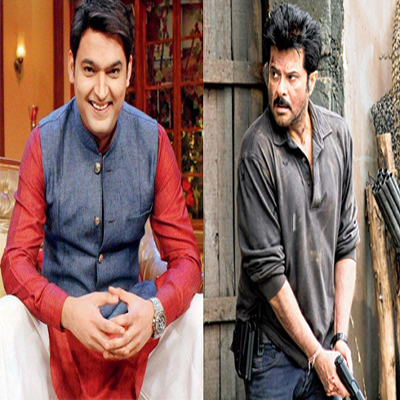
On the Hindi GEC front, channels for the most part walked the tried and tested path in soap, drama, reality TV, though attempts at mythogolicals and historicals did bear fruit. Colors walked unknown terrain when its CEO Raj Nayak wagered with the Indian adaptation of American thriller24 with Anil Kapoor in the lead role, and also with a new stand-up comedy show Comedy Nights with Kapil. The first got critical acclaim; the second, a vast popular following. Nayak also gambled with seasons, bringing back shows such Na Bole Tum Na Maine Kuch Kaha for its second season.
Star Plus continued to lead the genre for almost the entire year, with second, third and fourth places being traded between Colors, Zee TV, Sony, Life Ok and Sab. Period dramas and mythological drams such as Saraswati Chandra, Mahadev, Mahabharata from Star Plus and Life Ok did well with viewers. Staid old Zee was the real risk taker this year with its reality show –Connected Hum Tum (adapated from Armozia Formats). It tracks the life of ordinary folks on TV. India’s oldest existing private network flagged off shows such as Jodha Akbar, Budha and added another leg to its DID franchise in DID Super Moms. It did phenomenally well for Zee TV. Sony too had a winner in its period drama – Maharana Pratap, even as its long serving CID,Adalat continue to keep it amongst the top six Hindi GEC roster. Life Ok was the surprise of the year as it has emerged as a strong contender. Channel V, Sony, Zee TV all refreshed their packaging and branding through the year.
 |
|
Colors walked unknown terrain when its CEO Raj Nayak wagered with the Indian adaptation of American thriller 24 with Anil Kapoor in the lead role, and also with a new stand-up comedy show Comedy Nights with Kapil.
|
The year also saw channels risking with the film industry in a big way. Star India announced that it was forking out almost Rs 900 crore for exclusive telecast rights of all of Salman Khan’s and Ajay Devgn’s films which will be released till 2017. Then film maker Kamal Hassan attempted to premiere his film Vishwaroopam on DTH platforms but had to retreat when theatre owners protested.
What started with Amitabh Bachchan in 2000, has now snowballed with Madhuri Dixit, Salman Khan, Mithun Chakraborty, Karan Johar, Shilpa Shetty, Anil Kapoor all becoming permanent fixtures on the small screen. Other film stars too made TV shows a must stop to promote their films. Whether it is a Hrithik Roshan or an Ajay Devgn, they definitely stopped over on the sets of a Taarak Mehta Ka Ooltah Chashmah or a reality show to promote their films. While this helps create excitement on the respective shows, too many appearances on television has made them seem rather deja vu for viewers.
 |
|
Whether it is a Hrithik Roshan or an Ajay Devgn, they definitely stopped over on the sets of a Taarak Mehta Ka Ooltah Chashmah or a reality show to promote their films.
|
Film folks turned to TV production too during 2013. Anil Kapoor co-produced 24, Sanjay Leela Bhansali produced Saraswati Chandra, Anurag Kashyap announced a fictional show starring Amitabh Bachchan, who is also reviving his production house Saraswati Audio Visuals to co-produce the show with Endemol. His wife Jaya Bachchan has also announced that she is going to make her TV debut. The Bachchans’ TV fiction show debut is much awaited as it is the septuagenarian who opened the doors for Bollywood’s big stars to host or be a part of non-fiction shows with his fabulous performance on Kaun Banega Crorepati.
Sports in India still means cricket for the masses. However, the year 2013 saw efforts being made to kick start other sports such as football, hockey, and even badminton through leagues. At the forefront of this was the Rupert Murdoch-owned Star India which coughed up Rs 3,851 crore to acquire the rights to domestic and international cricket from the Board of Control for Cricket in India until 2018. The deal covers 96 matches, including all the international matches India plays at home and local tournaments such as Ranji Trophy, Duleep Trophy and Irani Trophy. It even invested huge monies in becoming an associate sponsor of the Indian Premier League and followed it by paying close to Rs 200 crore to become the sponsor for Team India. This just a year after it scooped out close to Rs 1,700 crore to Disney to acquire its 50 per cent stake in their ESPN Star joint venture. The year also saw Star India rebranding and relaunching the six channels under the Star Sports umbrella Star 1,2,3,4,5,6 and introducing Hindi language commentary.
 |
|
Sports in India still means cricket for the masses. However, the year 2013 saw efforts being made to kick start other sports such as football, hockey, and even badminton through leagues. At the forefront of this was the Rupert Murdoch-owned Star India which coughed up Rs 3,851 crore to acquire the rights to domestic and international cricket from the Board of Control for Cricket in India until 2018.
|
2013 has also been the year when Sony Entertainment’s billion dollar plus investment to acquire the rights to broadcast the Indian Premier League for 10 years was being questioned. Viewership ratings showed some slack, even as the entire league was embroiled in a betting and fixing scandal, which involved players from different teams. Fears were that viewers would be put off, but these were short lived and it is evident from the fact that Sony has started selling inventory for the 2014 edition at higher advertising rates than earlier years.
In the meanwhile, on the news front, it was the year of pink slips. Almost every news network trimmed the fat on bloated payrolls as the economic crisis bit deeply. Efficiency is the buzzword today in television as TV networks grapple with a tough competitive environment, high costs, and shrinking margins. News channels like NDTV, Network 18 and Bloomberg reorganised their operations, and told excess staff to go home, with journos and camera crews being the hardest hit. Zee Media (earlier Zee News) too got shareholder approval to merge the group’s English newspaper DNA with itself. Its plan is to create an integrated newsroom serving TV, internet and print. It is quite likely that the process of doing this will result in excess staff being ejaculated. Already, its cousin sister channel Ten Sports relocated staff from Dubai to Noida, a move that saw many of them putting in their papers.
 |
|
On the news front, it was the year of pink slips. Almost every news network trimmed the fat on bloated payrolls as the economic crisis bit deeply.
|
Efficiency was also the buzzword with advertisers, this year, in getting a better bang for the buck. Hence, companies such as Amagi Media saw takers for its geotargeting advertising service. Bengaluru-based Amagi Media announced its deal with Hindustan Unilever (HUL) and the Viacom18 kid’s channel Nickelodeon. The deal meant that an HUL TV commercial could run simultaneously on Nick nationally in different versions, depending on geographical location using Amagi’s DART platform. The platform also entered in a partnership with Zee TV, Zee News and Zee Business.
With all the twists and turns in the year 2013, the upcoming year looks set to be even more interesting. Will the industry earn rewards for all the risks it took? Or, will it be forced to to continue to play the role of the great gambler? That’s a bet we at indiantelevision.com are not willing to wager on.