Tag: DTH

  • Only 70 per cent of the Indian pay-TV market will be digitised by 2023: MPA report

    Only 70 per cent of the Indian pay-TV market will be digitised by 2023: MPA report

    MUMBAI: The process of digitisation in India currently seems to be stuck in limbo. Even with several deadlines being set, the country doesn’t seem to have progressed much even in digital addressable systems (DAS) phase II, let alone phases III and IV. A new report from Media Partners Asia (MPA) has predicted key findings about the cable and DTH industry in India between 2013 and 2023.


    It expects the next five years to be a period of robust growth of India’s pay-TV market. MPA projects that the pay TV industry in the country will grow from $7.4 billion in revenue in 2013 to $12.3 billion by 2018.


    The growth in revenue will be equal to an average annual growth rate of 11 per cent between the years 2013 to 2018. By 2023, it expects the industry to generate revenues of approximately $ 16.4 billion. The findings by MPA were published in the report ‘India Pay-TV and Broadband-Future Trends’.


    The study states that by the end of 2013, India had approximately 65 million paying digital subscribers. MPA projections indicate that only 70 per cent of the Indian pay-TV market will be digitised by 2023.


    The total number of TV households in India is currently pegged at around 160 million with nearly 20 million on terrestrial only. This will be the growth opportunity for alternative platforms as cable and DTH will find it unviable to penetrate into the interiors of the country. The Ministry of Information and Broadcasting (MIB) has given a deadline of 31 December 2014 for completion of digitisation. If one goes by the MPA report, India has a long way to go for 100 per cent digitisation.


    From 2015 to 2017 will see an upward trend as DAS will take off in phase III and IV areas. After 2017, the time will be for consolidation and monetisation as subscriber growth will decelerate.


    While the growth during 2009 to 2013 was driven by volume, the next five years will be led by average revenue per user (ARPU). At the end of the 2018, pay TV subscribers will hit 165 million and by 2023, it will be 180 million. This implies a long term penetration of 80 per cent.


    The growth will also give wide space for alternative platforms such as Doordarshan-owned Free Dish, headend-in-the-sky (HITS) and over-the-top media (OTT) apart from cable and DTH, which will address the need gap between TV households and pay TV subscribers.


    DTH industry revenues are expected to reach $4 billion by 2018 and $5.5 billion by 2023. This will be due to healthy subscriber additions from 2014 to 2016 and by improved churn and suspension management. The active DTH subscriber base is expected to grow from 37 million in 2013 to 60 million by 2018 and 70 million by 2023. Thus, DTH will have a 39 per cent share of the pay-TV market by 2023 and 56 per cent share of the digital market.


    MPA predicts that the total digital cable subscribers will be 50 million by 2018 and 55 million by 2023. Digital cable conversion will shoot up from 29 per cent in 2013 to 48 per cent by 2018 and 50 per cent by 2023. This will enable growth in cable broadband. It expects share of cable in the fixed broadband market to grow from 6 per cent to nearly 15 per cent from 2013 to 2023.


    The projected total pay-TV channel revenues for broadcasters, including advertising and subscription will grow from $3.3 billion in 2013 to $6 billion by 2018 and $8.3 billion by 2023.


    Meanwhile the pay-TV ad market is expected to grow at 8.6 per cent CAGR over 2013 to 2023 while broadcaster subscription revenues are expected to grow at 11.3 per cent over the same period. This will be due to improved macro-economic conditions, sub-segmentation of existing genres and new advertiser categories.


    “The Indian market is important because of its accessibility for global media distributors and investors and its high levels of pay-TV penetration. Ever changing regulations are destabilising but the government’s DAS mandate will be an important catalyst while improved supply side factors, including healthy financial markets and investments from international strategists are also critical,” says MPA India VP Mihir Shah.
  • DTH ops plea: Exclude content cost from AGR

    DTH ops plea: Exclude content cost from AGR

    MUMBAI: The Telecom Regulatory Authority of India (TRAI), last week, came out with the much needed recommendation paper on new DTH licences. The issue had come into light when India’s oldest DTH operator Dish TV was nearing the end of its 10 year licence that was given to it when it started operating.


    While the need for fresh and transparent rules came up, TRAI issued a consultation paper in October 2013 and it was just last week that it came up with its recommendation paper on the same. What most DTH operators were glad about was the reduction in the annual licence fee from 10 per cent of gross revenue (GR) to 8 per cent of adjusted gross revenue (AGR). This would mean that the DTH industry in all will save around Rs 200 crore to Rs 300 crore.


    The AGR is calculated after deducting service tax, sales tax and entertainment tax from the GR. TRAI states that since there has been growing convergence of telecom and broadcast, the 8 per cent is aligned to the unified licence (UL) in the telecom field. The recommendation paper states that in the UL, AGR is arrived at by excluding taxes and charges of ‘pass through’ nature. Even though TRAI states that there is no such charge of ‘pass through’ nature for DTH players, the latter disagrees.


    “We were hoping for either a 6 per cent of AGR or 8 per cent of AGR with ‘pass through’ of content cost,” says Videocon d2h CEO Anil Khera. When a few months ago, the Ministry had sent notices to all the DTH operators to pay the licence fee dues, they had taken the issue to court. Tata Sky CEO Harit Nagpal had then said that the Ministry of Information and Broadcasting had itself asked the Finance Ministry to reduce the fee from 10 per cent to 6 per cent.


    The paper says that two DTH operators had recommended that for calculating AGR, deduction should be made for not just service tax, sales tax and entertainment tax, but also for content costs, transponder costs, hardware sales revenue etc.


    Dish TV CEO and soon to be DTH Operators Association president RC Venkateish says that the fight for exclusion of content cost isn’t over yet. He says, “We will approach the Ministry of Information and Broadcasting to press for content cost to be excluded from the AGR. Like we had said, either it should be removed or else the licence fee should be brought down to 6 per cent of AGR instead of the recommended 8 per cent of AGR.”


    The parliament was told in April 2013 that six private DTH operators paid Rs 307.8 crore as licence fee to the government for the year 2011-12. According to figures furnished in the reply to the Parliament, Tata Sky paid licence fee of Rs 79.3 crore in 2011-12 as against Airtel Digital’s Rs 61.87 crore and Dish TV’s Rs 30 crore. Sun Direct paid Rs 36 crore, Reliance Big TV paid Rs 9.5 crore, and Videocon d2h paid Rs 5 crore.


    For now, the recommendations are pending with the Ministry for approval.

  • Technicolor ships 11th million STB to Tata Sky; celebrates 10 years of partnership

    Technicolor ships 11th million STB to Tata Sky; celebrates 10 years of partnership

    PARIS: Technicolor  (Euronext Paris: TCH ; OTCQX: TCLRY) is proud to announce two special landmarks in its relationship with Tata Sky India’s leading direct to home (DTH) service provider and HD market leader – the 10 year anniversary of the partnership and the delivery of the 11 millionth Technicolor set-top box.

    These special milestones follow an announcement in May of this year for Technicolor to ship 4K set-top boxes in volume to Tata Sky from early 2015.


    “On behalf of Technicolor, I’d like to thank Tata Sky for its ongoing co-operation and congratulate the company on its achievements as India’s market leader. We look forward to continuing our partnership and helping to deliver even more successful and exciting services to consumers across India in future,” said Michel Rahier, President of Connected Home Division at Technicolor.


    Tata Sky MD & CEO, Harit Nagpal, added “Over the past 10 years Tata Sky’s vision has been to offer its customers the best, most compelling video experience. Technicolor has been a true partner in that quest, delivering high quality products and services. And 2015 will be a great year for our partnership as we deploy 4K STBs across the Indian market, once again, underlying our commitment to delivering the most recent technologies and the highest quality content.”

  • Is India ready for HD HEVC set top boxes?

    Is India ready for HD HEVC set top boxes?

    MUMBAI: India may be struggling with completing the strenuous task of digitising the close to 9.4 crore cable TV homes, but when it comes to keeping pace with technology as compared to the rest of the world, we are not very far behind.

    While it was direct to home (DTH) player Videocon d2h which first announced that it was working out to launch its 4K Ultra HD service, Tata Sky followed soon. And with this, came the one big question: is the country ready for a technology such as this? Answers Broadcom Corporation associate product line director Brett Tischler, “The consumer is ready for 4K technology, which gives a clearer, sharper and brighter viewing experience. When people see it, they want it.”

    Worldwide, when the first 4K Ultra HD TV was launched, it cost close to $20,000. “This has now come down to $1000. This makes the TV much more affordable. The premium consumer is quick to respond,” he adds.

    The chip making company, Broadcom has forayed into 4K technology as well. And if sources are to be believed, it is Broadcom’s chip that has been used in the 4K Ultra HD set top boxes (STBs) introduced by both Videocon d2h and Tata Sky.

    While one may feel that there is not enough 4K content available the world over, Tischler feels otherwise. According to him, 4K content can be made available on Over the Top (OTT) platforms or through Live TV, Video on Demand (VOD) and web based content. Sports and movies are the two genres which will be popular in 4K. “There are a few Hollywood movies which are being made in 4K. Also the last three or four 2014 FIFA World Cup matches were broadcast in 4K in South America,” adds Tischler.

    Broadcom, in the past had also telecast the winter Olympics using 4K technology. According to Broadcom managing director Rajiv Kapur 4K will be adopted faster world over.

    Ultra HD filming, transmission and broadcast requires a significant increase in bandwidth. “Our Ultra HD video decoder solutions with integrated high efficiency video codec (HEVC) technology reduces bandwidth usage by 50 per cent, allowing users to download Ultra HD content in half the time,” informs Tischler.

    Both Kapur and Tishler are of the view that HEVC is the standard that the industry will move towards now. And if the duo is to be believed, the operators in India will soon move towards HD HEVC set top boxes (STBs), since the technology compresses the content and reduces the bandwidth needed to half.

    “India has the potential. We have developed an optimised technology that works well in the country. It is an exciting time for the country,” opines Tischler.

    Content today is generally produced and transmitted in 8 bit but HEVC take it up to 10 bit, giving a wider colour gamut. And so a lot of the content creators will now be looking at adopting this technology. “Most producers and broadcasters know that they will need to create content in 10 bit for better experience, but if they make it in 8 bit, even that will work,” informs Tischler.

    On the flip side, with Indian DTH operators facing transponder space constraints, will the technology be accepted? Answers Tischler, “HEVC content at the same resolution is about half the size. So the 10 megabit AVC content can be reduced to 5 megabit HEVC content, without having any effect on the quality of the content. HD moving to 4K is a multiplier by four and by using the HEVC, this can be halved, and so it’s a multiplier by two.”

    For both Kapur and Tischler, cable satellite and IP TV operators either have definite plans to move to HEVC or are planning to move to it. “It is a better codec for them to use. They are already putting it in their next generation equipments,” says Kapur.

    4K Ultra HD is a premium service, which according to Kapur will start as VOD and then move to OTT and then to full channels.

    The primary obstacle for introducing 4K is gone. With TV sets being sold, the operator cannot ask the consumer to first go and buy TV and then launch the service. “TVs are selling and  the service can’t be far behind. 4K initially will be a premium product, but HEVC as an HD codec, applies to everybody. So some operators who are doing HD will go right into HEVC, and will only do HD in HEVC. So we see HEVC being adopted by some of the biggest and most developed DTH operators in the world and also some of the emerging markets which are going into digitisation,” opines Tischler.

    HEVC is future-proof and will give better returns on investment. “We have a range of HEVC chips, but the 4K p60 10 bit HEVC chip is what we are planning to put in people’s houses,” adds Kapur.

    If the operator chooses to do VOD in HEVC, they can do it using half the bandwidth. According to Kapur, the early decision of deploying boxes by the operators will now play a critical role, since changing the boxes, after the operator has installed them over a large subscriber base will be a tedious task. 

    The HEVC boxes will move into production this year and will be available by 2015. “We are right at the cusp of these developments,” informs Tischler.

    Both Tischler and Kapur are of the view that the phase III and phase IV markets in India will not be using HEVC, since MPEG 2 SD boxes will dominate these markets. “Currently, the operators are looking at grabbing as many subscribers as possible. So they want to push as many and cheapest boxes as possible. It is only later they will introduce newer technology boxes. Then they will try to grow their revenue and give more services to their consumers,” opines Kapur.

    Unlike DTH, the cable TV market in India is still dominated by the SD STBs. Will that also see introduction of HD HEVC boxes? Says Kapur, “DTH also took decades to grow from basic SD boxes to some of the latest technologies. Cable will go through similar evolution.”

    Broadcom which has some 70 offices worldwide, invests heavily on R&D. The company which has close to 35 R&D offices, spends close to 21-23 per cent of its total revenue on R&D.

  • Dish TV adds some Zing to Maharashtra

    Dish TV adds some Zing to Maharashtra

    MUMBAI: After targeting the east of the country, Dish TV has trained its sights on the diametrically opposite part of India – Maharashtra – with its regional sub brand Zing.  The western state has arguably the highest penetration of TV viewing homes nationally.

    Zing has been spreading out gradually over various towns and districts of Maharashtra right from Nashik to Ratnagiri to Aurangabad to Amravati over the past few days. It will however be focusing primarily in the heartlands and on areas where language consumption is very high; hence bigger cities like Mumbai, Thane, Pune and Nagpur won’t be exposed to the brand.


    Earlier this year, Zing was launched in West Bengal, Odisha and Tripura. The aim is to provide a DTH offering that can compete with cable but with digital picture quality, stereophonic sound and at affordable rates. Says Dish TV marketing VP Anjali Malhotra, “When these analogue consumers think of going digital we come as the first proposition. As markets will open up in phase III and IV, we do see an opportunity between other private DTH players and DD’s Freedish.”


    There are three packs available – Utsav, Anando and Shubharambh that will have 16 Marathi channels such as Zee Talkies, Zee 24 Taas, Zee Marathi, Star Pravah, Mi Marathi, ABP Mazha, IBN Lokmat, Saam TV, Maayboli, 9X Jhakaas, Jai Maharashtra, TV9 Maharashtra,  DD Sahyadri and ETV Marathi.


    Estimates peg Maharashtra’s cable TV and DTH homes at around 4-5 crore with a considerable amount of that being covered under the first two phases of digitisation.

    A marketing campaign worth Rs 6 crore has already begun across various towns and cities. The first phase was ground activations through mobile vans and merchandising activities. The ATL campaign that just commenced includes Marathi newspapers, local radio spots and close to 100 outdoor billboards in city and market areas. The ATL marketing that has been executed by McCann with planning in the hands of Madison will go on for a month.

    “Consumers are warming up to the idea that they are getting an offering that his cablewallah will have,” says Malhotra while highlighting some of the learning from Zing in the east. West Bengal and Odisha were test areas and she says that at an aggregate level the two brands, Dish and Zing, have collectively taken 40 to 50 per cent share.


    The regionalisation of DTH also means that new channels need to be added as and when they come. Earlier this year the DTH operator secured additional transponder space on the newly launched SES 8 satellite, thus allowing it to add several more channels.


    While there is a worry that the sub brand may eat up into the parent brand, Malhotra says that research has shown that isn’t the case. “The customers for Dish and Zing are very different. Which is why we aren’t even bringing Zing to the cities. In some places we will only display Zing, in some Dish and in some both, depending upon the language consumption in each of the areas,” she says.


    While on the one hand, a couple of DTH operators are going high tech and targeting premium viewers with 4K Ultra HD announcements, Dish TV, the oldest of them all, is going desi and local.

  • Telecast of DD to be made mandatory on all cable and DTH platforms: Javadekar

    Telecast of DD to be made mandatory on all cable and DTH platforms: Javadekar

    NEW DELHI: Telecast of Doordarshan will be made mandatory on every direct to home and cable network, according to Information and Broadcasting Minister Prakash Javadekar.


    Speaking at a press meet in Ahmedabad, Javadekar said his aim was to make Doordarshan and All India Radio the first choice for viewers.


    Javadekar invited suggestions from the public in this regard. “I held a meeting with local officials and asked them to come with ideas to improve the content of DD and AIR,” he said. “To do that, we have decided to invite suggestions from people about what they would like to watch and listen,” he added.


    “We are taking steps to make Doordarshan channels available in all cable TV as well as direct to home platforms.”


    He stressed on the need to convert the Medium Wave (MW) frequency of Akashvani to FM, “as a majority of radio sets catch only FM signals these days.”


  • TRAI extends time on consultation paper on VAS by cable and DTH ops

    TRAI extends time on consultation paper on VAS by cable and DTH ops

    NEW DELHI: The Telecom Regulatory Authority of India today decided to give more time to stakeholders to respond to its consultation paper on regulatory framework for platform services.


    Stakeholders can now respond by 29 July with counter-comments by 5 August following request by stakeholders.


    Some of the issues the paper issued on 23 June had raised include questions on whether services issued by TV channels should be defined as broadcast channels or value-added services. TRAI is also seeking the stakeholders’ opinion on issues such as the kind of content that platform services should be allowed to transmit. Issues, registration process, security clearances, limits on geographical reach of these channels, compliance with advertising and content code, and conditions of imposing penal provisions in case of violations have also been raised.


    All cable TV and DTH operators offer different kinds of programming services that are only shown on their platform but not obtained from broadcasters. These are called platform services. These include movies, music or local news channels offered by the cable operator as well as value-added services such as ‘movie on demand’ and ‘pay per view’ services offered by the DTH players.


    The Regulator’s move to regulate platform services comes after the Information and Broadcasting Ministry expressed concern about the transmission of these local channels over a wide geographical area, like any other national or regional channel, without obtaining any permission from the Ministry.


    The Ministry note said it believed that a proper regulatory framework is required to govern these channels and value-added services since programming is similar to the programmes transmitted by regular TV channels. 

  • Star Sports fuels team YUWA’s aspiration to play the USA Cup

    Star Sports fuels team YUWA’s aspiration to play the USA Cup

    MUMBAI: STAR Sports successfully completed a fund-raiser campaign that turned the dream of the immensely talented girls from YUWA into reality, as they participate in the coveted football tournament USA Cup, to be held in Minnesota from July 15 to July 19. The USA Cup is one of the largest youth tournaments in the world with more than 1000 teams participating.


    YUWA, an NGO based in Jharkhand and led by an American national Mr. Franz Gastler, uses football as a platform to combat child marriage and human trafficking in India and instils confidence and skills in young women affected by such social evils. The girls from YUWA, with their incredible talent and unflinching dedication, have victoriously crossed over several hurdles, fighting multiple ills that plagued their lives, such as poverty, malnutrition and gender-discrimination. They have deeply inspired millions around the world with their achievements, as they made the headlines last year by bagging a Bronze medal in an international youth tournament, the Gasteiz Cup held in Spain.


    The girls from YUWA never failed to persevere and relentlessly made countless efforts under the rigorous training from their mentors to participate in the globally prestigious football tournament, USA Cup. While the girls battled against all odds with their hard work and focus to reach greater heights, travelling to the United States for the tournament was the only obstacle in their way. STAR Sports, committed to spurt sports development in the country at the grassroots level, stepped in to support the girls to participate at the games. The network further went on to tell the deeply inspiring tale of the girls through a gripping TV campaign in the month of May to muster mass support, creating a cycle of attracting more funds. Corporate organizations and people across the length and breadth of the country happily came forward to help Team YUWA realize their dream journey to the US.


    In addition to Star Sports funding the travel the campaign gathered funds from major corporations, such as market research firm Quantum, DTH service provider Tata Sky, electronic major Lenovo and people from all over the country through a web-based crowd-funding platform called Ketto.


    Mr. Nitin Kukreja, President – Sports, STAR India, expressed his delight on this achievement, “We are extremely pleased to have led this initiative to a fruitful conclusion. The story of the YUWA girls touched our hearts and we wanted to make an honest effort to fulfil their dream of participating in the USA Cup. We, at STAR, truly believe that sports have the power to transform the lives of people and Team YUWA is a great example of it. I would also like to take this opportunity to wish the girls great success and hope that they have a good time out there.”


    This initiative by STAR Sports comes in-line with the media conglomerate’s promise of creating local heroes in the country and spawn a new sporting culture. As part of this commitment, STAR has also heavily invested in nurturing international and national leagues for various sports such as hockey, football and kabaddi.


    Mr. Franz Gastler, Founder and Executive Director, YUWA said, “I’d like to say a huge Thank You to Star Sports from all of us at Yuwa for the work they have done. The campaign has been a huge success since its launch and I can’t understate how much buzz has been created around Yuwa in this short amount of time. Our inbox has been flooded daily with messages of support. We’re truly proud to see the brand Star Sports on our jerseys”


    Team YUWA will be India’s only representative in the USA Cup, which allows teams to participate under various age groups across 9 years and 19 years.

  • Sandeep Bajpai joins Dish TV as VP marketing

    Sandeep Bajpai joins Dish TV as VP marketing

    MUMBAI: DTH operator Dish TV has appointed Sandeep Bajpai as the new vice president for marketing. Bajpai who took charge nearly two weeks ago, was earlier with Tata Docomo handling the communication and consumer experience.


    A PTI report quotes Bajpai saying, “It is a great opportunity for me to lead Dish TV into its next phase of growth by consolidating and further strengthening its position in India, and looking at global markets to complete its transition of becoming a global force to reckon with.”


    Bajpai replaces Animesh Misra who has since then moved on. Prior to Tata Docomo, Bajpai has worked at Spice Hotspot, Bharti Airte, Idea Cellular and net2phone from the last 14 years.

  • Axe the tax, say DTH ops & MSOs

    Axe the tax, say DTH ops & MSOs

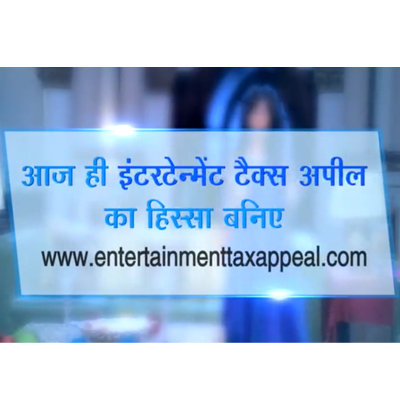
    MUMBAI: In the run up to Budget 2014, the DTH Operators Association and the MSO Alliance have joined hands with broadcasters to embark on an aggressive campaign (in the shape of a television promo or commercials)  to fight the heavy entertainment taxes levied on them by the various state governments.


    The TV commercial which stars Roopal Tyagi (Sapne Suhane Ladakpan Ke) and Surbhi Jyoti (Qubool Hai) has been running across all channels.  It makes an appeal to TV viewers to log on to http://entertainmenttaxappeal.com to pledge against rising entertainment taxes. It says that on an average a viewer spends approximately Rs 3000 on cable TV and DTH recharges annually. Almost half of this goes directly into the government’s kitty by way of taxes. Therefore, there is a need to put an end to it.


    “We will present the appeals from the people to the government and hope that they take note of it,” says newly-appointed DTH Operators Association of India president RC Venkateish. He added that the advertisement was timed to coincide with the upcoming budget session. 


    Entertainment tax is a state subject and hence, varies from state to state. In some, it is a fixed amount while in others the state exchequer carves it out as a percentage of the bill. 


     “The state of Maharashtra charges Rs 45 as entrainment tax. This is ridiculously high,” says an industry professional and adds, “High entertainment tax is one of the reasons why local operators don’t declare the number of viewers they have.”


    The campaign is expected to run for a month in order to build a ground swell of public opinion against the entertainment tax levies.  It seems to have got the Information & Broadcasting Minister Prakash Javadekar’s attention already. Speaking to PTI recently he assured industry that “the government is looking into the demands of the DTH operators and that the issue is with the Ministry of Finance.”


    “Industry has high hopes in the new Modi-led government. For several years, it has been appealing to the previous government to reduce the burden but to no avail.  High and multiple taxes have been crippling. Hopefully, the government will find a solution to this problems,” says a media observer. 


    It’s now over to Mr Arun Jaitley. 


    Click here to watch the commercial