Tag: DTH

  • Doordarshan’s Freedish to switch to an upgraded platform to increase capacity

    Doordarshan’s Freedish to switch to an upgraded platform to increase capacity

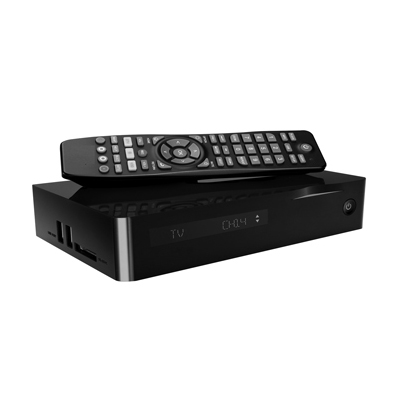
    NEW DELHI: Doordarshan’s Freedish, India's only free direct-to-home (DTH) service, is migrating from its old platform to a new upgraded one with effect from midnight of 9 January (12.05 am of 10 January) in its attempt to increase its capacity.

    The migration would result in increase of TV channels from 59 to 64 and radio channels from 22 to 24.

    Prasar Bharati chief executive officer Jawhar Sircar said recently that the pubcaster would have to strengthen its DTH platform, Freedish if it has to survive.

    He had announced in November that Freedish was expected to go up to 112 television channels in the next few months but he had made it clear to the government that while most were coming through e-auctions, some popular channels may have to be ‘attracted’ to join Freedish since satellite television was the future. He said he was not opposed to digital terrestrial transmission but advances in technology may make it obsolete.  

    In fact in a pace that has surprised many, Doordarshan has held 19 e-auctions for Freedish as on 12 December.

    DD Sources also said that while Freedish may be encrypted to keep a tab on the number of subscribers, it would remain free-to-air.

    To access the upgraded platform, the viewers need to edit the Transponder Parameter by changing only the Symbol Rate from 27500 Ksps to 28500 Ksps in four transponders and retune/rescan their Set Top Box to receive the upgraded TV and radio channels.

    Freedish viewers can get further information regarding retuning/rescanning of their Set Top Boxes on DD's official website: ddindia.gov.in

     Viewers/subscribers who do not rescan their Set Top Box will continue to get only ten channels for a period of seven days only from the date of upgradation. Out of these ten channels, one channel is an informative channel which will show detailed procedure for re-tuning the Set Top Boxes.


  • SEBI asks for clarification from Videocon d2h for its proposed Rs 700 crore IPO

    SEBI asks for clarification from Videocon d2h for its proposed Rs 700 crore IPO

    MUMBAI: Direct to home (DTH) operator Videocon d2h has been in the news for its proposed Rs 700 crore initial public offer (IPO) for long and now the Securities and Exchange Board of India (SEBI) has asked for clarifications from the merchant banker of the DTH operator.  

    While the last date on which communication by SEBI was issued or received was 2 January, the board, today, without disclosing the details said that the clarifications from lead manager (LM) are still awaited.  


    The observations on the draft offer document may be issued by the board within 30 days from “the date of receipt of satisfactory reply from the lead merchant bankers, where the board has sought any clarification or additional information from them,” reads SEBI notice.

    It was on 30 September that the board received the draft offer from Videocon d2h through its lead manager Axis Capital.


    As per several media reports, while the DTH company has proposed IPO estimates to raise Rs 700 crore, it is also considering to mop-up Rs 50 crore through a pre-IPO placement of its shares to institutional investors.


    “While the company has not disclosed the total number of shares to be sold in IPO, the pre-IPO placement could be of 50 lakh shares,” says a PTI report.


    It was in October when Videocon d2h filed for its IPO. The company had then said that it plans to spend a portion of the Net Proceeds of the issue towards acquisition of set-top boxes, outdoor units and accessories thereof from TEL, a Videocon Group entity.


    The company commenced DTH operations in July 2009 and has grown its subscriber base from 0.44 million gross subscribers as of 31 March 2010, to 11.21 million gross subscribers, as of 30 June 2014, which represents approximately 16.2 per cent of the total DTH subscriber base in India.


  • 2014: A year of improved subscriber numbers

    2014: A year of improved subscriber numbers

    The year 2014 has been better than the previous year, in terms of the share of numbers for all direct to home (DTH) players. Subscriber additions were higher and there was more stability in the overall industry. In terms of price discounting, people were more rational through the year. Overall, it has been a much better year than 2013.

    Increased subscriber numbers and ARPU

    Overall additions in subscribers, for all the DTH players, were higher in the magnitude of 25-30 per cent than the previous year.

    That apart, the churn came down substantially, not only for Dish TV, but for all the other DTH players as well.

    2014 also saw a rise in the Average Revenue Per User (ARPU). But there are still problems, since the whole cable TV system hasn’t stabilised and gross billing hasn’t been fully implemented. Though, we do see some encouraging signs, in terms of people getting down to doing that now.

    DTH has been able to take price increases through the year. There was a price increase which took place in April, at the magnitude of 8-9 per cent. But the big collection from the ground will happen only once cable TV gets its act together.

    Different people calculate ARPU differently. For example, Dish TV calculates it on subscriber revenue, whereas Airtel Digital TV, as per its published figures, looks at gross numbers, and so do others. So there is no common matrix being used across the industry for definition of ARPU. But having said that, at the consumer level, the consumer prices are in the average price range of Rs 250-275.

    Challenges in 2014

    One of the major challenges that we continue to present to both the state and central government is on the high level of taxation on DTH. Apart from the taxation element which we have been presenting, we are the only industry which is subject to service tax and entertainment tax. While we were hoping for some relief in the last budget, we didn’t get that, we hope we will get some relief in the coming year.

    Secondly, there is no clarity on the licence fee issue, even though the Telecom Regulatory Authority of India (TRAI) issued a recommendation, there has been no action on that front.

    So while we lived in continued uncertainty in 2014, we hope that the government will take some steps in 2015. People have invested more than Rs 25000 crore in the industry, so at least we have the right to know what the law of the land will be going forward.

    The new launch Zing

    It has been an extremely successful product in all the geographies we launched. The specific proposition that we had, which was regional first and targeting the entire product mix around consumption has clicked very well with the customers. So we are very pleased with the way things have come.

    Highs and lows of 2014

     For Dish TV, it has been a fairly stable year. We regained our share leadership for about last three to four quarters. We launched a significant and tactical product in Zing which has helped us capitalize on the phase III and IV areas. The high point has been that we have been able to, post the balance sheet adjustment that we did last year, been able to get back on the growth path, which is what we have always said and we achieved that in 2014.

    The low point is at two levels: At one level, the whole issue of taxation and licence fee kept dragging for the whole year. Secondly, we expected the cable TV and broadcaster system to stabilize the whole regime. The whole issue of getting proper addressability and customers to actually choose and compare products has still not happened.

    Delayed Digitisation

    First and foremost, the manner of digitisation needs to be addressed. What has happened in the first two phases is simply the change of pipe. This has not been supported by addressability and that is the reason there has been no or marginal change in the revenue flow.

     Until and unless these issues are addressed, a non-addressable digitisation is of no help to anybody, neither to the government nor the stakeholders. We hope that by the time they get down to it, we will have some better roadmap of how to achieve that.


    (These are purely personal views of Dish TV CEO R C Venkateish and indiantelevision.com does not necessarily subscribe to these views)

  • 2014: The year that changed landscape of distribution

    2014: The year that changed landscape of distribution

    2014 has been the most exciting and an eventful year for us in the Media and Distribution Industry. The phrase “There is never a dull moment” is so apt to define the year of 2014 that changed the landscape of distribution so significantly and posed challenges like never before. The year started on a promising note for the Industry with the impact of digitisation settling down and the benefits of this shift starting to roll in. Reduction in carriage fees and an upswing in subscription revenues indicated change, yet the industry continued to grapple with implementation of packaging at the retail level.

    Value chain as a whole moved towards a more structured form, with constituents at each level moving from an adhoc/ flat fee commercial arrangement to CPS model. Subscription flow from LCO to MSO which was significantly low in analog era started growing. Wider choice at the subscriber end also helped growth in ARPUs.

    One of the biggest changes that shall significantly impact the distribution model is BARC becoming a reality. It is set to redefine the way all of us look at distribution. Expansion in LC1 markets and forthcoming BARC measurement is pushing every broadcaster expand visibility to the deepest, darkest corners of the country. Such is the scope of expansion that it will require any organisation 24-30 months to plan, execute and brace one of the biggest change in the history of distribution.

    DTH industry saw a major shift this year in their outlook towards the business. Almost all of them moved away from the customer acquisition mode to better profitability. While the story of subscriber acquisition was not exceptionally different over the previous year, DTH companies managed churn, HD and ARPU increasingly well.    

    No other year has seen a bigger storm than 2014 in the Regulatory environment. There were so many storming changes that touched every stakeholder in the distribution chain. TRAI came out with regulatory changes like Disaggregation, DAS phase III and IV, Commercial establishments and Ad-Cap. The new regulatory environment posed new challenges such as keeping partners together, protecting bottomline revenue and remaining relevant in the new regime. Postponement of digitisation in phase III & IV caused recalibration of business plans by all stakeholders. TRAI’s regulatory change for commercial establishments affected an entire revenue stream of broadcasters and the matter continues to be fiercely litigated.

    Going into 2015, we strongly believe the industry will undergo some paradigm shifts in the way we do business. Implementation of RIOs in cable will see packaging in cable become a reality. Digital platforms hence shall compete effectively. Carriage fee, a big cost for broadcasters will get reduced to miniscule or only exist for FTA channels. HD and broadband in cable will see a big swing to drive revenues significantly for the cable companies. More interesting deals like DEN-Snapdeal shall emerge. DTH players shall equally bring about next level of offers to bring more value to the subscribers such as OTT, 4K boxes, TV Everywhere, and Binge viewing being offered to the consumers.

    For us here at IndiaCast UTV, the year 2014 was equally exciting. In face of compelling challenges, we en-cashed on the opportunities to attain significant growth. There is ample evidence that we are moving forward and in the right direction. In light of disaggregation, IndiaCast UTV was successfully appointed as the authorised agent for TV 18, Disney UTV and ETPL and the broadcasters reposed full faith in the our team. Transcending these regulatory changes, we emerged stronger than ever.

    On the DTH front, we saw all our renewals happening during the year. We had to up our ante and attain a fair share for the unmatched content that the network stands for. It was tough convincing the platforms but eventually they saw sense in the value we bring to the table. We are proud to say that we were able to stitch our multi-year content deals with all the DTH platforms at a healthy growth rate. On the visibility front, we embarked upon the biggest challenge to put in place an entire LC1 team and collectively put in thousands of manpower hours to expand our reach across the length and breadth of the country. Our ratings in the past few months are a testimony to the efforts of the affiliate team who seeded our channels in a number of new networks across smaller markets.

    The year also saw us successfully launching and distributing the third Hindi GEC “EPIC” which expanded the GEC space by offering a season based formats based on Indian Mythology and folklore. Viacom18 gave a myriad of entertainment options with Colors being the frontrunner in Hindi GEC space, launch of new Hindi GEC “Rishtey”, MTV Indies creating a new space in Music genre and by launching “24” – India’s first international non-reality format show with international standard production quality. TV 18 maintained its leadership position and added a business news channel in Gujarati called CNBC Bajar to its portfolio. The regional offering was strengthened by launching four news channels under the ETV banner – Kannada, Bangla, Gujarati and Haryana.

    This year has seen IndiaCast UTV coming of age, adding stability and propelled us to achieve more. We are confident of setting new benchmarks for ourselves and for the industry and embark on a larger journey which will see us coming out stronger than ever before. We are looking forward to an exciting and eventful 2015.


     (These are purely personal views of IndiaCast UTV Media Distribution EVP Amit Arora and indiantelevision.com does not necessarily subscribe to these views)

  • Delhi HC wants to know if DTH players can run FM channels and VAS

    Delhi HC wants to know if DTH players can run FM channels and VAS

    NEW DELHI: The Delhi High Court has sought a response of the Information and Broadcasting Ministry and six direct-to-home (DTH) operators on a public interest litigation seeking to restrain DTH service providers from carrying any channel or value added service (VAS) which are not registered with or permitted by the government.

    The court passed the order on the plea of Hyderabad-based NGO Media Watch-India (MWI) which alleged that DTH service providers carry self-promotion advertisements in violation of uplinking and downlinking guidelines.

    Listing the matter for 4 March next year, a bench of Chief Justice G Rohini and Justice P S Teji issued notice to the Ministry as well as six DTH providers – Bharti Telemedia, Tata Sky, Dish TV, Sun Direct TV, Reliance Big TV and Bharat Business channel.

    Counsel Gaurav Kumar Bansal said that value added services like ‘movie on demand’ or games are provided without specific licence from the Ministry. The NGO has said that even FM radio channels are being illegally provided and has sought orders restraining the DTH operators from providing these services.

    The petitioner contended that the Ministry instead of taking action against these entities has been playing the role of a spectator while “statutory guidelines are being flouted with impunity by the private DTH operators”.

    Meanwhile, the Telecom Regulatory Authority of India (TRAI) had recently issued a consultation on regulating platform services of service provider including MSOs cable operators and DTH operators and has also given the recommendation on 19 November which are under consideration of the Ministry.


  • The DTH industry’s big developments in 2014

    The DTH industry’s big developments in 2014

    MUMBAI: 2014 was the year of mixed fortunes for the direct to home television industry in India. The seven players in the industry continued to burn cash as customer acquisition costs continued to stay at high levels, at least one of the players spent a large part of the year looking for a white knight, all the players pushed ahead with their HD offerings in phase I, and II digitisation areas, leading to attractive rises in average revenues per user. The total number of registered subscribers and active subscribers, for all the six DTH players, as per the Telecom Regulatory Authority of India (TRAI) report, as on 30 June 2014 was 67.57 million and 38.24 million respectively. Close to 43.41 per cent of DTH subscribers were inactive till June 2014.

    At least two of the players have started generating positive cash flows during the year, even as new spectacular announcements of preparing launches of Ultra HD or 4K services were made during the year. Fresh debt and equity infusions, efforts to introduce new subscriber packages, and an announcement of new policy directions for licensing DTH by TRAI were the hallmark of the year.

    The DTH industry in the country saw some big innovative changes being made over the year 2014. These helped the industry in adding more subscribers while marginally increasing the average revenue per user (ARPU).

    The year began with three DTH operators, Tata Sky, Sun Direct and Reliance Digital TV being issued notices by the Information and Broadcasting Ministry (I&B) for not showing the mandatory 24 Doordarshan channels. Later on the Ministry also pulled the entire DTH industry for not paying licence fee worth Rs 2066 crore.

    The DTH ops resisted the amount stating that they had been paying the fees on the gross revenue (GR) basis while the government was extracting it on the adjusted gross revenue (AGR). A court case on the same had been pending from nearly four years and is still ongoing. However, Tata Sky and Reliance decided to challenge the same in the Telecom Disputes Settlement Appellate Tribunal (TDSAT) while Sun Direct made an application on its 2009 petition regarding AGR.

    The licence fee case was put in the backburner by the TDSAT stating that since it is relative to the telecom case on licence fee issue, it would hear that case first and then come to the DTH case. By the end of the year, however, the TDSAT agreed to hear the DTH ops separately rather than wait in line, the case is still on. Tata Sky in the meanwhile has already paid a sum of Rs 383 crore to the I&B Ministry, while Dish TV awaits court orders.

    The budget 2014 got some relief to the set top box (STB) manufacturers by reducing the excise duty from 12 per cent to 10 per cent from February to June 2014. However, they continued to fight the entertainment and service tax that was being levied on them since several years while cable operators go without paying it. Dish TV raised the issue with the finance minister Arun Jaitley and then I&B Minister Prakash Javadekar to discuss the multi layered taxes, which however didn’t lead to any conclusive solution on the same. DTH ops are subjected to licence fee, 12. 3 per cent service tax and also entertainment tax at the state level.

    The DTH Operators Association also saw a change of head with Dish TV CEO RC Venkateish replacing Tata Sky MD and CEO Harit Nagpal. Doordarshan ADG Ranjan Thakur who also headed Freedish moved out due to the expiry of his term.

    Freedish has been working on adding several Indian as well as international channels through its auctions while also setting up MPEG-4 boxes alongside MPEG-2 for the interior parts of the country.

    Several new innovations came across last year. Tata Sky introduced a new feature of Karaoke on TV while Videocon d2h came out with a headphone attached to the remote for watching TV without disturbing others. Both of them also were the first ones to introduce 4K HD TV set top boxes in the country. However, the official commercial rollout for both has yet to happen. Tata Sky even did a live telecast of one of the FIFA world cup matches on its 4K TV as a demo.

    Dish TV on the other hand, chose to go local, by introducing customised packs for regional India. A sub-brand ‘Zing’ was launched that would give localised packages in the states of West Bengal, Odisha, Tripura, Seemandhra, Telangana and Maharashtra. The oldest DTH operator also heaved a sigh of relief when after months, it received the nod from the Sri Lanka government to commence operations for its DTH project in the neighbouring country.

    With markets being more receptive, Videocon d2h, which has been planning on launching its IPO since long, went ahead with its filing to SEBI for Rs 700 crore with seven banks managing the share sale. Much of what it can raise will go towards acquiring STBs and outdoor units. Dish TV is also contemplating on starting its own manufacturing unit, though it hasn’t laid any concrete plans on it yet.

    TRAI played a big role when it came out with its DTH licencing recommendation paper which is now pending before the I&B Ministry. The paper restricted broadcasters from owning more than one DPO which is likely to affect Dish TV/Siti Cable under Zee and Sumangli Cable/Sun Direct under Sun Network.

    The paper however extended the 10 year licence period to 20 years while the one time entry has been retained at Rs 10 crore. DTH operators whose licence term expires after 10 years will be allowed to apply for a 10 year extension. The licence fee has been reduced from 10 per cent of GR to 8 per cent of AGR.

    The earlier norm of providing a bank guarantee (BG) of Rs 40 crore was change to the amount payable as a licence fee for two quarters and will have to be renewed year on year till the end of the licence period. New entrants will however have to provide a BG of Rs 5 crore for two quarters and then progress as above.

    The year ended with the Comptroller and Auditor General (CAG) of India coming out with a scathing report on the management of satellite capacity for DTH service by the Department of Space (DoS). In it, it stated that over the years the DoS has been lagging in its satellite launches that were required by DTH operators, leading to them migrating to foreign operators and loss of revenue to the government. The DoS had also goofed up on charging Sun Direct and Prasar Bharati leading to a loss. On the other hand, its commitment to Tata Sky for first right of refusal for using its Ku band transponders, led to its transponder space remaining idle for years.

  • Axom Communications signs bandwidth agreement with Airtel

    Axom Communications signs bandwidth agreement with Airtel

    KOLKATA: Assam-based multi-system operator (MSO), Axom Communications and Cable, has signed an agreement with telecom major Airtel for one year. The main objective of this is to have better bandwidth and reach in all the seven north eastern states, where the company operates.

    Currently, the MSO boasts of around six lakh cable TV connections in Assam including the lower and central parts of the state. It had installed a digital headend in 2009 and had laid down the fiber connecting around 250 kms from three sides of Guwahati, the commercial hub of Assam.

    Axom Communications and Cable director Sanjive Narain said that this bandwidth would easily help in connecting all the seven north eastern states. “Before the cable TV digitisation starts in full swing in phase III and IV, we have already finished 60-70 per cent of the work in Guwahati,” he added.

    “Out of the six lakh connections, more than 70,000 cable homes have been converted into digital signal even before the digitisation process has started in the state,” he explained talking about Guwahati.
    “Fiber network connectivity work is on in other states like Tripura, Nagaland, Meghalaya to name a few,” he further added.

    The company has around 10 analogue headends and one digital headend in total, informed Narain.

    It should be noted that Assam and other north eastern states are likely to digitise their cable TV homes in the phase III and IV of digitisation. “Right now the process has not started in the true sense, but the industry is getting ready,” he said.

    With a terrain where cable cannot reach easily, there is a sizeable penetration of DTH in this market. “We will convert a DTH home into cable TV home by giving a lucrative option to consumers,” he concluded.


  • Rajiv Khattar bids adieu to Dish TV

    Rajiv Khattar bids adieu to Dish TV

    MUMBAI: In the season of movements, Dish TV president-project Rajiv Khattar has decided to move on from the direct to home (DTH) platform.

    Confirming the news to indiantelevision.com, Khattar said, “Yes I have resigned.” He refused to furbish any further details about his movement.

    He has been associated with Dish TV for more than nine years, where he was responsible for content, technology, CPE and regulatory environment management.  

     
    Prior to joining the DTH operator, Khattar had a short stint with Reliance Infocomm as president Netway. He was also associated with multi system operator Siti Cable for a decade as its executive vice president.


  • DTH could push HD penetration in next one year: MPA

    DTH could push HD penetration in next one year: MPA

    MUMBAI: As the year comes to an end, the multi system operators (MSOs) have finally come out with their packages and the pricing module for the Star India channels, after the broadcaster decided to give its channels only on Reference Interconnect Offer (RIO) basis.


    But according to Media Partners Asia (MPA) while Star has the right intent, it has to remain flexible on the incentives offered for better ground adoption. From the operator’s viewpoint, the Star scheme needs to address the following issues:


    1. Despite availing of the maximum discount on the scheme, the content cost for operators remains higher than previous CPS deals, exacerbated as operators are not receiving any carriage fees.


    2. The scheme does not factor in volume discounts on the basis of an absolute number of subscribers offered through a given operator network.


    3. Channel pricing is based on filed RIO rates. These are not reflective of consumer preferences. For instance, Star Plus which enjoys 2x the viewership of Life OK, has a lower price than Life OK.


    4. To generate higher discounts, the scheme demands carrying maximum channels with 90 per cent penetration. This will result in a rich basic pack offering which will disincentivise future upselling to an operator’s high value packages.


    5. Even if operators are able to pass through content costs to subscribers, MSOs face the risk of paying more and collecting less as the current backend systems for operators are not robust and transparent enough to collect and pass on revenues for channels on an a-la carte basis.


    6. The scheme does not factor in HD channels. MSO action plan and execution risk Star has been transparent on rates and discounts for its channels. Some national MSOs have accordingly started to work on their blueprint of tiering channels through a broad revenue share arrangement with local cable operators (LCOs). On the backend, according to MPA, the operators now critically need to have their technology systems in sync with consumer preferences, collected through KYC (Know Your Customer) forms. They will also need to decentralise control by extending their consumer databases to respective LCOs to enable the upgrading and downgrading of packages as per consumer choice. As backend systems get re-engineered, MSOs will need to concurrently conduct roadshows and training programmes for LCOs. MSOs will also need to undertake marketing campaigns to create awareness on a consumer’s need to make choices on revised cable packages.


    MPA also feels that MSOs intend to pass their increase in net content cost to consumers by undertaking an average price hike of Rs 40-60 ($0.7-1) per month. Even if consumers accept the price increase, the risk to MSOs lies in collecting their legitimate share of incremental revenues from LCOs. In order to offset this, MSOs plan to shift to trade prepaid services, which should have positive consequences.


    Long term implications for the Pay TV industry


    Broadcasters: Currently, all broadcasters are looking to reduce carriage fees and bring it to parity with DTH in terms of total payout. A number of broadcast networks are taking a wait-and-see approach. Having already eliminated carriage in DAS markets, if Star manages to obtain reasonable viewership for its driver channels with a nominal growth in subscription revenues, MPA believes that others too will broadly follow Star’s approach.


    According to MPA, non-carriage discounted rate schemes could become the template for future content deals. This will have direct implications on several advertisement-skewed and reach-dependent genres, such as news and music. Channels in such genres might then remain feasible by converting to free-to-air. Launching new channels will become difficult and as a result, the industry could see rebranding and a frequent change in the programming mix of existing channels.


    MSOs: As carriage and placement revenues start to dry up, the priority for MSOs for the next 12 months will be to shift to establishing robust back-end systems for better subscription monetisation in phases I and II. Consequently, voluntary digitisation and reach expansion in phases III and IV could take a back seat. MPA in its report also points out that national MSOs have already invested and outsourced backend systems to renowned IT vendors, which need to now streamline the secondary point network in order to attain authenticated customer information and deliver strong customer support services.


    “Critical is the increasingly important need to successfully rollout trade prepaid services and rationalising content cost by identifying active paying subscribers which will address the current cash flow crisis and determine the future feasibility of an MSOs business model.


    As the industry shifts gears, we may see more consolidation of cable players which fail to invest and execute on establishing B2C processes,” says MPA.


    DTH: Over the last 30 months, the DTH industry had implemented a 53 per cent increase in its base pack pricing. Just when it seemed that rate hikes on base packs had hit a ceiling, the price hikes implemented by MSOs provided the DTH industry with additional headroom to undertake further price increases. In addition, with tiering of channels on cable, the value gap in the form of realisation per channel between cable and DTH operators will narrow, feels MPA.


    As per MPA, a lighter base pack for both cable and DTH will gradually result in the upselling of subscribers to high value packs, thereby boosting ARPU growth.


    Moreover, Star’s entertainment and sports channels have been key drivers for HD in India.


    MPA in its concluding remarks points out that acquiring Star’s HD channels on RIO makes it unfeasible for cable and thus enables DTH operators to push HD penetration aggressively for the next one year. Through attractive pricing and marketing, DTH operators could leverage HD to win some subscribers from cable.

  • 2014: The year of bold steps

    2014: The year of bold steps

    The year 2014 will go down in history as the year of bold steps.  Whether it was the postponement of digitisation, the introduction of many a forward-thinking and hard-hitting paper and regulation by government regulator Telecom Regulatory Authority of India (TRAI), the industry’s punts at experimenting with big ticket shows, the completion of the acquisition of the Network18 group by Reliance Industries and the departures that followed thereafter, the push by YouTube into creating  a platform that could disrupt audiovisual content viewing, followed by the drive by broadcast networks to build their own independent digital platforms, the increasing importance of social media for television, the introduction of Reference Interconnect Offer (RIO) deals by Star India in a bid to force the industry to speed up digitisation,  big 4K announcements by Videocon and Tata Sky, the rise and rise of Life OK and SabTV, or the slow descent of Sony (once amongst the top two Hindi general entertainment channels -GECs ) to the number sixth spot, the continuing stranglehold of Star Plus over the Hindi GEC viewer,  the industry’s total disillusionment with existing TV rating provider TAM India, and the swing towards the new industry-backed BARC, the news and niche TV channels’ battle with the the government imposed advertising cap of 10+2 in the courts, the launch of three specialised Hindi general entertainment TV channels, a gradual increase in carriage fee payouts to the cable TV sector by smaller channel owners – all these and many were formed the highlights of the television business in 2014.

    To start with, the government took a firm decision to push ahead the analogue cable TV sunset date to 2016, seeing the state of progress by India’s 60,000 cable TV operators and seven-odd so called national multi system operators (MSOs). Of course, digitisation delay led to a lot of carping by many in the trade, but then it was back to business as usual very quickly. For some, no change was more comfortable than having to reinvent thinking, processes, and also business models – which was proving painful. Those who had pressed their foot on digitisation’s accelerator eased off a bit as they had been given some breathing space.

    The new government

    public://Narendra_D_Modi.jpg2014 was the year of the big change, with the Narendra Modi led Bharatiya Janata Party (BJP) sweeping the ‘election of the century’ and coming to power.  In the new government, the mantle of Information and Broadcasting Ministry was given to Prakash Javadekar, who in his five months tenure made numerous public appearances, making major announcements. Before, the portfolio was passed on to Arun Jaitely in November, Javadekar had made some crucial changes, that of pushing the deadline for digitisation of phase III to December 2015 and of phase IV to December 2016. The move was  done in order to help the indigenous set top box (STB) manufacturers’ boost their businesses as well as allow the MSOs and cable TV operators’ enough time to do it right.

    The year saw the tech savvy Prime Minister announcing his dream of seeing a ‘Digital India’, which was followed by numerous campaigns. It was also the year, when the Media and Entertainment sector envisaged of becoming a $100 billion industry by 2020.


    Cable, DTH and Distribution

    public://222222.jpgIn the cable TV sector, while the tiff between the last mile owners (LMOs) and MSOs over ownership of consumers, billing and revenue share continued like in 2013, some unity could be seen amongst the MSOs with regards to voluntary digitisation after the I&B decided to push digitisation to a later date. The LMOs on the other hand united in several parts of the country to form cooperatives in a bid to get some financial muscle to be able to digitise apart from strengthening their customer base. The year saw not only Hinduja’s headend in the sky (HITS) project taking strides, a new model of distribution: Cable Virtual Network Operator (CVNO) too came up in a few cities like Mumbai and Kolkata.

    Another major development towards the end of the year was the decision of Star India to apply the RIO deal approach with the MSOs. The move while aimed at bringing in addressability and packaging in the DAS markets, saw a number of MSOs coming up with either different packages or putting the network’s channels on a-la-carte.

    With the Average Revenue Per User (ARPU) not showing much signs of improvement, a number of MSOs have started shoring up their broadband offering to customers.  The year also saw Den Networks launching its broadband service in Delhi, with plans of expansion in the coming year.  

    The direct to home (DTH) operators too were seen taking some bold steps with Dish TV launching a sub-brand Zing for the regional markets and Tata Sky and Videocon d2h announcing that they would be introducing 4K set top boxes in India. Not only this, DD Freedish too decided to seed MPEG4 STBs along with MPEG2 boxes in interior areas.

    The icing on the cake was TRAI’s regulation on unbundling, which saw distribution giants, MediaPro and TheOneAlliance parting ways. A lot of other broadcasters too were seen setting up distribution initiatives of their own. 

    Advertising

    public://bjp.JPGThe 16th Lok Sabha elections were not only fought on the ground, but political parties laid siege to the airwaves as well. This general election was the first among many, where media was so extensively (and blatantly) used by political parties.  Far from fighting shy of marketing themselves, the main players – Congress and BJP –spent nearly Rs 400 to Rs 500 crore each on publicity campaigns. An additional Rs 500 to Rs 1,000 crore was spent on related activities such as banners, hoardings, organisation of public meetings and transportation of key campaigners, among others. Not surprisingly, media agencies had estimated around 2 to 2.5 per cent of overall advertisement spends this year to come from elections.

    The year also saw the growth of the e-commerce sector as they intensified their battle. As investments rolled in, the market spends increased to woo customers. And with Finance Minister Arun Jaitley in his maiden budget announcing that manufacturing units will be allowed to sell their products through retail including e-commerce platforms without any additional approval, paving a path for the foreign direct investment (FDI) in the manufacturing sector, the upsurge is expected to continue.

                                                                                                                                                                      News Broadcasters

    public://Mukesh-Ambani-1.jpgThe first half of the year went in covering what seems the country’s biggest election. From exit polls to election result day, one thing was clear that it was a battle of individuals and not parties. And one man leading it all was none other than, BJP’s Narendra Modi.

    The news channels went all out to outdo each other as far as presentation was concerned vis-a-vis live graphics and coverage.  As per industry sources, the channels had earmarked Rs 1 crore to Rs 1.5 crore for the day, but spent a lot more. And with youth stepping out to vote, the channels went all out to social media to gather the pulse of the nation. Channels tied up with Microsoft and Google as well.

    The second big thing, which shook the industry, was when India’s largest company Reliance Industries announced its takeover of India’s largest media companies–Network 18.

    In May, RIL said it would invest about Rs 4,000 crore through Independent Media Trust, of which RIL is the sole beneficiary, to acquire 78 per cent stake in NW18 and about 9 per cent stake in TV18. Founder Raghav Bahl continues to be on the board as a non-executive director.

    The announcement saw senior level exits from the network. The CEO, CFO, COO quit in the days after it. The network’s news channels too saw famous faces like Rajdeep Sardesai moving on.

    The move did make many ask: Is this the death of media independence? But Reliance managers took quick initiative to assuage any such doubts, essentially keeping a hands-off approach from the news network.

    Programming

    public://star.jpgThe television industry saw two major appointments – Uday Shankar taking over as president of Indian Broadcasting Federation (IBF) and NP Singh being elevated as Multi Screen Media (MSM) CEO. Then his predecessor Man Jit Singh was given a US posting and global responsibility in Sony’s home entertainment division.

    As for the programming, the number one channel as per TAM TV ratings, Star Plus intensified its youth turn by launching shows like India’s Raw Star, Airlines and Everest. 

    Zee experimented with content through its new channel, Zindagi, with a slate of programming from across the border – Pakistan . A relief from daily melodramatic soaps got another boost as the country’s first genre-specific Hindi entertainment channel, Epic, finally got a nod from the MIB after more than a year-long wait. MSM too launched two new channels – Max2 and Sony Pal – to add a little more flavour to its pack.

    As industry awaits Broadcast Audience Research Council (BARC) to give out ratings, the body held roadshows across the country to share its updates with all constituents across the entire broadcast value chain, and, equally important, to receive feedback and suggestions.

    Sports

    public://kabbdi.jpgThe year saw India embracing a number of sports leagues apart from cricket, like football, tennis, kabaddi and basketball, that too in different formats. The Pro Kabaddi League, an initiative to revive India’s contact sports was a success and a surprise, not just on television but also at the stadiums, as Indian families cheered  the country’s lost sport. Bud sadly enough, advertisers decided to play a wait and watch game and missed the bus. It was initiated by Mashal Sports and broadcaster Star Sports.

    The Hero India Super League, an IPL styled football domestic tournament was a hit too, on television, social media and fans flocking to the stadiums. Conceptualised by Star Sports, IMG-Reliance and All India Football Federation (AIFF), it garnered a strong advertising support in its maiden year. While bigger brand like Hero, Puma and Amul came on board for the league as title and associate sponsors, individual franchises too drew support from brands.  With advertising and sponsorships stakes high in the Indian Premier league (IPL), these formats have allowed brands with smaller advertising budgets to have a play in the sports television business.

    While the industry did take some bold steps in the year, it hopes to reap the benefits in 2015.