Tag: DTH

  • Despite roadblocks, India attains 48% digital pay-TV penetration in 8 years: MPA

    Despite roadblocks, India attains 48% digital pay-TV penetration in 8 years: MPA

    MUMBAI: Following a blitzkrieg of cable set-top box (STB) deployment, the digitisation process is taking a breather as operators shift focus from deployment to monetisation in order to ensure growth with profitability. 


    As per a recent Media Partners Asia (MPA) report, the pace of India’s pay-TV growth story may appear to be in trouble. However, the report also points out that the process of profitable digitisation typically takes 15-20 years. “In this context, for a market characterised by low average revenue per user (ARPUs), absence of tiering and fragmented last mile cable distribution, India has done well to attain 48 per cent digital pay-TV penetration in eight years,” the report highlights. 


    As the industry consolidates and regroups, the current phase of India’s pay-TV industry offers significant opportunities for value creation across various business segments. The key opportunities and levers, according to MPA are as follows:


    Cable


    Initial STB seeding by cable operators has improved subscriber declarations. Accordingly, with the transition from analog to digital, net ARPUs to multi system operators (MSOs) have grown 10x, to Rs 100 per subscriber per month. However, the current balance sheet position of most MSOs does not justify market expansion. MSOs are therefore compelled to drive operational efficiencies through prepaid services and packages. This helps improve yields from existing digital subscribers. Operators successful in executing such moves will attract refinancing (of existing debt) to expand their consumer offerings with bundled broadband and HD services. Over time, MSOs will also gain more operational control of their networks through majority ownership of joint ventures, and eventually acquire primary points at affordable prices.


    At each stage of cable’s evolution, the operating margin for MSOs will grow multifold. The business will remain capital-intensive but as operators grow to become full-service providers, they hold the potential to generate significant returns on capital employed (RoCE). Cable assets should not just be evaluated on reach and the digital subs base but also on their ability to cross-sell high value services such as HD and broadband. Also important is their effective economic interest in the last mile business. As the approach for MSOs shifts from width to depth, structurally, cable platforms will remain concentrated in the top 50 cities. This could change dramatically, however, with the entry of deep-pocketed players such as Reliance Jio and the growth of Headend-in-the-Sky (HITS) platforms, which seek to digitise rural markets.


    Several international and long-term financial strategics have also been eyeing partnerships with India’s cable and broadband players. This would help expedite capital as well as technical, operational expertise.


    DTH


    Since its inception, the DTH sector has made cumulative investments of Rs 275 billion and has been primarily responsible for driving penetration of digital pay-TV. With a base of more than 41 million active subscribers, DTH is poised to benefit from greater economies of scale. In 2014, the DTH industry reported an average EBITDA of Rs 38 per sub per month, with margins at 16 per cent. Moreover, two of the leading operators, Dish TV and Airtel Digital, have already started generating positive free cash flow (FCF). 


    Over time, MPA expects the DTH industry at large to generate meaningful FCF through: 


    (1) EBITDA margin expansion, as operating leverage starts to play out with subscriber acquisitions in Phase III and Phase IV DAS markets; and 


    (2) The composition of incremental revenue becoming driven more by ARPU growth rather than subscriber volumes. Leading players will be able to self finance future growth as well as consolidate the market, creating significant value in the process.


    Broadcasting


    India’s $3.5 billion broadcast industry remains in a sweet spot. The dual revenue stream of advertising and subscription is expected to benefit from a resurgent economy as well as improved structural dynamics anchored to steady growth in the number of TV households (TVHH) and higher digital pay-TV penetration.


    At 60 per cent TVHH penetration, India continues to add seven million new TV homes each year. In other words, at an average family size of 4.5 members, TV is gaining more than 30 million potential viewers each year. Television will continue to offer the highest reach to advertisers, relative to other media. As a result, advertisements will remain the major revenue stream for broadcasters, while an increase in affiliate sales will help stabilise the business and drive profitability.


    As of end-2014, total affiliate sales for broadcasters reached $1.1 billion, according to MPA. Significantly, 80 per cent of affiliate revenues were derived from digital subscribers (cable DAS + DTH), while India’s digital pay-TV penetration stood at 48 per cent for the same period. Digitisation has therefore improved subscription yields for broadcasters.


    In 2014, an average broadcaster’s yield from digital subscribers stood at Rs 74 per sub per month, against Rs 18 per sub per month from analog. There is therefore upside on affiliate sales, as analog subscribers in Phases III and IV convert to digital.


    Besides leading to greater addressability, digitisation has also improved channel distribution economics by lowering the cost of distribution and allowing multiple modes on content delivery (SD, HD SVoD, TVE etc). Although cable continues to account for more than 80 per cent of the carriage and placement (C&P) market in India, since the roll-out of DAS in 2012, the cable net distribution income (or NDI, which is essentially subscription income minus C&P costs) for broadcasters has grown by 137 per cent, to $218 million. 


    Going forward, the growth of the broadcasting industry will be driven by:


    (1) Expansion in advertising through sub-segmentation and identifying new genres


    (2) An increase in the addressable subscriber base with more digital homes


    (3) Growth in subscription yields: MPA projects total pay-TV channel revenues for broadcasters to grow from $3.5 billion in 2014 to $6.1 billion by 2019, and to $7.9 billion by 2023.


    Based on the relative growth for other markets in Asia- Pacific (ex-China), India is expected to contribute more than one-third of the total channel revenue business in the region by 2023. India’s strategic importance in the region cannot be ignored. For major international networks,

    India already contributes a significant part of their overall APAC business.


    Broadband to sow seeds for new digital assets


    Significant investments are also being made in India’s fixed and wireless broadband infrastructure. This will help boost internet penetration and improve average broadband download speeds. To address the challenge of last mile connectivity, the Department of Telecom (DoT) is considering joining forces with cable MSOs and local cable operators to help boost broadband penetration in smaller cities and towns. The above proposal, if implemented, can open new avenues for cable broadband.


    MSOs have already increased their investments in broadband. As of end-2014, cable broadband subscribers stood at one million, or only 0.3 per cent penetration of total households in the country. However, the entry of new players such as Reliance Jio could dramatically change the fixed broadband landscape. Having recently secured a pan-India MSO license, the company claims to have built the capacity to serve 20 million fiber-to-the-home (FTTH) customers.


    Traditional broadcasters are looking to capitalise on the emerging digital opportunity by investing to create long-term assets. For instance, incumbent broadcasters Zee, Star and Sony have started to aggressively invest in delivering branded OTT services. The belief is that online video consumption will complement the existing linear pay-TV business. Eventually, subscription OTT services will take off as bandwidth costs become more affordable and compelling exclusive content is made available for online audiences. Nonetheless, revenue monetisation will require more scalability, as online video revenues are projected to account for not more than 10 per cent of total video industry revenues over the next decade.

  • “India will be a huge broadband market over the next 3 years:” Rajiv Kapur

    “India will be a huge broadband market over the next 3 years:” Rajiv Kapur

    MUMBAI: The Indian Cable TV sector has a gargantuan task at hand. Not only does it have to work towards converting analogue cable TV homes to digital, but it also needs to work towards connecting India with high-speed broadband pipes.


    Multi system operators (MSOs) are now working towards strengthening their broadband services. While Hathway Cable & Datacom was the first to launch a 50 mbps broadband service on its Docsis 3.0 ultra high speed network in 2013, Siti Cable and Den Networks were quick to follow suit in 2014. Not only this, several cooperatives that mushroomed post the digitization announcement, are also looking at offering more broadband services. And all this, to improve business as well as their average revenue per user (ARPU).


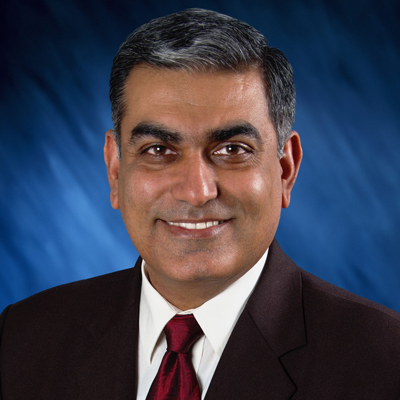
    So are MSOs in India taking the right approach to build a broadband base in the country? Broadcom India managing director Rajiv Kapur tells Indiantelevision.com, “I applaud the MSOs in the country for what they are doing. They are taking the right approach. If anything, they should do more of it.”


    The satellite versus cable versus IPTV is probably the biggest war in the broadcast universe, where three different ways of delivering live TV compete with each other. “India is at a very nascent stage for IPTV, and that brings us to the satellite versus cable TV war. Like in any other market, both will co-exist with their own unique offerings. Both have existed with a large enough pie of their own and both bring something unique to the table,” opines Kapur.


    Kapur believes that a reason why cable benefits over satellite is because it can provide a two way service. “While one way service is very limited, two way services are way more powerful in customizing things to make them more entertaining, or in gaming context more interactive. Taking a cue from what has happened in the rest of the world, I foresee that the sheer desire to remain competitive against satellite will again lead cable to bring broadband more aggressively in Indian cable market. The market itself isn’t exactly demanding it, so there has to be a little bit of a push to create the demand,” he adds.


    Since Indian subscribers are currently not aware of the advantages of a two way pipe, cable operators will need to start making creative use of the pipe that gives two way cable services, which enhances one’s TV watching experience and not just leave it as a pipe. “Even if it is left as a pipe, there are still some benefits for cable operators because the ARPU will still be way higher,” Kapur informs.


    Broadband will not only benefit cable operators, but also subscribers as there will be less capital expenditures (CAPEX) and a lower total bill, if they get the services from one operator. “So everyone benefits and this will happen whether it’s a sheer data pipe or there are services in the data pipe, which embellishes TV watching experience,” says Kapur.


    According to him, one needs to be a little more patient with broadband as India is going through the basic steps of digitization. “As a country, barely have we been able to figure out how to get such a large footprint of analogue converted to digital. It is a very large market and that makes it that much more difficult. One needs to keep in mind that business relations between broadcasters, MSOs and LCOs are still settling down,” points out Kapur.


    The country definitely needs a broadband push and now. Talking about how it will happen, Kapur suggests two types of push mechanism. “The first push is much easier and has already started, which is offering a higher bandwidth speed at aggressive pricing. This kind of push takes a progressive operator to initiate it and we have seen it happening. The second level of push is TV embellishing two way service. If you fast forward into 2016, there will be at least one progressive like-minded large cable operator who will begin showcasing interactive services that others will either be forced to follow or would want to follow,” he suggests.


    Talking about the right pricing for broadband, Kapur says that the sweet spot of bandwidth and price is between Rs 800 – 1000. “There is always a package, which is above it and there is a package below it. What will happen with time is that higher speeds will come at the same price. This is the beauty of a competitive market. In a year from now, at least a few operators will start aggressive broadband packages in the market. The side effects of this on other operators starting the same, will take another year or two. So in the next two-three years, India will be a much larger broadband market than it is today,” feels Kapur.


    Delay in Digitization


    Kapur believes that even if the country sees a large percentage of digitized homes and not 100 per cent, is still a big step forward. “The only benefit of 100 per cent digitization is that one can do an analogue shut off,” he says.


    Citing the positives of the delay of digitization, Kapur says, “The sheer magnitude of what needs to be done is very large. The delay gives time and opportunity to MSOs, LCOs and broadcasters to sort out their complex relations and their businesses.”


    The pressure to complete seeding of set top boxes (STBs) on time in phase I and II saw many MSOs compromising with the STB quality. “If we have to deploy 50-100 million boxes, it will be a shame to do it without keeping quality in mind. This country shouldn’t waste money in replacing boxes. So there is a big positive in the delay as now the quality matrix of what needs to be looked in hardware procurement will be left uncompromised,” he adds.


    Pay TV channel revenues post digitization


    Currently there is fear in the masses that prices of pay TV channels post digitization will go up. Kapur feels that while there is an element of truth in that, it is only because in the analogue regime, people were not paying for what they were viewing. “The second television was not being paid for and people were slicing the cable and taking feeds. So in the bigger picture, prices will go up just because of that.”


    Citing examples from the telecom sector, where high competition and usage led to reduction of prices, Kapur suggests that hyper competition will force price control even in the cable TV sector. “More services will come, which if taken by subscribers, will increase the ARPU for operators,” he opines.


    In satellite, DTH players have existed since over 10 years, however the country witnessed hyper competition amongst players only in 2008-2009. As the DTH market enters its early stage of maturity, more services are being considered and offered to consumers. “All this took a decade. Cable will not take that long because the market is established due to DTH, but it still needs to go through it,” informs Kapur.

  • Digital fallout: DTH cos set to lose, broadcasters poised to reap benefits

    Digital fallout: DTH cos set to lose, broadcasters poised to reap benefits

    MUMBAI: Change is constant and change is good…. however, it seems like change isn’t good for all. While the proliferation of digital platforms giving an impetus to online videos, will turn out to be a boon for broadcasters, direct to home (DTH) operators however, are set to lose out.


    According to a research report by Bank of America-Merrill Lynch, just like in the West, online video content will disrupt India’s Pay TV market. While broadcasters will benefit because of ad supported content monetisation, DTH players will suffer because of pressure on ARPUs. Moreover DTH companies are also poised to lose most as the price-sensitive Indian consumers will refrain from paying premium for content on live television when they have online alternatives.


    Broadcasters are well placed to monetise content on digital platforms as it only increases the opportunities. As a result, ad revenues are expected to improve following a pick up in economy. The report states that broadcasters will be able to improve their content monetisation through increased ad revenues and better declaration of subs in a digitised environment.


    For DTH companies, despite digitisation delay, there will be improvements in the average revenue per user (ARPU) driven by the following factors: 1) HD channel penetration increase; 2) Differential tariff hikes; and 3) MSOs hiking tariffs to maintain profitability – offering DTH players more headroom to raise tariffs.


    Creating a scenario comprising Zee TV (broadcaster) and Dish TV (DTH), Bank of America-Merrill Lynch’s analysis suggests that the overall risks are skewed to the upside for broadcaster Zee and to the downside for DTH operator Dish TV.


    According to the report, Zee has underperformed the markets by eight per cent year-to-date (YTD) on concerns about the loss in market share due to channel fragmentation and investments in new channels. “Post the share-price underperformance, we see the risk-reward as favourable since, in our view, the market is now factoring in all the risks, but not giving full benefits of strong ad growth, monetisation of new content and digitisation benefits,” the report states.


    Factoring in the positives for Dish TV, the report says that though digitisation is inevitable, the expectations on timelines are optimistic and complete benefits of digitisation will be seen only by FY2020-21. However, over the next 12 months, ARPU improvements are expected due to: 1) MSOs hiking tariffs to maintain margins; 2) Increased penetration of HD channels; and 3) Differential price hikes in urban areas. “However, Dish TV has outperformed the market by 65 per cent YTD, and we see most of the positives are priced in,” says the report.


    The upside of digitisation will be gradual. Citing risks and benefits of digitisation, the report says that it sees the risk of distributors (MSOs and DTH players) not realising the full potential of digitisation as the pace of roll out is slower than what the market is anticipating. Moreover, by the time the full benefits of digitisation are realised, the new-age video disruptors, internet-enabled smart devices like mobile, TV and PC will start eating into the revenues of Pay TV and MSOs like they have done in the West. Additionally, though phase-I and II of digitisation is complete, the expected benefits have not flowed to the players because of issues like MSOs/LCOs tussle and absence of customer billing. “There has been some progress on resolving the issues but it has been slow. These problems will only increase with roll out in phase-III and IV areas,” the report states.


    In the next few years, the Indian media sector is expected to evolve as digitisation gradually picks up, fragmentation of channels increases and all companies (broadcasters, DTH and MSOs) evolve their business models in face of online content proliferation.


    Positive on broadcasters: Content still the king


    According to the report, companies like Zee will benefit from an improvement in ad growth (led by GDP uptake) and expect to benefit from content fragmentation as it is one of the better companies leveraging this trend. “Over time, as traffic will shift to smart devices, we expect consumption of video content to increase. This presents increasing opportunities for broadcasters to monetise content. With improving economic activities, digitisation rollout and pressure on distributors’ P&L, we expect both advertisement and subscription revenues of broadcasters to increase. On the other hand, we believe that given the reluctance of Indian consumers to pay for online consumption, content on smart devices (smartphones, PCs, tablets) will be monetised primarily through advertisements,” the report states.


    DTH: Digitisation is gradual; ARPU improvement to flow in


    Despite slow digitisation, companies like Dish TV are likely to improve their ARPUs and EBITDA margins over next 12-18 months. The ARPU improvement will be led by the following factors: 1) MSOs facing some pressure from broadcasters to hike tariffs allowing DTH operators to follow them; 2) Increased penetration of HD channels; and 3) Players like Dish TV implementing differential pricing across cities to improve realisations and monetising on its “Zing” offering.


    MSOs: Broadband push is the next big story


    With the ongoing tussle between MSOs and LCOs, the full benefits of digitisation will come gradually for MSOs. As a result, MSOs are likely to focus on other revenue streams like broadband subs. According to checks carried out by Bank of American-Merrill Lynch, there’s increasing focus by MSOs to improve their broadband coverage, which would help cross-sell services overtime and have direct control over subs. The major MSOs have already started experimenting with high-speed broadband in high-density urban areas, and slowly they will start rolling out in Tier-2 and Tier-3 cities.


    Key risks:


    1) Economy not picking up: Any slower-than-expected economic uptake may lead to material downgrades to our consensus ad revenue numbers for Zee. 


    2) LCOs/MSOs tussle unable to reach a solution: Continued tussle between LCO and MSO (LCOs are unwilling to share consumer details with MSOs in order to guard their turf) will impact ARPU improvements for the sector. 


    3) Rise in piracy: With the proliferation of online content and new mediums of consumption, we may see a rise in piracy. In such a scenario, it will impact the entire industry negatively as it would be difficult to monetise the content effectively.

  • STB market set to grow globally with HD channels & falling prices of smart TVs

    STB market set to grow globally with HD channels & falling prices of smart TVs

    NEW DELHI: Even as India has embarked on a Make in India programme, an international research says that availability of High Definition (HD) channels and falling prices of smart TVs are expected to surge set top box (STB) market growth between 2015 and 2022.


    Cooperation between STB operators and the manufacturers along with efficient customer support is expected to positively contribute towards market growth, according to Grand View Research.


    The Asia Pacific STB market is expected to witness rapid growth due to growing consumer adoption and favorable government mandate in the region.


    Regulations mandating the digitization of traditional cable television and the subsequent migration from analog to digital TV have led to an increased demand for STBs over the past few years. Technological advancements and better quality of signal transmission may further supplement STB market growth over the next seven to eight years.


    The improvements in technology and better quality of signal transmission in digital television are expected to spur market growth over the forecast period. Moreover, features such as recording, live streaming through internet, and remote viewing through smartphones and tablets are further expected to drive STB market growth.


    However, high costs of such STBs and associated costs of pay channels could challenge market growth. Cable service providers who are unwilling to participate in rolling out of STB due to major capital expenditure amidst business uncertainties may also challenge market growth. Factors such as operator upgrades to high definition technologies, attractive development policies, plans, growth interest in over-the-top hybrid set top box designs, and rising global penetration of pay-TV are expected to provide growth opportunities for the set top box market over the forecast period.


    Types of set top box include Internet Protocol Television (IPTV), satellite Direct-To-Home (DTH), cable, and Digital Terrestrial Transmission (DTT). The IPTV segment is expected to account for a major share in the market.


    Strategic acquisitions and mergers are expected to play a key role in expanding market share. For instance, in April 2015, ArrisGroup Inc., a broadband media technology, and Pace PLC, a UK-based technology provider for the Pay-TV and Broadband industries, announced that Arris would acquire Pace for a cash consideration of $2.1 billion. The acquisition is expected to enhance the company’s product portfolio and its presence in the satellite segment, the California-based research group said.

  • Vserv to offer solutions to telcos & DTH operators

    Vserv to offer solutions to telcos & DTH operators

    MUMBAI: Smart data platform for mobile marketing in India and Southeast Asia – Vserv has forayed into the burgeoning commerce space.


    In an industry-first move, Vserv will now provide an end-to-end solution for telcos and DTH operators, right from the discovery of customers to the transaction of services. This step will empower consumer-facing companies to utilize the combined power of Vserv Smart Data platform and commerce solution.


    With this added capability, Vserv will enable telcos to promote segmented offers across data and voice. By driving these transactions, Vserv enhances average revenue per user (ARPU) for telcos. For DTH operators, this translates into selling segmented channel packs leading to a major jump in subscriptions and higher revenue.


    Vserv co-founder and CEO Dippak Khurana said, “We saw the opportunity to redefine the relevance, simplicity and convenience of these services for the customer. Vserv’s massive reach of 120 million unique users in India combined with this commerce solution creates a disruptive development in the mobile Internet ecosystem. While our Smart Data platform is a revolutionary offering for mobile marketing, with our commerce solution, we now complete a user’s journey from intent to purchase. This unique proposition provides a powerful opportunity for consumer-facing companies, which are seeking to tap into the growing mobile Internet user base. We have always challenged the status quo and this offering is a gigantic leap towards bringing about a radical shift in the ecosystem.”


    The Vserv commerce solution delivering relevance, simplicity and convenience works on a four- pronged approach of: discovery (identifying the right user with Vserv Smart Data), promotion (engaging the user with segmented offers), payment (enabling seamless transaction for the user) and activation (quick and easy activation of the service).


    The total revenue of telco and DTH services in India stood at around $31 billion in 2014, and is currently growing at a rate of 10 per cent per annum. Within this, the share of digital commerce is close to 10 per cent and is expected to grow by 300 per cent in the next four years. This growth will be fuelled by the rapidly expanding Internet user base, which is expected to reach 500 million users by 2018, 80 per cent of which will be contributed by mobile users. With the largest mobile Internet user base in India and its unique proposition of enabling commerce for consumer-facing companies, Vserv is strategically positioned to capture a sizeable market share.

  • Biggest threat to Indonesia’s DTH & Pay TV market is piracy: Tanoesoedibjo

    Biggest threat to Indonesia’s DTH & Pay TV market is piracy: Tanoesoedibjo

    MUMBAI: While there may have been disruptive pricing and piracy issues that haunt the Indonesian pay TV market, the potential in the country is enormous.


    According to Indonesian satellite Pay TV company MNC Sky Vision’s president and director Rudy Tanoesoedibjo, the industry faces three key hurdles, which are stagnating growth. Outlining the three key points he says that piracy has been the biggest threat to the pay TV and Direct to Home (DTH) market.


    “We work very hard to fight piracy and we get very good support from the channels to stop piracy,” Tanoesoedibjo says. He was speaking at the recently held Asia Pacific Operators Summit (APOS) 2015 in Bali.


    Tanoesoedibjo further adds that the other two reasons are inter related to the content of the channels in Indonesia. “We are experiencing what India was experiencing in the past. In India, it was called call rotational subscribers while we call it recycle subscribers. The same set of new subscribers come in once again every three to four months, as new subscribers like a rotational churn thanks to an ‘unhealthy’ free offering for new subscribers. A single subscriber jumps from one operator to another,” he says.


    The third reason behind the stagnant growth, according to Tanoesoedibjo, is severe because of a new practice adopted by some operators in the country. “Operators do not shut off non-paying subscribers. We have had instances where people only pay one time and continue with the service. This threatens the growth,” he laments before adding, “this is a structural problem and we can only solve it with the participation of the channels.”


    To battle the menace of piracy, MNC Sky Vision is currently fighting approximately 36 cases in court. The company has three brands namely Indovision, Top TV and Oke Vision under its umbrella. The good news here is that MNC Sky Vision has managed to crack one the biggest player, which had 75,000 subscribers.


    Talking about the scale of opportunity for DTH players in Indonesia, Tanoesoedibjo opines that the opportunity is large enough with a market size of 40-50 million subscribers and the pipe can grow further. “Currently the pipe is stagnant,” he informs.


    Going forward, MNC Sky Vision is planning to offer more High Definition (HD) channels in the country and will also be moving soon to MPEG-5.


    “It doesn’t matter if the Set Top Box (STB) is MPEG2, MPEG 3, MPEG 5, HD or even Standard Definition (SD), as the price difference is only one or two dollars. We will be move to MPEG 5 by the end of the year,” he says.


    Throwing light on the dilemma of whether Over the Top (OTT) and DTH players can co-exist peacefully, Tanoesoedibjo says that DTH operators need to evolve in order to survive. “DTH operators think with a traditional mindset that they just provide access to content via their technology for customers. We should not forget that at the end of the day, we do not have control of content. We are only a pipe,” he informs.


    Calling new technology that can deliver content faster, efficiently and cheaper than a DTH operator, a threat, Tanoesoedibjo says that in that scenario operators will have to expand, introduce better technology and new means of delivery such as OTT platforms.


    “We have already launched our alternate OTT, and are also preparing our stand alone OTT services next. But maybe in the next five months there will bea new means of delivery,” he mulls.


    On a concluding note Tanoesoedibjo says that operators need to pay attention in creating their own content. “We now have our own content for 20 channels. At the end of the day we deliver content. But if someone else finds an easier way to deliver it, then DTH needs to watch and be more effective,” he cautions. 

  • “Disorganisation of analogue cable in Phase III & IV will help DTH”: Harit Nagpal

    “Disorganisation of analogue cable in Phase III & IV will help DTH”: Harit Nagpal

    MUMBAI: While India has witnessed Phase I and Phase II of digitisation, the remaining two phases (i.e Phase III and IV) will go a long way in aiding more transparency. Direct to Home (DTH) platforms too are an enthused lot, hoping it will help them gain additional subscribers. 


    Speaking about the expected development Tata Sky CEO Harit Nagpal said, “As digitisation rolls out, we are hopeful that a large number of consumers will move to DTH because analogue cable is little less organised in Phase III and IV of digitisation.”


    Nagpal said that the first two phases impacted approximately 15 per cent of the TV population. According to him, when it came to the process of conversion from analogue cable to digital, about 40 per cent of the analogue subscribers picked up DTH.  Nagpal was speaking at the Asia Pacific Operators Summit (APOS) held in Balli recently.


    Speaking about net additions, he said that the pace had not slowed down. “Even when we were acquiring close to 10 million subscribers as gross, we were getting three to four net additions. Today, the industry picks six to seven million gross, it still makes three to four million net.” Nagpal further added that this would be facilitated by digitisation in places where the first two phases were complete.


    Nagpal believes that the top four DTH players will become cash positive very soon. “It’s on the horizon now. We have already been covering our operational costs. The investment that is really going into the business is going to fund the growth,” he said.


    According to Nagpal, an investor wouldn’t mind finding the growth because on a 10-12 per cent churn, the life of a customer is seven to eight years. As such if the pay back is three years, then an operator has about six to seven years cash life with the customer.


    “Thus an investor is happy to invest and add the gross adds faster and does not mind paying for the investment,” he added.


    While on the one hand, Videocon d2h CEO Anil Khera expressed his displeasure over premium content being distributed for free by Over The Top (OTT) platforms, Nagpal explained his point of view. “I treat myself, i.e. a content access provider, as a grocer. We buy soaps and cereals in bulk and sell them in small packets. If three generations in a single family want to consume bread, rice and pasta we have it stocked. Secondly, if these three generations ordered the food respectively via in shop, over the phone or placed an order online, I have to cater to that and make it convenient for customers.” 


    He further said that he would not go about cursing people as to why content is being given out for free. “I have to make it convenient for the customer to find everything at one place,” he stressed.


    On the added service of video on demand (VOD), Nagpal said that four years ago when Tata Sky launched VOD, it had seen an investment of close to $10 million. Currently the operator was just breaking even on operating costs. “But we know it’s a long term play. It’s not necessarily a play of premium content. In fact, on our first VOD we made available Hindi movies and not English. The reason being English movies’ rights holders were sceptical and insisted on minimum guarantees.”


    On the issue of broadband bandwidth, Nagpal stated that going by the current world wide web phenomenon it was obvious that  video cannot be carried by over the air as the last mile has to be connected by at least some form of wire. He hoped a new entity would cater to this business very soon. 


    “Currently there are a lot of entrepreneurs who provide broadband very well in some areas. They have just been constrained by expansion. We are hoping that in a year’s time the landscape will change. Some funding will come in and then they will expand,” he concluded.

  • Tata Sky targets southern market with customised packs

    Tata Sky targets southern market with customised packs

    MUMBAI: After creating quite a stir in the industry by introducing its Rs 8 daily recharge voucher, Direct to home (DTH) service provider Tata Sky has rolled out customized packs specifically targeted towards the Southern markets in India.


    These modular packs called the My 99 pack, enables viewers to avail varied regional channels at a reasonable cost along with a base pack of Rs 99.


    According to Tata Sky chief communications officer Malay Dikshit, the move will help Tata Sky to tackle analog users in the region situated within urban and rural areas.


    “Being price and value sensitive, subscribers were keen to do away with the other language channels that they didn’t view as a part of their base pack and stick to a bouquet of only their favorite language channels. My 99 pack is the answer for all those subscribers,” Dikshit said.


    The My 99 pack comprises over 100 channels across genres such as general news, entertainment and movies to which subscribers can add as many language channel packs (Tamil, Telugu, Malayalam and Kannada) of their choice. Available to new as well as existing subscribers, this pack is specifically conceptualized keeping in mind the requirements of the subscribers residing in the south. The DTH operator is looking at adding new subscribers by launching this initiative.


    With the challenge of digitization across the state, such customized and mini packs is also likely to give the DTH sector the much-needed push. 

  • MIB gets BSI’s ISO certification for Quality Management Systems

    MIB gets BSI’s ISO certification for Quality Management Systems

    NEW DELHI: The Information and Broadcasting Ministry (I&B) has been conferred the certificate of registration by the British Standard Institute (BSI) for the Quality Management System as required under ISO 9001:2008 in respect of various permissions / licenses issued by the Ministry for the broadcasting, print and films sectors.


    These include permission / license for satellite television channels, teleports, multi-system operators, community radio stations, direct-to-home services, publication of Indian editions of foreign, technical and scientific foreign magazines of news and current affairs sector and facsimile edition of foreign newspapers and grant of permission for foreign film producers. 

    The Ministry has been taking several initiatives to bring in more transparency and efficiency in the processes relating to grant of various permissions / licenses to the eligible applicants.


    The Ministry has put in place a well defined procedure and measures for ensuring quality of services offered to the customers on the basis of ISO 9001:2008. This will ensure delivery of services by the Ministry in a qualitative manner.  

  • Apollo’s 3% stake sale in Dish TV earns it a profit of Rs 135 crore

    Apollo’s 3% stake sale in Dish TV earns it a profit of Rs 135 crore

    MUMBAI: US based alternative assets manager Apollo Global Management part sold its three per cent stake in direct to home (DTH) operator Dish TV for Rs 262.5 crore, through an open market transaction on 10 April. 


    The stake comprising 32 million shares of an average price close to Rs 82, as compared to their original purchasing price of approximately Rs 39, was picked up by an investment unit of Citigroup and a mutual fund under Birla Sun Life.


    With the sale purchase, Apollo will see a profit of Rs 135 crore. The Private Equity (PE) firm is now left with eight per cent stake in the company through its outstanding global outstanding depository receipts (GDR). This stake is valued at Rs 721 crore.


    It was in 2009 when the PE firm invested $100 million to gain an 11 per cent stake in the company, which was the firm’s first investment in the country. Dish TV is part of the Subhash Chandra owned Zee Network with approximately 12.5 million net subscribers. With a strong range of 470 television and audio channels, it has 43 High Definition (HD) channels under its kitty. For the quarter ending 31 December, 2014 the company’s net loss stood at Rs 2.9 crore.

    Meanwhile the ESSEL group through its continuation of an earlier intimation dated 26  August last year,  informed the BSE that the Board of Directors of the Company at their meeting held on August had considered and approved to transfer the Company’s non-core business (including set top boxes, dish antenna, and related services) to its Wholly Owned Subsidiary – ‘Xingmedia Distribution Private Limited’ (presently known as ‘Dish Infra Services Private Limited), subject to necessary approvals and as per the applicable provision of the Companies Act, 2013.