Tag: DTH

  • Pay channel’s a la carte rate to not exceed two times its RIO rate: TRAI

    Pay channel’s a la carte rate to not exceed two times its RIO rate: TRAI

    NEW DELHI: The Telecom Regulatory Authority of India (TRAI) today said that the a la carte rate of a pay channel forming part of a bouquet offered by any digital platform should not exceed two times its RIO order rate offered by the broadcaster for addressable systems.


    TRAI also said that the sum of a la carte rates of all channels in the bouquet should not exceed three times the bouquet rate. 


    This applies to all multi-system operators (MSOs), direct to home (DTH) operators, internet protocol service (ISP) providers and Headend in the Sky (HITS) operators providing broadcasting services or cable service to its subscribers using a digital addressable system (DAS) and offers pay channels or pay and free-to-air (FTA) channels as part of a bouquet.


    These provisions are contained in the draft Telecommunication (Broadcasting and Cable) Services (fourth) (Addressable Systems) Tariff (Amendment order), 2015 that TRAI has prepared consequent to an order of the Telecom Disputes Settlement and Arbitration Tribunal (TDSAT) of 13 July.


    TRAI has also given the definitions of RIO and RIO rates in the draft, to which comments can be filed by 14 October with counter-comments if any, by 21 October.


    TRAI defines “RIO” as Reference Interconnect Offer published by a service provider specifying terms and conditions on which other service providers may seek interconnection from the service provider making the offer. On the other hand, “RIO rate” is the rate specified by the service provider in its Reference Interconnect Offer.


    The a-la-carte rates of all the channels offered by the service provider should be same for all the bouquet of channels formed by the service provider.


    The matter had gone to TDSAT as some platforms had objected to the “twin conditions” that were prescribed at retail level pricing of TV broadcasting services in order to link the a-la carte rates of channels to the bouquet rates in the Tariff order of 20 September, 2013.


    TDSAT, while disposing off the appeal vide its order of 13 July, stated that the Authority will consider the concerns of the appellants and take a final decision on the matter within four months from the date of the order.

  • Change in investor mindset needed for MSOs to chart growth path

    Change in investor mindset needed for MSOs to chart growth path

    GOA: While the direct-to-home (DTH) sector has managed to attract investment from private investors because of its growth, the cable industry will be able to do so only if multi-system operators (MSOs) add broadband to their services.


    This was the general consensus of a session on ‘Investing in Digital assets – Gems and long bets’ at the ongoing Indian Digital Operators Summit (IDOS) 2015 organised by Indiantelevision.com and Media Partners Asia.


    HSBC Securities and Capital Markets (India) Pvt Ltd director of analyst telecoms, media and Internet Rajiv Sharma said that DTH had gained as it has shown growth in terms of average revenue per user (ARPU), and innovation.


    While the stocks of cable industry initially went down, a reading of the figures of both cable and DTH showed that there was some recovery towards the end of the year. “The MSOs have not matched up to expectations, partly because of MSO-local cable operator problems,” Sharma said.


    In the session moderated by Castle Media ED Vynsley Fernandes, Sharma said that broadband can be the catalyst, which can bring in growth but only one or two MSOs have entered the broadband space.


    “The scale of growth is directly linked to attracting investments. If LCOs (local cable operators) can show that they own subscribers, they will get investment,” Sharma said. However, he was quick to add that broadband infrastructure and broadband compliant STBs (set top boxes) would help.


    Asked about collaborations, Sharma said that the media can learn a lot from telecom where networking and collaborations led to the government thinking in terms of letting them sell or share spectrum. “Telecoms focus on revenues to share, while the cable industry wants finance for set top boxes,” he said.


    Replying to a question about the slow growth of broadband in the country, he said, “Anything that is wireline will grow slowly whereas wireless will grow much faster. The consumer is willing to pay but it is for the government to facilitate this.”


    Sharma also added that the quality of management, profitability and network will attract investments. He regretted that the cable industry had failed to learn any lessons from the first two phases of the Digital Addressable Systems (DAS).


    Concurring with Sharma, MPA executive director Vivek Couto added, “Investors reward growth and DTH did exactly that.” However, he was of the opinion that the last mile operator (LMO) will consolidate under the Headend In The Sky (HITS) platform and that may change the situation. “The results will begin to show in the three to four years,” he said.


    Referring to NXT Digital, which was prepared to offer funding, he said that LMOs may now come forward.


    Couto added that while organized MSOs were doing well, investment in broadband in the short term would bring in benefits in the long term.


    In reply to a question, he said that India was the only country where content generation was growing. “But in all this, the cable industry was feeling lost,” he opined.


    Indiantelevision.com founder CEO and editor-in-chief Anil Wanvari had the last word when he said that the mindset of investors had to change as few MSOs in India could today afford the kind of growth their counterparts had shown in foreign countries.


    In another session, Maharashtra Cable Operators Foundation president Arvind Prabhoo and Sagar E-Technologies executive director Sudhish Kumar agreed that the cable industry had to organise itself better if it was to attract investments and grow in the digital era.


    Prabhoo said he had succeeded to an extent in this by getting the LCOs to be seen as the last mile operator (LMO). In an example of how the LMOs can grow, he said, “30 LMOs in Nagpur have joined together to form an MSME and were not prepared to invest in other LMOs,” he said.


    He added that if investors put in money to help create model services, there will be a major change in the next six months or so. “If cable operators offer other services through their STBs, there will be a churn in the industry,” he said.


    Kumar, who has a headend in Bangalore, lamented that finance was a major problem. “One STB cost around Rs 1500, but some of the larger MSOs sell boxes for around Rs 1000 and this forced others to sell at lower rates, which in turn results in a loss,” he said.


    Emphasising on the fact that MSOs were not concentrating on marketing, he said that if they did, it would help in consolidating the industry.


    Citing his own example, he said that he had not lost a single LMO despite having had ups and downs in his company because of the faith reposed in the company.

  • DW News eyes greater coverage on S. Asia riding on reach in India

    DW News eyes greater coverage on S. Asia riding on reach in India

    NEW DELHI: German public service broadcaster Deutsche Welle, which launched its 24-hour English news channel in India on 22 June, 2015, is committed to increase its coverage on south Asia from the current 30 per cent, riding on its large scale reach in India. While the company’s flagship channel DW had started out with 300 TV homes in India, DW News now beams in 71 million TV households across direct to home (DTH) and cable platforms.


    DW News is aiming to increase its coverage in India of local issues as well as highlight local heroes and has appointed two India correspondents for the same. Speaking to Indiantelevision.com, DW head of news and current affairs Carsten von Nehman said, “Now that we have two correspondents in India, we hope that there will be greater coverage.”


    DW News India head Sudeep Malhotra added that the channel is available on DTH platforms namely Dish TV, Airtel and DD Freedish. It is also available on cable networks including Asianet, Hathway, DEN Network, InCable Network, Ortel and GTPL. The programmes are beamed via ASIASAT 7 satellite. According to him, the channel’s viewers included teens to people in their mid or late forties.


    According to von Nehman, the channel’s morning slots were generally devoted to Europe, while the early afternoon slots were about news from south Asia. The late afternoon slots were on African news and the night shows related to North America. This had been planned meticulously based on the time zones in these respective countries.


    He said apart from news on the hour, highlights included the lifestyle shows like EuromaxxArts 21 and Tomorrow Today. Other show include Discover GermanyGlobal 3000In Good Shape, Kick-off (DW has a tie-up with the German Football Association) and the political talk show Conflict Zone with Tim Sebastian.


    Asked about the marketing of the channel, von Nehman said that there would be no advertising in newspapers or elsewhere. Marketing was being done more subtly through involving viewers via contests and interactions.


    “The new DW TV opens a window to the world for our viewers in South Asia. DW offers a unique perspective that is especially valued by local business and opinion leaders and DW News will now provide them with insights into international head-lines and the details behind regional issues,” said DW head of distribution Asia Dorothee Ulrichs. 


    German ambassador Martin Ney and Prasar Bharati CEO Jawhar Sircar were the main speakers at the formal launch in India.


    It may be recalled that Prasar Bharati had signed a memorandum of understanding (MoU) with DW last year paving way for distribution of DD India on DTH platform of Hotbird-13B Satellite and the reciprocal distribution of DW-TV on DD Freedish. 


    According to Ney, India had Germany had many things in common, including federalism, a free press and healthy trade relations. “Germans are curious to know more about India and this is evident from the growing number of tourists to Germany from this country,” he said.


    Sircar said the primary aim of a public service broadcaster should not be to impose any news or information on the viewers, and leave it for the consumer to decide.


    “India has over 400 news channels and so there’s ample choice, but the real challenge lies in getting to the 150 million cellphones since the consumer is not using the mobile to get information,” Sircar said.


    DW is Germany’s international broadcaster with content in 30 languages. The flagship channel DW provides analysis and insights to viewers around the globe, reporting on important issues in English 24/7.

  • Arqiva scales up Eutelsat satellite capacity for DTH broadcasting

    Arqiva scales up Eutelsat satellite capacity for DTH broadcasting

    MUMBAI: UK based communications infrastructure and media services company Arqiva has signed a multi-year deal with Eutelsat Communications for a 14th transponder at the 28° East video neighbourhood, to serve the UK DTH (direct-to-home) broadcasting market.


    Arqiva’s portfolio of capacity at the UK’s premium neighbourhood, combined with encryption, multiplexing and uplinking services, positions it as a key partner for channels seeking to engage with Sky and Freesat homes. The additional capacity will expand Arqiva’s extensive digital multiplex offering and broaden the options available to its existing and future customer base.


    Arqiva managing director for satellite and media David Crawford said, “Arqiva’s multi-year agreement with Eutelsat not only supports our continued growth in the satellite market, but it also confirms our long-term commitment to our customers, and to delivering them service excellence at great value.”


    Eutelsat chief commercial and development officer Michel Azibert added, “We are proud to meet the exact requirements of the largest satellite and media service provider in the UK. The Arqiva team has its finger on the pulse of broadcasting in the UK and we are delighted that our satellite capacity forms an integral part of their response to customers.”

  • Subhash Chandra’s Living Ent. to launch 5 channels; eyes Rs 1000 crore revenue in 4 years

    Subhash Chandra’s Living Ent. to launch 5 channels; eyes Rs 1000 crore revenue in 4 years

    MUMBAI: Essel Group’s Living Entertainment is looking at launching five new channels in the Indian market.


    The first channel to go on air will be an international food and lifestyle channel christened Living Foodz. Hitting Indian airwaves on 11 September, 2015, this foodtainment channel will have dual feed in Hindi and English.


    Additionally, the group also plans to launch Zee Living in India, which is already an established channel in the US. Apart from this, channels that will be launched under the Living Entertainment’s umbrella are: Living Rootz, which will concentrate on the rich civilization of the country, Living Homez focusing on home décor and Living Travelz, which will emphasise on the traveling aspect. The launch dates of these four channels have not yet been decided. 


    What’s more, the Living network, which has generated revenues of Rs 80 crore from global operations, is eyeing global revenue of Rs 1000 crore in the next four years.


    “In the next six months, we will add Rs 30 crore from India operations, which will take our business to around Rs  110 – 115 crore. In next four years, Living network will reach the Rs 1000 crore mark,” informed Zeel and Essel Group chairman Dr Subhash Chandra.


    According to him, 12 – 13 per cent of the global television viewership comes from the lifestyle category, while in terms of revenue generation the percentile goes up to 18 to 20 per cent, hence offering a huge space to explore.


    “This is yet another endeavour from our group to bring the world closer through entertainment. Living is all about global mindsets and experiences. This is also in line with our group philosophy of ‘Vasudhaiva Kutumbakam’ – The world is my family. Our group has always believed in creating not just great content but building genres and brands that are milestones,” he added.


    According to Dr Chandra, the American market, where Living network’s Zee Living has already established itself, is the most closed economy. “I have no hesitation in saying that, though people say US is the father of market economy, it’s the most closed economy I have ever seen in my life. We had to tussle hard to get distribution and even today out of 110 million homes, we managed to reach only 30 million homes,” he asserted.


    Zeel MD & CEO Punit Goenka added, “With Living, we intend to make global content for global audiences. This will be for the first time ever  that original content from India will be available to audiences across the globe. We are very proud to present this new form of entertainment to our audiences.”


    Drawing light to the business aspiration of the first channel to be launched from the bouquet, Goenka said, “Living Foodz will be a profitable from year one. Given the quality and content we have, I am sure of the fact that Living Foodz will go a long way.”


    Living Foodz will specialise in exploring the evolving social status of food: moving out of the confines of the conventional kitchen into a world of entertainment and adventure with food. Having food at its core, Living Foodz will explore different perspectives towards food and the way it touches people – from lifestyle, travel, wellness to food infotainment and reality.


    “Living is our endeavour to showcase audiences with great lifestyle content. Growth of digitisation is leading to fragmentation of audiences, thereby creating an opportunity for differentiated and genre specific content. Moreover, increasing digital households are giving rise to increased audience expectations and demand for more diverse viewing opportunities. Under this scenario we are providing Living Foodz to people who love exploring and knowing more about food,” opined Zee Living – India & APAC CEO Piyush Sharma. 


    Sharma further informed that the network will launch an app in six months’ time as well as a website in the next two months. “The channel will have 100 per cent original content,” he added.


    Speaking to Indiantelevision.com, Living Foodz business head Amit Nair said, “We will have 80 per cent of Indian content, while 20 per cent will be English. The entire programming will be in-house. We have a very good in-house team who will handle that part.”


    In terms of marketing, the channel will emphasize more on digital platforms while there will be a 360 degree presence.


    For the Indian market, Living Foodz will be the international food & lifestyle channel that will have a universal feel and will appeal to new age groups in digital households. The core audience set will comprise the well travelled and connected people with high interest level of food. 


    The launch of Living Foodz will also mean curtains down for Zee’s Khana Khazana channel. “We are proud of the achievements and accolades Khana Khazana has garnered so far but now we believe audiences’ taste has changed and hence we decided to come up with Living Foodz. We will use Khana Khazana content and re-package it for our digital platforms, but since Living Foodz is going to have 100 per cent fresh content we cannot have its content on television,” said Sharma.


    The shows that Living Foodz is launching with are: Food Xpress: Rocky & Mayur, Chef on Wheels, Vickypedia, with Chef Vicky Ratnani, The Great Indian Rasoi with chef Ranveer BrarGood Food America and Peggy’s Kitchen Cures.


    The channel will be available across all direct-to-home (DTH) platforms like Dish TV, Tata Sky, Airtel Digital TV and Videocon d2h as well as leading cable networks.


    Living Entertainment in India will be an extension of the Living network belonging to Essel Group, which already exists in international markets.

  • ISRO to increase transponder capacity for Indian DTH players to use INSAT

    ISRO to increase transponder capacity for Indian DTH players to use INSAT

    NEW DELHI: With five Direct-to-Home (DTH) service providers using transponder capacity leased from foreign satellites, the Indian Space Research Organization (ISRO) is taking measures to augment satellite capacity in India so that these users have the option to migrate to the INSAT system. 


    Giving this information, Space Department Minister Jitenda Singh told the Lok Sabha today that ISRO has given a proposal for pricing of satellite transponders for public and non-government users.


    A proposal for continuing the existing method of transponder pricing, which is based on type of services, band of operations, coverage area, power level is under consideration. 


    There are 13 INSAT/GSAT satellites in orbit, out of which 11 are communication satellites and two are meteorological satellites. In INSAT/GSAT communication satellite systems, there are about 37 Government users and about 49 non-Government users. 


    The transponder characteristics in terms of power, coverage, frequency band, etc., vary according to the type of service, which requires differential pricing.  

  • Dish TV launches Zing in Kerala with 27 Malayalam channels

    Dish TV launches Zing in Kerala with 27 Malayalam channels

    MUMBAI: A decade after serving the nation with direct to home (DTH) services media mogul Dr Shubash Chandra owned Dish TV has now launched its regional DTH brand Zing in the Kerala market targeting Malayalam viewers.


    It may be recalled that in an exclusive interview with Indiantelevision.com recently, Dish TV CEO RC Venkateish had said that after being present in the Bengal, Tamil Nadu, Andhra Pradesh and Maharashtra market, Zing would expand into the Kerala market.


    Special conceptualisation and customization has been done keeping the Malayalam viewers in the state of Kerala, who are rapidly moving over to the digital platform. 


    The bouquet of services are derived from a consumer survey revealing the most watched channels in this region. As an attempt to give the best services to the consumers at a reasonable price, Zing will offer 27 Malayalam channels and services along with 150+ channels at an exclusive price of Rs 99 per month.


    Venkateish said, “Our consumer demographic study has indicated that large segment of TV viewers from medium and small town prefer content from their own region. Zing will address this need and provide maximum available regional content (27 Malayalam Channels and Services) to viewers through exciting packs as compared to other DTH brands.”


    He added, “Zing is our unique initiative where a complete new brand is being launched to address this need for regional content. Now not only will packages cater to specific audiences across states, but even communication will be in the customer’s language of choice.”

  • “We are aiming to get digital users to switch to our OTT platform”: RC Venkateish

    “We are aiming to get digital users to switch to our OTT platform”: RC Venkateish

    At a time when digitization of cable television is throwing up a major challenge to direct-to-home (DTH) operators, Dish TV has reported a 55.2 per cent higher profit after at Rs 54.21 crore in the quarter ended 30 June. It is the first DTH company to report a profit after tax, also adding 390,000 subscribers, which was only slightly lower than the figure of 404,000 in the fourth quarter of 2014-15. Dish TV now has 13.3 million subscribers. The ARPU is more or less the same, but subscriber acquisition costs are running at Rs 1750 per subscriber.


    In an interview with Indiantelevision.com, Dish TV CEO RC Venkateish spoke of the work that had gone into achieving this success.


    Excerpts:


    To what do you attribute your success in reaching out to more subscribers and coming up with an impressive revenue figure?


    I feel that the credit goes to better marketing strategies and the youth-based Zing, which has been lapped up by the people because of the local content. In fact, Zing has also succeeded because there is greater emphasis on the language of the region where it is beamed with local content and programming.


    Can you throw some light on the plans to launch Zing in the Kerala market?


    Zing has been present in the Bengal, Tamil Nadu, Andhra Pradesh and Maharashtra. And we are now expanding and moving to Kerala with Malayalam content.


    Dish TV’s subscription figures are somewhat lower than those in the last quarter of 2014-15. Comment.


    Well, the effort is to consolidate and grow. Dish expects to add 1.5 to 1.7 million subscribers this year. Do not overlook the fact that last year we had got 332,000 subscribers in the same period (first quarter of 2014-15). The gradual shift to digitization will also help, and therefore the concentration at present is on Phase III and Phase IV.


    But the ARPU shows an increase of only one rupee over the previous quarter, ending up at Rs 173 a month.


    The ARPU is always typically low in the first quarter but picks up later.


    The Government is emphasizing on indigenous set top boxes. Are you installing local STBs for your subscribers?


    Dish is currently getting these mostly from Korea though every effort is being made to get good quality indigenous STBs.


    Dish TV also has a tie-up with Kolkata Knight Riders. How much of the budget goes into marketing and advertising?


    The players wear Dish TV armbands, and the tie-up gives us the opportunity to have in-stadia advertising through boards etc.


    I would not say budget, but around 3.5 per cent of the topline sales go into advertising and marketing. The advertising is not done merely through Zee’s own channels but also through other channels, digital platforms, hoardings, newspapers and FM channels.  


    Can you tell us something about your future plans?


    We are working on our over-the-top (OTT) platform – DishOnline and aiming to get digital subscribers on to this platform.


    There has been some tirade against local channels run by DTH operators. Comment.


    We do not have a local channel. But the channel that opens as one switches on Dish is aimed only at advertising various schemes of the platform and modes of payment.


  • Disney India terminates distribution agreement with IndiaCast

    Disney India terminates distribution agreement with IndiaCast

    MUMBAI: Disney India has terminated its agency contract with IndiaCast Media Distribution, and has set up an internal team to manage the distribution for all eight of its channels.


    The channels under the company are Disney Channel, Disney Junior, Disney XD, Hungama TV, bindass, bindass PLAY, UTV Movies and UTV Action.


    All subscription and placement deals will now be done directly by its internal team with all platforms.


    “With the No.1 kids network, the No.1 youth network and one of the leading movie channel networks in the country, Disney India provides an exciting and diverse mix of high quality content for kids, youth and family audiences. Today’s dynamic distribution market and increasing pace of digitisation provides us with a huge opportunity for growth and scale. With a robust internal distribution team now in place, we believe we can drive significant value and further strengthen our already well-established relationships with MSOs, DTH Platforms and distribution partners,” said Disney India VP and head – revenues, media networks Nikhil Gandhi.


    It can be noted IndiaCast had filed a case against Disney India with The Telecom Disputes Settlement and Appellate Tribunal (TDSAT) for wrongful termination on 28 July, 2015. TDSAT, on the other hand disqualified the case and asked IndiaCast to withdraw the case in 24 hours or it would dismiss it on 29 July. IndiaCast asked for an extension of another 24 hours to discuss and today (31 July), the case has been dismissed as withdrawn.

  • Piracy notwithstanding, English Entertainment genre charts growth story

    Piracy notwithstanding, English Entertainment genre charts growth story

    MUMBAI: That there are as many as 20 English entertainment channels in India today is alone testament to the fact that there is a chunk of audience out there who are happily lapping up English shows and movies on television. In a country where Hindi and regional general entertainment channels (GECs) account for almost 49 per cent of the total viewership pie, the English GECs and movie channels genre survive on a measly 0.9 per cent.


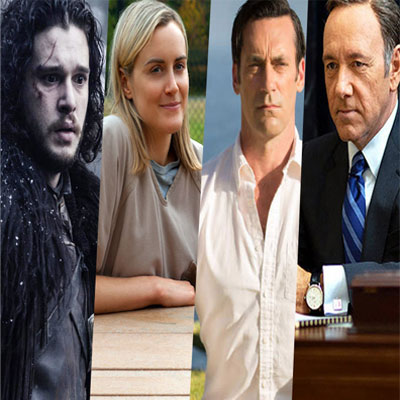
    Notwithstanding, overhear snatches of conversation of today’s youngsters and you’re most likely to hear show names such as Orange is the New Black, Homeland, House of Cards and Game of Thrones. However, a couple of pertinent questions to ask here are: Where are they consuming this content from and whether there is much scope for a genre like this to grow in a country as diverse as India?


    Even as piracy is rampant specially for English entertainment content, Indian broadcasters are going around with a fine-tooth comb in order to offer viewers the best content in order to feed their insatiable demand.


    The English Entertainment Growth Story


    According to the FICCI-KPMG 2015 report, English entertainment genre, which includes both English GECs and English movie channels, accounted for 0.9 per cent viewership in 2014 as compared to the 1.1 per cent in 2013.


    With the recent addition of Viacom18’s Colors Infinity and Colors Infinity HD, the number of English entertainment channels in India today has touched 20, as per TAM Media Research data. Of these, there are seven HD channels with the first half of 2015 alone seeing as many as five HD launches.


    Speaking to Indiantelevision.com, Times Network CEO and managing director MK Anand says, “With DAS phase I and II complete, as we go to phase III and IV, the potential to launch more and more niche channels and to reach out to specific people has become better and cheaper. With analog one could reach 100 channels through a network, whereas with digital we can technically and theoretically reach 500 channels.”


    While the niche English entertainment genre has seen content acquisition cost rising almost three-fold in the last couple of years, the fact remains that the advertising rates are nothing to write home about. Even as media planners suggest that there has been close to 43 per cent jump in the commercial time sold on English entertainment channels, the ad rate for the genre ranges from Rs 500 to Rs 2,500, which is considerably below the rates that Hindi GECs command. In a scenario like this, the question that looms large is whether it is even profitable to enter the space?  


    Viacom18 EVP head – English Entertainment Ferzad Palia says that close to 250 million Indians now are English literates, which was anywhere between 25-30 million, 10 years ago. Not just this, English entertainment genre currently reaches to 200 million consumers, with close to 60 per cent of English entertainment consumption coming from non-metros. While currently, the genre has only 4.6 per cent AdEx share of the whole television pie, Palia feels that the genre is lucrative from an advertiser’s perspective, as English entertainment consumers have 35 per cent higher disposable income.


    While the above figures and the liking for high quality content by youngsters justifies the many new launches in the English entertainment space, what is interesting to note is that networks today are investing not just on an English entertainment channel, but are also looking at catering to their HD audiences, by simultaneously launching the HD feed of the channel or only coming up with an HD channel.


    The HD Push


    GroupM head – trading & partnerships Jai Lala believes that there is scope for more HD channels in the market as the viewing pattern is changing. “With better TVs, and better availability of content, people want to watch the content in HD. The way we had SD, over a period of time, people would want to move to HD and that is where the opportunity exists,” he says.


    Digitisation and the growing emphasis of direct to home (DTH) players on HD is another reason for broadcasters concentrating on strengthening their HD bouquet. “The HD part is extremely small right now and at a very nascent stage. With an increase in the seeding of HD set top boxes, things will change. While currently HD penetration is mainly in SEC A cities, over a period of time, it will become mass,” opines Lala.


    Increasing penetration of premium, ad free channels like HBO Hits, HBO Defined and Star World Premier has given a major fillip to subscription revenues significantly for the English entertainment genre. Premium HD channels last year recorded 10X topline growth with DTH accounting over 95 per cent of the premium channel subscriber base.    


    The advertising revenue from HD channels, according to media experts is approximately Rs 250 crore. Lala estimates the English general entertainment HD market to be in the tune of Rs 100 crore.  


    Agreeing that the genre currently is not profitable, Madison Media Omega chief operating officer Dinesh Rathore says, “There is so much content available internationally and it is quite popular. Thanks to digitisation and digital penetration that people are watching this content through different avenues. This gives an impression that there is a demand for such content, but this is specialized content meant for a niche audience.”


    Giving examples of channels like Big Thrill and CBS, Rathore says that these did not work because they were not viable monetarily. “Today, every network wants to be available in every genre and with better quality. It is like building a portfolio in order to cater to your clients in every niche,” he opines.


    The Road Ahead


    While the English entertainment channels genre currently is a small player in the vast broadcast game, it has a chance to pick up with growing digital homes. Once a strong pipe is created, broadcaster will have to concentrate on bringing good quality content to viewers, preferably at the same time as its US release. They will also have to create enough room for sampling of content by viewers.    


    The key area of concern for English entertainment genre in India still remains that of piracy. According to Palia, the habit of ‘torent’ing amongst viewers has been inculcated by broadcasters themselves. “We have forced consumers to go and download. Research shows that people do not download just because they want to watch content immediately after the US launch. The real reason is that they aren’t getting enough content that they should be. There is a plethora of content that is not even brought to the country,” Palia had earlier said. 


    Media analysts are of the opinion that the English entertainment genre in the country should pick up in the next two-three years. Moreover, the huge time gap between the US and India release of a show is what eventually leads to downloading. If broadcasters can deal with this issue and develop appointment viewing amongst customers, the genre, which has immense potential given India’s high youth and English speaking population, stands to bloom.