Tag: DTH

  • How to check if your payment app is reliable?

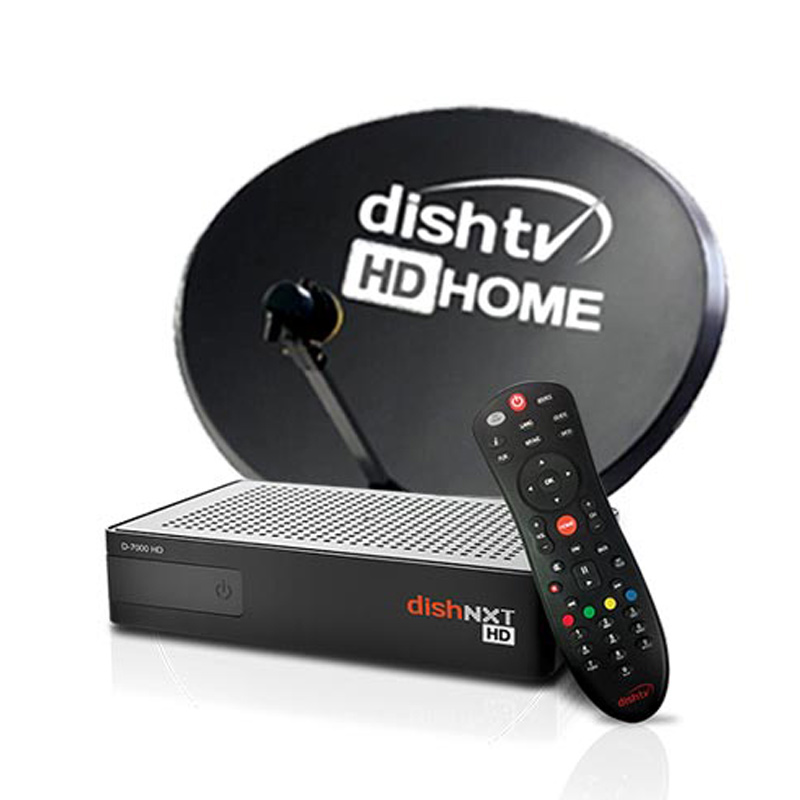
    Direct-to-home (DTH) recharge is one of the most frequently used services today as you get to browse through hundreds of TV channels – domestic, regional, and international. The geographic spread of India is aptly covered by a large number of  DTH operators, with some having hold in one part of the country while the other in another part. One of the leading DTH operators in India is Dish TV. Used by more than 21 million subscribers, the 24×7 service provider offers a comprehensive range of set-top boxes and smart device connectivity to elevate home entertainment to several notches higher. For online Dish TV recharge, you can use a trusted UPI app for swift and prompt payments. How to identify the best and the most dependable app?

    Features of a trustworthy Payment App:

    The best part about technology is that multiple apps have been developed and launched for users. The con is that not all can be trusted because not all have the features that can help process payments safely. It is critical to check out the features of the top Apps in the country today, compare the features and read reviews online before downloading one. Look out for some of the features mentioned below:

    1.    The app should permit payment transfer on a 24×7 basis. 

    2.    The app should be downloadable on your mobile phone. 

    3.    It should allow payments and recharges for multiple services and cover all service providers in the given category.

    4.    Look out for an interface that has straightforward steps to carry out the payment. Complicated interfaces should be avoided.

    5.    Checkout if the UPI payment app offers rewards and cash backs as incentives to the user.

    6.    Ensure that the payment processing time is fast; hence, find out about the technology, system performance before picking one.

    It is a good idea to enquire within your social circle about their choice of the UPI app. Word-of-mouth reviews are good sources of information, and you instantly get to know the pros and cons that help you decide. One of the things that need to be mentioned here is the app’s reputation or the credibility of the parent company that owns the app. The approach is to read online reviews and check from trusted sources before using the apps. It is vital because the app becomes your one-stop payment interface – be it paying for your child’s school fees or booking the tickets of a movie show, or paying your monthly EMIs.
     
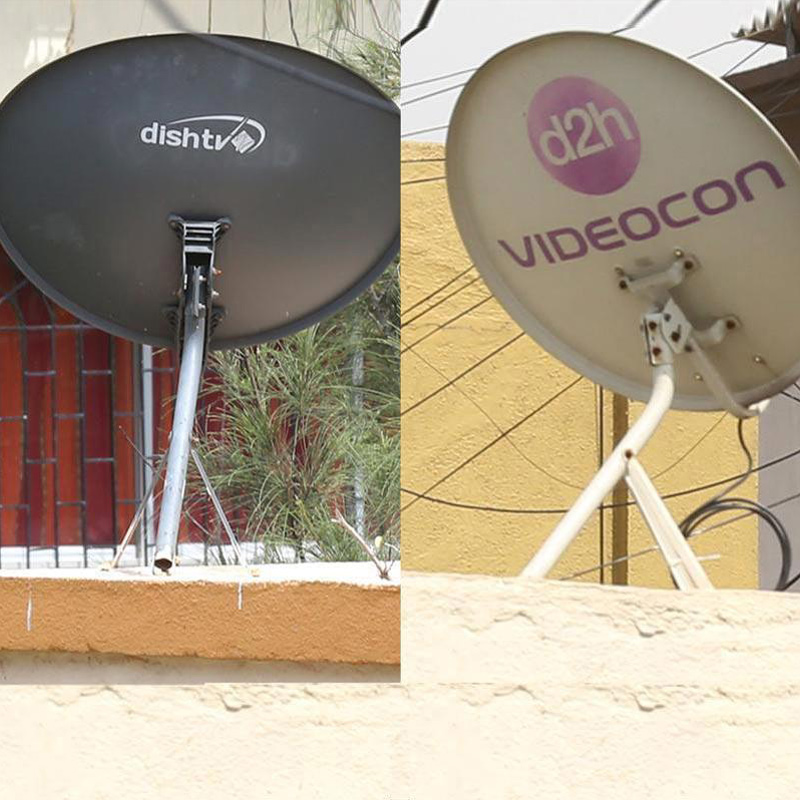
    In simple three or four steps, one can recharge your DTH connection, irrespective of the service provider. Videocon DTH is another leading service operator in the direct broadcast satellite sector. Videocon DTH has officially merged with Dish TV, and the name of the new business entity is d2h. Today, d2h owns about 19% of the market share with a subscriber base of 29 million and more. Founded in June 2009, the company was merged with Dish TV in 2016. By choosing the right UPI payment app, you can get your Videocon d2h recharge and dish TV recharge from the same platform, one after the other. Not just that, you can recharge your mobile, pay your water and electric bills and in the process, get cash backs by using the right app.

    No need to move out of home, there are no other hassles, and you get to watch your shows without any interruptions. All of it not only looks effortless, but these are also quite simple in reality. The crucial work is to find out in-depth about the payment app you choose for recharging your direct-to-home connection. 

  • Make in India push for set-top boxes face challenges

    Make in India push for set-top boxes face challenges

    KOLKATA: Last year it made headlines when large DTH players including Tata Sky, Dish TV announced their decision to move manufacturing of a significant portion of set-top boxes (STBs) in India. The announcements were in line with the government’s renewed push for Make in India. But with complexities looming over the initiative, manufacturers remained worried about the impact of the initiative, if it remained limited to just ‘assembling the products in India’.

    There have been talks around different aspects of the Make in India push for STBs since the last two years. “In 2020, the department for the promotion of industry and internal trade (DPIIT) formed a committee. It asked the ministry of information and broadcasting (MIB) to be a part of it and a meeting was held with operators and STB manufacturers to gauge the overall situation,” said MyBox Technologies MD and CEO Amit Kharbanda. “STB as an electronic product falls under the purview of the ministry of electronics and information technology (MeitY)Meity, but buyers are regulated by MIB, an ‘unusual situation’.”

    According to MIB, Make in India is not just about assembling the product in India but also about promoting Indian designs.

    “Our entire HITS business was premised on furthering the mission of ‘Digital India’ – taking signals to remote semi-rural and rural areas across our pan-India satellite footprint; facilitating a digital transition. As regards local sourcing, our Cable Operator Premise Equipment or COPEs bear testimony to our ‘Make In India’ approach; with a significant percentage of locally sourced components. With Set-Top Boxes, we have already moved whatever inventory production was possible, to India. This includes not just India-based manufacturers but also Indian companies. But, the challenge is that several components of the STBs still need to be procured from overseas manufacturers,” said NXTDigital MD & CEO Vynsley Fernandes.

    The draft National Broadcasting Policy (NBP) finalised early this year also focused on policies to indigenise the production of consumer premises equipment including the set-top boxes, which are heavily import-dependent. This will be done by setting up a self-reliant local manufacturing ecosystem and roping in the Bureau of Indian Standards (BIS) and other agencies to publish the quality benchmark. The policy also called for setting up measures to rationalise the import tariffs and provide preference to domestically manufactured electronic products and mandate increasing deployment of indigenous equipment.

    GTPL Hathway cable TV head and chief strategy officer Piyush Pankaj said, “MIB has been promoting the initiative for the last two-three years, focusing on Indian manufacturers. But, the problem is many components like chipsets still come from a foreign country and are being assembled here. However, the MSO is also buying boxes from Indian vendors.”

    While domestic manufactures are trying to make way for Indian designing, it takes more than a year to develop designing. “Indian design companies have competence but the business is not in good shape, so the domestic manufacturers are requesting the operators to cooperate with them. The operators can be worried about the quality of boxes but they can opt for trial orders,” said MyBox Technologies MD and CEO Amit Kharbanda.

    On the other hand, some operators have distanced themselves from the matter.

    “We support the Make in India initiative. But, we have also clarified that it applies to any product manufactured in India by an entity here, whether it’s an Indian company or a foreign one. As a service provider, I can’t go checking on the antecedents of the company and whether it has ‘designed’ or ‘assembled’ in India, or whether there was a technology transfer or indigenous technology used. It is very complicated for us. We are buying from a company registered in India, paying Indian taxes, not importing. As long as we are doing that, we believe we are buying from India. Now it is up to the government to find out this nitty-gritty and it wants to take a policy initiative,” a senior executive with a large MSO said on conditions of anonymity.

  • Cable industry veteran Lt Col VC Khare passes away

    Cable industry veteran Lt Col VC Khare passes away

    KOLKATA: Cable TV expert, retired Lt.Col VC Khare has passed away. He contributed to the cable TV industry in India at different roles for nearly three decades.

    He was a member of the Bureau of Indian Standards (BIS) where he played a significant role in formulating 8 BIS Specification for cable TV hardware. He published over 30 papers on cable television.

    The cable industry veteran was also a part of Broadcast Engineering Consultants India Ltd. (BECIL). During his stint at BECIL, he established the Wireline Broadcasting Division and set up training in collaboration with SCTE UK in India.

    He also worked with renowned brands like Videocon, Reliance Communications. At Videocon, he guided the setting up of d2h earth station for its DTH platform. At Reliance Communications, he set up Reliance Digital DTH platform from concept to service on screen.

    Khare was very vocal about industry issues like DAS implementation, new tariff order roll out. He spoke at different forums to share his expertise with the operators.

    At the early part of his career, he was associated with the Indian army for 24 years. He got his education on telecommunications engineering in the field of military communications from the Military College of Electronics and Mechanical Engineering Secunderabad.

  • Airtel reports growth for DTH, home broadband segment in Q4

    Airtel reports growth for DTH, home broadband segment in Q4

    KOLKATA: Airtel Digital TV, Bharti Airtel’s direct-to-home (DTH) segment has reported Rs 767.3 crore revenue in q4 FY21 compared to Rs 603.5 crore in the corresponding quarter of the previous financial year, clocking a 27 per cent year-on-year growth.

    The DTH segment has raked in Rs 248.3 crore profit in the quarter, up from Rs 152.8 crore in the same quarter a year ago. However, both profit and revenue have declined compared to the third quarter of FY21. The company deployed Rs 369 core capex for the quarter compared to 251.4 crore in Q4 FY20.

    Airtel Digital TV witnessed a decline in customer base by 156 K during the quarter from 17.9 million in Q3 to 17.7 million in Q4, despite a growth of 6.6 per cent from 16.6 million in the corresponding quarter last year. ARPU for the quarter was at Rs 144 as compared, down from Rs 154 in the corresponding quarter last year.

    Homes business segment witnessed revenue growth of five per cent year-on-year to reach 128.8 crore. The company’s focus on re-calibrated offerings and launch of Xstream bundles, with content and unlimited internet, to accelerate penetration has resulted in the highest ever net addition of 274K to reach a total base of 3.07 million, it stated. On a year-on-year basis, the customer base increased by 27 per cent.

    For the quarter, revenues from Homes operations were Rs 600.9 core as compared to Rs 572.5crore in the corresponding quarter last year and Rs 567.4 in the previous quarter.

    Overall, Airtel’s consolidated revenue stood at Rs 25,747 core, with India revenues at Rs 18,338 crore.

    “It is this relentless focus on customer obsession that has allowed us to deliver another consistent quarter in terms of performance. Our mobile revenues grew at 19.1% YoY backed by 13.7 Mn 4G customer additions. We are seeing strong momentum in our home business with 274k net adds. The Enterprise segment delivered double-digit growth. Our digital assets continue to scale and we are beginning to see strong traction in monetisation of these assets,” said Airtel India and South Asia MD & CEO Gopal Vittal

  • ShortsTV enters Nepal with local partnerships

    ShortsTV enters Nepal with local partnerships

    KOLKATA: SVoD platform ShortsTV has forayed into Nepal in partnership with leading DTH platform DishHome and cable TV operator SimTV. With this, ShortsTV is the first ever curated platform for short stories and films in Nepal, providing over 900 hours of unconventional and captivating short format stories.

    The service will be available to all subscribers as part of the Basic Pack and will feature a promising line-up of 4,000+ premium titles, including the best of Oscars, BAFTA and Cannes along with popular Indian short films. Subscribers can look forward to an exciting mix of award winning and nominated short films covering a variety of genres including comedy, drama, thriller, mystery, crime and adventure amongst others in specially curated one-hour programming blocks. This premium offering will be available to subscribers as a linear channel on their television and the buddy mobile app of DishHome.

    ShortsTV chief executive Carter Pilcher said, “As viewing habits evolve, & time being a rare commodity, viewers are preferring complete storytelling in a short dose. As such, short films have seen a huge surge in popularity across the globe including in India. We are introducing our choicest shorts to the Nepal market and are ramping up the regional content on our platform. We are on a quest to further strengthen our presence in Asia and the entry into Nepal marks the second country in our Asian portfolio.”

    ShortsTV’s library of short films includes international finds like Skin, Bear Story, Friend request pending, Henry, Inseparable, Shackled, The Voorman Problem, Swimsuit 46 and others. It also includes some of the most popular Indian short films starring Bollywood celebrities like Kajol, Nawazuddin Siddiqui, Radhika Apte, Rajkumar Rao, Nasseruddin Shah, Jackie Shroff such as Chutney, Ahalya, Shunyata, Devi, Rogan Josh, Zahida, Carbon, Uss Din among others.

    ShortsTV Asia president Tarun Sawhney said, “With the recent digitisation and boom in content consumption, storytelling has transcended language and geographical barriers and found audiences among people who truly appreciate good cinema. The same goes for short films. With the expansion of ShortsTV, we are introducing the world’s largest library of high-quality curated shorts to one country at a time and we are sure of the success that awaits shortbusters with our every next step.” 

    ShortsTV is already available in over 100 million homes across the US, India, Latin America, the Netherlands, Belgium, and Eastern Europe.  In India, ShortsTV is available as a value-added service across all leading DTH platforms including Tata Sky, Dish TV, D2H and Airtel Digital TV. The platform has also forayed into OTT streaming with its recent partnership with Airtel Xstream App.

  • DTH segment expands its subscriber base by 1.01 mn in 2020

    DTH segment expands its subscriber base by 1.01 mn in 2020

    KOLKATA: The direct-to-home (DTH) subscriber base in India has reached a base of around 70.99 million in 2020, according to the Indian Telecom Services Performance Indicator Report October-December 2020 published by the Telecom Regulatory Authority of India (TRAI). This points to an addition of around one million subscribers in the year.

    While the total active DTH subscriber base stands at 70.99 million as of 31 December 2020, the segment had reported a base of 69.98 million for the last quarter of 2019.

    Tata Sky is leading the DTH segment with 33.03 per cent market share. It has marginally increased its market share of 32.58 per cent from July-September (2020) quarter. Airtel’s DTH arm has almost closed its gap with Dish TV with the former holding 25.17 per cent market share, and the latter gaining 25.45 per cent market share. Sun TV’s DTH arm has also improved its position with 16.35 per cent market share compared to 15.83 per cent in the previous quarter.

    As on 31 December 2020, there are 1,704 MSOs registered with the ministry of information and broadcasting (MIB), as against 1,613 multi-system operators (MSO) at the end of 2019. There were 1,697 MSOs including two provisional MSOs at the end of the previous quarter. Further, TRAI data indicates that there are 12 MSOs and one HITS operator who have subscriber bases greater than one million. Siti Networks, GTPL Hathway and Hathway are the top three players in this category.

    A total of 907 private satellite TV channels have been permitted by MIB for uplinking, downlinking, as on 31 December 2020. There are 326 pay TV channels including 233 SD channels and 93 HD channels and 581 free-to-air channels.

  • Negligible content investment for the urban viewer segment: Tata Sky’s Harit Nagpal

    Negligible content investment for the urban viewer segment: Tata Sky’s Harit Nagpal

    KOLKATA: The pay-TV industry in India has been highlighting the regulatory overburden in the industry for some time now. The players have been battling several legal issues, the amended new tariff order (NTO 2.0) being the most discussed one. According to Tata Sky CEO Harit Nagpal, it has not only impacted the growth of the industry, but put a halt on broadcasters’ plans to bring any change in pricing since January 2020, despite rising industry costs.

    Speaking at the recently concluded APOS 2021, the Tata Sky CEO said broadcasters will not be able to make up for this period, even if they are allowed to alter prices tomorrow. “A hole has already been created in the ability to generate revenue for the industry. There is a logjam between broadcasters and regulators via legal cases, which we are hoping settles down soon, so that broadcasters can raise prices,” he explained.

    According to Nagpal, the price hike will enable broadcasters to invest in creating more differentiated content and help them cater to increasing needs of viewers from various segments. “There has been a negligible investment for the urban viewer segment, even though it is one of the growing segments,” he pointed out, during a virtual session with Media Partners Asia executive director and co-founder Vivek Couto.

    But the Tata Sky CEO highlighted that he still remained optimistic about the growth of linear TV in India. “Both will survive; both will grow but not at the cost of each other. The people who can afford a broadband connection at home, and can subscribe to SVoD, can also afford TV because TV is much cheaper than that,” he added. “And viewers who cannot OTT subscriptions will watch content that comes only through cable and satellite. TV viewing remains a habit for Indians.”

    Recalling the days he spent days walking in and out of 1,200 customer homes in the rural area, Nagpal said there was rarely a home without a television set in India. “It’s like background noise. A family collectively consumes six to 10 hours of TV content per day. It is one segment that leaves a high opportunity for the growth of traditional TV,” he shared.

    Despite that, there are still around 100 million homes that don’t have a TV in India. The data shows that TV sales have picked up in the last few years. But there is still a gap in TV penetration this year due to the ongoing crisis, which will be filled in the next few years, he noted.

    “We have not seen signs of on-demand content or even broadband penetrating the kind of numbers that we have been hearing for the last few years. Despite the best efforts of most of the broadband operators, we have not seen numbers reaching the level that we are talking about,” said Nagpal.

    Tata Sky has embraced the change in the industry with the launch of Binge products – its smart boxes which offer both TV and OT content. The DTH operator has also marketed the product aggressively last year. 

    “We never expected these services to reach the level of DTH. We said both will grow. Maybe Binge will grow faster in terms of percentage because we have got a small base. But there is enough headroom for the satellite TV market to grow. We are pretty happy with the numbers of both sides,” Nagpal stated. 

  • Subhash Chandra denies rumors related to Dish TV India

    Subhash Chandra denies rumors related to Dish TV India

    KOLKATA: Dish TV India promoter and managing director Jawahar Goel has offered a substantial portion of his equity in the DYH operator as security for the credit facilities availed by Essel Group (Subhash Chandra Group). The group will return the security cover soon, Subhash Chandra Group official spokesperson Ronak Jatwala said in a statement.

    He went on to add that the Group is also extremely thankful to Goel. “Goel has extended support, in the form of a substantial portion of his equity in the mentioned listed entity (Dish TV), as security for the credit facilities availed by Subhash Chandra Group,” he noted.

    “The Group is confident and fully committed to return the mentioned security cover back to Jawahar Goel and his family. The group also wishes to iterate that Jawahar Goel, as the rightful owner of the equity stake in Dish TV India Ltd, had only stepped forward to offer support, and has no financial stress whatsoever in his personal capacity,” the statement added.

    Essel Group has also denied all the speculations and rumours pertaining to the shares being released from the lenders at a lower price and sold to third party investors at higher price points. These speculations are absolutely baseless and incorrect, and the company has no such intentions whatsoever, it claimed.

    “The Group has been consistently focused on its commitment towards its lenders and truly values the priceless support received during the turbulent phase, recognising their trust and belief. With their undeterred faith and support, the Group has successfully resolved majority of the issues and is on a steady path to iron out the limited pending issues,” Jatwala added.

  • Dish TV’s Watcho surpasses 25 mn subscribers

    Dish TV’s Watcho surpasses 25 mn subscribers

    KOLKATA: Dish TV India’s OTT Watcho has surpassed 25 million subscribers, a new milestone for the platform that provides snackable and on-the-go entertainment.

    Watcho has brought a unique assortment of delectable content such as Sarhad, The Jail Plan, Jaalsaazi, 4 Thieves, Love Crisis and Ardhsatya. The platform boasts of 50 original web-shows, 115 Live TV channels and 800+ hours of engaging content across diverse genres.  Furthermore, with the launch of original shows across different languages like Hindi, Kannada and Telugu and original influencer shows such as Look I Can Cook, Bikhare Hain Alfaaz, etc, viewers across the country and across segments can enjoy their favorite content.

    Dish TV India executive director & group CEO Anil Dua said, “We are elated to achieve this 25 million milestone and are proud of having created a strong resonance with our viewers in such a short span of time. At Dish TV India, it has always been our endeavor to meet the entertainment needs of all our subscribers all the time. Watcho, is a step in this direction that delivers a seamless streaming entertainment experience to our subscribers through its advanced technology and diverse content. I would also like to take this opportunity to thank all our subscribers for loving our platform and congratulate our young Watcho team for having created this bond with them.”

    Watcho not only has this unique content on its platform but also provides several engagement properties. It recently rolled out Watcho Aur Jeeto to give users an opportunity to engage with the platform daily. It has also launched Watcho Swag that lets users showcase their talent on the platform.

    DishTV & Watcho, Dish TV India marketing corporate head Sukhpreet Singh added, “Watcho has been growing consistently since its launch. What sets us apart is the fact that Watcho has always aimed at delivering a versatile content portfolio to its subscribers. We are confident that our subscribers are in for a thrilling ride as we continue to introduce interesting snackable content and an integrated content viewing experience across screens.”

  • DD Free Dish adds six new MPEG-2 slots

    DD Free Dish adds six new MPEG-2 slots

    KOLKATA: Public broadcaster Prasar Bharati's free-to-air DTH platform service DD Free Dish has added six new MPEG-2 slots, on the back of having surpassed an estimated 40 million subscribers.

    The move comes at a time when the platform witnessed a significant jump in the overall sales of MPEG-2 slots at the recently concluded 52nd e-auction of DD Free Dish. It raked in Rs 731.34 crore from the sale of 57 MPEG-2 slots, compared to Rs 594.25 crore collected from the sales of 53 slots in March 2020.

    The third annual e-auction was conducted from 22 February and ended on 27 February. Applications were received for e-auction under six different buckets. 57 channels were allocated slots on various buckets after multiple rounds of robust bidding.

    Prasar Bharati also amended the policy guidelines for DD Free Dish slots in late February. According to the new rules, the reserve price for MPEG-4 slots have been fixed at Rs 50 lakh per annum. Earlier, the reserve price was Rs 5 lakh per annum.

    The amended rules termed ‘Policy guidelines for allotment of slots of DD Free Dish Direct-to-Home Platform to satellite TV channels (Third amendments), 2021’ came into force from 22 February. “Bidding in the e-auction of vacant unreserved MPEG-4 slots will be open to all genre (language) channels at a reserve price of Rs 50.00 Lac/annum,” Prasar Bharati wrote in a notification.

    DD Free Dish earned nearly Rs 10 crore through 53rd e-auction of MPEG-4 slots of DD Free Dish and 11 channels were successfully allocated MPEG-4 slots post the auction. According to estimates, the platform could cross 50 million households by 2025.