Tag: DTH

  • DTH players capitalize on DAS phase III areas with aggressive campaigns

    DTH players capitalize on DAS phase III areas with aggressive campaigns

    MUMBAI/NEW DELHI: DTH players like Videocon d2h, DishTV et al have been shouting from rooftops about being DAS Phase III ready for a few months now. And since the DTH sector stands to benefit the most with the cable TV digitisation drive in India, most players have rolled out aggressive advertising campaigns to acquire more customers.


    While Videocon d2h expects Phase III to be 50 million TV households in terms of size, the scope for customer acquisition is vast.


    More so now with the ongoing High Court cases filed by various multi system operators (MSOs) and cable operators to extend the Digital Addressable System (DAS) Phase III implementation deadline, as many as five states have got temporary respite. With cable operators in several states facing shortage of set top boxes (STBs), the situation proves beneficial to DTH players in acquiring new subscribers in DAS Phase III.


    Dish TV, which is the oldest direct-to-home player in the country, has stepped up its campaign following the deadline of the Government for switching off analogue signals in all urban areas covered by DAS Phase III.


    In fact, the DTH player has been very upfront about their marketing strategy that capitalises on the confusion over digitisation in Phase III areas, as seen from their latest aggressive campaign titled Dish99. Targeting the Hindi speaking market, the catch phrase for this new campaign reads “Set-Top-Box Matlab DishTV” (Set-Top-Box Means DishTV).


    The TVC features popular TV actress Radhika Madan, who is a household name for daily soap watchers, addressing two housewives to tell them that their serials would be off air soon.


    When the panic-stricken women ask what they should do, she urges them to switch to Dish TV that offers service starting at just Rs 99 before their analogue signals are disrupted and they miss out on their daily entertainment.


    Explaining their current marketing strategy, Dish TV MD Jawahar Goel said, “DishTV’s advertising has always been very pro-active, but the ongoing campaign has been designed in view of the obvious shortage of set top boxes with cable operators. With the deadline of phase III of TV digitisation coming to a close, we aim to capitalise the huge captive user base that will eventually be on digital platform.”


    With this product, further, to augment the digitisation drive in Phase III, DishTV has introduced a 360 degree multi-media campaign spanning TV (across leading entertainment, sports and news channels), outdoor, radio, digital, online and direct marketing that leverages the power of popular TV celebrities. This DAS campaign features DishTV’s relatable faces to strike a chord amongst the audience and create awareness about TV digitisation among every household to shift from analog to digital platform,” added another DishTV spokesperson.


    Earlier Tata Sky too had rolled out a similar engaging campaign with Kangana Ranaut as its brand ambassador reaching out to people and telling them why they should switch to Tata Sky and enjoy paying for selective channels.


    However, Tata Sky points out that their campaign was not intentionally targeted to capitalise the digitisation situation.


    Tata Sky CEO and MD Harit Nagpal says, “We didn’t do any special campaign and the ads with Kangana Ranaut had commenced last year before the deadline. The ad simply says that if the viewer gives a missed call on the displayed number, Tata Sky will call back for installing their system. Thus, the viewer will save money as well as get the work done.”


    The campaign kick started earlier in June 2015, saw itself drawing several eyeballs from both consumers and industry experts by virtue of its casual and conversational style of narrative.


    On the other hand, sources share that Doordarshan’s free to air DTH service FreeDish has no plans to step up its publicity or marketing in view of the extension orders by High Courts of the DAS Phase III.


    “FreeDish was in a market that was different from the other DTH players as it was a free to air platform. DD generally publicised FreeDish only on its own channels and has no intention of any cross-channel promotion,” a source informs.


    It is undeniable that the current situation of DAS Phase III poses an opportunity for several DTH players to provide an easier alternative to consumers and bring them on board as subscribers while cable operators find a solid ground on the digitisation proceedings. What’s more, even as the government has announced 31 December, 2016 as the deadline for DAS Phase IV, it now remains to be seen how DTH players get even more aggressive on the marketing front as the year progresses.
  • DishTV’s HD offering touches 50 with Sony ESPN HD

    DishTV’s HD offering touches 50 with Sony ESPN HD

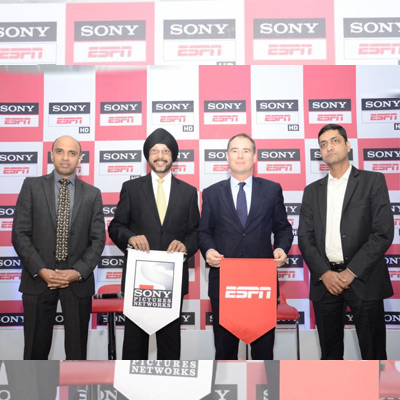
    MUMBAI: Direct to home (DTH) operator DishTV has taken its High Definition (HD) channels’ offering to 50 with the addition of the newly launched sports channel Sony ESPN HD. Incidentally, this is also the highest HD offering by a DTH player in the country. 

    DishTV India CEO Arun Kapoor said, “DishTV has always taken a lead in enhancing the TV viewing experience for our audience. To further add spruce to the sports lovers this sporting season, Dish TV has added Sony ESPN HD to its bouquet of channels. The company not only has the first mover advantage in the DTH category and also will be accredited with the highest number of HD channels across the industry with a whopping 50 HD channels. Our endeavour is to increase affinity with our audiences by providing them the choice of content they would like to watch. Latest trends suggest that the growth of the High Definition category over the past year together with rising sales of flat panel TV’s (LED/LCD) has added a new dimension to the superior HD viewing experience.”


    The Sony ESPN HD channel kicked off its sporting calendar with the live broadcast of the first Grand Slam of the year, the Australian Open. 
     

    DishTV subscribers can watch Sony ESPN HD at channel no 87.

  • DD confident of achieving 112-channel target on FreeDish by March-end

    DD confident of achieving 112-channel target on FreeDish by March-end

    NEW DELHI: Indian pubcaster Doordarshan is now confident that it will acquire the capacity of carrying 112 channels on its free-to-air (FTA) direct to home (DTH) service FreeDish by March-end.
     
    DD director general C Lalrosanga told Indiantelevision.com that a meeting had been held recently by the engineering team in FreeDish and Doordarshan with experts from the Bangalore based ByDesign India.
     
    DD is acquiring ByDesign’s conditional access system (CAS) so as to increase its channel offerings from the current 64 by the end of March 2016.
     
    The meeting was primarily aimed at assessing the requirement of CAS-enabled set top boxes (STBs) that will be needed to cover all regions of the country.
     
    Lalrosanga said the DTH player will switch over to MPEG4 from the current MPEG2 in two phases. “The first phase may begin this month,” he informed.
     
    Late last year, the Department of Electronics and Information Technology (DeitY) approved a proposal by ByDesign India to develop an Indian conditional access system. ByDesign was to receive a support amount of Rs 19.79 crore from DeitY to develop the new system in association with Centre for Development of Advanced Computing (C-DAC).
     
    The ByDesign model is totally indigenous and built for DVB-C setup. This CAS solution will enable broadcasters to control access to their services by viewers, and thereby enabling them to extend their business models to subscription based schemes.
     
    This will mean that the FreeDish will become encrypted but will remain FTA. In addition to helping increase the number of channels on the platform, this will enable FreeDish to gauge the exact number of households relying on FreeDish as encrypted STBs will only be available with authorised dealers.
     
    Lalrosanga went on to add that many homes were gradually switching over to FreeDish as they could then get their entire entertainment for a one-time fee of purchasing a dish, which costs as low as Rs 700 to Rs 1200.
     
    Prasar Bharati CEO Jawhar Sircar had said early last year that FreeDish’s aim was to reach 112 channels within a year or so.
     
    At present, there is no vacant slot on Freedish since all channels that were on the platform and whose licences had expired have come back through the 24 e-auctions conducted over the past year.
     
    Interestingly, two new entrants on the platform – Aaj Tak and Big Magic – are pay channels, which are being run as FTA on FreeDish.
     
    DD sources said that the reference interconnect agreement signed by these two channels no longer carries any non-discriminatory clause as it refers to FreeDish.

  • DTH to benefit, Reliance Jio to intensify competition in DAS Phase III: Edelweiss

    DTH to benefit, Reliance Jio to intensify competition in DAS Phase III: Edelweiss

    NEW DELHI: Broadcasters are obviously clear winners, but the direct to home (DTH) platforms may ultimately become the greatest beneficiaries of Phase III of digital addressable system (DAS) by garnering incremental market share of more than 50 per cent.

     
    According to Edelweiss Securities Ltd, broadcasters will be one of the safest and most attractive plays on the digitisation theme, irrespective of higher subscriber additions by DTH or MSOs. “We expect a one-year lag for subscription revenue to flow (starting FY18) from the newly digitised subscribers,” Edelweiss said in its analysis of DAS Phase III.   

     
    “In our view, analogue signals will gradually switch off and substantial roll out of Phase III digitisation will take at least three to four quarters driven by mass media ads and proactive steps by DTH players, national MSOs & the regulator,” the firm said.


    However, this view is contrary to the Chrome Data Analytics’ claim of 70 per cent digitisation in Phase III. 

     
    With six states (Assam, Telangana, Andhra Pradesh, Maharashtra and Odisha and Tamil Nadu) stalling Phase III digitisation by eight weeks or more with High Court orders, Edelweiss says, “Uncertainty persists; we expect many more states to follow suit.” In Tamil Nadu, the stand-off between Arasu and the Information & Broadcasting Ministry will delay digitisation, as was the case with Chennai earlier. 

     
    Moreover, Edelweiss believes Reliance Jio’s entry in cable TV will intensify competition in the space. “Overall, we expect Zee, Sun TV, TV18 and Dish TV to be bigger beneficiaries of Phase III digitisation over the long term.”   

     
    In Phase I and II cities, MSOs were able to retain around 75 per cent of incremental market share, while DTH players managed to garner only 25 per cent.

     
    However in Phase III markets, Edelweiss says regional MSOs will have to incur substantial capex to make the cable infrastructure digital ready. “We believe DTH players will enjoy natural advantage over regional MSOs in Phase III markets.”

    Further, voluntary digitisation by national MSOs in Phase III markets, learnings from Phase I & II digitisation and parts of Phase III areas being contiguous with Phase I & II markets put national MSOs in better position than regional MSOs. 

     
    With the rollout of Reliance Jio, Edelweiss expects “competition to intensify in cable TV business. Cashing in on its strong balance sheet, RJio will fuel further competition in cable TV (free STBs, bundled services) in Phase I and II markets. We expect RJio’s entry to change the industry dynamics led by introduction of packaging and prepaid billing.”

  • Netflix a damp squib; broadcasters long term gainers: Edelweiss

    Netflix a damp squib; broadcasters long term gainers: Edelweiss

    MUMBAI: While the world is going gaga over Netflix’s simultaneous launch in 130 countries across the globe including India, financial services company Edelweiss is not too impressed, at least in the medium term.


    So when all and sundry are trying to predict and second guess the impact Netflix’s launch will have on the over-the-top (OTT) scene as well as on the broadcast industry in India, according to Edelweiss, the impact of Netflix in India will be limited on direct to home (DTH) and cable TV players over the medium term.


    Citing the reasons for the same, Edelweiss lists:


    1) Netflix does not have local content

    2) Free content is easily available on Erosnow, Hotstar, YouTube

    3) Steep pricing at 2-3x prevailing cable TV/DTH rates

    4) Broadband speed beyond top cities will be a huge challenge

    5) Lack of India cricket matches


    The Indian pay TV market is on its way to embrace OTT platforms, especially for sports content, following increasing usage of internet. According to the company, this will be an additional source of revenue for broadcasters like Zee, Sun TV and TV18 over the longer term. “However, most broadcasters already have their OTT platforms and are yet to sign content deals with Netflix,” the company said in its report.


    A successful OTT in US:


    Netflix is a successful OTT in US as cable TV ARPU is $60 per month versus Netflix’s ARPU of $20-24. Secondly, the US has higher broadband penetration (~80 per cent) with good speed; and original content is dished out by Netflix. However, in India, Netflix currently lacks these advantages.


    “Hence, we do not expect Netflix to have any major impact on Indian DTH/cable TV players over medium term. Netflix has a long way to go before tasting success in India,” Edelweiss said.


    Pricing, slow broadband key challenges in India:


    As was reported earlier by Indiantelevision.com, in India, Netflix’s subscription rates are Rs 500, Rs 650 and Rs 800 for basic, standard and premium packs respectively. “These are 2-3x the prevailing cable TV/DTH rates. Besides, broadband will entail additional costs,” the report added. 


    Internationally, Netflix has done well riding attractive pricing, which is almost half the cable TV/DTH rates, and original content. While the company currently does not enjoy these benefits in India, in a bid to attract subscribers, it is offering free services in its first month of operations. 


    According to Edelweiss, plans are also afoot to facilitate streaming via laptops, TV, smart phones and tablets. “However, we believe in India where subscribers pay ~Rs250-450 per month for cable TV (includes sports channels), Netflix’s rates are on the higher side. Broadband speed will also be a challenge. Netflix requires minimum speed of 512kbps and recommends 3mbps speed for SD content and 5mbps for HD videos, which further limits its expansion plans,” the report said.


    Sports missing, India savours diverse content:


    Netflix is currently beaming international TV shows in India along with English and Hindi movies. “The company is currently not offering local content. Sports content, the main driver of the OTT platform, is also not offered. With India being a country with diverse culture it consumes content in eight different languages. Currently, Netflix is beaming only English content which will attract only niche audience,” the report added.


    With Netflix’s subscription price being by far the steepest in India as compared to competition, some of whom even offer content for free on their platform, it remains to be seen whether other players up their price, match Netflix’s or continue to offer content at a lower price. That said, with growing competition in the space from the likes of Arré, ALT Digital, DittoTV, ErosNow, HOOQ, Hotstar, Netflix, nexGTV, Sony Liv, Spuul, Voot and YuppTV, Netflix’s content strategy in the near future will be the key differentiator, which will separate the best from the rest.

  • TRAI makes interconnect agreements mandatory between broadcasters & MSOs

    TRAI makes interconnect agreements mandatory between broadcasters & MSOs

    NEW DELHI: In view of several multi-system and local cable operators supplying signals even in the absence of an agreement, the Government today said that it was mandatory for the broadcaster of pay channels to enter into written interconnection agreement (ICA) for retransmission of its pay channels irrespective of whether subscription fee is paid by the MSO to the broadcaster.
     
    The Telecom Regulatory Authority of India (TRAI) today released the Telecommunication (Broadcasting and Cable Services) Interconnection (DigitalAddressable Cable Television Systems)(Sixth Amendment) Regulations 2016 in this regard.  
     
    The amendment provides for sufficient time (minimum sixty days) for entering into new interconnection agreement before the expiry of existing ICA between the service providers for retransmission of TV signals.
     
    It was made clear that after this amendment, no scope will be available in the name of mutual negotiations for continuing the provisioning of TV signal after expiry of the existing ICA. 
     
    MSOs have been mandated to inform the consumers in the event of failure to execute new ICA, about date of expiry of its existing ICA and disconnection of TV channels, fifteen days prior to the expiry of existing ICA to enable the consumers to take informed decision in respect of their choice. 
     
    At the outset, TRAI said it was observed from the interconnection details submitted by the service providers that signals of TV channels are being provided by several broadcasters to MSOs and MSOs to LCOs even in the absence of valid ICA in writing. 
     
    It was also observed that continuation of retransmission of signal without valid ICA, on the pretext of continued mutual negotiations, often results in disputes and sometimes abrupt disconnection, which affects the quality of service to the consumers. 
     
    In this regard, the draft sixth amendment was released for consultation on 3 November last and an Open House Discussion (OHD) was held on 11 December. 
     
    The amendment was issued after considering the stakeholder’s comments and in-house analysis.
     
    TRAI noted that a few stakeholders expressed their concern, stating that the timeline of 60 days for starting of negotiation will bring practical difficulties and inconvenience at the ground level in view of the large number of service providers across the country. 
     
    This concern has been addressed by adding the word “at least” before 60 days in the amendment thereby they can start negotiations any time prior to 60 days. Moreover, several broadcasters and MSOs do their mutual agreements for all its operating areas or pan-India basis simultaneously. 
     
    A few stakeholders had suggested that similar provision may be made in the regulations for non-DAS areas and also in other platforms such as DTH. In this context it was mentioned that the delay in renewal of ICA is predominantly observed between broadcasters and MSOs in areas where Digital Addressable Cable System has been implemented. 
     
    However, TRAI noted that the stakeholders’ request may be taken up while reviewing interconnection regulations as a whole, in future, when such need arise.
     
    TRAI is already in the process of finalising a model ICA to ensure smooth transition to DAS.
  • Broadcasters asked to step up publicity, even as Govt rules out extension of DAS Phase III

    Broadcasters asked to step up publicity, even as Govt rules out extension of DAS Phase III

    NEW DELHI: Reiterating that there was no question of an extension of the 31 December deadline for switching off analogue signals, the Task Force of the Information and Broadcasting Ministry today urged broadcasters to step up their publicity in preparation for the final phase in December 2016.

    The stakeholders were told that reports indicated that over 80 per cent of seeding of set top boxes (STBs) in all remaining urban areas that are to be covered in the current phase.

    Broadcasters were also encouraged to come up with newer formats of their appeals to viewers on channels that would catch the attention of the target viewers.

    The Task Force chaired by Special Secretary J S Mathur with the presence of Joint Secretary (Broadcasting) R Jaya was told that there was nothing in law to bar litigants from going to court and it was for the judiciary to deal with these issues.

    At the same time, the government will make all efforts to defend itself in various courts.

    Although the Bombay High Court and some other High Courts have already refused to extend the deadline, the Andhra Pradesh High Court has issued a stay till the next date and the Government said would be replied to. Similarly, a case relating to operators in Indore was coming up for hearing tomorrow (31 December).

    Some participants who did not wish to be named told Indiantelevision.com that a bleak picture was sought to be presented by some participants including the Maharashtra Cable Operators Federation (MCOF) but the Ministry officials answered these queries.

    Similarly, the Ministry turned down the demand by some states for extension of date.

    A clarification was also given to the effect that while MSOs may use a single control room for transmitting DAS signals under Phase III and analogue under Phase IV, they would need IRDs from broadcasters for these signals.

    The Task Force, which expects to release its minutes in a day or two, is also working out the figures of STBs available with direct-to-home (DTH) players that can be used. Clarifications were given with regard to queries by some stakeholders about STBs.

  • MIB warns broadcasters against giving FTA signals to unauthorised operators

    MIB warns broadcasters against giving FTA signals to unauthorised operators

    NEW DELHI: The Ministry of Information and Broadcasting (MIB) has warned broadcasters against giving signals of free to air (FTA) channels to unauthorised operators. 


    The government said that it should be ensured that satellite TV channels do not provide their signal reception decoders or access to their signals to any cable or multi system operators (MSO), DTH operators, IPTV service provider and headend in the sky (HITS) operator, which is not registered or permitted by the MIB.


    The Ministry said that non-adherence to the laid down stipulation is “liable for stern action from this Ministry in case corrective action by broadcasters is not taken immediately.”


    It was pointed out that there should be strict adherence to clause 5.6 of the Article 5 of Downlinking Guidelines in this regard.


    The clause stipulates that all the broadcasters “shall provide satellite TV channel signal reception decoders only to MSOs/Cable Operators registered under the Cable Television Networks (Regulation) Act 1995 or to a DTH operator registered under the DTH guidelines issued by Government of Indian or to an Internet Protocol Television (IPTV) Service Provider duly permitted under their existing Telecom License or authorised by Department of Telecommunications or to a HITS operator duly permitted under the policy guidelines for HITS operators issued by the I&B Ministry to provide such service.”


    The MIB said that it had come to its notice that certain DTH operators were beaming into India FTA channels without obtaining due license or registration authorisation in any manner from the Ministry. “These FTA TV channels, it is learnt, are permitted TV channels. However, broadcasters appear to have allowed their signals to be used by such unauthorised operators,” the Ministry said.

  • YuppTV launches platform for original content creators

    YuppTV launches platform for original content creators

    MUMBAI: Expanding its offering with an aim to lure original content creators on to its platform, over the top (OTT) player YuppTV has launched a marketplace, which will host curated premium video content across various genres. 


    YuppTV Bazaar will cater to video content creators, who often find it tough to monetise and market their premium content through traditional video-sharing portals, satellite and DTH platforms. 


    YuppTV Bazaar will offer creators quality supervision and a large native user base to showcase their high-quality videos across the world through multiple devices.


    “With the proliferation of unregulated video content on the digital platform, content monetisation and visibility is a prime concern for premium video content creators who often find their content being lost in a deluge of casual user-generated content. YuppTV Bazaar is being launched as a solution that will overcome the traditional roadblocks associated with free-for-all video sharing platforms. We are confident that this development will be a major success and will empower content developers with the perfect medium to share and monetise their offerings,” said YuppTV founder and CEO Uday Reddy.


    Content creators can upload videos across various genres like education, short films, web series and trailers.


    Governor of Maharashtra Vidyasagar Rao, who was present at the launch, said, “In today’s digital age, with technology having changed the way many industries operate today, YuppTV’s launch of its premium video content platform YuppTV Bazaar comes as a very welcome move. By providing a medium to independent creative content creators for showcasing their works, YuppTV has taken the spirit of entrepreneurship to a new level. I support the initiative wholeheartedly and wish YuppTV and YuppTV Bazaar all success.”


    Abhishek Bachchan, who was also present, added, “India, at the moment, is brimming with talent looking for an outlet for their creativity. The launch of YuppTV Bazaar from YuppTV is a welcome move that will provide the indie moviemakers with a trusted and curated platform for showcasing their talent.”

  • DishTV wins ET’s Best Corporate Brand 2015 award

    DishTV wins ET’s Best Corporate Brand 2015 award

    MUMBAI: DishTV bagged ‘The Economic Times Best Corporate Brands’ award in the DTH category.


    The award has been presented to DishTV for being one of the most admired corporate that is shaping up the Indian marketplace. 

    The ET Best Corporate brands is an endeavor of The Economic Times, where it conducts a survey across a wide spectrum of consumers and stakeholder’s demographics in eight metro cities and eight other cities on the basis of parameters like familiarity, interaction, loyalty, trustworthiness, innovation and recommendation.


    DishTV chairman and managing director Jawahar Goel said, “We would like to thank all our stakeholders for reposing their faith in DishTV. This is a vindication of our belief that our investments in technology, content, distribution and customer service has helped us in securing the leadership position in the category. We are committed to providing the services that help consumers make the most out of their DTH services and ensure a superior viewing experience that mirrors the latest world standards.”